

You're 30 minutes from training, your stomach is making decisions for you, and the protein bar in your gym bag looks less like fuel and more like a brick. You want enough energy to lift well, but you don't want to spend the first half of the workout feeling bloated, distracted, or slightly nauseated.
That's the key question behind high protein snacks before workout sessions. Are they useful, or are they just another fitness ritual? The answer depends on your last meal, the workout you're about to do, and how comfortably you digest the food. A well-chosen snack can bridge a long gap between meals, provide amino acids before training, and help control hunger without turning a short workout into a full eating event.
Why Pre-Workout Snacking Matters More Than You Think
Consider two gym-goers arriving for the same lifting session. One ate a balanced meal several hours earlier and feels steady. The other rushed through the day, skipped lunch, and now feels light-headed during the warm-up. The difference isn't discipline. It's the gap between available fuel and the demands of training.
A pre-workout snack can fill that gap. Protein supplies amino acids when a meal is still some time away, while carbohydrates can provide readily available energy for sessions that require repeated effort. The snack also gives you a practical way to avoid starting training extremely hungry, which can make it harder to concentrate on technique, breathing, and effort.
Training fasted isn't automatically wrong. Some people feel comfortable exercising without food, particularly during shorter or lower-intensity sessions. Others notice early fatigue, dizziness, irritability, or a drop in focus. Your own training log is useful here. If the same symptoms appear repeatedly when you skip food, a small snack may be more valuable than following a rigid fasted-training rule.
Practical rule: The purpose of a pre-workout snack isn't to eat as much as possible. It's to arrive ready to train, with a portion your stomach can handle.
A small snack can be enough
A 2023 review found that consuming up to 40 g of protein about 30 minutes before exercise didn't impair fat oxidation compared with fasted exercise, and the authors noted that this approach could help people who struggle to train fasted. The review also found limited evidence that 20 g versus 40 g of protein changed resting energy expenditure or free-living energy intake. That supports a moderate, practical serving rather than an oversized meal. The review of pre-exercise protein intake provides useful context for people who want convenience and appetite control without treating food timing as a metabolic emergency.
The same principle applies after training. Pre-workout food and post-workout recovery serve different purposes, so readers managing joint conditions or recovery demands may also benefit from this recovery drink guide for osteoarthritis. For broader meal ideas, this guide to the best foods to eat before the gym can help you compare snacks with full meals.
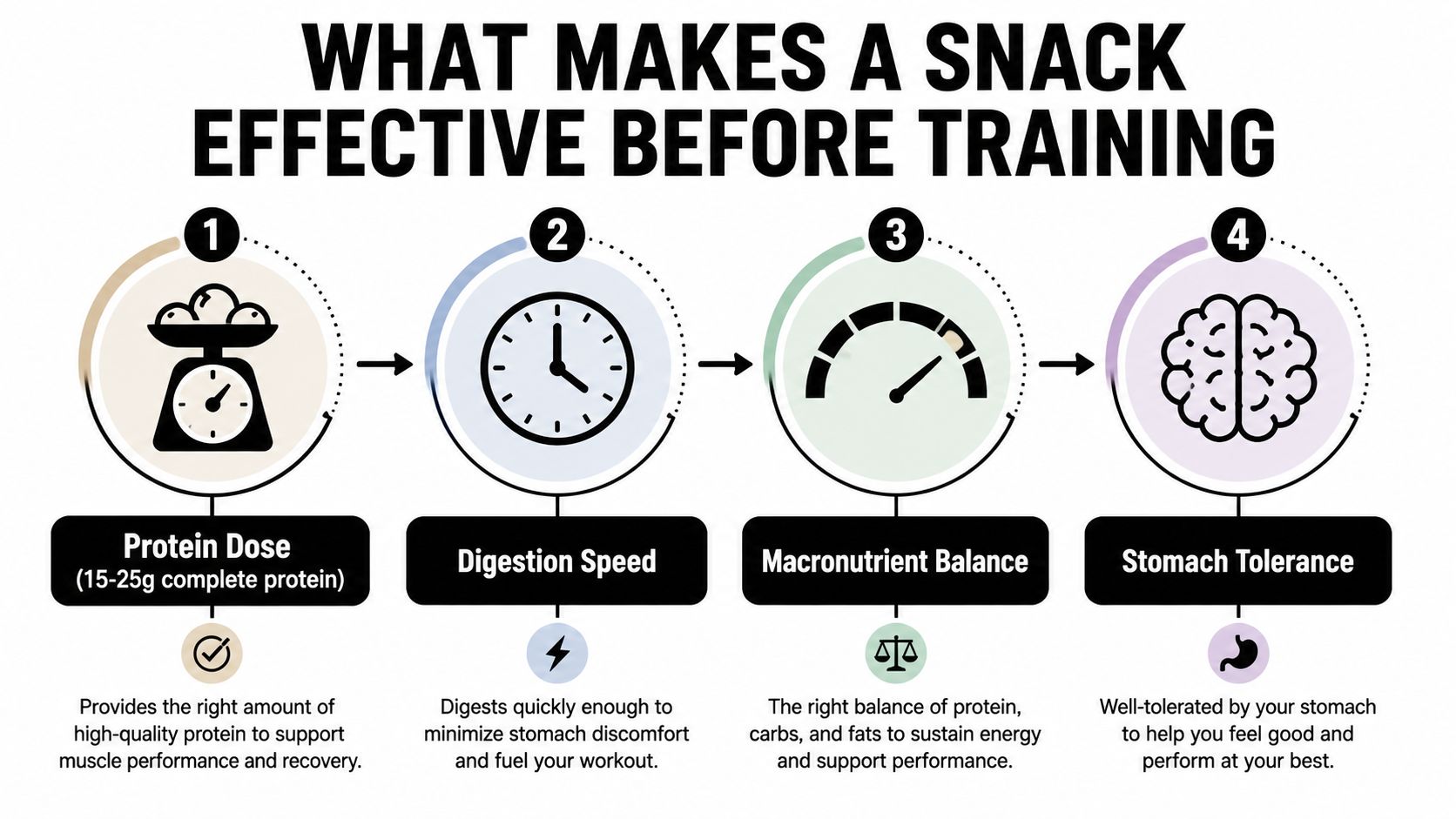
What Makes a Snack Effective Before Training
An effective snack passes four tests: it contains a useful protein dose, matches the workout's carbohydrate demand, digests at a suitable speed, and leaves your stomach comfortable. You don't need perfect macros every time. You do need a repeatable choice that supports the session in front of you.
Start with protein
For resistance training, practical guidance commonly places a high-quality protein serving at about 20–40 g, with expert guidance also expressed as roughly 0.4–0.5 g per kilogram of lean body mass. The same guidance notes that a snack providing approximately 15–30 g can be useful when eaten 15–120 minutes before lifting, especially after a long gap since the last meal. This sports-nutrition review explains why the snack doesn't need to be built around a narrow post-workout window.
In everyday terms, aim for a serving that contributes meaningful protein without forcing down a full meal. A dairy-based option might be Greek yogurt or cottage cheese. A plant-based choice could use edamame, tofu, pea protein, or a combination of legumes and grains. The label matters, but so does your tolerance.
Add carbohydrates according to the session
Carbohydrates are more useful when the workout demands repeated bursts, challenging volume, or sustained output. A moderate serving of fruit, crackers, toast, or another easily digested carbohydrate may fit a lifting or interval session. If you're doing gentle mobility work, you may need little or none.
Fat deserves the same context. A small amount can fit comfortably, but rich or high-fat foods often digest slowly and may feel heavy during sprints, jumping, crunches, or deep bracing. Fiber can create a similar issue for some people, particularly when the snack is eaten close to training.
Let timing control portion size
A mixed snack sits differently from a light bite. When you have more time before training, you can usually tolerate a more substantial combination of protein and carbohydrates. When you're close to the session, choose less volume and fewer ingredients.
Hydration belongs alongside the snack, not as an afterthought. Drink according to thirst and your environment, and avoid turning the pre-workout routine into a large volume of liquid immediately before movement. For a deeper look at how protein density affects snack choices, see this protein-to-calorie ratio guide.
The Satiety Science Behind Protein-Rich Snacks
Protein does more than support muscle tissue. It also interacts with the signals that influence hunger after you eat. Two of the best-known signals in this conversation are GLP-1 and PYY, gut hormones involved in fullness and appetite regulation.
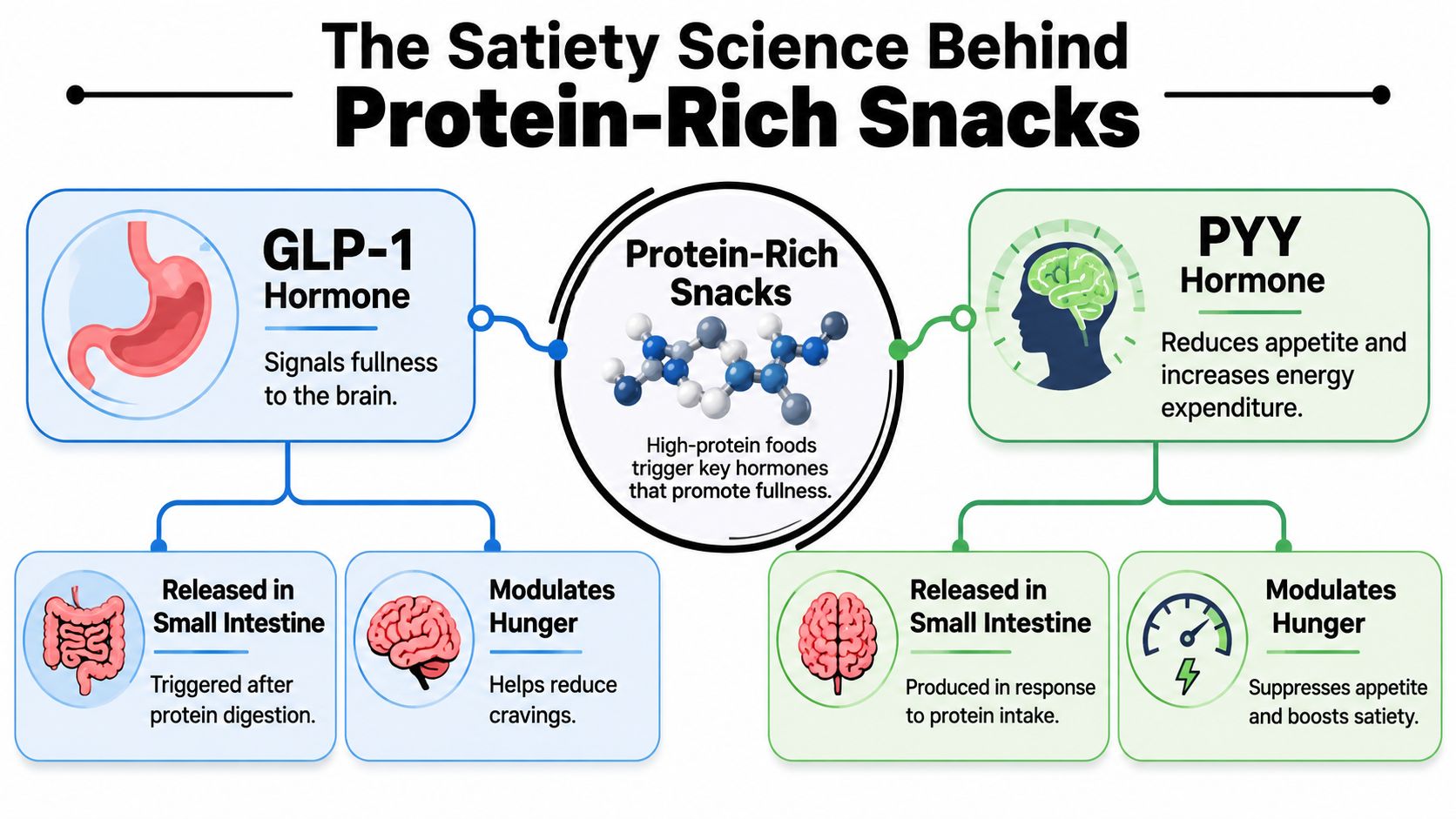
A controlled breakfast-composition study found that the high-protein breakfast produced the highest PYY at 240 minutes and the highest GLP-1 at 120 minutes, with statistically significant differences compared with higher-fat and higher-carbohydrate meals, P=0.005 for PYY and P=0.041 for GLP-1. Another trial found that a breakfast containing 51% of energy from protein produced greater satiety than a breakfast containing 10% of energy from protein, while GLP-1 and PYY also rose significantly at several points after eating. The breakfast study and related evidence show why a protein-centered snack can feel more satisfying than a similarly sized snack built mostly around refined carbohydrates.
What that means before a workout
Suppose you're training before dinner and you've already started thinking about the meal you'll eat afterward. A protein-rich snack may help take the edge off that hunger, so you can warm up and train without rushing through the session mentally. That doesn't mean protein guarantees stable blood sugar or eliminates hunger. The response depends on the food, the total portion, your previous meal, and your individual physiology.
The hormone story also needs restraint. GLP-1 can reduce meal size at physiological infusion doses, while PYY has been less consistent as an independent satiety marker in human research. The whole food matrix and total protein load matter more than chasing a particular hormone response. This review of gut hormones and appetite regulation supports that more measured interpretation.
Protein can make a snack more satisfying, but it doesn't turn an uncomfortable food into a comfortable one.
A savory, familiar option may therefore work better than a highly sweet product you've grown tired of eating. That matters for adherence. If your snack helps you start sessions consistently and avoid arriving ravenous, it can support a routine you'll maintain. For more food-based ideas, explore these foods for appetite control, then test one option at a time.
Watch this overview for a visual explanation of how food and training choices can fit together.
For readers who want a broader nutrition perspective, this resource on how food choices affect recovery offers additional context beyond the pre-workout snack itself.
Matching Your Snack to Different Workout Types
Your snack should match the work, not just the clock. Heavy lifting, intervals, easy cycling, and fasted mobility place different demands on your energy and digestion. A snack that feels perfect before squats may feel excessive before a relaxed walk.
Resistance training
A lifting session often benefits from a moderate protein serving paired with carbohydrates when you're training after a long gap between meals. Choose a more complete snack when you have time to digest it, and a smaller protein-first bite when you're closer to the first working set.
HIIT
Intervals can make stomach discomfort obvious. Keep the portion compact, avoid foods you already know cause reflux or bloating, and choose a relatively simple combination. You may tolerate carbohydrates well, but the right amount depends on the session length and your previous meal.
Steady-state cardio
Easy or moderate cardio often calls for a lighter approach. Some people do well with a small carbohydrate serving and modest protein, while others prefer to train after a normal meal with no additional snack. Don't add food just because a workout plan labels it “cardio.”
Fasted sessions
If you train comfortably fasted, there's no requirement to force food into your routine. If fasted training leaves you feeling depleted, a small protein serving with a simple carbohydrate may provide a compromise. Early-morning athletes can also shift more nutrition into the previous evening meal rather than trying to eat a full snack immediately after waking.
| Workout Type | Protein (g) | Carbs (g) | Fat (g) | Timing (min before) |
|---|---|---|---|---|
| Resistance training | 15–30 | Moderate | Low to moderate | 15–120 |
| HIIT | 15–25 | Moderate | Low | 30–60 |
| Steady-state cardio | Modest | Light to moderate | Low | Flexible |
| Fasted or early training | Small serving | Light | Low | Close to training |
The protein ranges in the table reflect practical snack guidance and the broader resistance-training recommendation of 20–40 g of high-quality protein. The cited sports-nutrition review is the relevant source for that quantitative guidance. Treat the other cells as decision prompts, not universal prescriptions.
Sweet Versus Savory Formats and Why It Matters
Sweet snacks dominate gym recommendations because they're familiar and often easy to eat quickly. Bars, shakes, fruit, and gels can provide useful carbohydrates, especially when you need something simple close to training. They can also become repetitive, overly sweet, or difficult to tolerate if a thick texture and large serving don't agree with you.
Savory snacks solve a different problem. Roasted chickpeas, edamame, seed crackers with hummus, tofu bites, and plant-based protein crisps can offer a more satisfying flavor profile for people who don't want another dessert-like product. They may also pair naturally with water or an electrolyte drink instead of adding another sweet taste to the routine.
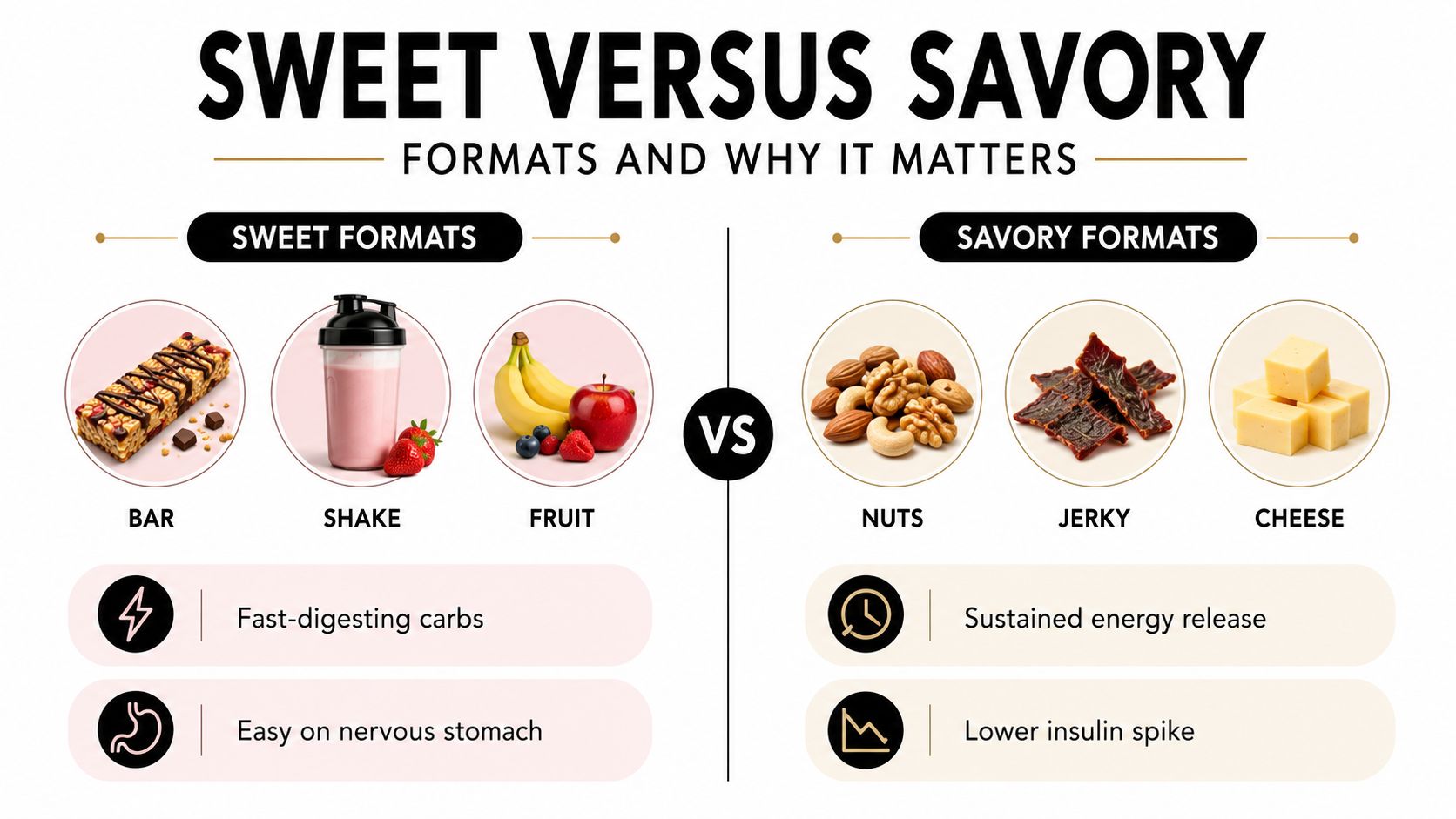
The trade-off is digestion. Some savory choices are high in fat, fiber, or sodium, and those features can matter before intense movement. Hummus and raw vegetables may be nutritious, but a large portion close to training can feel bulky. Nuts can provide protein and fat, but they aren't always a strong protein anchor for a workout snack.
An allergen-conscious lens
Read the full ingredient list, not only the front label. Dairy, soy, gluten, nuts, and seed ingredients appear in many conventional bars and crisps, while seasonings and binders can create additional issues for sensitive eaters. A plant-based product may be useful, but “plant-based” alone doesn't guarantee easy digestion or a complete nutrition profile.
The best savory option is the one that combines a meaningful protein contribution with a portion you can tolerate. For some people, that means a small serving of edamame. For others, it means a crunchy, shelf-stable format that avoids dairy and common allergens. The label and your own response should decide.
Easy Homemade Builds and Ready-to-Pack Options
A good gym-bag snack needs to survive real life. It should travel well, taste acceptable when cold or at room temperature, and provide a clear protein contribution without requiring a kitchen beside the squat rack.
Try these simple builds:
- Greek yogurt with berries: Add a spoon of nut butter only if you tolerate the extra richness and have enough time before training.
- Egg and banana: A hard-boiled egg paired with a small banana gives you a compact mix of protein and carbohydrate.
- Cottage cheese with apple: Cinnamon can add flavor without making the snack heavier.
- Salted edamame: This works well for plant-based eaters who want a savory option with a recognizable whole-food base.
- Turkey, pickle, and crackers: Roll deli turkey around a pickle and add crackers if you digest cured or sliced meats comfortably.
The exact protein content varies by brand, serving size, and preparation, so check the label rather than assuming that every version meets the same target. Homemade snacks also require attention to refrigeration and food safety, especially when they'll sit in a warm car or a packed bag.
Choosing a packaged option
For a ready-to-pack product, check four details:
- Protein contribution: Does the serving provide enough protein to matter for your meal gap?
- Allergen labeling: Can you identify dairy, soy, gluten, nuts, or other ingredients you avoid?
- Texture and portion: Will it feel comfortable shortly before movement?
- Flavor fatigue: Would you still want it after eating it repeatedly?
Gym Snack's plant-based protein crisps are one packaged example. The publisher describes them as using pea protein, providing 15 g or more of protein per serving, and being free of dairy, soy, and gluten. The product is available in savory flavors such as Cheddar Cheeze and Jalapeño Cheddar Cheeze, so it fits the crunchy, allergen-conscious format discussed here. Check the current package label for the serving details and ingredient information before buying.
A simple rotation
Keep three or four choices available rather than searching for one perfect snack. You might rotate edamame on lifting days, yogurt when you have refrigerator access, an egg and banana for early sessions, and a packaged savory crisp when you're commuting. Variety makes the routine easier to maintain and helps you notice which foods support your stomach and performance.
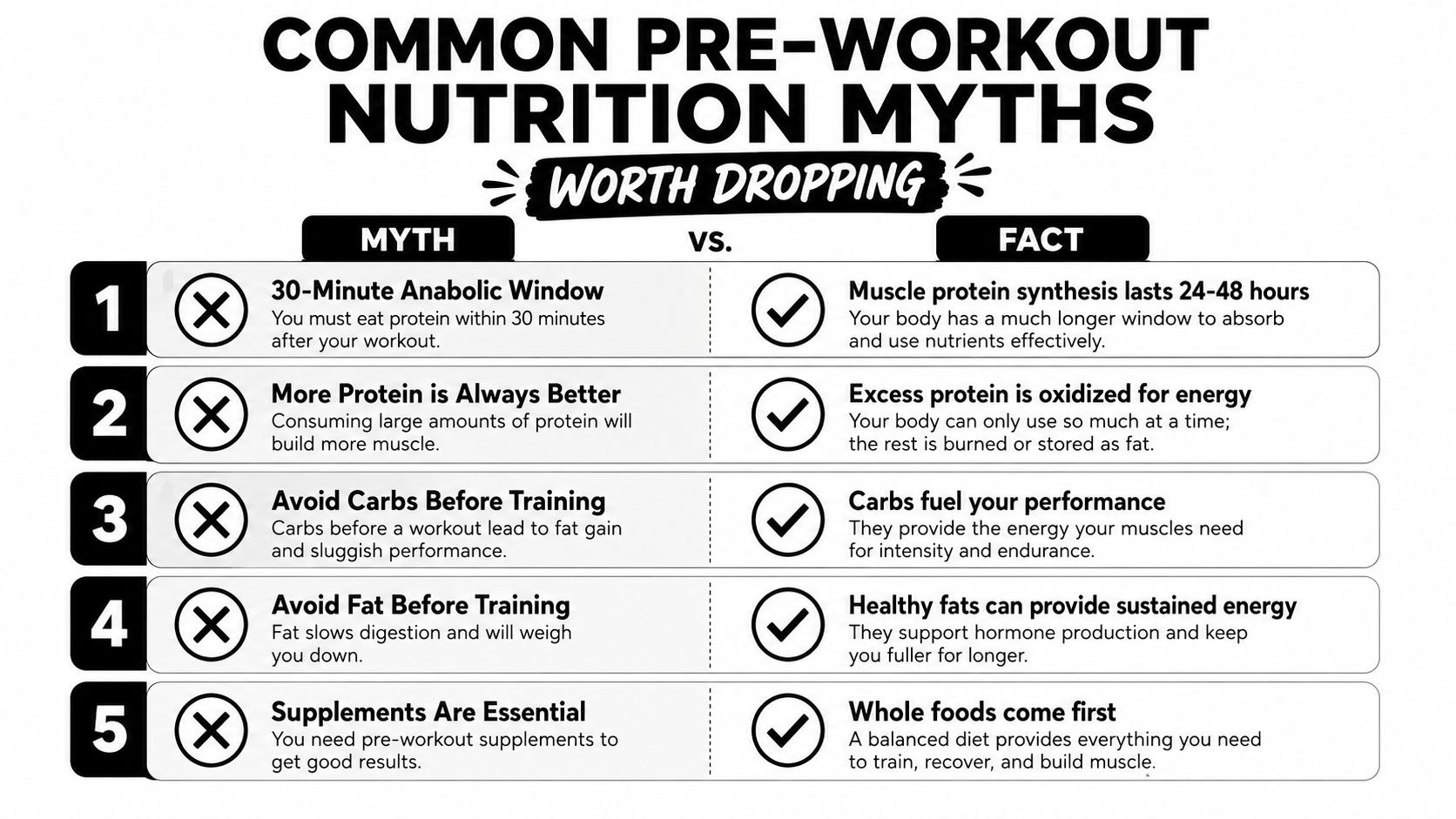
Common Pre-Workout Nutrition Myths Worth Dropping
Pre-workout advice often turns a useful principle into a rigid rule. A better approach matches the snack to your training, digestion, and the time available before movement.
Myth one, you must eat inside a narrow anabolic window
Muscle protein synthesis does not depend on one dramatic deadline. The resistance-training review cited earlier presents pre-workout protein as a practical option and explains why a narrow post-workout “anabolic window” is not required for the strategy to help. Focus on total intake, meal spacing, and tolerance rather than watching the clock.
Myth two, fasted training automatically burns more useful fat
The 2023 pre-exercise protein review discussed above found that consuming up to 40 g of protein around 30 minutes before exercise didn't impair fat oxidation compared with fasted exercise. That supports a flexible choice. If a small savory snack, such as edamame or a plant-based protein crisp, helps you concentrate and train comfortably, it can fit normal exercise metabolism.
Myth three, more protein always makes the snack better
A larger serving is not automatically more effective. In the reviewed context, limited evidence found little difference between 20 g and 40 g of protein for resting energy expenditure or free-living energy intake. A moderate portion may digest more easily and leave room for protein in later meals.
Myth four, all fat must be avoided
High-fat foods can feel slow before intense movement, yet fat is not automatically a problem. Portion size, your tolerance, the workout, and the distance from training all matter. A small amount may work well when you eat farther ahead, while a lighter option may suit a session starting soon.
Myth five, every protein source works the same way
Protein quality, amino acid profile, texture, and gut tolerance differ across foods. A snack that looks ideal on paper can still fail if it causes bloating or nausea. Choose a source you digest reliably, including an allergen-conscious savory option when that suits you, then adjust portion or timing before replacing the whole plan.
Your Pre-Workout Snack Checklist for Tomorrow
Use this checklist before your next session:
- Anchor the snack with protein: Choose roughly 15–25 g from a source you digest comfortably. The wider resistance-training guidance supports a practical pre-workout range of approximately 20–40 g for a full high-quality serving, while snack portions can be smaller. The resistance-training protein review provides the underlying guidance.
- Add carbohydrates when the workout needs them: Use a modest serving of fruit, crackers, toast, or another familiar option for demanding lifting or interval work.
- Keep rich ingredients controlled: If fat, fiber, or volume has caused discomfort before, reduce them as training gets closer.
- Match the timing: Eat a more substantial snack when you have time to digest, and choose a lighter bite when you're close to the warm-up.
- Check your stomach: Don't test a new product before a race, a personal-record attempt, or an especially demanding session.
- Bring water: Hydrate consistently, but avoid forcing a large drink immediately before movement.
- Record the result: Note hunger, energy, focus, digestion, and workout quality. Adjust one variable next time.
A useful three-slot library might include savory edamame, Greek yogurt with fruit, and a shelf-stable plant-based protein crisp. Rotate based on your schedule, access to refrigeration, and the workout you're about to perform. The best snack is the one that meets your needs and leaves you confident rather than distracted by your stomach.
Gym Snack offers plant-based savory protein crisps for people who want a crunchy, portable option before or after training, with allergen-conscious ingredients and 15 g or more of protein per serving. Visit Gym Snack to explore the available flavors and choose a pack for your next gym-bag rotation.