

You're hungry between meals, but you're also trying to keep calories under control. A handful of popcorn may fit your plan, yet it can leave you searching for more food soon after. A small portion of cottage cheese, tuna, yogurt, or another protein-focused option can use the same calorie budget much more effectively.
That's the key distinction with high protein snacks under 100 calories. The best choice isn't always the food with the fewest calories. It's the snack that gives you meaningful protein, suits your appetite, and delivers enough volume or texture to feel satisfying.
Why 100 Calories Can Still Deliver Real Protein
A 100-calorie limit can look too small for a satisfying snack, especially during a long afternoon or after exercise. The result depends on what fills those calories. A compact portion of cottage cheese, tuna, egg, or Greek yogurt can provide far more protein than a similarly sized snack built mainly from starch.
That difference matters because protein gives each calorie more purpose. A snack with only three to six grams may technically fit your target, yet still leave you looking for another option soon afterward. A higher-protein choice works more like a small anchor between meals: it may not replace a full meal, but it can help steady hunger without spending many calories.
The hunger test
Suppose you have 100 calories available before dinner. You choose a crunchy snack because it is convenient, eat it quickly, and still feel that your appetite has not changed. On another day, you use the same calorie allowance for a concentrated protein food. The portions may be small in both cases, but the second snack gives your appetite a clearer signal to work with.
This matters even more when medication has reduced your appetite, or when weight-management goals make every bite count. A small protein serving can be easier to prioritize than a larger snack that offers texture but little protein. Plant-based savory options can work well too, particularly when they combine legumes with crunch or fiber. Their package claims still need checking, since grain- and legume-based snacks vary widely in protein.
Use the hunger test alongside the calorie count:
The practical question: Is this under 100 calories, and does it provide enough protein and satisfaction for the hunger I am trying to manage?
Texture remains part of the decision. Roasted chickpeas, crisp legumes, or another savory plant-based snack may appeal when you want crunch, portability, or an option without animal foods. A product that supplies only a few grams of protein may function more like a crunchy side than a filling snack, so pair its texture appeal with a label check for protein density.
Protein, appetite, and eating experience belong in the same decision. Calories set the boundary, while protein amount and texture help determine whether the snack earns its place inside it.
Understanding Protein Density and How It Works
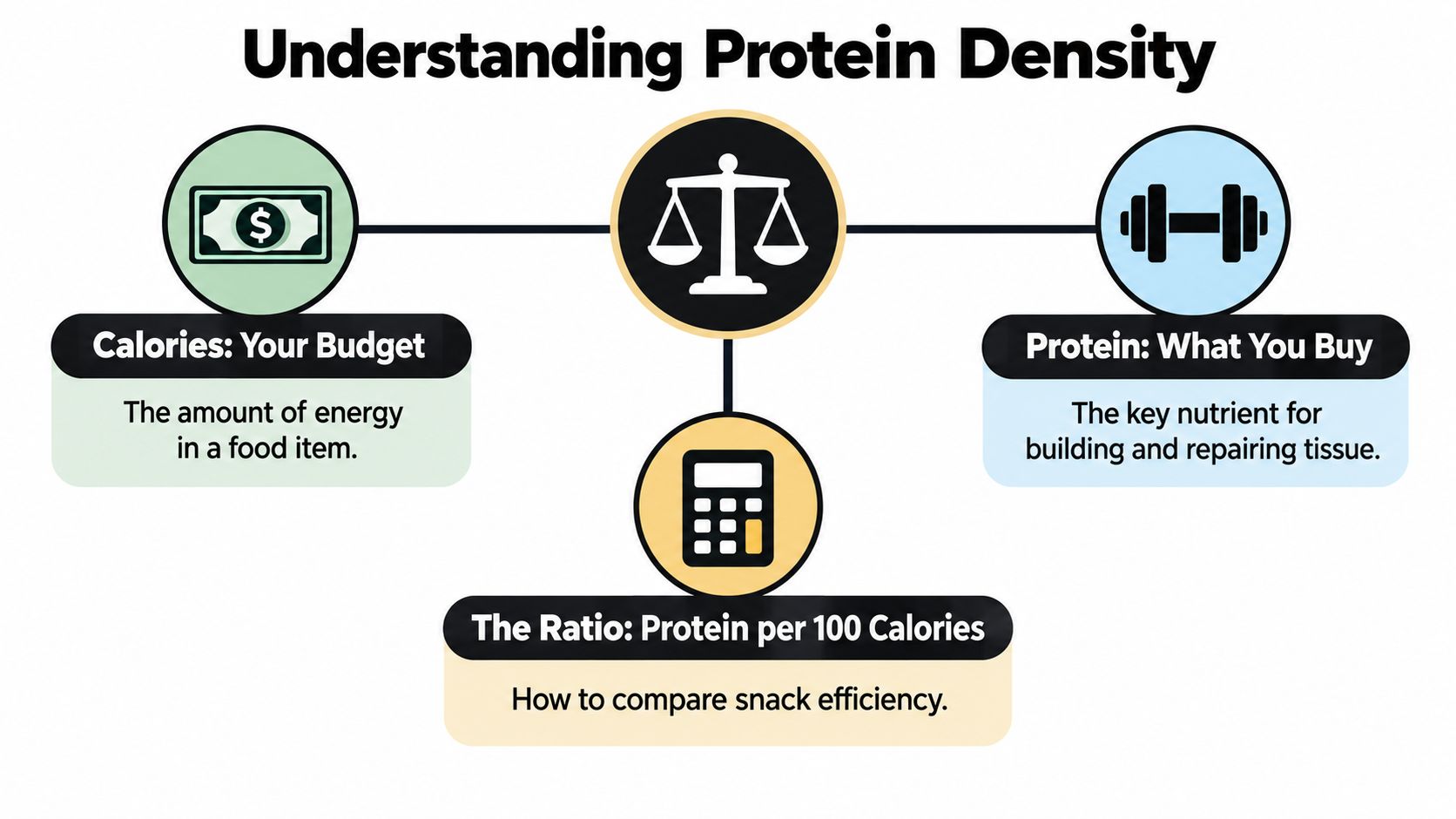
Protein density shows how much protein a food supplies for a fixed calorie amount, usually 100 calories. It creates a fairer comparison when serving sizes vary. A snack with a larger protein number is not automatically the better choice if it also uses far more calories.
Treat 100 calories as a fixed budget and protein as what you get for it. A snack that delivers only a few grams offers limited return, while one that provides a larger protein serving makes that calorie allowance work harder.
The simple calculation
Use this formula:
Protein density = protein grams ÷ calories × 100
A snack with 10 grams of protein and 100 calories provides 10 grams per 100 calories. One with 5 grams and the same calories provides only 5 grams per 100 calories. For a serving below 100 calories, divide the protein grams by the calorie count, then multiply by 100 to compare it on the same scale.
A practical working threshold from protein-to-calorie ratio guidance is at least 10 grams of protein per 100 calories. The guidance describes 10 to 15 grams per 100 calories as solid, with more than 15 grams per 100 calories as elite, according to expert snack-density rankings.
Why the ratio beats the protein headline
A package can highlight protein while the serving size or calorie count weakens the overall value. A snack may contain a respectable protein amount, yet provide only 3 to 6 grams for nearly 100 calories. That can make it more of a crunchy extra than a filling, protein-forward choice, including among savory plant-based products.
Protein density is a comparison tool, not a pass-or-fail rule. For appetite control or weight management, a higher ratio can help you get closer to a useful protein serving while keeping calories available for the rest of the day. When reading a label, check both numbers together, then judge whether the portion matches your appetite and plan.
Why Protein Helps You Stay Full on Fewer Calories
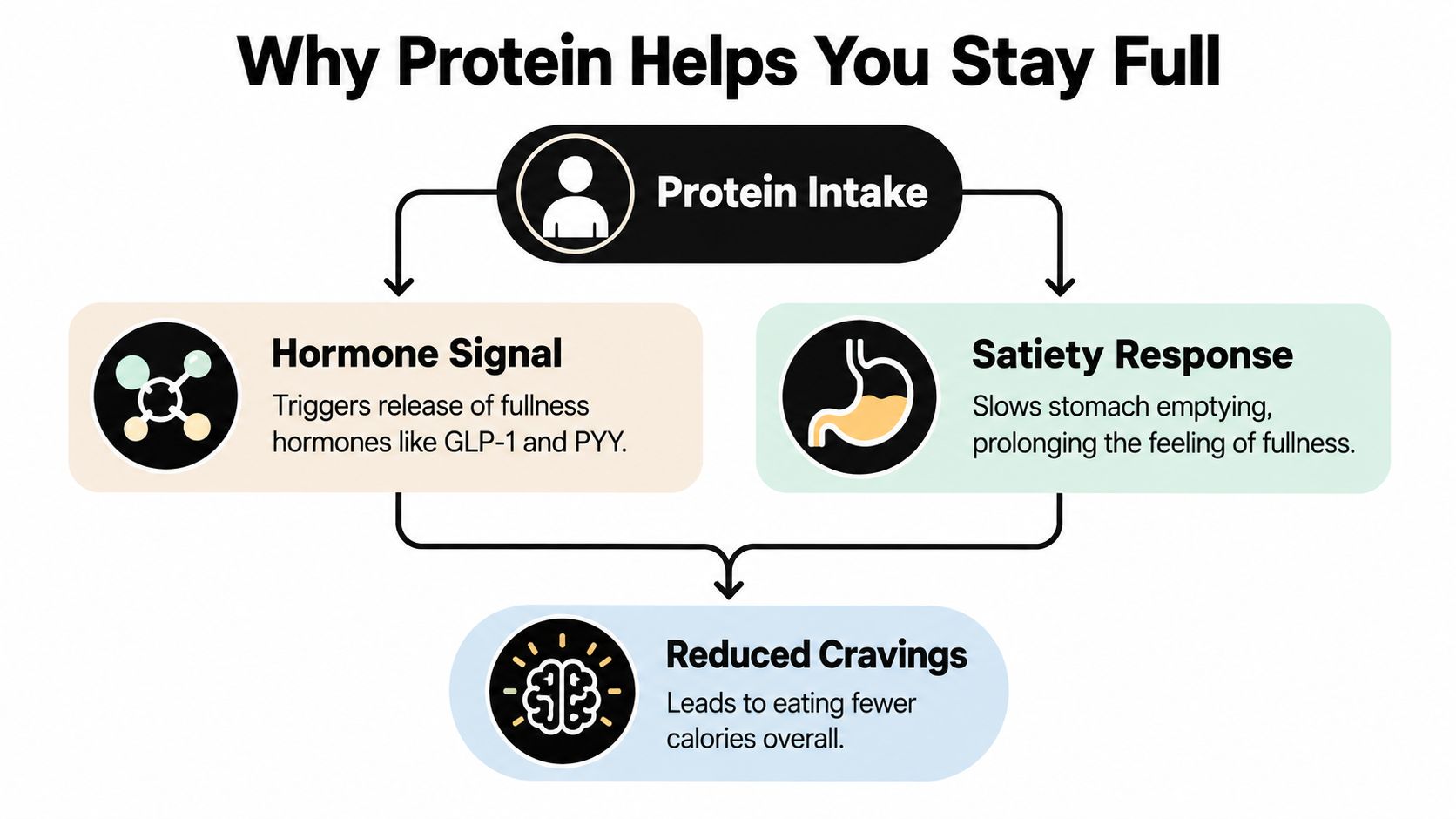
A small snack can quiet your stomach briefly without giving your appetite much support. A protein-forward snack works differently because protein can affect fullness after eating and reduce how much you want later. The calorie total alone does not predict that experience.
A review available through NIH's PubMed Central summarizes a 2011 study in which higher-protein snacks produced the strongest satiety effect compared with higher-carbohydrate or higher-fat snacks. The review also describes a randomized trial in which a snack containing 14 grams of protein, 25 grams of carbohydrates, and 0 grams of fat led to less perceived hunger and slightly lower later calorie intake than a lower-protein snack with the same calories.
The appetite difference between snacks
Consider a busy afternoon with two snacks that fit a similar calorie budget. A light, crunchy option may provide flavor and something to chew, yet leave you searching for more soon afterward if it contains little protein. A protein-forward choice can provide a stronger fullness signal without requiring a much larger calorie portion.
That is why a list of snacks under 100 calories needs more than calorie totals. A snack with only 3 to 6 grams of protein may fit the limit while doing little to support satiety. Look for protein density, especially in savory plant-based options, where beans, peas, soy, or other ingredients may add texture but not always enough protein for the calories.
Low energy density can make protein easier to eat in a small portion. Yogurt, cottage cheese, and similar foods provide protein within a compact calorie range, while a soft texture may suit someone who finds dry, highly processed snacks difficult to finish. Independent coverage of a Nutrition Journal study reports that high-protein, lower-energy-density snacks such as yogurt improved appetite control and reduced later food intake in healthy women, as discussed by Mic's summary of satisfying 100-calorie snacks.
Match the snack to the situation
On training days, a small protein serving may feel easier before activity or after exercise than a large snack containing substantial fat or volume. A compact option can provide structure without making the eating occasion feel heavy.
GLP-1 users may have a different need. Low appetite, nausea, and early fullness can make large portions unappealing, so a small, mild, easy-to-digest snack may work better than choosing the lowest-calorie item. In that situation, the practical question is whether each bite contributes useful protein, rather than whether the package makes a low-calorie claim. Protein still belongs within a broader eating pattern that includes hydration, balanced meals, and fiber, alongside medical guidance when appetite-affecting medication is involved.
How Common Snacks Compare Under 100 Calories
A 100-calorie limit does not guarantee a filling snack. Compare each option by protein density, or grams of protein delivered for every 100 calories. The calculation uses the listed calories and protein, so rounding may cause small differences.
| Snack and Portion | Calories | Protein | Protein per 100 kcal |
|---|---|---|---|
| Cottage cheese, ½ cup | 98 | 14 g | 14.3 g |
| Canned tuna, 3 ounces | 99 | 22 g | 22.2 g |
| Hard-boiled egg | 78 | 6.3 g | 8.1 g |
| Greek yogurt cup | 90 | 12 g | 13.3 g |
| Air-popped popcorn | 93 | 3 g | 3.2 g |
| Roasted chickpeas | 82 | 4.43 g | 5.4 g |
| Edamame | Check label | Check label | Compare labels |
| Tofu | Check label | Check label | Compare labels |
| Pea-protein crisp | Check label | Check label | Compare labels |
The cottage cheese and tuna benchmarks appear in WebMD's 100-calorie snack list. They show how a small serving can provide roughly 14 to 22 grams of protein per 100 calories, far beyond the 3 to 6 grams found in many crunchy or sweet snack choices.
What the table reveals
The egg provides useful protein in a portable package, although its density is lower than that of yogurt, cottage cheese, or tuna. Choose it for its combination of protein, convenience, and satisfaction rather than expecting every whole-food snack to deliver the same return.
Popcorn and roasted chickpeas offer crunch, but their listed portions contribute less protein. They can suit someone prioritizing texture. For appetite control, especially with GLP-1-related early fullness, a savory plant-based option should earn its space by contributing meaningful protein, not just few calories. Edamame, tofu, and pea-protein crisps are worth checking because their protein density depends on the product and portion.
Almonds illustrate the trade-off clearly. A 30-gram serving provides 6.1 grams of protein, but its calorie load makes almonds less efficient for a strict under-100-calorie protein target, according to BetterMe's snack examples.
Read the label like a budget: calories are the total spending, while protein is the useful return. For more portion-controlled ideas, browse low-calorie snacks under 100 calories, then verify the package serving, calories, and protein. Benchmarks guide comparisons, but brands and recipes vary.
Portion Smart Ideas and Recipes That Stay Under 100 Calories
A snack can fit under 100 calories and still feel satisfying when protein takes the lead. Portion it before hunger arrives, then use that measured serving to train your eyes. After a few repetitions, the container becomes a visual guide rather than a daily calculation.
Start with a protein anchor
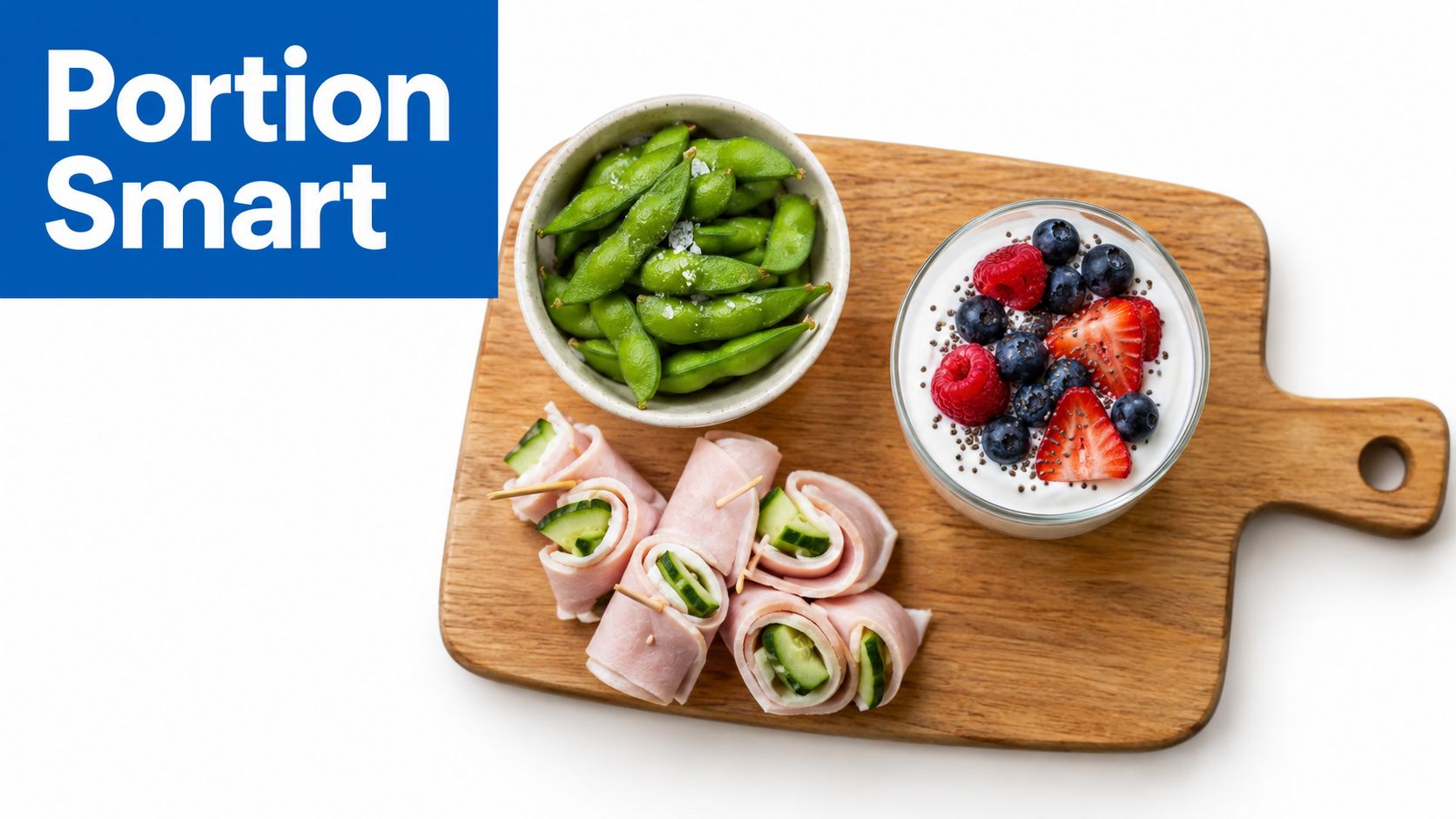
Put the protein source in the center. Add one flavor or texture accent, while keeping calorie-dense extras measured.
- Savory dairy cup: Portion cottage cheese into a small container with cucumber, black pepper, or a few tomato pieces. The vegetables should add contrast, not become an unmeasured topping pile.
- Tuna crunch bowl: Use the listed 3-ounce canned tuna benchmark, then season it with lemon juice, mustard, pepper, or chopped pickles. Measure mayonnaise separately, since a casual spoonful can quickly use the remaining calorie budget.
- Yogurt with contrast: Choose plain Greek yogurt and add cinnamon, herbs, or a few berries. Its soft texture may suit an appetite that tires quickly, while fruit or seasoning prevents every bite from feeling the same.
- Egg and spice: Pair a hard-boiled egg with smoked paprika, hot sauce, or everything seasoning. Use salty seasonings lightly if sodium matters for your eating plan.
Plant-based savory choices deserve careful portioning because preparation changes their protein density. Edamame, tofu, roasted chickpeas, and pea-protein crisps may work well, but oils, coatings, and serving sizes can shift the calories. Check whether the product delivers meaningful protein or mainly supplies crunch. A crisp option may also feel more appealing than a shake or sweet bar.
Build texture without doubling the calories
Choose one main texture and one accent. Try a measured crunchy protein snack with cucumber slices, or creamy yogurt with a small amount of fruit. Several “healthy” toppings can behave like extra passengers in a small calorie budget, turning a controlled snack into a much larger serving.
For GLP-1 users, a portion smaller than the package serving may be easier to finish. A practical target can be the previously discussed 15 to 20 grams of protein when tolerated, but the immediate goal is a portion you can eat comfortably. Prepare it the night before in a 100-calorie container, label the protein amount, and store it where it is ready to grab. This removes guesswork when appetite is low and makes the protein return visible at a glance.
How to Read Labels to Find High Protein Low Calorie Snacks
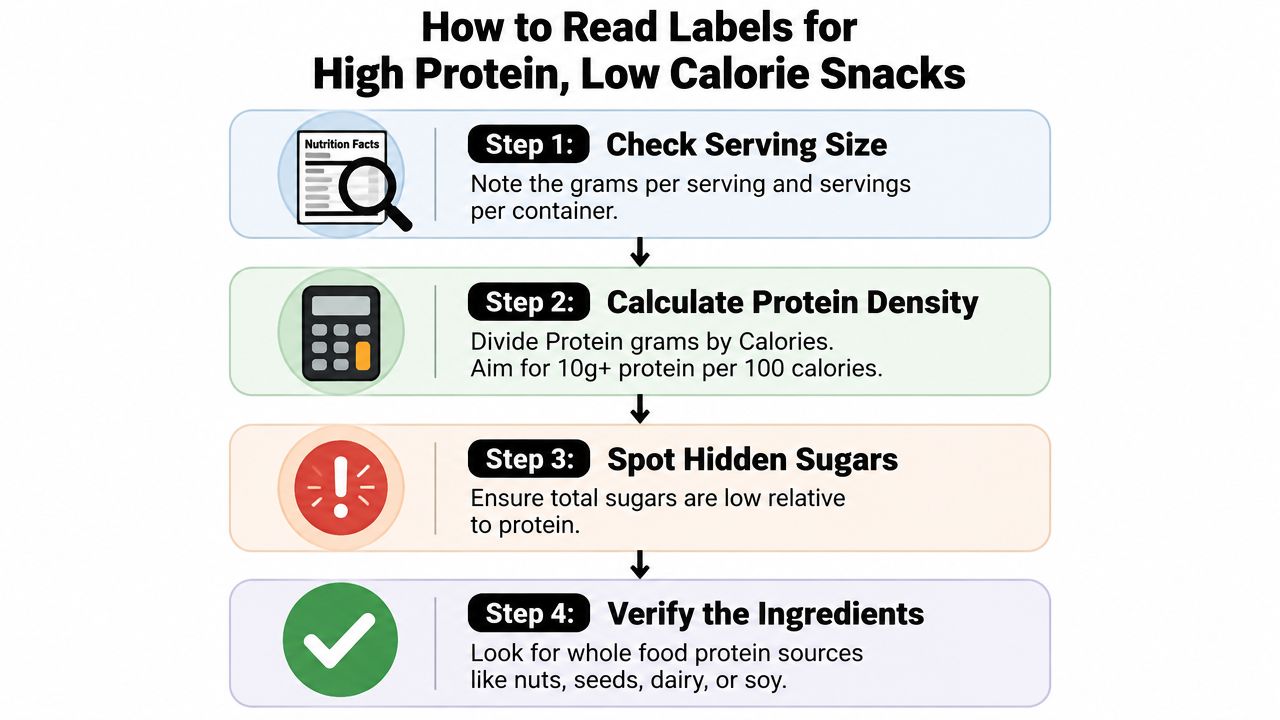
A snack can look protein-rich on the front of the package while delivering only a few grams in the portion you eat. Use the nutrition panel as a quick calculation tool: first confirm the serving, then compare protein with calories.
Four checks at the shelf
- Check the serving size. Look for grams, pieces, or scoops. If you plan to eat more than one listed serving, multiply both calories and protein by that amount. A package serving is a measurement, not automatically your portion.
- Calculate protein density. Divide protein grams by calories and multiply by 100. Use the earlier 10 grams of protein per 100 calories benchmark as a practical filter. Snacks providing only 3 to 6 grams may add crunch or flavor without offering much protein for their calorie budget.
- Scan added sugars and fats. Sweet coatings, oils, and creamy additions can occupy calories without increasing protein. Carbohydrates and fat are not automatic problems. Compare similar snacks and ask whether those calories contribute to taste, texture, or fullness.
- Read the ingredient list. Look for recognizable protein sources, including dairy, eggs, soy, peas, beans, seeds, fish, or meat. In plant-based savory snacks, check whether a concentrated protein source leads the formula or whether starch and a small amount of legume flour do most of the work.
The Gym Snack guide to reading nutrition labels offers a useful way to practice these checks across packaged foods. Compare products using the same serving basis and the same protein-per-calorie calculation.
This video provides another visual explanation of label-reading basics:
If a snack exceeds 100 calories, calculate the portion that fits your budget rather than trusting the front-of-pack serving. A smaller portion of a protein-dense food may support your appetite better than a full serving that provides mostly calories and only a little protein. For GLP-1-related low appetite, this comparison can help identify compact savory options that offer more protein without requiring a large volume of food.
Choosing the Right Snack for Your Goals and Appetite
Use protein density as your first filter, then use appetite and context as the tie-breakers. A snack near or above 10 grams of protein per 100 calories is a strong candidate, while a snack providing only 3 to 6 grams may be better viewed as a crunchy or flavorful add-on than a complete protein solution.
For weight management, choose the option that reduces the chance of immediate grazing without making the snack feel difficult to eat. For training, prioritize a portable protein source that fits before or after activity and doesn't leave you feeling weighed down. For GLP-1-related low appetite, favor compact portions, mild flavors, and textures you tolerate comfortably, while following your healthcare professional's guidance.
Plant-based savory snacks can fill an important gap between sweet dairy products and meat-based choices. Gym Snack offers crunchy, plant-based pea-protein crisps in savory Cheddar Cheeze and Jalapeño Cheddar Cheeze flavors, with product information describing 15 grams of protein per serving at 150 calories, so they don't meet a strict under-100-calorie serving target but can be considered when your calorie budget allows a larger portion.
Test one snack at a time and record three things: how much protein it provides, how easy it is to portion, and how long it keeps you comfortable. The most useful choice is the one whose nutrition, texture, and convenience match your real routine.
Gym Snack makes chef-inspired, plant-based savory protein snacks for people who want crunchy, convenient options with transparent ingredients. Visit Gym Snack to explore the available flavors and choose a snack format that fits your training, weight-management, or on-the-go routine.