

If you're constantly battling hunger, know this: it's not a willpower problem. It's a biology puzzle. The secret to curbing hunger for good is working with your body's natural signals, not against them.
This means focusing on protein and fiber to keep your blood sugar steady, getting a handle on stress and sleep to balance your hormones, and making sure you’re properly hydrated. By tackling the real reasons you feel hungry, you can stay fuller, longer.
Why Am I Always So Hungry?
That constant, nagging hunger is beyond frustrating. You finish a meal, and what feels like minutes later, your stomach is already complaining. This isn't a personal flaw—it’s a complex mix of your hormones, your daily habits, and the foods you're putting on your plate. Figuring out what’s really driving your hunger is the first real step toward getting back in control.
At its heart, your hunger is run by an incredibly smart hormonal messaging system. You can think of it as a set of traffic lights inside your body.
Your Hormonal Traffic Lights
The main "go" signal is a hormone called ghrelin. When your stomach is empty, ghrelin levels shoot up, telling your brain, "Hey, it's time to find some food!"
On the flip side, hormones like GLP-1 and Peptide YY (PYY) are your "stop" signals. Your gut releases them after you eat—especially after a meal rich in protein and fiber—to let your brain know you’re satisfied.
When everything is working smoothly, you get hungry at normal mealtimes and feel comfortably full afterward. The problem is, a lot of things in our modern lives can throw this system completely out of whack, leaving your hunger signal stuck on green.
- Lousy Sleep: Just one bad night can send ghrelin soaring and suppress leptin, another crucial fullness hormone.
- Chronic Stress: When you're constantly stressed, your body pumps out cortisol, a hormone that's notorious for firing up intense cravings for fatty, sugary comfort foods.
- Sugary Diets: Processed carbs and sugary snacks send your blood sugar on a rollercoaster. The inevitable crash feels just like a hunger signal to your body, demanding another quick fix.
This hormonal mess traps you in a brutal cycle. You feel hungry, so you grab a convenient snack that spikes your blood sugar. Then you crash, which only makes the next round of cravings even stronger. This is pure biology in action, not a lack of self-control.
To break free, you have to shift your mindset from just eating less to eating smarter. By picking foods that boost your "stop" hormones and building habits that keep your "go" signals in check, you can finally curb hunger the natural way. For a closer look at what to put on your plate, checking out the best foods for appetite control is a great next step.
This guide will give you practical, science-backed strategies—real actions, not just theories—to help you start working with your body.
Using Protein and Fiber for Lasting Satiety
If you want to get a handle on hunger, the secret isn't about eating less—it's about eating smarter. The single most effective strategy you can use is building your meals around two nutritional heavy-hitters: protein and fiber. This combination is the key to flipping your body's "fullness" switches on and keeping them there for hours.
Think of protein as a direct line to your brain's hunger control center. When you eat a protein-rich meal, your gut releases powerful satiety hormones like Peptide YY (PYY) and GLP-1. These hormones send a clear message to your brain: "We're satisfied; you can stop eating now." This is exactly why a high-protein breakfast keeps you sharp until lunch, while a sugary cereal leaves you hunting for snacks by 10 a.m.
Fiber, meanwhile, works right alongside protein to lock in that feeling of fullness. It physically slows down how quickly your stomach empties, which means you feel full for a lot longer. This slower pace is crucial for preventing the wild blood sugar spikes and crashes that trigger those intense, can't-ignore-them hunger pangs.
The Science of Satiety Hormones
Getting to know the hormonal signals behind hunger can make your food choices much more strategic. Let's look at the two main players: ghrelin, the "go" hormone that tells your brain to eat, and GLP-1, the "stop" hormone that signals you're full.
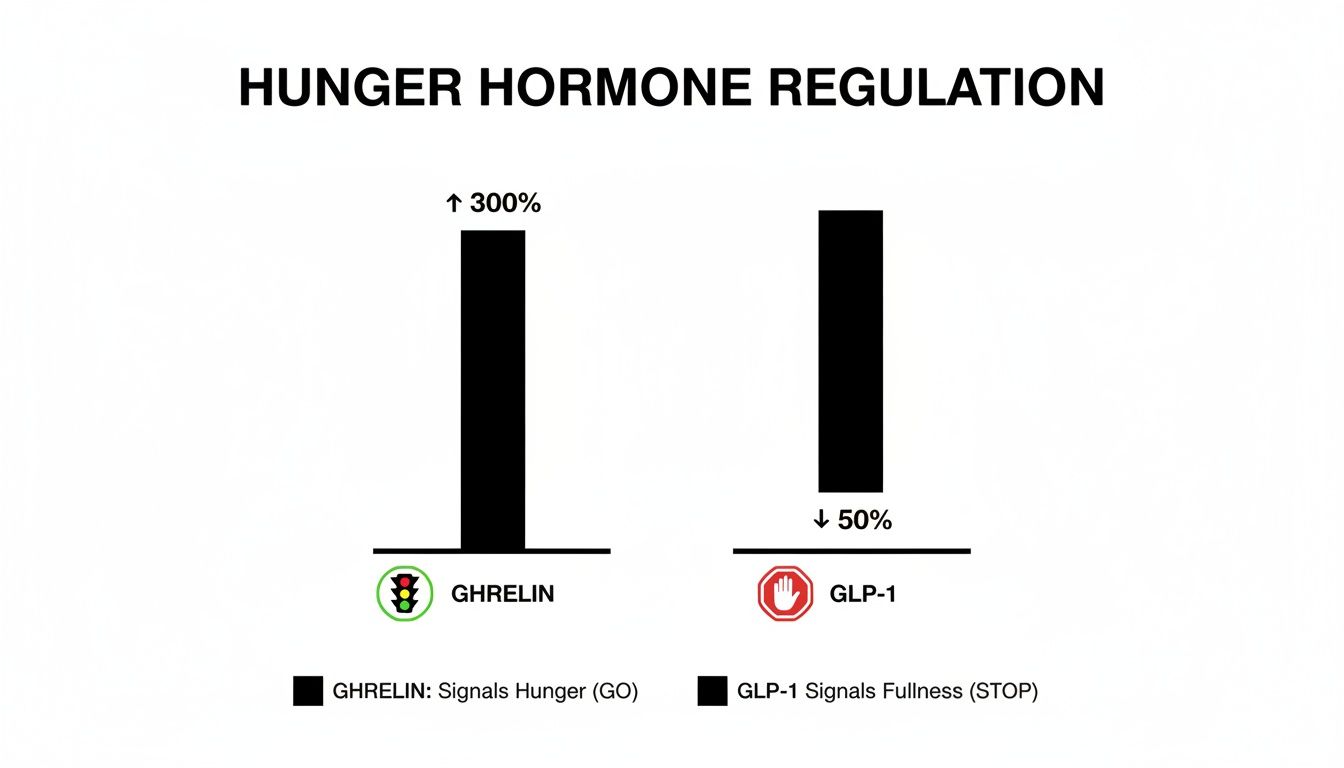
As you can see, the goal is to keep ghrelin low and GLP-1 high. Protein is one of the best tools we have to do just that.
Putting this into practice means going beyond just "eating more chicken." A solid, science-backed target is to aim for 25-30 grams of protein at each of your main meals. Research consistently shows this is the sweet spot for triggering those satiety hormones and supporting muscle health. It might sound like a lot, but it’s totally doable with a little planning. For more ideas, check out our guide on how to increase protein intake.
Building Meals That Keep You Full
Creating truly satisfying meals is all about combining the right ingredients. Instead of focusing on what to cut out, think about what you can add to your plate to give it more staying power.
Here are a few simple swaps to build a high-protein, high-fiber meal:
- Breakfast: Ditch the plain bagel and go for scrambled eggs with black beans, topped with avocado on whole-wheat toast. The eggs and beans deliver a serious protein punch, while the beans, avocado, and toast load you up with fiber.
- Lunch: Transform a basic salad into a "power bowl." Start with a base of quinoa (which has both protein and fiber!), then top it with grilled chicken or chickpeas, roasted veggies like broccoli and sweet potatoes, and a creamy tahini dressing.
- Dinner: You can't go wrong with a classic like salmon with roasted asparagus and a side of lentils. The salmon is packed with protein and healthy fats, while asparagus and lentils are fiber superstars.
The real magic happens when protein and fiber work together. Protein triggers the hormonal 'fullness' signal, while fiber provides the physical volume and slow-digesting bulk to make that feeling last. It’s a one-two punch against unwanted cravings.
One of the most powerful habits you can build is simply eating more high-fiber foods. A massive 2019 meta-analysis that looked at 62 different trials found that adding just 14 grams of fiber per day led to a 10% drop in calorie intake and notable weight loss over four months. It works by slowing digestion and keeping blood sugar stable.
Smart Snack Swaps for Hunger Control
That stretch between lunch and dinner is often where a solid plan can go off the rails. This is where a protein-first snack can be a game-changer, stopping you from getting ravenous and reaching for the first thing you see.
High-Protein vs High-Carb Snack: A Hunger Control Showdown
Let's look at what happens in your body after eating two very different types of snacks. A handful of pretzels might seem harmless, but it sends your blood sugar on a roller coaster, often leaving you hungrier than before.
| Metric | High-Protein & Fiber Snack | High-Carb Snack |
|---|---|---|
| Satiety Hormones | GLP-1 & PYY increase, promoting fullness. | Minimal hormonal response; may increase ghrelin. |
| Blood Sugar | Gradual, stable rise and fall. | Sharp spike followed by a rapid crash. |
| Energy Levels | Sustained, steady energy for 2-3 hours. | Quick burst of energy, then a crash and fatigue. |
| Hunger an Hour Later | Still feeling satisfied and focused. | Cravings return, often stronger than before. |
As the table shows, a savory, protein-focused option like a crunchy pea protein snack has a completely different effect. The protein helps trigger that crucial GLP-1 release, while the satisfying crunch can curb cravings for junk food. It’s a strategic choice that works with your body's biology, not against it.
For personalized guidance on optimizing your diet for lasting satiety, you might consider exploring professional nutrition therapy.
The Hidden Impact of Hydration and Meal Timing
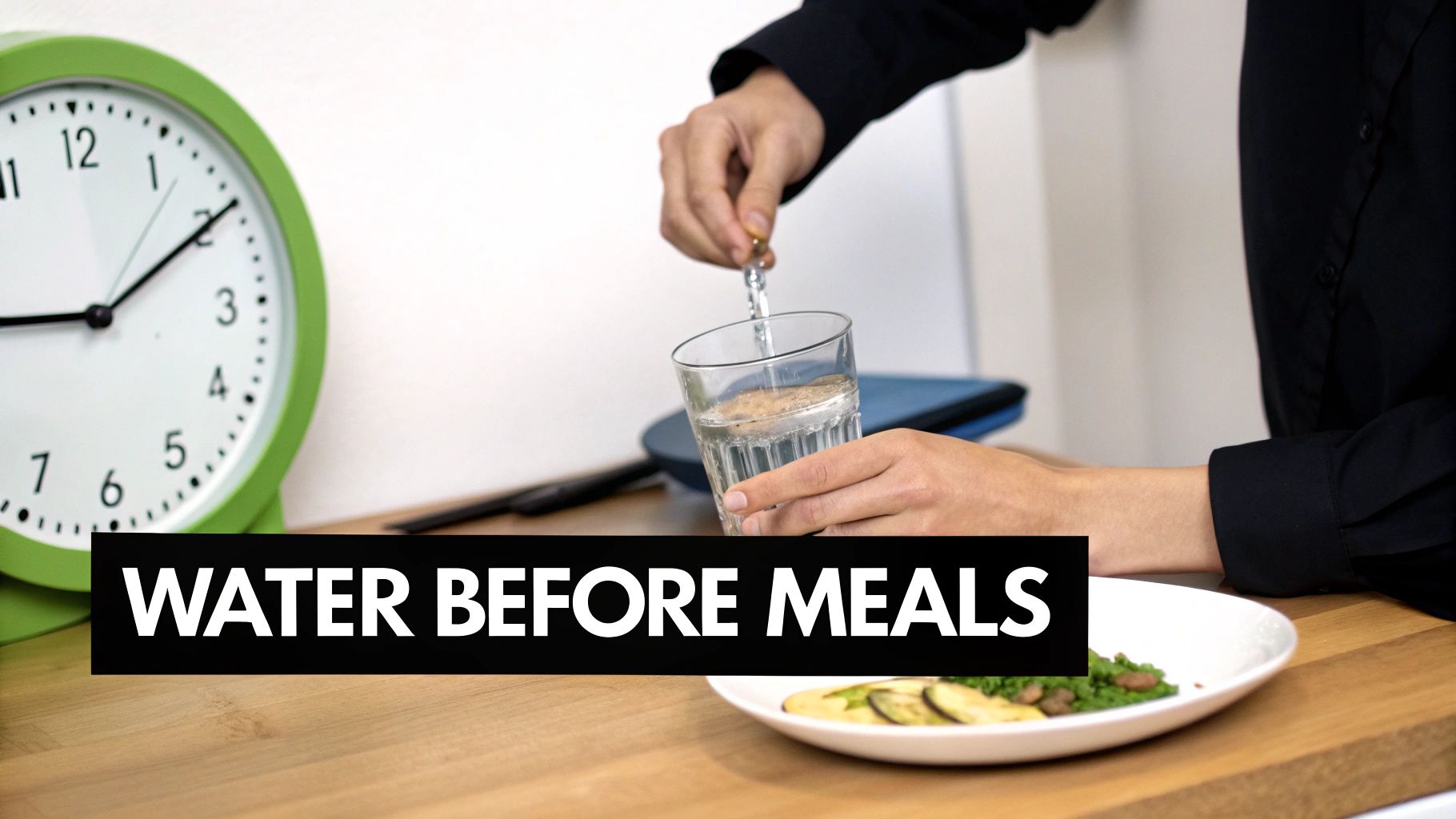
While protein and fiber are your heavy hitters, two of the most effective and straightforward tools for managing hunger often get overlooked: water and when you eat. It’s surprisingly easy for the brain to mix up its signals, sending you to the pantry for a snack when all you really needed was a glass of water.
This classic confusion between thirst and hunger can trip up even the most disciplined eaters. By learning how to use hydration and meal timing to your advantage, you can gain a serious edge over your appetite and stay on track all day long.
Use Water to Your Tactical Advantage
Sure, drinking water is essential for general health, but its role in taming hunger is incredibly strategic. One of the most effective techniques is what’s known as water preloading. It’s exactly what it sounds like: drinking a large glass of water about 30 minutes before you sit down to eat.
This simple act accomplishes two critical things. First, it physically takes up space in your stomach, creating a sense of volume that helps you feel fuller faster when you do start eating. Second, it gets you properly hydrated, which stops you from overeating just because your body was actually sending out thirst cues.
Water is more than just a thirst-quencher; it’s a zero-calorie appetite suppressant. Making it a deliberate part of your pre-meal routine can be one of the easiest and most effective ways to curb hunger naturally.
Research really drives home how powerful this one habit can be. One study following over 200 overweight adults found that those who drank 500ml of water 30 minutes before meals achieved 44% greater weight loss over 12 weeks compared to those who didn't. Researchers credited this to the water expanding stomach volume and helping to suppress appetite hormones. You can read more about these global nutrition findings.
Master Your Meal and Snack Timing
What you eat is only half the battle; when you eat it is just as crucial. A common mistake I see is people saving the bulk of their protein for one big dinner. This leaves you vulnerable to cravings and energy crashes for most of the day.
A much smarter approach is to spread your protein intake evenly across all your meals and snacks.
Think of it like keeping a fire going. You wouldn't throw one giant log on and expect it to burn steadily for hours. You add smaller logs consistently to maintain a steady flame. Distributing your protein gives your body a constant stream of the raw materials needed to trigger those key fullness hormones like GLP-1 and PYY.
This is where a planned, protein-first snack becomes an absolute game-changer. That mid-afternoon slump is a classic danger zone where blood sugar dips and willpower fades. Instead of waiting for ravenous hunger to strike, having a smart snack ready prevents that desperate search for quick energy that almost always ends with a poor choice.
Here’s how to put this into practice:
- Morning Hydration: Before you even think about coffee or breakfast, start your day with a large glass of water. It rehydrates you after sleep and sets a positive tone for the day.
- Pre-Lunch Preload: Set a recurring reminder on your phone for 30 minutes before your lunch break. The goal is to make drinking that glass of water an automatic habit.
- The 3 PM Protein Bridge: Don't let the afternoon slump win. Have a savory, high-protein snack like roasted chickpeas or a crunchy pea protein snack on hand. This "protein bridge" keeps you full and focused, preventing you from showing up to dinner so hungry you're ready to eat everything in sight.
By weaving these simple hydration and timing tactics into your routine, you amplify the great work you're already doing with protein and fiber. You'll not only curb hunger but also build a more stable, predictable energy cycle that frees you from the constant distraction of cravings.
Building a Hunger-Proof Lifestyle Routine
Getting your nutrition dialed in with protein and fiber is a huge win, but what’s on your plate is only one piece of the puzzle. If you want to get a real handle on hunger, you have to look beyond the food. Your daily habits, especially around sleep and stress, can quietly sabotage your best efforts and send your appetite-driving hormones into a total tailspin.
Think of it like this: your diet is the high-quality fuel you put in your car, but your lifestyle habits are the engine itself. If that engine is sputtering from stress and exhaustion, even the best fuel in the world won’t give you a smooth ride.
The Sleep-Hunger Connection
Ever had a terrible night's sleep and found yourself absolutely ravenous the next day, craving everything in sight? That's not just in your head—it’s a direct hormonal consequence.
When you don’t get enough quality sleep, two of the most important hormones that regulate your appetite go completely haywire.
- Ghrelin Skyrockets: This is your primary hunger hormone. It’s the one that screams, "Feed me now!" After a bad night's sleep, ghrelin levels can surge, making you feel far hungrier than you actually are.
- Leptin Plummets: This is your fullness hormone, the one that tells your brain, "Okay, we're good here." When you're sleep-deprived, leptin levels drop, so that crucial "I'm satisfied" signal never gets delivered.
This hormonal double-whammy creates a perfect storm for overeating. You're starting your day with a biological disadvantage, fighting off intense cravings that have nothing to do with your body's true energy needs.
Believe it or not, a single night of poor sleep can ramp up hunger and cravings for high-calorie, carb-heavy foods by as much as 45%. Your brain is desperate for a quick energy fix, so it pushes you toward the very foods that will spike your blood sugar and keep that vicious hunger cycle going.
The best way to fight back is with a solid wind-down routine. This isn't about forcing yourself to sleep; it's about giving your body and brain clear signals that it's time to power down.
Here’s a simple routine to try:
- Dim the lights about an hour before you want to be asleep. This helps kickstart your body's natural melatonin production.
- Ditch the screens. The blue light from your phone, tablet, or TV is a notorious melatonin-suppressor. Put them away at least 30-60 minutes before bed.
- Find something calming. Read a real book, listen to some chill music, or do a few gentle stretches. The goal is simply to quiet a busy mind.
How Stress Drives Cravings
Chronic stress is another major player in the hunger game. When you're constantly on edge, your body is pumping out cortisol, the main stress hormone. While it's helpful in short bursts for "fight or flight" situations, constantly elevated cortisol has a direct and powerful effect on your appetite.
Cortisol does more than just make you feel frazzled; it actively signals your brain to seek out rewarding, energy-dense foods. This is a deeply ingrained survival mechanism—your body thinks it's in danger and needs to stockpile calories. That's why after a brutal day at work, you're not dreaming of a salad; you're reaching for the ice cream, chips, or pizza.
Managing stress isn't about eliminating it—that's just not realistic. It’s about having a few simple tools in your back pocket to help you dial it back down. A few minutes of intentional breathing can make a world of difference.
Try the "box breathing" technique next time you feel wound up:
- Inhale slowly for a count of four.
- Hold your breath for a count of four.
- Exhale slowly for a count of four.
- Hold at the bottom for a count of four.
Repeat this cycle for just two or three minutes. This simple act helps activate your parasympathetic nervous system, pulling you out of that high-alert state and weakening cortisol's grip on your food choices.
The Power of Mindful Eating
Finally, one of the most effective lifestyle shifts you can make is to start eating mindfully. This isn't some new diet; it's the simple practice of paying full attention to your food and listening to your body's signals.
So often, we eat while we're distracted—scrolling on our phones, watching TV, or working at our desks. This completely disconnects us from our natural hunger and fullness cues. We end up eating way too fast, blowing past the subtle signs that we're getting full, and overeating as a result.
Mindful eating brings your focus back to the meal. When you slow down, you give your brain and stomach enough time to actually communicate with each other. It takes about 20 minutes for your gut to send those crucial "I'm full" hormones (like GLP-1 and PYY) up to your brain.
To get started, try this simple exercise at your very next meal:
- Put your fork down between each bite.
- Chew your food thoroughly. Really chew it.
- Take a moment to actually notice the flavors and textures.
This one small change can help you start distinguishing between true, physical hunger and the emotional or habitual cravings that pop up. You’ll learn to recognize what real satisfaction feels like, empowering you to stop eating when you're comfortably full, not just when your plate is empty.
Smart Snacking for On-the-Go Hunger Control
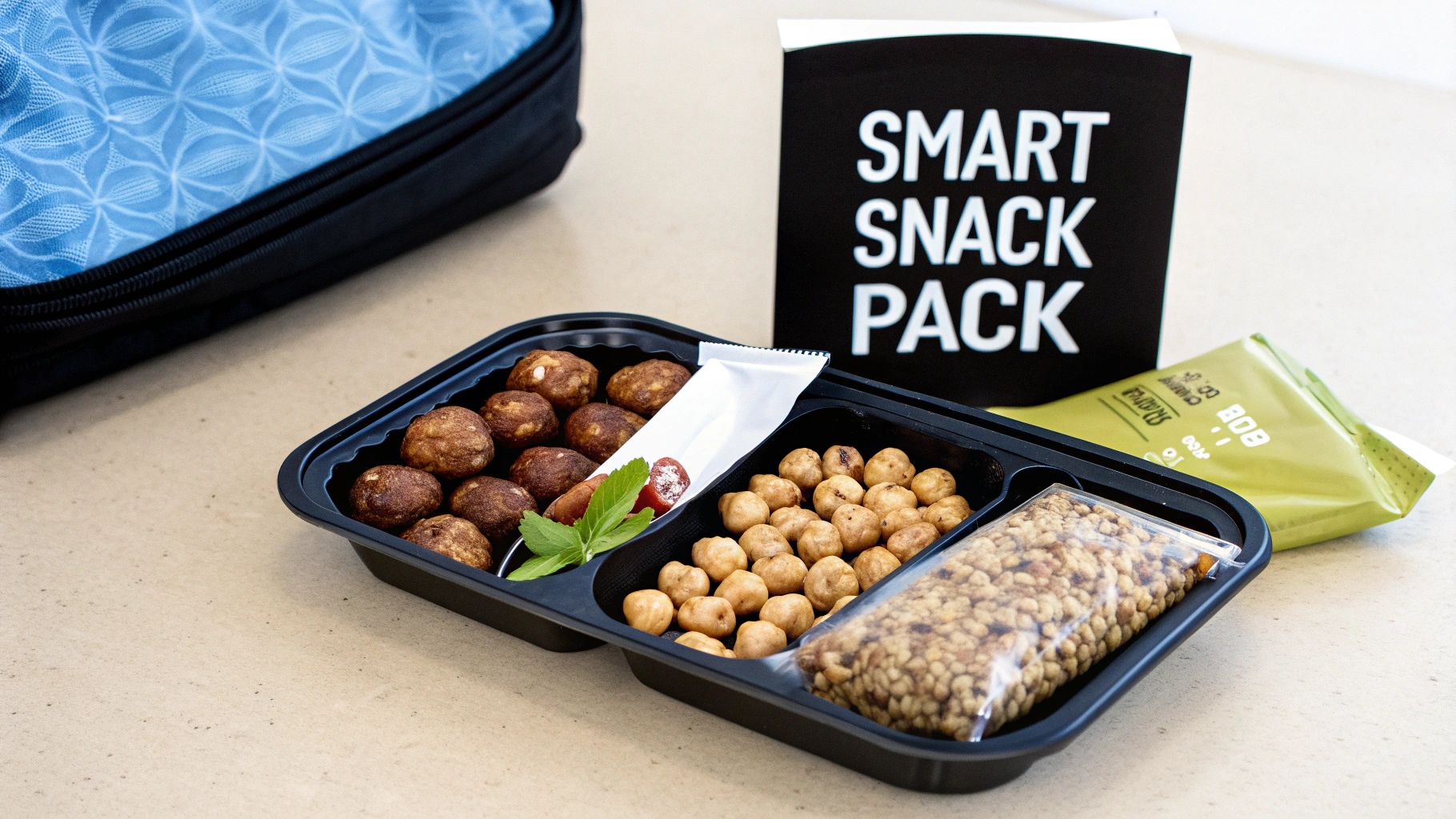
Let's get one thing straight: snacking isn't the enemy. The real problem is reactive snacking—the kind you do when you're suddenly starving and grab the first thing you see. Smart snacking is the complete opposite. It's a strategic move to bridge the gap between meals, keeping your energy steady and preventing that ravenous hunger that always leads to bad choices.
The secret weapon here is simple preparation. Having a satisfying, nutrient-packed snack ready to go is your best defense against the siren call of the vending machine or the gas station candy aisle. When you’re prepared, you're the one in control.
Building the Perfect Hunger-Busting Snack
The formula for a truly effective snack couldn't be simpler: pair a solid source of protein with a good dose of fiber. This powerhouse combination triggers your body's fullness hormones, slows down digestion, and keeps your blood sugar from taking a nosedive. We're talking about a world away from those empty-calorie bags of chips that somehow leave you hungrier than before.
Think of your snack as a portable insurance policy against hunger. A well-built snack means you're never caught off guard. It’s all about being proactive.
Your snack should do more than just fill a temporary void—it should actively support your goals. By prioritizing protein and fiber, you're not just eating; you're sending a powerful signal to your brain that says, "I'm full, focused, and in charge."
Timing matters just as much as what you eat. Spreading your protein intake evenly throughout the day is a proven strategy for managing hunger. In fact, a huge review of 38 different studies found that distributing 25-30g of protein across meals and snacks was a game-changer for satiety. This simple shift cut overall hunger by 25% and slashed late-night eating by 30% compared to cramming most of your protein into a single meal.
Your On-the-Go Snack-Building Guide
A busy life demands snacks that are portable, don't need a fridge, and are easy to eat anywhere. The best on-the-go snacks also satisfy a real craving—like the need for something crunchy or savory—while still hitting your nutritional marks. This is where options like a high-quality pea protein snack can be a game-changer, giving you that satisfying crunch without the junk.
Here’s how to mix and match your own hunger-busting snack packs:
1. Pick Your Protein Powerhouse (Aim for 10-15g)
- Roasted chickpeas or edamame (a great fiber source, too!)
- A handful of almonds, walnuts, or pistachios
- A savory pea protein snack for that crucial crunch
- Individual Greek yogurt cup (if you've got a cooler)
- Hard-boiled eggs (make a batch for the week)
2. Add a Fiber Friend
- An apple or a pear (don't peel it—the skin is packed with fiber)
- A small bag of baby carrots or sugar snap peas
- A few whole-grain crackers
- A sprinkle of chia or flax seeds over your yogurt
3. Combine and Conquer
- The Crunch Combo: Roasted chickpeas + a handful of almonds.
- The Sweet & Savory: An apple + a savory, crunchy protein snack.
- The Classic: A hard-boiled egg + a small bag of baby carrots.
Having these components prepped and ready means you can throw together a powerful, hunger-fighting snack in just a few seconds. For more creative ideas, check out a wide range of air fryer snack ideas that can easily be adapted for better hunger control. And for even more grab-and-go inspiration, don't miss our guide to the https://gymsnack.com/blogs/gym-alpha/best-on-the-go-protein-snacks.
Your Questions About Natural Hunger Control, Answered
When you start making changes to how you eat, questions are bound to pop up. It's completely normal to wonder how these strategies fit into your life or what to expect along the way. I get these questions all the time, so let's tackle some of the most common ones head-on.
"I'm Vegan. Can I Still Use These Tips to Curb Hunger?"
Yes, absolutely. In many ways, a plant-based diet gives you a serious advantage because it’s often naturally high in fiber—one of the cornerstones of feeling full. The trick is to be just as intentional with your protein as you are with your fiber.
You'll want to make protein-dense plant foods the star of every meal. Think lentils, chickpeas, tofu, tempeh, and seeds. And don't forget about snacks! A good plant-based protein snack is your best friend for keeping hunger at bay between meals.
- Lentil Soup: A big, comforting bowl can easily serve up over 15 grams of protein and fiber.
- Roasted Chickpeas: The perfect crunchy, savory snack to satisfy cravings while delivering a solid dose of nutrients.
- Pea Protein: This is my go-to recommendation. It's a clean, complete protein that's incredibly easy to digest, so you get the hunger-busting benefits without the bloating.
"How Quickly Will I Notice a Difference?"
Some of these changes bring near-instant gratification, while others are more of a slow burn. For example, if you drink a big glass of water right before a meal or grab a high-protein snack when you feel a craving coming on, you can feel less hungry in under 30 minutes.
The more significant shifts—like steady energy all day and far fewer "hangry" moments—usually start to become your new normal within the first week or so of being consistent. This isn't about finding a magic bullet. It's about retraining your body's hormonal responses. You're teaching it what real, sustained fullness feels like again.
The real win here isn't just silencing your stomach for an hour. It's about establishing a new baseline where you feel satisfied, energized, and in control of your appetite. Small, consistent actions are what build those powerful, lasting habits.
"Will All This Extra Fiber and Protein Make Me Bloated?"
That's a valid concern. If you go from zero to one hundred with your fiber and protein intake overnight, you might feel a bit of temporary bloating. Your digestive system just needs a little time to catch up.
The solution is simple: go slow. Instead of jumping from 15 grams of fiber a day to 35 grams tomorrow, gradually increase your intake over a week or two. And here's the non-negotiable part: you have to drink more water. Water is what helps fiber do its job and move smoothly through your system.
When it comes to protein, choosing one that's easy on your gut can make all the difference. I often suggest a clean pea protein because it's free of common allergens like dairy and soy. This helps you get all the hunger-fighting benefits without the digestive drama.
Ready to make smart snacking a core part of your hunger control strategy? Gym Snack offers savory, plant-based protein snacks designed to keep you full and fueled. With 30g+ of clean pea protein per bag and a satisfying crunch, it’s the perfect way to crush cravings and hit your macros.