

Cutting back on saturated fat is really all about making smarter food choices. It’s not about getting rid of fat entirely, but about swapping the not-so-great sources for healthier ones. Think lean proteins instead of fatty meats, low-fat dairy instead of full-fat versions, and plant-based oils instead of butter.
When you replace saturated fats with healthier unsaturated fats, you’re not just cutting something out; you're adding something beneficial. This simple shift can make a huge difference in your overall health, from improving key health markers to boosting your energy levels day-to-day.
Why You Should Care About Saturated Fat
Let's be honest, the advice on dietary fats can feel like a moving target. One minute, all fats are bad. The next, some are good. The conversation has definitely gotten more sophisticated, but one piece of advice has stood the test of time: watch your saturated fat intake. Understanding why this matters is the key to making changes that actually stick.
First off, this isn't a war on fat. Your body absolutely needs dietary fats to function. They’re essential for things like:
- Absorbing Nutrients: Fats are the vehicle for fat-soluble vitamins like A, D, E, and K.
- Making Hormones: They’re the building blocks for hormones that control everything from your metabolism to your mood.
- Fueling Your Body: Fat is a seriously concentrated energy source that keeps you going.
What the Latest Science Says
For a long time, saturated fat was public enemy number one, blamed directly for heart disease. This idea was heavily shaped by research from the 1950s that connected a high intake with poor cardiovascular health. But the science has evolved.
More recent, large-scale reviews show the picture is a bit more complicated. Some studies now suggest that the link isn't so black-and-white, and the effect of saturated fat can depend heavily on the food it comes from.
This doesn't mean it's time to go all-in on butter and bacon. What it really highlights is the importance of the bigger picture. The main issue with a diet high in saturated fat from processed foods is what you're not eating—things like fiber, vitamins, and the beneficial unsaturated fats you get from plants, nuts, and fish.
The goal isn't fat elimination; it's fat optimization. By intentionally reducing saturated fats, you create room in your diet for more nutrient-dense foods that actively support your health, from your heart to your brain.
To really get a handle on how these small changes fit into a larger strategy, it’s worth looking at what makes up a comprehensive heart-healthy diet plan.
How Your Diet Affects Your Daily Grind
Beyond just preventing disease down the road, your saturated fat intake has a direct impact on how you feel right now. We've all been there—a heavy, high-fat meal leaves you feeling sluggish and ready for a nap. On the flip side, a diet built around whole foods and healthier fats provides steady, sustained energy.
For anyone who’s active, dialing in your macronutrients is a game-changer. If you want to get the most out of your food for fitness, our guide on understanding macros for weight loss is a great place to start. Making smarter fat choices is one of the most powerful things you can do to fuel your body for peak performance, whether you're at the gym or just tackling a busy day.
Finding Hidden Saturated Fats in Your Daily Diet
The first step in cutting back on saturated fat often comes with a bit of a shock. It’s not just lurking in the obvious places, like the butter dish or a fatty steak. Saturated fat is a master of disguise, hiding in all sorts of foods you’d never suspect—including some that are marketed as convenient or even "healthy."
Think about that morning coffee run. A large flavored latte, made with whole milk and topped with whipped cream, can easily pack more saturated fat than a donut. The same goes for pre-packaged pastries, muffins, and even savory snacks like sausage rolls, which are often loaded with butter or palm oil to improve taste and extend shelf life.
This is where becoming a "fat detective" really pays off. As our understanding of dietary science has evolved, the advice has shifted dramatically.

We've moved beyond the old "all fat is bad" message from the mid-20th century. Now, the focus is on a much more nuanced approach: understanding which fats we're eating and prioritizing the good ones.
Uncovering Sneaky Sources in Everyday Meals
Restaurant meals and takeout are common culprits for hidden saturated fats. Chefs often rely on butter, cream, and fatty cuts of meat to make their dishes rich and delicious. Even a salad that seems healthy can become a trap once you add creamy dressings, bacon bits, and heaps of cheese.
Processed and packaged foods are another major area to watch. From frozen pizzas and creamy pasta sauces to store-bought cookies and crackers, manufacturers frequently use saturated fats to get the flavor and texture just right. It’s so important to look past the claims on the front of the box and get straight to the nutrition label.
The World Health Organization (WHO) recommends keeping saturated fat intake to less than 10% of your total daily calories. This is part of their broader guideline to keep total fat under 30% of daily energy to help prevent unhealthy weight gain and reduce disease risk. You can discover more insights on healthy diets from WHO.int to see how these global recommendations shape dietary choices.
Smart Swaps to Lower Saturated Fat
The good news? You don't need a complete diet overhaul to make a difference. Small, consistent swaps can add up to a significant reduction in saturated fat over time. It’s all about replacing high-saturated-fat items with healthier alternatives rich in unsaturated fats.
Here’s a practical look at some simple exchanges you can start making today.
Smart Swaps to Lower Saturated Fat
| High-Saturated-Fat Food | Healthier Alternative | Saturated Fat Savings (Approx.) |
|---|---|---|
| Butter (1 tbsp) on toast | Mashed avocado (1/4 fruit) | ~7 grams |
| Full-fat ground beef (4 oz) | 93% lean ground turkey (4 oz) | ~6 grams |
| Sour cream (2 tbsp) on a potato | Plain Greek yogurt (2 tbsp) | ~5 grams |
| Creamy Caesar dressing (2 tbsp) | Olive oil & vinegar (2 tbsp) | ~2.5 grams |
| Cheddar cheese (1 oz slice) | Nutritional yeast (1 tbsp) | ~5 grams |
By actively looking for these hidden sources and making thoughtful swaps, you’re not just following a diet—you’re taking control and making meaningful, positive changes for your long-term health.
Decoding Food Labels to Make Smarter Choices
Think of the nutrition label as your secret weapon in the grocery aisle. It can look like a jumble of numbers and jargon, but once you know what to look for, it becomes a powerful tool for cutting down on saturated fat. Mastering this skill is a total game-changer.
When you pick up a package, your eyes should dart straight to the Saturated Fat line. This gives you the raw number in grams per serving. But don't forget to check the serving size! If you end up eating double the listed serving, you're also doubling the saturated fat.
Putting the Numbers into Context
So, you see a number on the label. What does it actually mean?
The American Heart Association suggests keeping saturated fat to less than 6% of your daily calories. For someone eating around 2,000 calories a day, that translates to roughly 13 grams per day. Having that number in your head helps you create a daily "budget" for your meals and snacks. You can find more detailed guidance from the American Heart Association right on their website.
For a quick in-store comparison, the % Daily Value (%DV) is your best friend. It’s a handy shortcut.
- 5% DV or less is considered low.
- 20% DV or more is considered high.
When you're trying to choose between two similar products, just glance at the %DV for saturated fat. If one brand of granola bar has 25% DV and the one next to it has only 5% DV, the healthier option is obvious.
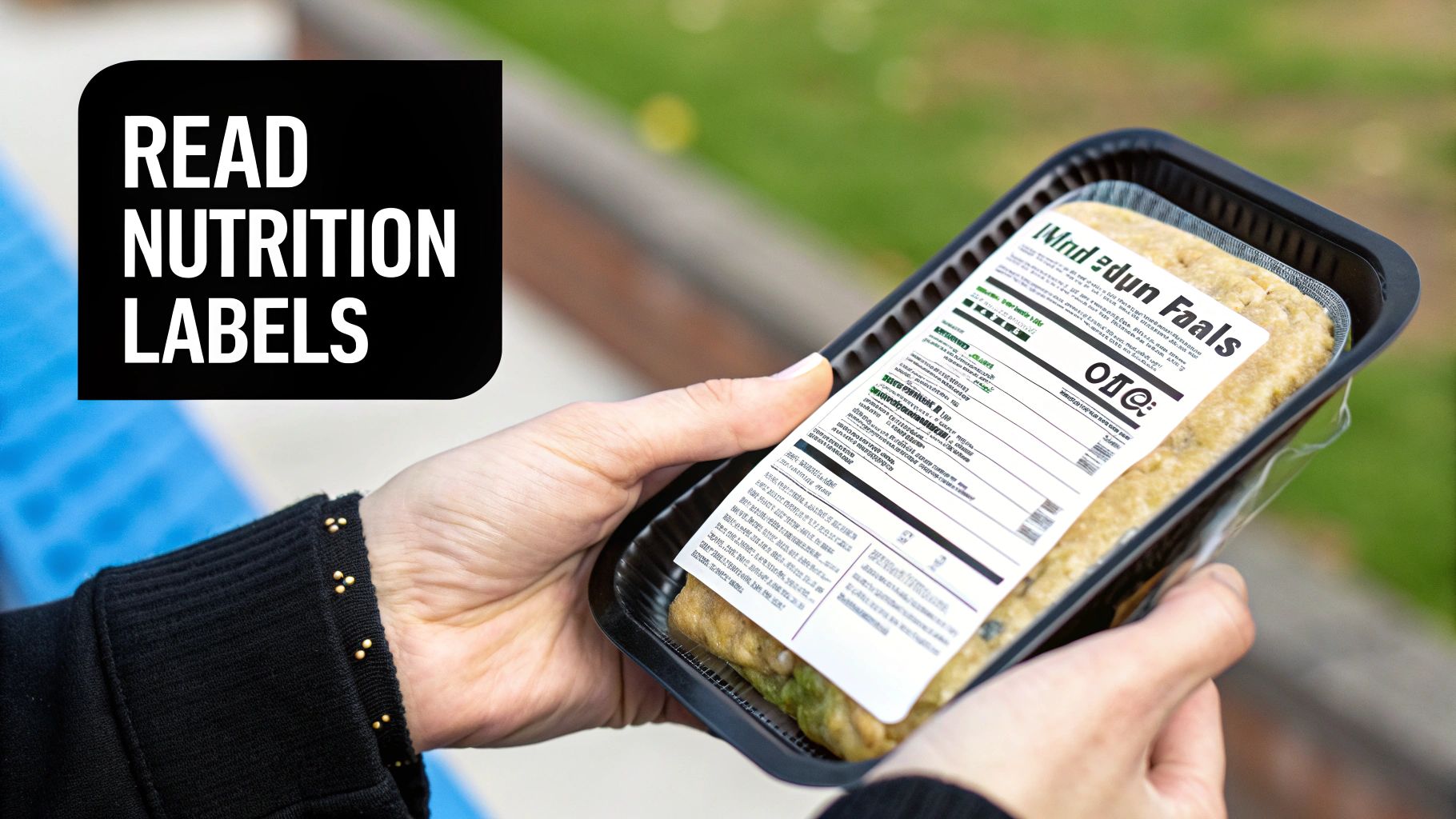
As you can see, "Saturated Fat" is clearly indented under "Total Fat," making it easy to find with a quick scan.
Checking the Ingredients List
The numbers tell you how much, but the ingredients list tells you from what. This list is organized by weight, so the first few ingredients make up most of the product. Keep an eye out for common saturated fat sources like palm oil, butter, lard, or coconut oil, especially when you're grabbing processed snacks.
By mastering the nutrition label, you move from guessing to knowing. It empowers you to see past flashy front-of-package marketing and make choices that truly align with your goals for a healthier lifestyle.
This skill is particularly useful for finding healthy convenience foods. If you need some ideas on what to look for, our guide to the best on-the-go protein snacks is a great place to start.
Healthy Cooking Techniques for a Low-Fat Kitchen
Creating healthier meals doesn't mean you have to give up on flavor. Believe it or not, the real magic is in how you cook. By switching up your go-to methods, you can slash the saturated fat in your favorite dishes, often without even noticing a difference. It’s all about cooking smarter.
The easiest place to start is by moving away from techniques that rely on a ton of added fat. Instead of deep-frying or pan-frying everything in butter or lard, try embracing methods that let the natural flavors of the food take center stage.
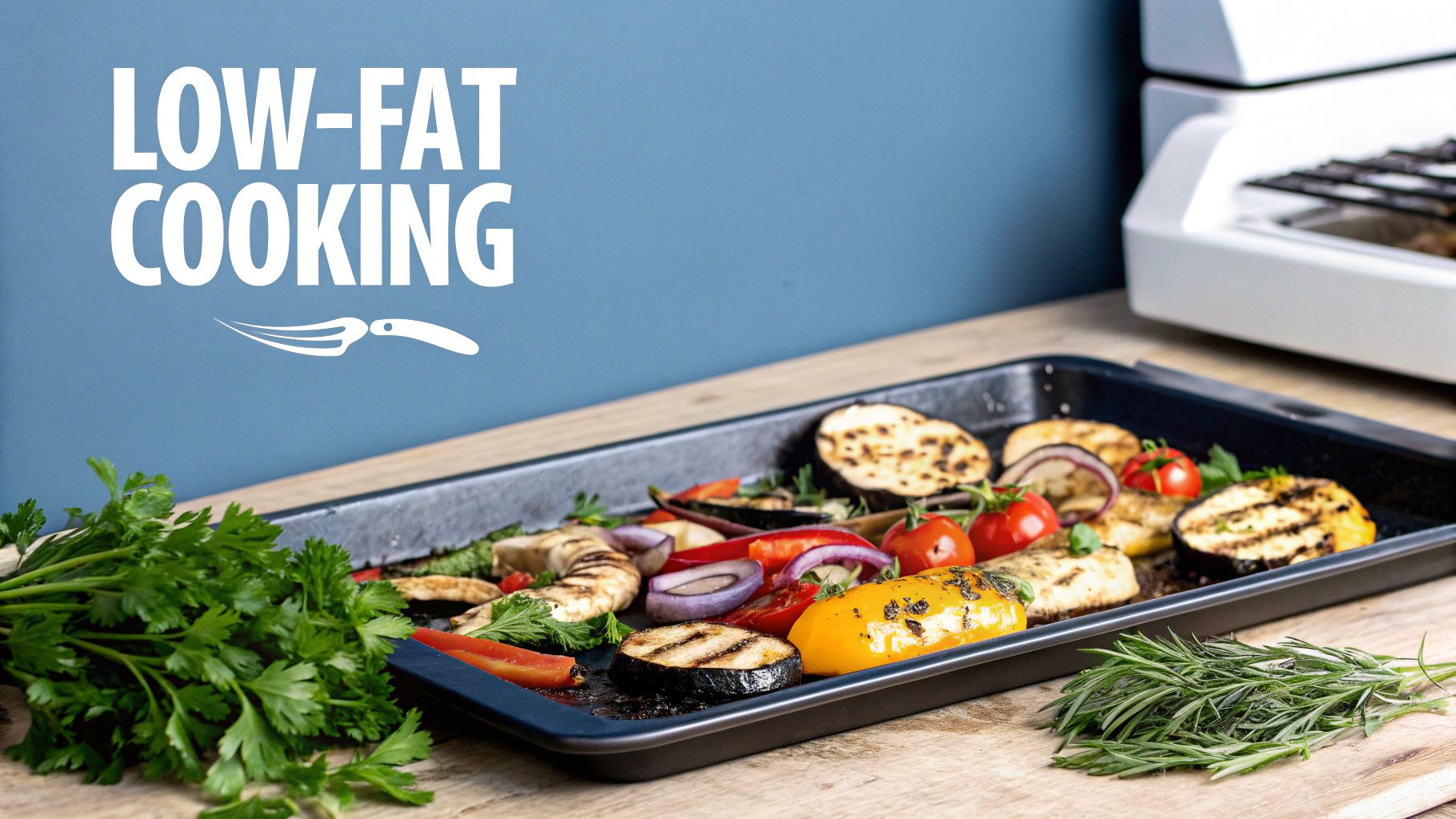
- Grilling and Broiling: These high-heat techniques are perfect for everything from chicken breasts to bell peppers. You get that amazing char and flavor, and any excess fat simply drips away.
- Roasting and Baking: Your oven is one of your best tools for cooking with minimal oil. A light drizzle of olive oil on vegetables or lean protein is all it takes to get them perfectly tender and caramelized.
- Steaming and Poaching: Cooking with water or broth instead of oil is a fantastic way to prepare delicate foods like fish, poultry, and vegetables. It keeps everything incredibly moist and tender—a naturally fat-free approach.
Smart Swaps and Flavor Boosters
Beyond just your cooking method, a few simple ingredient swaps can make a huge dent in your saturated fat intake. One of the biggest wins is choosing a healthier cooking fat—if you want to get into the weeds, you can explore the debate between olive oil vs. butter in your cooking.
Here are a few other easy substitutions I use all the time:
- Use plain Greek yogurt or even mashed avocado instead of sour cream and mayo in dips and dressings.
- For creamy soups, skip the heavy cream. Try pureeing white beans or adding a splash of evaporated skim milk for that rich, velvety texture.
- When baking, you can often replace half the butter with unsweetened applesauce or mashed banana. It cuts fat while adding moisture and natural sweetness.
Finally, stop thinking fat is the only source of flavor. Your spice rack is your secret weapon when learning how to reduce saturated fat intake.
Your goal is to build layers of flavor so you never miss the extra fat. Acidity from lemon juice or vinegar can brighten up a dish, while fresh herbs like basil, cilantro, and parsley add a vibrant kick right before serving.
Try roasting garlic until it's sweet and mellow to enrich sauces and spreads. A dash of smoked paprika can add a bacon-like smokiness to almost anything, completely fat-free. When you start focusing on these flavor-building techniques, you'll end up with food that’s not just healthier, but often more delicious and complex.
Putting It All Together: Sample Low-Saturated-Fat Meal Plans
It's one thing to talk about swapping ingredients, but it’s another to see what a full day of low-saturated-fat eating actually looks like. The goal is never about feeling deprived; it's about making smart, delicious substitutions that work for you.
To give you a clearer picture, I've mapped out two sample meal plans. Think of these less as strict rules and more as a jumping-off point for your own creativity. The first is designed for an active person who needs plenty of fuel, and the second is a completely plant-based approach that's bursting with flavor.
https://www.youtube.com/embed/8l4230iTOBE
Fitness-Focused Meal Plan
If you're active, you need sustained energy and high-quality protein for performance and recovery. This plan delivers exactly that while keeping saturated fat in check, landing around 12-14 grams for the entire day.
- Breakfast: Kick things off with a big bowl of oatmeal made with skim milk or water. Stir in a scoop of whey protein for a muscle-building boost, then top with a handful of fresh berries and a tablespoon of ground flaxseed for those crucial omega-3s.
- Lunch: A classic grilled chicken salad. I'm talking 4-5 ounces of lean, skinless chicken breast over a bed of mixed greens, loaded with crunchy cucumbers, bell peppers, and tomatoes. Ditch the creamy bottled dressings and whisk together a simple vinaigrette with olive oil, lemon juice, and herbs.
- Dinner: Baked salmon served with roasted sweet potatoes and steamed broccoli. Salmon is a fantastic choice because its fats are the heart-healthy unsaturated kind. For even more fiber and protein, add a side of quinoa.
- Snacks: A cup of plain Greek yogurt paired with a small apple is a perfect post-workout refuel. A handful of almonds works great too. For more grab-and-go options, check out our guide to the best low-fat, high-protein snacks.
Plant-Based Meal Plan
Eating plant-based is a fantastic way to naturally lower saturated fat and eliminate dietary cholesterol, as long as you watch out for tropical oils like coconut and palm. This plan is all about whole foods, delivering satisfying meals that are anything but bland. The total saturated fat here is only about 8-10 grams.
- Breakfast: A savory tofu scramble. Just crumble some firm tofu in a pan with turmeric for color, a pinch of black salt for that eggy flavor, and a ton of veggies like spinach, onions, and mushrooms. Serve it alongside a slice of whole-wheat toast with some mashed avocado.
- Lunch: Nothing beats a hearty lentil soup. It’s packed with protein, fiber, and vegetables like carrots, celery, and kale, keeping you full and focused all afternoon.
- Dinner: Homemade black bean burgers on whole-grain buns. These are surprisingly easy to make and so much better for you than the store-bought versions. Serve with a big side salad and a light vinaigrette. Craving cheese? Sprinkle on some nutritional yeast for a savory, cheesy kick without the fat.
- Snacks: Hummus with carrot and cucumber sticks is a classic for a reason. You could also grab a small handful of walnuts or some steamed edamame for a quick protein hit.
To make this even easier to visualize, here's a side-by-side look at how these plans stack up.
One-Day Low-Saturated-Fat Meal Plan Examples
| Meal | Fitness-Focused Plan | Plant-Based Plan |
|---|---|---|
| Breakfast | Oatmeal with whey protein, berries, and flax seeds | Tofu scramble with veggies and whole-wheat avocado toast |
| Lunch | Grilled chicken salad with olive oil vinaigrette | Hearty lentil and vegetable soup |
| Dinner | Baked salmon with sweet potatoes and broccoli | Black bean burgers on whole-grain buns with a side salad |
| Snacks | Greek yogurt with an apple; handful of almonds | Hummus with veggie sticks; handful of walnuts |
These examples are just a starting point. Feel free to mix and match meals, adjust your portions based on your own energy needs, and get creative with your favorite lean proteins and plant-based foods.
A diet low in saturated fat is anything but boring. It’s full of vibrant colors, diverse textures, and incredible flavors from whole, minimally processed foods.
The real key is building your meals around a foundation of nutrient-dense ingredients. Once you get the hang of it, you’ll see that eating healthy is both simpler and more enjoyable than you might think.
Your Saturated Fat Questions, Answered
Any time you make a big shift in how you eat, questions are bound to pop up. It’s totally normal. When you start cutting back on saturated fat, you'll suddenly notice it everywhere and run into confusing advice, especially with so-called "health" foods.
Let’s clear the air. Think of this as your go-to guide for those tricky situations—the ones that make you question if you're doing it right. We'll tackle everything from trendy oils to navigating a party without derailing your progress.
Is Coconut Oil a Healthy Choice?
This one is a hot topic. Coconut oil has been marketed as a miracle food, but let's look at the facts. While it comes from a plant, it’s one of the most concentrated sources of saturated fat out there—we're talking 80-90% saturated fat, which is even higher than butter.
Because it can significantly raise LDL ("bad") cholesterol, the American Heart Association advises against using it as a primary cooking oil. While some of its fats are metabolized a bit differently, the research still points toward moderation. It’s best to save it for occasional use and stick to unsaturated fats like olive or avocado oil for your daily cooking.
What if I'm Eating Out or at a Friend's House?
This is a classic dilemma, right? You don't want to be "that person," but you also don't want to undo all your hard work. Don't worry, you can absolutely handle social events without stress. It just takes a little planning.
- Restaurant Recon: Check out the menu online before you go. Look for keywords like grilled, steamed, baked, or roasted. Fried foods are usually a red flag. And never hesitate to ask for dressings or creamy sauces on the side—it puts you in control.
- Party Strategy: Be a great guest and bring a dish you know fits your goals. A big, colorful salad with a vinaigrette, a tray of roasted veggies with hummus, or some grilled chicken skewers are always crowd-pleasers. That way, you know there’s at least one fantastic option for you.
Remember, the goal is progress, not perfection. One meal won't sabotage your entire journey. Focus on enjoying the company, make the best choice you can, and get right back to your routine with your next meal.
How Can I Manage Cravings for High-Fat Foods?
Cravings are real, but they don't have to run the show. The first line of defense is to not let yourself get ravenously hungry. Eating regular, balanced meals packed with protein and fiber will keep you feeling satisfied.
When a craving for something specific like creamy pasta or a greasy burger hits, see if a smart swap can do the trick. For instance, if you're dying for ice cream, try blending some frozen bananas into a creamy "nice cream" or have a bowl of Greek yogurt topped with fresh berries and a few dark chocolate chips. You'd be surprised how often a healthier alternative can hit the spot.
Fuel your active lifestyle the right way with Gym Snack. Our crunchy, plant-based protein snacks are designed to be macro-friendly, delivering over 15g of protein with low saturated fat and zero cholesterol. Ditch the sugary bars and upgrade your snack game at https://gymsnack.com.