

To curb sugar cravings for good, you need a strategy that goes beyond sheer willpower. It's about stabilizing your blood sugar with the right nutrients—like protein and fiber—while also getting a handle on stress and sleep.
This approach isn't about fighting the symptoms; it's about fixing the biological root causes. It means learning to work with your body, not against it.
Why You Really Crave Sugar and How to Regain Control
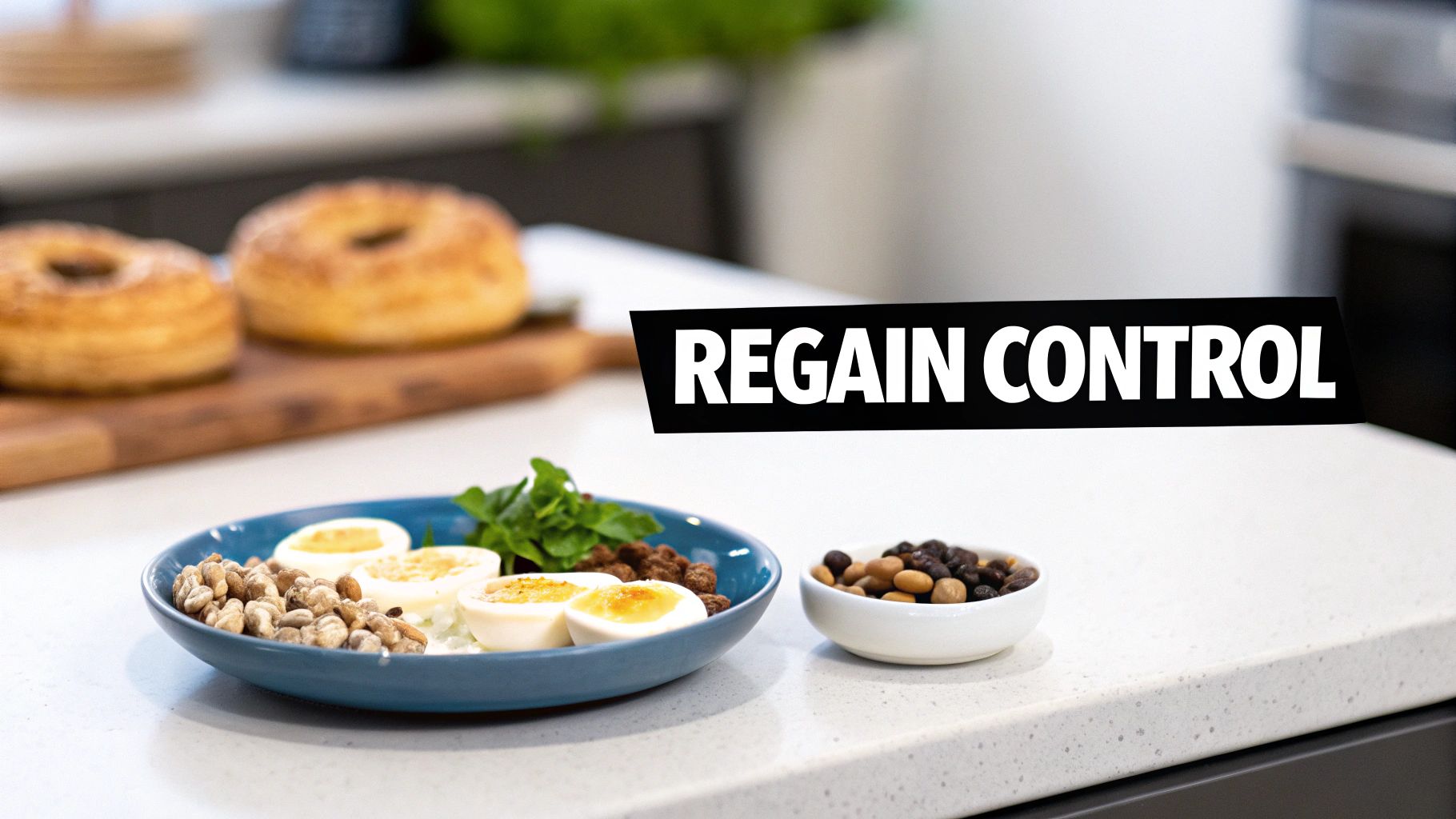
Let’s be honest—that intense, late-afternoon pull toward something sweet can feel completely unstoppable. It's easy to blame it on a lack of self-control, but the reality is far more scientific. Your cravings aren't a personal failing; they're a biological response driven by powerful internal signals.
The first step to regaining control is understanding what’s really going on inside your body.
The cycle often kicks off with unstable blood sugar. When you eat refined sugars or simple carbs, your blood glucose shoots up, giving you a quick—but fleeting—burst of energy. Your body then releases a flood of insulin to handle the surge, but it frequently overcorrects, causing a dramatic crash. This crash leaves you feeling tired, irritable, and desperately searching for another sugary hit to pull you back up. It’s a relentless rollercoaster, and your body is just trying to find a way off.
The Hormonal Connection to Cravings
Blood sugar is only part of the story. Your hormones are major players, too. Think of ghrelin as your "hunger hormone" and leptin as your "satiety hormone." When you’re stressed out or haven’t slept well, your body ramps up ghrelin production and dials back leptin. This hormonal cocktail sends a loud, clear message to your brain: "I need energy, now." And what’s the fastest, most rewarding source? Sugar.
This creates a powerful feedback loop. The average American consumes about 17 teaspoons of added sugar daily, a number that far surpasses health recommendations. According to some dietary sugar statistics, this constant intake fuels the cycle of spikes and crashes, reinforcing the brain's reward pathways in a way that’s eerily similar to addictive substances.
The key takeaway is this: Cravings are often a symptom of a deeper imbalance. By focusing on the root causes—blood sugar, hormones, and stress—you can stop fighting an uphill battle and start creating sustainable change.
Your Path to Lasting Control
Instead of relying on willpower alone, this guide lays out a clear, evidence-backed plan to quiet sugar cravings naturally. We'll focus on practical strategies that work with your body’s biology, not against it.
Here’s a quick overview of what we’ll cover.
Your Quick Guide to Natural Craving Control
Here’s a snapshot of the core strategies this guide covers, giving you an immediate grasp of the key takeaways.
| Strategy | How It Works | Quick Tip |
|---|---|---|
| Nutrient-Dense Diet | Protein, fiber, and healthy fats slow digestion, preventing blood sugar spikes and crashes. | Add a handful of nuts or seeds to your morning yogurt to stay full longer. |
| Stress Management | Lowering cortisol levels helps regulate the hunger hormone ghrelin. | Try a 5-minute guided meditation when you feel a stress-induced craving coming on. |
| Prioritize Sleep | 7-9 hours of quality sleep helps balance leptin and ghrelin, your appetite-regulating hormones. | Set a digital curfew—no screens for an hour before bed. |
| Strategic Snacking | High-protein savory snacks provide sustained energy and satiety. | Keep hard-boiled eggs or beef jerky on hand for an afternoon energy boost. |
| Mindful Eating | Paying attention to hunger cues helps distinguish true hunger from emotional cravings. | Before reaching for a snack, ask yourself: "Am I truly hungry, or just bored/stressed?" |
Each of these pillars is a powerful tool on its own. Together, they form a comprehensive system for taking back control. By tackling the problem at its source, you can finally build a healthier, more balanced relationship with food.
Building a Craving-Proof Diet with Smart Nutrition
If you want to stop sugar cravings for good, you have to look past willpower and focus on what's on your plate. A craving-proof diet isn't about restriction. It's about rebuilding your meals to head off the biological triggers—like those nasty blood sugar crashes—that send you running for a quick sugar fix.
It all boils down to mastering three key players: protein, fiber, and healthy fats.
When you build your meals around this trio, you create a powerful defense system against cravings. They work as a team to slow down digestion, which means the energy from your food is released slowly and steadily. This prevents the dramatic blood sugar spikes and crashes that leave you feeling tired, irritable, and desperate for something sweet.
Think of it like building a fire. Simple carbs and sugars are like kindling—you get a big, bright flash, but it burns out in an instant. Protein, fiber, and healthy fats are the slow-burning logs that provide steady, reliable heat for hours.
Harness the Power of Protein
Protein is your single most important weapon in the fight against sugar cravings. It’s a powerhouse for two reasons: it delivers deep, lasting satiety and directly helps balance your hunger hormones. When you eat a protein-rich meal, your body takes much longer to digest it, keeping you feeling full and satisfied.
This isn't just a feeling; it’s hard science. Studies show that protein significantly boosts satiety hormones like GLP-1 and PYY, which are the chemical messengers that tell your brain you’re full. This effect can slash your overall appetite and keep your energy levels on an even keel, preventing the dips that trigger cravings.
Putting this into practice is all about making simple swaps:
- Breakfast: Instead of a sugary pastry or cereal, go for Greek yogurt with berries and nuts or a couple of scrambled eggs with avocado.
- Lunch: Add grilled chicken, a scoop of chickpeas, or a hard-boiled egg to your salad. That simple addition turns a light bite into a genuinely satisfying meal.
These small changes send a clear signal to your body that it's nourished, dramatically reducing the impulse to grab something sweet later on. For more ideas, check out our guide on the best foods for appetite control.
The Unsung Hero: Fiber
Fiber is the quiet hero of a balanced diet, working behind the scenes to keep your digestion and blood sugar in check. It adds bulk to your meals without adding a ton of calories, which helps you feel physically full.
There are two types of fiber, and you really want both in your diet:
- Soluble Fiber: This type dissolves in water and forms a gel-like substance in your gut, which slows down how quickly your body absorbs sugar. You can find it in oats, apples, beans, and carrots.
- Insoluble Fiber: This is the "roughage" that adds bulk and helps move food through your digestive system. It’s plentiful in whole grains, nuts, and vegetables like cauliflower and green beans.
A diet high in fiber ensures your body gets a steady stream of energy, preventing those sudden crashes that send you on a desperate hunt for sugar.
Embrace Healthy Fats
For decades, fat was unfairly demonized, but we now know the right kinds of fats are essential for curbing cravings and promoting overall health. Healthy fats—like the ones in avocados, nuts, seeds, and olive oil—are incredibly satisfying.
By adding a source of healthy fat to each meal, you slow down how quickly your stomach empties. This simple trick helps you stay fuller for longer and keeps your blood sugar stable. A small handful of almonds or a few slices of avocado can make a huge difference in how you feel hours after eating.
Smart nutrition doesn't just stop cravings, either. It has a ripple effect on other parts of your life, like your sleep quality, which in turn influences your desire for sugar. You can find some great tips on improving your diet for better sleep and see just how connected it all is.
By building this strong nutritional foundation, you're not just fighting cravings—you're creating a body that no longer needs them in the first place.
Mastering Your Snacking Strategy to Beat Cravings
Snacking often gets a bad rap. But it’s not the act of snacking that derails your health goals—it’s mindless snacking. When you do it right, snacking becomes a powerful tool for managing energy and preventing the very blood sugar crashes that send you rummaging through the pantry for something sweet.
Think of it as a strategic bridge between meals, not a moment of weakness. The key is shifting your focus from sugary, quick-fix snacks to smart, savory, high-protein options that deliver sustained energy and genuine satisfaction. A little planning goes a long way in outsmarting cravings before they even start.
Why Savory and High-Protein Snacks Always Win
When that 3 p.m. slump hits, it’s tempting to grab something sweet for a quick jolt. The problem is, that jolt is followed by an even bigger crash. A high-protein, savory snack, on the other hand, actually addresses the root cause of the craving. Protein slows down digestion and signals the release of satiety hormones, which keeps your blood sugar stable and your hunger in check for hours.
For instance, reaching for a crunchy, plant-based Gym Snack bag with 30g+ of protein instead of a candy bar gives your body steady fuel without the junk. This isn't just theory; it's backed by research. High-protein diets have been shown to slash sugar cravings by 25% in just 12 weeks. And in the US, gym-goers who prioritize protein snacks report 40% fewer cravings.
To help you put this into practice, here's a quick guide for making smarter snack swaps.
Swap This for That: Savory Snack Edition
| Instead Of This Sugary Snack... | Try This High-Protein Savory Snack... | Why It Works Better |
|---|---|---|
| Granola Bar or Cereal Bar | A handful of almonds and a cheese stick | Provides a balanced mix of protein and healthy fats to stabilize blood sugar, unlike the hidden sugars in most bars. |
| Sweetened Yogurt | Plain Greek yogurt with a few berries | Greek yogurt is packed with protein, keeping you full longer. The berries offer natural sweetness and fiber without the sugar crash. |
| Bag of Chips | Roasted chickpeas or edamame | Delivers that satisfying crunch you're looking for, but with a bonus of protein and fiber to actually curb your hunger. |
| Candy or Chocolate Bar | A high-protein snack like Gym Snack or a hard-boiled egg | Gives you a substantial protein boost (30g+ in Gym Snack!) that fights off hunger hormones and prevents future cravings. |
These simple swaps make a massive difference in how you feel throughout the day, helping you avoid the energy rollercoaster altogether.
Time Your Snacks for Maximum Impact
What you snack on is crucial, but when you snack is just as important. Most of us feel a predictable energy dip around 3 p.m.—prime time for sugar cravings. Instead of waiting for the crash to happen, get ahead of it.
Try eating your protein-rich snack about an hour before you usually feel that slump. This proactive move keeps your blood sugar from plummeting, effectively shutting down the craving before it even gets a chance to start.
Pro Tip: For one week, make a mental note of when you feel the most tired or snacky. This will help you identify your personal "craving window" so you can schedule a healthy snack and head it off at the pass.
This simple shift from reactive to proactive snacking is a total game-changer. You’re no longer a victim of your cravings; you’re using food as a tool to maintain consistent energy. For more ideas, check out these high-protein snacks for weight loss that are perfect for this strategy.
Build Your Snack Emergency Kit
Let's be real: willpower has its limits. Being unprepared is the fastest way to give in to an unhealthy craving when you're hungry and in a hurry. The solution? Create a "snack emergency kit" that you can keep in your car, at your desk, or in your gym bag. When you have healthy options within arm's reach, you're never caught off guard.
Stock your kit with non-perishable, high-protein, savory snacks that you actually look forward to eating.
- Roasted Edamame or Chickpeas: They offer a fantastic crunch with a solid hit of protein and fiber.
- Hard-Boiled Eggs: A classic for a reason. They're a perfect source of high-quality protein and healthy fats.
- Individual Nut Butter Packets: Great on their own or paired with an apple for a balanced mini-meal.
- Plant-Based Protein Snacks: Look for options like Gym Snack that deliver a big protein punch with clean ingredients.
- Beef or Turkey Jerky: A super convenient, portable option that's loaded with protein to keep hunger away.
By making preparation a priority, you remove the guesswork and decision fatigue. When you know you have a delicious, satisfying snack waiting for you, the allure of that vending machine candy bar just fades away. This is how you stop fighting cravings and start preventing them for good.
How Stress and Sleep Hijack Your Cravings
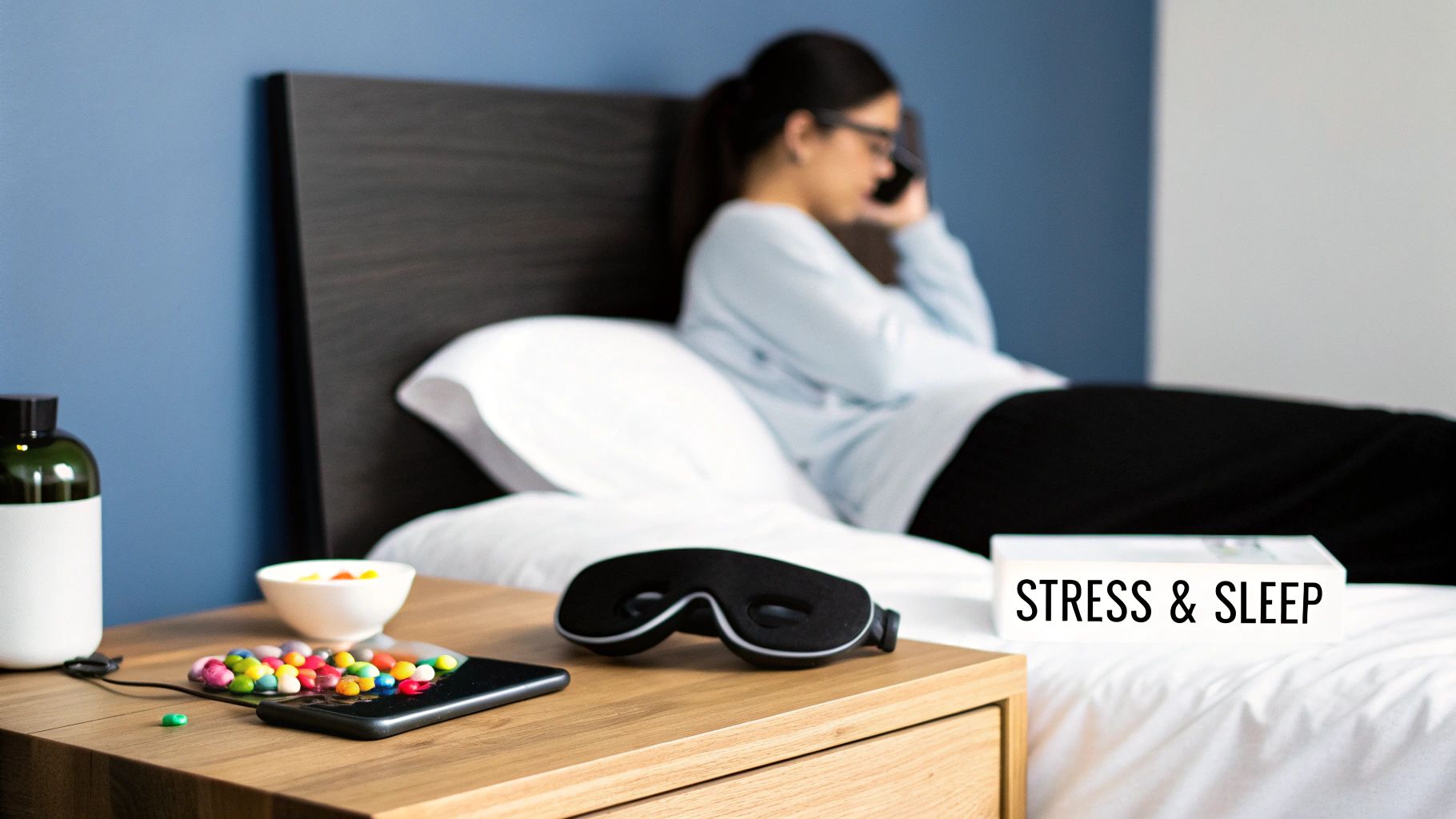
Ever found yourself mindlessly reaching for a cookie after a brutal day at work? Or waking up after a night of tossing and turning with an intense craving for donuts? That's not a coincidence. While what you eat is a huge piece of the puzzle, your lifestyle—especially your stress levels and sleep quality—can be just as powerful in driving your desire for sugar.
When life gets overwhelming, your body’s ancient survival instincts take over. It can't tell the difference between a looming project deadline and a real physical threat. The response is the same: a flood of cortisol, the body's primary stress hormone.
This hormonal surge is meant to get you ready to "fight or flight," and one of its main jobs is to tell your body to find the fastest energy source possible. Your brain interprets this as an urgent command for fuel, and nothing delivers a quicker energy spike than sugar.
The Cortisol and Craving Connection
When you're dealing with constant pressure, your cortisol levels can stay high, which seriously messes with the hormones that control hunger. Cortisol cranks up ghrelin (the "I'm hungry" hormone) while shutting down leptin (the "I'm full" hormone). This hormonal mess creates a perfect storm for intense, hard-to-ignore sugar cravings.
Because stress is such a powerful trigger, learning how to deal with chronic stress is absolutely essential for getting a handle on your eating habits. You simply can’t out-diet a body that’s stuck in a constant state of alarm.
When you're stressed, the logical, decision-making part of your brain takes a backseat. The more primitive, reward-seeking part takes the wheel, making that sugary treat feel less like a choice and more like a survival necessity.
When Sleep Deprivation Fuels Your Sweet Tooth
Poor sleep does something remarkably similar. Even one bad night can throw your appetite-regulating hormones into total chaos. Research consistently shows that sleep deprivation leads to higher ghrelin and lower leptin, making you feel way hungrier and less satisfied by the food you do eat.
And it's not just that you want more food; you specifically want high-carb, high-sugar foods. Your exhausted brain is desperate for a quick fix to make up for the lack of restorative rest, and sugar is its go-to solution.
Your Toolkit for Calming Stress and Improving Sleep
The good news is you can absolutely reclaim control by managing these lifestyle factors. Small, consistent changes can make a massive difference in shutting down those cravings at the source.
For Stress Reduction:
- Take a Five-Minute Walk: Feeling overwhelmed? Step outside. The combination of movement and a change of scenery works wonders for hitting the reset button on your brain and lowering cortisol.
- Practice Box Breathing: It sounds simple, but it works. Inhale for four seconds, hold for four, exhale for four, and hold for four. Repeating this for just a couple of minutes can instantly calm your nervous system.
- Have a Mindful Moment: Instead of doom-scrolling on your phone during a break, just sit and focus on your senses. What do you see, hear, and feel? This tiny act pulls you back into the present.
For Better Sleep Hygiene:
- Create a Wind-Down Routine: An hour before you want to be asleep, dim the lights, put away screens, and do something genuinely relaxing. Read a real book, do some light stretching, or listen to calming music.
- Optimize Your Bedroom: Make your room cool, dark, and quiet. This environment sends a powerful signal to your body that it’s time for deep, restorative rest.
- Be Consistent: Try to go to bed and wake up around the same time every day—yes, even on weekends. This helps regulate your body's internal clock, making it easier to fall asleep and wake up naturally.
By tackling the root causes of stress and making quality sleep a priority, you create a physiological environment where your body no longer feels that desperate, screaming need for a sugar fix. It’s not about adding more rules, but about building a foundation of well-being that makes healthy choices feel easy and natural.
Using Movement and Mindful Eating as Your Allies
While what you eat lays the foundation for stable blood sugar, your daily behaviors—like how you move your body and approach your meals—are the secret weapons that truly solidify your defenses against sugar cravings. It’s less about willpower and more about building a stronger connection between your mind and body, turning those reactive habits into conscious, empowering choices.
Physical activity is one of the best tools I know for learning how to stop sugar cravings naturally. It’s brilliant because it works on multiple levels, tackling both the physical and psychological reasons you're reaching for sweets.
When you exercise, even just a brisk walk, your muscles become more receptive to insulin. This improved insulin sensitivity means your body gets much better at managing blood sugar, preventing the sharp crashes that send you straight to the cookie jar for a quick fix.
Movement is also a huge mood booster. Exercise releases endorphins—your body’s natural feel-good chemicals—which can give you that same sense of comfort and reward you might be seeking from a sugary treat.
Tune In with Mindful Eating
Mindful eating is simply the practice of paying full attention to the experience of eating. Think of it as the direct antidote to that autopilot snacking that happens in front of the TV or while scrolling through your phone. Instead of eating while distracted, mindfulness asks you to slow down and really connect with your food and your body’s signals.
This simple practice helps you figure out the difference between true physical hunger and a craving driven by emotion or habit. Are you actually hungry, or are you just bored, stressed, or following a pattern you've had for years? Just pausing to ask that question creates enough space to make a conscious choice instead of having an automatic reaction.
Mindful eating isn't about restriction; it's about awareness. It empowers you to honor what your body truly needs, which often has nothing to do with sugar.
This heightened awareness is key to understanding your body's unique patterns. For a deeper look at this, exploring how to stay full longer can offer more strategies that fit perfectly with a mindful approach. When you truly listen, you might be surprised to find that a craving for sweets is actually a signal for thirst, a need for a mental break, or a sign of fatigue.
A Simple Mindful Eating Exercise
Ready to give it a try? You can do this with your very next meal or snack. It’s a great way to experience the difference between mindless consumption and mindful enjoyment.
- Observe Your Food: Before you take a bite, really look at your food. Notice the colors, shapes, and textures. Take just a second to appreciate where it came from.
- Engage Your Sense of Smell: Bring the food close and inhale its aroma. What do you notice? Is it sweet, savory, earthy?
- Take Your First Bite: Put a small amount in your mouth but don't chew right away. Just let it sit there. Pay attention to the texture and the temperature.
- Chew Slowly: Now, start to chew deliberately. Try to identify all the different flavors. Notice how the taste and texture change as you keep chewing.
- Swallow and Pause: After you swallow, take a moment. Notice the sensation of it. Take a single breath before you go for the next bite.
By engaging all your senses, you don’t just get more pleasure from eating—you also give your brain the time it needs to register fullness. This simple act of slowing down can make a huge difference in how much you eat and how satisfied you feel, often making that post-meal desire for something sweet just fade away.
Navigating Setbacks and When to Seek Professional Advice
Let's be realistic: even with the best intentions, you're going to have moments where a sugar craving hits hard. A stressful day at work, a friend's birthday party, or hormonal shifts can throw a wrench in your plans. The goal isn't to be perfect—it's to be prepared and bounce back without beating yourself up.
Social events can feel like a minefield when you're trying to cut back on sugar. My advice? Don't just avoid them. Go in with a game plan. I always tell clients to have a high-protein snack before they leave home. That way, you're not starving and tempted by every tray of appetizers that goes by.
Once you're there, make a beeline for the savory stuff. Load up your plate with protein and veggies first. You'll be surprised how much less room—and desire—you have for that dessert table afterward.
For many women, cravings are deeply tied to the menstrual cycle. Fluctuating estrogen and progesterone can mess with your insulin sensitivity and mood, making that call for chocolate feel incredibly strong. It's important to recognize this for what it is: biology, not a lack of willpower. Plan for it by having your favorite healthy, satisfying snacks ready to go. Gentle exercise, like a long walk or some yoga, can also make a huge difference during this time.
When It's More Than Just a Craving
Most of the time, we can trace cravings back to diet, stress, or habits. But if you've made significant changes and still feel like you're fighting an intense, losing battle with sugar, it might be a sign of something deeper.
Your body could be trying to tell you something specific.
- Nutrient Gaps: That intense craving for chocolate? It can sometimes be linked to low magnesium. Other deficiencies, like chromium, zinc, or certain B vitamins, can also throw your blood sugar regulation out of whack.
- Underlying Health Conditions: Persistent, powerful sugar cravings are a common symptom of conditions like polycystic ovary syndrome (PCOS) and insulin resistance.
If your cravings feel all-consuming, never-ending, and come with other red flags like extreme fatigue, unexplained weight changes, or constant thirst, it's time to listen to your body. These are signals that you need a professional opinion.
Don't hesitate to book an appointment with a registered dietitian or your doctor. They can help you pinpoint potential nutrient deficiencies or run tests to see if there's an underlying medical issue. This kind of personalized guidance goes far beyond what any article can offer.
With global sugar consumption reaching an astounding 200.1 million metric tons in 2023, finding effective, personal strategies is more critical than ever. You can read more about this trend in these dietary sugar statistics.
Got Questions About Sugar Cravings? Let's Clear Things Up
Even with the best plan in hand, you're bound to have questions. Learning to read your body's signals is a huge part of breaking free from sugar for good. Let's tackle some of the most common concerns I hear all the time.
Will I Have These Cravings Forever?
Absolutely not. I know it can feel incredibly intense at first, but that intensity is actually a sign that your body is starting to recalibrate. As you keep giving it the right fuel—plenty of protein, fiber, and healthy fats—your blood sugar will begin to stabilize. That stability is the secret to getting those cravings under control.
Over a few weeks, something else amazing happens: your taste buds adapt. Foods you once thought were bland will start to taste satisfying, and things that are packed with sugar might even start to taste too sweet. The physical urge for a sugar hit will fade as your body finds its healthier, happier balance.
The Bottom Line: Those intense cravings are temporary. They're a sign you're breaking the cycle of blood sugar spikes and crashes. A balanced diet doesn't just fix your hormones; it actually retrains your palate.
Is It Okay to Use Artificial Sweeteners?
This is a tricky one, and the answer isn't a simple yes or no. While artificial sweeteners are free of sugar and calories, they can sometimes create more problems than they solve. They're incredibly potent—often hundreds of times sweeter than table sugar—which can keep that "sweet tooth" of yours on high alert.
When you're constantly tasting hyper-sweet things, it's a lot harder to appreciate the natural, subtle sweetness in foods like berries or a crisp apple. There's also some research suggesting these sweeteners might mess with your gut health and don't quite hit the reward centers in your brain the same way real sugar does. This can leave you feeling unsatisfied and looking for that fix somewhere else. For long-term success, your best bet is to focus on sweetness from whole foods.
What if I Slip Up and Eat Sugar?
It's going to happen. One cookie or a piece of cake doesn't undo all of your hard work. The most critical thing is to ditch the "all-or-nothing" mentality right now. A single slip-up is just that—one moment in time. It's not a total failure.
Don't let it become an excuse to throw in the towel for the rest of the day or week. Just acknowledge it without judgment and get right back on track with your next meal. In fact, use it as a learning experience. Pay attention to how you feel afterward—that inevitable energy crash is often the most powerful reminder of why you decided to make this change in the first place.
Ready to arm yourself with a smarter, savory snack that actively fights back against cravings? Gym Snack packs over 30g of plant-based protein per bag to crush hunger and keep your energy stable for hours. Check out our delicious, junk-free snacks at https://gymsnack.com.