

Going vegan doesn't have to be a light-switch moment. In my experience, the most successful, long-term transitions happen gradually. Think of it less as a diet overhaul and more as a progressive upgrade to your fuel source.
Taking a slow and steady approach lets your digestive system catch up and prevents that "what do I even eat?" feeling of overwhelm. This is how you make the change stick.
Easing Into It Without Sacrificing Your Gains
Diving headfirst into a vegan diet can be a real shock to the system, and that’s the last thing you want when your training is on the line. The all-or-nothing approach is a classic recipe for burnout and, worse, nutrient gaps that can tank your performance. For athletes, the best strategy is always a gradual one, where every change is deliberate and performance remains the top priority.
A high-performance, plant-based diet is so much more than sad salads and a banana. It's a well-oiled machine built on protein-packed legumes, complex carbs for energy that lasts, and healthy fats to keep your hormones in check. When you approach it this way, you're not just surviving on plants—you're setting yourself up to thrive.
Start With Simple Swaps
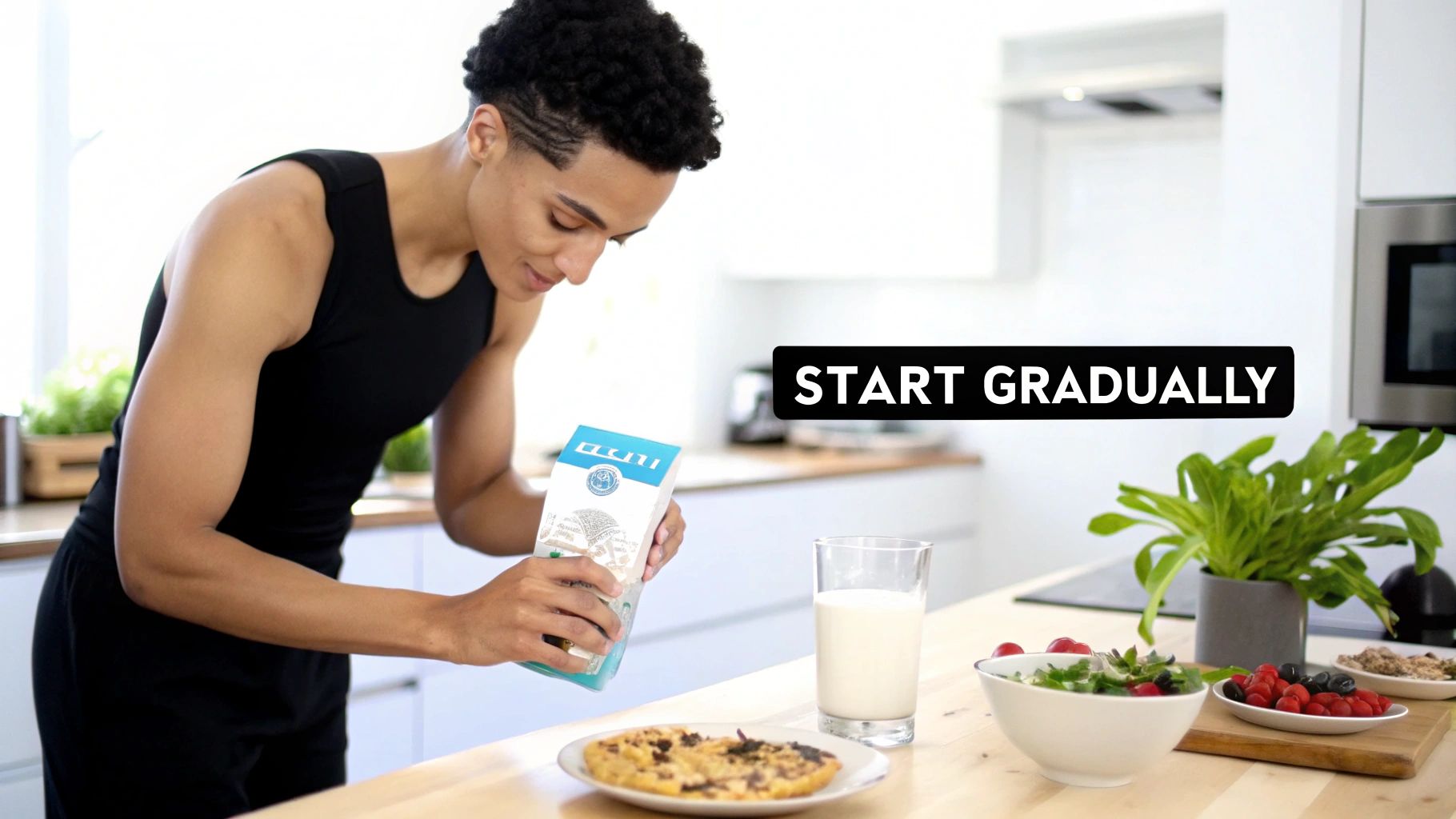
The secret to a smooth transition? Swap out just one thing at a time. This turns the whole process from a restrictive chore into a fun exploration of new foods. It also gives your gut the time it needs to adapt to all the extra fiber, which means less bloating and digestive chaos.
Here’s a practical way to get started:
- Dairy Milk: The first week, just focus on milk. Swap out your usual dairy milk for a high-protein, fortified plant-based milk like soy or pea milk. Use it exactly as you would in your protein shakes, coffee, and cereal. Easy.
- Breakfast Eggs: Next, let's look at your morning meal. Instead of scrambled eggs, try a savory tofu scramble. A little nutritional yeast and black salt (kala namak) gives it a surprisingly "eggy" flavor.
- Cheese: Now for the big one. Find a quality vegan cheese you actually like. The market is huge now, so whether you need meltable shreds for tacos or a creamy spread for a bagel, there's an option out there.
Veganize Your Go-To Meals
You don't have to give up your favorite meals! Just learn to "veganize" them. Love tacos? Swap the ground beef for seasoned lentils or crumbled tempeh. Is pasta your pre-workout ritual? Use a lentil-based pasta for a serious protein boost and top it with a hearty veggie marinara.
This simple, one-step-at-a-time method makes the whole transition feel manageable and far less intimidating.
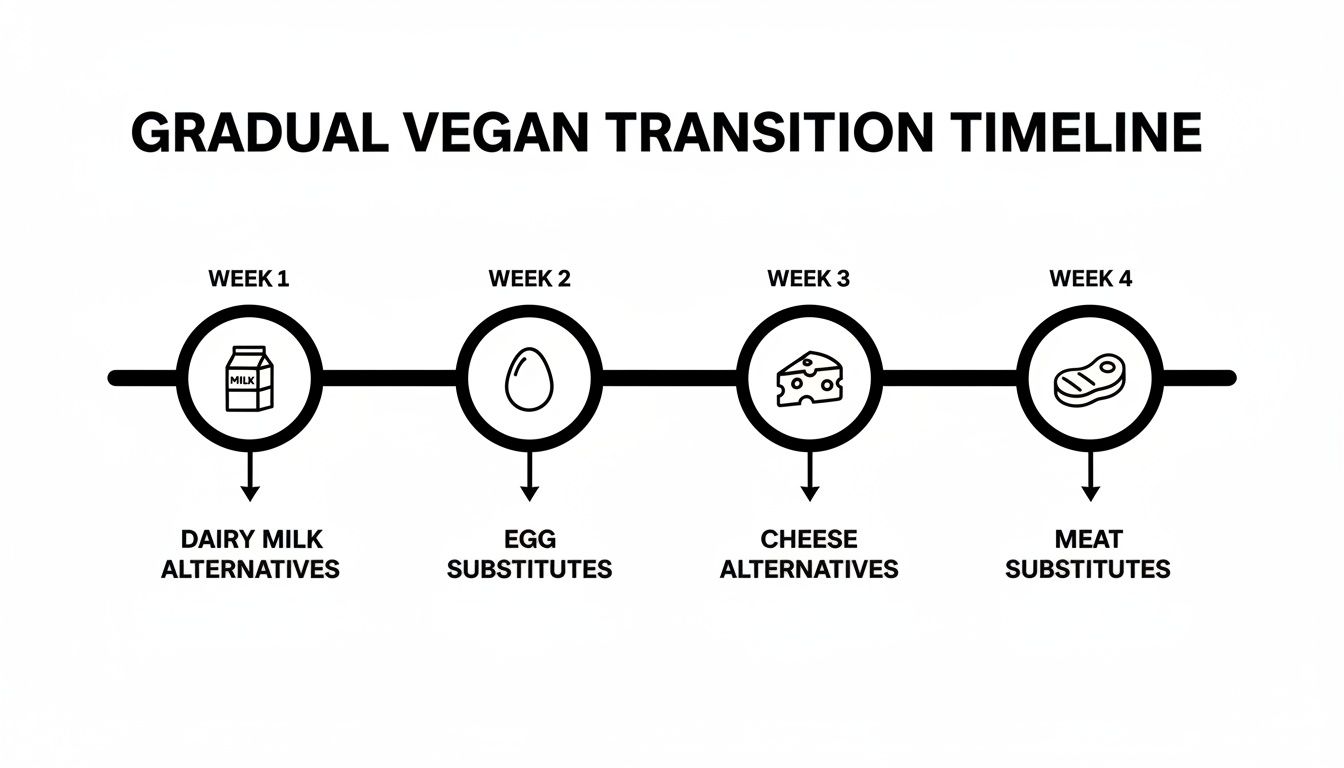
Here's a sample timeline to show you what this can look like in practice. The goal is to replace one category of animal products each week, giving you plenty of time to adjust and find alternatives you love.
Your Four-Week Gradual Vegan Transition Plan
| Week | Focus Area | Actionable Steps | Example Meal Swap |
|---|---|---|---|
| Week 1 | Dairy & Milk | Swap all dairy milk, yogurt, and creamers with plant-based alternatives like soy, oat, or almond milk and coconut-based yogurts. | Replace your whey protein shake with a plant-based protein powder mixed with soy milk. |
| Week 2 | Eggs | Eliminate eggs from your breakfast and baking. Experiment with tofu scrambles, chickpea flour omelets, and flax "eggs" for recipes. | Swap your morning scrambled eggs for a hearty tofu scramble with spinach and mushrooms. |
| Week 3 | Fish & Poultry | Replace chicken and fish with plant-based proteins. Try marinated tofu, tempeh, or seitan in stir-fries, salads, and sandwiches. | Instead of a grilled chicken salad, make a grilled tempeh salad with the same marinade. |
| Week 4 | Red Meat | The final step! Swap out beef, pork, and lamb for hearty plant-based options like lentils, black beans, or high-quality veggie burgers. | Trade your beef chili for a three-bean and lentil chili that's just as satisfying. |
By breaking it down week-by-week, you build new habits without the pressure. This structured approach is what makes the change sustainable long-term.
This kind of gradual plan is catching on. In January 2025 alone, a massive 25.8 million people took part in Veganuary. It’s a global challenge that essentially guides people through a one-month transition, proving that a step-by-step commitment works. For athletes who can’t afford an off-day, it’s the most reliable way to make the switch. You can read more about the rise of plant-based eating trends and see what the data shows.
Mastering Your Vegan Macros for Muscle and Energy
For anyone serious about fitness, the first question that comes up when considering a vegan diet is almost always, "But where will I get my protein?" It's a fair question, and one that gets to the heart of fueling performance. Let's clear the air: building serious muscle and maintaining high energy levels on plants isn't just a fantasy—it's how countless elite athletes train, compete, and win.
The old myth that plant protein is "incomplete" or not good enough for muscle growth is just that—a myth. The real secret is simply learning how to structure your meals to get the right balance of protein, carbs, and fats. This isn't about restriction; it's about making smart substitutions and being strategic with your food choices.
Dialing in Your Protein Target
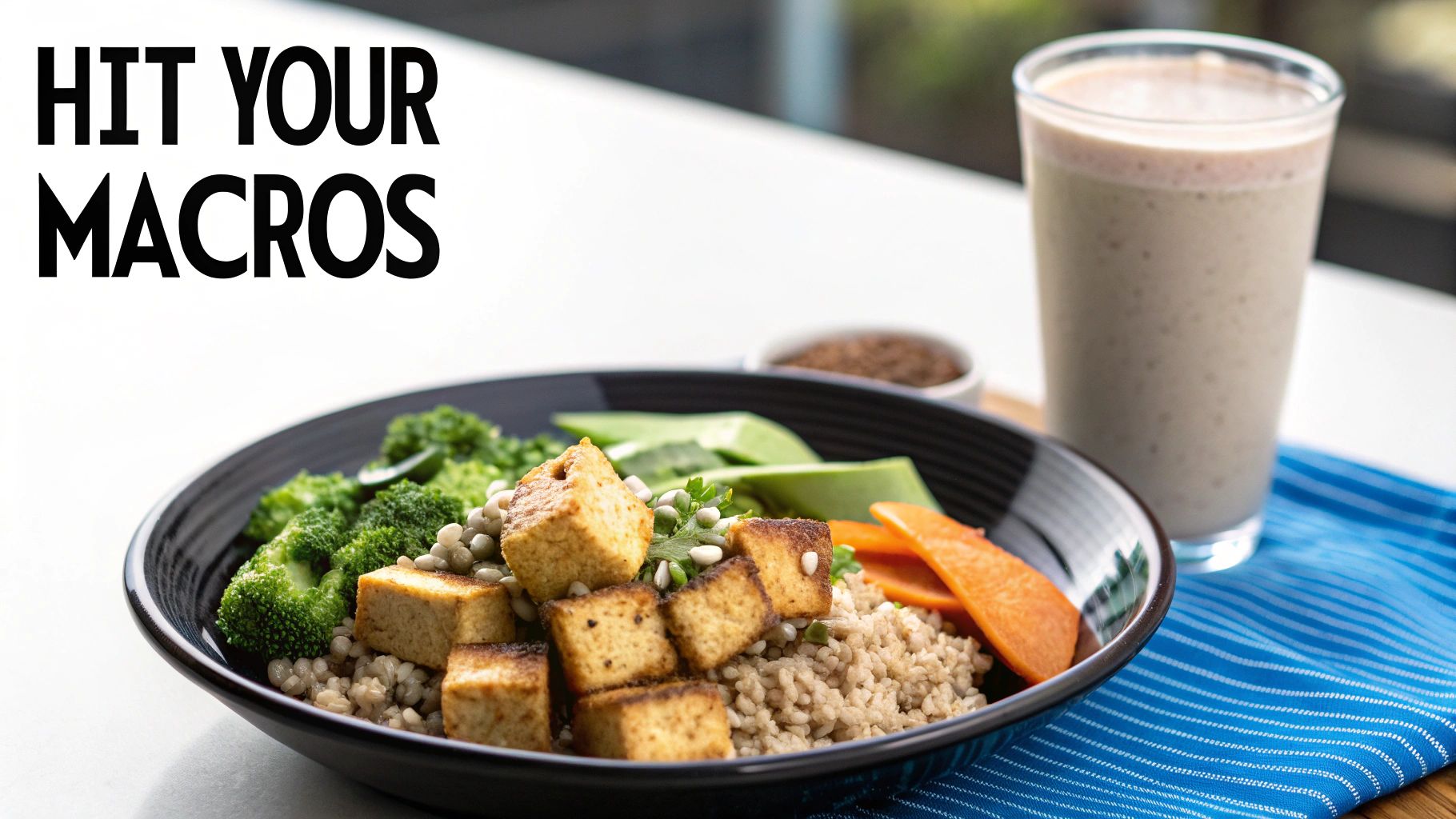
Protein is the absolute cornerstone of muscle repair and growth, and your body's need for it doesn't suddenly change when you switch your protein source. If you're active and looking to build muscle, a solid target is 1.6 to 2.2 grams of protein per kilogram of body weight. This range is the sweet spot for ensuring you have a steady supply of amino acids for recovery and synthesis.
Let's put that into perspective. For a 180 lb (about 82 kg) person, you're looking at a daily goal of roughly 131 to 180 grams of protein. Hitting that number on plants is completely doable, but it won't happen by accident. You can’t just eat salads and hope for the best. You have to consciously build your meals around protein-dense foods. If you want to get really specific, our guide on how to calculate your daily protein needs can help you nail down your exact number.
Key Insight: The protein conversation in vegan fitness isn't about if you can get enough, but how. It's all about intentional planning and making sure every meal and snack is pulling its weight.
Assembling Complete Proteins and Finding Your Go-To Sources
The whole "complete protein" thing trips a lot of people up, but it's way simpler than it sounds. It just means getting all nine essential amino acids. While most single plant foods might be a bit low in one or two, your body is smart. It pools the amino acids from everything you eat throughout the day to create a complete profile.
Think of it like building with LEGOs. You might get the blue bricks from lentils and the red bricks from brown rice. At the end of the day, you've got all the colors you need to build whatever you want.
Here are some of the absolute powerhouses you should have in your arsenal:
- Seitan: Known as "wheat meat," this stuff is a beast, packing a huge 25g of protein per 100g serving.
- Tofu & Tempeh: These soy-based workhorses deliver around 15-20g of protein per serving and are ridiculously versatile.
- Lentils: A true nutritional MVP with about 18g of protein in every cooked cup.
- Chickpeas & Beans: Great for chilis, salads, and bowls, offering roughly 15g of protein per cup.
- Nutritional Yeast: This is the secret weapon for a cheesy flavor and a sneaky 8g of protein in just two tablespoons.
Fueling Up with the Right Carbs and Fats
Protein might get all the glory, but your carbs and fats are the engine that drives your workouts. The good news? Shifting to a vegan diet often means you naturally start eating more high-quality complex carbohydrates, which is a massive win for your energy levels.
Complex Carbohydrates: This is your primary fuel for tough sessions. Think slow-release energy that keeps you going strong without the crash.
- Oats
- Quinoa
- Sweet Potatoes
- Brown Rice
- Whole-Grain Bread & Pasta
Healthy Fats: These are non-negotiable for hormone production, absorbing nutrients, and overall health. Try to get a source in with most meals.
- Avocados
- Nuts (almonds, walnuts)
- Seeds (chia, flax, hemp)
- Olive Oil
A Real-World Example: Hitting 150g+ of Protein in a Day
So, what does this actually look like on a plate? Here’s a sample day of eating that easily clears 150 grams of protein, no problem.
| Meal | Example | Estimated Protein |
|---|---|---|
| Breakfast | Tofu scramble (½ block) with nutritional yeast, spinach, and whole-wheat toast. | 30g |
| Lunch | Big salad bowl with 1 cup of chickpeas, quinoa, and a tahini-based dressing. | 25g |
| Pre-Workout | A quick plant-based protein shake mixed with soy milk. | 30g |
| Post-Workout | A bag of Gym Snack Cheddar Cheeze savory protein puffs. | 30g |
| Dinner | Seitan stir-fry with broccoli, bell peppers, and a side of brown rice. | 40g |
| Total | 155g |
See? Hitting your macros is just a matter of smart planning. By anchoring each meal with a solid protein source and having high-protein snacks like Gym Snack on hand, you can give your body everything it needs to keep crushing your goals in the gym.
Stocking Your High-Performance Vegan Pantry
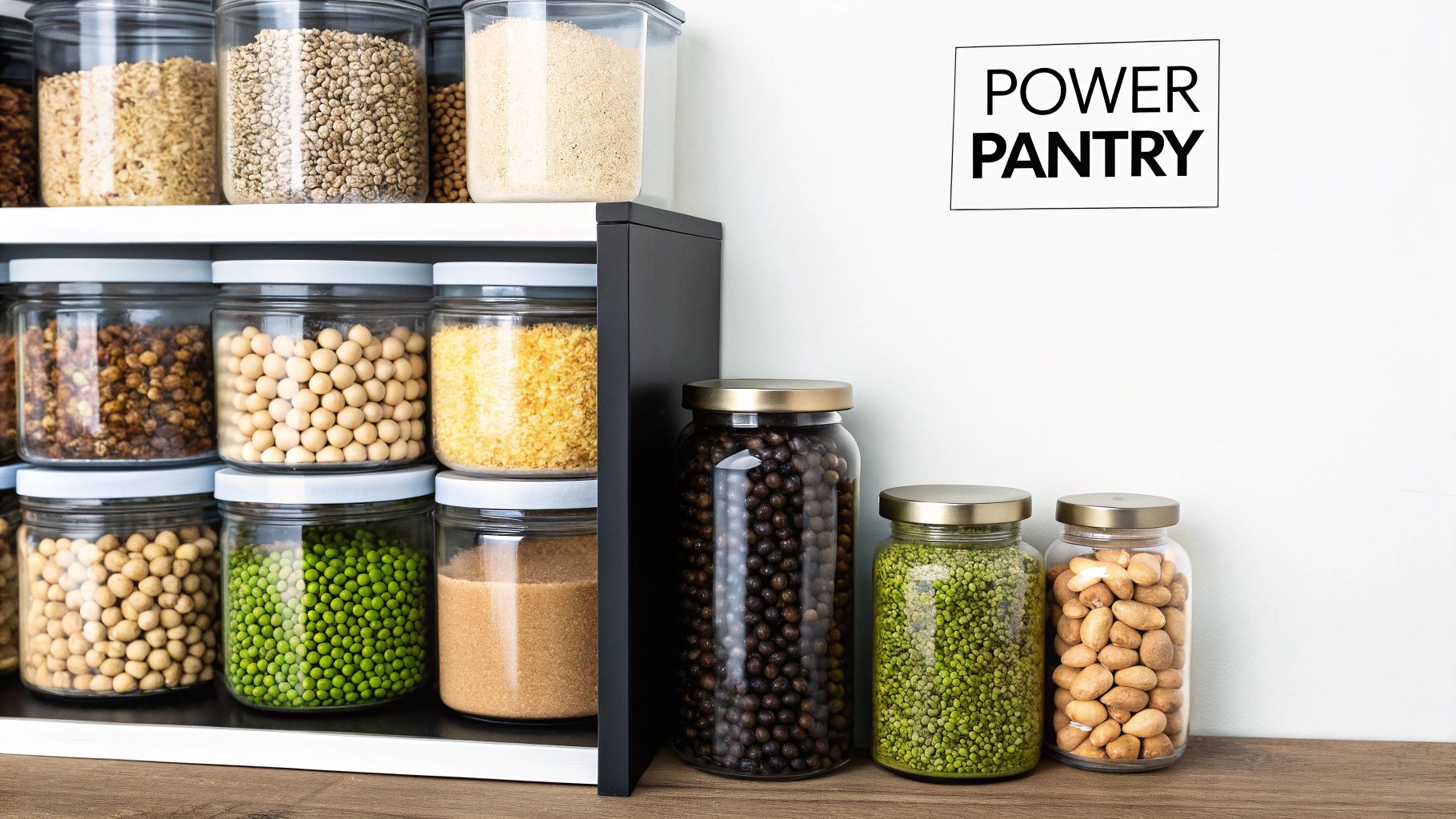
Let's get practical. A successful switch to a vegan diet doesn't start on your plate—it starts at the grocery store. The single most important thing you can do right now is transform your kitchen into a powerhouse of plant-based fuel. This isn't just about swapping out milk for almond milk; it's about building a strategic arsenal of foods that will power your workouts and make hitting your macros feel second nature.
Think of your pantry as your personal fueling station. When it’s full of the right stuff, making a powerful, protein-packed meal becomes the easy choice, not the chore. This is how you set yourself up for long-term success.
Core Protein Powerhouses
First things first: load up on versatile, high-protein staples. These are the absolute cornerstones of nearly every meal you'll make, from a post-workout recovery shake to a satisfying dinner. If you're serious about maintaining or building muscle, these are non-negotiable.
- Legumes: Lentils (all colors), chickpeas, black beans, and kidney beans are your best friends. They're cheap, incredibly versatile, and packed with nutrients. A single cup of cooked lentils, for example, gives you about 18 grams of protein.
- Soy Products: Always have firm or extra-firm tofu, tempeh, and edamame on hand. Tofu is a blank canvas that soaks up any flavor you throw at it, while tempeh brings a firmer, nuttier vibe.
- Seitan: Known as "wheat meat," seitan is a protein heavyweight, delivering up to a massive 25 grams of protein per 100g. It’s fantastic for replicating meaty textures in stir-fries or sandwiches.
- Plant-Based Protein Powder: Let's be real—a good pea or soy protein powder is a game-changer for hitting your targets, especially right after a workout when you need it most.
If you want to go even deeper, check out our detailed high-protein vegan foods list to explore more options.
Energy-Sustaining Complex Carbs
Next up, you need a solid lineup of complex carbs. This is your primary energy source, giving you that slow-release fuel you need to crush intense training sessions and avoid that dreaded afternoon slump. Ditch the refined white stuff and focus on the good-for-you whole foods.
Make sure you've always got these in stock:
- Quinoa
- Oats (rolled or steel-cut)
- Brown and wild rice
- Sweet potatoes
- Whole-grain pasta and bread
Your pantry should reflect your goals. A shelf full of whole grains, legumes, and nuts is a visual reminder that you're fueling for performance, not just eating to get by. It’s about being intentional with every choice you make.
Essential Healthy Fats and Flavor Boosters
Healthy fats are absolutely crucial for hormone regulation, absorbing key nutrients, and overall health. They also make your meals more satisfying, keeping you full and focused for longer.
- Nuts and Seeds: Almonds, walnuts, cashews, and especially seeds like chia, flax, and hemp are nutritional gold. Hemp seeds, for instance, have a fantastic balance of omega-3 and omega-6 fatty acids.
- Nut Butters: Peanut, almond, or cashew butter is perfect for throwing into smoothies and oatmeal, or just as a quick snack with an apple.
- Oils and Avocados: Keep a quality olive oil for dressings and avocado oil for high-heat cooking. And fresh avocados? They're a must for their creamy texture and all those healthy fats.
Finally, don't forget the flavor! A well-stocked spice rack, nutritional yeast (for a cheesy, savory flavor and B12), tamari, and liquid smoke can turn a few simple ingredients into something you actually look forward to eating.
This shift isn't just a personal one; it's part of a massive global trend. The market for plant-based foods is projected to hit USD 31.1 billion by 2032. That explosion in growth means finding amazing, high-performance vegan products is easier than ever.
Essential Supplements for the Vegan Athlete
A well-planned vegan diet built on whole foods is an absolute nutritional powerhouse. But let’s be real—when you’re pushing your body to its limits in the gym, a few key micronutrients need some extra attention to keep you firing on all cylinders.
Think of supplements less as a crutch and more as a smart insurance policy. They’re there to fill in the gaps that can sometimes appear when you cut out animal products, ensuring your energy, muscle function, and recovery never miss a beat.
The Non-Negotiables
Some nutrients are either incredibly hard to find or completely absent in plant-based foods. For anyone serious about their health and performance, overlooking these is simply not an option.
Vitamin B12 is the big one. It's absolutely critical for nerve function and creating the red blood cells that shuttle oxygen to your muscles. Since B12 is made by bacteria and found almost exclusively in animal products, a reliable supplement is a must for every single vegan. A deficiency can lead to brutal fatigue and even nerve damage, so don't skip it.
Then there's Vitamin D, the "sunshine vitamin." It's essential for absorbing calcium, which means strong bones and proper immune function. While sunshine is a great source, many of us—vegan or not—don't get nearly enough, especially in the winter. A plant-based Vitamin D3 supplement, usually sourced from lichen, is a wise move to keep your levels where they need to be.
Minerals That Make or Break Performance
Beyond the absolute must-haves, athletes have to be hyper-aware of a few minerals that directly fuel energy and muscle contraction. You can definitely get them from a plant-based diet, but it requires a bit of strategy.
Iron is a classic example. Plants give us non-heme iron, which our bodies don't absorb as easily as the heme iron from meat. For an athlete, low iron translates directly to poor oxygen transport, which feels like hitting a wall mid-workout.
The fix is simple: always pair iron-rich foods like lentils, spinach, and tofu with a good source of Vitamin C. Toss some bell peppers in your tofu scramble or squeeze fresh lemon over a lentil stew. This little trick dramatically boosts how much iron your body can actually use.
Pro Tip: Try to avoid drinking coffee or tea right with your iron-heavy meals. The tannins in them can block absorption, so it’s best to wait an hour or two.
Calcium is another mineral to keep on your radar. Leafy greens like kale are great, but you should also make fortified plant milks and tofu made with calcium sulfate your best friends. Getting enough is non-negotiable for bone density and preventing cramps. If you feel like you're not hitting your targets through food, a supplement can provide peace of mind. For more on this, our guide on the best plant protein for muscle gain also dives into crafting a fully nutrient-dense plate.
Getting the Omega-3 Edge
Finally, we need to talk about Omega-3 fatty acids, specifically EPA and DHA. These fats are inflammation-fighting superstars and crucial for brain health. Plant sources like flaxseeds, walnuts, and chia seeds are packed with ALA (another omega-3), but our bodies are notoriously inefficient at converting ALA into the more potent EPA and DHA.
To get a direct, powerful dose, look into an algae-based oil supplement. This is where fish get their omega-3s from in the first place, so you’re just cutting out the middleman. For any athlete, keeping inflammation in check is the secret to consistent training and bouncing back faster.
Your 7-Day High-Protein Vegan Meal Plan for Athletes
Alright, let's move from theory to action. Knowing what to eat is one thing, but seeing it all laid out is what really makes it click. This is a full, 7-day meal plan I've put together specifically for active people who need serious protein to fuel their goals.
This isn't about restriction. It’s designed to fuel tough workouts, speed up recovery, and prove once and for all that you can absolutely crush it on a plant-based diet without ever feeling hungry. Each day features a powerful breakfast, a solid lunch, a satisfying dinner, and a couple of well-timed snacks to keep you going strong.
Your High-Protein Vegan Week at a Glance
Think of this as a road map, not a rigid set of rules. Feel free to swap days or sub in different meals based on your tastes or what’s in the fridge. The big takeaway here is seeing just how simple it is to build a high-protein day, every day.
- Monday: We're kicking the week off strong with a classic Tofu Scramble, easily packing in over 30g of protein before you’ve even finished your coffee. Lunch is a big Lentil Salad, and we’ll wrap up the day with some hearty Black Bean Burgers for dinner.
- Tuesday: That morning oatmeal gets a major protein boost with soy milk and a sprinkle of hemp seeds. For lunch, you’ll have a batch of Chickpea "Tuna" Salad Sandwiches, followed by a killer Seitan and Broccoli Stir-fry for dinner.
- Wednesday: A fruit-filled smoothie blended with your favorite plant-based protein powder makes for a quick and powerful breakfast. Leftover stir-fry for lunch keeps things simple, and a rich Red Lentil Curry is on the menu for dinner.
- Thursday: Breakfast is high-protein toast topped with mashed avocado and edamame—simple but so effective. Lunch is a loaded Quinoa Power Bowl, with Tempeh Tacos for a fun and satisfying dinner.
- Friday: Let's switch it up with a savory Chickpea Flour Omelet for breakfast. Leftover tacos are an easy win for lunch, and a comforting Lentil Shepherd's Pie finishes the day.
- Saturday: It’s the weekend, so why not celebrate with some Protein Pancakes? Lunch is a big Mediterranean Bowl, followed by a delicious homemade Vegan Pizza for dinner.
- Sunday: One last Tofu Scramble to round out the week. Sunday afternoon is perfect for a little meal prep, and you can enjoy leftover Shepherd's Pie or Pizza for a low-effort, high-reward dinner.
The real secret here is consistency. Anchor every single meal and snack with a primary protein source. That steady supply of amino acids is exactly what your muscles need to repair and grow, day in and day out.
Putting It All Together: A Sample Day
So, what does this look like in practice? Let's break down a full day of eating. As you can see, hitting a high protein target isn't just possible—it's pretty straightforward when you plan ahead. This example easily clears 160g of protein.
Sample High-Protein Vegan Daily Meal & Snack Schedule
This table shows just how easy it is to stack protein throughout the day with whole foods and smart snacks.
| Meal Time | Meal/Snack Example | Estimated Protein (grams) |
|---|---|---|
| Breakfast | Tofu Scramble (½ block extra-firm tofu) with spinach, mushrooms, and a side of whole-wheat toast. | 35g |
| Snack 1 | A plant-based protein shake made with soy milk. | 30g |
| Lunch | Large Lentil Salad with mixed greens, cucumber, tomatoes, and 1.5 cups of cooked brown lentils with a lemon-tahini dressing. | 30g |
| Snack 2 | A bag of Gym Snack Cheddar Cheeze savory protein puffs for a crunchy, satisfying boost. | 30g |
| Dinner | Two homemade Black Bean Burgers on whole-wheat buns with a side of roasted sweet potato wedges. | 40g |
| Total | ~165g |
With a little structure, you're not just hoping you get enough protein; you're guaranteeing it.
Core Recipes to Get You Started
You don’t need to be a world-class chef to nail these meals. Here are the simple instructions for two of the cornerstones of this plan.
The Ultimate Tofu Scramble (Serves 1)
- Crumble half a block of extra-firm tofu into a non-stick pan with a tiny splash of water or oil.
- Toss in 2 tbsp of nutritional yeast, ½ tsp turmeric, ½ tsp garlic powder, and a pinch of black salt (kala namak)—that’s the secret for an "eggy" flavor.
- Sauté for 5-7 minutes until everything is heated through. Right at the end, stir in a big handful of fresh spinach and cook just until it wilts. Serve it up hot.
Effortless Black Bean Burgers (Makes 4 Burgers)
- In a food processor, throw in one 15-ounce can of black beans (make sure to rinse and drain them), ½ cup breadcrumbs, ¼ cup chopped onion, 1 tsp cumin, and ½ tsp chili powder.
- Pulse it until the mixture just starts coming together. You still want some texture in there, so don't turn it into paste!
- Form the mixture into four patties and pan-fry them over medium heat for about 4-5 minutes on each side until they’re golden brown and firm.
This 7-day plan is your launchpad. It takes the guesswork out of going vegan while keeping your fitness goals front and center. By building your meals around protein-dense foods and using convenient, high-impact options like Gym Snack to fill in the gaps, you’ll give your body all the fuel it needs to perform at its absolute best.
Navigating Social Situations and Staying Consistent
Making the switch to a vegan diet is one thing; making it stick is the real test. The final hurdle isn't just about what you eat at home—it's about building the resilience to stay the course through cravings, crazy schedules, and social events.
This is where your commitment truly gets tested. The goal isn't just to be vegan, but to build a sustainable lifestyle that feels natural, not like you're constantly fighting your environment.
Dining Out and Social Gatherings
Eating out with friends or heading to a family dinner can feel like navigating a minefield when you first go vegan. The key is to shift your mindset from anxiety to proactive planning. You can absolutely enjoy these moments without sidelining your goals.
A little prep work makes a huge difference. Before you even leave the house, take two minutes to check the restaurant's menu online. Most places these days have dedicated vegan options or dishes that are easy to modify.
Here are a few practical tips to keep in your back pocket:
- Call Ahead: If the menu looks vague, don't hesitate to call. A simple, "Hi, I'm coming in tonight and was wondering if you can accommodate a vegan diet?" usually gets you a helpful answer. Most kitchens are surprisingly flexible.
- Bring a Dish: For potlucks or family get-togethers, offer to bring something you love. This move is a double win: you guarantee you'll have a substantial, satisfying meal, and you get to show everyone how incredible plant-based food can be.
- Keep Explanations Simple: You don't owe anyone a dissertation. If someone offers you something you can't eat, a polite, "No thanks, I'm good," or, "I'm eating plant-based now," is more than enough.
Staying consistent, especially when social pressures pop up, requires a strong inner game. For athletes, mastering motivation in sport offers mental tools that can be applied directly to nutrition, helping you treat your diet with the same discipline as your training.
Handling Cravings and Cooking Burnout
Let's be real: cravings are going to happen. Your brain is wired to remember old favorites, but that doesn't mean you have to cave. The trick is having a game plan with satisfying vegan swaps that hit all the right notes. Craving a cheesy pizza? Find a good-quality cashew mozzarella. Missing that savory crunch? You need a powerful alternative.
Cooking burnout is another real threat. After a long day of work and a tough training session, the last thing you want is a complicated recipe. This is where a smart meal prep strategy and a roster of go-to simple meals become your secret weapon.
Here’s how to beat the burnout:
- Embrace Batch Cooking: Dedicate just a couple of hours on a Sunday to prep your core ingredients for the week. Cook a big batch of quinoa, roast a tray of veggies, and press and cube a block of tofu.
- Master 30-Minute Meals: Keep a few powerhouse recipes on deck that you can whip up in less than 30 minutes. Think simple lentil pasta with marinara or a quick tofu and veggie stir-fry.
- Stock Smart Snacks: Don't let hunger sabotage your progress. Keep high-protein, ready-to-eat options on hand for those moments you need something fast and filling.
By arming yourself with these strategies, you're not just surviving—you're building a system that allows you to thrive. It’s all about making the right choice the easy choice, no matter what your day throws at you.
Ready to crush your cravings and hit your protein goals with a snack that’s as serious about performance as you are? Gym Snack delivers over 30g of clean pea protein in every delicious, crunchy bag. No junk, no soy, no gluten—just bold, cheesy flavor designed to fuel your results.
Build your custom snack pack now at GymSnack.com and taste the difference.