

You’re in the snack aisle after a workout, or maybe between meetings, staring at a shelf packed with bars that all promise protein, clean ingredients, and better energy. One wrapper says vegan. Another says dairy-free. Another has a tiny symbol you’ve seen before but never really understood. You want something that fits your training goals, won’t upset your stomach, and lines up with the way you eat. But the labels don’t make that easy.
That’s where the idea of a kosher protein bar gets interesting. For some shoppers, kosher certification is essential. For others, it’s a useful extra layer of ingredient oversight. If you care about traceability, allergen awareness, or how a product is made, kosher labels can tell you more than flashy front-of-package marketing.

That matters because protein bars aren’t a niche category anymore. The North America protein bar market is projected to reach USD 7.95 billion in 2026 and USD 12.73 billion by 2031, and nearly 48.8% of North Americans snack three or more times daily, according to Mordor Intelligence's North America protein bar market analysis. People aren’t just eating bars as emergency snacks. They’re using them as pre-workout fuel, post-gym recovery, breakfast backups, and desk-drawer insurance.
Introduction Navigating the Protein Bar Aisle
A lot of confusion starts with one simple assumption. People think kosher is only about religion, so if they don’t personally keep kosher, they skip right past the symbol.
In practice, a kosher protein bar can also matter to someone who’s focused on macros, ingredient sourcing, or food sensitivities. That’s because kosher certification checks both what’s in the bar and how the bar was produced.
Why the label catches fitness shoppers off guard
Most bars lead with performance language. High protein. Low sugar. Great taste. Then somewhere near the ingredient list there’s a small kosher symbol, often without any explanation.
If you’ve ever wondered whether that symbol tells you anything useful, the answer is yes. It can help you spot whether a bar is dairy, neutral, or produced under stricter ingredient controls than the average shopper realizes.
A kosher symbol won’t replace the nutrition facts panel. But it can help you narrow the field faster.
Why this matters beyond religious observance
Many gym-goers shop with overlapping goals. They want enough protein. They want convenience. They may also want to avoid dairy, minimize digestive issues, or choose products with fewer ingredient gray areas.
Kosher certification doesn’t automatically make a bar healthier. It does make the label more meaningful when you know how to read it. And once you understand a few basics, the aisle gets much less overwhelming.
What Kosher Really Means for Your Protein Bar
Think of kosher as an ingredient and process audit rooted in Jewish dietary law. For a protein bar to qualify, the ingredients themselves must be acceptable, and the manufacturing process must also meet kosher standards.
That second part is where many people get tripped up. They look at a bar made with oats, nuts, and plant protein and assume it must be kosher. But kosher status isn’t based only on the final ingredient list. It also depends on sourcing, handling, and equipment.
The three food categories that matter
Kosher foods are often grouped into three broad categories:
- Meat means ingredients and products tied to meat.
- Dairy includes milk-based ingredients such as whey or casein.
- Pareve means neutral. These foods contain neither meat nor dairy.
For protein bars, that distinction matters a lot. A bar made with whey protein is typically dairy. A bar made with pea protein may be pareve if the rest of the formulation and processing also qualify. A bar made with egg whites can be kosher and still be pareve, which surprises many shoppers.
Why certification goes beyond the ingredient list
A front label can say plant-based, natural, or dairy-free. Kosher certification asks harder questions. Were flavor systems approved? Were processing aids acceptable? Was the line shared with non-kosher products? Was there proper oversight?
That’s why many shoppers use kosher certification as a practical shortcut for accountability.
A real-world example helps. The Grab1 Kosher Nutrition Bar provides 15g of protein and is sold under Dairy Cholov Yisroel standards in a 20-bar pack, as shown on Kosher Vitamins' Grab1 product listing. That tells a kosher-observant shopper something important about both the dairy source and the supervision behind it.
What this means in the aisle
When you pick up a kosher protein bar, ask two basic questions:
- What is the protein source? Whey, casein, egg white, soy, pea, and rice all have different implications.
- What category is the product in? Dairy and pareve bars can fit very different lifestyles.
If you’re not used to kosher terms, don’t worry. You don’t need to become a food law expert. You just need to learn how to spot the signals that matter for your body and your goals.
Practical rule: Kosher tells you the bar passed a standard. You still need to decide whether that standard matches your training needs, allergies, and food preferences.
Decoding the Symbols on the Wrapper
The word “kosher” often appears in tiny print, but the key indicator is the hechsher, the certification symbol from a supervising agency. That symbol is the fast way to tell whether the product is certified and, in many cases, whether it’s dairy or pareve.
If you’ve seen symbols and never known what to do with them, keep this simple. First find the mark. Then look for the letters that come after it.
Common labels you’ll see
In the US market, shoppers often look for marks from agencies such as OU, Kof-K, Star-K, and cRc. The exact appearance varies, but the logic is similar across brands.
What matters most in the protein bar aisle is the qualifier attached to the symbol.
| Symbol | Meaning | What It Means for Protein Bars |
|---|---|---|
| OU | Certified kosher by the Orthodox Union | The bar meets kosher standards under OU supervision |
| OU-D | Kosher dairy | The bar contains dairy ingredients or is classified as dairy |
| OU Pareve | Kosher neutral | The bar contains no meat or dairy ingredients |
| Kof-K | Certified kosher by Kof-K | Look for added qualifiers to tell if it’s dairy or pareve |
| Star-K | Certified kosher by Star-K | Useful certification mark, especially when paired with category details |
| cRc | Certified kosher by the Chicago Rabbinical Council | Another recognized mark that signals supervised production |
How to shop faster with the symbol
For fitness shoppers, the symbol helps answer practical questions right away:
- Need dairy-free? Look for Pareve, then confirm with the ingredient list.
- Using whey on purpose? A dairy mark can help you identify bars built around milk proteins.
- Managing mixed households? The category helps avoid buying a bar that doesn’t fit everyone’s food rules.
That still leaves one big step. You have to cross-check the symbol with the label itself. A bar may be pareve and still not fit your macros. Or it may be kosher dairy and still work perfectly for your post-lift routine.
If you want to get better at that second step, Gym Snack’s guide on how to read nutrition labels is a helpful companion when you’re comparing bars side by side.
The easiest mistake to avoid
Don’t assume the prettiest front label gives you the most useful information. “Clean,” “natural,” and “plant-based” aren’t the same as kosher certification.
The small symbol usually tells you more than the big slogan.
Key Ingredient Concerns in Kosher Protein Bars
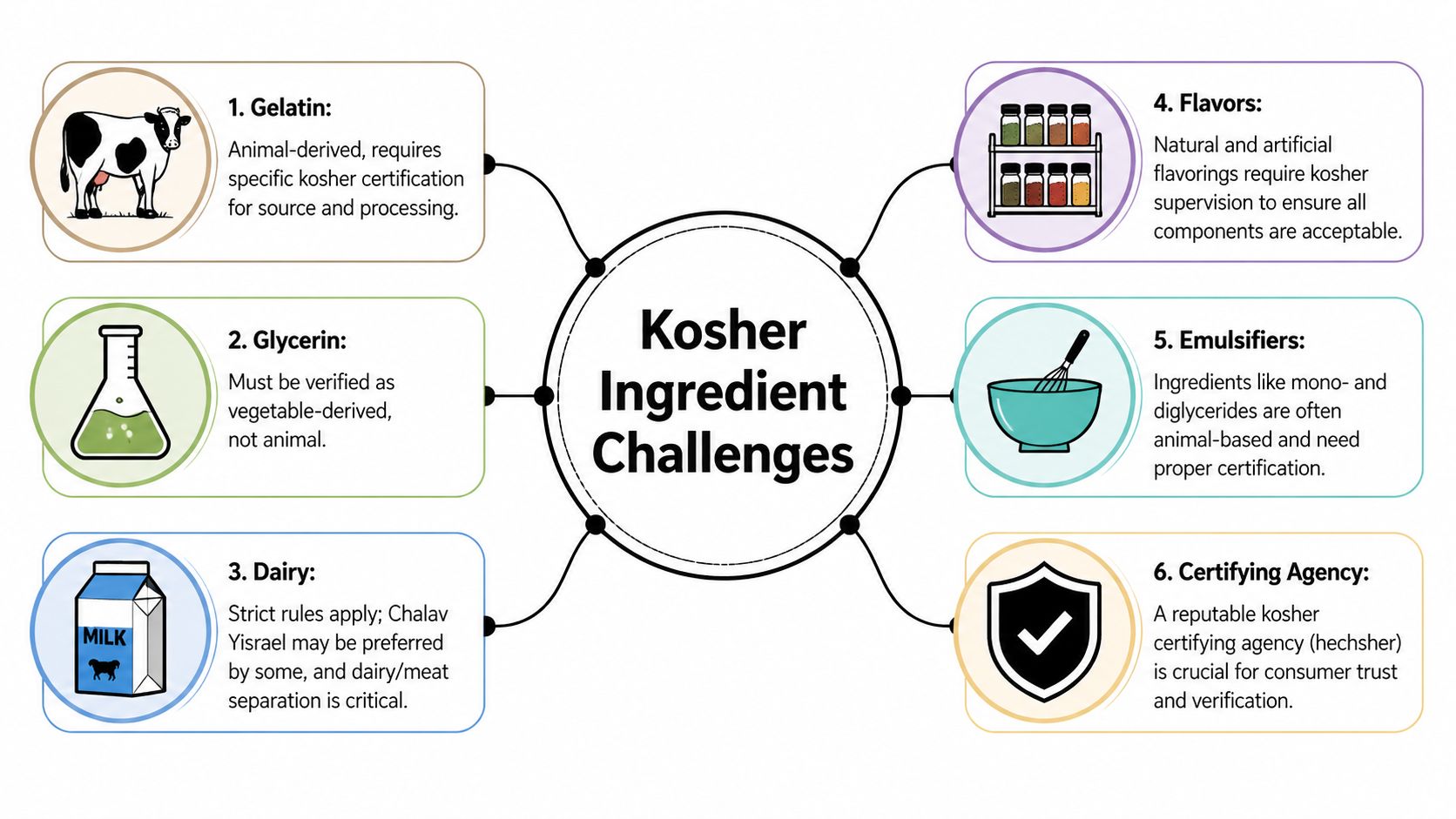
The hardest part of buying a kosher protein bar isn’t the protein. It’s the supporting cast. Bars often include binders, flavors, coatings, sweeteners, emulsifiers, and texture agents that can raise kosher questions even when the headline ingredient looks simple.
That’s why two bars with similar macros can be very different from a kosher standpoint.
The ingredients that deserve a second look
Some of the most common sticking points include:
- Gelatin can come from animal sources, so kosher suitability depends on both source and processing.
- Whey and casein place a bar in the dairy category, which matters for kosher observance and for shoppers avoiding milk.
- Natural flavors sound harmless, but their source materials and processing can be complex.
- Emulsifiers and glycerin may be plant-derived or animal-derived, so certification matters.
If you’ve ever read a bar label and thought, “I recognize the nuts and dates, but what are the rest of these ingredients doing here?” that instinct is useful. Texture and shelf life often depend on components shoppers overlook.
For a plain-language primer on how these texture-building additives work in foods, VitzAi.com's bulking agent insights are worth reading. It’s a good way to understand why a bar’s structure can look simple on the outside while relying on less obvious formulation choices.
Pareve is not the same as vegan
This is one of the biggest points of confusion.
A pareve bar contains no meat or dairy. That makes it appealing to kosher shoppers and often useful for people avoiding milk. But pareve doesn’t always mean vegan. Eggs can still appear in a pareve product.
That’s why a plant-based shopper should never stop at the kosher symbol alone. You still need the ingredient list.
If you’re vegan, “pareve” is a good clue, not a final answer.
A useful real-world example
Bars like NuGo and No Cow use OU Pareve certification, which excludes meat and dairy and can also help dairy-allergic shoppers avoid cross-contact concerns, as described in NuGo’s explanation of kosher pareve bars. That same source notes that pareve positioning often overlaps with lower-sugar product styles that support fullness.
On the other hand, some bars use egg whites as the protein source. The RXBAR Chocolate Sea Salt bar delivers 12 grams of protein per bar from egg whites, according to Round Eye Supply’s RXBAR product listing. That bar can fit kosher needs while still not being vegan.
What plant-based shoppers should check
If you want a bar that’s both kosher-friendly and free of whey, use a short filter:
- Check for a pareve mark
- Read the protein source
- Scan for egg white, honey, gelatin, and milk ingredients
- Look at the rest of the formula, not just the protein number
If whey is off the table for you, Gym Snack’s breakdown of protein bars without whey protein can help you compare alternative protein sources without getting lost in label jargon.
A Practical Buying Guide for Fitness Consumers
A good kosher protein bar isn’t just one that passes certification. It’s one that fits the job you need it to do. The best choice for a vegan commuter won’t be the same as the best choice for a lifter who likes dairy-based recovery snacks.

If you’re plant-based or dairy-free
Start with pareve. It’s the fastest way to screen out dairy. Then verify the protein source. A pareve bar made with pea and rice protein will usually fit a vegan pattern better than one made with egg whites.
Pay attention to how the bar sits with you. Some people tolerate certain fibers or sweeteners better than others, especially around training.
If you’re training with macro goals
Look at the kosher mark and the nutrition panel together. A bar may fit kosher standards and still be too low in protein, too sweet for your preference, or too light to hold you until your next meal.
For a quick refresher on what to compare on the panel, Gym Snack’s guide to protein bar nutrition facts is useful when you’re balancing protein, fiber, sugar, and total calories.
If you’re shopping for low-carb options
This is one area where the market is changing. An emerging trend is the rise of low-carb, sugar-free kosher vegan bars aimed at keto and diabetic users. One example is JO-MO, with bars that offer 20g of protein and under 1g of sugar, according to The Jerusalem Post’s report on JO-MO’s kosher vegan bars.
That said, many of these newer bars still stay in the sweet lane. They don’t do much for shoppers who want savory flavor, pea protein, or a crunchier format.
A simple aisle checklist
Use this when you’re short on time:
- Find the symbol first so you know whether the bar is dairy or pareve.
- Check the protein source because whey, egg white, soy, pea, and rice all serve different needs.
- Read the first few ingredients to see whether the bar is built around whole-food binders, protein isolates, or sweeteners.
- Match the bar to the moment. Pre-workout, post-workout, commute snack, and meal backup aren’t the same use case.
If you want a quick visual walkthrough before your next grocery run, this short video gives a useful overview of what to look for on packaged snacks:
The Unmet Craving for Savory Kosher Snacks
Most of the kosher protein bar aisle tastes like dessert. Chocolate brownie. Cookie dough. Peanut butter cup. White chocolate raspberry. Even when the macros work, the experience can start to feel repetitive.
That’s fine when you want something sweet. It’s not so great when you’ve already had a smoothie, a banana, and a sweet bar that week and all you really want is something salty and crunchy.

Why the category feels narrow
A significant gap in the market is the lack of savory kosher protein options. Top retailer assortments are dominated by sweet bars, while the few savory choices are often not in a convenient bar format or don’t deliver the 15g+ protein and clean plant-based profile many fitness consumers want, according to this discussion of the missing savory kosher snack option.
That matters more than it might seem. Taste fatigue is real. If every portable protein option tastes like a candy bar with better branding, some people stop reaching for them altogether.
Who gets underserved
This gap hits a few groups especially hard:
- Plant-based athletes who want savory protein without soy-heavy or dessert-style products
- Allergen-conscious shoppers trying to avoid dairy while also avoiding overly processed snack formats
- Busy professionals who want a gym-friendly snack that feels more like food than a treat
Sweet bars solve one problem. They don’t solve every craving.
What shoppers are really asking for
A lot of people don’t want another chocolate rectangle. They want something that still travels well, still supports macros, and feels satisfying in a different way.
Crunch matters. Savory flavor matters. Simpler ingredient expectations matter. And for shoppers who care about kosher standards, finding all of that in one product is still harder than it should be.
Why Gym Snack Is the Savory Solution
That unmet need is exactly where Gym Snack stands out. Instead of trying to make another dessert-style bar, it takes a different route with a savory, crunchy, plant-based protein snack built for people who are tired of sweet-on-sweet snacking.
The formula is centered on pea protein, which makes sense for shoppers who want a dairy-free and soy-free option. It also fits people who are looking for a cleaner-feeling snack that won’t rely on whey or milk ingredients to hit a meaningful protein target.
Why the format works
A crunchy savory snack does something bars often don’t. It breaks the dessert cycle. That sounds small, but it matters if you’re trying to stay consistent with your nutrition.
Gym Snack also aligns with what many kosher-curious shoppers are already screening for in spirit:
- Plant-based protein instead of dairy-based protein
- Dairy-free, soy-free, and gluten-free ingredients for a more allergen-conscious profile
- Bold cheesy flavor without turning your snack break into another candy imitation
Why it fits fitness routines
From a sports nutrition perspective, this kind of snack makes practical sense for people who want protein between meals, before training, or after training without the heaviness of a shake. The crunchy format also gives more sensory satisfaction than many bars, which can help when you’re eating on the go and still want your snack to feel like real food.
There’s also a broader mindset shift here. A lot of gym-goers are no longer choosing between performance and ingredient quality. They want both. They want convenience, but they also want a snack they’d look forward to eating.
That’s where a savory option can be more than a novelty. It can be the product you reach for consistently because it fills a gap the sweet bar aisle keeps ignoring.
Find the Right Fuel for Your Fitness Journey
A kosher protein bar can be a smart tool, whether you keep kosher strictly or just want more confidence in what you’re buying. Once you know how to read the symbol, understand dairy versus pareve, and check the ingredient list for protein source and hidden problem ingredients, the aisle gets much easier to approach.
The bigger takeaway is simple. The best snack isn’t just the one with a decent macro line. It’s the one that fits your body, your values, and your actual cravings. Sometimes that will be a sweet bar. Sometimes it won’t.
If you’re building a more complete snack routine around training, recovery, and busy workdays, these top post-workout refreshment options can help you think beyond bars and stock better choices.
If you’re ready for a savory alternative to the usual protein bar routine, take a look at Gym Snack. It offers chef-inspired, plant-based crunchy protein snacks with 15g+ protein per serving and bold cheesy flavor for people who want portable fuel without the dessert-bar fatigue.