

Most advice about a low calorie milkshake gets the priority backward. It cuts calories first, then acts surprised when the shake tastes thin, leaves you hungry, and behaves more like flavored ice than food. A better shake starts with a simple question, will this hold you over, or is it just a lighter dessert in disguise?
That distinction matters because milkshakes are still usually built around calorie-dense ingredients. A standard homemade shake can sit around 380 to 500 calories per 12 oz with whole milk and ice cream, while a lighter version with low-fat milk and light ice cream can land around 200 to 310 calories, and an ultra-light version with almond milk and no ice cream can fall to about 43 to 74 calories per serving (milkshake calorie baseline). Those numbers make the problem obvious. The lower you push calories without planning for protein density, fiber, and texture, the more likely you are to end up with a sweet drink that doesn't behave like a meal.
Why Most Low Calorie Milkshakes Fail at Keeping You Full
Calories aren't the whole job
A lot of recipes win on paper and lose in real life. They swap in almond milk, add fruit, maybe throw in ice, and call it a day. That can keep the calorie count low, but it also strips away the things that make a shake feel substantial, especially protein, thickness, and enough body to slow you down while you drink it.
That's why a milkshake built only to be light often fails people trying to manage appetite. If you're using it as a snack, you don't need a tiny dessert. You need something that can stand in for food for a while, especially if you're trying to stretch the gap between meals or keep a cut from turning into constant grazing.
Practical rule: if a shake is mostly liquid and fruit, treat it like a treat, not a meal replacement.
The bigger context backs that up. Milkshake products on the market remain calorie-dense, and fast-food versions still run high. Market Research Future estimated the global milkshake market at USD 17.6 billion in 2024, with a projection to USD 26.09 billion by 2035 at a 3.64% CAGR (market context). That same source notes McDonald's shakes at 520 calories for a small chocolate, 650 for medium, and 800 for large, with a large vanilla at 780 and a large strawberry at 850 calories. In other words, “milkshake” still usually means energy-dense, so low calorie only matters if the build changes the structure of the drink.
Satiety comes from density, not just restraint
The most useful low calorie milkshake is the one that gives something back for every calorie. That usually means a more protein-forward build or a shake with some fiber and thicker texture, not just a diluted one. The search world is full of almond milk, fruit, cocoa, and sweetener ideas, but it rarely answers the main question: will this keep me full long enough to replace a snack or light meal?
A useful mindset shift is to think in terms of macro density. If the shake contains very few calories but almost no protein, it's probably a short-lived fix. If it carries enough protein and some thickness, it can work as a genuine break between meals.
For readers who want a deeper appetite-control lens, the guide on how to stay full longer maps that same logic onto everyday eating. The takeaway is simple. A good shake isn't the lowest-calorie version you can make, it's the lowest-calorie version that still feels like it fed you.
Choosing Your Base Liquid and Texture Builders
Base liquid choices shape the whole shake
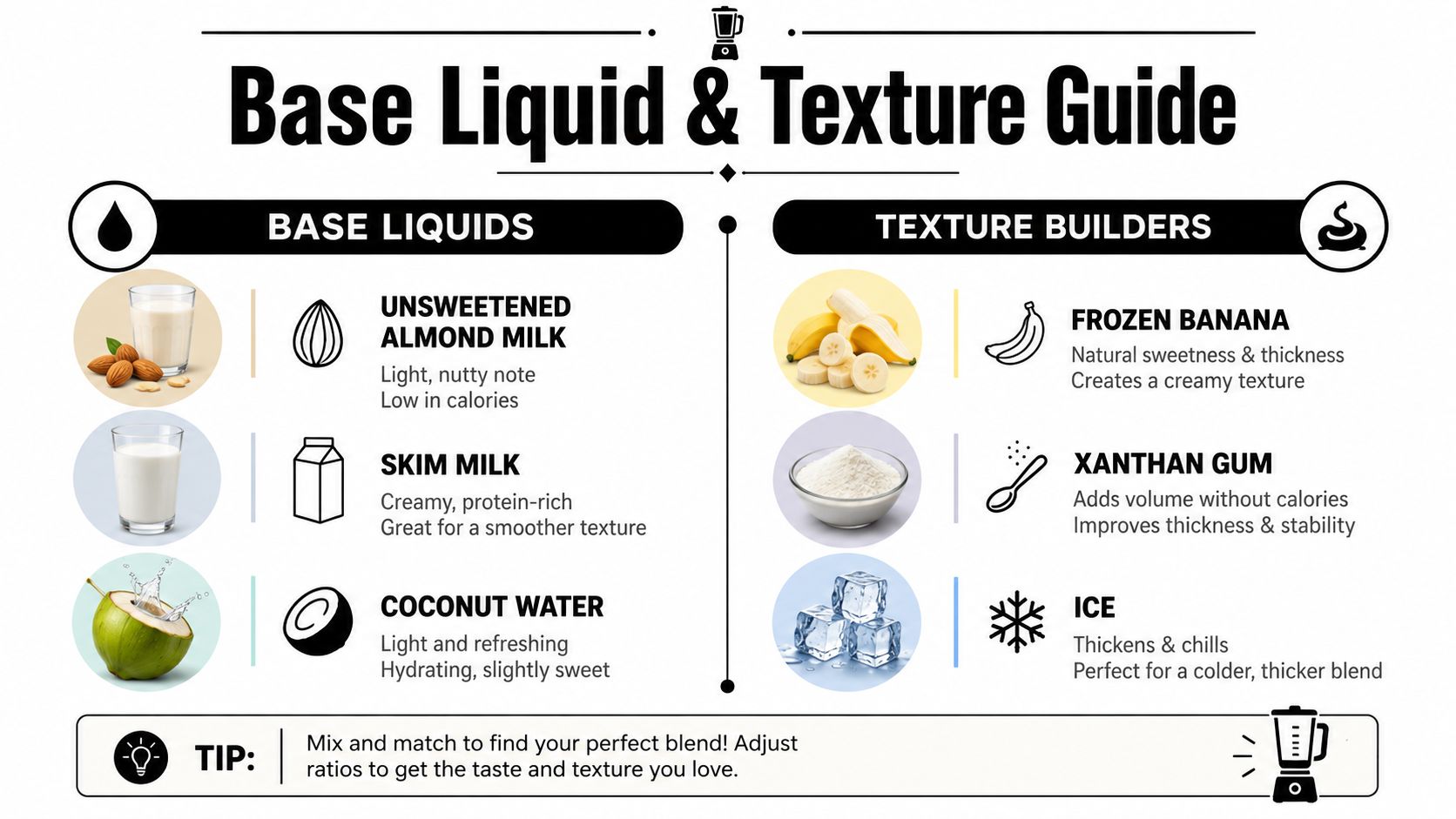
The liquid you choose decides whether the finished shake feels creamy, chalky, or like sweetened water. Unsweetened almond milk is the leanest common option and gives a light nutty note, but it won't carry body on its own. Skim milk brings more dairy structure and a more familiar milkshake feel, while still staying lighter than whole milk. Cashew milk usually lands creamier than almond milk, which helps when you want dessert texture without piling on calories.
Oat milk tastes richer and naturally thicker, but it can push the shake toward a more carb-heavy profile. Light coconut milk gives a pronounced flavor and a soft, rounded mouthfeel, though it's easy to overuse and make the shake taste like coconut dessert rather than a versatile base. If you're building for macros, the question isn't which one is “best,” it's which one gives you the texture you want with the fewest wasted calories.
Texture builders do the heavy lifting
A thin shake usually needs help from texture agents, not more sweetener. Xanthan gum is the fastest way to create a milkshake-like body in very small amounts. Ice adds volume but can also dilute flavor, so it works best when the recipe already has enough intensity from cocoa, fruit, or vanilla. Frozen banana gives sweetness and thickness at the same time, which is why it's such a reliable bridge between dessert and meal.
Frozen vegetables can work too, especially cauliflower, because they bulk up the shake without adding much flavor if the rest of the recipe is strong enough. Sugar-free pudding mix is another practical option when the goal is to mimic a diner-style shake texture, though it can make the result feel more like a dessert cup than a nutrition-first shake. In retail data, the Tesco no-added-sugar strawberry milkshake mix lands at 149 kcal per 213 ml prepared serving, or roughly 70 kcal per 100 ml, with 7.7 g protein, 13.0 g sugars, 3.6 g fat, and 2.3 g saturates (Tesco product data). That's a useful benchmark because it shows how quickly a “light” milkshake can still skew carbohydrate-heavy.
Start with the thickest ingredient in the blender jar first, then add the liquid, then the powders. That order helps avoid clumps and keeps the blade from spinning air into the mix too early.
A simple blending order that avoids grainy shakes
Powders go in last if they're prone to clumping, but the liquid should still be in the blender before the motor starts. If you're using frozen fruit, keep the liquid modest at first and add more only after the blade catches. The same logic applies to gum-based thickeners. Too much too soon can make the shake gummy instead of creamy.
The best texture builds usually follow the same pattern. Start with a base liquid, add frozen solids, include one thickener, then blend and adjust. If the shake tastes good but feels thin, you usually need body, not more sweetener.
Protein Forward Builds Versus Fruit Only Shakes
The trade-off is simple
A protein-forward shake is better when you want the drink to behave like food. A fruit-only shake is better when you want a lighter, more dessert-like sip that fits a small snack slot. The difference shows up in how long the shake tends to hold your appetite, not just in the calorie number.
For training days, a protein-forward build makes more sense almost every time. It gives you something to recover with and usually feels more substantial, even if the calories are higher than a fruit-only version. That matters because the point of a post-workout shake isn't just to be light. It's to do something useful.
How to increase protein intake is a useful companion topic if your current shakes are mostly fruit and ice. The upgrade is not adding random extras. It's increasing protein density without wrecking the texture.
Side by side comparison
| Metric | Protein Forward Build | Fruit Only Build |
|---|---|---|
| Main job | Recovery and fullness | Light dessert or snack |
| Typical structure | Protein powder, Greek yogurt or plant protein, thickener | Frozen berries, banana, ice, sweetener |
| Satiety potential | Higher | Lower |
| Texture | Creamier and heavier | Brighter, thinner, more refreshing |
| Best use | Post-workout, meal gap, GLP-1-friendly snack | Afternoon treat, calorie-controlled dessert |
| Common failure point | Can taste chalky if under-blended | Can taste like flavored ice if under-built |
A fruit-only shake can still be useful if you're intentionally keeping it small. It just shouldn't be mistaken for a filling option unless there's another substantial component in the mix. Protein-forward versions win when the goal is appetite control, especially for people who need a shake to bridge time between meals.
Vegan readers still have good options
Plant-based builds don't have to mean watery drinks. Pea protein, soy protein, and blended nut milks can create a fuller shake without using dairy. The challenge is flavor management. Plant proteins can taste flat if you don't give them cocoa, vanilla, or frozen fruit with enough character.
The practical rule is to choose the texture you need first, then match the flavor around it. If the shake is for a meal gap, prioritize protein. If it's for a dessert swap, a lighter fruit build may be enough.
Three Complete Low Calorie Milkshake Templates
Post workout recovery shake
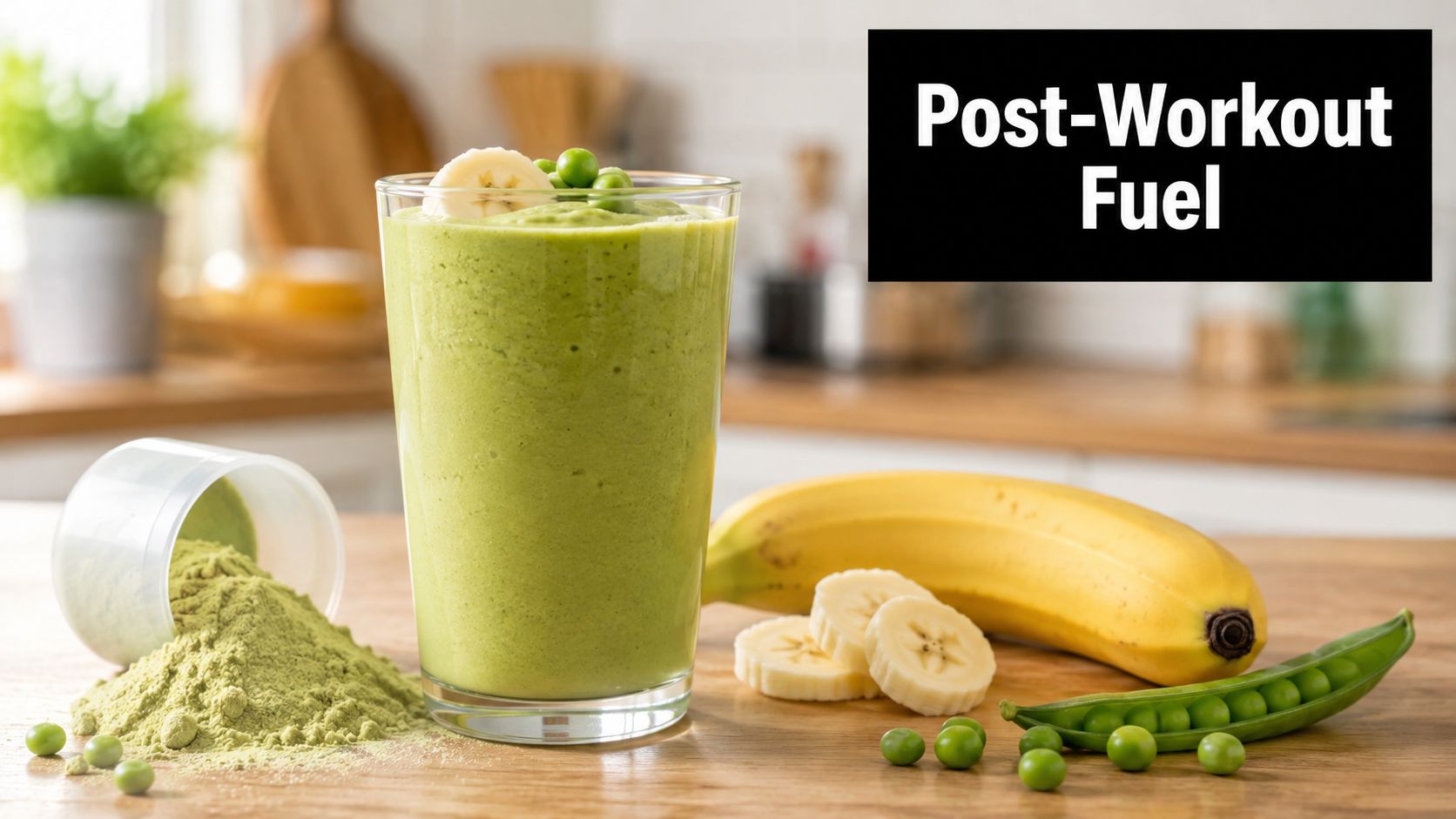
Use this when you want something that feels like a real recovery drink instead of a sweet snack. It works well after lifting because it keeps the flavor familiar while giving the shake actual structure.
Ingredients
- 1 cup unsweetened almond milk
- 1 scoop pea protein
- 1 small frozen banana
- 1 cup ice
- 1 teaspoon cocoa powder
- Optional vanilla extract
Method
- Add almond milk first.
- Add the pea protein and cocoa.
- Add frozen banana and ice.
- Blend until smooth, then let it sit for a few seconds and blend again if the texture looks airy.
Macro note This is a protein-forward template with a moderate calorie profile, and the banana keeps it from tasting hollow. If you want it thinner, add more almond milk. If you want it richer, use less liquid and let the banana do more of the work.
Vegan chocolate dessert swap
This one is for the moments when you want a milkshake feel without turning the glass into a sugar bomb. It leans on cocoa, a creamy plant milk, and a small amount of thickener so the texture reads as dessert instead of juice.
Ingredients
- 1 cup cashew milk
- 1 tablespoon cocoa powder
- 1 scoop chocolate or unflavored plant protein
- 1 cup ice
- Tiny pinch xanthan gum
- Zero-calorie sweetener, to taste
Method
- Pour in the cashew milk.
- Add cocoa and protein.
- Add ice and the smallest practical amount of xanthan gum.
- Blend on low first, then increase speed until the shake looks glossy and thick.
For readers comparing equipment, top milkshake makers for 2026 is a useful reference if you're deciding whether you want a standard blender or a dedicated drink machine for more consistent texture.
If a dessert swap tastes “clean” but not satisfying, it usually needs more cocoa depth or a better thickener, not more sweetener.
GLP 1 friendly satiety shake
This version aims for staying power, not just low calories. It works best when you want a snack that feels calm and useful between meals, especially if your appetite is already lower than usual and you want every sip to count.
Ingredients
- 3/4 cup Greek yogurt
- 1/2 cup frozen berries
- 1 tablespoon chia seeds
- 1/2 cup unsweetened almond milk
- Ice, as needed
- Vanilla extract or cinnamon
Method
- Add the yogurt and almond milk first.
- Add berries and chia seeds.
- Add just enough ice to thicken.
- Blend well, then rest the glass for a minute so the chia can start working.
If you want to batch prep, portion the berries and chia into freezer containers and keep the yogurt separate. That makes it much easier to build a shake quickly without reaching for extra sweeteners or overdoing the liquid.
To see more on format and blending style, a quick watch of the embedded demo below is helpful when you're tuning thickness by eye.
Making Your Shake Satisfying for Weight Management
Satiety needs more than low calories
A shake can stay low in calories and still do a poor job of managing hunger. The versions that hold up better use protein, some form of fiber, and enough texture to slow the drinking pace. That matters because a liquid meal disappears fast if it is too thin, even when the ingredient list looks balanced on paper.
Protein is the easiest lever to pull when fullness matters. It is also the one most fruit-only recipes leave out. If you want a low calorie milkshake to work as a snack or a light meal, protein should be part of the base, not a garnish.
For people using GLP-1 therapies, that difference matters even more. A lower appetite does not mean you need less structure. A shake that feels too light can leave you underfed in a way that seems fine at first, then catches up later.
Fiber and fats should be deliberate, not automatic
Fiber helps when it has a real job in the recipe. Chia, flax, and some frozen produce can add bulk and slow the pace of the drink. Healthy fats like almond butter can also improve staying power, but they are not required in every shake. If the calories are already tight, too much fat can turn the shake into a calorie trade instead of a satiety win.
The better approach is to match the shake to the use case. If it is a pre-workout snack, keep it lighter and easier to digest. If it is replacing a late-night snack, give it more body and a bit more staying power. If it is filling a meal gap for a GLP-1 user, the balance should favor protein and texture over novelty flavor.
For a related decision framework, the guide on evidence-based weight loss shakes is worth reading alongside this approach because it reinforces the same idea, a shake only works if the structure fits the goal. If you want a practical list of foods that support appetite control, the breakdown of best foods for appetite control is a useful companion guide.
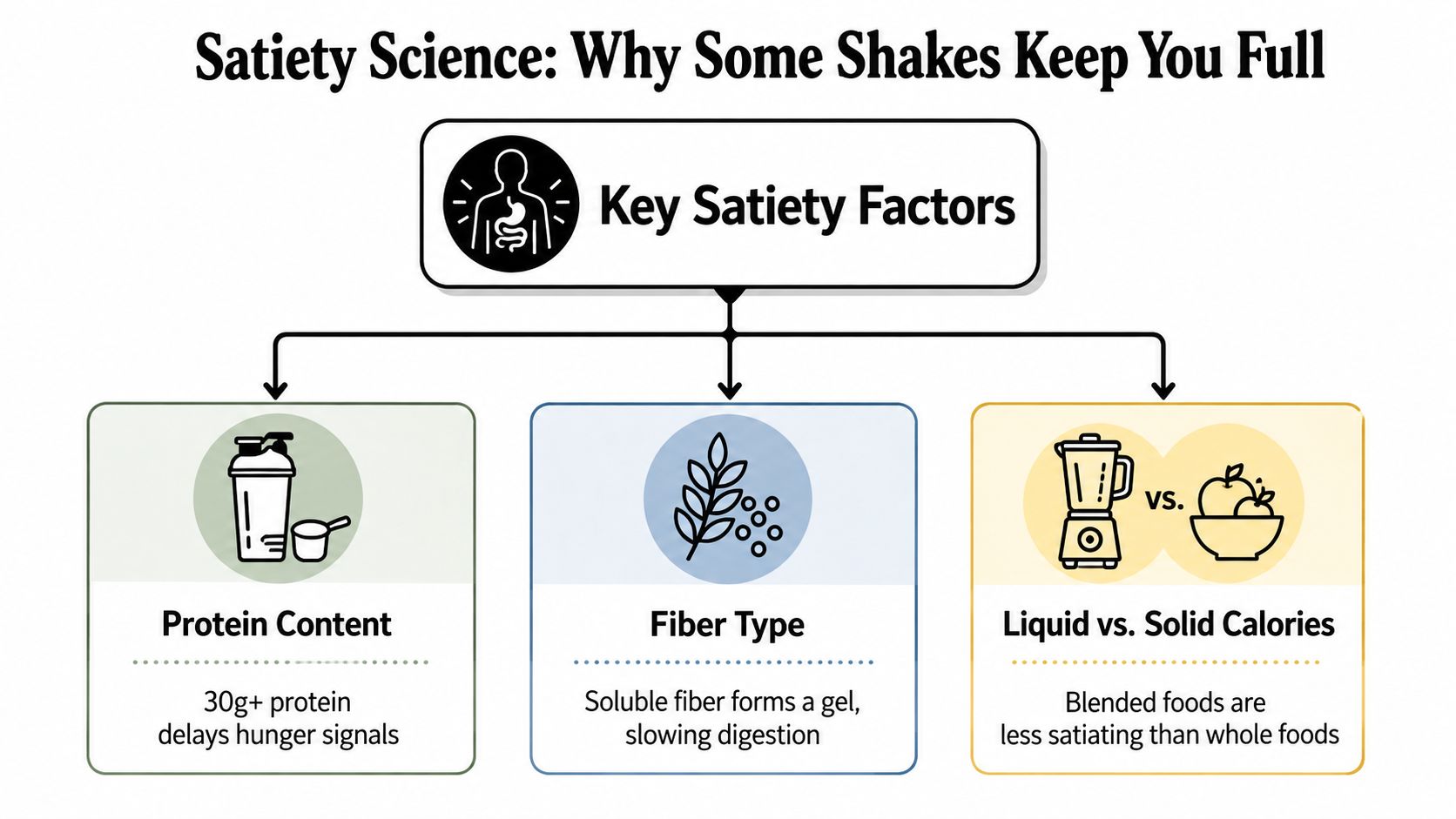
Good rule: when hunger control matters, build the shake to slow you down, not just to lower the calorie total.
If your current shake leaves you hungry, the fix is usually not more volume. It is better protein, smarter fiber, and fewer empty ingredients that only improve taste.
Common Mistakes and When to Use Each Shake Type
A lot of good shakes get ruined by the same three mistakes. The first is over-blending, which whips in foam and makes a thick shake feel oddly airy. The second is using fresh fruit when frozen fruit would have given better body. The third is dumping in too much liquid too early, which forces you to rebuild texture from scratch.
The right shake type depends on the job. Use a protein-forward shake after training or any time you need something that acts like food. Use a fruit-led shake when you want a smaller dessert replacement and don't need it to hold you for hours. Use the GLP-1-friendly template when appetite is already reduced and you want each sip to count.
If you're testing recipes at home, don't judge one version too fast. A shake that tastes thin at first may just need less liquid, a stronger frozen base, or a better blender rhythm. A shake that tastes heavy might be the right answer for a busy morning, even if it's not the flashiest option.
Gym Snack is a good fit if you want more practical, protein-first ideas that support fullness without making food feel bland. Visit Gym Snack for more nutrition-minded snack strategies, especially if you're building a routine around training, appetite control, or keeping your meals satisfying without going overboard on calories.