

Most advice about low saturated fat snacks stops at “swap chips for rice cakes.” That's a weak solution. Removing saturated fat can leave you with a dry, carb-heavy snack that tastes forgettable, wears off quickly, and sends you back to the pantry before your next meal.
The better target is low saturated fat plus enough protein and fiber to support fullness for roughly two to three hours. That combination matters for gym-goers managing energy around training and for people using GLP-1 medication who may have a smaller appetite but still need nutrient-dense food. A snack should do more than pass a label test. It should earn its place in your gym bag.
Why Most Low Saturated Fat Snacks Leave You Hungry
A rice cake can be low in saturated fat and still be a poor hunger-management tool. The same applies to pretzels, many low-fat crackers, and several “light” snack packs. They may remove some fat, but if they replace it with rapidly digested carbohydrate and provide little protein or fiber, they don't give your appetite much reason to settle.
That's the trap in treating low fat as a synonym for filling. Saturated fat is only one part of the nutrition panel. A snack can meet a low saturated fat benchmark and still be too small, too sweet, or too low in protein to carry you between meals. Replacing saturated fat with refined carbohydrate isn't automatically a health upgrade, a point also raised in nutrition guidance on reducing saturated fat.
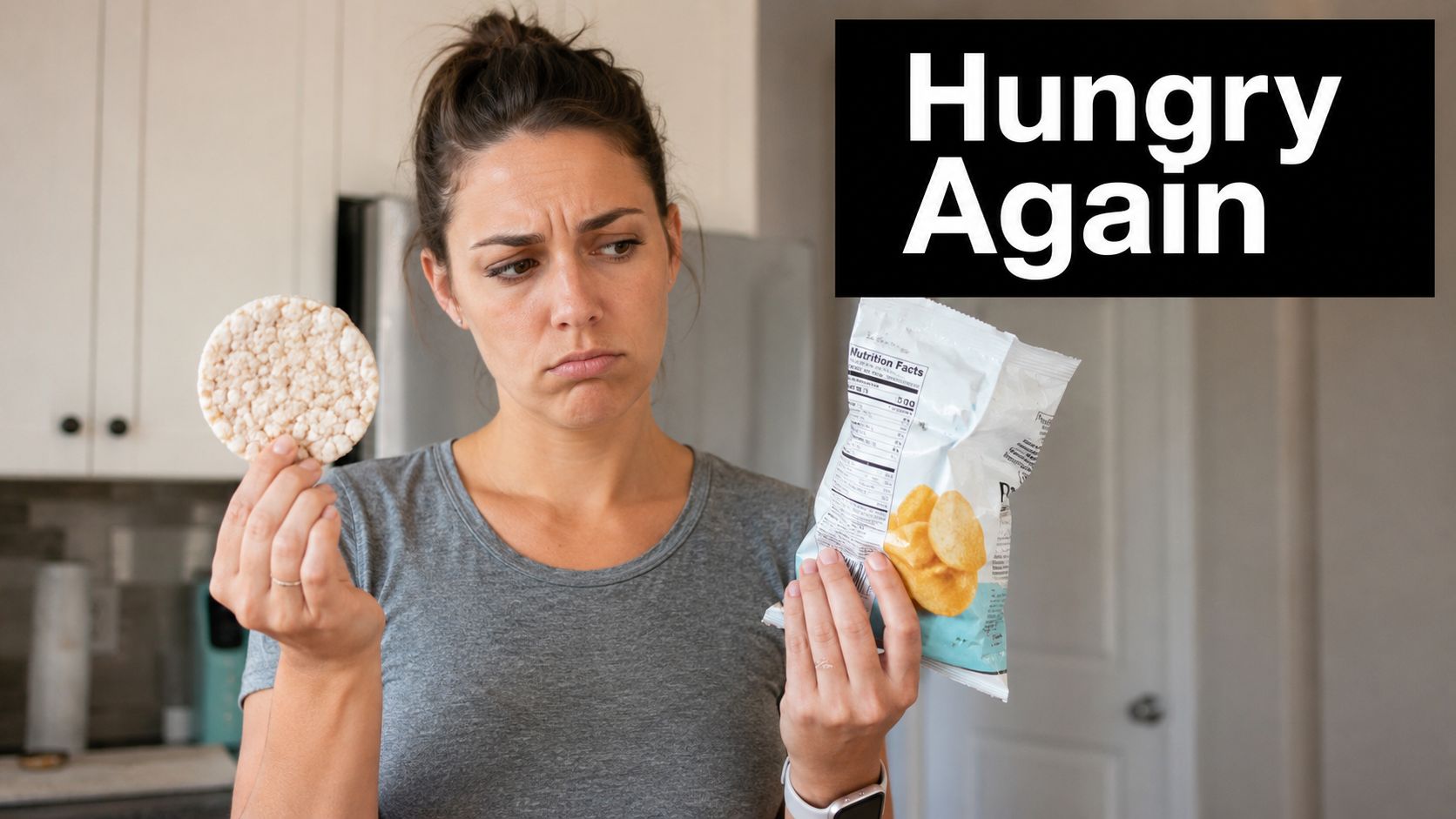
The satiety gap
In practice, I look for three things before recommending a snack:
- Protein: Enough to make the snack function as a small nutrition event, not just a handful of calories.
- Fiber: A whole-food component that adds bulk and slows the eating experience.
- Flavor and texture: Crunch, salt, spice, or umami, so the snack satisfies rather than inviting a second snack.
For many people, a protein-forward savory option works better than a plain starch. That doesn't mean every snack needs to be large. It means the available calories should do useful work. A portion of roasted chickpeas with vegetables, edamame with fruit, or a plant-based protein snack can provide a more balanced combination than pretzels alone.
Gym-goers often need a snack that bridges a long gap before training or supports recovery afterward. GLP-1 users may face a different problem, reduced appetite and difficulty fitting enough protein into smaller meals. In both situations, low saturated fat is useful, but satiety density is the deciding factor.
For a practical way to align snack choices with your daily energy and protein needs, use the Strive Workout Log macro tool, then compare your actual snack routine with guidance on how to stay full longer. The goal isn't to chase a perfect snack. It's to stop choosing foods that look virtuous on the label but leave you hungry soon afterward.
The Official Thresholds for Low Saturated Fat Snacks
You can evaluate a packaged snack quickly if you know which line on the label matters. The Dietary Guidelines fact sheet on saturated fats states that adults should keep saturated fat to no more than 10% of total energy. U.S. guidance and FDA materials use the same ceiling.
On a 2,000-calorie diet, that ceiling translates to about 20 grams of saturated fat per day. The FDA also defines 5% Daily Value or less as low for saturated fat on the Nutrition Facts label. Because the Daily Value is less than 20 grams per day, a serving at 5% DV or less works out to 1 gram or less per serving.
That creates a simple first-pass test. Find the saturated fat line, check the serving size, and look for 1 gram or less. If you'll eat two servings, multiply the listed amount by two before deciding whether the snack fits your day.
| Standard | Threshold | What It Means Per Serving |
|---|---|---|
| WHO and U.S. dietary guidance | No more than 10% of total energy | Keep total daily saturated fat within the overall energy limit |
| FDA Daily Value | Less than 20 g per day | The reference amount used for label calculations |
| FDA “low” definition | 5% DV or less | 1 g or less saturated fat per serving |
| Institutional snack benchmark | No more than 5 g total fat | A tighter total-fat target used in some commercial settings |
| Institutional saturated-fat benchmark | No more than 10% of calories | A product-development benchmark per serving |
These standards don't tell you whether a snack will keep you full. They tell you whether it clears the saturated fat hurdle. You still need to inspect protein, fiber, serving size, added sugar, and the ingredient list.
A product can meet the FDA low claim while delivering little nutritional value. Conversely, a snack may contain unsaturated fat from seeds or nuts and still be satisfying without being a low-fat food. The label test is the starting gate, not the finish line.
How Protein and Fiber Drive Satiety Without Saturated Fat
Protein changes the job a snack performs. Instead of supplying quick energy alone, it can support appetite control through digestive and hormonal signals. Reviews of plant proteins describe protein as generally more satiating than an equivalent amount of energy from carbohydrate or fat, and they discuss appetite-related gut hormones including CCK and PYY.
Pea protein is especially practical for plant-based snack formulation. In crossover studies reviewed in the peer-reviewed discussion of plant proteins and satiety, a 20 g pea-protein preload lowered subsequent food intake, while a 30 g pea-protein isolate increased perceived satiety. Those findings don't mean every person needs exactly the same dose. They do show why a protein-first snack can work even when saturated fat stays low.
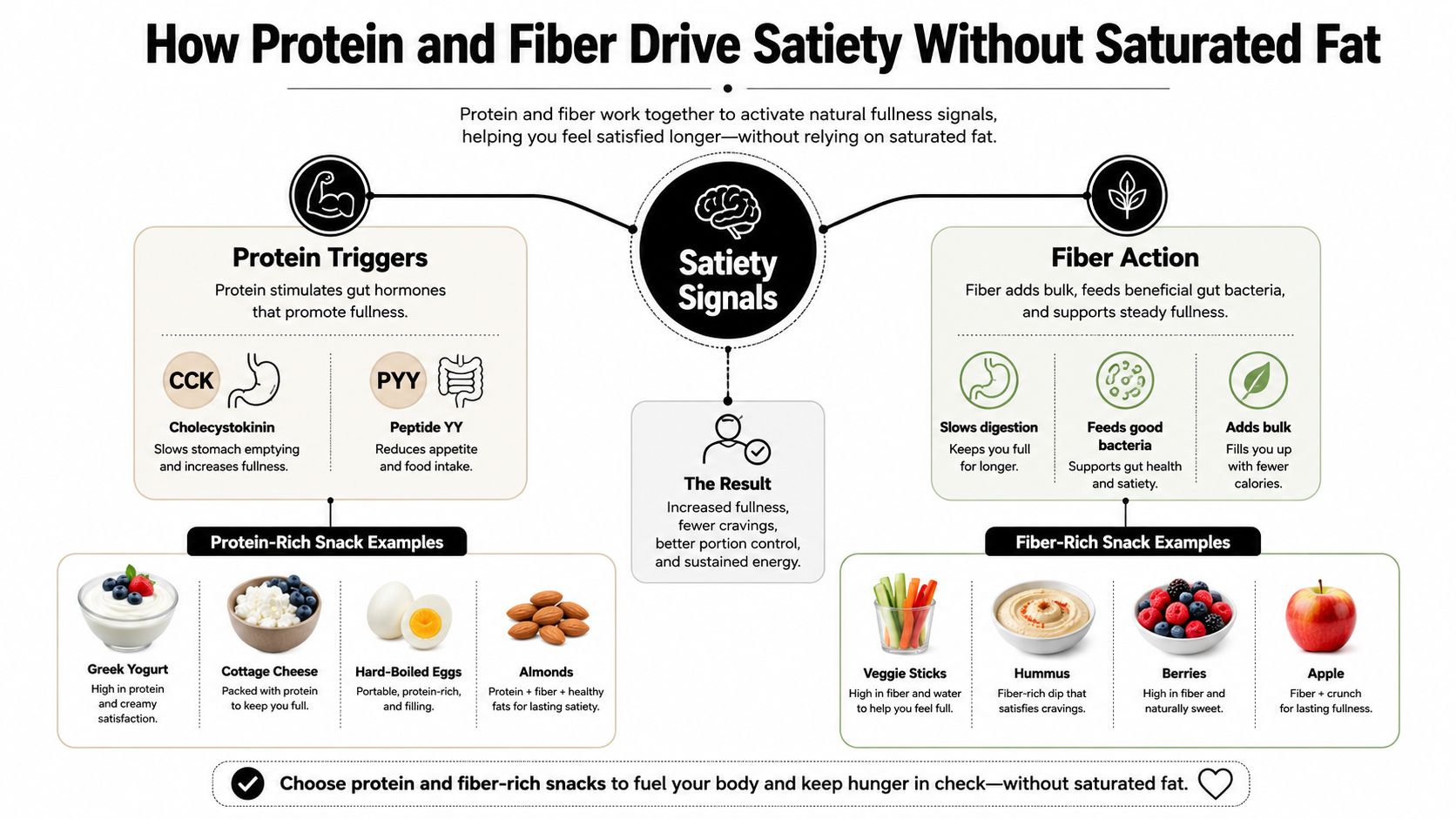
Protein is only half the formula
Fiber adds a different mechanism. Beans, chickpeas, vegetables, fruit, and seeds can slow the pace of digestion, add physical volume, and make a snack take longer to eat. That matters because a small, quickly consumed snack is easy to underestimate, especially when it has a soft texture and little chewing demand.
The strongest combinations pair a meaningful protein portion with a fiber-rich side:
- Pea protein with an apple.
- Edamame with carrots or snap peas.
- Plant-based yogurt with berries and seeds.
- Roasted chickpeas with sliced peppers.
- A savory protein crisp with fruit or a vegetable container.
Practical rule: Don't ask only whether a snack is low in saturated fat. Ask what will still be working for your appetite an hour after you finish it.
Many low-fat crackers and fruit-only snacks fall short. They may be useful as part of a meal or before easy activity, but they often need a protein partner when the next meal is several hours away. For more food-based ways to build protein into the day, the guide to increasing protein intake is a useful companion.
The same structure can help GLP-1 users, but portion tolerance matters. A large, dense snack may feel uncomfortable, while a smaller protein portion eaten slowly with a modest amount of fiber can be easier to manage. Gym-goers should also distinguish between a pre-workout snack, where digestibility matters, and an afternoon snack, where staying power matters more.
Practical Snack Combos and Portion Frameworks
A low saturated fat label does not guarantee a satisfying snack. Build each combination around its job: before training, use a moderate portion of protein and digestible carbohydrate; during a long workday, give fiber and food volume more room. For GLP-1 users, start smaller, eat slowly, and avoid forcing a dense serving to reach a high protein target.
Use the combinations below as templates, then check packaged-food labels for saturated fat, serving size, protein, and fiber. The goal is enough protein and fiber to support comfortable fullness for roughly two to three hours, not the largest snack possible.
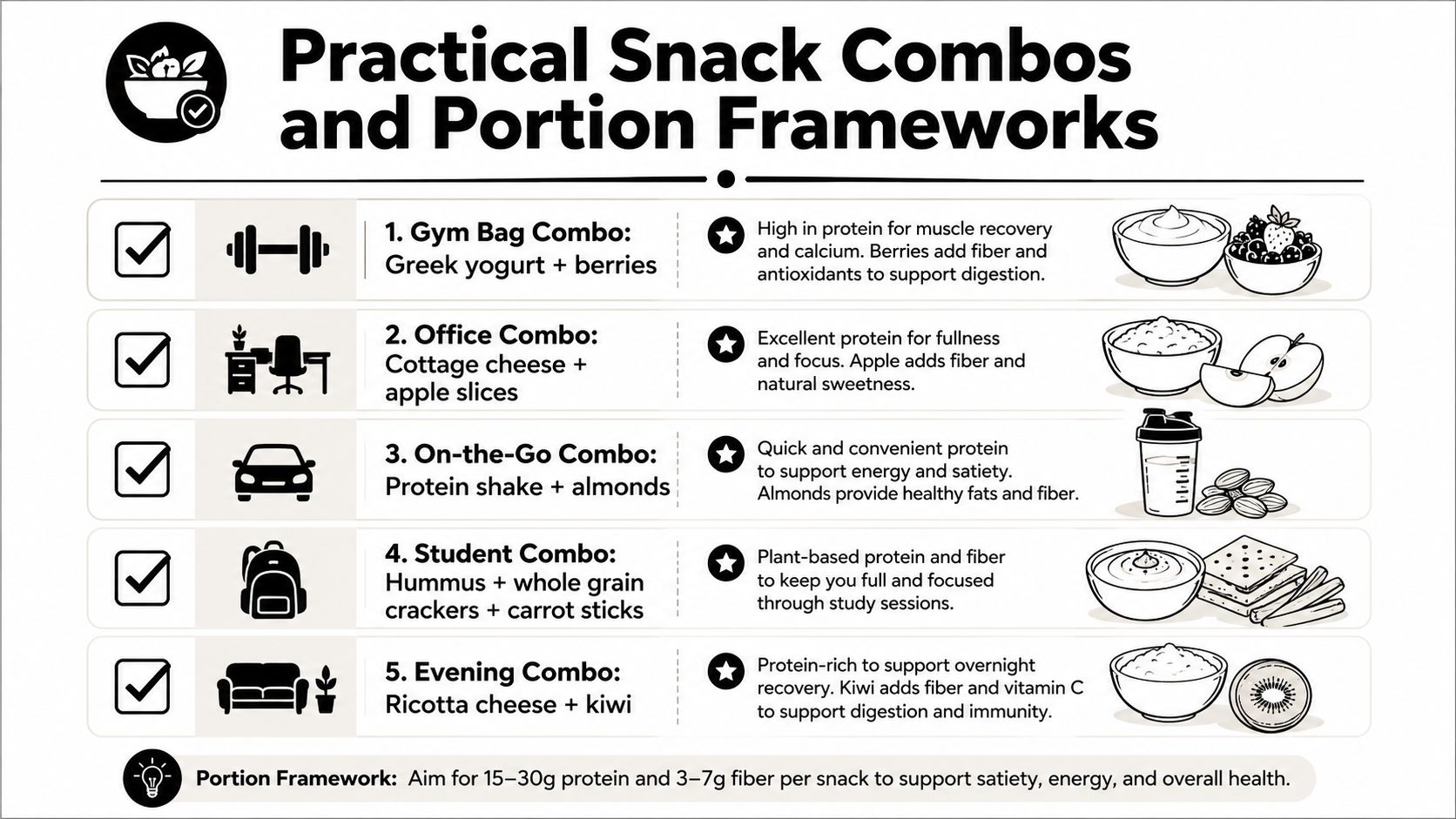
Gym bag options
Savory protein snack plus fruit: Pair a serving of Gym Snack in either Cheddar Cheeze or Jalapeño Cheddar Cheeze with an apple, orange, or berries. The snack provides a protein anchor, while fruit adds carbohydrate and fiber. It works well before training when portability matters and a full meal would feel excessive.
Edamame and crunchy vegetables: Combine shelled edamame with cucumber, snap peas, or baby carrots. Edamame contributes plant protein and fiber, while the vegetables add volume and chewing without making the snack especially heavy. If beans or legumes cause stomach discomfort, save this option for after training or a non-training afternoon.
Roasted chickpeas with nutritional yeast: Portion roasted chickpeas and season them with nutritional yeast, smoked paprika, garlic, or chili. The result is crunchy and plant-based, although the fiber and texture may sit poorly immediately before intense exercise for some people.
For another portable format, compare options in this guide to high-protein, low-fat snacks. Use DIY recipes for fat burn coffee only as a beverage idea, not as a replacement for the protein and fiber that make a snack filling.
Desk and afternoon options
Plant-based yogurt with seeds and berries: Choose an unsweetened or lightly sweetened plant-based yogurt, then add berries and a measured spoonful of chia, flax, or hemp seeds. Confirm the yogurt's protein content because some varieties contribute little protein. Seeds improve texture and fiber, but too much fat or fiber at once can reduce tolerance for GLP-1 users.
Protein snack with vegetables and dip: Combine a savory protein snack with sliced peppers and a bean-based dip. The vegetables slow the eating pace, and the dip adds fiber and substance. Eat from a portioned container rather than grazing from a bag.
If appetite is reduced by GLP-1 medication, stop at comfortable satisfaction and keep the next snack smaller if needed. For training days, increase the carbohydrate side when the session requires more fuel instead of relying on saturated-fat-heavy foods for extra calories.
Shopping and Meal Prep Strategies for Busy Schedules
The snack stash usually fails before the nutrition plan does. If the only option in your office drawer is a sweet bar, you'll choose the bar. If the gym bag contains an open bag of crackers, you'll eat crackers. Build the environment around the decision you want to make.
A practical shop includes shelf-stable protein snacks, roasted chickpeas, dry-roasted edamame, fruit that travels well, single-serve plant-based yogurt, snap peas, carrots, cucumbers, and ingredients for bean dip. Choose bold seasonings too. Smoked paprika, nutritional yeast, chili powder, black pepper, garlic, and everything-bagel seasoning can make low saturated fat snacks taste intentional rather than restrictive.
A short prep routine
On a prep day, rinse and portion vegetables first. Store them at eye level in the refrigerator beside protein dips or edamame, not buried behind ingredients you rarely use. Divide roasted chickpeas into containers so you aren't eating from the baking tray or guessing at a serving while distracted.
Keep a separate shelf-stable kit in your work bag or car. Include a protein-forward savory option, fruit, and a backup item that doesn't require refrigeration. Replace anything that becomes stale, crushed, or unappealing. Food that survives storage but tastes bad isn't a practical snack.
The savory category deserves more attention because many convenient protein products are designed like desserts. Current trend coverage from Symrise on savory snacking innovation describes interest in bold flavor, lower sugar, protein-forward formats, and options such as plant-based crisps, roasted chickpeas, and seaweed snacks. That direction matches what many athletes want: salty, crunchy, umami-rich food that doesn't feel like another sweet shake.
For a busy week, assemble three zones:
- Refrigerator: Cut vegetables, edamame, plant-based yogurt, and bean dip.
- Gym bag: Shelf-stable protein snacks and fruit.
- Desk drawer: Backup portions with clear labels and no open multi-serving bags.
A prep routine should remove friction, not create a second job. Keep the ingredients familiar, the portions visible, and the flavors strong enough that you won't abandon the plan for vending-machine food.
Quick Recipes for Savory Low Saturated Fat Snacks
Low saturated fat does not guarantee a filling snack. Each recipe below pairs plant protein with fiber, then adds enough flavor and texture to make the food satisfying. That combination is more useful for gym-goers and people using appetite-affecting medication than a small, low-fat snack built mostly from refined starch.
Spiced roasted chickpeas
Ingredients
- Drained and thoroughly dried chickpeas
- Smoked paprika
- Garlic powder
- Black pepper
- Chili powder
- Salt to taste
- Nutritional yeast, optional
Method
Pat the chickpeas dry, toss them with the spices, and bake or air-fry until crisp. Shake the basket or tray during cooking so they brown evenly. Cool them fully before storing, since trapped steam softens the coating.
Chickpeas provide plant protein and fiber, while avoiding butter and high-saturated-fat toppings keeps the recipe's saturated fat low. Nutritional yeast adds a savory, cheese-like note without dairy. Pair a portion with fruit or a higher-protein item if chickpeas alone do not hold your hunger for several hours.
No-cook black bean and corn dip
Ingredients
- Rinsed black beans
- Corn
- Diced tomato
- Lime juice
- Chopped cilantro
- Smoked paprika and cumin
- Baked tortilla chips or sliced vegetables
Method
Mash part of the beans, then fold in the remaining beans, corn, tomato, lime juice, and seasonings. Serve with baked tortilla chips when you need a pre-workout carbohydrate option. Use sliced vegetables when you want more volume and fiber.
The beans supply the protein and fiber base. Keep the portion practical before training, because a large legume serving can feel heavy for some people. For longer-lasting satiety, add a separate protein source rather than increasing the dip.
Savory pea-protein bites
Ingredients
- Plain pea-protein powder
- Nutritional yeast
- Everything-bagel seasoning
- Mashed white beans or unsweetened plant yogurt
- A small amount of ground flax or hemp hearts
- Black pepper
Method
Mix until the dough holds together, adjusting the texture with a little more bean or yogurt. Roll into small bites, chill briefly, and store in a sealed container. Keep them easy to portion around workouts or while taking appetite-affecting medication.
The formula combines pea protein, fiber-rich ingredients, and assertive seasoning. For more ideas about cooking with hemp hearts, see this hemp-heart cooking guide. Serve the bites with cucumber or peppers for crunch instead of adding a high-fat coating.
Your Low Saturated Fat Snack Audit Checklist
Run this audit on the snacks currently in your kitchen, gym bag, and desk drawer.
- Check saturated fat: Look for 5% Daily Value or less, which the FDA identifies as low. The relevant label benchmark is 1 gram or less per serving, based on the FDA Daily Value.
- Verify protein: Choose a snack with enough protein to function as more than a refined-carbohydrate vehicle. A protein-forward format is usually more useful for hunger control.
- Assess fiber: Pair the protein with beans, chickpeas, fruit, vegetables, or seeds. Fiber gives the snack bulk and a slower eating experience.
- Control the portion: Confirm how many servings you'll eat, especially with bags that contain multiple servings.
- Taste-test: If the snack is bland, dry, or dessert-like when you want savory food, it won't stay in your routine.
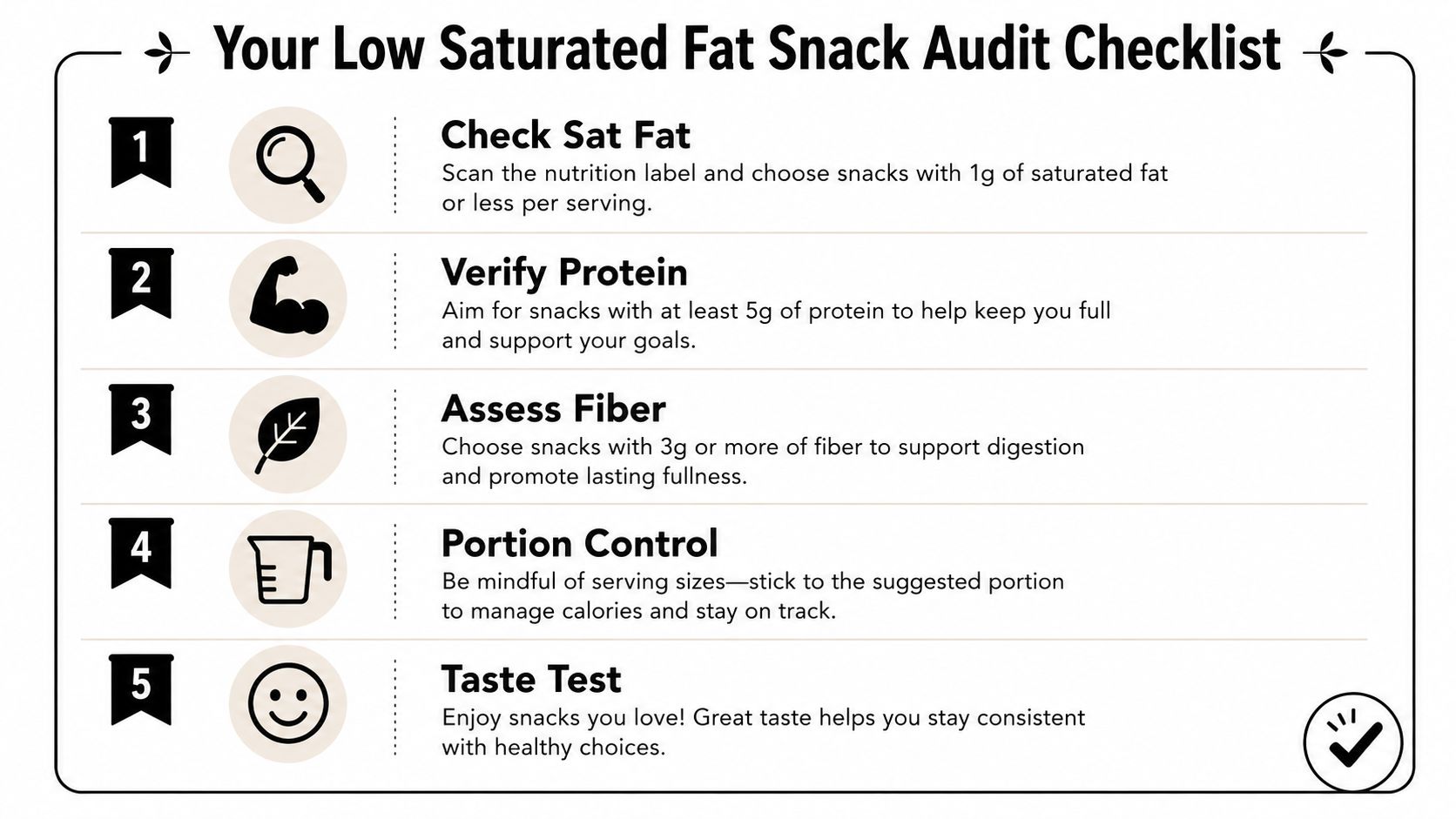
Replace two snacks that repeatedly leave you hungry with combinations built around protein, fiber, flavor, and a clear saturated-fat check. Gym Snack offers plant-based savory protein snacks in Cheddar Cheeze and Jalapeño Cheddar Cheeze, with low saturated fat, no cholesterol, and no seed oils, so you can use a ready-made crunchy option when meal prep isn't realistic.
Try Gym Snack as a savory, plant-based protein option for your gym bag, desk, or post-workout routine. Explore the available bundles or build a custom pack, then pair a serving with fruit or vegetables to create a low saturated fat snack that's designed for more than a quick burst of flavor.