

Protein snacks don't have to be sweet bars, chalky shakes, or heavily processed bites. A better rotation puts savory flavor, crunch, plant-based protein, fiber, and portion control at the center, especially when you need something that can survive a gym bag or an afternoon at work.
These eight macro friendly snack recipes cover different jobs: portable crunch, high-volume eating, freezer prep, fermented protein, and protein-dense clusters. Compare them by protein density, fiber, calorie density, preparation time, storage, texture, and allergen fit. Protein-rich foods tend to be more satiating than carbohydrate- or fat-dominant options, and controlled feeding research supports using protein-rich snack formats when between-meal hunger is the problem. The peer-reviewed review of protein and satiety at this clinical evidence summary provides the useful context.
For a packaged reference point, Gym Snack offers bold, crunchy, plant-based pea-protein snacks without the batch cooking. If you want help adapting recipes around your broader eating plan, the Maximum Health Products meal guide is another useful planning resource.
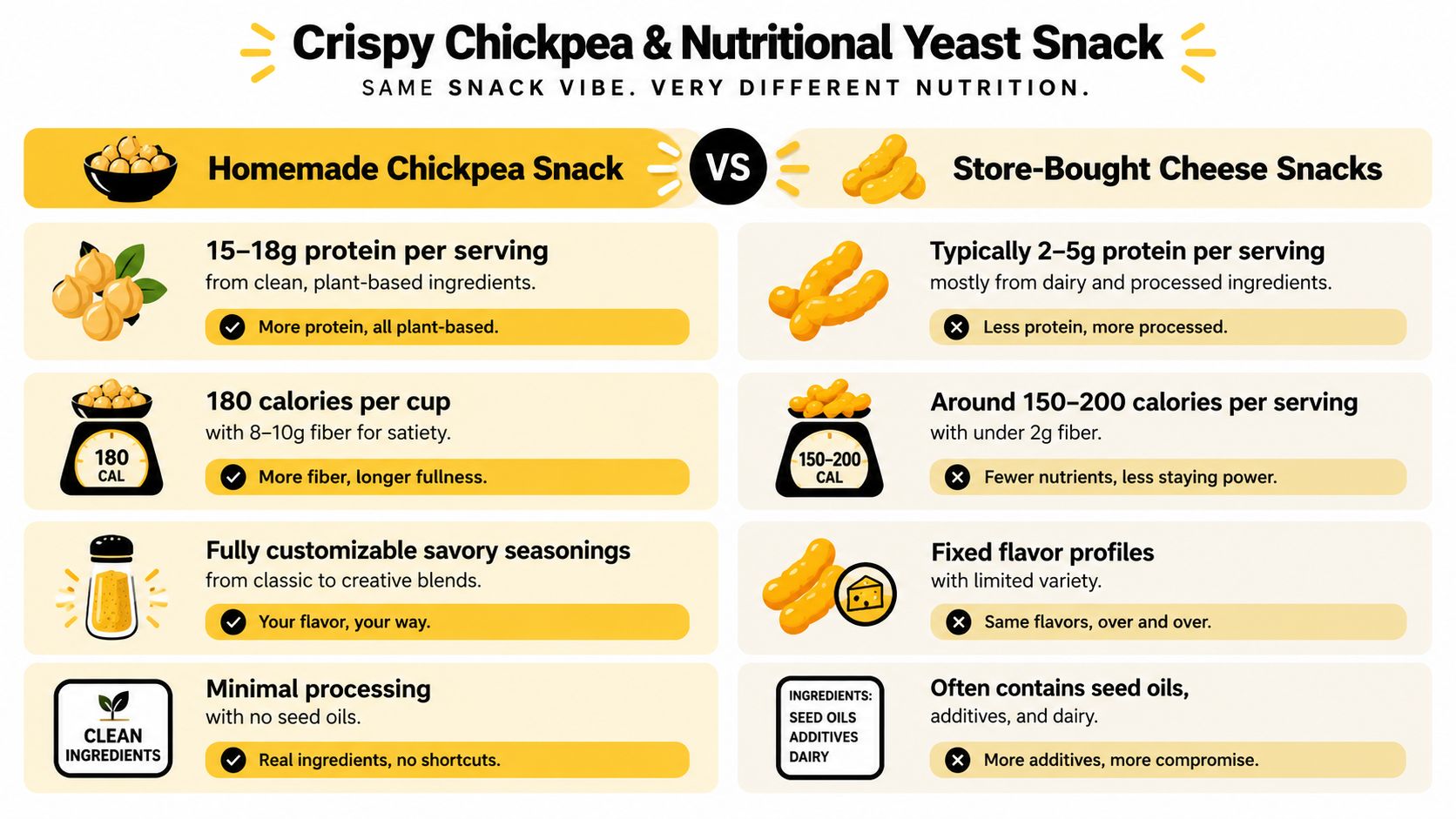
1. Crispy Chickpea and Nutritional Yeast Snack
Roasted chickpeas are the most straightforward entry point into savory macro-friendly snacking. They bring plant protein, fiber, and a substantial crunch, while nutritional yeast adds a cheese-like flavor without dairy. The result works better than a plain rice cake when you want something salty and textured, although chickpeas won't deliver the same protein density as a concentrated pea-protein snack.
Drain canned chickpeas thoroughly, rinse them, and remove loose skins if you have the patience. Pat them completely dry with towels, toss them with a measured amount of oil, smoked paprika, garlic powder, salt, and nutritional yeast, then roast until browned. Shake the tray halfway through so the outer layer cooks evenly.
Make the texture work
Moisture is the main enemy. If the chickpeas go into the oven damp, they steam before they crisp. They also soften in a sealed container if you pack them while warm, so cool them fully before storing them in a glass container lined with parchment.
A Sunday batch can cover several weekday gym sessions, and smaller portions make sense before training when you want a light, crunchy option rather than a full meal. For people using appetite-focused eating patterns, including GLP-1 medications, the fiber and chew can make a modest serving feel more substantial, but individual tolerance matters.
Practical rule: Keep the seasoning dry and the chickpeas completely cool before sealing. Crunch depends more on moisture control than on adding extra oil.
Smoked paprika and garlic create a deeper, cheese-snack profile that makes these a useful comparison with Gym Snack. For another plant-based crunchy format, see vegan crunchy snack ideas. Store portions separately for easy packing, and freeze extra cooled portions if you want a longer rotation. Thaw them uncovered and refresh briefly in the oven if the texture softens.
2. Pea Protein and Herb Savory Clusters
Pea protein isolate gives these clusters a more concentrated protein structure than roasted legumes. Mix unflavored pea protein with seeds, dried herbs, nutritional yeast, seasonings, and just enough moisture to bind. Gentle folding matters. Overmixing can turn the mixture dense and tough instead of crisp and brittle.
Use smoked paprika, jalapeño powder, cracked pepper, or everything bagel seasoning to change the flavor without rebuilding the recipe. A small amount of nutritional yeast adds savory depth, while seeds contribute fat and texture. The trade-off is calorie density. Seeds make clusters satisfying, but they also make portion measurement more important than it is with a high-volume vegetable snack.
Batch them for exact portions
Bake the clusters until golden, then let them cool completely on the tray. Move them into individual glass containers immediately after cooling so you can grab a measured serving for the office, commute, or pre-workout snack.
This is one of the better choices for plant-based macro counters who want repeatable portions. Use an unflavored isolate if you want control over the seasoning, and check the ingredient panel if you're avoiding gums, sweeteners, or flavor systems that don't fit your digestion.
A cluster is useful when you want protein density and portability in the same bite, but it isn't the best choice for unrestricted snacking.
The recipe also mirrors the core ingredient used in Gym Snack, namely clean pea protein, while keeping the flavor profile savory rather than dessert-like. For more ideas built around this ingredient, explore pea protein snacks. Keep the clusters dry, avoid refrigerating them unless necessary, and use parchment between layers if you freeze them. Refrigeration can introduce moisture and reduce the crisp finish.
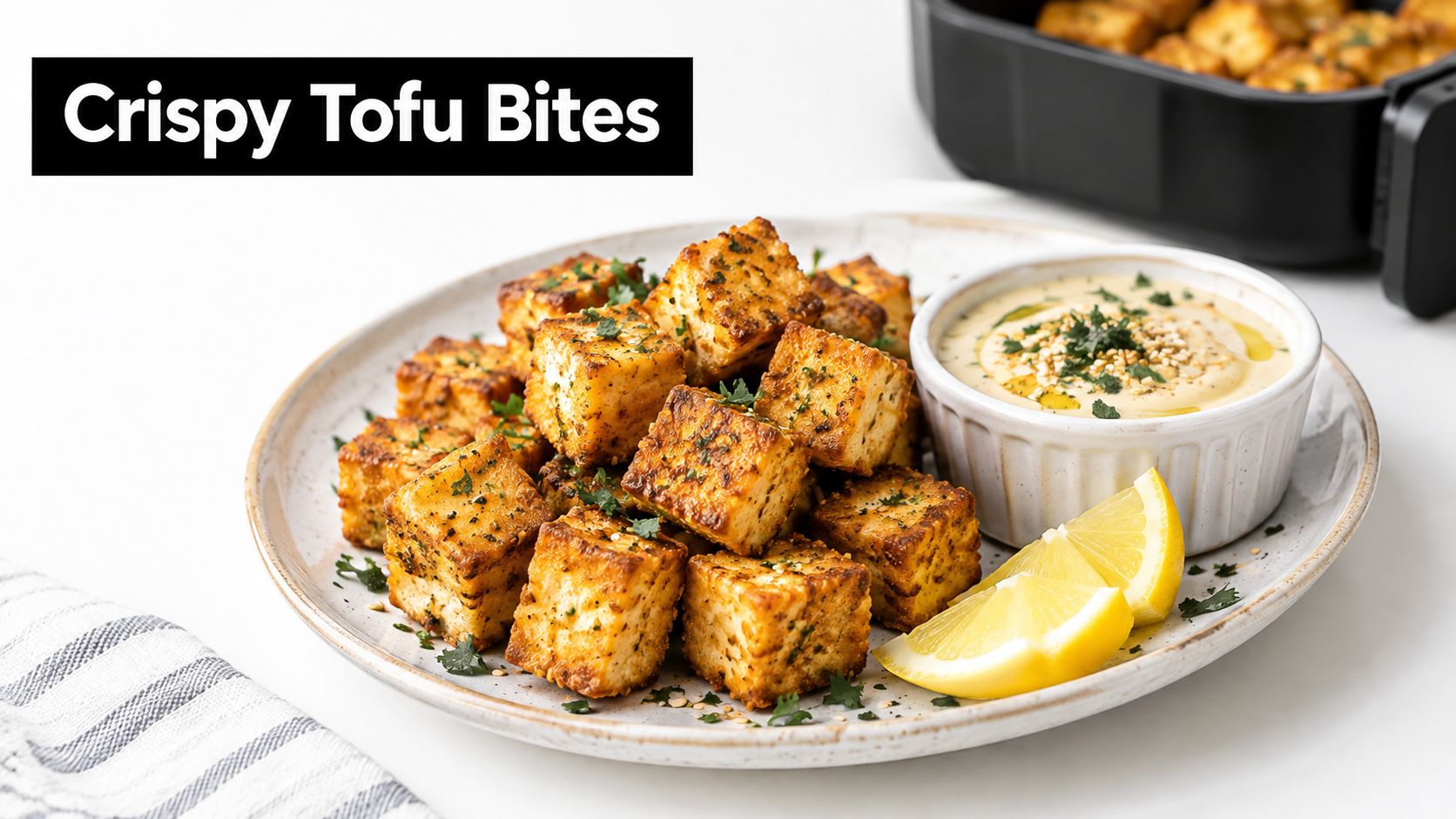
3. Crispy Tofu and Nutritional Yeast Bites
Tofu bites are better suited to a refrigerator than a desk drawer, but they offer a satisfying combination of crisp edges and a tender center. Press firm tofu thoroughly, cut it into even cubes, and coat it with plant milk, nutritional yeast, arrowroot powder, garlic, pepper, and other savory seasonings. The arrowroot creates a light crust without relying on breadcrumbs.
An air fryer usually produces the crispest result with less added oil than oven baking. If you're using an oven, spread the cubes across a lined tray with space around each piece. Crowding traps steam and leaves the coating soft.
Build flavor into the coating
A spoonful of miso in the plant-milk batter adds umami, but it also raises the salt level, so adjust tamari or salt accordingly. Serve the bites with a small tahini-lemon dip if you want more richness. That dip improves satisfaction, although it also increases the snack's calorie density and makes it less convenient for a pre-workout window.
Pressing multiple tofu blocks at once can make weekly prep easier. You can cube and freeze portions before cooking, then thaw and press them again when needed. Cooked bites keep best refrigerated in a vented container or loosely covered container, because a tightly sealed warm batch will sweat.
The recipe works well after training or as part of a meal-prep box. It doesn't travel as well as dry chickpeas or clusters, so it belongs in an insulated lunch bag rather than loose in a gym bag.
For another high-protein vegan preparation, use this high-protein vegan snack recipe as a complementary idea.
4. Spiced Roasted Pumpkin Seeds with Nutritional Yeast
Pumpkin seeds make a compact snack with a pronounced roasted flavor and a satisfying shell-free crunch. Toss raw seeds with a light coating of avocado oil, nutritional yeast, cumin, smoked paprika, garlic, and black pepper. Roast them in a single layer, stirring frequently so the edges don't burn before the centers toast.
Their compact size makes them excellent for trail mix, a desk jar, or a post-workout snack paired with fruit. The trade-off is easy to miss: seeds are nutrient-dense, but they're also more calorie-dense than air-popped popcorn or vegetable chips. Weigh or portion them instead of eating directly from a large container.
Use seasoning strategically
To intensify the savory profile, toast the dry spices briefly in a skillet before mixing them with the seeds. You can also blend a small amount of miso into the oil, but use a light hand because miso can make the coating salty and slightly softer if overapplied.
Cool the seeds fully before storage. Residual heat creates condensation, and condensation removes the crisp texture you prepared them for. Small mason jars work well for grab-and-go servings, while parchment-lined containers prevent the seasoning from collecting at the bottom.
Storage insight: Dry, cooled seeds are one of the easiest recipes here to keep on hand, but their compactness makes portion awareness essential.
For athletes who like a sweet-salty trail mix, combine a measured amount of pumpkin seeds with dried fruit. That pairing improves portability and energy availability, but it shifts the snack away from protein density and toward a broader training-fuel mix. Use it before longer activity or when you need more than a very light snack.
5. Lentil and Herb Crispy Fritters
Lentil fritters sit between a snack and a small meal. Cooked lentils provide a soft base, while fresh herbs, garlic, cumin, coriander, and pepper create a savory center. Pulse the mixture only until it holds together. If you process it into a smooth paste, the fritters can become heavy and lack the rough surface that browns well.
For a binder without aquafaba, mix finely ground flaxseed with water and let it thicken before folding it into the lentils. Form small patties, bake them until set, then pan-sear or air-fry them for a darker crust. The added sear improves texture, but it also requires attention because the exterior can darken quickly.
Make the freezer do the work
Freeze unbaked patties on a tray, then transfer them to a freezer bag once firm. Cook only what you need, which prevents the soft interior from sitting in the refrigerator for too long. Cooked fritters can travel in a sealed container, although they remain more enjoyable when reheated rather than eaten cold.
This is a strong option for plant-based athletes who want whole-food protein and fiber in a more substantial format. It also suits people who need a snack one to two hours before training, when a denser portion has time to digest. Pair it with tahini-lemon sauce or hummus if you want extra creaminess and fat, but keep the dip separate to preserve the crust.
A fritter isn't as shelf-stable or portable as a dry cluster. Its advantage is freezer flexibility and meal-like satisfaction. Make several batches with different herbs, then label each container with the preparation date and flavor so the rotation stays usable rather than repetitive.
6. Seeded Vegetable Chips
Vegetable chips are the high-volume choice in this list. Slice zucchini and carrots thinly, coat them with ground pumpkin seeds, nutritional yeast, garlic, paprika, and salt, then bake until the edges crisp. The vegetables create bulk, while the seed coating adds savory flavor and a little protein without turning the snack into a dense bar.
A mandoline produces more consistent slices than a chef's knife, but use a guard and keep the slices thin. Uneven pieces finish at different times, so some burn while others stay flexible. Pat the vegetables aggressively with paper towels before coating them, and arrange them in a true single layer without overlap.
Protect the crunch
Start checking the tray early because thin slices can finish before thicker pieces. Rotate the tray if your oven browns unevenly, and let the chips cool before judging their final texture. They often firm as they cool.
Store them with parchment between layers. A food-safe silica packet can help in a suitable sealed container, but only if it stays separate from the food and is intended for food storage. These chips are best eaten relatively soon after baking because vegetables retain more moisture than chickpeas or seeds.
Choose this format when volume matters more than maximum protein density. Add a separate pea-protein cluster or tofu portion if the snack needs to carry more of your daily protein target.
For a gym-goer replacing standard potato chips, the appeal is obvious: a crisp, salty format with visible vegetables. For someone managing appetite, the larger physical portion can feel more satisfying than a small dense serving. The limitation is portability. Pack them in a rigid container, not a soft bag, or the chips will arrive as crumbs.
7. Tempeh and Miso Strips with Nutritional Yeast Crust
Tempeh delivers a firmer bite and deeper flavor than tofu, making it a natural choice for savory snackers who want something closer to a crisp strip than a tender cube. Slice it thinly, then marinate it with miso, tamari, garlic, and a small amount of acid. If the tempeh tastes bitter, steam it briefly before marinating.
Coat the strips with nutritional yeast, dried herbs, pepper, and a light brush of oil. Don't drench them. Excess oil can soften the crust and makes the strips heavier without improving the final texture. For extra crunch, apply a second light coating after the first layer adheres.
Keep the fermented flavor balanced
Miso and tamari already bring plenty of umami and salt, so taste the coating before adding more seasoning. Use gluten-free tamari when gluten avoidance matters. The strips work in snack packs, chopped over salads, or alongside vegetables in a small meal-prep container.
Refrigerated tempeh strips are practical for the workweek, while frozen cooked strips can extend the rotation. Separate them with parchment so they don't freeze into one block, and reheat them in an air fryer or oven to restore the surface.
This is a good Gym Snack comparison because both formats emphasize savory flavor and crunch rather than sweetness. Tempeh has the advantage of a whole-food fermented base, but Gym Snack is easier to carry and doesn't require reheating. Choose tempeh when you want a fresh batch with a stronger umami character, and choose a packaged snack when your schedule won't support refrigerated prep.
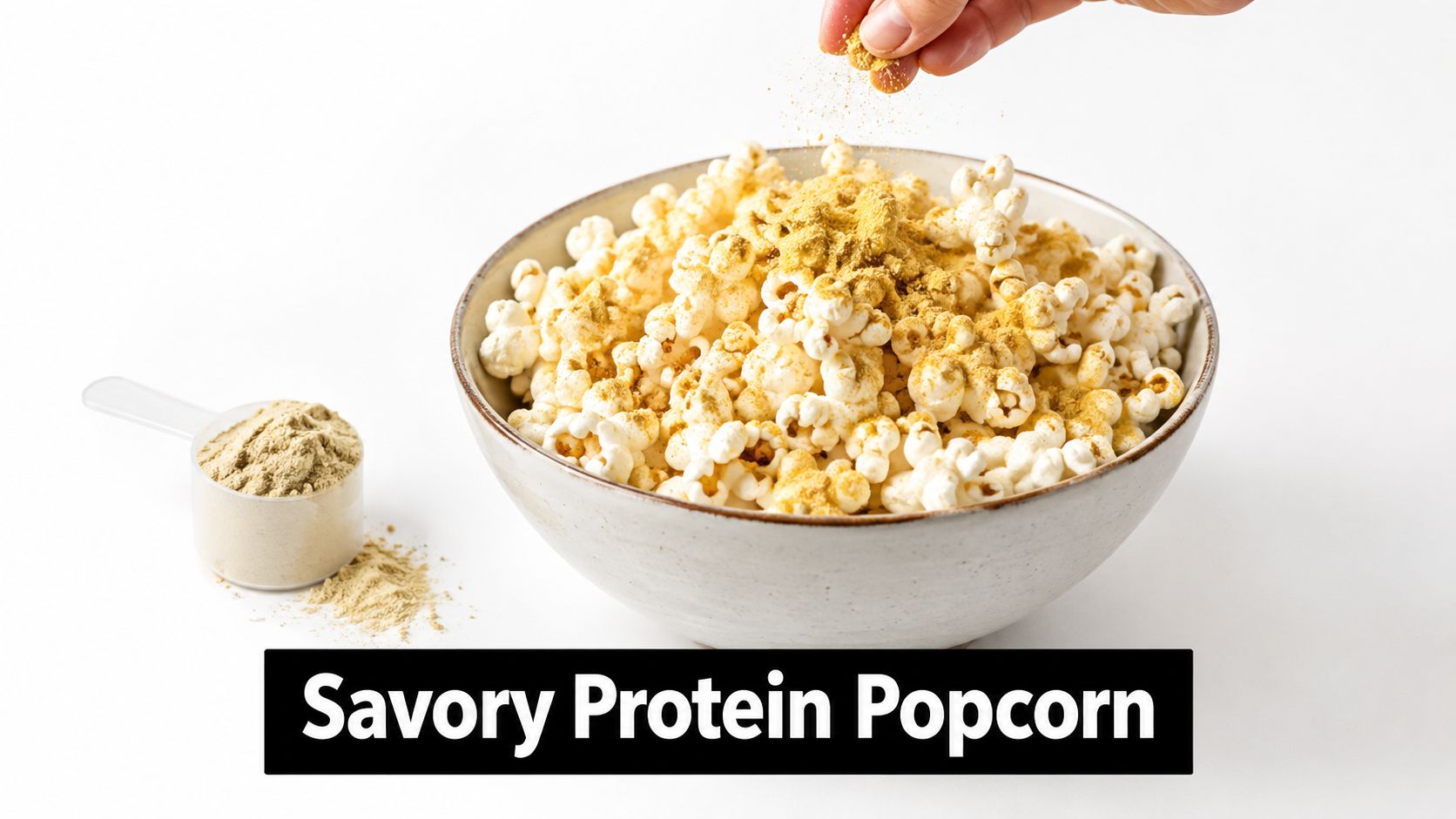
8. Savory Nutritional Yeast Popcorn
Popcorn delivers the most physical volume for the least cooking effort in this roundup. Air-pop the kernels, then combine nutritional yeast, salt, garlic powder, smoked paprika, and an optional dusting of pea protein. The pea protein won't disappear into the popcorn by itself, so blend it with the seasoning and sift it over the bowl while tossing continuously.
A very light mist of avocado oil helps the powder adhere. Too much oil creates greasy popcorn and moves the snack toward a higher-calorie format. Toasted seeds or chopped nuts add texture and protein, but they also reduce the high-volume advantage, so use them when you want a more substantial snack rather than a large bowl.
Match it to the moment
Popcorn works well between meetings, during travel, or as a light pre-workout snack. On its own, it isn't the strongest protein option, so pair it with a more protein-dense food when the snack needs to support a higher protein target. That distinction matters. Volume and protein density aren't the same thing.
Serve it immediately for the best texture. If it softens, spread it on a tray and re-crisp it briefly in a 300°F oven for three to five minutes. Let it cool before packing. A rigid container protects the popped kernels better than a soft pouch.
For GLP-1 users or anyone trying to make a snack feel larger without adding dense ingredients, popcorn can be useful. For a post-workout recovery snack, add a clearly measured protein component rather than assuming a seasoning dust will do the entire job.
Macro Breakdown of 8 Snack Recipes
| Snack | 🔄 Implementation Complexity | ⚡ Resource Requirements | 📊 Expected Outcomes | Ideal Use Cases | ⭐ Key Advantages |
|---|---|---|---|---|---|
| Crispy Chickpea & Nutritional Yeast Snack | Low, simple roast, minimal prep | Oven, canned chickpeas, nutritional yeast, basic spices | ~180 kcal, 15g protein, 8g fiber; portable; 5–7 day shelf | Meal-prep for gym, pre-workout, GLP‑1 appetite control | Budget-friendly, high fiber+protein, crunchy without frying |
| Pea Protein & Herb Savory Clusters | Medium, mixing/binding and baking | Oven, pea protein isolate, seeds, nuts, precise mixing | ~220 kcal, 20g protein; high protein density; ~10 days storage | Macro trackers, pre/post-workout packs, batch snack prep | Direct pea-protein use, highly customizable, high satiety |
| Crispy Tofu & Nutritional Yeast Bites | Medium, pressing + coating; air-fry or bake | Air fryer or oven, extra-firm tofu, nutritional yeast, arrowroot | ~160 kcal, 14g protein; complete amino acids; 5–6 day fridge life | Post-workout, meal-prep, GLP‑1 users seeking volume | Complete protein, low processing, air-fryer crispiness option |
| Spiced Roasted Pumpkin Seeds with Nutritional Yeast | Low, toss and roast | Oven, raw pepitas, avocado oil, spices | ~210 kcal, 10g protein; rich in magnesium/zinc; 2–3 week shelf | Recovery snack, trail mix, athletes needing minerals | Mineral-dense whole food, long shelf life, budget-friendly |
| Lentil & Herb Crispy Fritters (Baked) | Medium–High, cook lentils, process, shape | Food processor, cooked lentils, oats, oven or pan | ~180 kcal, 13g protein, 6g fiber; freezer-friendly | Meal preppers, pre-workout 1–2 hr, bulk cooking | Whole-food protein+fiber, high satiety, freezerable |
| Seeded Vegetable Chips (Zucchini & Carrot) | Medium, thin slicing and careful baking | Mandoline recommended, ground pumpkin seeds, oven | ~120 kcal, 8g protein; high-volume low-calorie; 3–4 day freshness | High-volume satiety (GLP‑1 users), low-calorie snack swaps | Very high volume per calorie, vegetable micronutrients |
| Tempeh & Miso Strips with Nutritional Yeast Crust | Medium, marinate, coat, bake | Oven, tempeh, miso/tamari, nutritional yeast | ~190 kcal, 14g protein; fermented benefits; refrigerate 5–7 days | Gut-health seekers, gourmet umami snacking, meal-prep | Fermented protein for gut health, strong umami, complete AA |
| Savory Nutritional Yeast Popcorn (Protein-Boosted) | Low, air-pop and season | Popper or stovetop, nutritional yeast, optional pea protein | ~120 kcal base (3 cups); 2–3g protein base; +10–20g if powdered | Office snacking, GLP‑1 volume strategy, quick low-cal snack | Extremely high-volume for calories, very quick, customizable |
Choose Your Crunch, Then Prep With Purpose
The best snack is the one that fits the moment you face. Choose chickpeas or pea-protein clusters when portability, crunch, and a more concentrated protein contribution matter most. They can sit in a work bag or gym kit more comfortably than refrigerated foods, and both formats adapt easily to smoked paprika, garlic, jalapeño, or nutritional yeast.
Choose tofu or tempeh when you can refrigerate the snack and want a fresh, savory batch with a substantial bite. Tofu is more neutral and works with a wide range of seasonings. Tempeh brings fermented character and a firmer texture, but it can taste bitter if you skip the brief steaming step. Use gluten-free tamari when needed, and check every packaged seasoning for hidden allergens.
Lentil fritters are the freezer-prep option. Freeze them unbaked, cook only what you need, and keep dips separate until serving. Pumpkin seeds store for longer than most of the fresh recipes, but their compactness makes measured portions particularly important. Vegetable chips and popcorn suit high-volume eating, although neither should be treated as a complete high-protein snack without a deliberate protein addition.
Use the supplied serving information in your finished recipes to set portions that match your own macro targets. Don't estimate repeatedly from memory. Weigh the batch if precision matters, divide it into labeled containers, and write the preparation date on each one. Refrigerate fresh items promptly, cool roasted snacks before sealing, and inspect allergen substitutions rather than assuming that a plant-based ingredient is automatically gluten-free, soy-free, or dairy-free.
Your weekly rotation should change texture as well as flavor. A crunchy chickpea portion can feel very different from a soft lentil fritter, a chilled tofu bite, or a large bowl of popcorn. That variety helps you avoid relying on one snack until you get tired of it. For a deeper look at planning food intake around body-composition goals, review this guide to tracking macros for body composition.
Gym Snack fits the gaps that batch prep can't cover. Its plant-based pea-protein snacks are designed around savory crunch, with Cheddar Cheeze and Jalapeño Cheddar Cheeze flavors, and the publisher states that the formula is free of dairy, soy, gluten, and seed oils. That makes it a practical packaged reference point when you need a portable option and don't have a container of cooled chickpeas or tofu ready to go.
Gym Snack offers chef-inspired, plant-based savory protein snacks built around clean pea protein, with crunchy Cheddar Cheeze and Jalapeño Cheddar Cheeze options for gym bags, commutes, and busy workdays. If you want a convenient alternative to preparing every batch in this list, visit Gym Snack and explore the available packs.