

Crunchy vegan snacks don't have to mean airy chips, sweet bars, or one-note puffed junk. The better comparison is simpler, protein-dense roasted legumes, lighter vegetable crisps, cheese-style puffs, and training-oriented crisps all do different jobs, so the right pick depends on whether you want protein, fiber, lower calories, or just a familiar salty crunch. That matters in a category that's already big and getting bigger, with the global vegan snacks market estimated at USD 44.0 billion in 2021 and projected to reach USD 80.5 billion by 2030 (Grand View Research).
The best vegan crunchy snack is the one that matches the moment, not the one with the loudest label.
This roundup compares seven formats using protein, calories, texture, portability, sodium, ingredient transparency, and the actual eating occasion. You'll see where a gym-focused crisp beats a puff, when a roasted bean makes more sense than a chip, and why a homemade tray of chickpeas can still be the smartest flexible option. Gym Snack sits at the center of the list as the savory, protein-first benchmark for people who want more than dessert-style bars or shakes.
1. Gym Snack
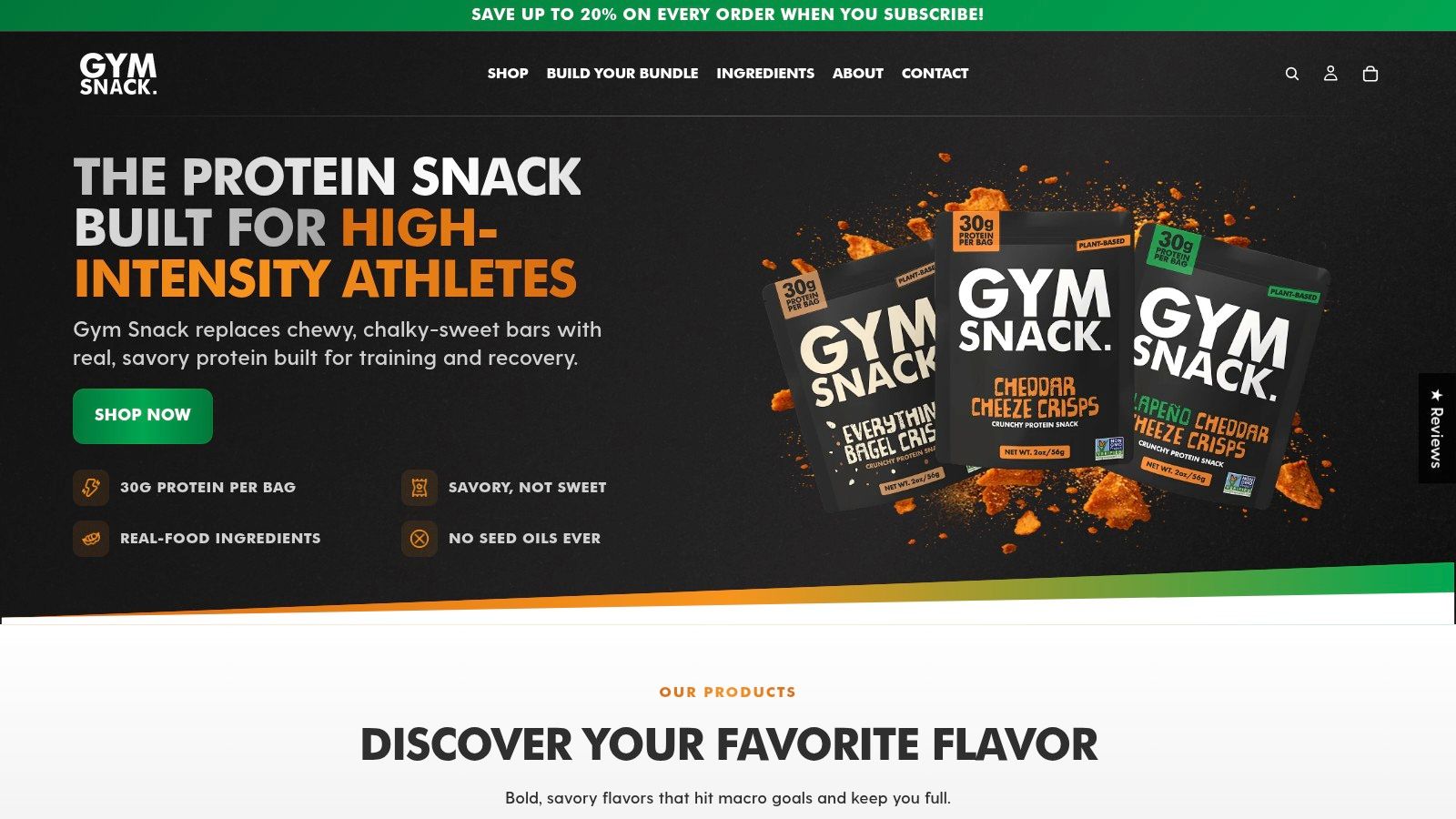
Gym Snack is the clearest fit for readers who want vegan crunchy snacks to function like fuel, not just a salty distraction. The crisps are centered on pea protein, and the brand positions each bag around 30g+ protein per bag and 15g+ per serving, which gives it a very different job from lighter puffs or chip-style snacks. That profile makes sense on training days, after workouts, or during long gaps between meals, when protein matters more than novelty. Flavor also stays on the savory side, with options such as Cheddar Cheeze, Jalapeño Cheddar Cheeze, Everything Bagel, and Buffalo Ranch.
Why it ranks first for protein-first snacking
The macro structure is the main reason Gym Snack sits at the top of this list. The brand presents a bag as roughly 30g protein, 14g carbs, 13g fat, and about 290 calories, so the snack behaves more like a compact protein source than a light crunch for casual grazing. That makes it a practical choice for people who want a savory option that can take the place of a bar without drifting into dessert territory.
For readers comparing vegan crunchy snacks by actual function, that matters. Gym Snack is built for protein, while many other crunchy options are built for texture, familiarity, or easy eating.
Gym Snack also avoids a long list of ingredients many shoppers try to skip, including dairy, soy, gluten, seed oils, sugar alcohols, and artificial sweeteners. That can make the label easier to live with for gym-goers who want a routine snack with fewer common exclusions, and for plant-based eaters who prefer a straightforward ingredient list without extra sorting at the store.
Practical rule: choose this when the goal is to close a protein gap, not just satisfy a crunch craving.
The trade-off is straightforward. This is not the lightest or cheapest type of crunchy vegan snack, and the texture may not appeal to everyone. The brand also notes that some buyers react differently to the aroma and crunch, and the product is made in a facility that processes nuts and allergens, so it is not the right choice for severe cross-contact concerns. For readers who want a broader framework for picking a crunchy snack based on hunger, the Tecton Ketones hunger guide is a useful companion. Gym Snack also lays out its own position on the category in this guide to high-protein crunchy snacks, and the product details are available directly at Gym Snack.
Best use case
Gym Snack fits best before a workout, after a workout, or in the middle of the day when you want something savory and more filling than a typical chip. It is also a better match than many lighter snacks for people using higher-protein eating patterns to manage hunger, because the snack is designed to contribute meaningfully to satiety instead of just adding crunch.
2. PeaTos
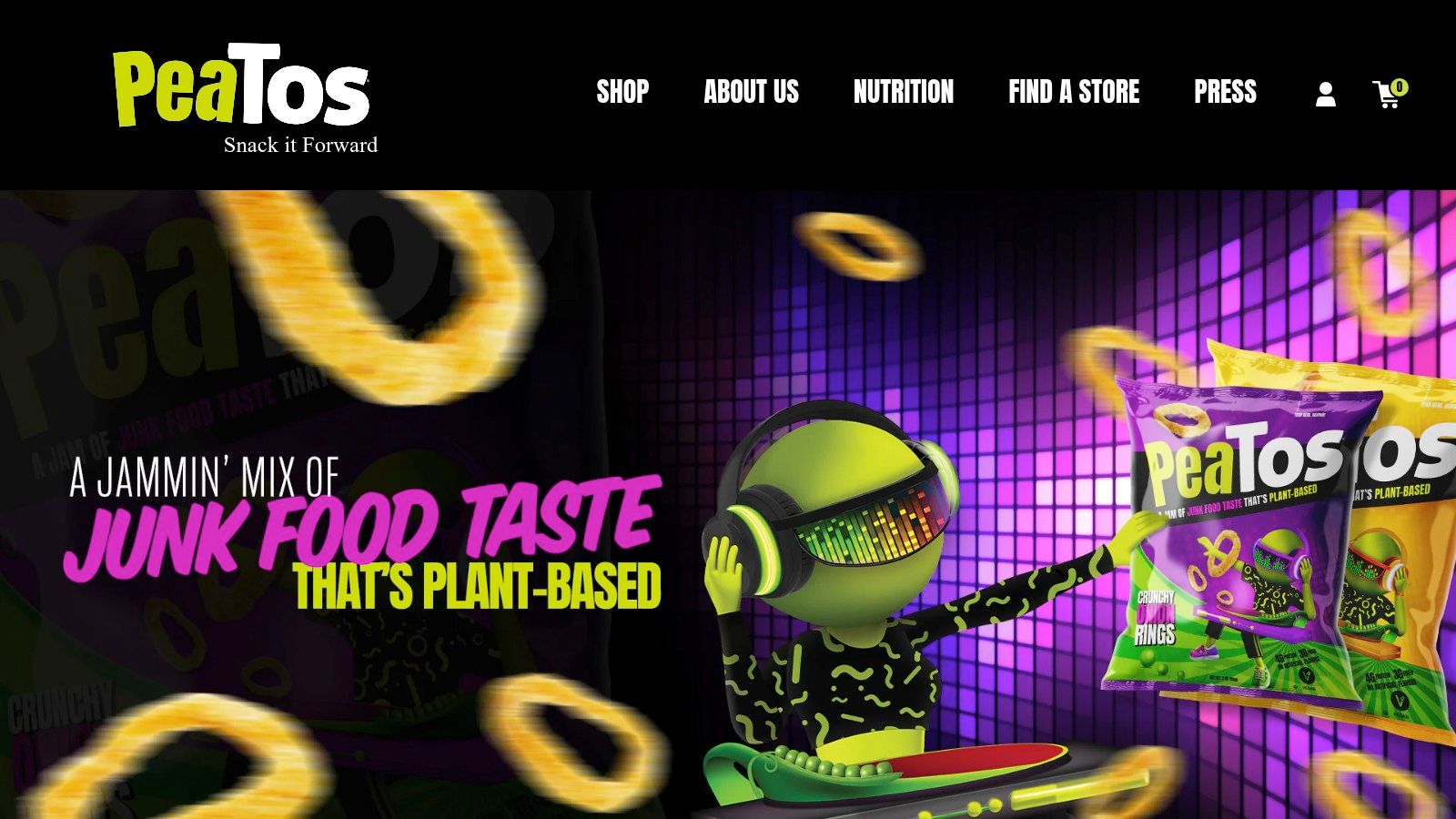
PeaTos works for snackers who want the taste memory of classic cheese curls and rings without reaching for a standard corn-based product. The brand's pea-based puffs sit squarely in the “junk food, but plant-based” lane, which makes them useful for an office snack stash or a movie-night bowl when the goal is familiarity more than nutrition density. The texture is light and crunchy rather than dense, so the bag tends to disappear quickly, which helps for sharing and makes portion control harder.
Where it fits in the ranking
PeaTos earns its place because it solves a different job than Gym Snack. It is built around format familiarity and bold flavor first, with plant-based positioning second. That makes it a practical option for someone switching away from conventional cheese curls or keeping a salty snack in the house that feels indulgent without requiring a full label reset.
The brand says the snacks have more protein and fiber than corn snacks, and the products are sold online and through major U.S. retailers. That matters because crunchy snacks are often impulse buys, and a snack has to be easy to find before it can become a repeat purchase. Browse the brand's lineup at PeaTos. For a closer look at how pea protein snacks can fit into a training diet, see this pea protein snack guide.
There is still a trade-off. Flavored curls can be salty, so the bag fits a craving or casual snacking moment better than someone watching sodium closely. Older inventory at some retailers may also still contain dairy, so package checks matter here more than they do with a tightly controlled direct-to-consumer brand.
Best for: people who want a crunchy, cheesy-style puff that feels familiar, portable, and easy to find.
3. HIPPEAS
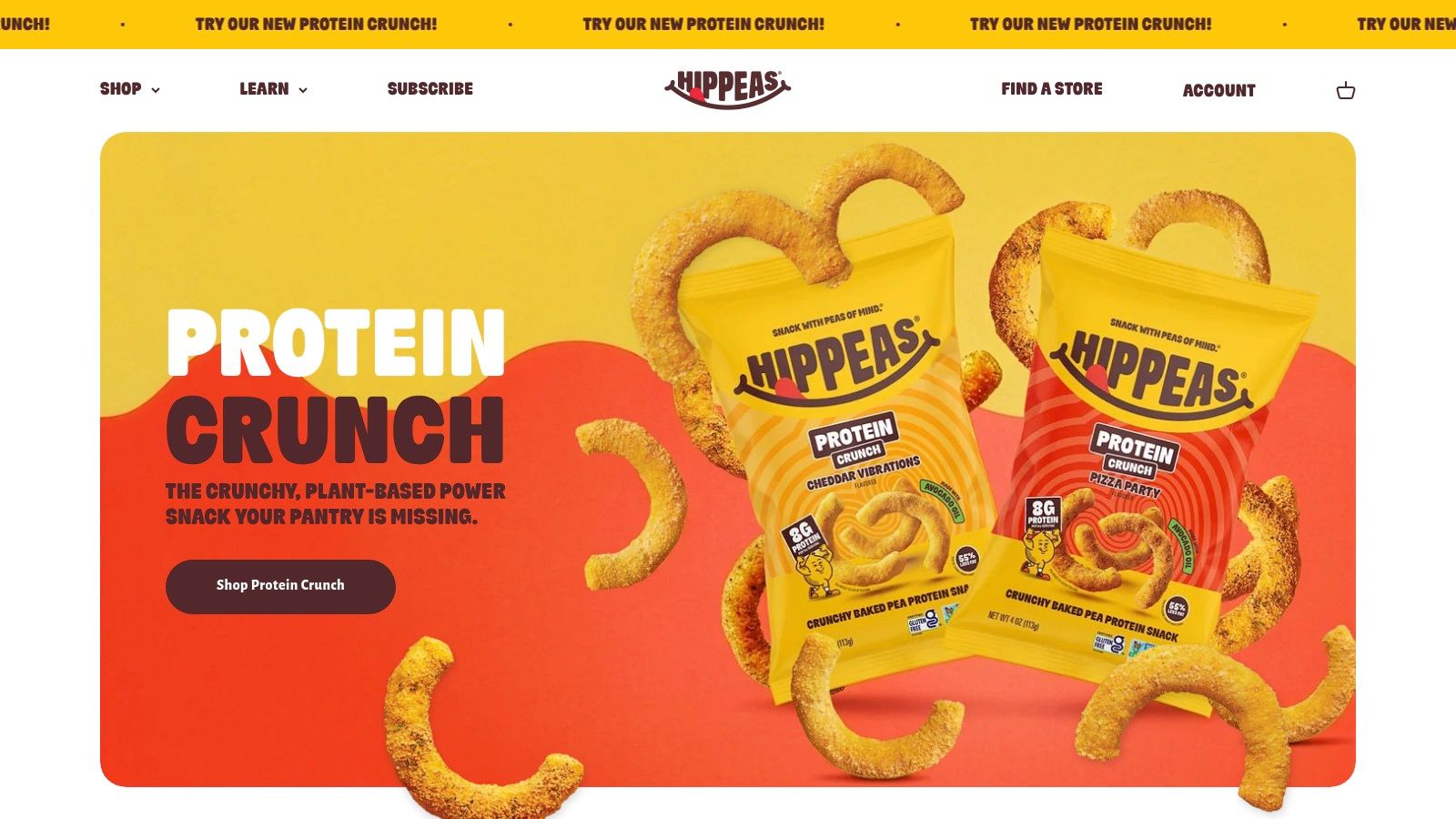
HIPPEAS is a mainstream snack aisle option because it is built for broad appeal. The brand's chickpea puffs and chips are meant to feel familiar, with flavors like Groovy White Cheddar and Jalapeño Cheddar Blaze doing most of the work. The texture stays airy and crunchy, so it delivers a cheese-snack feel without the density of a roasted legume.
The right choice for cheesy comfort without overcommitting
HIPPEAS makes sense for people who want a vegan crunchy snack that reads like a conventional puff instead of a protein product. It is vegan and gluten-free, which helps it fit mixed households where more than one person is checking labels. The newer Protein Crunch line shows that the brand is aware shoppers want more than flavor, but taste and accessibility are still its main draw rather than macro density.
That trade-off matters. Typical servings are around 4 g plant protein and 3 g fiber per 1 oz, depending on flavor, so the bag offers some nutrition without being especially protein-forward. Compared with roasted beans or edamame, it is better suited to a light snack, a lunchbox add-on, or a cheese-craving moment than to recovery or hunger control. For a closer look at how puff-style snacks fit into a protein-first rotation, see this plant-based protein puff guide.
The main advantage is convenience. HIPPEAS is sold direct and through major retailers, so it is easy to keep on hand when the goal is a familiar, better-for-you puff rather than a high-protein snack. The main limitation is equally clear. If the job is to support workouts, manage appetite with fewer calories, or make protein the priority, this is a comfort snack first and a macro snack second.
4. SNACKLINS
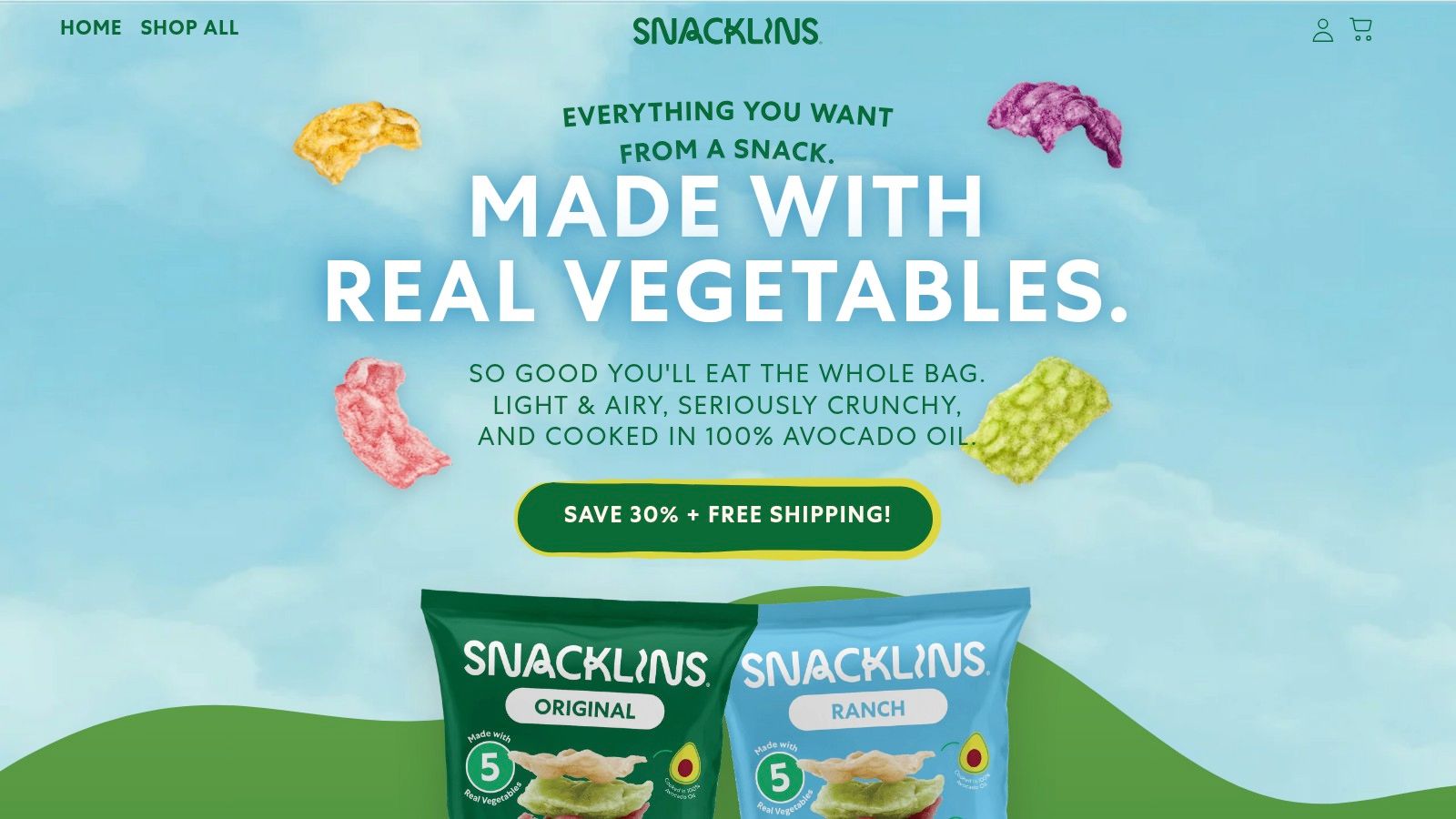
SNACKLINS is the pick for people who care more about low-calorie volume than about protein. The brand makes vegetable-based crisps cooked in avocado oil, and the appeal is obvious once you open the bag, you get a serious chip-like crunch without the feeling that you've committed to a heavy snack. For calorie-controlled snacking, that's a real advantage.
Why it belongs in a calorie-conscious rotation
SNACKLINS is not trying to compete with roasted legumes on protein, and that's exactly why it earns its place. Many bags sit around 90 to 125 calories, which makes them useful when you want something crispy while keeping the snack slot light. That's a different use case from Gym Snack, where the bag is meant to meaningfully contribute to protein intake.
The flavor range is broad, and all listed flavors are plant-based. That makes the brand a good fit for desk drawers, car consoles, and late-afternoon snack cravings when the goal is to take the edge off without turning a snack into a meal. Visit SNACKLINS for the lineup.
The trade-off is obvious. These crisps are about texture and calorie restraint, not macro density. If you're using snacks to support workouts, satiety, or a higher-protein pattern, SNACKLINS can be too light to do the job on its own. It works best for volume eaters, weight-management routines, or anyone who wants a crunchy sidekick rather than a nutritional anchor.
Best for: a light, crunchy snack when you want restraint more than fullness.
5. Bada Bean Bada Boom
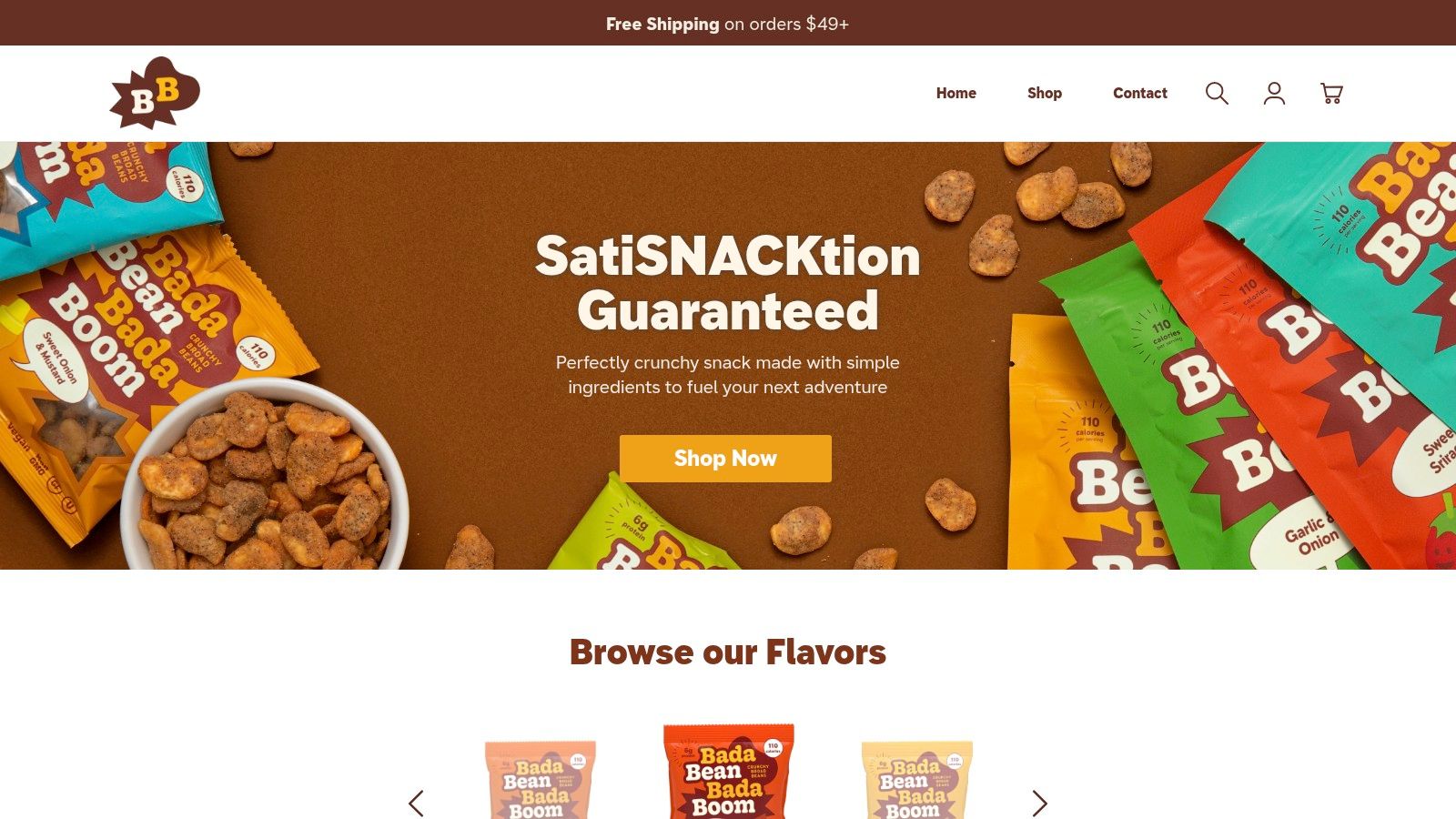
Bada Bean Bada Boom is the substantial bean crunch in this group. Roasted broad beans have a denser bite than puffs or vegetable crisps, and that density helps the snack feel more satisfying per handful. The clean-label positioning and simple ingredient style make it a natural fit for people who want something straightforward, savory, and portable.
The bean snack with the most practical crunch
The sea salt version is the clearest reference point. A typical 1 oz serving gives about 6 g protein, 4 g fiber, and about 110 calories, which is a strong balance for a snack that still eats like a snack. That puts it in a useful middle ground, more filling than a puff, lighter than a protein-first crisp, and more portable than a homemade tray of roasted legumes.
This is also one of the better options for single-serve use because the texture holds up well in a bag. It's the kind of snack people can throw into a backpack, keep in a car, or portion out for a workday without needing a separate container. The brand's vegan, gluten-free, and soy-free positioning adds to its appeal for people with common dietary filters. Find the line at Bada Bean Bada Boom.
The downside is that broad beans are denser than many readers expect. If you prefer light puffs, this can feel hard. Flavored versions may also push sodium higher, so the label matters more than the branding. Among roasted-legume snacks, though, this is one of the best choices when you want a snack that changes how hungry you feel.
6. Biena Snacks
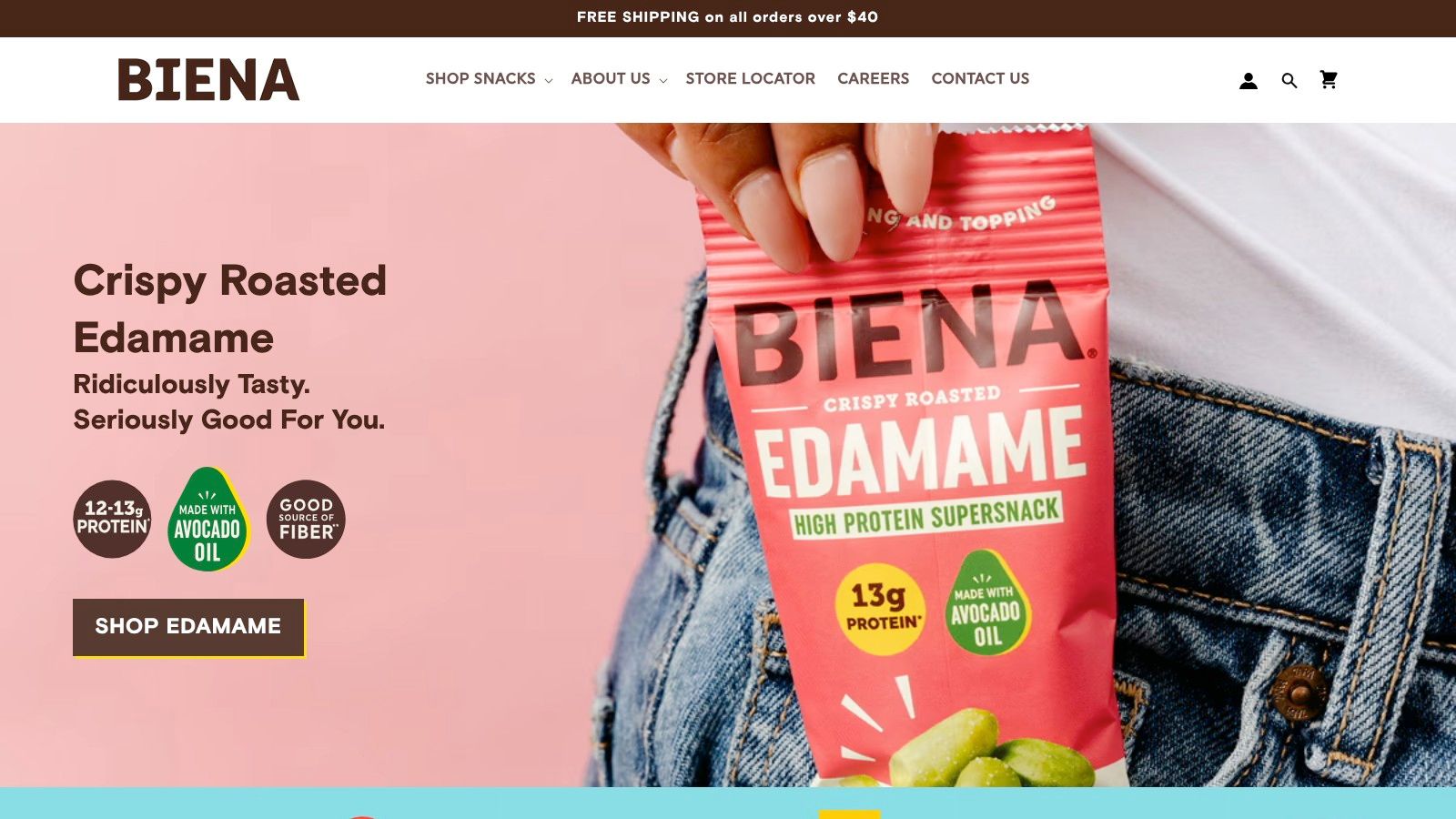
Biena Snacks is useful because it gives you two different snack jobs under one brand. The roasted chickpea line leans more toward fiber-forward crunch, while the crispy roasted edamame line pushes harder into protein. That split is valuable, because not everyone wants the same outcome from a handful of crunchy beans.
Choose the line, not just the brand
The edamame snacks can provide around 12 to 13 g protein per serving, which puts them near the top of the category for shoppers who want a snack that feels savory but still pulls weight nutritionally. The chickpea options are lower in protein, typically around 5 to 6 g, but they offer a different balance for people who care more about a gentler, lighter crunch. Shop the brand at Biena Snacks, and for a broader protein-snack framing, see this plant-based protein puffs guide.
That flexibility is the reason Biena ranks well. It gives the shopper a way to choose based on the actual job, protein support from edamame, or a more classic crunchy legume feel from chickpeas. It's also widely available in grocery channels, which makes it practical for repeat purchases instead of one-time curiosity.
The label check still matters. Some flavored chickpea products can include honey, so strict vegans need to verify the exact SKU. Nutrition also varies more than with a tightly specialized product, so this is a brand where the front panel should not be the final word.
The best version of Biena is the one that matches the day's goal, not the flavor name on the bag.
7. The Only Bean
The Only Bean is the strongest roasted-edamame option for readers who want a high-protein chip alternative they can eat by the handful. Dry-roasted edamame gives you a dense, savory crunch with a more serious macro profile than most puffed snacks, and it's especially appealing to fitness-minded eaters who want something portable, low in net carbs, and easy to stock in bulk.
The highest-protein style outside the top benchmark
Typical servings land around 11 to 14 g protein, depending on flavor, which makes this one of the most macro-focused options in the whole category. That puts it in direct competition with other roasted-legume snacks, but the edamame base gives it a particularly firm, crunchy bite that some people prefer when they want a snack to feel substantial.
The distribution is a major advantage too. The brand is available through direct channels and at retailers including Costco, Target, GNC, and Walmart, which makes it easier to keep on hand than many niche protein snacks. That matters for gym bags, office drawers, and travel. Browse the brand at The Only Bean.
The trade-off is density. Roasted edamame can feel heavy, and the savory flavors can run salty, so people who are sensitive to sodium or prefer airy textures may not love it. Still, if the job is to deliver a protein-rich crunch that feels more like food than a puff, this is one of the most practical options available.
Best for: low-carb snackers, gym-goers, and anyone who wants the crunchiest possible protein payback.
7-Brand Vegan Crunchy Snack Comparison
| Product | 🔄 Formulation & Production Complexity | ⚡ Cost & Availability | 📊 Expected Outcomes (nutrition/impact) | 💡 Ideal Use Cases | ⭐ Key Advantages |
|---|---|---|---|---|---|
| Gym Snack | Moderate–High: chef-formulated pea-protein crisps, targeted macros | Mid price; DTC + subscription; bundles & single-serve | Very high protein density (~30g/bag; ~15g/serving); supports recovery & satiety, ⭐⭐⭐⭐ | Pre/post workout, mid-day protein boost, vegan athletes | High protein density; clean ingredients; savory, crunchy alternative |
| PeaTos | Medium: puffed pea extrusion similar to classic curls | Low–Moderate cost; widely available at US retailers | Moderate protein & fiber vs corn snacks; indulgent flavor profile, ⭐⭐⭐ | Casual snacking, familiar junk-food substitute, wide retail purchase | Familiar cheesy taste; national availability; better macros than corn snacks |
| HIPPEAS | Medium: organic chickpea puffing with organic supply chain | Moderate cost; DTC + major retailers | Lower protein (~4 g/oz) and ~3 g fiber per oz; mainstream acceptability, ⭐⭐ | Family snacks, on‑the‑go portions, clean-label preference | Organic, gluten-free, crowd-pleasing flavors and textures |
| SNACKLINS | Medium: vegetable crisps cooked in avocado oil, variety of SKUs | Low–Moderate cost; DTC & retail variety packs | Very low calories per bag (~90–125 kcal); low protein, ⭐⭐ | Volume snacking, calorie-controlled diets, crunchy low-calorie alternative | Very low-calorie crunch; broad flavor variety; vegan |
| Bada Bean Bada Boom | Low–Medium: roasted broad/fava beans with simple ingredient lists | Moderate cost; single-serve and resealable packs available | Moderate protein (~6 g/oz) and ~4 g fiber; good protein-to-calorie ratio, ⭐⭐⭐ | Portable protein-rich snack, satiating between meals | Clean labels; strong protein-to-calorie; satisfying crunch |
| Biena Snacks | Low–Medium: roasted chickpeas and dry-roasted edamame lines | Moderate cost; DTC + wide retail distribution | Variable: edamame ( |
Macro-focused (edamame) or fiber-forward snacking (chickpea) | High-protein edamame option; recognizable brand; broad availability |
| The Only Bean | Low–Medium: dry-roasted edamame with club/retail formats | Mid price; widely sold (Costco, Target, Walmart, DTC) | High protein density (~11–14 g/serving); relatively low net carbs, ⭐⭐⭐⭐ | Fitness, low-carb diets, bulk stocking | One of the highest-protein vegan chip alternatives; wide retail access |
Choose the Crunch That Matches the Moment
A single winner doesn't make sense here, because vegan crunchy snacks solve different problems. Pick Gym Snack when the goal is protein density and savory, training-oriented fuel. Choose The Only Bean or Biena's edamame line when you want a high-protein roasted-legume snack. Reach for Bada Bean Bada Boom when you want a solid bean crunch with a good balance of protein and fiber. Go with HIPPEAS or PeaTos when you want a familiar cheesy puff experience, and choose SNACKLINS when low calories matter more than protein.
A homemade option still earns a place in the rotation. Roast drained chickpeas, broad beans, or edamame until crisp, season them to taste, and portion them for the moment you need. That route gives you the most control over ingredients, flavor intensity, and serving size, which is useful if you're cooking for allergy awareness or trying to keep snacks aligned with a specific appetite plan.
The decision framework is simple. For workouts, lean toward protein-first crisps and roasted edamame. For GLP-1-related appetite management and weight management, compare the nutrition panel, serving size, and sodium carefully, then choose the option that gives you the most satisfaction without pushing calories too high. For everyday occasions, keep both a lighter puff and a denser legume snack around so you're not forcing every snack to do the same job.
Check the specific nutrition panel, vegan status, ingredient list, and allergen statement every time, especially because formulations can vary by flavor and retailer. A crunchy snack that fits your goal is better than a trendy one that doesn't. Pair it with a meal or beverage that fills the gap, and you'll get more from the snack than flavor alone.
If you want a crunchy vegan snack that's built around protein instead of empty crunch, Gym Snack is the place to start. Its savory crisps are designed for training, recovery, and all-day fuel, with plant-based ingredients that fit the exact use case this guide is about. Visit Gym Snack to see the bags, compare the flavors, and decide whether a protein-first crunch belongs in your routine.