

We’ve all been there. A day so packed with meetings, errands, or travel that a real, sit-down meal just isn't in the cards. This is precisely where a quality meal replacement bar comes in—it's not just a snack, but a nutritional bridge designed to get you through those moments.
What Are Meal Replacement Bars Anyway?
Let's get one thing straight: a true meal replacement bar isn't just a glorified candy bar or a simple protein snack. It’s engineered to deliver the nutritional profile of a balanced meal, just in a convenient, portable format. Think of it as your safety net, helping you avoid the drive-thru or those empty-calorie office snacks when hunger strikes and time is short.
The magic is in the blueprint. A well-formulated bar is built around a specific blend of the "big three" macronutrients:
- Protein: The cornerstone for keeping you full, maintaining muscle, and helping your body repair itself.
- Complex Carbohydrates: This is your slow-burn fuel source, providing steady, sustained energy without the dreaded sugar crash.
- Healthy Fats: Absolutely crucial for everything from hormone regulation to absorbing certain vitamins.
But the real difference-maker—what truly separates it from a standard protein bar—is the fortification with essential vitamins and minerals. That's the "meal" part of the equation, turning a simple snack into a more complete nutritional solution.
From Niche Product to Mainstream Staple
It wasn't always this way. Meal replacement bars started out as a highly specialized product, mainly used by endurance athletes or in clinical settings for very specific dietary protocols. Now, they’re everywhere. From busy parents to high-flying executives, people are realizing their practical value.
This boom is a direct response to our modern lifestyles and the growing demand for healthy, convenient food. The market numbers tell the story loud and clear. The global meal replacement market was valued at a staggering USD 2,520 million in 2022 and is expected to continue its rapid climb. You can explore more data on this market growth to see just how massive this shift has been.
Think of it like a nutritional toolkit. You wouldn't use a hammer for every single job around the house. But when you need to drive a nail, it’s the perfect tool. A meal replacement bar is the same—it’s the right tool for the job when a balanced, sit-down meal just isn't an option.
Their popularity is rooted in a simple promise: providing a reliable, portion-controlled, and nutrient-dense meal when you're up against the clock. Whether you're stuck in an airport, running between meetings, or need to refuel after a workout, a good bar ensures your health goals don't get sidetracked by a hectic day.
How to Actually Read a Meal Replacement Bar Label
Let's be honest, choosing the right meal replacement bar can feel overwhelming. The front of the package is usually covered in splashy claims and health buzzwords, but the real story is always on the back.
Learning to read a nutrition label is the single best skill you can have to cut through the marketing fluff. It’s your map to finding a bar that will actually help you, not just a candy bar in disguise. The first step? Ignore the front and flip it over to the Nutrition Facts panel.
A true meal replacement needs to be balanced. It's not just about protein; it’s about providing everything a small, healthy meal would.
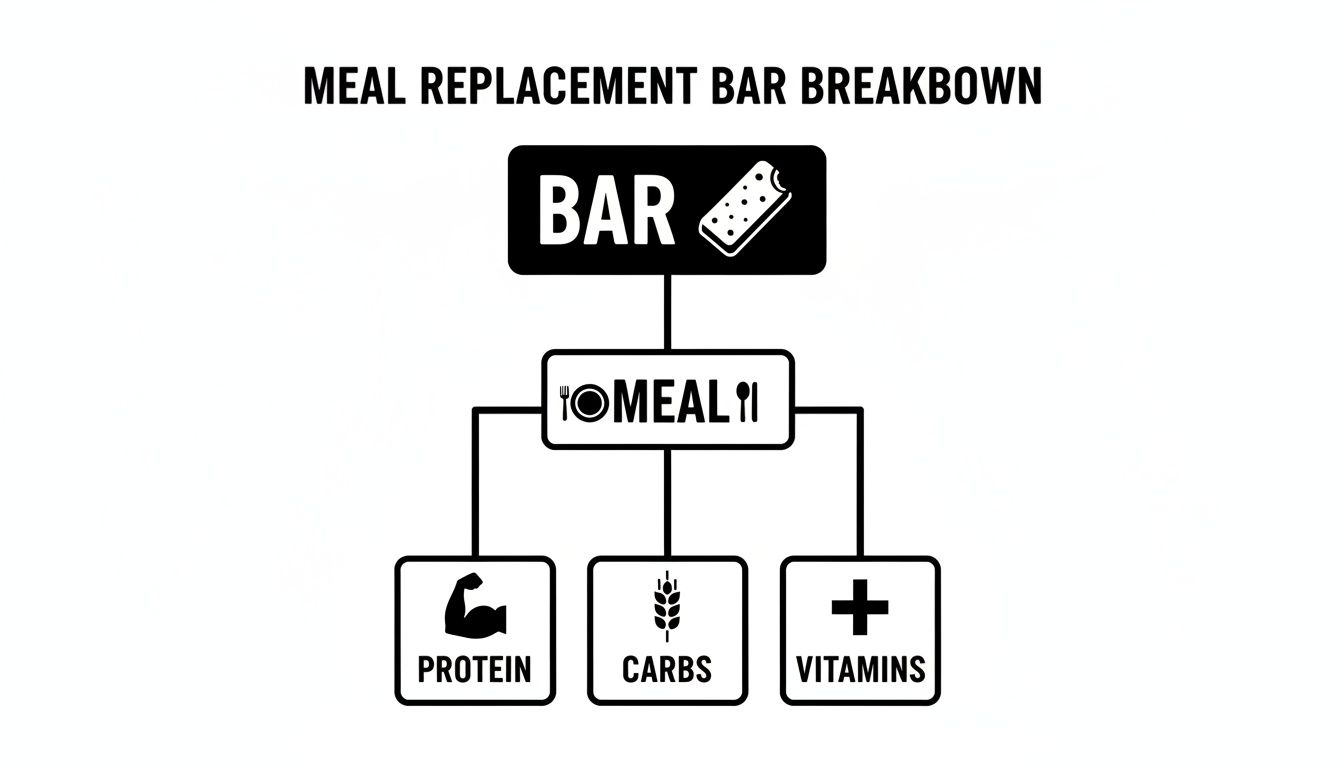
Think of it this way: protein, carbs, and fats are your core building blocks, and the vitamins and minerals are the essential finishing touches that make it a complete structure.
Checking the Macronutrients
Macronutrients—your proteins, carbs, and fats—are where the energy and staying power come from. A well-formulated bar will have a smart balance of all three to keep you full and focused. If you want to get really good at this, our complete guide on reading nutrition labels goes even deeper.
Here’s the quick-and-dirty checklist for your bar:
-
Protein for Fullness: Look for at least 15-20 grams of protein. This is the magic number for feeling satisfied and supporting muscle, especially if you’re active. The source is important, too. High-quality options include whey and casein, or plant-based choices like pea, soy, or fava bean protein.
-
Carbs for Energy: Carbs are not the enemy! You just need the right kind. The best bars get their carbs from whole-food sources like oats, nuts, or seeds. Your key metrics here are fiber and sugar. Aim for at least 3-5 grams of fiber and keep the added sugar low.
-
Fats for Health: Healthy fats are non-negotiable for hormone health and helping your body absorb nutrients. Look for fats from whole sources like nuts, seeds, and their butters. Make sure the bar has low saturated fat and absolutely no trans fats.
Meal Replacement Bar vs. Standard Protein Bar
It’s easy to get these two confused, but they serve very different purposes. A meal replacement is designed to be just that—a meal. A protein bar is a supplement, great for a post-workout boost but not nutritionally complete.
| Nutritional Component | Ideal Meal Replacement Bar | Typical Protein or Snack Bar |
|---|---|---|
| Calories | 250-400 kcal | 150-250 kcal |
| Protein | 15-25g | 20g+ (often the main focus) |
| Carbohydrates | 25-50g (from complex sources) | Variable, often lower |
| Fiber | 3-5g+ | Often low (<3g) |
| Fat | 10-15g (from healthy sources) | Variable, can be low or high |
| Micronutrients | Fortified with 15-25% DV of vitamins/minerals | Minimal or no fortification |
Seeing them side-by-side makes the difference clear. Meal replacements have a more robust and balanced profile, whereas protein bars are hyper-focused on one macro.
Spotting Red Flags on the Ingredient List
The Nutrition Facts panel tells you what's in the bar, but the ingredient list tells you how it's made. Ingredients are listed from most to least by weight, so pay close attention to the first few. This is where you’ll find hidden sugars and cheap fillers.
Here's a simple rule I live by: If sugar or some kind of syrup is one of the top three ingredients, put it back. It’s a candy bar, and it will lead to a nasty energy crash.
Watch out for these common red flags that signal a lower-quality bar:
-
High Sugar Content: So many bars are absolute sugar bombs. Try to keep added sugars under 10 grams. Be on the lookout for sneaky names like high-fructose corn syrup, agave, or brown rice syrup, especially when they’re near the top of the list.
-
Sugar Alcohols: Ingredients ending in "-ol" (like erythritol, sorbitol, and maltitol) are often used to keep the sugar count down. While they're not sugar, they can cause some serious digestive upset—like bloating and gas—for a lot of people. If a bar doesn't sit right with you, this could be why.
-
Artificial Fillers and Binders: If the ingredient list reads like a chemistry textbook, it's probably a sign of an ultra-processed product. While not every additive is bad, a shorter list full of whole-food ingredients you recognize is almost always the better choice.
The Micronutrient Difference
Finally, here’s what truly separates a real meal replacement from a simple snack. It has to deliver more than just macros.
To stand in for a meal, a bar needs to provide a good dose of essential vitamins and minerals (micronutrients). On the label, you'll see these listed as a percentage of your Daily Value (% DV). A quality meal replacement bar will be fortified with things like Vitamin D, Calcium, Iron, and Potassium.
Look for a bar that provides 15-25% DV for a wide range of these micronutrients. That’s a clear sign it was designed to be a nutritionally complete option, not just a quick hit of protein.
The Real Benefits and Risks of Meal Replacement Bars
Meal replacement bars come with a tempting promise: all the nutrition you need, packed into a convenient, grab-and-go format. And for many of us trying to juggle a busy life with health goals, they can be an absolute lifesaver. The appeal is obvious, and it's why the market for them is exploding.
In fact, the meal replacement bar market is expected to jump from USD 18.39 billion in 2025 to a massive USD 32.35 billion by 2035. That growth is a direct reflection of our collective desire for simple, healthy solutions. If you're interested in the numbers, you can explore the full market research report.
One of the biggest wins with a meal replacement bar is the built-in portion and calorie control. Let's be honest, when you're trying to manage your weight, guesswork is the enemy. A bar that clearly states it has, say, 350 calories, takes all the ambiguity out of the equation. It's far easier than trying to estimate the calories in a meal you cooked or, even worse, one from a restaurant.
The Science of Satiety and Convenience
But it's not just about counting calories. A truly good meal replacement bar is engineered to make you feel full and satisfied—a concept known as satiety. This is where two key players, protein and fiber, really step into the spotlight. A bar packed with these two can work wonders on your body's hunger cues.
Protein, for instance, has been shown to trigger the release of hormones like GLP-1 (glucagon-like peptide-1). This hormone is like a messenger that travels to your brain to tell it, "Hey, we're full down here!" This little hormonal trick helps shut down cravings and stops you from overeating later, turning the bar into a strategic tool for managing your appetite.
And then there’s the undeniable benefit of pure convenience.
- For the busy professional: It’s the perfect substitute for a sad desk salad or an unhealthy fast-food run between meetings.
- For the frequent traveler: A quality bar is a beacon of health in an airport filled with greasy temptations.
- For the fitness enthusiast: It offers perfectly timed fuel right before or after a tough workout.
In these moments, a well-formulated bar isn’t a compromise—it’s a smart, strategic choice that keeps your health goals on track.
The Hidden Risks and Downsides
However, it’s important to keep a balanced view. While these bars are a fantastic tool, they can be misused, and relying on them too heavily can introduce some real downsides.
The biggest risk is the potential for nutritional gaps. A bar can mimic the macros and some of the vitamins and minerals of a whole meal, but it can never truly replicate the complex symphony of compounds found in real food. Things like fresh vegetables, fruits, and lean meats contain thousands of phytonutrients, enzymes, and antioxidants that work together to support your health in ways science is still just beginning to understand.
Think of it this way: a meal replacement bar is like a well-written summary of a great book. It gives you the main points, but you miss out on all the nuance, detail, and richness of the full story.
On top of that, many bars lining the shelves are highly processed. While you're reaching for convenience, it's worth understanding the hidden dangers of processed foods. Cheaper, lower-quality options are often little more than candy bars in disguise, loaded with:
- Excessive added sugars or artificial sweeteners
- Unhealthy fats and refined oils
- A cocktail of artificial flavors, colors, and preservatives
These ingredients can quickly cancel out any health benefits. They can even lead to digestive upset like bloating and gas, especially from high amounts of sugar alcohols or certain fibers.
The key is to use meal replacement bars as a strategic part of your diet, not the foundation of it. Use them when you need them, but make sure your diet remains centered around whole, unprocessed foods to get the best of both worlds.
How to Choose the Right Meal Replacement Bar for Your Goals
Walking down the meal replacement aisle can feel overwhelming. With so many brands shouting about their benefits, it’s tough to know which one to trust. But don't worry, once you know what to look for, you can cut through the noise and find the perfect bar for you.
It’s not about finding the single "best" bar on the market. It’s about finding the one that fits your life and your goals. This industry, already worth US$367 million in 2024 and on track to hit US$465.5 million by 2030, is booming precisely because people are looking for personalized nutrition. You can find out more about this growing market to see how consumer goals are shaping the products on the shelf.
Let's break down how to pick a winner.
Step 1: Define Your Primary Goal
Before you even look at a wrapper, ask yourself one simple question: “What do I need this bar to do for me?” A bar meant for post-workout recovery is built differently than one designed to help you manage your weight.
Figure out your main objective. Are you trying to:
- Manage Your Weight? Your main concerns are feeling full and controlling calories. You'll want a bar that keeps hunger at bay without derailing your calorie deficit.
- Support Muscle Growth? If you’re active, your body needs protein to repair and build muscle. You should be prioritizing bars with a significant protein punch.
- Find Pure Convenience? For busy parents, professionals, or anyone on the move, the goal is a balanced, healthy meal that’s better than grabbing fast food. You need a solid mix of protein, carbs, and fats to keep you going.
Knowing your "why" makes the rest of the process much easier.
Step 2: Analyze the Macronutrients
With your goal set, it's time to become a label detective. The ratio of protein, carbs, and fats is what really dictates how a bar will work for you.
Someone trying to build lean muscle, for instance, should look for bars with over 20 grams of protein. If you're following a specific high-protein meal plan, a bar that supports this is a must. We've got a whole guide dedicated to finding great protein bars with 20 grams of protein if you want to dive deeper.
On the other hand, if you just need a quick lunch substitute, look for a more balanced profile—something like 20g protein, 30g carbs, and 15g fat. This will give you steady energy without that dreaded afternoon crash. For weight management, a bar in the 250-350 calorie range with plenty of fiber and protein will be your best bet for staying full.
Step 3: Investigate the Ingredients
The numbers on the nutrition panel are important, but the ingredient list tells you the quality of those numbers. A bar can have a great macro split but be loaded with cheap fillers and artificial junk.
As a rule of thumb, always look for whole-food ingredients you can actually recognize. If the first few ingredients are sugar, corn syrup, or words you can't pronounce, put it back on the shelf.
Scan the list for high-quality sources of macros:
- Protein from: Whey, casein, or great plant-based options like pea, soy, or brown rice protein.
- Carbs from: Complex sources like oats, quinoa, or real fruit, not just refined syrups.
- Fats from: Healthy sources like nuts, seeds, and their butters instead of hydrogenated oils.
Step 4: Check for Your Dietary Needs
Last but not least, make sure the bar fits your specific dietary restrictions. The market has exploded with options, so you don't have to settle.
- Gluten-Free: If you have celiac disease or a sensitivity, look for a "certified gluten-free" seal for peace of mind.
- Dairy-Free or Vegan: Go for bars built on plant-based proteins like pea, soy, or fava bean to avoid whey and casein.
- Low Sugar: If you're watching your blood sugar, choose bars with less than 10g of sugar. High fiber content is also a huge plus here, as it helps slow down sugar absorption.
When you follow these four steps—defining your goal, analyzing the macros, investigating the ingredients, and checking for your needs—you stop guessing and start choosing with confidence. You’ll be able to grab a bar knowing it’s actually working for you and your health.
When and How to Use a Meal Replacement Bar
Figuring out when to eat a meal replacement bar is just as important as choosing the right one. Think of them less as a daily meal and more like a secret weapon for those specific times when a proper, whole-food meal just isn't in the cards.
They’re your nutritional safety net. A Plan B for when life inevitably gets in the way of Plan A. So, let's talk about the situations where a bar isn't just convenient, but genuinely the smart choice.
For the Desk-Bound Professional
We've all been there. You're slammed with back-to-back meetings, and your "lunch break" is a 15-minute window between calls. The only options are the sad vending machine down the hall or the greasy food truck you know you'll regret. This is exactly when you should have a good meal replacement bar on hand.
Instead of skipping the meal entirely (hello, 3 PM energy crash) or grabbing junk food, a well-formulated bar gives you a balanced, calorie-controlled meal that keeps you sharp.
A simple pro tip? Keep two or three bars in your desk drawer or work bag at all times. It's a small bit of planning that saves you from making bad decisions when you're starving. Just add a big glass of water, and you've got a quick, effective lunch without the post-meal slump.
For the Fitness Enthusiast
When it comes to workout nutrition, timing is everything. A meal replacement bar can be a game-changer for fueling your performance and recovery, as long as you use the right kind at the right time.
- Pre-Workout Fuel: About 30-60 minutes before you start, you need easy-to-access energy. Look for a bar with a solid base of complex carbs and a moderate amount of protein. The carbs top off your muscle fuel stores, while the protein gives your body a head start on the repair process.
- Post-Workout Recovery: The clock starts ticking the second you finish your last rep. Within an hour, your muscles are screaming for protein to repair the micro-tears you just created. This is where a high-protein bar is your best friend. Aim for one with at least 20 grams of protein to kickstart muscle protein synthesis and replenish your body.
For the Frequent Traveler
Let's be honest: airports, train stations, and highway rest stops can be nutritional deserts. Finding something healthy and satisfying is a real struggle. This is where a meal replacement bar truly shines—it’s portable, doesn't need a fridge, and sails right through security.
Tucking a bar into your carry-on is like buying an insurance policy against overpriced, unhealthy airport food. It’s your guarantee of a decent meal, no matter how long the delay or how grim the terminal's food court is.
This little bit of foresight helps you stay on track with your health goals, even when you're hundreds of miles from your kitchen. It's a small habit that prevents travel from completely derailing your diet.
For the Weight Management Strategist
When you're focused on managing your weight, consistency and portion control are the name of the game. Meal replacement bars deliver both in one easy-to-grab package. By swapping one meal a day—usually breakfast or lunch—with a bar that has a clearly defined calorie count, you create a calorie deficit without the mental gymnastics of meal prep.
Think about it: trading a 600-calorie takeout lunch for a 350-calorie bar that’s high in protein and fiber instantly saves you 250 calories. More importantly, that protein and fiber will actually keep you feeling full, helping you sidestep those afternoon cravings that lead to mindless snacking. Used this way, a simple bar becomes a powerful ally on your health journey.
The Rise of Savory Meal Replacement Alternatives
Let's be honest. If you've ever unwrapped another chocolate-drizzled, cookie-dough-flavored bar and just… sighed, you’re not alone. The meal replacement market is flooded with options that taste more like candy than a balanced meal, leading to what many of us in the nutrition world call flavor fatigue. It’s that point where your taste buds are just plain tired of the relentless sweetness, making it tough to stick to your goals.
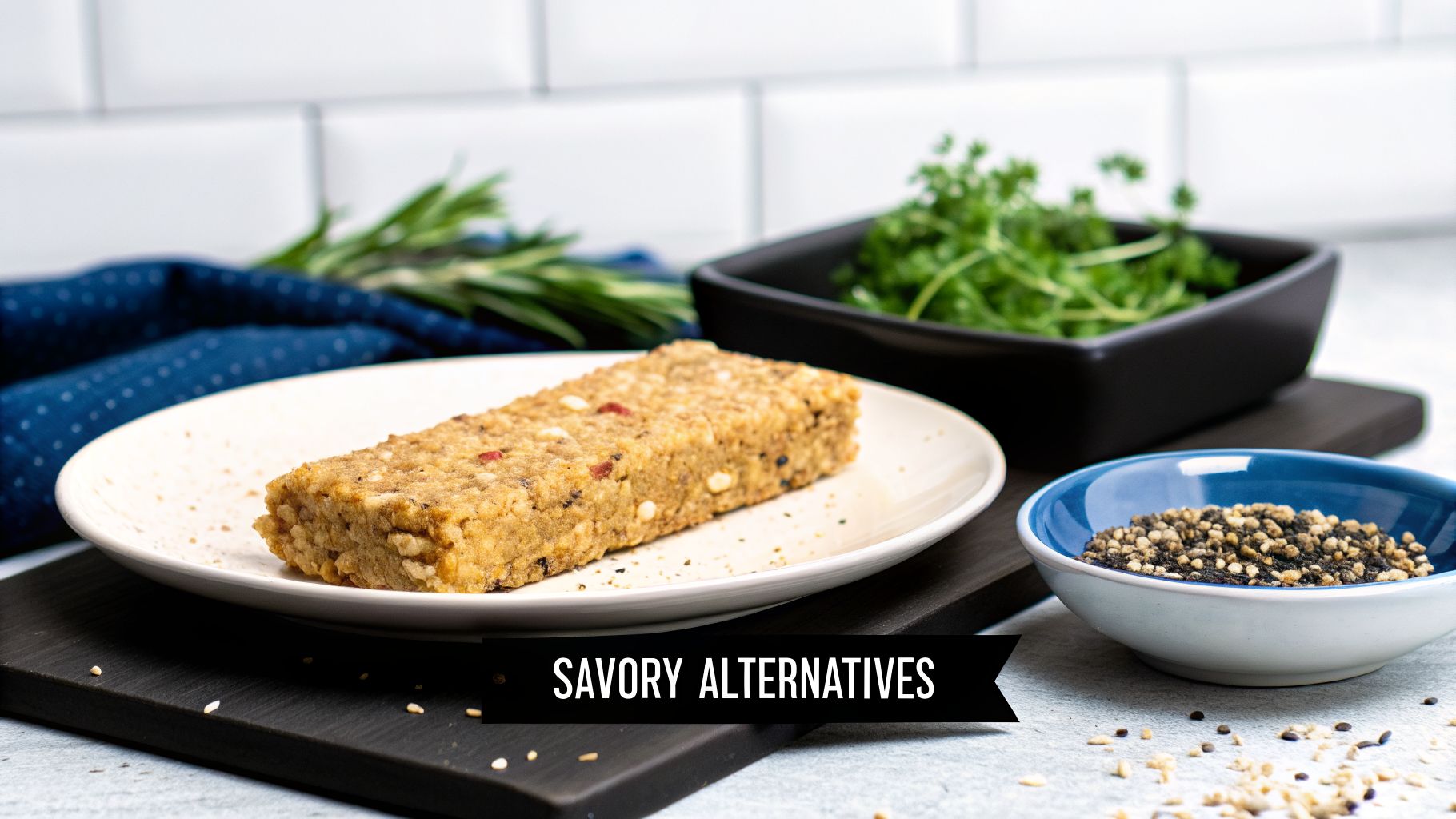
But what if your quick, on-the-go meal could taste like an actual meal? That's exactly where the new wave of savory meal replacements comes in. This isn't just a gimmick; it's a response to a real need. We're finally moving away from the candy aisle and embracing complex, satisfying flavors like herbs, spices, and umami. It’s a shift that acknowledges a simple truth: sometimes, you just need something salty and crunchy, not sweet and chewy.
Why Savory Is a Game Changer
Switching to savory does more than just give your palate a break; it changes the entire experience. When your bar tastes like a mini-meal instead of a forced dessert, it feels more sustainable and, frankly, more enjoyable. That mental shift is powerful.
The advantages of adding savory to your rotation are pretty clear:
- Beats Flavor Fatigue: Offering a completely different profile keeps things interesting and helps you avoid burnout from an all-sweet lineup.
- Satisfies Real Cravings: Not every hunger pang is a sweet tooth. Savory options answer the universal call for something salty, crunchy, and satisfying.
- Feels More Like Real Food: Flavors inspired by actual meals make convenience feel less like a compromise and more like a legitimate dining choice.
Think of it like this: You wouldn't want to eat cake for lunch every single day, even if it met your macros. A savory option gives your palate the variety it desperately needs, making a quick meal feel like a choice, not a chore.
A Modern Take on Savory Nutrition
This new generation of savory options is driven by some really smart food science, especially with plant-based ingredients. For instance, you can now find crunchy, savory puffs made from clean pea protein that deliver outstanding nutrition without the common allergens lurking in many sweet bars. For anyone looking for better options, exploring the world of savory high-protein snacks can be a total game-changer.
Look for products like Gym Snack that use ingredients you can actually recognize to create a junk-free, macro-friendly format. By building their snacks on a high-protein, plant-based formula, they deliver a serious crunch and bold flavor without any dairy, soy, or gluten. It's the perfect choice for anyone trying to fuel their body with clean ingredients while finally getting a break from the endless parade of sweet protein bars.
Answering Your Top Questions About Meal Replacement Bars
When you're new to meal replacement bars, a few questions always seem to pop up. It's completely normal to want to get it right. Let's clear the air on some of the most common concerns so you can feel confident about using them.
Can I Eat Meal Replacement Bars for Every Meal?
I get this question a lot, and the short answer is a definite no. While it might sound tempting to simplify your life that much, it’s not a sustainable or healthy strategy. Your body is designed to run on the incredible variety of nutrients, fibers, and natural compounds found in whole foods.
Think of meal replacement bars as a specialized tool in your nutritional toolkit, not the entire toolbox. They are fantastic for that one meal a day when you’re slammed with work or for a quick snack, but they can't replicate the complex goodness of a plate filled with fresh veggies, lean protein, and healthy fats.
Will Meal Replacement Bars Make Me Gain Weight?
This is a great question, and the answer comes down to simple math: calories in versus calories out. A bar itself won't make you gain weight, but how you use it certainly can. They are brilliant for managing your weight if you use them for what they're intended for—replacing a higher-calorie meal.
For example, if you typically grab a 700-calorie takeout sandwich for lunch, swapping it for a 350-calorie meal replacement bar instantly puts you in a better position to meet your weight loss goals. The trouble starts when you add the bar on top of your regular meals. Then, it's just extra calories that can easily lead to weight gain. It all depends on how it fits into your daily calorie budget.
Are They Safe for People with Diabetes?
For anyone managing diabetes, food choices are extra critical, and bars are no exception. Some can be a good fit, but you have to be a detective and read the label carefully. Of course, you should always run it by your doctor or a registered dietitian first.
When you're scanning the options, look for a bar that will help keep your blood sugar stable. Here’s your checklist:
- Low in Sugar: Keep it under 10 grams per bar if you can.
- High in Fiber: Fiber is your friend—it slows down how quickly your body absorbs sugar.
- Rich in Protein: Protein helps you feel full and provides steady, stable energy.
Be sure to check the total carbohydrates and scan the ingredients list. If you see high-fructose corn syrup or any other form of sugar near the top, put that bar back on the shelf.
Tired of the same old sweet bars? Gym Snack offers a bold, savory, and crunchy alternative. Fuel your goals with our high-protein, plant-based puffs, designed to keep you full and satisfied without the junk. Explore our delicious flavors.