

You’re probably looking at met rx meal replacement for one of three reasons. You need a fast meal after training, you’re tired of grabbing random snacks when work gets busy, or you’ve seen Met-Rx on shelves for years and want to know if it still makes sense today.
That’s a fair question.
Met-Rx has been part of fitness nutrition for a long time, and it built its reputation on high-protein meal replacements aimed at lifters and bodybuilders. But the market around it has changed. People now care not just about protein, but also allergens, ingredient lists, flavor fatigue, and whether they want another sweet shake at all.
So the useful question isn’t “Is Met-Rx good or bad?” It’s simpler. Is it the right tool for your goal, digestion, and preferences?
What Is Met-Rx Meal Replacement
You finish a workout, glance at the clock, and realize your next real meal is hours away. In that gap, a product like Met-Rx is meant to act as a stand-in, not because it beats whole food, but because it gives you a fast, portable way to get protein and calories when your schedule falls apart.
That is the basic idea behind a meal replacement. It is more substantial than a standard protein shake, which often focuses mainly on protein. A meal replacement is built to do more of the job a meal would do by adding extra calories and a broader nutrition profile. If you want a clearer baseline for how that differs from a regular shake, this guide to protein shake nutritional information helps frame the comparison.
Met-Rx became popular during an earlier era of sports nutrition, when the goal was often simple: get a large serving of protein into a busy athlete or lifter without much preparation. That legacy is significant because the brand still reflects that mindset. Met-Rx products are usually designed for people who want something filling and protein-heavy, not a light snack between meals.
In real life, that makes Met-Rx useful for a narrow but common problem. You miss lunch. You need something after training. You are traveling and the food options are poor.
Used that way, a meal replacement can be practical. Used as your default for breakfast, lunch, and dinner, it starts to solve the wrong problem.
A helpful way to look at Met-Rx is this: it sits between a protein powder and an actual meal. It gives you more structure than a scoop of whey, but less variety and satisfaction than eating chicken, rice, fruit, or a balanced wrap. For some people, that middle ground is exactly what makes it useful.
It is also where modern buyers pause. Many people now care about more than protein totals. They want to know about allergens, sweet flavors, ingredient complexity, and whether they really want another chocolate or vanilla shake after months of using supplements. That is one reason newer options, including savory plant-based protein snacks like Gym Snack, are getting attention. They solve a similar convenience problem from a different angle.
So what is Met-Rx meal replacement, really? It is a legacy, protein-forward convenience product built to help active people cover a missed meal or support recovery when whole food is not realistic. Whether that sounds helpful or outdated depends on your goals, your digestion, and how tired you are of sweet shake culture.
A Deep Dive into Met-Rx Ingredients and Nutrition
Met-Rx makes more sense once you read it like a formula built for a job, not just a tub of powder with extra marketing. The job is straightforward. Provide a large dose of protein, add some vitamins and minerals, and make the shake feel closer to a meal than a standard post-workout scoop.
The protein blend is the main story
Met-Rx centers much of its identity on the METAMYOSYN® protein blend. The HEB product listing for a Met-Rx bar describes a mix that includes whey protein isolate, whey protein concentrate, milk protein isolate, calcium caseinate, and egg albumen.
Why does that matter? Because these proteins do not all digest at the same pace. Whey is usually the faster part of the mix. Casein and egg tend to digest more gradually. HEB’s description also says the blend is intended to create an early rise in leucine from whey, followed by a longer release of essential amino acids from caseinate and egg proteins.
For an athlete, that approach is easy to understand. A single-source protein is like one tool in a toolbox. A blended protein tries to cover more than one need at once, especially if you want a shake that feels more substantial than plain whey.
There is a tradeoff, though. This blend pulls from milk and egg, which matters if you avoid dairy, react poorly to lactose, or want a simpler ingredient panel.
What the original powder looks like nutritionally
The original Met-Rx meal replacement has long been known for a protein-heavy profile with relatively controlled calories. In practical terms, that means it is designed to keep protein high without turning into a full fast-food-sized meal. That appeals to lifters and dieters who want structure, but it also explains why some people still feel like they need fruit, oats, or another side to make the shake more satisfying.
A good label check starts with four questions:
- How much protein are you getting per serving?
- How much of the total calorie load comes from sugar or other carbohydrates?
- Is there enough fiber to help fullness?
- Does the ingredient list match your digestion and allergy needs?
If you want help reading those numbers in context, this guide to protein shake nutritional information gives a useful framework for comparing meal replacements with standard protein powders.
That broader view matters because a meal replacement is not judged by protein alone. It also has to fit appetite, digestion, schedule, and goal.
Carbs, vitamins, and the “meal” part of meal replacement
Protein gets the attention, but the supporting ingredients do a lot of the work. Met-Rx products often include added carbohydrates, vitamins, and minerals so the product feels more like a stopgap meal instead of a pure recovery shake.
That can be helpful after training or during a rushed day. Carbohydrates can support energy replenishment. Micronutrients can fill some gaps when real food is not available. The downside is that “more complete” does not always mean “more satisfying.” A fortified sweet shake can cover nutrients on paper while still leaving someone tired of dessert-style flavors by week two.
This is one reason newer options are getting a closer look. Savory, plant-based protein snacks such as Gym Snack address the same convenience problem from a different direction. Instead of another sweet dairy-forward shake, they give some people a format that feels more like eating and less like drinking a supplement. That difference matters if flavor fatigue, allergens, or ingredient simplicity are high on your list.
A practical way to judge the formula
A useful test is to ask what role Met-Rx will play in your routine.
If you need a high-protein backup meal and tolerate dairy and egg well, the formula can still make sense. If your bigger concern is long-term adherence, ingredient simplicity, or avoiding sweet shakes, you may do better with another category entirely.
That is also true for weight-loss use. A meal replacement can create structure, but it works best inside safe and sustainable weight management practices, not as a shortcut that replaces too many whole-food meals.
One caution on quality and fit
Purity and ingredient quality deserve attention with any product you use often. If a shake becomes part of your daily routine, small details matter more. The protein source, sweeteners, allergens, and manufacturing quality all become part of the decision, not just the front-label protein number.
So the fairest reading of Met-Rx is this. It is a legacy, high-protein meal replacement built around a blended animal-protein formula. For some people, that still fits the job well. For others, especially buyers who want fewer allergens or a break from sweet shake culture, the newer savory plant-based category may be a better match.
Common Use Cases for Met-Rx Meal Replacements
You miss lunch, your afternoon gets hectic, and by 4 p.m. you are choosing between a vending machine bar and nothing at all. That is the kind of moment a Met-Rx meal replacement is built for. It works best as a planned fallback for specific situations, not as an everyday substitute for balanced meals.
A simple way to judge fit is to ask what problem you are trying to solve. Is it missed meals, post-workout timing, or a schedule that keeps pushing food decisions to the last minute? Met-Rx can help in each case, but the right answer depends on whether you want a sweet, shake-style product or something that feels more like food, such as the newer savory plant-based protein snack category.
The office worker who keeps skipping lunch
Sara trains after work and often lets lunch slip because meetings run long. By the time she notices how hungry she is, she wants fast calories, not a well-planned meal.
For someone in that pattern, met rx meal replacement can act like a packed umbrella. You hope you will not need it, but having it with you prevents a bad decision when the weather changes. Used this way, it gives structure to a day that went off course.
If weight management is one of your goals, that structure helps most when it sits inside safe and sustainable weight management practices, not crash dieting or a habit of replacing too many whole-food meals.
The lifter who wants a heavier post-workout option
James finishes training late and does not always want to cook as soon as he gets home. A basic whey shake feels too small, but a full meal may be an hour away.
Met-Rx has long appealed to this type of user because it provides a relatively high protein serving and tends to feel more substantial than a standard protein powder. That is part of why it stayed popular with bodybuilders and strength-focused gym users for years.
The practical question is comfort and preference. Some lifters like that thick, sweet, old-school shake style after training. Others get tired of it and start skipping it. If that sounds familiar, a savory plant-based protein snack can solve a different problem. It gives you protein without adding another dessert-flavored shake to the day.
The person who needs predictable convenience
Alex is less interested in bodybuilding culture than in reducing daily friction. Between commuting, work, and family responsibilities, he wants an option he can count on when plans change.
That is a reasonable use case for Met-Rx. Meal replacements are often most helpful for people whose real challenge is inconsistency. The product is doing one job. It shortens the gap between "I need to eat" and "I made a decent choice."
It tends to fit best in moments like these:
- After training when dinner will be late
- During travel when better options are hard to find
- As a backup meal on days when work crowds out your normal routine
Use Met-Rx to cover gaps in your plan and protect protein intake. Do not use it as a reason to stop building better meal habits.
That last point matters. If you want a familiar, high-protein shake and you tolerate dairy, soy, and egg, Met-Rx can still fit these use cases well. If your bigger issue is ingredient sensitivity, flavor fatigue, or wanting something less processed-feeling than a sweet shake, a savory plant-based protein option may match your routine better.
Evaluating the Pros and Cons of Met-Rx
Met-Rx has real strengths. It also has real limitations. If you look at it through a modern nutrition lens, both sides become clearer.
Where Met-Rx still performs well
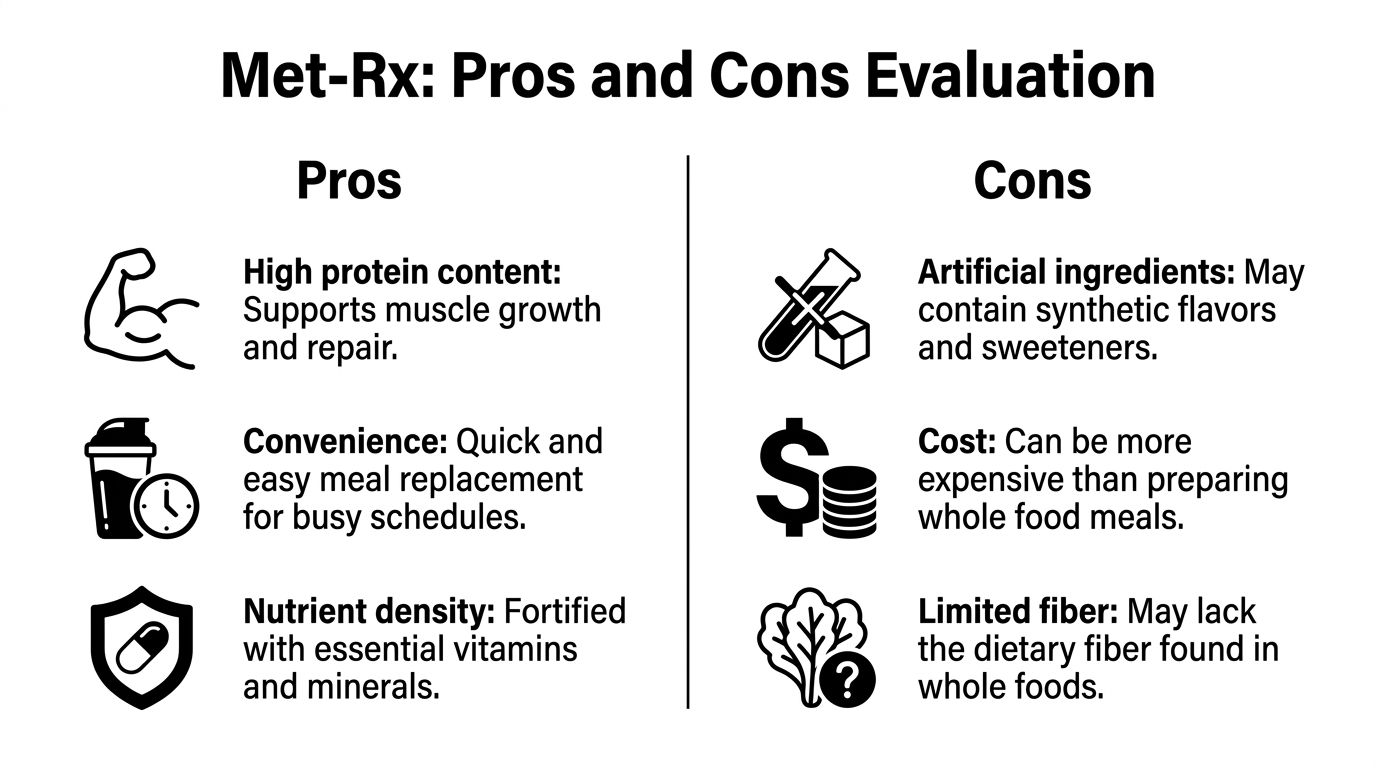
The first advantage is obvious. It gives a lot of protein in a compact format. That’s useful for athletes, busy professionals, and anyone who struggles to eat enough structured protein during the day.
The second advantage is convenience. Powders and bars are easy to store, easy to carry, and easy to use when your schedule goes off-script.
The third advantage is formula design. Met-Rx products were built to feel more substantial than a basic protein supplement. That matters if you want a product that bridges the gap between snack and meal.
Where modern buyers may hesitate
The biggest concern for many people now is the protein source profile.
Verified data notes that one underserved issue in Met-Rx coverage is its heavy reliance on dairy, soy, and egg proteins, which can make it a poor fit for people avoiding those allergens or following a plant-based diet. The same verified data states that the global plant-based protein market grew 12% year over year in 2025, reflecting stronger interest in gut-friendly, non-dairy options, as cited in the Met-Rx Big 100 Crispy Apple Pie product page reference.
If you tolerate dairy, soy, and egg well, that may not bother you.
If you don’t, this is a major issue. Not a minor preference.
Ingredient quality concerns
A second hesitation is ingredient style. Some Met-Rx bars rely on syrup-heavy, dessert-like formulations. Verified data highlights concerns about bioengineered ingredients and high sugar content, including ingredients such as corn syrup and fructose in Big 100 bars, which can conflict with “clean eating” preferences.
That doesn’t mean every user should panic over one ingredient list. It does mean you should read the label with your priorities in mind.
Here’s a practical comparison:
| Consideration | Met-Rx may fit if... | Met-Rx may not fit if... |
|---|---|---|
| Protein goal | You want a high-protein meal replacement | You only need a light protein snack |
| Dietary tolerance | You handle dairy, soy, and egg well | You need allergen-conscious or plant-based options |
| Ingredient philosophy | You care more about convenience and macros | You want simpler or less processed ingredients |
| Flavor preference | You like sweet, classic supplement flavors | You’re burned out on sweet shakes and bars |
My nutritionist take
Met-Rx still makes sense for a specific person. Usually that’s someone who prioritizes protein, doesn’t mind traditional sports nutrition ingredients, and wants a fast solution that’s been around for years.
But “works” and “works for you” aren’t the same thing.
If your stomach, values, or taste preferences fight the product every day, the macros won’t save it.
That’s why the best choice often comes down to more than the label. It comes down to what you’ll use consistently.
A Practical Guide to Buying and Dosing Met-Rx
If you’ve decided Met-Rx is worth trying, keep the process simple. A complicated strategy isn't needed. They need to match the format and serving size to the reason they’re buying it.
Step one, choose the format that matches your routine
Met-Rx comes in different forms, and each one solves a slightly different problem.
- Powder: Best if you want flexibility. You can make it thicker or lighter depending on what you mix it with.
- Ready-to-drink shake: Best for pure convenience. Open, drink, move on.
- Bar: Best when you need portability and can’t carry a shaker.
If you shop in person, you can inspect the package quickly and compare flavors. If you shop online, it’s easier to review ingredients and compare formats without rushing.
Step two, read the label for your goal
Don’t buy based on branding alone. Buy based on what role the product will play.
If you’re using it after a workout, you may care most about protein and overall tolerance. If you’re using it as a stand-in for lunch, you should care about whether it keeps you full and whether the calories fit your day.
Label reading is important here. If you need a refresher, this guide on how to read nutrition labels is a useful place to start.
Step three, dose it based on the situation
A common mistake is using the same amount every time no matter the context.
Use this framework instead:
- Post-workout use: Take the amount that gives you the recovery support you want without ruining your appetite for your next meal.
- Meal backup: Use a fuller serving when you’re replacing a meal, not just taking the edge off hunger.
- Between meals: A smaller serving may be enough if your goal is to avoid a long gap without protein.
You don’t need to force a “full meal replacement” every time. Sometimes the right move is a partial serving that fills the gap until real food.
Step four, make it easier to drink consistently
Taste and texture matter more than people admit.
Try these adjustments:
- Use colder liquid: It usually improves texture.
- Shake longer than you think: Clumps make a decent product feel worse.
- Start simple: Test it with water first, then adjust if needed.
- Drink it soon after mixing: Many shakes taste best fresh.
A supplement only helps if you’ll keep using it. If preparation is annoying or the texture turns you off, you’ll stop buying it.
Alternatives to Consider Savory Plant-Based Protein
Not everyone wants another sweet shake. That’s become one of the biggest shifts in sports nutrition.
Some people are tired of chocolate, vanilla, cookie, and dessert-style flavors. Others want to avoid dairy, soy, or egg. Others are looking for products that feel less like old-school supplement culture and more like normal food choices.

Why this category is growing
Verified data points to an underserved gap around bioengineered ingredients and high sugar content in some Met-Rx bars, including ingredients such as corn syrup and fructose. The same verified data notes a 15% rise in demand for savory, seed oil-free protein snacks for busy professionals in 2025, a trend described in the Shaws product reference for a Met-Rx bar.
That shift makes sense.
A savory plant-based protein snack solves a different set of problems:
- Flavor fatigue: You don’t always want dessert flavors.
- Allergen concerns: Plant-based options can be easier to fit into restrictive diets.
- Crunch and chewing satisfaction: Some people feel more satisfied eating a snack than drinking calories.
- On-the-go practicality: A dry, savory snack can feel more natural in work or travel settings.
Quick Comparison Traditional Shake vs. Savory Protein Snack
| Feature | Met-Rx Type Shake | Gym Snack Type Snack |
|---|---|---|
| Main format | Drinkable meal replacement | Crunchy savory protein snack |
| Typical flavor profile | Sweet, dessert-style | Savory, snack-style |
| Best use case | Meal coverage or post-workout nutrition | Bridging meal gaps and satisfying snack cravings |
| Protein source style | Commonly dairy-based blends | Plant-based protein approach |
| Who may prefer it | Lifters wanting a classic shake format | People avoiding flavor fatigue or common allergens |
A useful way to think about this is that these products aren’t trying to do exactly the same job.
A traditional meal replacement shake aims to act more like a compact meal. A savory protein snack often works better as a bridge between meals, a crunchy desk snack, or an option for someone who’s done with sweet products.
If you’re comparing protein quality across plant options, this guide to the best plant protein for muscle gain gives helpful context.
Here’s another angle worth considering:
Some people don’t need a better shake. They need a different eating experience.
That’s especially true if your issue isn’t protein intake itself. It’s that you’re bored, bloated, or tired of forcing down sweet formulas you no longer enjoy.
Is Met-Rx Meal Replacement the Right Choice for You
Met-Rx still has a place.
If you want a classic high-protein meal replacement, tolerate dairy-based blends well, and like the convenience of traditional sports nutrition products, it can still be a practical option. For many lifters, that’s enough reason to keep it in rotation.
But the right answer depends on what matters most to you.
Choose Met-Rx if your top priorities are convenience, familiar bodybuilding-style formulas, and a substantial protein hit in a shake or bar. It fits best for the person who wants efficiency and doesn’t mind legacy supplement ingredients.
Look elsewhere if you care most about plant-based eating, avoiding dairy, soy, or egg, simplifying ingredients, or escaping sweet flavor overload. In that case, a newer category may fit your routine better than a legacy meal replacement ever will.
That’s the key takeaway. Met rx meal replacement isn’t outdated. It’s specific.
And specific products work well for specific people.
Pick the product you’ll use with consistency, tolerate comfortably, and feel good about eating. That’s the one that supports your results.
If you’ve realized you want protein support without the sweet-shake routine, Gym Snack is worth a look. It offers a different path: chef-inspired, plant-based savory protein snacks with pea protein, crunchy texture, and an allergen-conscious profile for people who want convenient protein that feels more like real snacking than dessert.