

You're standing in a supplement aisle with two products carrying the same MRE Blueberry Cobbler flavor name. One is a foil-wrapped bar you can toss into a gym bag. The other is a tub of powder with a blue label that needs a shaker, water, and a few minutes of preparation. They sound interchangeable, but they aren't.
The name appears across protein bars, powders, ready-to-drink shakes, and lighter powdered versions. Those formats can differ sharply in calories, carbohydrates, fat, protein, texture, and convenience. The useful question isn't whether MRE Blueberry Cobbler is “good.” It's which version you're looking at and what you want it to do.
The MRE Blueberry Cobbler Naming Problem
The confusion begins with the flavor name. A shopper may see MRE Blueberry Cobbler on a 67 g bar, a 130 g multi-scoop powder serving, a 29 g single scoop, and an 8 fl oz shake, according to the product nutrition entries cataloged by MyFoodData. These aren't different serving sizes of one identical product. They're separate formats built around a shared flavor identity.
That creates a practical problem. The bar is sealed, portable, and ready to eat. The full powder serving is designed to deliver a much larger meal-style intake, while the single-scoop entry is closer to a concentrated protein serving. The shake requires no mixing, and a lighter “MRE Lite” powder variant sits in yet another nutritional lane.
Same flavor, different job
A bar and a powder can both taste like blueberry cobbler while serving different moments in your day.
- The bar: Useful when you need food you can carry and eat without equipment.
- The full powder: Better suited to a larger shake or meal-replacement occasion.
- The single scoop: More appropriate when you want protein without the full calorie load of the multi-scoop serving.
- The RTD shake: Designed for immediate use, with no shaker bottle or liquid required.
- The lite variant: Intended for shoppers who want a lighter version of the powder format.
The labels may share branding, but the ingredient lists, preparation methods, and nutrition panels still matter. A person packing an emergency kit has different needs from someone looking for a post-workout shake, and neither should choose solely by flavor.
Practical rule: Read the serving description before comparing prices. “Per scoop,” “per bar,” and “per bottle” aren't interchangeable measurements.
This guide separates the formats so you can match the package to the task, whether you're packing a trail snack, organizing shelf-stable supplies, or replacing a convenient shake after training.
Where the MRE Name Actually Comes From
MRE is rooted in the military phrase Meal, Ready-to-Eat. It refers to a portable field-ration concept created to give soldiers food that could be carried and consumed in the field. Commercial supplement brands borrow that language because it suggests convenience, durability, and substantial nutrition rather than a small protein-only drink.
The modern product name also uses “MRE” as a positioning cue. It tells shoppers to expect something closer to a meal replacement than to an unflavored whey isolate. The full MRE Blueberry Cobbler powder, for example, is listed as a substantial blend of protein and carbohydrates, with its multi-scoop serving providing 530 calories, 47 g protein, and 75 g carbohydrate in the label data published by GNC.
Why the flavor matters
“Blueberry Cobbler” gives the formula a dessert-style identity. That makes oats, fruit flavoring, carbohydrate ingredients, and richer texture feel consistent with the product concept. The result isn't meant to behave like a plain, fast-mixing protein isolate. It's built to feel more substantial.
The powder's ingredient profile supports that interpretation. Five Natural's product listing identifies rolled oats, yam, sweet potato, pea starch, cellulose gum, coconut water powder, and MCT oil powder. Together, those ingredients create a mixed food matrix rather than a simple liquid protein base.
That distinction helps explain why commercial MRE products can feel thicker and more filling than a basic whey shake. They also aren't military-issued rations just because the label uses the acronym. Civilian products are sold as foods, supplements, or meal-replacement products according to their packaging and claims.
The military reference is a branding signal. It doesn't turn a commercial bar or shake into genuine military-issue food.
The product family's continued appearance in independently cataloged entries dated from 2020 through 2026 is documented in the supplied product research, but that persistence still doesn't make every format nutritionally identical. The name has lasted. The serving panel remains the deciding factor.
Nutrition Breakdown Across Formats
A shopper holding a single scoop, a full powder serving, a bar, or a ready-to-drink bottle is comparing different portions. The shared MRE Blueberry Cobbler name does not create shared macros. Start with the serving unit, then compare calories, protein, carbohydrates, fat, and sugar.
The data ranges from 130 calories per single scoop to 530 calories per four-scoop serving. The single-scoop powder lists 24 g protein, while the four-scoop serving lists 47 g protein. The shake lists 230 calories, 40 g protein, and 0 g sugar. A bar listing shows 260 calories, 20 g protein, 29 g carbohydrate, and 9 g fat, according to the MyFoodData nutrition entry.
A practical label comparison
| Nutrient | Powder scoop with water | Bar, single | RTD or Lite, per serving |
|---|---|---|---|
| Calories | 130 | 260 | 230 for the listed shake |
| Serving size | 29 g scoop | 67 g bar | 8 fl oz shake |
| Protein | 24 g | 20 g | 40 g |
| Carbohydrates | 4 g | 29 g | Not listed in the supplied data |
| Sugars | Not listed for the scoop | Not listed in the supplied data | 0 g sugar |
| Fiber | Not listed for the scoop | Not listed in the supplied data | Not listed |
| Total fat | Not listed in the supplied data | 9 g | Not listed |
| Saturated fat | Not listed in the supplied data | 5 g in one listing | Not listed |
| Sodium | 85 mg | 300 mg in one listing | Not listed |
The table works like a translation guide. A scoop is a small powder portion, a full powder serving may contain several scoops, and a bar is a complete packaged unit. Comparing the numbers without checking those units can make a lighter product appear equivalent to a meal-sized portion.
Bar listings also vary. One whole-food bar entry reports 360 calories, 20 g protein, 29 g carbohydrate, 9 g fat, and 6 g sugar, with protein from beef, salmon, chicken, egg albumin, brown rice, and pea proteins, as shown by Eat This Much. That difference reinforces a simple shopping habit: read the exact package rather than relying on the flavor name.
Use this guide to read nutrition labels by serving size and macronutrient when comparing a scoop, a full powder serving, a bar, and an RTD or lite format. The format determines whether the product fits a quick protein drink, a denser snack, or a larger meal replacement.
Ingredient Deep Dive and Digestion Notes
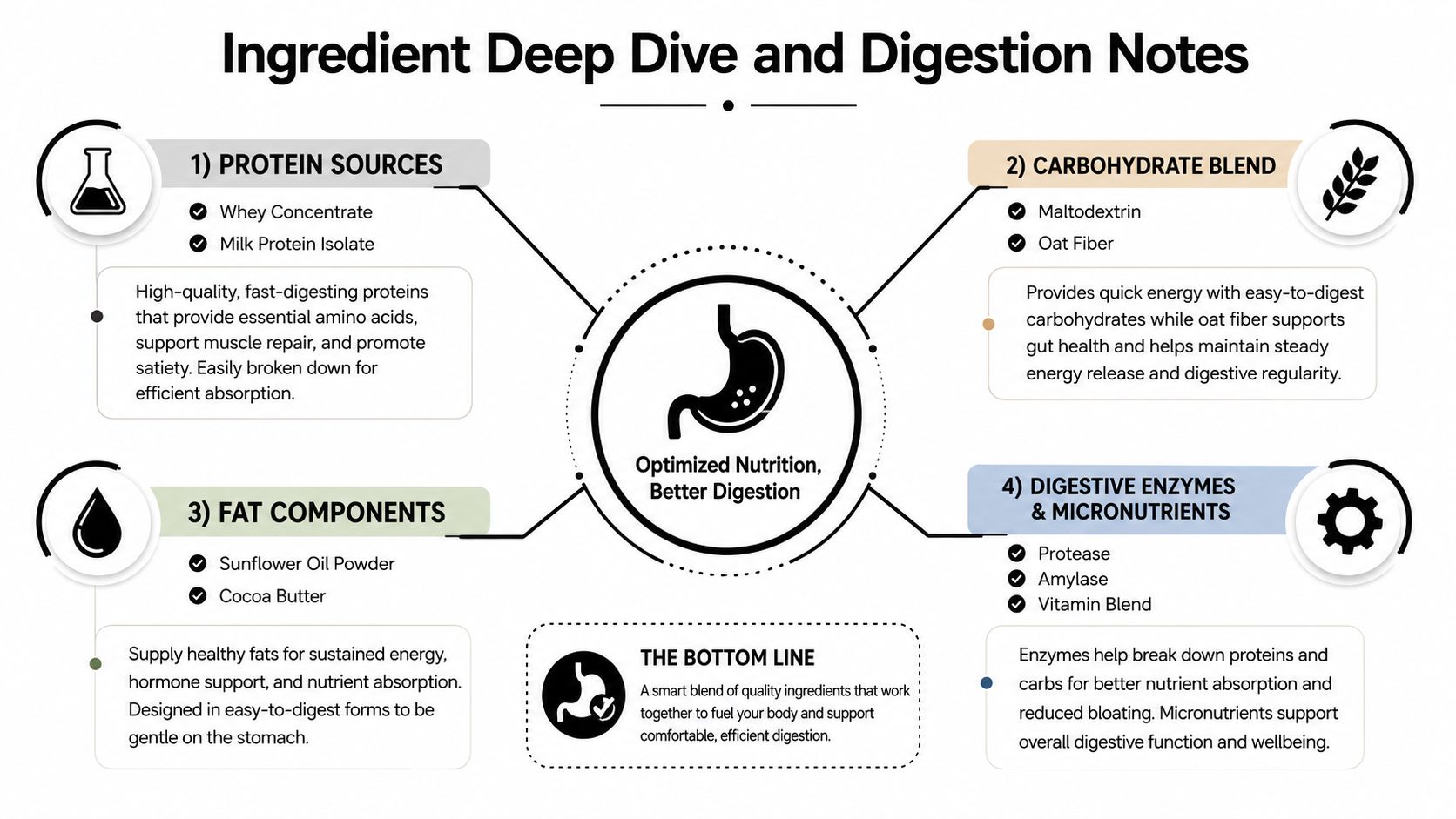
A blueberry-cobbler label can describe very different eating experiences. The powder is built for mixing, the bar is compact and chewy, and an RTD or lite version may use another ingredient balance. Read the formula by function: protein sources, carbohydrate structure, fats, texture agents, and ingredients that may affect digestion.
Protein sources
The powder combines protein with food-derived ingredients rather than depending on one isolated protein. Its listed formula includes rolled oats, yam, sweet potato, and pea starch alongside protein, according to Five Natural's ingredient information. Those ingredients help explain why the drink may feel thicker and more substantial than a simple protein shake.
The bar uses a broader protein blend, including beef, salmon, chicken, egg albumin, brown rice, and pea proteins. Soy protein isolate also appears in its wider ingredient system. Several protein sources can produce a denser, more food-like texture than a single whey-based drink.
Carbohydrate and fat components
In the powder, rolled oats, yam, sweet potato, and pea starch form a mixed carbohydrate base. This structure contributes body and may make the drink feel heavier as it moves through digestion.
The bar adds ingredients designed for chewiness and shelf stability, including maltitol, glycerin, chicory root fiber, and palm kernel oil. Polyols such as maltitol and concentrated fibers can cause gas or bloating for some people, especially after a large portion. For general context on sweetener substitutions used in food preparation, see this guide to best options for baking and cooking. It is not a product-specific nutrition analysis.
Why digestion can vary
Format changes the digestive experience. A thick powder may feel heavier than a thin shake, while a dense bar provides less water and more concentrated texture in each bite. Dairy ingredients may bother someone with lactose sensitivity, and sugar alcohols or added fibers may be difficult for people with sensitive digestion or IBS tendencies.
Use a small trial instead of treating the flavor name as a digestion guarantee. Start with half a serving of powder or a quarter of a bar, wait two hours, and record any discomfort before increasing the portion. If protein drinks regularly cause symptoms, this explanation of why protein shakes upset your stomach outlines common triggers to investigate.
How to Prepare and Serve Each Format
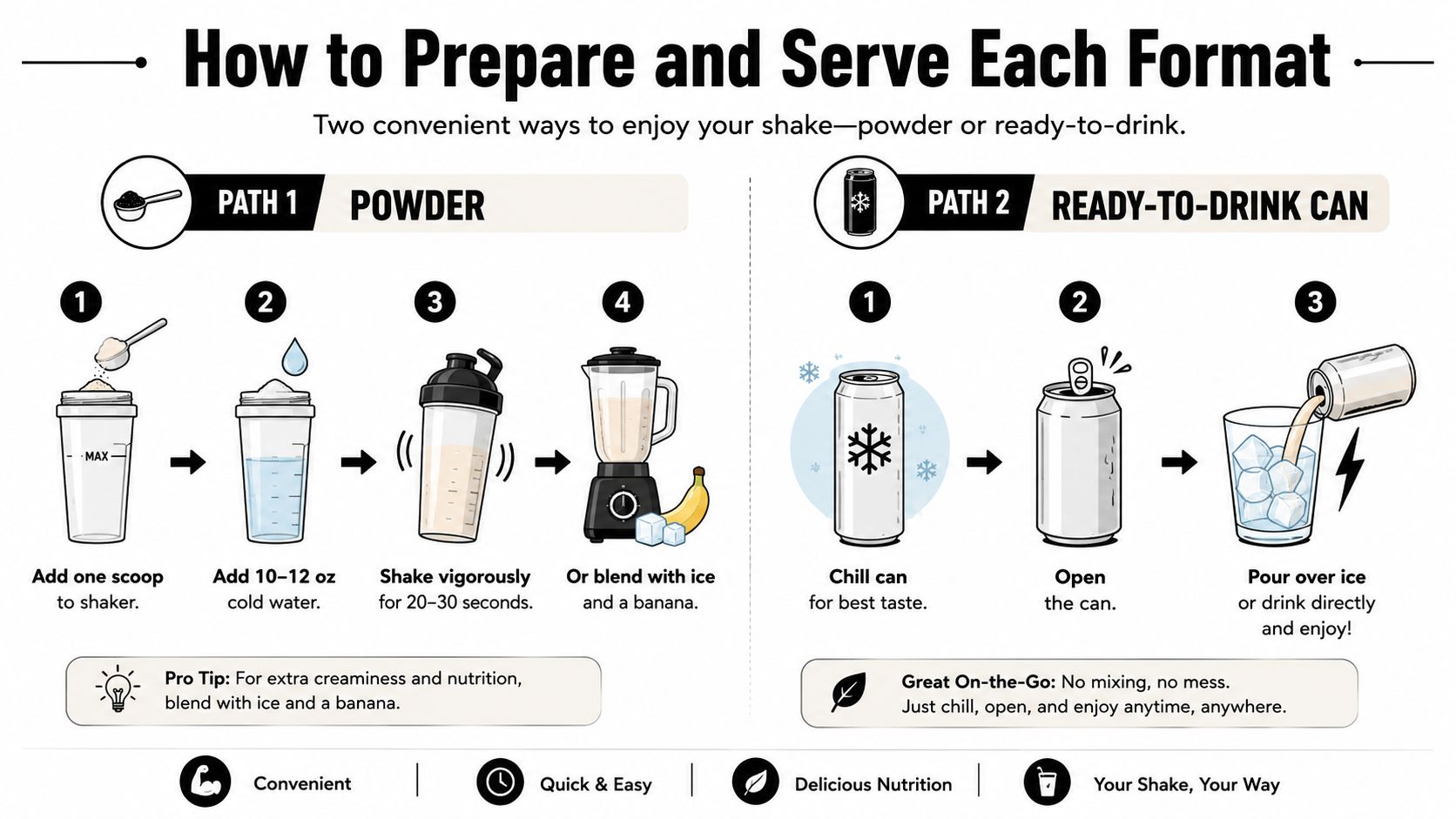
Preparation depends on the package, not the flavor. A powder needs liquid and mixing. A bar needs neither, while an RTD shake can go straight from the refrigerator or shelf to your hand.
Powder preparation
For a single scoop, add the powder to a shaker with 10 to 12 ounces of cold water, then shake for 20 to 30 seconds. The supplied preparation guidance recommends blending with ice and a banana when you want a thicker drink, but water keeps the mixture leaner than adding milk.
Use cold liquid first. Ice can improve texture, while a banana adds body and carbohydrate. Microwaving the mixed powder isn't necessary, and heating dairy proteins directly can produce scorching or an unpleasant texture.
Bar and RTD serving
The bar is ready when you open the foil. Eat it cold for the simplest trail or workday option. If you want a softer texture, warm it gently while tented over a camp stove for 30 to 45 seconds on low heat, following the supplied preparation guidance. You don't need boiling water, and there's no freeze-dried reconstitution step.
An RTD shake removes the preparation problem entirely. Chill the bottle, open it, and drink it directly, or pour it over ice. For additional ideas that don't require cooking equipment, browse these best no-cook meals for hikers from HYDAWAY.
A bar paired with fruit can make the eating experience feel less sweet and add fiber from the fruit itself. For more shelf-stable protein ideas, see this guide to shelf-stable protein.
Matching MRE Blueberry Cobbler to Your Use Case
The right format depends on what you can carry, prepare, and tolerate in the moment. A powder may be nutritionally flexible, but it needs a shaker and liquid. A bar gives up some preparation flexibility in exchange for portability.
| Scenario | Powder | Bar | RTD shake |
|---|---|---|---|
| Camping | Useful at base camp, especially stirred into oatmeal | Best for a quick, low-mess break | Convenient if you can carry the container |
| Emergency kit | Works if the package stays sealed and dry | Strong option for simple storage and immediate eating | Useful when storage space and container weight aren't concerns |
| Fitness fueling | Flexible for a shake after training | Handy as a portable snack | Fastest option when preparation time is limited |
Camping
The bar fits a summit break because you can eat it with one hand and don't need water or equipment. The powder makes more sense at base camp, where you can mix it into a drink or stir it into oatmeal.
Emergency preparation
A bar is easier to distribute and eat without preparation. Powder can still work, but moisture is a serious storage concern. Once a powder package is compromised, its texture and usability can change.
Training
The powder offers control over liquid and serving size, while the RTD version removes all preparation. A bar works well between activities, but its denser texture and carbohydrate-fat mix may feel different from a shake during training.
For daily training snacks, Gym Snack can provide a savory alternative to the repeated sweetness of dessert-style protein products. Its plant-based crunchy snacks are made with pea protein and are offered in Cheddar Cheeze and Jalapeño Cheddar Cheeze flavors, so they can sit alongside a sweet product without duplicating the same flavor profile.
Who Should and Should Not Buy It
MRE Blueberry Cobbler makes the most sense for shoppers who value portability, substantial protein, and a dessert-inspired flavor. Backpackers may prefer the bar because it's ready to eat. Emergency-prep households may like the convenience of a sealed, calorie-dense product. Casual snackers may enjoy the flavor if they prefer buttery, sweet protein foods.
The fit is weaker for people who need precise, simple macro control. A dedicated strength athlete may prefer a leaner protein source with a clearer serving structure, particularly if the full powder serving contains more calories and carbohydrates than they planned.
People managing blood glucose should review the carbohydrate ingredients carefully, especially in the full powdered formula, which is listed at 75 g carbohydrate per four-scoop serving in the MRE product listing. Anyone with whey, dairy, soy, or other relevant allergies should inspect the current package label before buying.
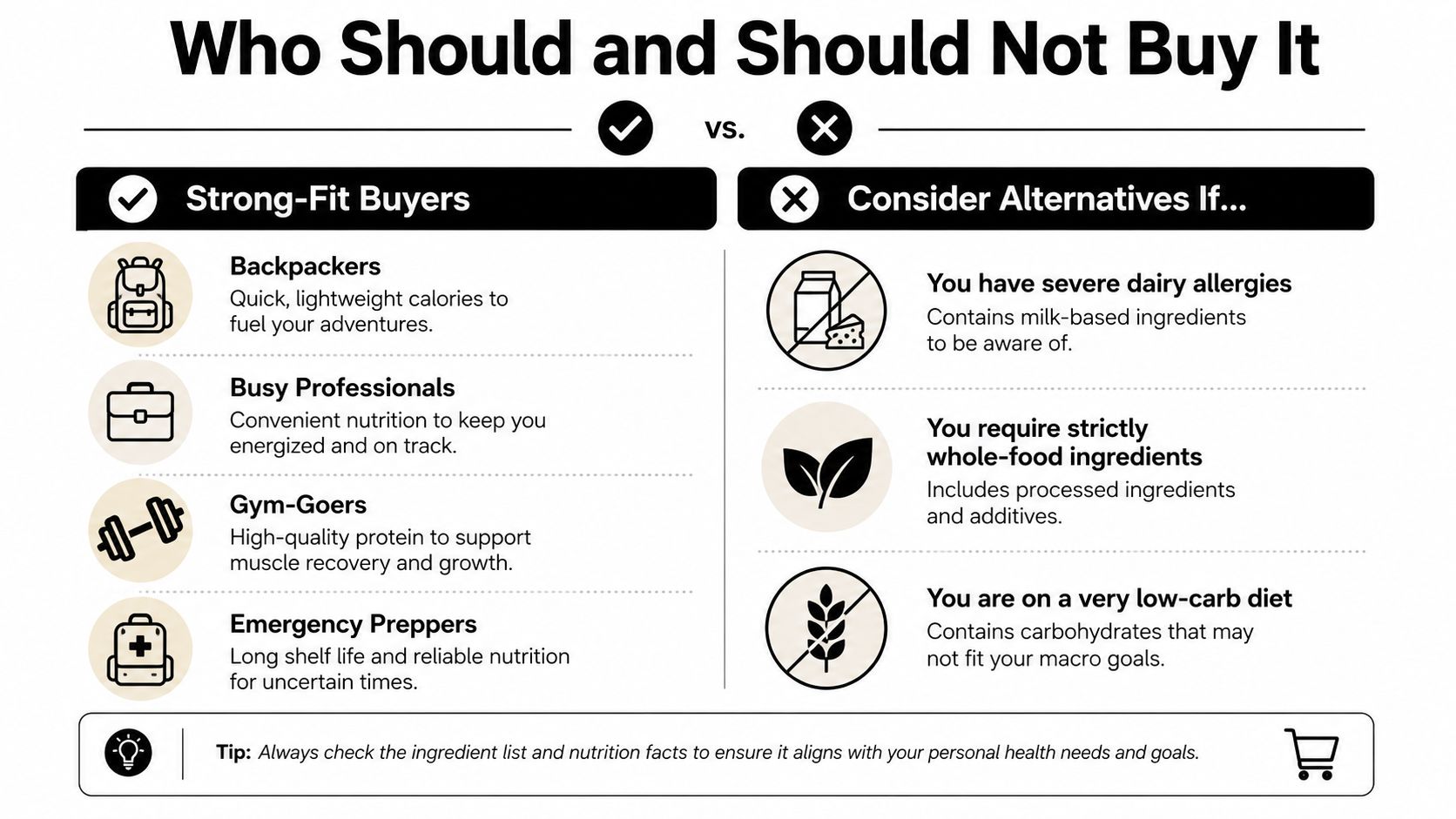
Skip the category if you expect a genuine baked dessert, want only whole foods, or assume “MRE” means military-issue food. Finally, compare price per gram of protein, not just the package price, because specialty MRE-style products can carry a premium over standard protein bars or powders.
Gym Snack offers plant-based, savory protein snacks made with pea protein, including crunchy Cheddar Cheeze and Jalapeño Cheddar Cheeze options. If you want a non-dessert alternative to balance your protein routine, visit Gym Snack and compare the available snack formats.