

You're standing in the grocery aisle with a protein bar in one hand, a pouch of jerky in the other, and a powder tub balanced against your cart. The labels promise convenience, muscle support, and long storage, but they don't answer the practical question: which shelf stable protein format fits your appetite, routine, budget, and digestion?
Shelf stability tells you where a product can be stored. It doesn't automatically tell you whether the food is nutritious, pleasant to eat every day, or transparent about its ingredients. This guide looks beyond pantry life to compare protein density, taste, portability, gut tolerance, and label quality across the formats people buy.
What Shelf Stable Protein Actually Means
Shelf stable protein is a protein-rich food that can remain safe in its sealed package at room temperature for an extended period. Manufacturers achieve that stability by controlling moisture, applying heat, using protective packaging, adding preservatives, or combining several of those methods.
That definition includes familiar products such as protein powders, bars, jerky, meat sticks, roasted chickpeas, soy puffs, pea crisps, and some ready-to-drink beverages in aseptic cartons. It doesn't include fresh Greek yogurt, refrigerated deli meat, or other foods that depend on cold storage before opening.
The important distinction is simple: “shelf stable” describes storage conditions, not nutritional superiority. A powder can be convenient but low in fiber. A bar can provide useful protein but contain sweeteners that upset your stomach. Jerky can travel well while contributing substantial sodium. The package's ability to sit in a cupboard doesn't settle those questions.
The category matters because people need protein in places where refrigeration is inconvenient. A commuter may keep a snack in a desk drawer, a student may have limited kitchen space, and a hiker may need lightweight food. People managing appetite changes also often prefer compact portions that don't require preparation. Rising grocery costs have encouraged shoppers to keep more canned and shelf-stable protein foods on hand, with 28% of shoppers reporting that they're buying more canned or shelf-stable proteins as grocery prices rise (Chain Store Age's consumer coverage).
For a broader list of options, see these non-refrigerated protein snacks. The right choice depends less on the word “stable” and more on how you'll eat it.
How Protein Stays Safe on the Shelf
A protein snack can sit in a cupboard for weeks because several safeguards work together. The formula limits the conditions microorganisms need, processing reduces contamination, and packaging keeps new moisture, oxygen, light, and microbes away.
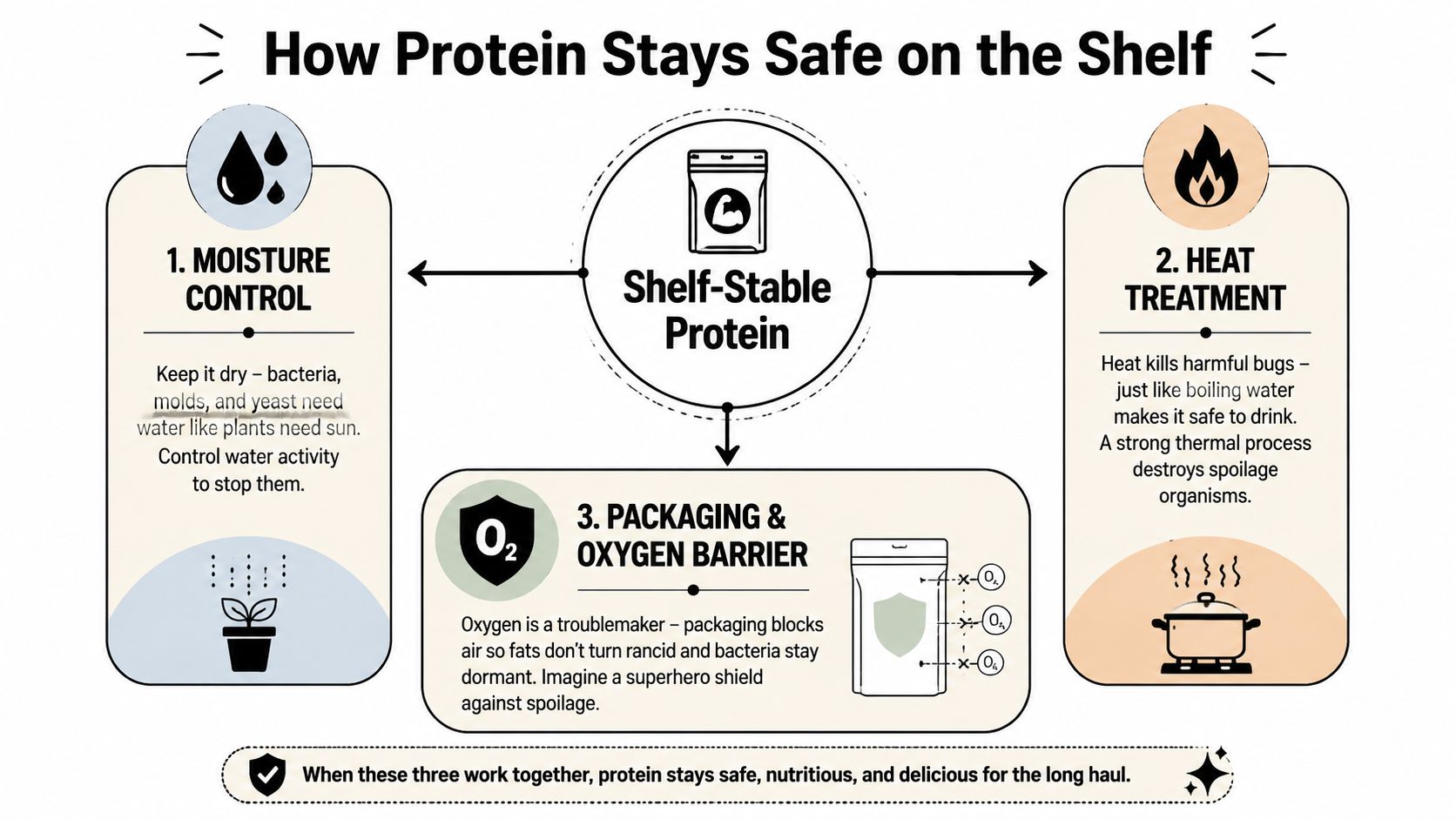
Moisture control
Bacteria, molds, and yeasts need usable water. Food scientists call this water activity, meaning the water microorganisms can access, rather than the recipe's total water content.
Drying, baking, or using humectants, ingredients that hold water tightly, makes growth less likely. A dried apricot and a fresh peach both began as fruit, but the dried apricot has much less available water and behaves differently in a pantry.
Protein powders depend heavily on low moisture. Bars and jerky also use controlled moisture to create their textures. A chewy bar is not necessarily as wet as a refrigerated food. Its ingredients must balance softness with protection against microbial growth.
Heat treatment
Heat can reduce harmful and spoilage microorganisms before sealing. Canned foods and retort pouches receive stronger thermal processing, while some beverages undergo ultra-high-temperature processing before aseptic filling.
Processing also changes texture, flavor, and how readily protein dissolves. Manufacturers must match the recipe to the heat method, particularly for high-protein drinks. Details on these production controls appear in manufacturing standards for protein foods.
Packaging barriers
Packaging acts like a barrier around the food. Foil laminates, vacuum sealing, nitrogen flushing, metal cans, and multilayer films protect against different threats.
A foil pouch blocks outside air and light more effectively than a paper wrapper. Oxygen can encourage rancidity in fats and gradually damage flavor. Humidity can also make powder clump or alter a snack's texture, so the package must keep moisture out.
The package can change how long a product remains stable. A 2011 shelf-stable protein-rich cereal bar remained stable for 3 months in polypropylene packaging and 6 months in several metallized or vacuum-packed formats under tested conditions (the study in PubMed Central). That finding does not make one package universally better. It shows that shelf stability comes from the combined effects of formulation, heat treatment, package design, and storage temperature.
For shoppers, this explains why protein density alone cannot identify the most practical format. A dry powder may need careful moisture protection, while a ready-to-eat product may depend more on heat processing and layered packaging. The right balance also affects taste, portability, and how clearly the ingredient list communicates what you are buying.
Comparing Common Shelf Stable Protein Formats
No format wins every category. Powders usually provide the most protein for the fewest calories and often the lowest cost per gram of protein, but you need water, a shaker, and a few minutes to prepare them. Bars are easier to carry and can feel more like a small meal, although binders and sugar alcohols may cause digestive trouble for some people.
Jerky and meat sticks offer a concentrated, savory animal-protein option. They're durable and ready to eat, but sodium can become a concern if you rely on them repeatedly. Crunchy plant-based snacks, including roasted chickpeas, soy puffs, and pea crisps, bring texture and a savory alternative to sweet shakes. Their protein content varies widely, and products made mainly from whole legumes may provide less protein density than snacks built with concentrated isolates.
| Format | Protein Density per Serving | Portability | Taste Fatigue Risk | Gut Tolerance | Price per g Protein |
|---|---|---|---|---|---|
| Powders | Usually highest, especially when mixed with water | Moderate, because water and a shaker are needed | Moderate, with flavor fatigue possible | Depends on dairy, sweeteners, and thickeners | Often favorable |
| Bars | Moderate to high, depending on the recipe | Excellent | Moderate to high if flavors are very sweet | Sugar alcohols, fibers, and nuts may bother some people | Varies |
| Jerky and meat sticks | Concentrated animal protein | Excellent | Lower for people who prefer savory foods, higher for repeated use | Usually low fiber, but sodium can be substantial | Varies |
| Crunchy plant-based snacks | Moderate, higher when isolates are used | Excellent | Often lower for shoppers tired of sweet products | Legume fibers and FODMAPs may bother sensitive eaters | Varies |
Match the format to the moment
Choose powder if you're building meals around precise macros or want to adjust the serving size. Choose a bar when you need a self-contained snack that can survive a commute. Choose jerky for a savory, animal-based option during travel or outdoor activities.
Crunchy plant snacks fit people who want texture, plant-based ingredients, or an alternative to dessert-style protein foods. They may not replace a powder for maximum protein density, but they can make daily protein intake easier to sustain because enjoyment matters. Industry coverage reports that shelf-stable high-protein snacks are expanding beyond powders and shakes, with particular momentum in savory products and the 20 to 25 gram protein range (Bakery and Snacks' protein trend coverage).
Nutrition and Allergen Considerations
Start with the relationship between protein and calories, not the protein number alone. A product can contain useful protein but also bring a large calorie load from sugar, fat, or a dense coating. Across shelf-stable formats, protein servings commonly fall in the broad range of 10 to 30 grams, but the label determines what you're getting.
Fiber changes the eating experience. Jerky contains little or no fiber, while powders vary depending on the formula. Crunchy snacks made from chickpeas, peas, lentils, or other legumes may provide more fiber and chewing satisfaction, although concentrated fibers can trigger gas or bloating in sensitive people.
Bars deserve a close look because recipes differ sharply. Some use modest amounts of sugar, while others rely on syrups, coatings, or sugar alcohols. Sugar alcohols such as maltitol, sorbitol, and erythritol can cause digestive symptoms in some individuals, especially when eaten quickly or in larger portions.
Sodium is another format-specific issue. Jerky and savory snacks often use salt for flavor and preservation, so compare products rather than assuming every savory option is excessive. A person eating jerky daily should consider sodium from the rest of the day's meals as well.
Allergens hide in familiar formats
- Dairy: Whey and casein powders come from milk and aren't suitable for people with milk allergies.
- Soy: Soy protein, soy-based jerky, and many plant snacks require careful label checks.
- Wheat: Seitan and some bar binders contain wheat gluten.
- Nuts: Bars may include almonds, peanuts, or shared-facility allergen warnings.
- Cross-contact: “Vegan” doesn't mean allergen-free, so read the manufacturer's statement.
People using GLP-1 medications may need a smaller, slower approach to protein. These medications can slow gastric emptying, and a large, dense serving may feel uncomfortable. Moderate portions of whey isolate, casein, soy, or pea protein, paired with fluid and fiber as tolerated, may be easier than forcing down a very large shake.
| Format | Calories | Protein | Fiber | Sugar | Sodium |
|---|---|---|---|---|---|
| Powder | Varies by formula | Commonly moderate to high | Low to moderate | Low to moderate | Usually low to moderate |
| Bar | Varies widely | Moderate to high | Low to moderate | Low to high | Low to moderate |
| Jerky and meat sticks | Moderate | High relative to serving size | Usually minimal | Low to moderate | Often moderate to high |
| Crunchy plant-based snack | Moderate | Moderate | Moderate when legume-based | Usually low to moderate | Varies by seasoning |
Storage, Shelf Life, and Safety Essentials
Protein powders can keep for 9 to 12 months at room temperature, but heat and humidity shorten that window. Follow the manufacturer's instructions, since formulation, packaging, and processing determine how long a product remains usable.
Store powder in its original container, or another tightly sealed package, away from heat, steam, and humidity. A spot beside a kettle or above a dishwasher exposes it to conditions that encourage clumping and quality loss. Reseal bars after opening. If a jerky or crunchy snack package no longer closes securely, transfer it to an airtight container.
Storage time varies by format. Under reported conditions, refrigeration at 4°C extended whey protein concentrate guidance from 9 to 12 months at room temperature to 24 months (the protein stability review in PubMed Central). A commercial protein bar maintained stability and sensory quality for up to 90 days in one comparison, while a preservative-free experimental bar lasted about 7 days refrigerated. These findings do not set a universal expiry period. They show why ingredients, moisture control, and packaging matter when comparing protein density with portability and ingredient transparency.
Know the spoilage signals
- Powder: Discard powder with persistent damp clumps, unusual discoloration, insects, or an off smell.
- Jerky: Avoid pieces that are soft, sticky, or unusually wet, or that smell sour or rancid.
- Crunchy snacks: Staleness signals quality loss. Rancid aromas or visible mold mean discard the product.
- Containers: A swollen can, pouch, or carton signals a serious safety problem. Do not taste-test it.
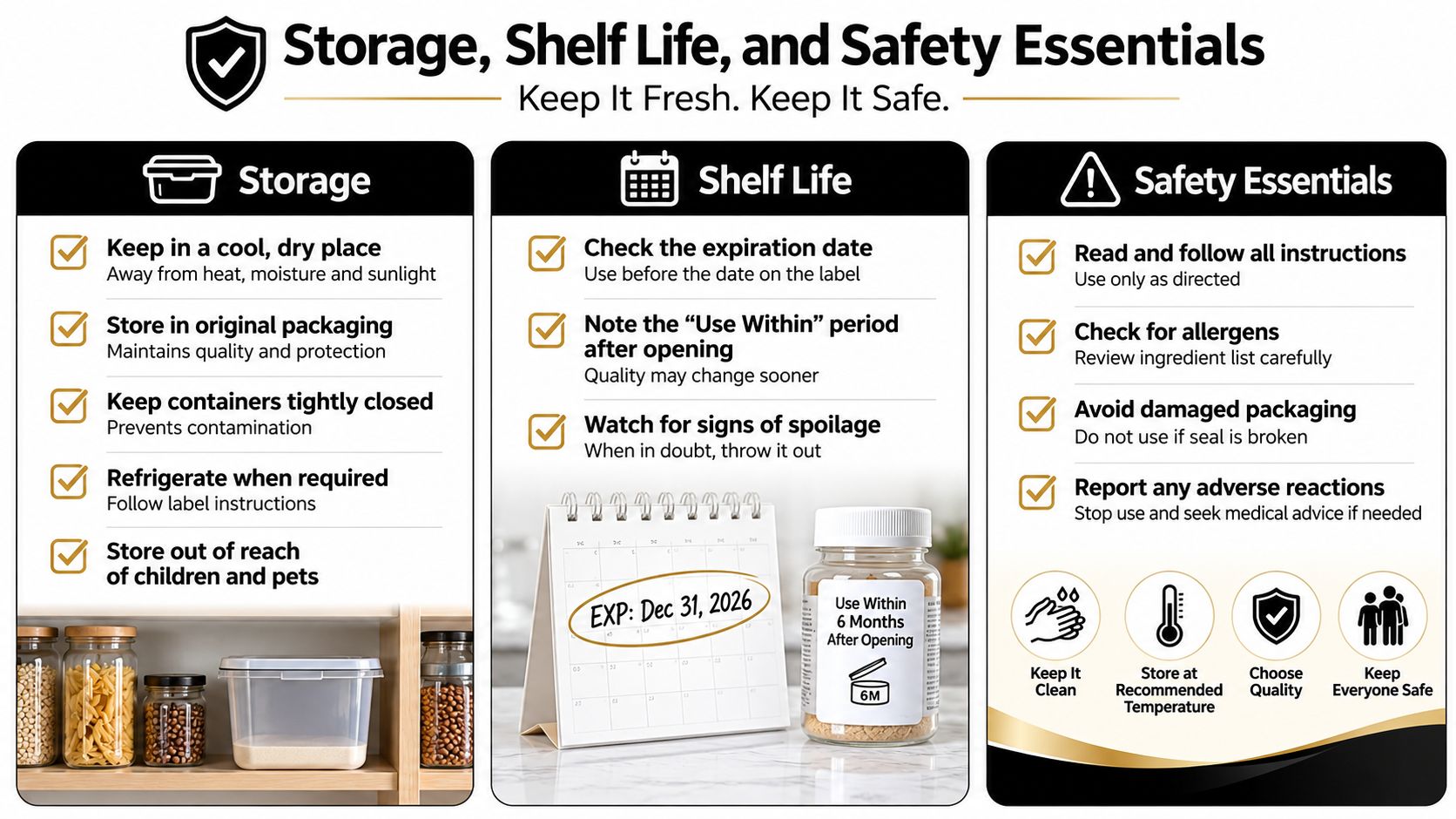
Best-by dates are only one part of a powder quality check. Independent reporting has found concerning lead levels in some powders and shakes, so look for brands that publish third-party testing results and explain their sourcing. Shelf stability indicates storage performance, not purity. A clean-looking package cannot replace testing.
Best Use Cases for Fitness, Plant-Based, and GLP-1 Users
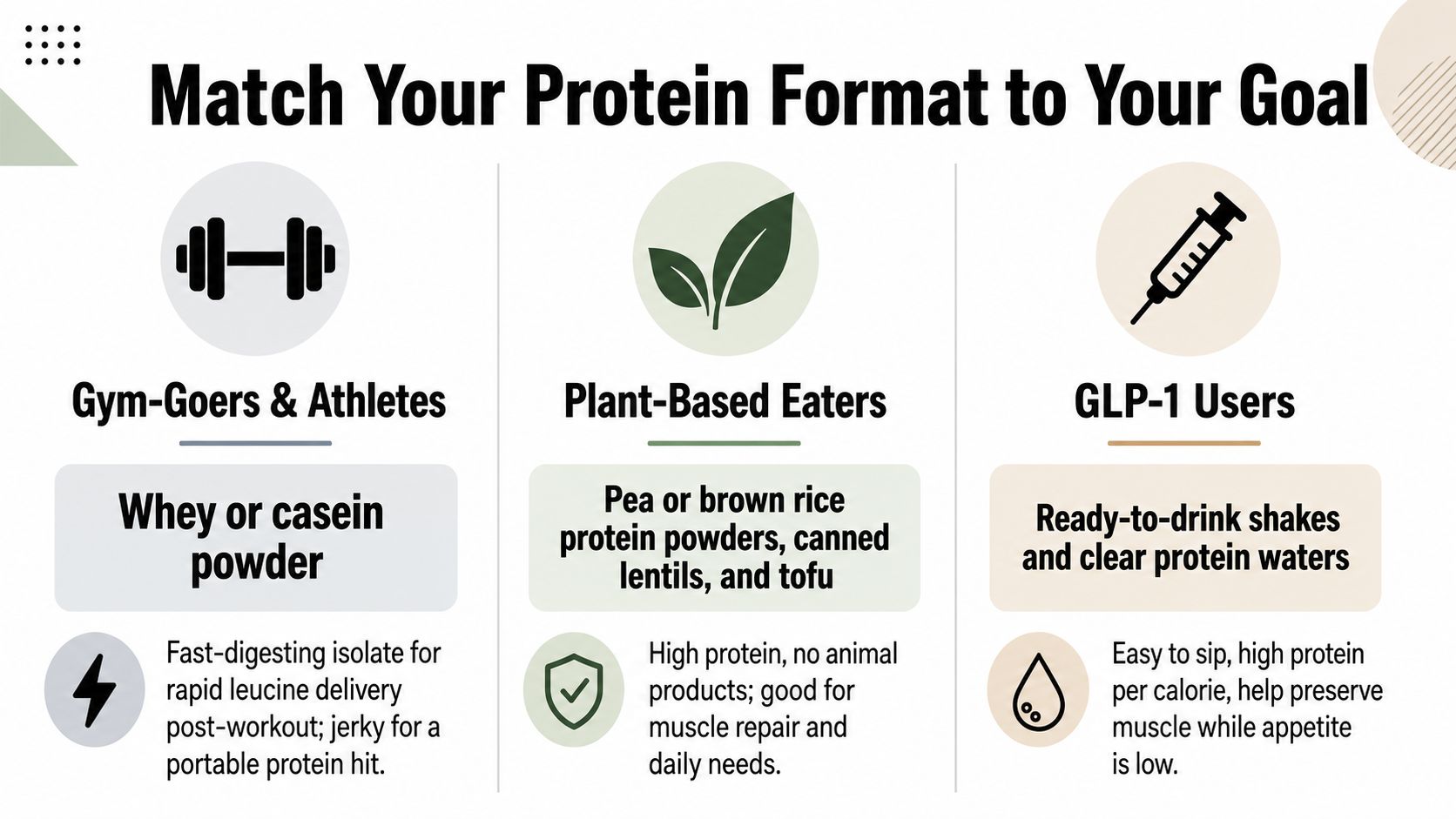
The best format depends on what tends to interrupt your protein routine. Gym-goers often need something that fits either a structured recovery meal or an unpredictable travel day. Plant-based eaters may want variety across protein sources. GLP-1 users may prioritize small portions, mild digestion, and savory foods over large sweet servings.
For gym-goers and athletes
Powder is useful when you can control preparation. Whey isolate digests relatively quickly, while casein has a slower-digesting profile. Either can work within an overall eating pattern that includes complete meals, and neither needs to be treated as mandatory immediately after exercise.
Jerky works better as a travel-day option than as a complete recovery meal because it typically contributes little carbohydrate or fiber. A bar can fill an emergency gap, but check whether its sweeteners and texture agree with you.
For plant-based eaters
Pea, soy, and rice protein powders offer different textures and amino acid profiles. A varied pattern can be more practical than relying on one product. Crunchy chickpea, lentil, fava, or pea-based snacks also provide a savory route for people who don't want another sweet shake.
Plant-based shelf-stable products aren't automatically simple. Soy and wheat are common ingredients in meat alternatives and jerky-style snacks, so allergy and gluten checks still matter.
For GLP-1 and weight-management plans
Small portions can be more comfortable than a large protein bolus. Start with a serving you can tolerate, sip fluids, and combine protein with fiber when your digestion allows it. Casein, soy, and pea formats may provide a slower, steadier eating experience than a very thin, rapidly consumed drink.
Taste fatigue also matters. Savory crunchy snacks can add variety when sweet bars and shakes lose their appeal. Gym Snack's plant-based savory crisps are one example of a shelf-stable option built around pea protein, with product information describing 15 grams or more of protein per serving and 30 grams or more per bag. For shoppers who want recurring deliveries of products that fit a routine, Shopify Subscriptions for Supplements offers useful subscription-commerce context.
A Smart Buyer's Label-Reading Checklist
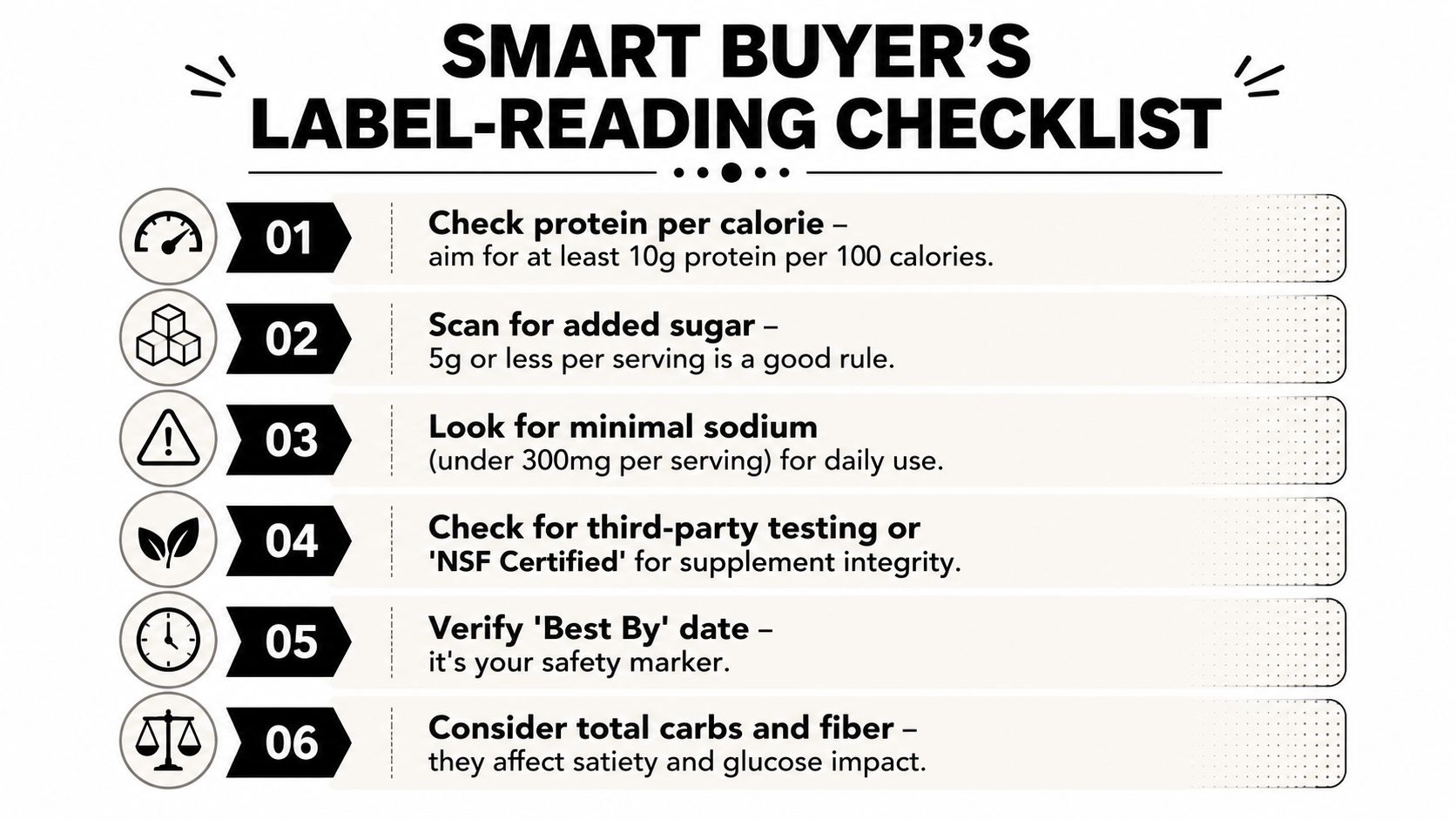
A quick label scan can eliminate most poor fits before you compare flavors. Start with protein density, then check ingredients, allergens, and testing information.
Use these pass or fail checks
- Protein density: Pass if the protein amount makes sense for the calorie total and your purpose. A powder intended for macro control should look different from a bar intended to replace a small snack.
- Named protein source: Pass when the label identifies whey isolate, pea protein, soy protein, collagen, or another clear source. Be cautious with a “protein blend” that doesn't explain how much of each protein it contains.
- Ingredient readability: A long list isn't automatically bad. Pass when you understand the function of the main ingredients and the product doesn't hide behind unexplained proprietary language.
- Sweeteners and fibers: Check for sugar alcohols and added fibers if you're prone to bloating. Your tolerance matters more than a marketing claim.
- Sodium and sugar: Compare savory snacks and bars with similar products. A low-sugar product may still be heavily salted, while a bar with impressive protein may carry a substantial sweet coating.
- Allergen statement: Pass only when the label clearly identifies milk, soy, wheat, nuts, and cross-contact information relevant to you.
- Testing and certifications: NSF Certified for Sport, USP, Informed Sport, Non-GMO Project, USDA Organic, gluten-free, and vegan certifications can answer specific quality or dietary questions. They don't all verify the same thing, so match the certification to your concern.
A useful aisle rule: Buy the product whose protein source, sweeteners, allergens, and testing information you can explain without guessing.
For a deeper walkthrough of serving sizes, daily values, and ingredient order, use this guide on how to read nutrition labels. “Natural flavor” isn't automatically a problem, but it's less informative than a label that names the actual flavoring ingredients. Missing allergen information and proprietary blends that conceal protein amounts are stronger reasons to keep looking.
Choosing the Right Format for Your Routine
Use your routine as the filter, not the front-of-package promise. Powders make sense when protein density, flexible serving sizes, and cost per gram matter most. Bars suit people who need a complete grab-and-go unit. Jerky provides a chewy, savory animal-protein option, while crunchy plant snacks offer texture and a way to move beyond sweet flavors.
| Format | Protein Density | Best For | Main Trade-Off |
|---|---|---|---|
| Powders | Highest potential | Macro-focused gym routines and flexible portions | Requires preparation and may cause flavor or digestive fatigue |
| Bars | Moderate to high | Commutes, work bags, and emergency snacks | Sweeteners, binders, and calorie density vary |
| Jerky | High relative to serving size | Travel, hiking, and savory animal protein | Sodium and limited fiber |
| Crunchy plant-based snacks | Moderate, higher with isolates | Plant-based eaters, savory cravings, and portable snacking | Protein density varies and legume fibers may bother some people |
Gym-goers often do well with powder as their adjustable anchor and jerky or a bar for backup. Plant-based eaters can rotate pea, soy, and rice powders with legume-based snacks to add variety in flavor, texture, and protein source. GLP-1 users and people managing appetite may prefer smaller servings of low-sugar, savory products, with fluids and fiber added according to personal tolerance.
The category is also moving toward more savory-first products, clearer ingredient decks, and creative uses for plant proteins that would otherwise be discarded. Industry coverage describes strong expansion in high-protein snacks, including growth in products such as chips, pretzels, cookies, and coffee, suggesting that the shelf stable protein aisle is becoming less dependent on shakes and dessert-style bars.
The practical decision is straightforward. Pick powder for density, bars for convenience, jerky for concentrated savory protein, or crunchy plant snacks for texture and variety. Then confirm the label supports your digestion, dietary restrictions, and actual eating pattern.
Build your pantry around shelf stable protein you'll enjoy eating, not products you'll abandon after a few bites. Visit Gym Snack to explore plant-based savory protein crisps with transparent ingredients and a crunchy format for workouts, workdays, and portable meals.