

You're probably standing in front of a shelf full of bars that all claim to be better for you. One says non-GMO, another says organic, another says clean, and a fourth looks like a candy bar wearing gym clothes. If your goal is better recovery, steadier energy, or a snack that doesn't leave you hungry again in an hour, the wrapper alone won't tell you much.
That's where people get stuck. They want something simple. A bar that supports training, travels well, and doesn't come with a long ingredient list full of mystery additives. But food labels pile on just enough health language to make a quick decision feel weirdly complicated.
Why Everyone Is Talking About Non-GMO Protein Bars
A common scene goes like this. You pick up one bar because it says “plant protein,” another because it says “non-GMO,” and a third because it has the word “natural” in big letters. They all seem close enough, so you end up choosing by flavor.

That confusion makes sense because the category is huge. The global protein bar market was valued at US$5.18 billion in 2024 and is projected to reach US$9.55 billion by 2034, according to Fact.MR protein bar market data. In the same source set, a Clean Label Project study of snack and nutrition bars found that 53% carried a non-GMO claim, yet many still had issues such as high lead levels. That's the key lesson. Non-GMO is meaningful, but it isn't a full quality verdict.
Why the label gets so much attention
For many shoppers, non-GMO acts like a shortcut for “less processed” or “cleaner.” Sometimes that instinct points in a useful direction. Bars with non-GMO positioning often use more familiar ingredients and avoid some crop sources people specifically want to limit.
But the label can also create false confidence. A bar can be non-GMO and still be overly sweet, hard on your stomach, or built around ingredients that don't match your training goals.
Practical rule: Treat non-GMO as a starting filter, not the final answer.
Why this matters for fitness and appetite control
If you train regularly, snack choice affects more than convenience. It affects how full you stay, how well you tolerate the product before or after a workout, and whether you feel like you ate food or dessert.
That last point gets overlooked. Most guides on non gmo protein bars focus on sweet bars. Many people want the opposite: something more savory, more meal-like, and less candy-adjacent. For satiety and stable energy, that difference can matter a lot.
Decoding the Non-GMO Label on Your Protein Bar
The phrase GMO refers to genetically modified organisms. In protein bars, people usually aren't thinking about the term in a lab-science way. They're thinking about ingredients. Corn, soy, and some sweetener inputs are the usual places where GMO concerns come up.
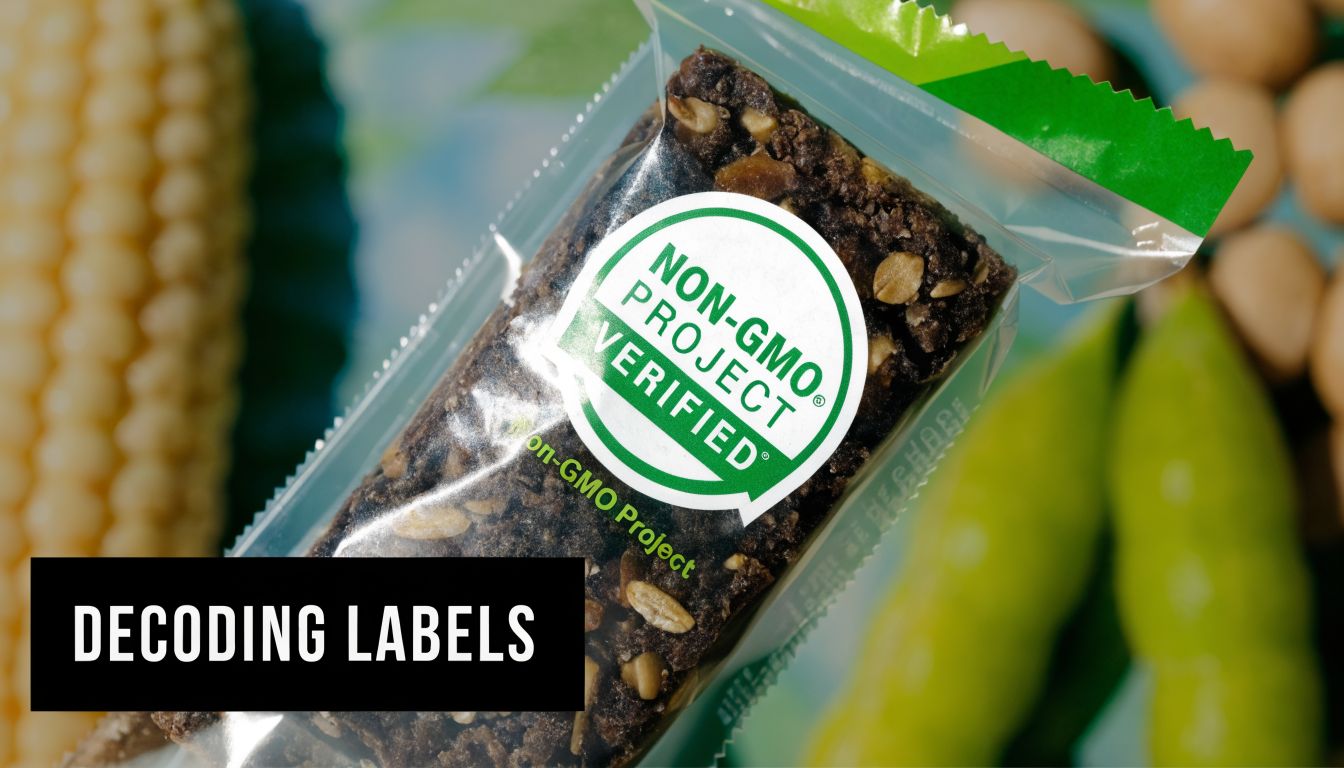
If a bar contains soy protein, soy lecithin, corn-derived ingredients, or sweetener systems built from common commodity crops, shoppers often want extra clarity. That's why the label matters most when the product uses ingredients from crops that are commonly genetically modified in the broader food system.
What the seal actually means
The easiest way to think about Non-GMO Project Verified is this: it works like a background check for ingredients. Instead of taking the brand's word for it, a third-party verification process checks whether the ingredients meet the program's standards.
That's very different from vague front-of-pack language like “made with natural ingredients” or “thoughtfully sourced.” Those phrases may sound reassuring, but they don't tell you whether anyone outside the company verified the claim.
A practical way to shop is to separate labels into two groups:
- Third-party verified claims that involve outside review
- Brand-created marketing phrases that may be useful, but are less concrete
If you're trying to get better at reading all of this quickly, Gym Snack's guide on how to read nutrition labels is a helpful companion because it teaches you what to check after the front label grabs your attention.
What non-GMO does not tell you
Many shoppers find confusion around this point. A non-GMO label doesn't automatically tell you:
- whether the bar is high in protein quality
- whether the sweeteners will upset your stomach
- whether it's low in added sugar
- whether it will keep you full
- whether it uses whole-food ingredients or a long list of functional additives
So the label answers one question, not every question.
A short visual explainer can help if you want to see how brands talk about the seal and related packaging cues.
A strong bar usually earns your trust twice. First from the label on the front, then from the ingredient list on the back.
Non-GMO vs Organic vs Clean Label A Simple Comparison
These three terms get grouped together all the time, but they don't mean the same thing. That's why someone can buy a bar labeled clean and still be unsure whether it's organic, or buy an organic bar and still wonder whether it fits their digestion and performance needs.
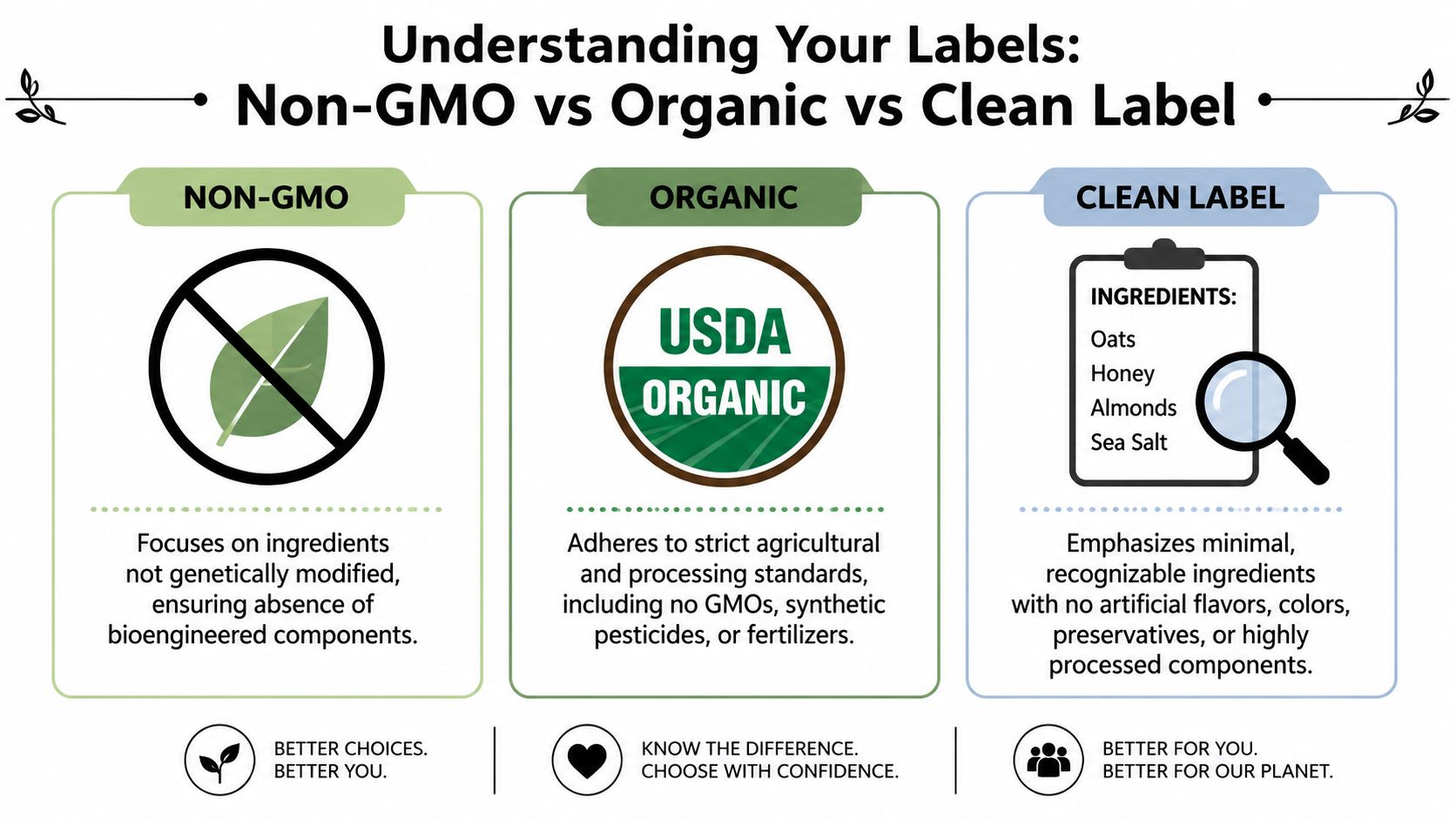
A quick side by side view
| Label | What it tells you | What it doesn't tell you by itself |
|---|---|---|
| Non-GMO | The product avoids genetically modified ingredients according to the claim standard used | It doesn't automatically mean simple ingredients, easy digestion, or better overall nutrition |
| Organic | It points to stricter farming and processing standards and includes no GMOs | It still doesn't guarantee the bar fits your protein, texture, or satiety preferences |
| Clean label | Usually signals recognizable ingredients and fewer artificial-sounding additives | It isn't one official standard, so definitions vary by brand |
Non-GMO means one specific thing
A non-GMO claim is focused. It's about whether ingredients are genetically modified. That focus is useful, especially in products that may include soy or corn-derived components.
But it's narrow by design. A bar can meet that standard and still be very sweet, heavily processed, or not especially filling.
Organic is broader
Organic usually gives shoppers a wider promise. It combines non-GMO expectations with stricter agricultural and processing rules. If you want a tighter standard overall, organic often gives more built-in guardrails than non-GMO alone.
That said, “broader” doesn't mean “perfect for every goal.” An organic bar can still eat like dessert. It can still rely on a texture or flavor profile that doesn't work for your appetite or workout timing.
Clean label is useful, but fuzzy
Clean label is the term that causes the most confusion because it sounds official even when it isn't. It is commonly used to mean a short ingredient list, recognizable foods, and fewer artificial additives.
That can be a good shopping principle. It's just not a certification in the same way many people assume.
If you like the clean-label approach, Gym Snack's article on clean protein snacks gives practical examples of what to look for beyond marketing terms.
Simple takeaway: Non-GMO answers “Was it genetically modified?” Organic answers a wider farming-and-processing question. Clean label asks, “Does this look like food I recognize?”
Analyzing Protein Bar Ingredients and Nutrition
Once the front label passes your first test, flip the bar over. The ingredient list and nutrition panel tell you much more about how the bar will perform in your day, revealing whether a product supports training, keeps you full, or tastes healthy.
Start with the protein source
The protein source is the first thing I look at because it shapes digestibility, amino acid quality, and allergy fit. According to Skout Organic's protein bar ingredient guide, pea protein is known for being allergen-friendly and easy to digest, while soy offers a complete amino-acid profile but is a high-risk GMO crop, making non-GMO sourcing essential. Brown rice protein can also show up in cleaner bars, often as part of a blend rather than the only source.
That gives you a practical lens:
- Pea protein often works well for people who want a plant-based option that feels gentler.
- Soy protein can be nutritionally strong, but sourcing matters more because of GMO concerns.
- Protein blends are common because formulators are trying to balance texture, amino-acid quality, and stomach comfort.
If you compare bars often, a guide to protein bar nutrition facts can help you connect the ingredient list to what the numbers on the panel mean.
Then check sweeteners and binders
Many bars feel soft and chewy because manufacturers use functional ingredients to hold moisture and improve shelf life. The same Skout-based formulation overview notes that cleaner bars often lean on whole-food binders like nut butters instead of synthetic humectants such as glycerol.
That tradeoff matters in real life. A softer shelf-stable texture may come from ingredients your stomach doesn't love. A more whole-food formula may feel simpler and more satisfying, but it can also change the texture and density of the bar.
Here's the quick interpretation:
- Nut butters and similar whole-food binders usually read better on a label and often feel more food-like.
- Humectants and sugar alcohol systems can improve softness and storage stability, but some people find them less comfortable.
- Dates, honey, and fruit-based sweeteners often appeal to shoppers who want less processed sweetness.
If you eat a bar and feel bloated, overly full in a bad way, or hungry again fast, the issue may be the formula, not your appetite control.
Finally look at the supporting ingredients
The fat source, fiber system, and emulsifiers all matter. Lecithins, gelling agents, and fiber additives can help bars stay cohesive and appealing on the shelf. They're functional, but they also move the product further away from a simple-food profile.
A useful mental test is this: Would I still want this product if the front label were covered up?
If the answer is yes because the protein source is solid, the binders make sense, and the ingredient list feels understandable, you've probably found a stronger option. If the answer is no and the bar depends mostly on branding, that's worth noticing.
How to Choose the Right Non-GMO Bar for Your Goals
The best bar for you depends less on trend labels and more on the job you need it to do. A pre-lift snack, an emergency desk snack, and a long-ride fuel option aren't always the same product.
The broader market is also shifting. Grand View Research's protein bar market report projects the plant-based protein bar segment to grow at a 5.8% CAGR through 2033, and that growth reflects rising demand for alternatives to standard sweet bars. One important gap remains. Most advice still centers on dessert-like options, even though many active people want savory, less-sweet choices that support satiety.

Match the bar to the moment
If your main goal is post-workout convenience, focus on digestible protein and an ingredient list you know you tolerate well. You don't want a bar that feels like a brick after training.
If you're trying to manage appetite between meals, sweetness becomes a bigger issue. Many sweet bars trigger the feeling that you ate a treat, not a meal-like snack. For some people, that's fine. For others, it leads to more grazing.
If you follow a plant-based or allergen-conscious approach, non-GMO sourcing matters most when soy enters the picture. Pea-protein-based options often fit more people comfortably.
Why savory deserves more attention
This is the part most bar roundups miss. Sweet bars are easy to market because they taste familiar. But when your real goal is fullness, steadier energy, and less snack fatigue, a savory protein snack can make more sense.
Savory formats often feel closer to actual eating. They can be easier to fit into a lunch gap, a commute, or a late-afternoon hunger window when another chocolate-peanut-butter bar sounds exhausting.
That doesn't mean sweet bars are bad. It means they aren't the only answer.
A simple decision filter
Ask these questions before you buy:
- Do I want fuel or a treat? If it feels like dessert, it may act like dessert in your appetite pattern.
- Will I eat this often? Repetition matters. Flavor fatigue is real.
- Does the ingredient list match my tolerance? Especially if sugar alcohols or soy tend to bother you.
- Would savory serve me better here? Many people never ask this, and that's why they keep buying bars they're tired of.
If you're choosing snacks for cycling or endurance days, it can also help to compare purpose-built options like these bike performance protein bars so you can see how different products are framed for sustained activity versus everyday satiety.
Common Questions About Non-GMO Protein Bars
Is non-GMO the same as healthy
No. It's one useful signal, not a complete health rating. A non-GMO bar may still be very sweet, highly engineered for texture, or a poor fit for your hunger and digestion. The strongest choice is a bar whose protein source, binder system, and overall ingredient list make sense for your goals.
Do non-GMO bars usually cost more
Often, yes. Verification, ingredient sourcing, and smaller-batch positioning can all raise the price. Whether that premium is worth it depends on what else comes with it. Paying more for non-GMO plus thoughtful ingredients can make sense. Paying more for a trendy label on an average formula usually doesn't.
Where should I buy reliable non gmo protein bars
Start with places that let you inspect the full label clearly, whether that's a grocery store, specialty retailer, or direct brand site. Look for bars with transparent ingredient lists, credible verification when relevant, and a protein source you trust. If you're tired of sweet options, don't limit yourself to the bar aisle. Savory high-protein snacks can sometimes fit your routine better than another chewy bar.
If you want a break from dessert-style snacks, Gym Snack offers a different approach: chef-inspired, plant-based savory protein snacks built around clean pea protein, bold cheesy flavors, and easy-to-read ingredients. It's a practical option for people who want protein that feels more like real food and less like candy in disguise.