

You're standing in the snack aisle, comparing two bags that look almost identical. One says non-GMO, another says organic, and a third promises “natural” ingredients. The nutrition panels look different, but the front of each package makes the same suggestion: this is the better choice.
That moment is common because food labels answer different questions. Non-GMO focuses on how certain ingredients were produced. It doesn't automatically tell you whether a snack is high in protein, rich in fiber, minimally processed, low in sugar, or satisfying enough to carry you between meals.
Non-GMO snacks have moved well beyond specialty stores. One industry estimate places the global non-GMO food market at USD 333.9 billion in 2025, with food representing 83.96% of that revenue, and identifies snack bars as a major demand driver. The same estimate says supermarkets and hypermarkets held 56.02% of distribution share, showing that these products are already part of mainstream grocery shopping, not a narrow niche (Fortune Business Insights).
This guide gives you a practical way to shop. You'll learn what the claim means, how certification works, why non-GMO isn't the same as organic or healthy, and how to compare non-GMO snacks by protein density, ingredient transparency, processing level, and satiety.
Introduction to Non GMO Snacks and Why Labels Matter
A package can make a snack look wholesome before you've read a single ingredient. Bright green seals, phrases such as “clean,” and familiar words like “natural” create quick impressions. The problem starts when shoppers treat every positive-sounding claim as if it guarantees the same thing.
Non-GMO is useful, but it's a narrow filter. It can help you identify products made without genetically modified ingredients under the relevant sourcing or certification standards. It can't replace the nutrition facts panel or tell you whether the snack fits your training goals.
A person choosing a snack before a workout may care about easy digestion and usable energy. Someone recovering after lifting may prioritize protein. A plant-based shopper may want a vegan recipe with clear allergen information. A person trying to stay full between meals may care more about the relationship between protein, fiber, fat, and total portion size than about one front-of-pack seal.
A useful mindset: Treat non-GMO as a trust and sourcing checkpoint, not a complete nutrition verdict.
Consumer awareness has made this checkpoint increasingly visible. In the U.S. market, 30% of consumers said non-GMO was important when buying food in 2023, while 66% recognized the Non-GMO Project Verified label and 72% recognized the USDA Organic seal (Persistence Market Research). Those figures help explain why brands display these claims prominently, but recognition doesn't eliminate confusion.
The better question isn't “Does this snack say non-GMO?” It's “What does this claim verify, and what else should I check before buying?”
By the time you leave the aisle, you should be able to make that decision quickly. Look past the largest words on the packet, identify the strength of the claim, scan the ingredients, and decide whether the snack supports the reason you're eating it.
What Non GMO Really Means for Everyday Snacks
Start with the crop, then follow the ingredient into the finished food.
Genetic modification refers to changing an organism's genetic material through biotechnology. In a snack, that distinction usually matters because a crop can become a processed ingredient, such as flour, oil, syrup, starch, or protein. The finished product may not resemble the original crop, but its supply chain still matters.
Think of a snack as a travel itinerary. The front of the bag shows the destination, but the ingredient list and sourcing records show the route. A non-GMO claim asks whether relevant ingredients came through approved routes that avoid genetically modified sources. Verification checks that journey rather than trusting the appearance of the final snack.
Corn, soy, canola, and sugar beet-derived ingredients deserve particular attention because they can appear in many forms. Corn might become flour, syrup, starch, or dextrose. Soy may appear as oil, protein, lecithin, or another functional ingredient. The name on the ingredient list doesn't always make the original crop obvious, which is why documentation and traceability matter.
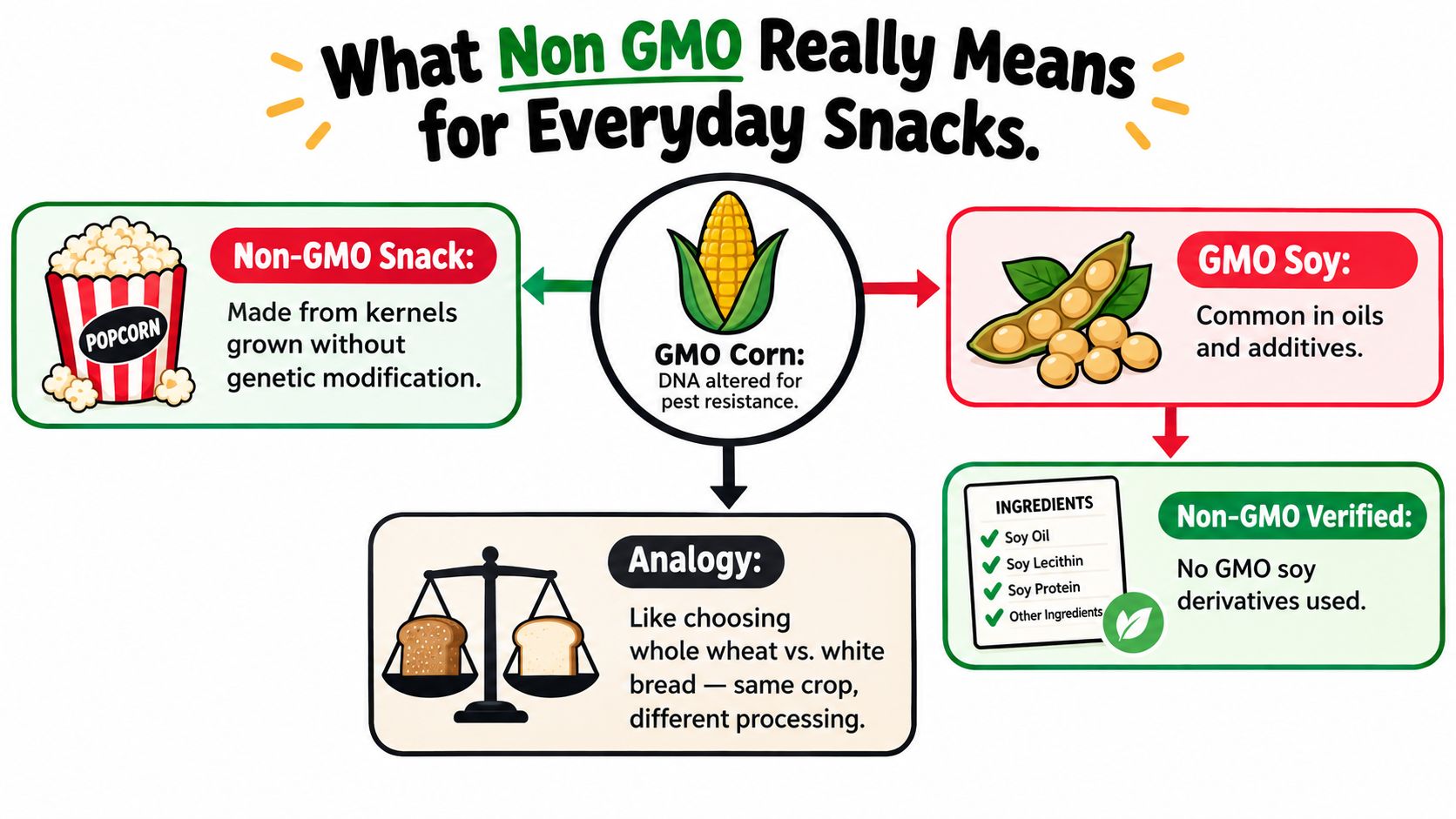
What the claim can tell you
A credible non-GMO claim gives you information about ingredient sourcing and production methods. It doesn't mean the snack contains no crops, no additives, or no processed ingredients. It also doesn't mean that every ingredient is nutritionally superior.
For example, a non-GMO popcorn snack can still be heavily salted. A non-GMO cracker can still be built mainly from refined starch. A non-GMO fruit candy can still be primarily sweetener. The sourcing claim may be meaningful, while the nutrition profile remains less useful for your needs.
That distinction is why a product such as browsing vegan licorice on Loyaltie can be evaluated through several lenses at once. Its non-GMO positioning answers one sourcing question, while its vegan, gluten-free, and sweetener details answer other dietary questions. You'd still need to read the ingredient list and nutrition panel to decide whether it suits your eating pattern.
What non-GMO doesn't guarantee
Non-GMO isn't a synonym for organic, natural, or minimally processed. It doesn't by itself address pesticide use, added sugar, sodium, saturated fat, protein, fiber, or portion size.
A simple analogy helps. Choosing non-GMO is like choosing a shirt made from a particular fiber. That information may matter to you, but it doesn't tell you whether the shirt fits, lasts, or suits the weather. The claim is one useful property, not the whole product assessment.
Use non-GMO to answer one question. Use the nutrition panel and ingredient list to answer the rest.
How to Read Non GMO Labels and Certifications With Confidence
In the United States, a non-GMO statement is generally voluntary. The FDA says the claim must be truthful and not misleading, and manufacturers can support it with records, third-party certification, or USDA-certified organic ingredients (FDA guidance).
That makes the label hierarchy important. A recognizable third-party seal usually gives you more information than a brand-created phrase printed without supporting detail. The seal doesn't make the snack nutritionally complete, but it can make the sourcing claim easier to evaluate.
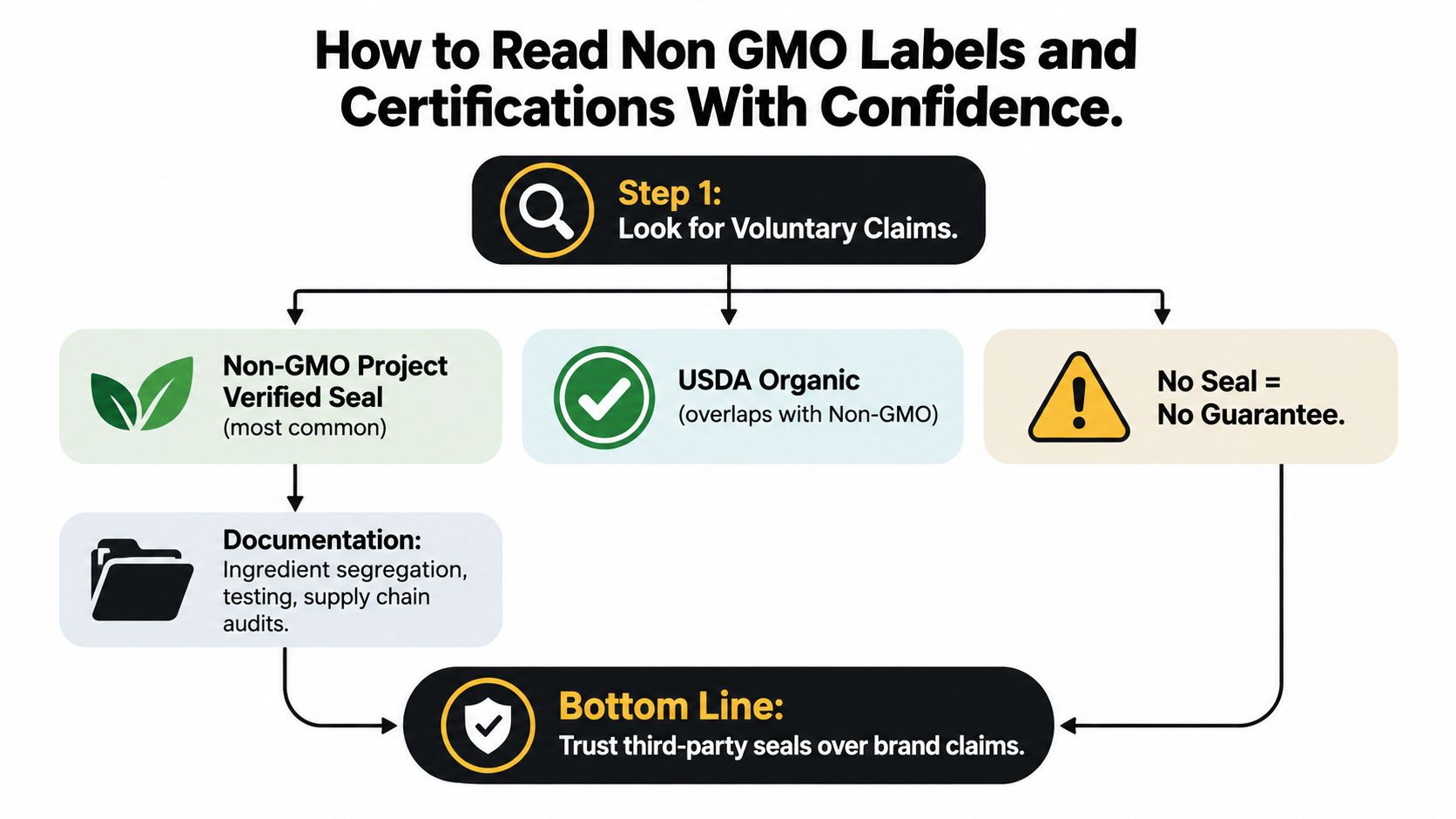
A practical label hierarchy
Non-GMO Project Verified is a common third-party seal. It signals that the product has gone through a verification system rather than relying only on the brand's own wording. The exact program requirements matter, so view the seal as evidence of a defined process, not a declaration that the snack is free from every possible trace.
USDA Organic overlaps with non-GMO concerns because certified organic production prohibits excluded methods such as bioengineering throughout handling and recordkeeping, as described in FDA guidance. Organic certification also covers broader production requirements, so it answers more questions than non-GMO alone.
A plain “non-GMO” statement may still be truthful, but it gives you less immediate information about who verified the claim and how the supply chain was checked. If the package offers no seal, look for supporting information from the manufacturer rather than assuming the claim means “zero GMO presence.”
Why supply-chain paperwork matters
High-risk ingredients require more than a final product glance. Certification systems commonly depend on ingredient-level records, segregation, testing, and traceability, with lot documentation used to keep claims below defined thresholds rather than assuming absolute zero presence (Consumer Reports).
That's similar to checking a chain of custody. A manufacturer needs to know where an ingredient came from, which lot entered production, whether it stayed separated when required, and how the finished snack can be traced back through the system.
If you're also researching growing methods, find farms with pesticide free produce as a separate resource. Pesticide-free sourcing and non-GMO status overlap in some shoppers' priorities, but they're not interchangeable claims.
For a broader walkthrough of serving sizes, ingredient order, and nutrition panels, use this guide on how to read nutrition labels. The non-GMO seal tells you about one aspect of sourcing. The panel tells you what the snack contributes nutritionally.
Common Myths About Non GMO Snacks Debunked
Many shoppers don't separate non-GMO, organic, and natural claims clearly. That confusion is one reason label education matters, especially for people buying snacks for training, weight management, or everyday energy (WFYI).
Myth one, non-GMO means organic
Fact: Organic certification includes a prohibition on bioengineering, but non-GMO doesn't automatically make a product organic. Organic and non-GMO programs address different sets of production and verification requirements.
A non-GMO snack may still use ingredients that don't meet organic standards. It might also contain more processing, added flavoring, or a nutrition profile that doesn't match what you expect from an organic product.
Myth two, non-GMO means natural
Fact: “Natural” and “non-GMO” answer different questions. A natural-style package may emphasize recognizable ingredients, but the word doesn't replace a non-GMO verification process.
A snack can carry natural language and still require careful ingredient review. Don't let a leaf illustration do the work of a certification seal or a nutrition panel.
Myth three, non-GMO means healthy
Fact: A snack can be non-GMO and still be high in sugar, sodium, or fat, or low in protein and fiber. It can also be highly processed.
Health-focused shoppers often make this mistake because a sourcing claim feels like a quality guarantee. It isn't. Non-GMO can support your values or preferences, but it doesn't tell you whether the snack will keep you full or help you reach a protein goal.
Watch this short explainer before your next grocery trip, then apply the nutrition-panel checks below rather than relying on front-of-pack language alone.
The myth-busting rule: A label can be accurate and still be incomplete.
Choosing Non GMO Snacks for Fitness Plant Based and GLP 1 Goals
A non-GMO seal may help you trust how ingredients were sourced, but it doesn't answer the performance question: Will this snack help me feel satisfied and support the reason I'm eating it?
Fitness shoppers usually need a snack to perform a job. Before training, it may need to be convenient and comfortable to digest. After training, protein may matter more. Between meals, a combination of protein, fiber, and a reasonable portion may offer more staying power than a sweet snack built mostly from refined carbohydrates.
Plant-based shoppers have another layer to consider. A snack can be non-GMO and vegan, but you'll still want to check the protein source, allergen statement, ingredient complexity, and whether the portion provides enough protein to matter for your day.
A comparison lens for the aisle
| Snack Type | Protein and Satiety Support | Processing and Label Clarity |
|---|---|---|
| Fruit or vegetables with a protein-rich side | Usually needs a complementary protein source to provide staying power | Often simple to understand, but packaged additions require label checks |
| Seed-based or legume-based crisps | Can offer a more substantial savory option when protein is meaningful per serving | Check whether the ingredient list is built around the stated protein source or mostly refined starch |
| Dessert-style bars | Protein varies widely, and sweetness may dominate the eating experience | Review syrups, coatings, flavor systems, and the difference between marketing language and certification |
| Pea-protein savory snack | A protein-first format can fit plant-based and between-meal goals when the panel supports the claim | Check the full recipe, sodium, serving size, and certification or sourcing language |
The comparison isn't about finding one universally correct snack. It's about matching the product to the job. A light carbohydrate snack may be reasonable before movement, while a protein-first savory option may make more sense when you want crunch and fullness between meals.
Clean-label expectations also influence how shoppers compare snacks. Market reporting describes rising interest in short ingredient lists, recognizable sourcing, and third-party validation, alongside non-GMO, protein, and preservative-free cues (Market IntelO).
For readers considering a GLP-1 medication, snack decisions should remain personal and should follow guidance from a qualified healthcare professional. Smaller appetites can make nutrient density and tolerability more important, but a non-GMO label still doesn't establish that a snack is appropriate for an individual treatment plan.
One example of a savory, plant-based protein format is Gym Snack, which uses pea protein and lists non-GMO positioning alongside its nutrition and allergen information. You can compare that type of product with other options through this guide to non-GMO protein bars, then choose based on your own protein, taste, and satiety needs.
Smart Shopping Tips to Find Truly Better Non GMO Snacks
You don't need to conduct a supply-chain audit in the grocery aisle. You need a repeatable scan that catches the biggest issues before the package wins you over.
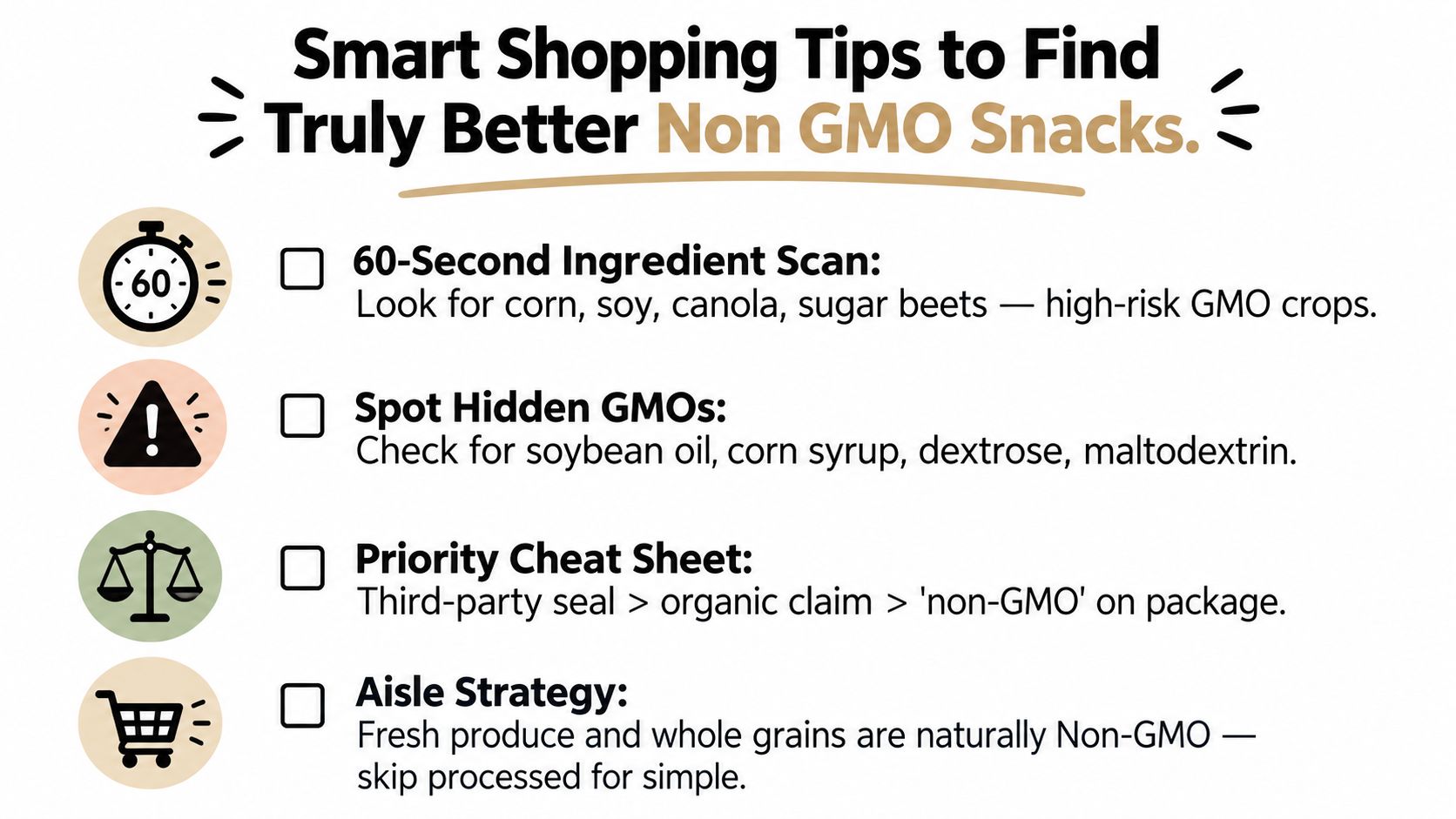
Use a quick ingredient scan
First, find the verification signal. Look for a recognized third-party seal or a clearly explained organic certification. Treat an unsupported front-of-pack phrase as a prompt to investigate, not as the final answer.
Next, scan for high-risk crop derivatives. Corn, soy, canola, and sugar beet-derived ingredients can appear under several names, so read the full ingredient list. Common examples include soybean oil, corn syrup, dextrose, maltodextrin, and soy-derived functional ingredients.
Then, check the nutrition panel. Look at protein, fiber, added sugars, sodium, and serving size. A snack may satisfy your non-GMO preference but fail to provide the energy or fullness you need.
Finally, ask whether the ingredient list matches the promise. If the package emphasizes protein, find the actual protein ingredient near the beginning of the list and confirm the protein amount on the panel. If it emphasizes whole foods, check whether the formula is mostly recognizable food ingredients or a long series of refined components and flavor systems.
Make competing claims easier to rank
When several packages look appealing, use this order:
- Third-party verification: Prefer a defined certification process when non-GMO sourcing matters to you.
- Ingredient transparency: Favor a list you can understand and a clear explanation of major ingredients.
- Nutrition purpose: Choose according to your goal, such as protein after training or a balanced snack between meals.
- Real-life fit: Consider taste, portability, allergens, and whether you'll enjoy eating it.
The technical concern isn't that a final package can be judged by sight. It's that supply chains need records, segregation, testing, and traceability for high-risk ingredients. That's why a certification process can provide more confidence than a vague phrase alone, as explained by Consumer Reports' guide to non-GMO seals.
For more ideas on ingredient transparency and practical package checks, see this guide to clean-label snacks. Clean label isn't a single universal guarantee either, so use it as a prompt to inspect the actual ingredients.
Final Takeaways for Choosing Non GMO Snacks That Satisfy
Non-GMO snacks can be sensible choices, especially when sourcing standards matter to you. The mistake is treating the claim as a health halo.
Use four rules:
- Verify the claim: A recognized third-party seal or organic certification gives you more context than an unexplained phrase.
- Separate categories: Non-GMO isn't the same as organic, natural, minimally processed, or nutritious.
- Match the snack to the job: For training and fullness, assess protein, fiber, sugar, sodium, serving size, and ingredient quality.
- Read beyond the front: The ingredient list and nutrition facts panel reveal whether the snack fits your goals.
Awareness is already substantial. In 2023, 30% of consumers said non-GMO was important when buying food, while 66% recognized the Non-GMO Project Verified label and 72% recognized the USDA Organic seal (Persistence Market Research). Those signals can guide your first filter, but your final decision should come from the whole package.
For active and plant-based shoppers, a savory, protein-first option may be more useful than a dessert-style snack that happens to carry a non-GMO claim. Start with the seal, finish with the panel, and choose the product that supports how you eat.
If you want a savory, plant-based way to compare non-GMO positioning with protein-focused nutrition, visit Gym Snack and review the ingredient and nutrition details before choosing a bundle or custom pack. Use the same aisle test here as anywhere else, check the claim, scan the ingredients, and decide whether the snack fits your training and satiety goals.