

We tend to think of nut bars as a healthy choice, but when it comes to nut bar protein, the numbers are all over the map. One bar might pack over 20 grams, while another that looks just as healthy might only have 5 grams. It’s a perfect example of why you can't judge a bar by its wrapper.
The Hidden Truth Behind Nut Protein Bars
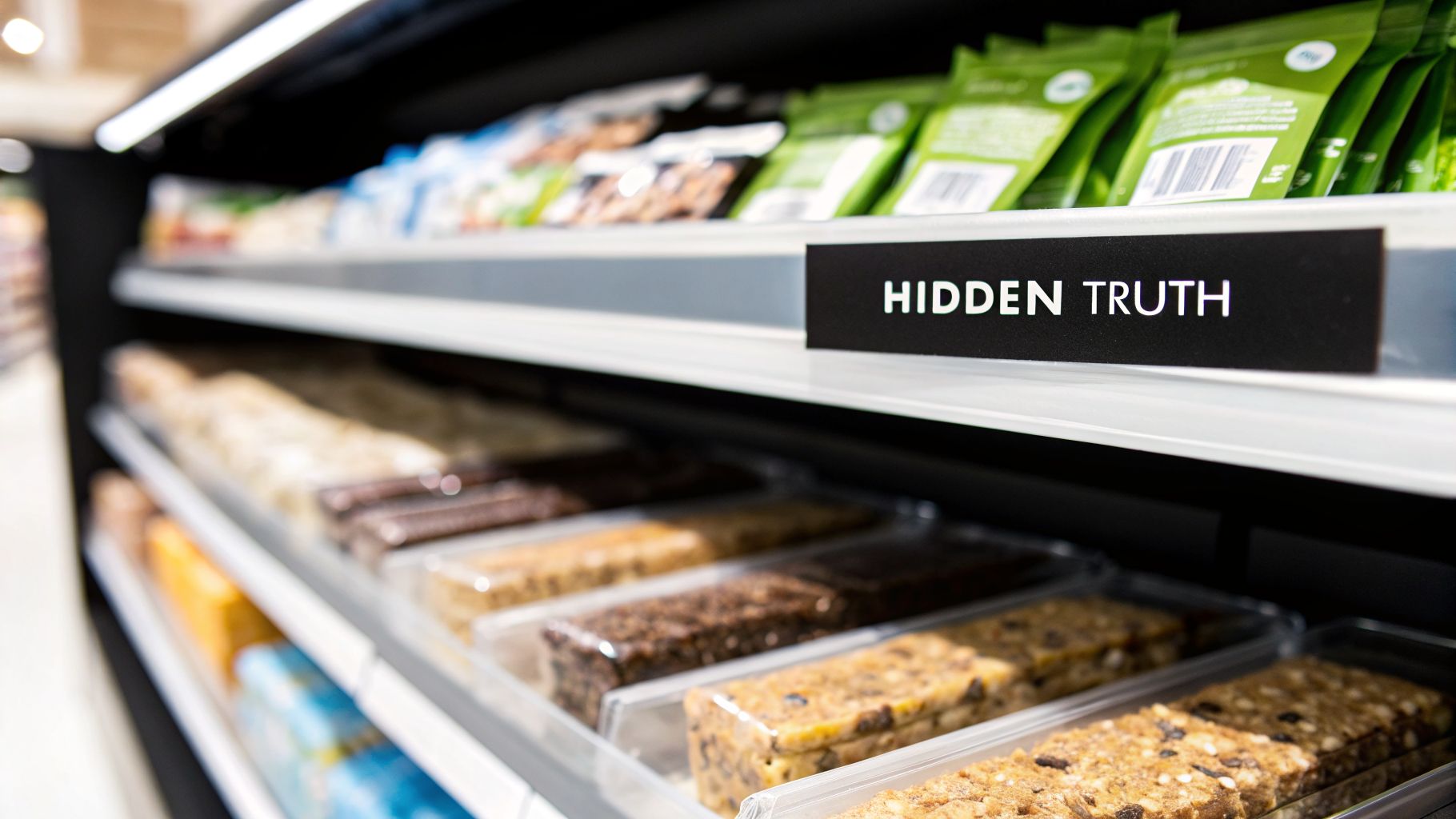
Walk down the snack aisle in any supermarket, and you'll see them. It's an entire wall of bars, all promising a quick, nutritious fix. What was once a niche item for serious athletes has exploded into a mainstream staple, grabbed by everyone from busy parents to office workers looking for a "healthy" afternoon snack.
This didn't happen by accident. Clever marketing has positioned these bars as the ultimate guilt-free, on-the-go food. The packaging is often covered in earthy colors, pictures of whole almonds, and buzzwords like "all-natural" or "high-protein." This creates what experts call a "health halo."
Beyond the Wrapper
The health halo is a powerful psychological trick. It makes us feel like a product is good for us, so we don't look too closely at the details. We see "nut bar" and our brain instantly thinks protein, fiber, and healthy fats. What we often miss are the high amounts of sugar, cheap fillers, and low-quality ingredients that can be hiding just beneath the surface.
The sheer popularity is reflected in the market numbers. The global protein bar market was valued at a massive USD 15.80 billion in 2025 and is expected to soar to USD 24.21 billion by 2033. This shows just how ingrained these bars have become in our day-to-day lives. You can dive deeper into the protein bar market trends to see the full picture.
This explosion in popularity has flooded the market with options. But it also means there's a huge difference in quality from one bar to the next.
To make a smart choice, you have to become a savvy consumer and learn to see past the marketing hype. This guide will teach you how to decode what’s really in your nut bar so you can confidently pick snacks that actually support your health goals.
Deconstructing Your Favorite Nut Bar
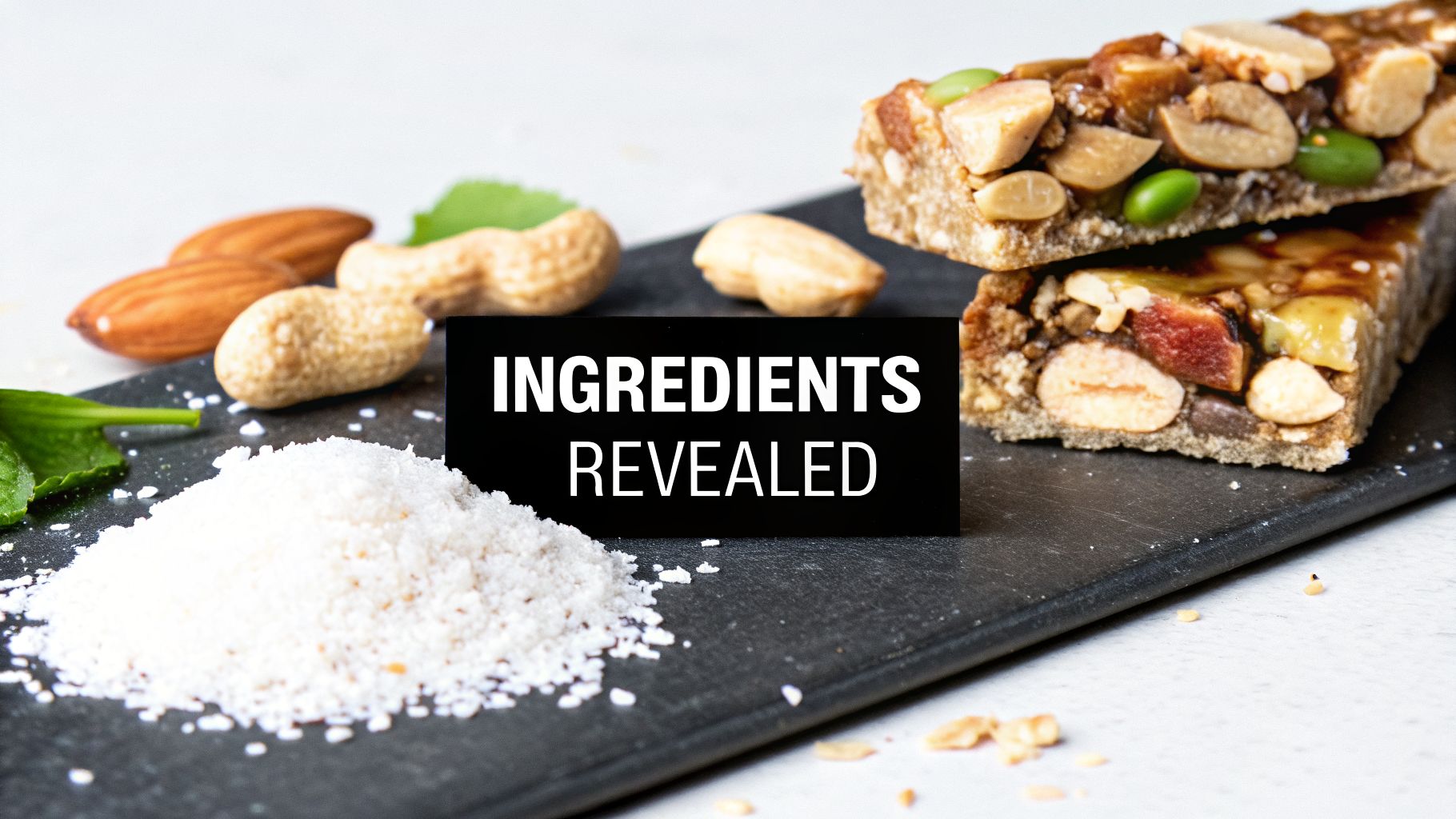
Ever wondered what really goes into a nut bar? At first glance, they seem simple enough. You've got the nuts—almonds, peanuts, cashews—which form the base, delivering that satisfying crunch, healthy fats, and a starting dose of protein.
But that's just the beginning of the story. The nuts are the foundation, but it's the other ingredients that determine if your bar is a genuine health food or just a candy bar wearing a clever disguise. The true quality of nut bar protein is hidden in the details.
What Is Really Inside Your Nut Protein Bar
To really understand what you're eating, let's pull back the curtain on the common components that turn a handful of nuts into a packaged bar. The table below breaks down the usual suspects you'll find on the label.
| Ingredient Category | Common Examples | Purpose in the Bar | Potential Downsides |
|---|---|---|---|
| Nut & Seed Base | Almonds, peanuts, cashews, sunflower seeds, pumpkin seeds | Provides core structure, texture, healthy fats, and some initial protein. | High in calories and fat (though mostly healthy fats); protein content is often insufficient. |
| Binders & Syrups | Brown rice syrup, tapioca syrup, honey, agave nectar | "Glues" the ingredients together, adds sweetness, and creates a chewy texture. | Often just a disguised form of sugar, leading to blood sugar spikes and crashes. |
| Fruit Components | Dates, raisins, dried cranberries, apricots | Acts as a "natural" binder and sweetener, contributes fiber and flavor. | Can be very high in concentrated sugar, dramatically increasing the total sugar content. |
| Protein Isolates | Whey protein, soy protein isolate, pea protein | Boosts the protein count to meet the numbers advertised on the front of the package. | Can sometimes cause digestive issues (whey), be a common allergen (soy), or have a chalky taste. |
| Fibers & Fillers | Chicory root fiber, soluble corn fiber, inulin | Increases fiber content to improve satiety and bar texture. | Can cause gas, bloating, and digestive discomfort for some people, especially in large amounts. |
| Fats & Oils | Palm kernel oil, sunflower oil, coconut oil | Enhances flavor, improves mouthfeel, and can act as a binding agent. | Some oils, like palm oil, can be high in unhealthy saturated fats. |
| Flavor & Add-ins | Chocolate chips, salt, natural flavors, cocoa powder | Improves taste and adds variety. | Chocolate can add more sugar and fat; "natural flavors" is an unregulated, vague term. |
As you can see, the journey from a simple nut to a finished bar involves a lot of moving parts—and not all of them are working in your favor.
The Sticky Truth About Binders and Sugars
To get all those nuts, fruits, and powders to stick together, manufacturers rely on binders. More often than not, these binders are just different forms of sugar.
You'll see ingredients like:
- Syrups: Brown rice syrup, tapioca syrup, and agave are everywhere. They might sound a bit more wholesome than high-fructose corn syrup, but make no mistake—your body treats them all as sugar.
- Fruit Pastes: Dates are a hugely popular "natural" binder. While they do bring some fiber to the party, they also pack a major sugar punch that adds up fast.
This is why flipping the bar over to read the nutrition panel is non-negotiable. It's not uncommon to find bars marketed for their protein that contain a shocking 15-20 grams of sugar per serving. That kind of sugar hit can send your energy levels on a rollercoaster, completely undermining the reason you reached for a protein snack in the first place. If you want to become a pro at spotting these red flags, our guide on how to interpret protein bar nutrition facts is a great place to start.
The Challenge of Boosting Protein
Here’s a little industry secret: most nut bars don't get their impressive protein numbers from nuts alone. It's just not possible. To hit the high double-digits you see on the label, manufacturers have to add supplemental protein.
These protein boosters are what turn a simple trail mix bar into a functional food for fitness. The most common ones are dairy-based whey, soy isolate, or other plant proteins like pea or brown rice. The type of protein used affects everything from the bar’s final texture to how easily your body can digest it.
But this reliance on nuts as the primary ingredient creates a big problem. Nut-based bars dominate the market, holding a massive 46.96% market share in North America. This sounds great, but it makes the entire category incredibly vulnerable to price swings. For instance, almond prices went wild in 2024-2025 because of droughts, and peanut prices jumped 17% year-over-year in early 2025.
That volatility gets passed straight to you, the consumer. It reveals a fundamental weakness in the nut bar model: an unstable and often expensive supply chain that leaves both brands and buyers at the mercy of the commodities market.
How Nut Bars Impact Your Fitness Goals
We all grab a nut bar thinking it's a healthy choice. It's convenient, it's quick, but is it actually helping you hit your fitness and wellness targets? The honest answer is: it depends. A nut bar can be a great ally or a sneaky saboteur, depending entirely on your specific goals.
If you’re hitting the gym, you’re likely focused on muscle repair, sustained energy, and solid recovery. The ideal post-workout snack gives you a meaningful amount of protein to rebuild the muscle fibers you just worked so hard to break down. Here’s where many nut bars fall short. They often have a lopsided protein-to-carbohydrate ratio. If your bar is packed with sugar but has less than 10 grams of protein, you’re not really fueling muscle growth. You’re just setting yourself up for a quick energy spike followed by an inevitable crash.
Considerations for Different Lifestyles
The "is this bar good for me?" question gets even more specific when we look at different dietary needs and health journeys.
For a Plant-Based Diet:
At first glance, most nut bars look like a safe bet for vegans. They’re built on nuts, seeds, and fruit, right? Not always. You have to become a bit of a label detective to spot common animal-based ingredients that sneak their way in.
- Honey: A frequent choice for a "natural" sweetener and binder.
- Whey or Casein Protein: These dairy proteins are often added to pump up the protein numbers.
- Milk Powder or Milk Chocolate: Used to improve flavor and texture, but not vegan-friendly.
For Weight Management and GLP-1 Users:
When you’re trying to manage your weight or are using GLP-1 medications to help control appetite, the name of the game is satiety. Feeling full and satisfied is crucial. Protein and fiber are your best tools for this, so a nut bar high in both can feel like a smart, strategic snack.
But you have to watch out for the calories and sugar. Because they're loaded with fats (even the healthy kind), nut bars are very calorie-dense. A single, small bar can easily pack over 250-300 calories, which can take up a surprisingly large chunk of your daily budget. On top of that, sugary bars can play havoc with your blood sugar levels—something you want to avoid, especially if you're working on weight management or using GLP-1s.
The real value of a bar isn't just one ingredient—it's the balance of everything inside. You need functional benefits, like protein for muscle or fiber for fullness, without a tidal wave of sugar and empty calories that work against you.
To really get a handle on how snacks like nut bars fit into your broader fitness plan, it’s worth diving into a complete guide to pre and post workout nutrition. This will help you make sure every bite you take is actually serving your body.
Ultimately, a nut bar can be a fantastic tool or a well-disguised treat. Its true impact comes down to whether you choose one that aligns with what you really need—be it high-quality protein for recovery, pure plant-based ingredients, or a macro-friendly profile for weight management. The only way to know for sure? Always read the label.
How to Spot a Genuinely Healthy Protein Bar
Let's be honest, the protein bar aisle is designed to be confusing. With all the flashy packaging and bold health claims, it's easy to grab what looks like a great fitness snack, only to find out it’s a candy bar in a clever disguise. To find the real deal, you have to learn how to read a nutrition label like a pro.
Forget the big calorie number on the front of the wrapper for a second. The real story is on the back, in the nutrition panel. This is where you can see past the marketing and get to the facts, and learning how to interpret them is a game-changer. For a great primer, check out this guide on Protein Bars Nutrition Facts Made Simple.
The Protein-to-Sugar Ratio
The first thing I always look at is the ratio of protein to sugar. This is the most telling sign of a bar's quality. A truly effective nut bar protein snack should have more protein than sugar—ideally, at least twice as much.
For example, a bar with 15 grams of protein and only 5 grams of sugar is a fantastic choice. It will give you sustained energy without the dreaded sugar crash. The problem is, many popular bars have this ratio completely backward, packing maybe 10 grams of protein with a whopping 20 grams of sugar. That’s a huge red flag.
This simple flowchart can help you decide if a bar is actually going to help you meet your goals.
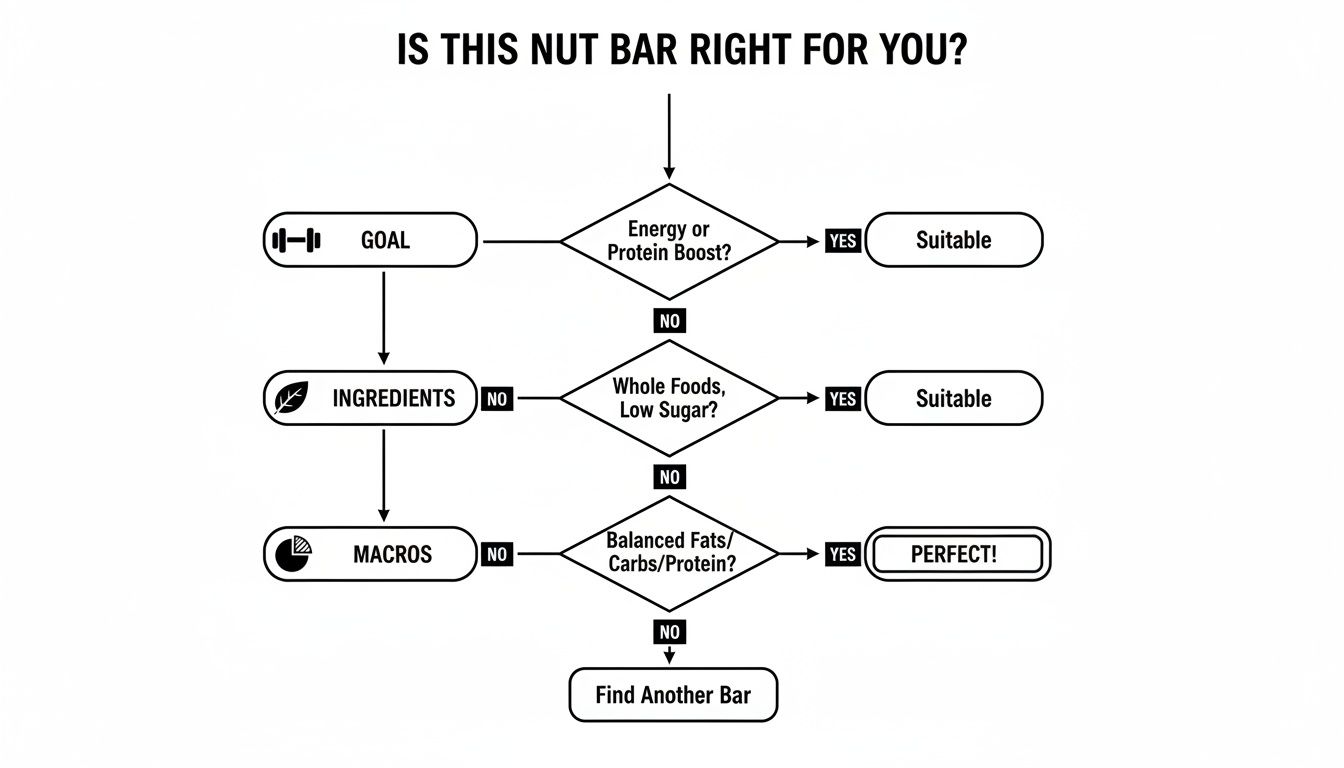
As you can see, it all comes down to what you need and then checking if the ingredients and macros actually line up.
Decoding Carbs and Hidden Sugars
Next, your eyes should go to the carbohydrate section. The key here is the relationship between "Total Carbohydrates" and "Dietary Fiber." The more fiber, the better. Fiber is your friend—it slows down digestion, keeps you feeling full, and helps prevent blood sugar spikes.
You also need to become a sugar detective. Manufacturers have gotten incredibly good at hiding sugar in plain sight using names that sound healthy and "natural."
Don't let wholesome-sounding names fool you. Ingredients like agave nectar, brown rice syrup, coconut sugar, or fruit juice concentrate are still just added sugars. They’ll spike your blood sugar all the same.
To make it easy when you're in the store, run through this quick mental checklist:
- Protein Content: Does it have at least 15g of protein?
- Sugar Content: Is the sugar under 10g? Even better if it’s half the protein amount.
- Fiber: Is there at least 5g of dietary fiber to keep you full?
- Ingredients List: Are whole foods like nuts or seeds the first few ingredients, not some type of syrup?
Using a simple framework like this helps you cut right through the marketing noise. And if you're specifically searching for options that fit a calorie-controlled plan, our guide to low-calorie protein bars is a great resource. A little knowledge goes a long way in making sure the bar you choose actually works for your body, not against it.
Why Savory Protein Is a Game Changer
If you've spent any time at all trying to eat for fitness, you know the drill. It feels like there’s an unspoken rule that all protein snacks have to be sweet. From birthday cake-flavored whey to chocolate-covered nut bars, the market is just flooded with dessert-like options.
That’s fine for an occasional treat, but day after day, it leads to what we call flavor fatigue. You know the feeling—it’s the burnout you get from eating the same sweet flavors over and over. When every post-workout snack tastes like a candy bar, your brain and your taste buds start screaming for something else. Something that feels like real food. This is where savory protein snacks come in and completely reset expectations.
Breaking Free from the Sugar Cycle
Sweet bars, even the ones with a decent amount of nut bar protein, often have a hidden downside: sugar. Many are loaded with syrups and sweeteners that send your energy levels on a rollercoaster, which is the last thing you need after a workout or during a mid-afternoon slump.
A savory snack, on the other hand, is built around complex, satisfying flavors instead of pure sweetness. Think about it. A crunchy, cheesy bite feels more like a mini-meal than it does a piece of candy. This simple switch makes a huge difference in how your body registers fullness. Flavors like salt and umami are what we associate with actual meals, and they do a much better job of signaling to your brain that you're satisfied.
Savory snacks work with our natural hunger cues for real food. They satisfy that need for something substantial and crunchy without kicking off the sugar cravings that almost always follow a sweet treat. It's a much smarter way to manage your appetite long-term.
This approach is a massive help for anyone on GLP-1 medications or simply trying to manage their weight, where keeping sugar low and feeling full are the main goals. You end up satisfying real hunger instead of just feeding a sugar craving.
A More Satisfying Crunch
The power of savory protein isn't just about taste; it's also about a more rewarding eating experience. So many sweet bars are soft, dense, or unpleasantly chewy. A savory snack built around a solid crunch offers a completely different kind of satisfaction that’s often more effective at stopping cravings in their tracks.
This combination of texture and flavor delivers a powerful one-two punch:
- Crush Hunger: The satisfying crunch and savory taste feel more substantial, helping you tackle genuine hunger pangs head-on.
- Prevent Cravings: By getting off the sweet-and-salty rollercoaster, you can keep your energy levels more stable and cut down on the urge to reach for more sugar later.
- Deliver on Protein: Most importantly, a well-made savory snack delivers high-quality protein to support your fitness goals without any compromises.
If you’re tired of the endless parade of sweet protein bars, checking out the world of savory high-protein snacks could be the key. It’s about finally choosing a snack that works with your body's signals, not against them, and tastes like the real, delicious food you actually want to eat.
A Protein-First Alternative That Actually Works
So, if traditional nut bars are often just candy bars in disguise, what’s the alternative? It’s not about finding a better nut bar. It’s about rethinking the entire snack from the ground up.
Instead of starting with nuts and binding them together with sugar, a truly functional snack flips the script. The foundation should be high-quality protein, with everything else built around it. Imagine a snack where clean, plant-based pea protein is the star of the show. This simple change sidesteps the biggest problems with standard nut bar protein snacks, like sugar overload, common allergens, and the wild price swings of the nut market.
A Macro-Friendly, Allergen-Free Formula
When you build a snack around protein, you get a much more powerful nutritional profile. We're talking over 15g of protein in a single serving, which is exactly what you need to support muscle repair and, just as importantly, stay full. That feeling of lasting satiety is a huge win for anyone trying to manage their appetite, especially people on GLP-1 medications who need effective hunger control.
By making pea protein the main ingredient, you also create something that almost anyone can eat. It’s a clean foundation that’s naturally free from the stuff that trips so many people up.
- No Nuts: Completely safe for those with nut allergies.
- No Dairy: Ideal for anyone who's plant-based or lactose intolerant.
- No Soy: Avoids another common dietary restriction and allergen.
- No Gluten: A worry-free choice for those with celiac disease or a sensitivity.
This isn't just about avoiding things; it’s about creating a reliable go-to snack without having to squint at the fine print on the label.
A protein-first formula isn't just about hitting a number on the label. It's about getting a snack that works for you by supporting fullness hormones and providing steady energy, not the spike-and-crash that comes with sugar.
Satisfy Cravings the Right Way
Let’s be honest, nutrition is only half the battle. If a snack doesn't taste good or feel satisfying, you won't stick with it. Most protein bars try to compete with dessert, adding to the mountain of sweet options out there.
A smarter alternative breaks that mold with a savory, satisfying crunch. The goal is to crush hunger, not just satisfy a sweet tooth. With bold, cheesy flavors and a texture that feels like you're eating real food, it gives you that rewarding feeling that a soft, chewy bar just can't match.
This isn’t just another bar. Gym Snack is a completely different approach—a savory, plant-based, and protein-forward snack designed to help you hit your fitness goals while actually enjoying what you’re eating.
Got Questions About Protein Bars? We've Got Answers.
It’s easy to get turned around in the protein snack aisle. Every bar seems to make a different promise, and what your gym buddy swears by might not be the right fit for you at all. Let's clear up some of the most common questions I hear all the time to help you snack smarter.
Are Nut Protein Bars Good for Weight Loss?
That’s the million-dollar question, isn't it? The honest answer is: it depends entirely on the bar. While the protein and fiber in a nut bar can help you feel full, you have to be careful. Many are loaded with so many calories, sugars, and fats that they can completely derail your weight loss efforts.
It's not uncommon to see a single nut bar packing over 250 calories. For many people, that’s not a snack; it's a mini-meal. You have to become a bit of a label detective. Look for low sugar content and a high protein-to-calorie ratio. Or, even better, find a snack specifically designed to be protein-forward to help manage your appetite without the extra baggage.
How Much Protein Should a Good Bar Have?
For a bar to be truly effective for muscle support and keeping hunger at bay, you should be looking for at least 15-20 grams of protein. But that number is only half the story. It's just as important to ask where that protein comes from and how much sugar is tagging along for the ride.
A lot of the nut bars you see on shelves have less than 10g of protein and are mostly just carbs and fat. Honestly, they're closer to a candy bar disguised with a 'health halo' than a real tool for fitness and recovery.
Why Choose a Savory Protein Snack Over a Sweet Bar?
If you’ve been on a fitness journey for a while, you know about "flavor fatigue." After countless sweet shakes, sweet yogurts, and sweet bars, your taste buds are just done. That's where savory snacks come in.
A savory option often feels more satisfying and more like real food, which can be a game-changer for crushing hunger. It also helps you break free from the cycle of sugar cravings. Choosing a crunchy, savory snack gives you that high-quality protein you need without the sugar rush, making it a refreshing and far more functional part of your daily routine.
If you're tired of sugary snacks and want a savory, protein-first alternative that crushes hunger, check out Gym Snack. Explore our delicious, plant-based options at gymsnack.com.