

Searching for peanut free snacks can feel like a label-reading marathon you didn't plan for. You're trying to pack a lunch, keep a gym bag stocked, or survive an afternoon at the office, and every wrapper seems to hide a new risk. The good news is that the category is broader than is commonly thought, and the best options are the ones that combine clear allergen controls, useful nutrition, and real convenience.
The Ultimate Guide to Safe and Delicious Peanut-Free Snacks
1. Gym Snack for High-Protein Savory Cravings
Gym Snack stands out because it solves a problem most protein snacks ignore, savory cravings. A lot of peanut free snacks in the fitness aisle lean sweet, dusty, or dessert-like. Gym Snack goes the other direction with crunchy, cheesy flavors that feel more like a real bite after training than a candy bar in disguise.
The brand positions itself as plant-based, peanut-free, and free from the Top 9 allergens, which makes it unusually easy to recommend for people who want a cleaner snack without juggling a long ingredient list. Its formulas also avoid dairy, soy, gluten, and seed oils, and the protein content is built for actual satiety, not just a label claim. For anyone who wants a snack that can work before a workout, after a workout, or between meetings, that combination matters.
Why it works for gym-goers
The biggest win here is the macro profile. Gym Snack is built around pea protein, and its savory format gives it a different use case than the usual bar or shake. The company's own positioning around fullness-supporting hormones like GLP-1 also fits the practical reality that many people want a snack that keeps them satisfied longer, especially when they're trying to stay on plan.
Practical rule: if you want a peanut-free snack for training, prioritize the product you'll actually eat consistently. A savory option often beats another sweet bar because it feels more like food and less like supplementation.
The trade-off is straightforward. It's not the cheapest option, and the flavor range is still tighter than legacy snack brands. But if your priority is a high-protein, savory, and allergen-conscious snack, Gym Snack is one of the strongest fits in this list. Visit Gym Snack if you want a snack built around training, not just around being “free from” something.
For more on the brand's approach to protein-first snacking, see its high-protein savory snacks guide.
2. MadeGood for School Lunches and Kid-Friendly Packs
MadeGood is one of the easiest brands to trust when the snack has to pass the school-lunch test. Its bars, granola minis, and crispy squares are built for the exact situation parents dread most, sending a snack into a classroom where someone else's allergy policy may be stricter than the school newsletter made it sound. The brand's focus on Top-9-free formulas and a dedicated peanut- and tree-nut-free facility makes the packaging language easier to interpret than many “nut-aware” snacks.
That dedicated-facility message matters. For families managing allergies, there's a big difference between a snack that avoids peanuts in the recipe and one that is produced in a space designed around allergen separation. MadeGood is also certified vegan and offers gluten-free options, which gives parents more room to cover different dietary needs with the same brand.
Best use case
MadeGood is strongest for school-safe lunchboxes, day care snacks, and travel bags where the priority is predictability. The formats are individually portioned and easy for kids to handle, which reduces the chance that a snack gets wasted because it's inconvenient or too messy. It's also the kind of brand that works when you need a familiar shelf-stable option rather than a specialty product.
A snack can be allergen-safe and still fail the school test if a child won't eat it. MadeGood tends to work because it feels familiar enough for kids while still fitting tighter policies.
The trade-off is that the lineup skews sweet, and it doesn't compete with high-protein bars on macro density. That's fine if the goal is lunchbox reliability rather than workout fuel. For a parent who wants one brand to cover multiple safe-snack moments, MadeGood is a very practical anchor.
For a related look at nut-free snack formats, see this protein-bars-without-peanuts guide.
3. Enjoy Life Foods for Reliable Everyday Snacking
Enjoy Life Foods is one of the most recognizable names in allergy-friendly packaged snacks for a reason. The brand offers cookies, chocolate, and crunchy snacks, and every product is made to be gluten-free and free from 14 common allergens, including peanuts. For families and offices that need a dependable snack drawer option, that kind of consistency reduces decision fatigue.
The facility setup also helps. Enjoy Life says its products are made in a dedicated nut-free and gluten-free facility, with routine allergen testing for peanuts and tree nuts. That doesn't eliminate every risk in food manufacturing, but it does give shoppers a clearer safety story than products that merely avoid peanuts in the ingredient list. In a market where cross-contact is a real concern, that clarity is valuable.
Where Enjoy Life fits best
This brand works best for people who want a widely available, easy-to-recognize option that feels safe in a lot of situations. It's a strong pick for allergy families, office snack drawers, and school-safe backup snacks because the product mix is easy to find and easy to explain to caregivers, teachers, and coworkers.
Practical rule: if a snack will be handled by multiple adults, choose the brand with the simplest safety story. Enjoy Life's packaging and facility claims make that conversation easier.
The main limitation is variety in function. Enjoy Life is strong on sweet snacks, but it's not the brand I'd choose if I needed a savory bite or a serious protein hit. It's also not trying to be a sports nutrition product. Still, as a reliable everyday option, it earns its place because trust matters as much as taste when peanuts are in the picture.
For shoppers comparing allergy-friendly packaged snacks, this gluten-free nut-free snacks guide is a useful companion read.
4. 88 Acres for Seed-Based Nutrition With Better Macro Support
88 Acres is a smart choice when you want a peanut-free snack that feels a little more substantial than a cookie and a little less sugary than a candy-style bar. The brand builds around seeds, not nuts, and it operates in a dedicated Top-9-free bakery. That matters for shoppers who need a more deliberate allergen posture but don't want to give up texture or convenience.
The product range spans bars, granola, and seed butters, which gives it more flexibility than a one-format brand. It's especially useful for people who want a macro-friendlier snack that still travels well and stores easily. In practice, that makes 88 Acres a strong fit for athletes, commuters, and adults who want something more filling than a puffed snack or a sweet mini-cookie.
Why seed-based snacks can outperform nut-free cookies
Seed-based snacks often strike a better balance between satiety and portability. They tend to feel more like a true snack than a dessert, and that makes them easier to use in the middle of the day without a sugar crash. 88 Acres is one of the brands that makes that trade-off work.
There's also a trust factor. Clear facility and allergen statements matter a lot when you're buying for yourself or for someone else who depends on the snack being safe. 88 Acres leans into that transparency, which is exactly what many shoppers want when they're comparing peanut free snacks across brands.
The downside is that portion sizes can be smaller than standard bars, and the price is typically above mass-market granola products. That's a fair trade if you care more about ingredient philosophy and allergen controls than about getting the cheapest box on the shelf.
5. Partake Foods for Sweet, Shelf-Stable Crowd Pleasers
Partake Foods is the kind of brand you buy when you need something familiar enough to please a crowd but still safe enough for a peanut-restricted environment. The whole catalog is Top-9-free, and that makes it easier to hand out in offices, campuses, classrooms, and group settings where the snack table has to work for a lot of different people.
The format matters here. Cookies, minis, and grahams are shelf-stable and portion-controlled, so they're easy to stash in desk drawers or pack for trips. The ingredient lists are also simple enough that people don't need a decoder ring to understand what they're eating. That's useful when the snack has to clear both an allergy check and a taste check.
Best fit for social snacking
Partake is at its best when the snack needs to feel fun rather than clinical. Birthday Cake and Ginger Snap are the sort of flavors that help an allergy-safe product avoid the “special diet” stigma. That can make a real difference for kids who don't want to feel different at snack time, and for adults who just want a cookie that doesn't feel like a compromise.
Sweet, portable, and easy to share, that's why Partake works so well in mixed settings.
The drawback is obvious. This is not a protein brand, and it's not trying to replace a pre-workout bite. It's also not the most savory option on the list. But for anyone building a pantry around dependable, shelf-stable peanut free snacks, Partake is a useful and approachable choice.
6. Blake's Seed Based for Travel and Lunchbox Flexibility
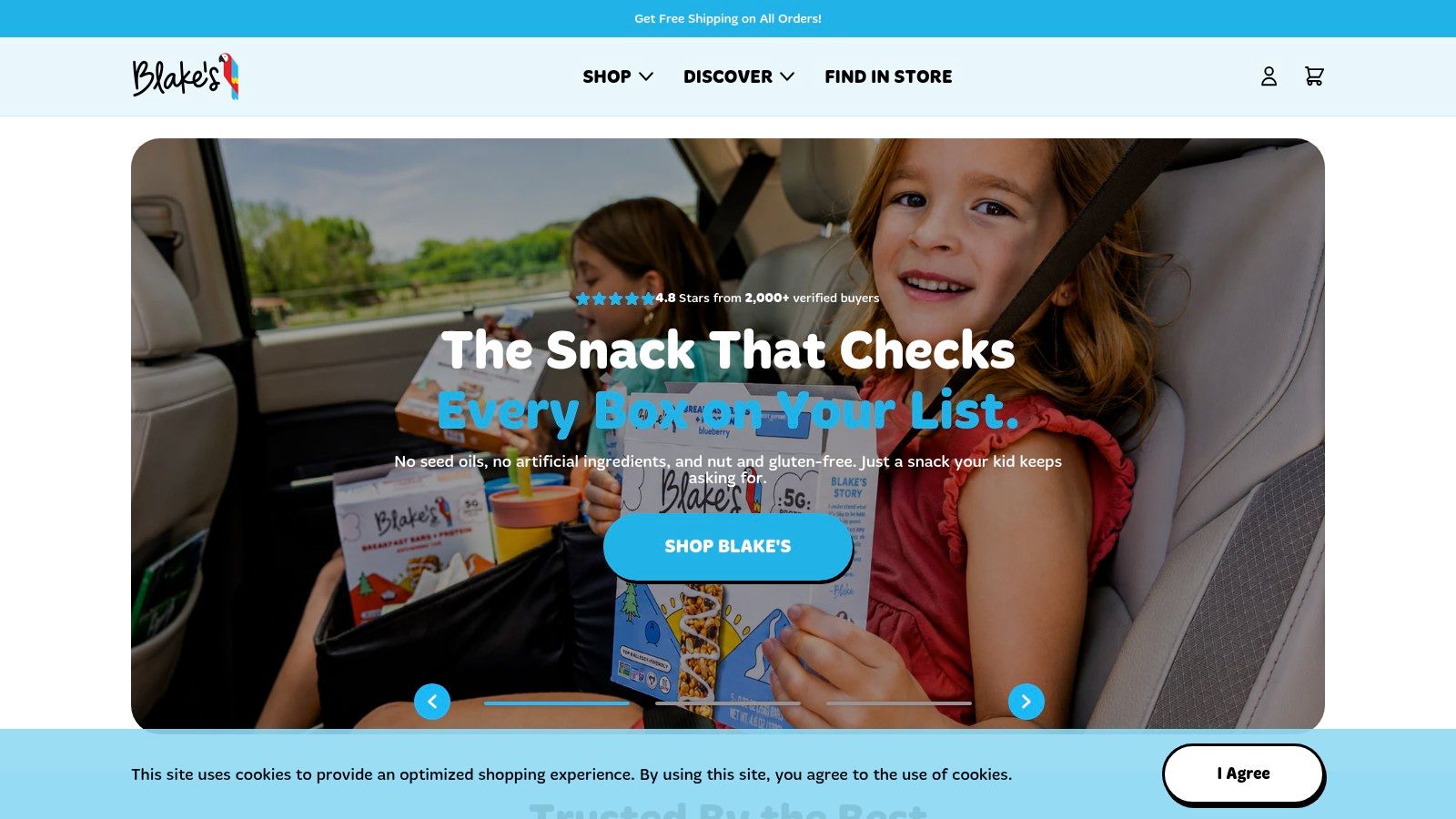
Blake's Seed Based sits in a useful middle ground. It has the portability people want from a bar, but it leans into seeds and allergen-conscious formulation in a way that makes it more interesting than a basic granola bar. The brand makes products in a certified nut-free and gluten-free facility, and its formulations are Top-9-free, which is exactly the kind of language parents and commuters want to see when they're packing fast.
The brand also gives shoppers enough variety to avoid snack boredom. Chewy granola bars, crispy treats, and protein or breakfast bars make it a practical choice for school bags, road trips, and office drawers. If you need one brand to cover several snack moments, that flexibility helps.
A closer look at the trade-offs
Blake's is a good fit for people who want a mix of convenience and reassurance. Its labeling and FAQ content are especially useful for shoppers who read beyond the front of the box. That matters because cross-contact concerns don't disappear just because a product uses nut-free ingredients.
There are two things to watch. Some products include chickpeas, which matters for shoppers with broader legume sensitivities. And some product lines may use shared equipment, so you still need to check the specific package rather than assuming the whole brand carries the same risk profile.
For people who value format variety and strong retail availability, Blake's does a lot right. It's not the most protein-dense brand here, but it's one of the more practical all-day snack options.
7. Free2b Foods for Peanut Butter Cup Style Treats
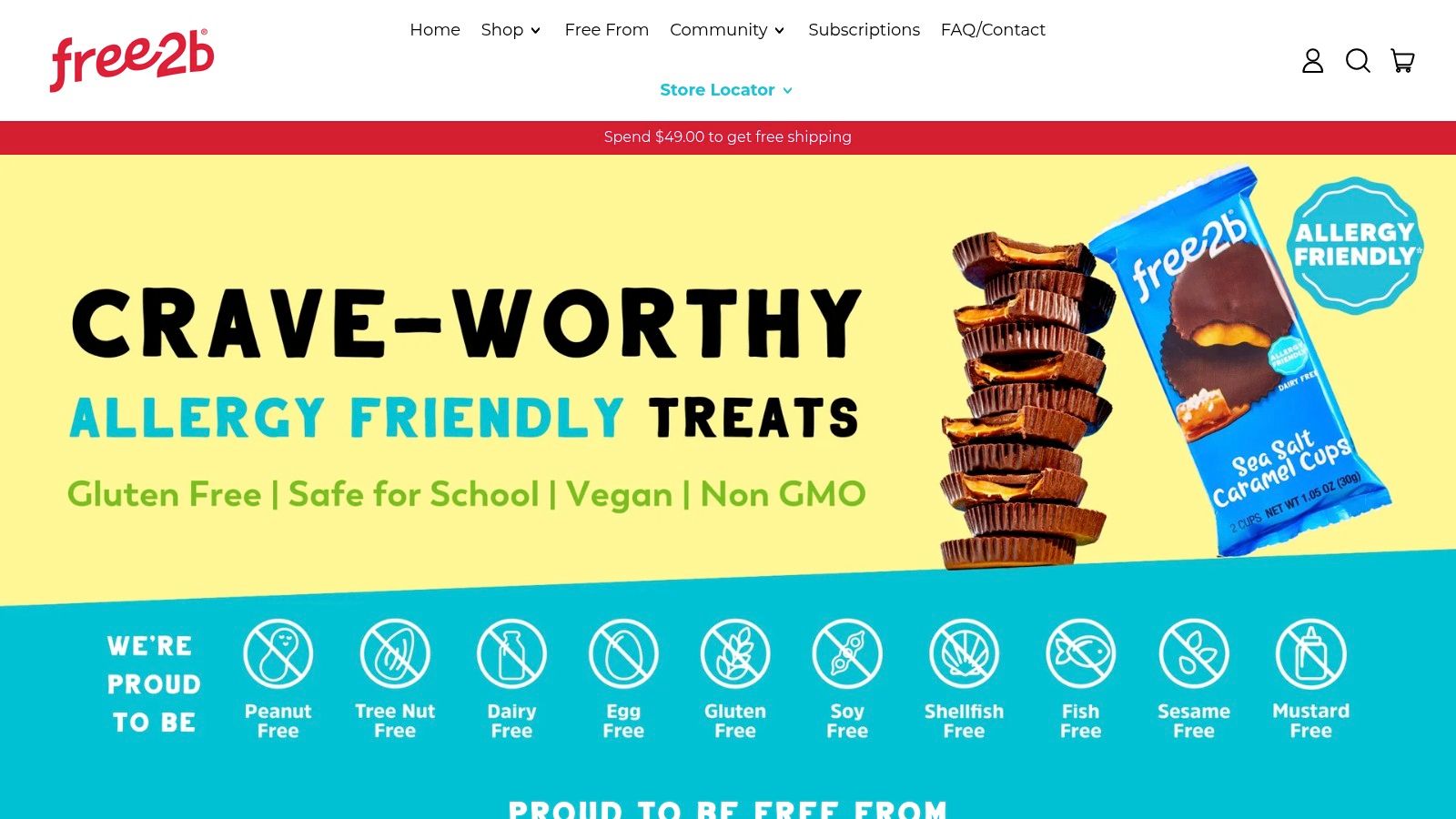
Free2b Foods solves a craving problem, not a macro problem. If you miss the taste and format of peanut-butter cups but need a safer alternative, its sunflower-butter treats are one of the clearest swaps in the category. The brand's products are formulated to be Top-9-free and made in an allergy-friendly dedicated facility, which gives the candy-style snack a more serious safety story than many mass-market chocolates.
The appeal is simple. It feels like candy, it packs well for events, and it's easy to hand to kids without a long explanation. That makes it especially useful for birthdays, classroom celebrations, and holiday bags where a peanut-free treat needs to feel festive instead of apologetic.
When Free2b is the right pick
Choose Free2b when the goal is to replace a candy craving, not when you're trying to build a filling snack. Its chocolate focus means it's lower in protein than savory or seed-based options, and that's fine if you know what you're buying. The problem comes when people expect a candy alternative to behave like a meal bridge.
Chocolate also comes with practical shipping and storage issues. Heat can be rough on confections, so it's better to think of Free2b as a pantry or gift item rather than a summer-carried gym bag staple.
Still, for kids and adults who want a direct peanut-free stand-in for a familiar sweet, Free2b does the job better than most.
8. Vermont Nut Free Chocolates for Gifts and Special Occasions
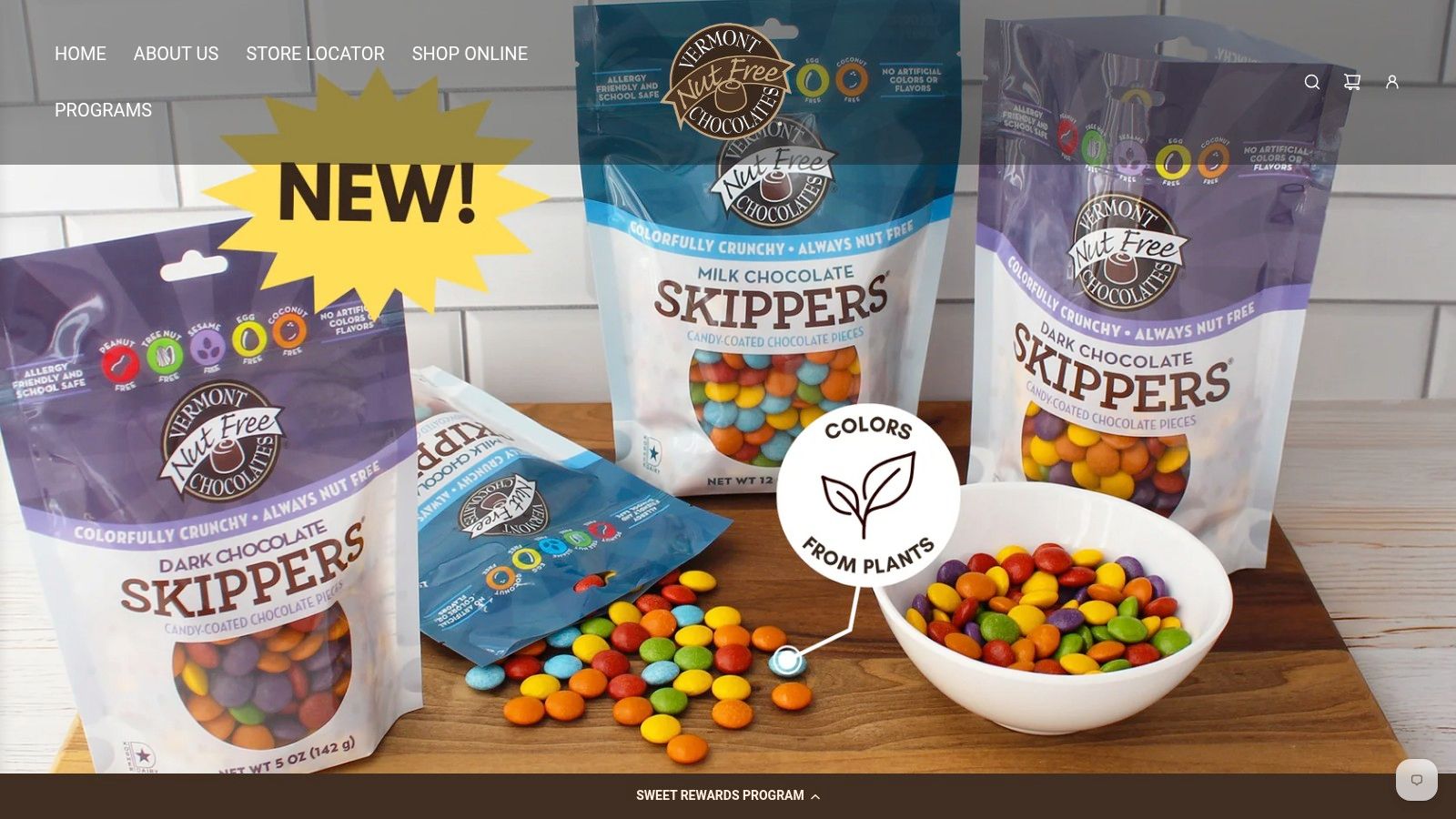
Vermont Nut Free Chocolates is the most gift-ready option in this list. The company has operated in a dedicated peanut- and tree-nut-free facility since 1998, and that long runway matters in a category where trust is built over time. If you're buying for a holiday, milestone, or thank-you gift, the brand feels much closer to an artisanal chocolatier than a compromise snack.
The assortment includes boxed chocolates, barks, and seasonal items, so it's useful when presentation matters. It also ships direct to consumers in the US, which makes it convenient for people who can't find a strict nut-free chocolate option locally. That combination of specialty focus and clear facility controls is hard to match.
Best use case
This is the brand to choose when the snack has to be memorable. It works for weddings, teacher gifts, holiday tins, and other moments where you want a safe treat that still feels indulgent. The safety story is also easy to communicate, which reduces awkward back-and-forth when the gift is going to someone with strict allergy needs.
The trade-off is price and purpose. This is premium chocolate, not an everyday macro snack, and it's not meant to support training, satiety, or casual desk snacking. It's about occasion value, not daily utility.
For special events, though, Vermont Nut Free Chocolates has one of the strongest reputations in the peanut-free space.
8-Brand Peanut-Free Snack Comparison
| Product | Complexity 🔄 (process/complexity) | Resources ⚡ (cost / availability) | Effectiveness ⭐ (expected outcomes / quality) | Ideal Use Cases 📊 | Key Advantages 💡 |
|---|---|---|---|---|---|
| Gym Snack (High‑Protein & Savory) | Low, ready‑to‑eat; limited SKUs | Premium price; primarily DTC | Very high for athletic needs, 30g+ pea protein per bag | Pre/post‑workout, gym fuel, savory cravings | High protein; allergen‑free; savory alternative to sweet bars |
| MadeGood | Very low, single‑serve, school‑friendly | Affordable; widely retail & online | Moderate, low protein but strong school safety | Lunchboxes, classrooms, on‑the‑go kids' snacks | Dedicated nut‑free facility; certified (vegan/gluten‑free); clear labeling |
| Enjoy Life Foods | Low, mass retail availability; shelf‑stable | Moderate price; widely stocked in US stores & online | High for allergy safety, free from 14 common allergens | Allergy families, school/work safe snacks | Dedicated facility + routine testing; broad product lineup |
| 88 Acres | Low, ready bars and seed butters | Mid–premium price; retail & online | High for macro‑friendly nut‑free protein options | Athletes or anyone needing higher‑protein nut‑free snacks | Seed‑first protein; Top‑9‑free bakery; transparent allergen claims |
| Partake Foods | Very low, shelf‑stable cookies, simple formats | Affordable–mid; retail & DTC | Moderate, excellent allergen safety; low protein | Offices, campuses, kids' programs, events | Entire catalog Top‑9‑free; strong flavor variety; portion‑controlled |
| Blake's Seed Based | Low, variety packs, travel‑friendly | Mid price; Amazon/retail + subscriptions | Moderate‑high for seed nutrition; some legume ingredients | Lunchboxes, travel, on‑the‑go snacking | Certified nut‑free facility; GF/vegan options; wide availability |
| Free2b Foods | Very low, confectionery formats | Mid price; allergy‑friendly facility; heat‑sensitive | Moderate, great peanut‑cup alternative; low protein | Kids, events, candy replacements | Sunflower‑butter Sun Cups; Top‑9‑free; recommended by allergy groups |
| Vermont Nut Free Chocolates | Low complexity but premium handling | High price; DTC shipping; seasonal | High for allergy‑safe confections; indulgent (low protein) | Gifts, holidays, special occasions | Longstanding dedicated facility; artisanal assortment |
Beyond the List, Your Checklist for Staying Peanut-Safe
Choosing the right brand is only half the job. The other half is paying attention every time you buy, because formulations change and packaging language changes with them. That's why the safest habit is to read the full ingredient label on every package, every time, instead of relying on memory from a previous purchase.
The difference between “peanut-free” and “made in a dedicated facility” matters more than many shoppers realize. A peanut-free recipe only tells you what goes into the product, while a dedicated facility can lower the risk of cross-contact during manufacturing. If the label also includes cautious language like “may contain” or “processed on shared equipment,” treat that as a real warning and not just a formality.
Practical rule: if a snack will be eaten repeatedly, ask the manufacturer about cleaning protocols, shared lines, and finished-product testing. One purchase can be a guess. Repeat purchases deserve better certainty.
At home, the safest setup is boring in the best way. Keep a separate snack area for trusted products, use dedicated utensils and cutting boards, and avoid mixing peanut-free items with shared jars, crumbs, or serving tools. That's especially important in busy kitchens where one small slip can undo an otherwise careful shopping routine.
For more meal and snack inspiration that keeps dietary needs in mind, the guide to Japanese snacks for vegetarians is a helpful next stop for thoughtful snack planning.
Gym Snack gives you a rare mix of savory flavor, high protein, and allergen-conscious design in a category that's usually dominated by sweet bars. If you want peanut free snacks that fit gym bags, office drawers, and busy schedules without feeling bland, it's worth a serious look. Visit Gym Snack to see how a protein-first savory snack can fit into your routine.