

Let's get one thing straight: building serious muscle on a plant-based diet is not only possible, but science also shows it’s just as effective as using animal protein. The secret isn't some magic vegan formula; it's about smart planning. If you nail your total protein intake, get the right amino acids, and time your meals well, you'll have everything you need to grow stronger. It's time to ditch the old myths for good.
Yes, You Can Build Serious Muscle with Plant Protein
The idea that you need meat and whey to build a strong physique is one of the most stubborn myths in fitness. For years, the conversation was dominated by the supposed superiority of animal protein, leaving plant-based athletes to prove everyone wrong.
Thankfully, that narrative is changing, backed by solid scientific evidence and the incredible results of elite plant-based athletes. Here’s the simple truth: your muscles don't check the source of amino acids. They just need a complete and sufficient supply to rebuild and grow.
The Science Backing Plant-Based Gains
The debate has been settled by recent research. One landmark study in the Journal of Nutrition compared vegans and omnivores undergoing resistance training. The results? The vegan group actually showed significantly greater improvements in incline bench press strength, with no major differences in muscle growth or body composition.
This study is a game-changer, confirming that plant-based protein for muscle building is just as potent as animal-based sources when the diet is structured properly. Success isn't about the food group; it's about the strategy.
"The conversation is no longer about if you can build muscle with plants, but how to do it most effectively. It comes down to understanding quantity, quality, and timing—principles that apply to any successful muscle-building plan."
To really get into the weeds of how plant proteins measure up, it’s worth exploring the difference between whey and plant protein. Understanding these nuances helps you make smarter choices, but the core principles of muscle growth are universal, whether you're eating chicken or chickpeas.
To get started, let’s simplify things. Building muscle with plants really comes down to mastering a few key concepts. This table breaks down what you need to focus on.
Key Principles for Plant-Based Muscle Growth
| Principle | Why It Matters | Quick Tip |
|---|---|---|
| Protein Quantity | Your body needs a surplus of protein to repair and build muscle tissue after training. | Aim for 1.6–2.2 grams of protein per kilogram of body weight daily. |
| Protein Quality | Ensuring you get all nine essential amino acids is crucial for muscle protein synthesis. | Vary your sources: combine legumes, grains, nuts, and seeds throughout the day. |
| Nutrient Timing | Consuming protein around your workouts can enhance recovery and stimulate growth. | Have a protein-rich meal or snack within a few hours of finishing your training session. |
Think of these three pillars as your foundation. Get them right, and you're well on your way to achieving your goals. Now, let's break down how to put these principles into practice.
Nailing Your Daily Plant Protein Target
If you're serious about building muscle on a plant-based diet, you have to stop guessing. Forget the generic advice you see everywhere. Your protein needs are unique to your body, your training intensity, and your goals. The first step is figuring out your personal protein number.
Science and real-world results point to a specific range for maximizing muscle growth: 1.6 to 2.2 grams of protein per kilogram of body weight each day. This isn't just a random number; it's the amount needed to supply your body with the amino acid building blocks to repair and rebuild stronger muscle tissue after you've broken it down in the gym.
Let's Find Your Protein Number
Time to get practical. The math is simple, and it's a game-changer.
First, you'll need your weight in kilograms. Just take your weight in pounds and divide it by 2.2. Then, multiply that number by the protein range to get your daily target.
Let’s run through an example for a 180-pound person:
- Convert Weight: 180 lbs / 2.2 = 81.8 kg
-
Calculate the Range:
- Lower End (good for maintenance): 81.8 kg x 1.6 g = 131 grams
- Higher End (ideal for a growth or cutting phase): 81.8 kg x 2.2 g = 180 grams
So, this individual should aim for somewhere between 131 and 180 grams of protein daily. If you're pushing hard to bulk up or trying to lose fat without sacrificing muscle, sticking closer to that higher number is a smart move. If you want to dive deeper into tailoring this for different goals, you can learn more about how to calculate your daily protein needs.
Don't Just Count Grams—Trigger Growth with Leucine
Hitting your total daily protein is only half the battle. To actually kickstart the muscle-building process, each meal needs to be potent enough to flip the switch on muscle protein synthesis (MPS). The amino acid that does this is leucine.
Think of it like this: to ignite muscle growth, each meal needs to deliver at least 2.5 to 3 grams of leucine. This is the "on" switch. A meal that falls short of this threshold won't be nearly as effective for building muscle, no matter how much total protein it has.
This sounds more complicated than it is. You don't need to track every milligram of leucine obsessively. The trick is to simply build your meals around high-leucine plant foods.
Here are some of the best plant-based sources that will get you over that leucine finish line in a single serving:
- Firm Tofu: A 1-cup serving packs around 2.8 grams of leucine.
- Lentils: One cooked cup gives you about 2.5 grams of leucine.
- Pea Protein: A single scoop of a good pea protein isolate can easily provide over 2.5 grams of leucine, which is why it's a go-to for so many athletes.
- Pumpkin Seeds: A half-cup serving delivers a solid 2.5 grams of leucine.
- Soy Milk: A large 16 oz glass gets you right in the ballpark with about 2.3 grams of leucine.
By making sure these foods show up in your meals consistently, you turn every eating opportunity into a signal for your body to grow. It's this strategic approach that transforms your plant-based diet into a powerful muscle-building engine.
How To Get All Essential Amino Acids From Plants
Let's tackle one of the oldest myths about plant-based diets: the idea of "incomplete proteins." You’ve probably heard it before—the notion that most plant foods are missing certain essential amino acids, making them second-rate for building muscle. While there's a kernel of truth to it (some plant proteins are lower in specific amino acids), the problem is massively overstated and incredibly easy to solve.
The solution isn't about meticulously planning every single meal around the classic rice-and-beans combo. Your body is much smarter than that. It keeps a reserve of amino acids on hand that it can pull from as needed throughout the day. So, what's the real secret? Variety.
As long as you’re eating a good mix of plant protein sources—think legumes, grains, nuts, and seeds—over the course of a day, your body will have every building block it needs. This approach gives you a complete amino acid profile without the stress of trying to make every plate "perfect."
Going Beyond Rice and Beans
Modern plant-based nutrition is full of delicious and effective protein pairings. The idea is to combine foods that have complementary amino acid profiles. Think of it like assembling a team where each player's strengths cover another's weaknesses.
Here are a few powerful combinations you might already be eating:
- Lentil soup with a side of whole-grain bread. Lentils are loaded with lysine but a bit lower in methionine. Whole grains are the exact opposite. Put them together, and you have a complete protein knockout.
- Hummus with whole-wheat pita. This classic snack pairs chickpeas (a legume) with a grain, giving you the full spectrum of essential amino acids.
- Tofu stir-fry served over quinoa. Tofu (from soy) and quinoa are both complete proteins all on their own. This makes for an incredibly high-quality meal for muscle recovery.
See how simple that is? These aren't complicated food formulas; they're just smart, everyday meals. If you want to dive deeper into this, our guide on what are complete protein sources has you covered.
This chart gives you a quick visual guide for how much protein you should aim for based on your goals.
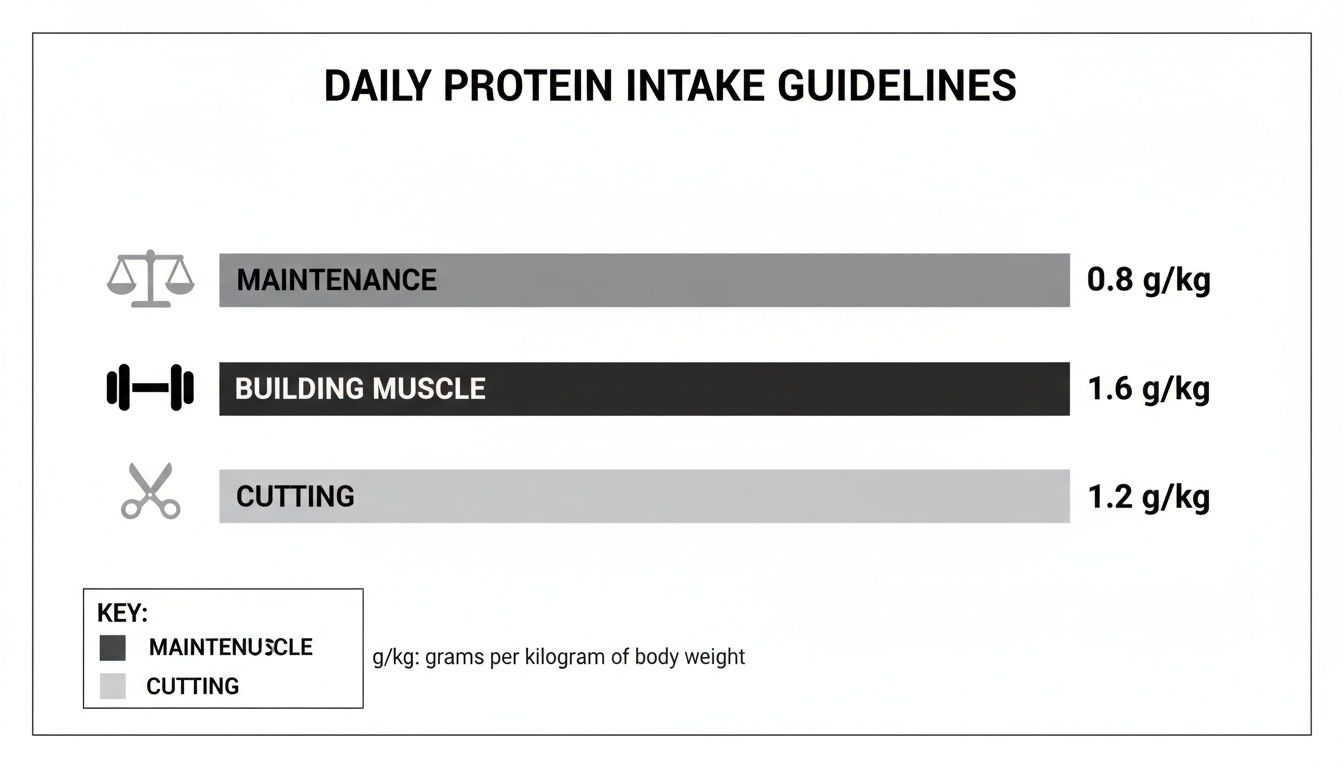
As you can see, the protein demands for building muscle are quite a bit higher than just maintaining, which is why having a solid, protein-focused strategy is so important.
Getting Smart With Your Protein Sources
To make combining proteins even easier, it helps to know the strengths of your go-to sources. This table breaks down some of the most popular plant proteins, showing what they bring to the table and how to pair them effectively.
Top Plant Protein Sources and Their Amino Acid Strengths
| Protein Source (1 cup cooked) | Protein (grams) | Key Amino Acids | Best Paired With |
|---|---|---|---|
| Lentils | ~18g | High in Lysine | Grains (rice, bread), nuts, seeds |
| Chickpeas | ~15g | High in Lysine | Grains (pita, couscous), tahini |
| Quinoa | ~8g | Complete Protein (all EAAs) | Pairs well with anything! |
| Tofu (firm) | ~20g | Complete Protein (all EAAs) | Grains, nuts, other veggies |
| Black Beans | ~15g | High in Lysine | Grains (corn, rice), nuts, seeds |
| Edamame | ~22g | Complete Protein (all EAAs) | Rice, noodles, other legumes |
Using a mix of these throughout the week ensures you’re not just hitting your protein numbers, but also getting a robust amino acid profile to fuel real muscle growth.
The Proof Is in the Science
At the end of the day, where your protein comes from matters a lot less than getting enough of it from high-quality, varied sources. And you don't have to take my word for it—the science is finally catching up.
A recent clinical trial put this debate to the test and found that plant-based proteins produced virtually identical muscle-building results to animal-based proteins when total intake was matched. Muscle biopsies showed no meaningful difference in muscle protein synthesis, confirming that a well-planned vegan diet is just as effective for gaining muscle.
What does this mean for you? It means you can confidently build a strong, muscular physique on plants. Your main job is to focus on hitting your daily protein target with a diverse mix of quality sources. That’s the real key to success.
Strategic Protein Timing for Peak Performance and Recovery
While hitting your daily protein number is the main goal, when you eat can give you a serious edge. Don't think of it as a rigid set of rules, but more like a strategic play to boost performance, jumpstart recovery, and keep your muscles fed when they're most receptive. It’s all about making your nutrition work smarter, not harder.
For years, everyone was obsessed with the so-called "anabolic window"—that mythical 30-minute slot post-workout where you had to chug a protein shake or all your hard work would supposedly vanish. Thankfully, we now know that window is much wider, probably spanning several hours. This is fantastic news because it gives you a ton more flexibility.
The real focus should be on your total daily protein and spreading it out, especially around your training sessions.
Fueling Your Workout The Plant-Based Way
What you eat before you train really sets the tone for your entire session. The mission is simple: give your body easy-to-access energy so you can push harder and go heavier. You’re looking for a smart mix of simple carbs for that immediate fuel and a moderate amount of protein to get those amino acids flowing to your muscles early.
The last thing you want is a heavy, fiber-packed meal sitting in your stomach. That’s a recipe for discomfort. Instead, aim for a smaller meal or a light snack about 60-90 minutes before you hit the gym.
Here are a few solid plant-based options that get the job done:
- A banana with a scoop of peanut butter.
- A small bowl of oatmeal topped with berries and a few hemp seeds.
- A slice of whole-grain toast with some mashed avocado.
These choices give you that perfect blend of quick carbs and quality protein without bogging you down, making sure you feel energized and ready to perform.
Optimizing Post-Workout Recovery
Once you've finished your last set, the focus shifts. Now, you need to restock your energy stores and give your muscles the raw materials they need to repair and get stronger. This is where a high-quality, leucine-rich meal or snack becomes your best friend. Try to get this in within one to two hours after your workout to take full advantage of your body's heightened ability to absorb nutrients.
The single most important part of your post-workout meal is leucine. Getting at least 2.5-3 grams of leucine is the trigger that tells your body to kickstart muscle protein synthesis—the actual process of repairing and building new muscle tissue.
This meal should be a tag team of protein and complex carbohydrates. Carbs are crucial for replenishing glycogen (your muscles' fuel tank), and protein delivers the amino acids for the rebuilding process. Wondering what to eat after lifting weights? We've got a whole guide packed with ideas to help you refuel the right way.
A great post-workout meal could be a big quinoa bowl with lentils and veggies, or maybe a tofu scramble with a side of black beans. When you're short on time, a well-formulated pea protein shake or a convenient, savory option like Gym Snack can deliver that crucial protein hit quickly and effectively.
Let’s see how this looks in the real world. Here’s a sample protein schedule for someone who trains in the evening around 6 PM:
- 7:30 AM (Breakfast): Tofu scramble with spinach (approx. 25g protein)
- 12:30 PM (Lunch): Large lentil salad with mixed greens and seeds (approx. 30g protein)
- 4:30 PM (Pre-Workout Snack): An apple with a handful of almonds (approx. 8g protein)
- 6:00 PM - 7:00 PM (Workout)
- 7:30 PM (Post-Workout Meal): Black bean burgers on whole-wheat buns (approx. 35g protein)
- 9:30 PM (Evening Snack): A serving of soy yogurt or a small pea protein shake (approx. 20g protein)
This simple schedule keeps a steady stream of protein coming in, ensuring your muscles have everything they need to recover and grow, all day long.
What a 150g High-Protein Plant-Based Day Actually Looks Like
It’s one thing to talk about protein targets and amino acids, but it's another to see it on a plate. Let’s put all that theory into practice.
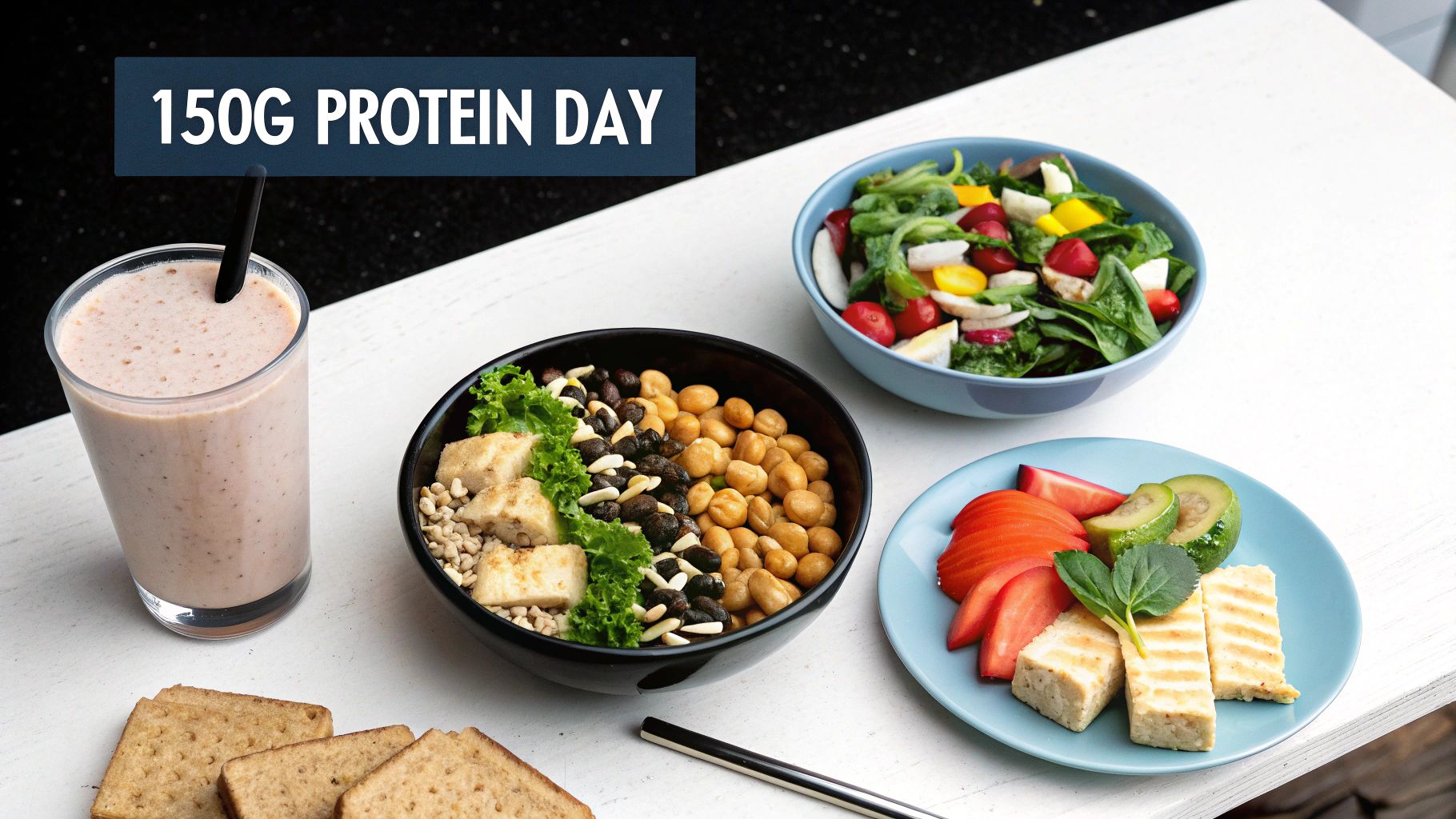
Here’s a sample day of eating that shows just how achievable—and delicious—hitting 150 grams of plant-based protein can be. Think of this not as a strict diet, but as a template you can adapt to fit your own tastes and schedule.
Morning Fuel Breakfast
Kick off the day strong. A high-protein smoothie is one of the fastest and most efficient ways to start the muscle repair process and give you sustained energy for hours.
- Meal: The "Powerhouse" Tofu & Berry Smoothie
- Ingredients: 1 cup firm tofu, 1.5 cups soy milk, 1 scoop pea protein powder, 1 cup frozen mixed berries, and 1 tbsp chia seeds.
- Approximate Protein: 45 grams
Don't let the tofu scare you—it blends completely smooth and adds a creamy texture. This combination delivers a huge protein hit right out of the gate, easily smashing the leucine threshold needed to kickstart muscle protein synthesis.
Midday Power Lunch
Lunch should be a substantial, whole-foods meal that provides more than just protein. This salad is loaded with fiber and micronutrients to keep you full and energized through the afternoon.
- Meal: Loaded Lentil & Quinoa Salad
- Ingredients: 1.5 cups cooked lentils, 1 cup cooked quinoa, mixed greens, chopped veggies (like cucumber and bell peppers), and a simple lemon-tahini dressing. Top it with a quarter-cup of pumpkin seeds for extra crunch and nutrients.
- Approximate Protein: 35 grams
This is a perfect example of protein combining in action. The lentils bring the lysine, and the quinoa fills in the gaps, creating a superior amino acid profile. It's practical and incredibly effective.
Savory Afternoon Snack
The afternoon slump is real, and it’s where a lot of people’s nutrition plans fall apart. Instead of another sweet shake or bar, a savory, crunchy option can feel like a real treat while pushing you closer to your goal.
- Meal: A Seriously Savory Protein Boost
- Ingredients: One bag (56g) of Gym Snack's Jalapeño Cheddar Cheeze protein puffs.
- Approximate Protein: 30 grams
Honestly, this is the easiest 30 grams of protein you'll get all day. It crushes salty, cheesy cravings, takes zero prep, and uses high-quality pea protein to bridge the gap between lunch and dinner.
Evening Recovery Dinner
Let's wrap up the day with a classic. A stir-fry is quick, versatile, and the perfect vehicle for another solid dose of protein to fuel recovery while you sleep.
- Meal: Tofu & Broccoli Stir-Fry
- Ingredients: 1 block of extra-firm tofu (make sure to press it!), 2 cups of broccoli florets, and your favorite stir-fry sauce. Serve it all over a cup of brown rice.
- Approximate Protein: 40 grams
And there you have it. This simple meal brings our daily total to a whopping 150 grams of protein. As you can see, hitting your numbers is totally doable with delicious, diverse meals, making plant based protein for muscle building a powerful and sustainable strategy.
Troubleshooting Common Plant-Based Hurdles
Making the switch to a high-protein, plant-based diet is a fantastic move for your fitness goals, but let's be real—it's not always a perfectly smooth ride. Hitting a few bumps along the way is totally normal as your body gets used to the new routine. Think of it as an adjustment period, not a setback.
One of the first things people notice is some digestive… "feedback." If you've suddenly ramped up your intake of beans, lentils, and whole grains, you're also getting a massive dose of fiber. This can lead to some bloating and gas at first. Don't worry, this is usually temporary.
Your gut just needs a minute to catch up. The key is to ease into it. Instead of going from zero to one hundred on fiber overnight, try gradually increasing your intake over a couple of weeks. And make sure you're drinking plenty of water; it helps keep things moving along nicely.
The Calorie Conundrum
Here’s another common challenge: actually eating enough calories to build muscle. Plant-based foods are packed with nutrients, but many of them aren't very dense in calories. That can make hitting a surplus feel like you're eating all day long.
The trick is to be smart about what you're eating. Focus on adding healthy, calorie-dense plant foods to your meals and snacks.
- Healthy Fats are your friend: Think avocado, nuts, seeds, and quality oils. A spoonful of peanut butter in your morning oats or a handful of walnuts on your salad can make a big difference.
- Don't skimp on carbs: Quinoa, brown rice, and sweet potatoes are great for providing the energy you need without making you feel overly stuffed.
- Make your snacks count: Your snacks should be more than just filler. They're a prime opportunity to sneak in extra calories and protein.
At the end of the day, muscle growth requires fuel. If you're not in a slight calorie surplus, your body simply won't have the raw materials to build new muscle, regardless of how much protein you're packing in. This is a fundamental rule of plant based protein for muscle building.
Dealing with Food Sensitivities
Finally, what if your body just doesn't agree with certain foods? Soy and gluten are popular in many plant-based diets, but they aren't for everyone. If you suspect an issue, it's important to find solid alternatives so you don't stall your progress.
This is where hypoallergenic protein sources really shine. Pea protein is an excellent go-to because it's naturally free of soy, dairy, and gluten. It's also worth looking into an anti-inflammatory diet, which can be a game-changer for muscle recovery and overall health. The most important thing is to listen to your body and stick with what makes you feel strong and energized.
Ready to crush your cravings and protein goals without the digestive drama? Gym Snack makes it easy with our crunchy, savory, pea-protein puffs. Each bag packs a massive 30g of plant-based protein, perfect for a post-workout refuel or a satisfying afternoon snack. Explore our bold flavors at https://gymsnack.com.