

Harnessing the power of plant-based protein for weight loss is an incredibly smart move. It works by naturally making you feel full, firing up your metabolism through something called the thermic effect of food, and protecting your hard-earned muscle. This triple-threat approach keeps you satisfied, helps you burn more calories, and maintains your body’s fat-burning engine for results that actually stick.
How Plant Protein Unlocks Sustainable Weight Loss
Let's bust a common myth right now: you absolutely do not need animal products to hit your weight loss goals. In fact, switching your focus to plants can be a game-changer. The path to lasting fat loss isn't about starving yourself; it's about giving your body the high-quality fuel it needs to thrive.
Think of plant protein as a powerful signal to your brain that says, "Hey, we're full and satisfied!" This helps quiet down those persistent hunger pangs, making it so much easier to avoid unnecessary snacking and stay on track without feeling miserable. For anyone just starting out, our complete guide to what a plant-based diet entails is a great place to build a solid foundation.
The Three Pillars of Plant-Powered Weight Loss
The magic behind plant protein isn't just one thing—it's how three key benefits work together to support your body's natural weight management processes.
-
Keeps You Fuller, Longer: Plant proteins are almost always packaged with fiber, and this duo is the ultimate tag team for satiety. Fiber slows down digestion, which means you feel satisfied for hours after a meal, crushing those cravings for mindless snacking.
-
Fires Up Your Metabolism: Your body has to work harder—and burn more calories—to digest protein compared to fats or carbs. This is known as the thermic effect of food (TEF). It’s like getting a small, consistent metabolic boost with every high-protein meal.
-
Protects Your Muscle: When you're eating fewer calories to lose weight, your body might try to burn muscle for energy. Getting enough protein tells your body to leave your muscle alone and burn fat for fuel instead, which is exactly what you want.
Evidence in Action
This isn't just talk; the science is there to back it up. A major study called VEGPREV looked at how different plant-based diets affected overweight adults. The results were stunning. After only 12 weeks, the group on a fully vegan diet lost an average of 6.7% of their body weight. That’s a significant, real-world result that shows just how effective plants can be. You can read the full research on these findings.
By focusing on nutrient-dense, high-fiber protein sources, you create an internal environment that supports fat loss naturally. It shifts the focus from calorie counting alone to nourishing your body for lasting success.
The Science of Feeling Full with Plant Protein
Have you ever noticed how a bowl of lentil soup can keep you feeling satisfied for hours, while a sugary donut leaves you hunting for another snack in less than an hour? That's not a lack of willpower; it's your body's biology at work. The secret is the powerful connection between plant protein and the feeling of fullness, a concept experts call satiety.
When you eat a meal packed with plant protein and fiber, you're basically flipping a switch in your brain that turns down the hunger noise. It's a real, measurable hormonal response that makes it so much easier to stick to a calorie deficit without feeling deprived.
Unlocking Your Body's Natural Appetite Control
Your digestive system is like a highly intelligent communication hub. When you eat, it sends out specific messenger hormones to tell the rest of your body what's going on. For weight loss, two of the most important of these messengers are Glucagon-like peptide-1 (GLP-1) and Peptide YY (PYY).
These hormones are your body's built-in appetite suppressants. They travel to the hypothalamus—your brain's command center—and deliver a simple, clear message: "We're good. We've got the fuel we need. Time to stop eating." Plant proteins are absolute all-stars at triggering the release of these hormones.
The diagram below really brings home how plant protein helps with weight management by influencing satiety, metabolism, and muscle support.
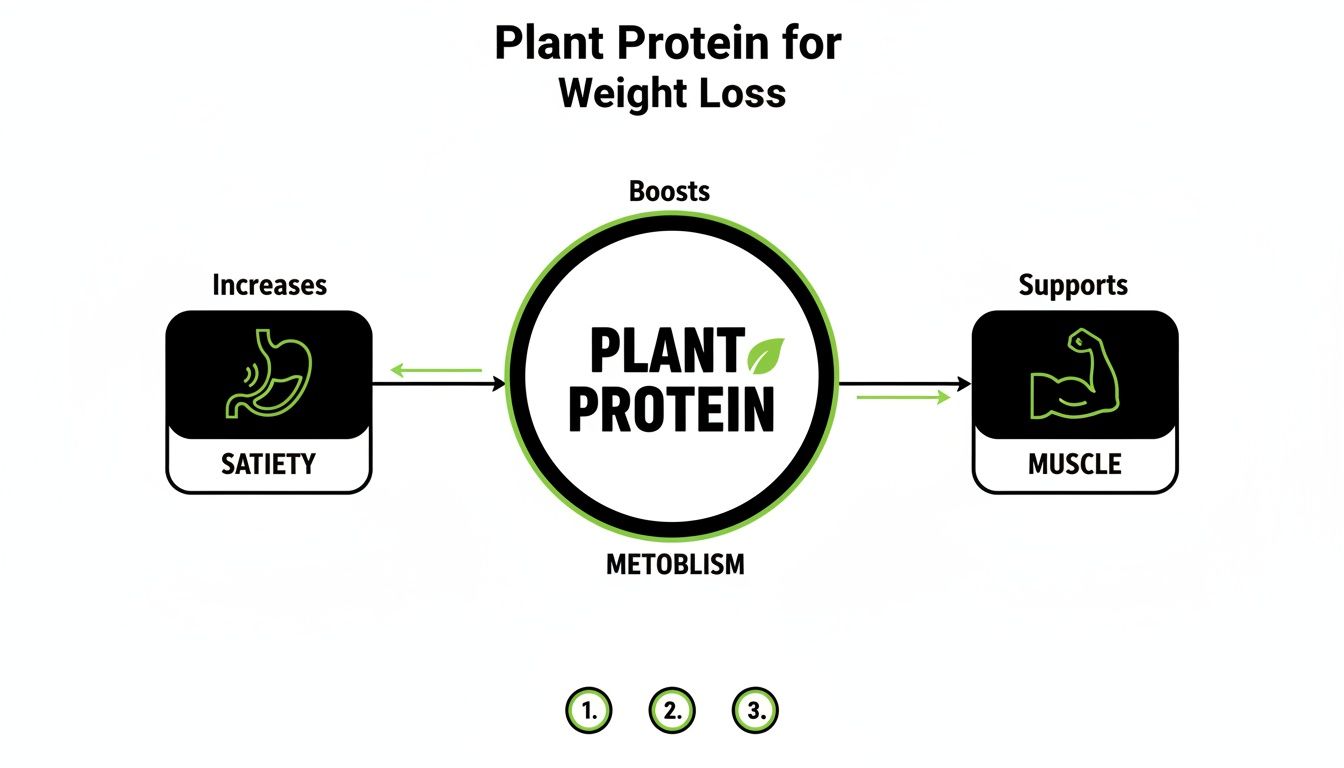
As you can see, feeling full is the first step. It leads to better metabolic function and helps you hold onto precious muscle, creating a positive cycle for fat loss.
The Fiber and Protein Power Duo
So, what makes plants so special when it comes to sending these "I'm full" signals? It's the one-two punch of protein and fiber working together, something you just don't get from animal-based proteins.
-
Protein's Role: The amino acids from the protein you eat are the primary trigger for releasing GLP-1 and PYY. Your body sees protein as a high-value nutrient and immediately fires up its fullness response.
-
Fiber's Role: Fiber, especially the soluble kind you find in beans, oats, and lentils, acts like a physical brake on digestion. It swells up in your stomach, creating a thick gel that slows everything down. This physical bulk makes you feel full longer, simple as that.
This dual-action effect is the secret weapon of plant-based protein for weight loss. It's a tag-team effort, working on a chemical level with hormones and a physical level with digestion to deliver a powerful, long-lasting sense of satisfaction. It’s a key strategy if you're trying to figure out how to stay full longer.
By naturally stimulating hormones like GLP-1, a high-protein plant-based diet can complement a healthy lifestyle and support the body’s own satiety mechanisms, leading to more mindful eating and sustainable weight management.
Putting This Science On Your Plate
The best part is that you don't need a biology degree to put this into practice. The goal is just to add more foods that are great at triggering this response.
-
Embrace Legumes: Lentils, chickpeas, black beans, and edamame are your best friends here. They are loaded with both protein and fiber, making them the foundation of a truly filling meal. Think hearty chickpea curries or black bean burgers that keep you going for hours.
-
Choose Whole Grains: Ditch the white bread and rice for things like quinoa, oats, and barley. They're still carbs, but they come with a solid dose of protein and fiber that makes a huge difference in appetite control.
-
Snack Smarter: When that 3 p.m. craving hits, grab a snack that actually works for you, not against you. A savory, high-protein option like Gym Snack is designed around these very principles. It gives you that satisfying crunch and a serious protein kick to stop cravings in their tracks, helping you avoid the energy crashes that lead to bad choices.
Your Guide to Choosing the Best Plant Proteins
Walking through the grocery store looking for healthy options can feel like a full-blown mission. With so many choices lining the shelves, how do you actually pick the right plant proteins to fuel your weight loss goals? The good news is, it's a lot simpler than you might think. It all boils down to looking past the flashy marketing on the front of the box and learning how to read the nutrition label like a pro.
This isn't just a small trend, either. It’s a global shift. An incredible 77% of consumers worldwide see plant-based proteins as a powerhouse for shedding pounds. This belief is even more pronounced for those using GLP-1 medications, where 64% are actively scrutinizing protein labels and 44% are upping their plant protein intake specifically to help them feel fuller, longer.
Complete vs. Incomplete: The Myth That Needs Busting
Let’s clear up one of the biggest points of confusion right away: the whole "complete" versus "incomplete" protein debate. A complete protein has all nine essential amino acids your body can't produce on its own. While some plant foods are complete all by themselves (like quinoa, soy, and pea protein), many others aren't.
For years, this created a myth that you had to meticulously combine specific foods—like the classic rice and beans—in every single meal to form a "complete" protein. We now know that's just not true.
Your body is smart. It maintains a pool of amino acids from everything you eat throughout the day. As long as you’re eating a varied diet, you'll easily get all the essential amino acids you need without overthinking it.
So, the key is to focus on variety, not complicated food pairings. To get a better handle on this, it helps to have a clear list of what goes into understanding complete protein sources.
How to Read Labels Like a Pro
The real challenge isn't the amino acids; it's steering clear of the hidden junk in processed foods that can completely derail your weight loss efforts. So many products marketed as "healthy" or "plant-based" are packed with ingredients that work against you.
Here’s what to watch out for:
-
Added Sugars: Sugar wears many disguises—dextrose, high-fructose corn syrup, cane juice. It just adds empty calories and can send your blood sugar on a roller coaster, leading to energy crashes and more cravings. Always aim for products with zero or minimal added sugar.
-
Unhealthy Oils: Highly processed seed oils like soybean, canola, and sunflower oil are everywhere in plant-based products. These can be inflammatory and pile on unnecessary fats. Look for foods made with healthier fats like avocado or olive oil, or better yet, no added oils at all.
-
Fillers and Binders: If you see a long ingredient list full of gums, starches, and artificial additives, that’s a red flag. These are usually just there to improve texture but bring zero nutritional value to the table. The shorter and more recognizable the ingredient list, the better.
Putting It Into Practice: Clean vs. Processed
Let's put this into a real-world context by comparing two hypothetical plant-based protein snacks.
| Feature | Clean Protein Snack (e.g., Gym Snack) | Highly Processed Alternative |
|---|---|---|
| Protein Source | Pea Protein Isolate (a complete protein) | Soy Protein Concentrate, Wheat Gluten |
| Ingredient List | Short & simple: Pea protein, seasonings, olive oil | Long & complex: Sugars, seed oils, starches, artificial flavors |
| Key Benefit | High-quality protein without the junk | Protein is present, but negated by unhealthy additives |
The difference is night and day. A clean option like Gym Snack is all about delivering high-quality protein from sources like pea isolate without the unnecessary baggage. On the flip side, many alternatives dilute their protein with ingredients that don't support your health. If you're curious about different protein types, you can dive deeper into pea protein vs whey protein in our detailed guide.
Building Your High-Protein Plant-Based Meal Plan
Knowing the science is one thing, but putting it into practice on your plate is where the magic really happens. A solid meal plan is your roadmap to success, helping you consistently hit your protein goals to burn fat, hold onto muscle, and kick hunger to the curb. The aim here isn't about making things complicated; it's about consistency.
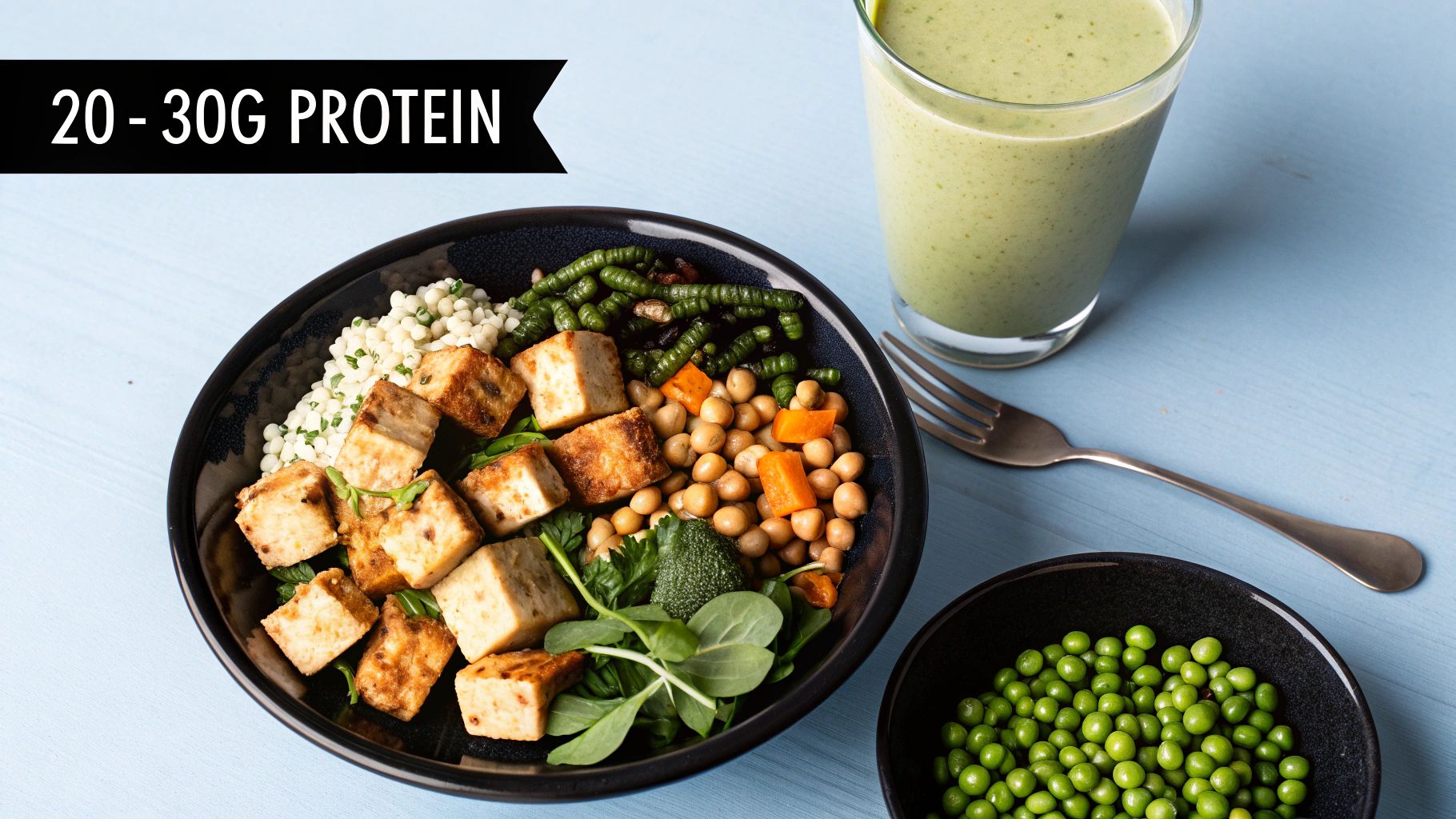
A great target to shoot for is 20-30 grams of protein per meal. This amount is the sweet spot for triggering muscle protein synthesis—the vital process of repairing and building lean muscle. It also signals your body to release those powerful satiety hormones that keep you feeling full and satisfied for hours, which is key to avoiding the energy dips and cravings that can derail your progress.
A Sample Day of High-Protein Plant-Based Eating
So what does hitting those targets actually look like? It's easier—and more delicious—than you might think. Here’s a sample day to show you how you can pack in the protein without feeling deprived.
-
Breakfast (approx. 25g protein): Kick off your day with a power-packed smoothie. Just blend one scoop of clean pea protein powder with a cup of soy milk, a handful of spinach, a tablespoon of chia seeds, and half a banana. It's quick, loaded with nutrients, and establishes a strong protein foundation right from the start.
-
Lunch (approx. 30g protein): Think big with a protein-heavy salad. Start with a bed of mixed greens and top it with one cup of cooked chickpeas, a quarter block of crumbled firm tofu, and a sprinkle of pumpkin seeds. A simple lemon-tahini dressing brings it all together for a meal that’s full of flavor and fiber.
-
Dinner (approx. 28g protein): End your day with a hearty lentil and vegetable stew. A generous bowl made with one cup of cooked lentils delivers an amazing mix of protein and slow-releasing carbs to keep you full all evening. To up the protein even more, serve it alongside a scoop of quinoa.
Smart Snacking for Sustained Energy
Snacks are your secret weapon. They act as a bridge between meals, stopping you from getting ravenous and making poor, impulsive food choices later. The trick is to pick snacks that work for you, not against you.
A high-protein snack isn't just a placeholder; it's a strategic tool to manage appetite and maintain a steady metabolism. It should deliver on nutrition, taste, and satisfaction to keep you on track.
Instead of grabbing something full of empty carbs, go for a snack with some real substance. A handful of almonds, a small bowl of edamame, or a savory, crunchy option like Gym Snack are all fantastic choices. It packs over 15g of clean pea protein per serving and is designed to crush cravings and support your plant based protein for weight loss goals without any added junk.
Top Plant Protein Sources for Your Meals
Eating a wide variety of protein sources is the best way to get a full spectrum of nutrients and amino acids. If you’re ever wondering how to get enough protein on a plant-based diet, our detailed guide can help you map out a bulletproof strategy.
To get you started, here’s a quick-reference table to help you build out your meals with some of the best protein powerhouses around.
Top Plant Protein Sources for Your Meals
| Protein Source | Serving Size | Protein (grams) | Meal Idea |
|---|---|---|---|
| Lentils | 1 cup, cooked | 18g | Add to soups and stews, or form into veggie burger patties. |
| Tofu (Firm) | 1/2 block (7oz) | 20g | Scramble for breakfast, bake into crispy cubes, or add to stir-fries. |
| Chickpeas | 1 cup, cooked | 15g | Roast for a crunchy snack, add to salads, or blend into hummus. |
| Pea Protein | 1 scoop (~30g) | 24g | Perfect for post-workout smoothies or mixing into oatmeal. |
| Quinoa | 1 cup, cooked | 8g | Use as a base for grain bowls or as a side dish instead of rice. |
| Edamame | 1 cup, shelled | 17g | Steam for a quick snack or toss into salads for a protein boost. |
Don't be afraid to mix and match these to keep your meals interesting and nutritionally complete!
The proof is in the pudding—or in this case, the plants. A compelling study from the Physicians Committee tracked overweight employees with type 2 diabetes. The group that switched to a low-fat vegan diet lost an average of 9.5 pounds in just 18 weeks, while also dramatically improving key health markers. It’s a powerful real-world example of just how effective a well-planned, plant-based approach can be for managing weight.
More Than Weight Loss: The Whole-Body Benefits
While seeing the number on the scale drop is a great feeling, the real magic of using plant-based protein for weight loss is what happens to the rest of your body. Think of it this way: weight loss might be the destination, but these extra perks are the incredible sights you get to enjoy on the journey. This isn't just a temporary diet—it's a serious investment in your long-term health.
One of the first things you'll likely notice is a much happier gut. Plant protein sources like beans, lentils, and quinoa are loaded with fiber, something most of us just don't get enough of.
This fiber basically acts like a broom for your digestive system, keeping things regular and feeding the good bacteria that live in your gut. The difference is pretty clear; one survey found that 68% of people eating a standard omnivore diet complained of bloating, while that number dropped to just 53% for those on a plant-based diet.
A Stronger Heart and Healthier Body
Beyond a happy gut, your heart gets a major boost. Animal proteins often come packaged with saturated fat and cholesterol, which can create problems for your cardiovascular system down the road.
Plant-based proteins, on the other hand, are completely cholesterol-free and naturally low in saturated fat. Making the switch can directly improve your cholesterol and blood pressure numbers, which are two of the biggest risk factors for heart disease. It's a simple swap on your plate that offers powerful protection for your heart.
Choosing plant protein is a holistic move. You're not just subtracting calories; you're adding an abundance of fiber, antioxidants, and micronutrients that build a more resilient, healthier body from the inside out.
Boosting Recovery and Easing Inflammation
And it doesn't stop there. So many plant-based foods are packed with antioxidants, which help your body fight off the daily grind of oxidative stress and inflammation. Chronic inflammation is tied to all sorts of health issues and can make you feel sluggish, especially after a workout.
By fueling up with nutrient-dense plant proteins, you're giving your body the raw materials it needs to bounce back faster and feel its best. Here’s a quick peek at some of the extra goodness you’re getting:
- Iron: Absolutely crucial for carrying oxygen to your muscles. Plant-based sources like lentils and spinach help keep your energy levels from tanking.
- Magnesium: Found in nuts, seeds, and legumes, this mineral is a key player in muscle function and relaxation—essential for good recovery and even better sleep.
- Antioxidants: Berries, leafy greens, and beans are brimming with compounds that help neutralize free radicals, protecting your cells from damage.
This isn't just about losing weight. You're creating a nutrient-rich foundation that can boost your energy, strengthen your immune system, and support your overall vitality for years to come.
Got Questions About Plant Protein and Weight Loss? We've Got Answers.
Making a big shift in how you eat always brings up a few questions. When it comes to using plant-based protein for weight loss, there's a ton of information floating around—and frankly, a lot of it is just plain wrong. This section is here to clear things up.
We’re going to tackle the most common concerns head-on with clear, science-backed answers so you can feel 100% confident in your journey.
Will I Lose Muscle if I Switch to Plant Protein?
Let's bust this myth right now: absolutely not. This is a huge misconception, especially for anyone serious about their fitness.
Your body's ability to build and keep muscle really just boils down to one thing: are you getting enough total protein with all nine essential amino acids? Where that protein comes from is way less important than the overall quantity and quality.
Study after study has shown that as long as your total protein intake is high enough, plant-based diets are just as effective for building muscle and strength as diets that include meat. The secret isn't a specific food, but smart variety.
By mixing and matching different plant sources—think legumes, whole grains, nuts, and seeds—you’ll easily get the full range of amino acids your body needs. Your body is smart; it pools these building blocks and pulls them as needed. Better yet, high-quality sources like pea protein isolate are complete proteins all on their own and are loaded with the branched-chain amino acids (BCAAs) that are so vital for muscle repair.
Is It Expensive to Eat a High-Protein Plant-Based Diet?
This is a big one, but the truth is, a high-protein plant-based diet can actually be way more affordable than an omnivorous one. Sure, some specialty vegan products like mock meats can be pricey, but the real staples of this lifestyle are some of the most budget-friendly foods in the grocery store.
Think about the workhorses of a plant-powered diet:
- Lentils and Beans: Ounce for ounce, these are some of the cheapest, most nutrient-packed protein sources you can find.
- Tofu and Edamame: These soy powerhouses deliver a massive protein punch for very little cost.
- Oats and Quinoa: Whole grains give you both protein and filling fiber, making them an incredibly economical base for any meal.
When you build your meals around these whole foods and use convenient options like protein powders or savory snacks to supplement, you can seriously slash your grocery bill. Pro tip: buying staples like beans and grains in bulk saves you even more money.
It's a myth that plant-based eating has to be expensive. By building your diet around whole-food staples, you can eat a high-protein, weight-loss-friendly diet that's much easier on your wallet than one centered on animal products.
How Do I Get Enough Iron on a Plant-Based Diet?
This is a great question. The iron found in plants (non-heme iron) is absorbed a bit differently than the kind from animal sources (heme iron). But with a little bit of kitchen know-how, it’s incredibly easy to keep your iron levels topped up and your energy high.
The single best trick in the book? Pair your iron-rich plant foods with a source of Vitamin C. This vitamin is a game-changer; it can boost the absorption of non-heme iron by as much as six times.
Here’s how simple it is in practice:
- Squeeze a wedge of fresh lemon over a bowl of lentil soup or a spinach salad.
- Toss some sliced bell peppers (which are packed with Vitamin C) into a tofu stir-fry.
- Have a small glass of orange juice with your iron-fortified breakfast cereal.
A well-planned plant-based diet makes it easy to meet your iron needs. Just focus on iron-rich foods like lentils, spinach, tofu, and quinoa, and remember that simple Vitamin C pairing trick.
What if I Feel Bloated When I Eat More Plants?
First off, don't panic! A little initial bloating is totally normal when you suddenly ramp up your plant intake. It’s just your digestive system getting used to a whole lot more fiber than it's seen before. While it might be a bit uncomfortable at first, all that fiber is doing amazing things for your long-term gut health.
The key is to take it slow. Instead of flipping a switch overnight, gradually increase your fiber over a few weeks. This gives the good bacteria in your gut a chance to adapt to their new favorite food source.
Also, make sure you're drinking plenty of water. Water helps fiber move smoothly through your digestive tract and do its job correctly. Sticking to well-cooked legumes and easily digestible protein sources, like the pea protein isolate in clean supplements, can also make the transition much smoother. Give it a little time—the discomfort will pass, and you'll be left with a much healthier and happier gut.
Ready to crush your cravings and hit your protein goals with a snack that’s as delicious as it is effective? Gym Snack offers savory, crunchy, plant-based protein snacks designed to keep you full and fueled without any of the junk. Explore our chef-inspired flavors and build your perfect bundle today.