

You finish a workout, grab your bag, and suddenly the question starts. Do you need a shake, a bar, a full meal, or just something savory that won't sit heavy while you head to work, drive home, or deal with the rest of your day? A smart post workout protein snack solves that in one move, it helps tired muscles recover, it steadies hunger, and it fits the next few hours without turning into a second meal you didn't want.
The tricky part is that most snack lists still default to sweet bars, smoothies, and dairy-heavy cups. That leaves out a lot of real situations, especially if you want something crunchy, plant-based, allergen-conscious, or easier to tolerate after training. The right choice depends on timing, protein dose, digestion, and whether your workout calls for carbs too, so the answer is more practical than trendy.
What a Post Workout Protein Snack Has to Do
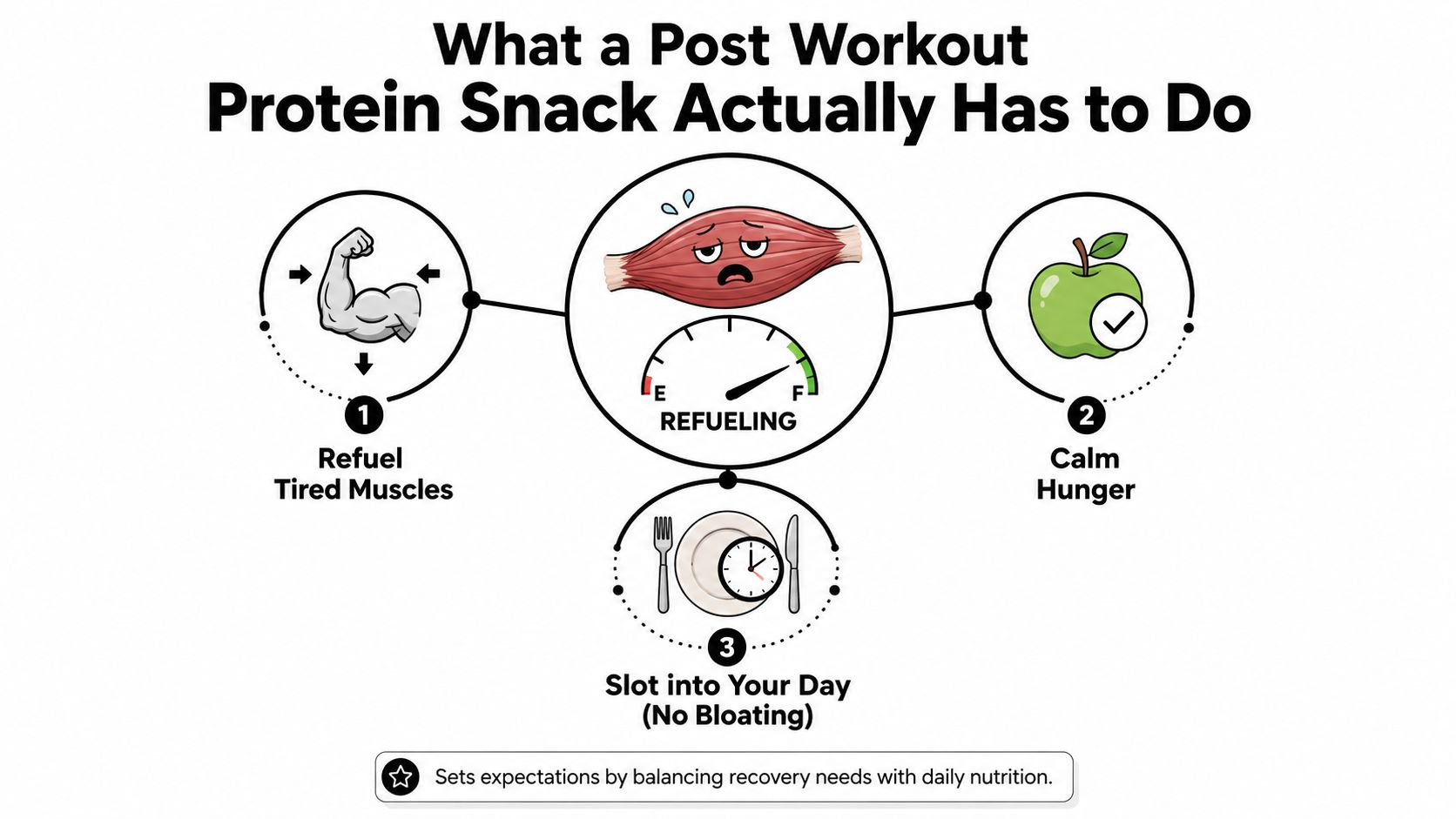
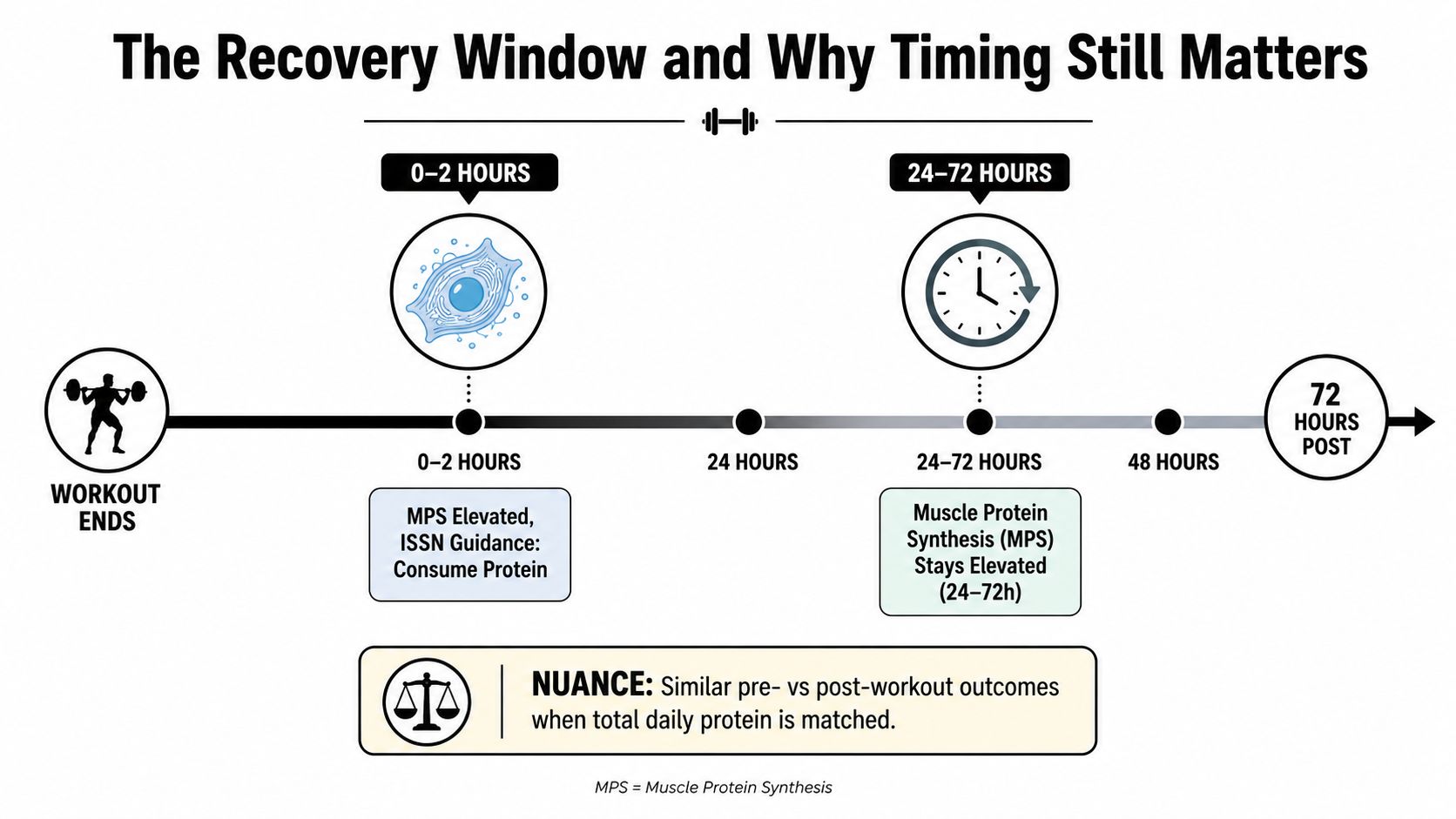
The first job is simple. After training, your body needs protein available to support muscle repair, and the International Society of Sports Nutrition notes that protein consumed directly after resistance exercise can acutely promote a positive muscle protein balance, with post-workout muscle protein synthesis peaking within about 3 hours and remaining increased for an additional 24 to 72 hours. That makes recovery a same-day process, not a frantic dash to the fridge, and it rewards consistency more than perfection.
A good snack also has to calm hunger without making the next meal awkward. If it is too small, you are back in the pantry in twenty minutes. If it is too heavy, greasy, or messy, it can crowd out lunch or dinner and leave you feeling sluggish.
The easiest way to think about it
Practical rule: the snack should help recovery, not complicate your day.
That is why this category works best when it is built around portable protein, a reasonable portion, and a texture you will want after sweating. For some people that means something crunchy and savory. For others it means a cold option that is easy to tolerate after training. It can also mean plant-based or allergen-conscious choices, which matters for readers who are managing weight, using GLP-1 medications, or dealing with a sensitive stomach and cannot always handle a sweet shake or a rich dairy snack.
Ready-to-eat options like Gym Snack fit that role when convenience matters most. A protein snack can be sweet or savory, cold or shelf-stable, but the point stays the same. It needs to be easy enough that you will eat it when the session ends.
If you want a deeper recovery overview alongside this article, the wellness guide to muscle recovery from MedEq Fitness is a useful complement because it keeps the focus on realistic recovery habits, not just single foods.
The Recovery Window and Why Timing Still Matters
You finish a lift, wipe your hands, and then the question starts. Do you eat right away, wait until dinner, or skip the snack because you are not starving yet? The answer is usually more practical than dramatic. Recovery begins after training, and timing matters enough to plan for, even if it does not require panic.
Sports nutrition guidance has long pointed to protein soon after resistance exercise as a useful way to support muscle protein balance. Practical serving targets often land around 0.25 to 0.3 g/kg per serving, which is why many adults end up in the 15 to 25 g range. Some guidance also places a useful window in the first hour after exercise, especially when the workout was hard or the next meal is not close.
Recovery does not stop at the gym door.
A later controlled-study review showed that pre- and post-workout protein can produce similar results when total daily protein is high enough, which is why the old idea of a tiny anabolic window is too rigid. That does not make timing meaningless. It means the better choice is usually the one you can repeat without stress, and without turning the end of training into a scramble for whatever is sweet and fast.
A simple timing rule that holds up in real life
If you train and then eat a solid meal soon after, a snack can be smaller or unnecessary. If you train fasted, leave a long gap between meals, or lift twice in one day, a protein serving within about 1 to 3 hours is a sensible target. That keeps you aligned with recovery without acting like you need to chug something in the parking lot.
For some people, the better move is a savory bite with a little crunch. For others, a cold option that sits lightly is easier to handle after training. That matters even more for readers managing weight, using GLP-1 medications, or dealing with a sensitive stomach, because a big sweet shake can be hard to tolerate when appetite is low or digestion feels off. A ready-to-eat option like Gym Snack fits that need when convenience matters and you want something portable, plant-based, and easier to keep in rotation.
pea protein vs whey protein for post workout recovery is a useful comparison if you want to see how different protein sources fit different digestion needs and food preferences.
The main confusion here is urgency. You do not need to rush blindly, but you do need a plan. A post workout protein snack works best as a bridge between training and the rest of your day, and that bridge is easier to use when you have something ready before hunger gets loud.
How Much Protein, What Kind, and Why Digestion Matters
The amount comes first. For many adults, a practical post-training range sits around 15 to 25 g, which lines up with the broader per-serving target often used in sports nutrition, about 0.25 to 0.3 g/kg. That is enough protein to make the snack do real recovery work instead of just acting like a placeholder.
The source matters too. A label can look impressive while the protein itself is hard to digest, incomplete for your needs, or too heavy after training. You want a protein source that your body can use well, one that brings a solid amino acid profile, and one that does not make the next meal feel like a chore. High-quality, leucine-rich proteins usually fit that job well, especially when the snack has to bridge training and dinner.
What digestion changes in practice
A snack can check the protein box and still be the wrong choice if it sits badly. That matters for anyone who is dairy-free, soy-free, gluten-free, or just more sensitive after lifting. In those cases, consistency beats theory. The best option is the one you can eat regularly without stomach upset, bloating, or a heavy after-feel.
Clean plant-based options deserve more attention for exactly that reason, especially because so many snack guides default to yogurt cups and whey shakes. For readers who want a savory, crunchy, plant-based, allergen-conscious option, the pea protein vs whey protein breakdown gives a useful side-by-side look at how different proteins fit different digestion needs and food preferences.
| Choosing a Post-Workout Protein Source | Typical Serving Protein | Quality Notes | Allergens / Sensitivities |
|---|---|---|---|
| Whey-based shake | Varies by brand | Fast and convenient, often used for quick post-training intake | Dairy |
| Greek yogurt | Varies by serving | Common recovery option, easy to pair with fruit or seeds | Dairy |
| Pea-protein snack | Varies by product | Useful plant-based option, often easier to build into savory snacks | Usually dairy-free, soy-free, gluten-free |
| Eggs | Varies by serving | Strong whole-food option, simple and portable | Egg |
| Chickpeas or edamame | Varies by serving | Plant-based, works well in crunchy or savory formats | Can matter for soy or legume sensitivity |
For readers managing weight, using GLP-1 medications, or working through a sensitive stomach, this part matters more than the usual “just grab a shake” advice. Appetite can be low after training, and a sweet, liquid option can feel harder to handle than something dry, savory, or lightly crunchy. That is why a ready-to-eat choice like Gym Snack can fit well in real life, especially when portability and easier digestion matter more than making a smoothie.
The main takeaway is simple. Protein amount gets you in the game, but digestibility decides whether you stay comfortable enough to keep eating well later.
Do You Need Carbs With Your Protein Snack
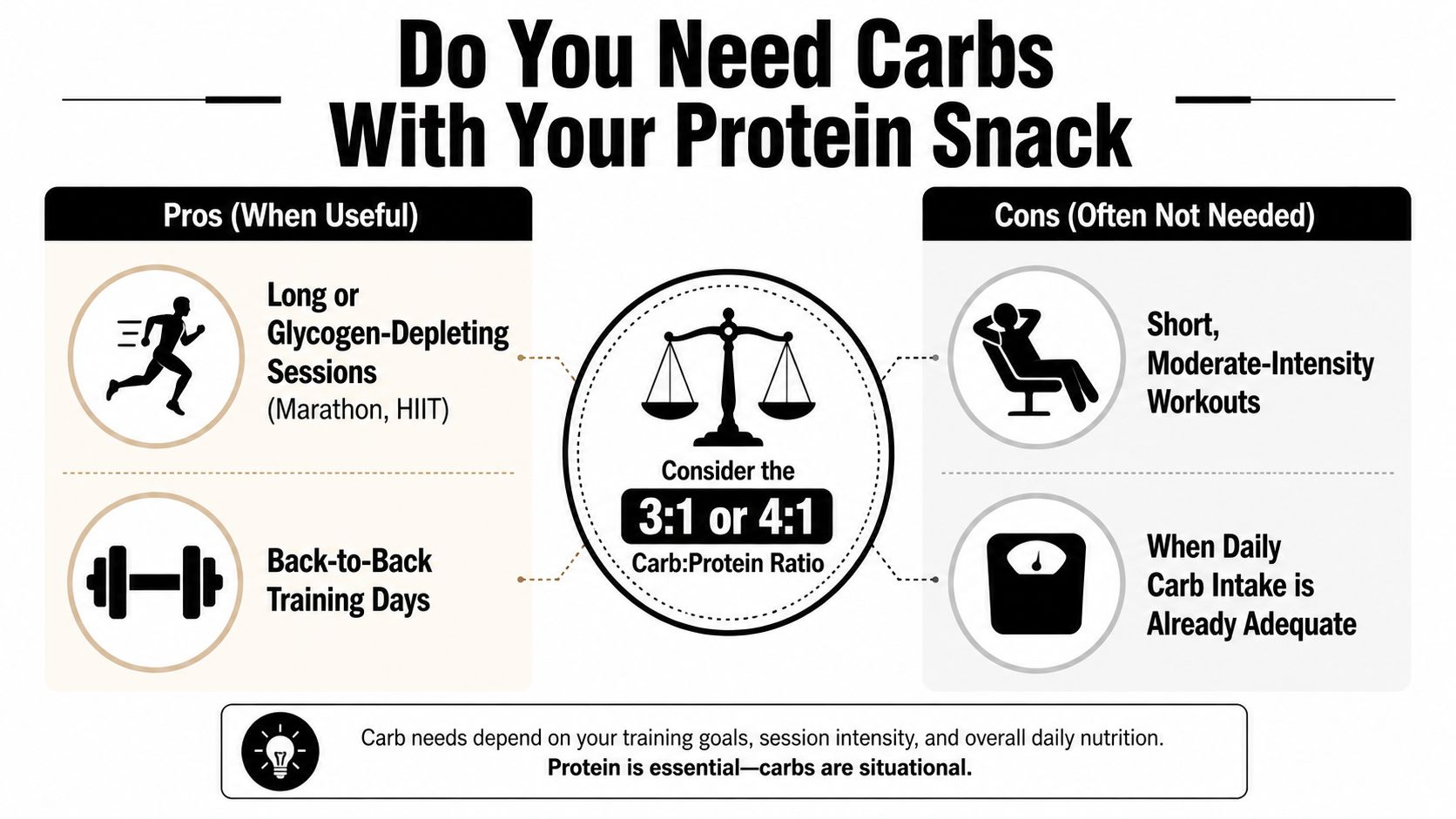
Sometimes yes, sometimes no. Carbohydrates become more important when the workout was long, glycogen-depleting, or followed by another session within about 24 hours. In those cases, research and reviews report better glycogen resynthesis when protein is co-ingested with carbs, along with lower muscle damage and faster tissue repair, and practical guidance often uses a 3:1 or 4:1 carbohydrate-to-protein ratio for recovery snacks (carb-plus-protein review).
That ratio is a benchmark, not a law. A short strength session, a moderate gym visit, or a workout that already followed a balanced meal often doesn't require a carb-heavy snack right away. In those situations, a protein-only savory snack can be the smarter move, especially if your priority is fullness, digestive comfort, or staying on track with weight goals.
Match the snack to the session
If you did long intervals, a hard run, or a heavy training block, carbs earn their place. If you lifted for forty-five minutes and you're not training again soon, protein may be enough. That's the part most snack roundups skip, they treat every workout like it needs the same recovery formula.
If your next meal is close, the snack can be simpler than people think.
That matters for GLP-1 users, anyone watching calories, and people who don't feel very hungry after exercise. A savory protein snack can cover recovery without pushing you into a bigger portion than your appetite wants.
Savory Plant Based Snack Ideas and Quick Builds
Sweet bars are easy to market, but savory snacks are often easier to live with after training. They feel more like food, less like dessert, and they tend to work better for people who want crunch, salt, and a cleaner finish. They also give plant-based eaters more ways to hit protein without leaning on dairy or soy.
A ready-to-eat option can be the most realistic answer when you're leaving the gym and your brain is already thinking about the rest of the day. Gym Snack is one example of a savory, plant-based, ready-to-eat protein snack that fits that use case, especially when you want something crunchy instead of another shake.
Fast savory combinations that actually travel well
- Roasted pea-protein crunch with olive oil and seasoning. Toss a crunchy pea-protein base with a little olive oil, smoked paprika, garlic powder, or chili seasoning. You get a snack that feels chef-made without turning into meal prep.
- Chickpea crispbread with avocado and lemon pepper. The crispbread gives structure, the avocado softens the texture, and the lemon pepper keeps it bright after a workout.
- Edamame with flaky salt. Simple, salty, and easy to portion. It works when you want something straightforward and not overly sweet.
- Savory protein bites straight from the bag. That's the advantage of a ready-to-eat format, no assembly, no mess, no extra dishes.
Two no-drama assembly ideas
-
Crunch bowl in five minutes
Put a scoop of crunchy plant protein into a bowl, add olive oil, a pinch of salt, and any dry seasoning you like. Eat it with cucumber slices or plain crackers if you want more volume. -
Open-and-go plate
Combine roasted chickpeas, sliced avocado, and a squeeze of lemon on a plate or in a container. It's simple, portable, and easy on decision fatigue.
For more plant-based combinations, the high-protein plant-based snacks guide is a useful reference because it keeps the focus on practical options instead of generic “healthy snack” lists.
The flavor rule is easy. If you want a snack to become a habit, it has to taste good and be easy enough to reach for when you're tired.
Portioning, Storage, and On the Go Strategies
Good snack choices fail when they're inconvenient. The fix is to treat recovery food like gym gear, portion it, label it mentally, and keep it where you'll use it. A single-serve format is easier than a big bag, because you're less likely to overeat it after a hard session and less likely to leave it at home.
If you already use a shaker, a sturdy bottle matters more than people think, especially when you're carrying protein mixes or pairing a snack with water on the way out. A practical option like custom logo shaker bottles from Custom Mark is useful when you want a dedicated container that lives in your gym bag and doesn't get mixed up with kitchen cups.
Where to keep what
| Post Workout Snack Storage Quick Reference | Pantry / Fridge | Best Container | Watch Out For |
|---|---|---|---|
| Crunchy savory plant-protein snacks | Pantry | Single-serve bag or sealed tin | Humidity can soften crunch |
| Roasted chickpeas or edamame | Pantry | Airtight jar or resealable pouch | Heat and moisture |
| Avocado-based snack builds | Fridge | Small container with a tight lid | Brownning and texture changes |
| Protein shake components | Pantry or fridge, depending on product | Shaker bottle | Forgetting to wash it out |
| Shelf-stable protein options | Pantry | Gym-bag pouch or desk drawer bin | Tossing them loose in the bag |
A simple placement system
Keep desk drawer snacks shelf-stable and portioned. Put gym bag snacks in containers that can handle heat, movement, and a little compression. Use the car only for items that won't melt, spoil, or get crushed.
The easiest routine is the one that doesn't ask for a fresh decision every day.
If you're building a backup shelf, this non-refrigerated protein snacks guide is worth a look because it helps you separate what belongs in a bag from what belongs in the fridge. That distinction matters more than people expect when the goal is to eat after training.
Special Cases for GLP-1 Users, Weight Goals, and Allergies
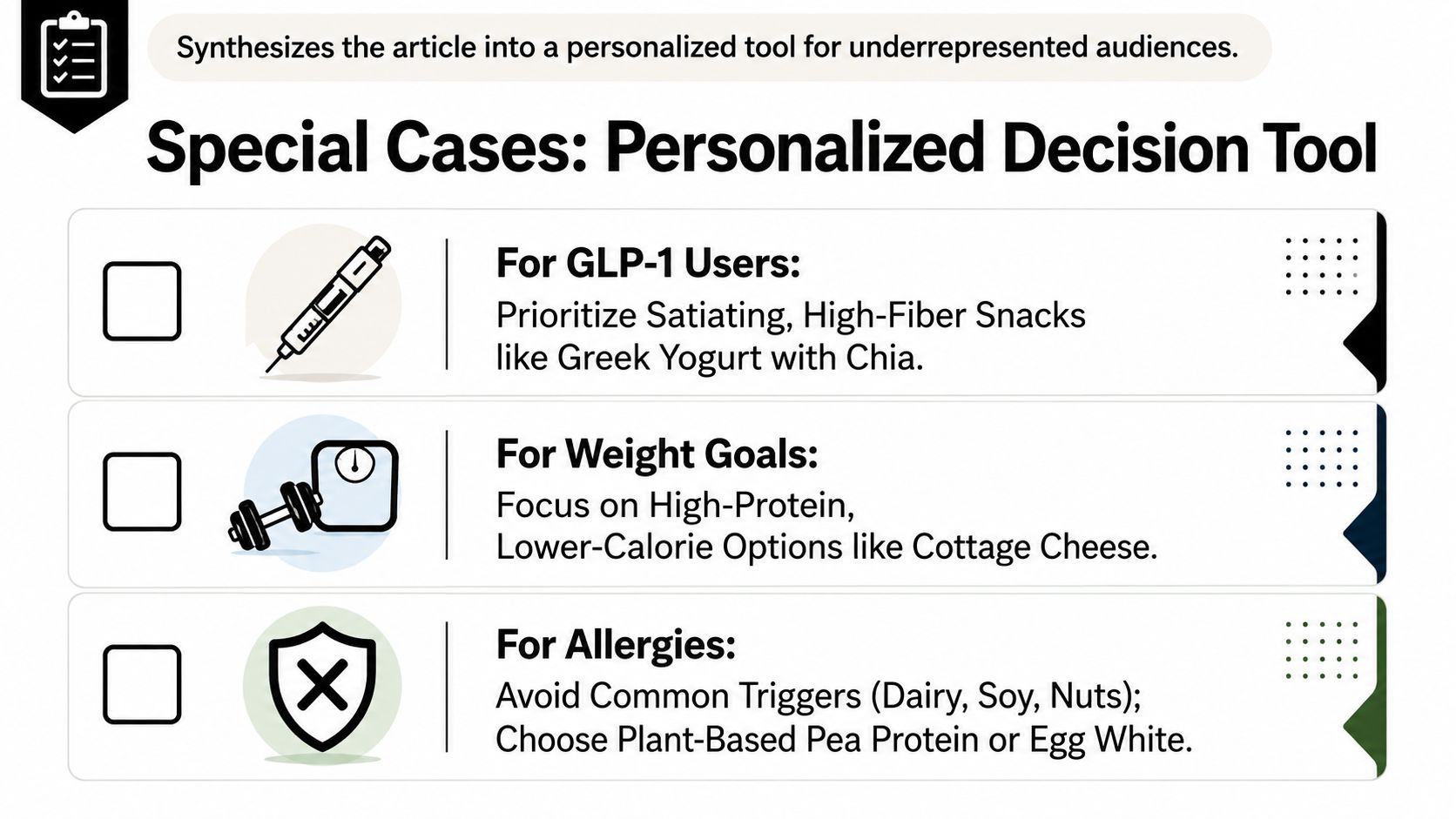
Mainstream snack lists assume everyone wants the same thing. They don't. GLP-1 users often need a snack that feels satisfying without being oversized, weight-management readers usually want protein-forward fullness instead of a calorie-heavy recovery combo, and allergy-conscious eaters need something that doesn't force them to negotiate dairy, soy, or gluten every time they train.
That's where the decision gets simpler. Pick a protein dose you can tolerate, then decide whether the workout earned carbs. For many people in these groups, a savory, crunchy snack is easier to finish than a sweet one because it feels more like a real food break and less like a treat trying to do a meal's job.
A decision tool that respects different bodies
For readers working with a clinician on appetite or weight management, LifeWorks weight loss treatment is one example of the kind of support that may sit alongside food planning, especially when appetite, satiety, and routine are part of the conversation.
A better default looks like this:
- Choose the protein first. If dairy or soy bothers you, don't force it just because a list says it's “classic.”
- Add carbs only when the session earns them. Long or back-to-back training days justify more than a short lift.
- Favor textures you can tolerate. Crunchy, savory, and ready-to-eat often works better than something creamy when appetite is low.
- Keep the option visible. If it lives in the bag, desk, or pantry, it gets eaten.
For anyone who wants a low-friction savory option, Gym Snack fits the exact problem this article has been building toward, a ready-to-eat, plant-based protein snack that's designed to be eaten after training or between meals without needing a blender or a refrigerator.
If you want a post workout protein snack that's savory, portable, and easy to live with, take a look at Gym Snack. It's built for the exact gap most recovery snack lists miss, something crunchy and protein-forward that works for training days, appetite management, and all the moments when a shake just isn't the answer.