

You finish a workout, or maybe you’re just trying to get through that long stretch between lunch and dinner, and suddenly you want something salty, crispy, and satisfying. Not a sweet bar. Not another shake. Actual crunch.
That’s where protein chips quest usually enters the conversation. A lot of active people reach for Quest Protein Chips because they seem to solve a very specific problem. They offer the feel of a chip snack while fitting better into a high-protein, lower-carb eating style than regular chips.
The catch is that “high protein” on the front of a bag doesn’t tell you whether a snack fits your goals, your digestion, or your food preferences. Some people will love the convenience. Others will realize the formula doesn’t work for them at all. That’s especially true if you avoid dairy, need to watch allergens closely, or want a different ingredient profile.
Craving Crunch Without the Compromise
A common client question sounds like this: “I’m not even craving junk food. I just want something crunchy that doesn’t wreck my day.”
That’s a fair question. Crunch matters. Texture changes how full and satisfied a snack feels, and for many people, a chewy protein bar doesn’t scratch the same itch as chips. So they end up stuck between two choices they don’t love. A standard chip bag that fits the craving but not the goal, or a “fitness snack” that hits the protein target but feels like a compromise.

Quest Protein Chips became popular because they’re built for exactly that moment. They’re a savory, portable option for people who want a snack that feels more like food and less like a supplement. If you’ve been browsing ideas for healthy snacks rich in protein, this category makes sense because it fills a gap bars and shakes often miss.
Why this snack gets so much attention
Quest chips appeal to people in a few very relatable situations:
- Post-gym hunger: You want protein, but you’re tired of sweet flavors.
- Desk-drawer emergencies: You need something quick that doesn’t leave you sleepy.
- Evening snacking: You want the ritual of chips without feeling like you’ve abandoned your plan.
Practical rule: The best “healthy snack” is the one that actually matches the craving you’re trying to solve. If you want crunch, a shake usually won’t do the job.
That’s why this product is worth looking at carefully. Not because it’s magic, and not because every person should eat it, but because it’s one of the more recognizable attempts to turn a classic snack food into something more macro-friendly.
The Story Behind the High-Protein Crunch
Quest Protein Chips grew out of a very specific problem. A lot of early fitness snacks gave people protein, but they often missed the eating experience. If someone wanted something salty and crunchy, another sweet bar was like bringing oatmeal cookies to a popcorn craving. It solved the macro goal, not the moment.
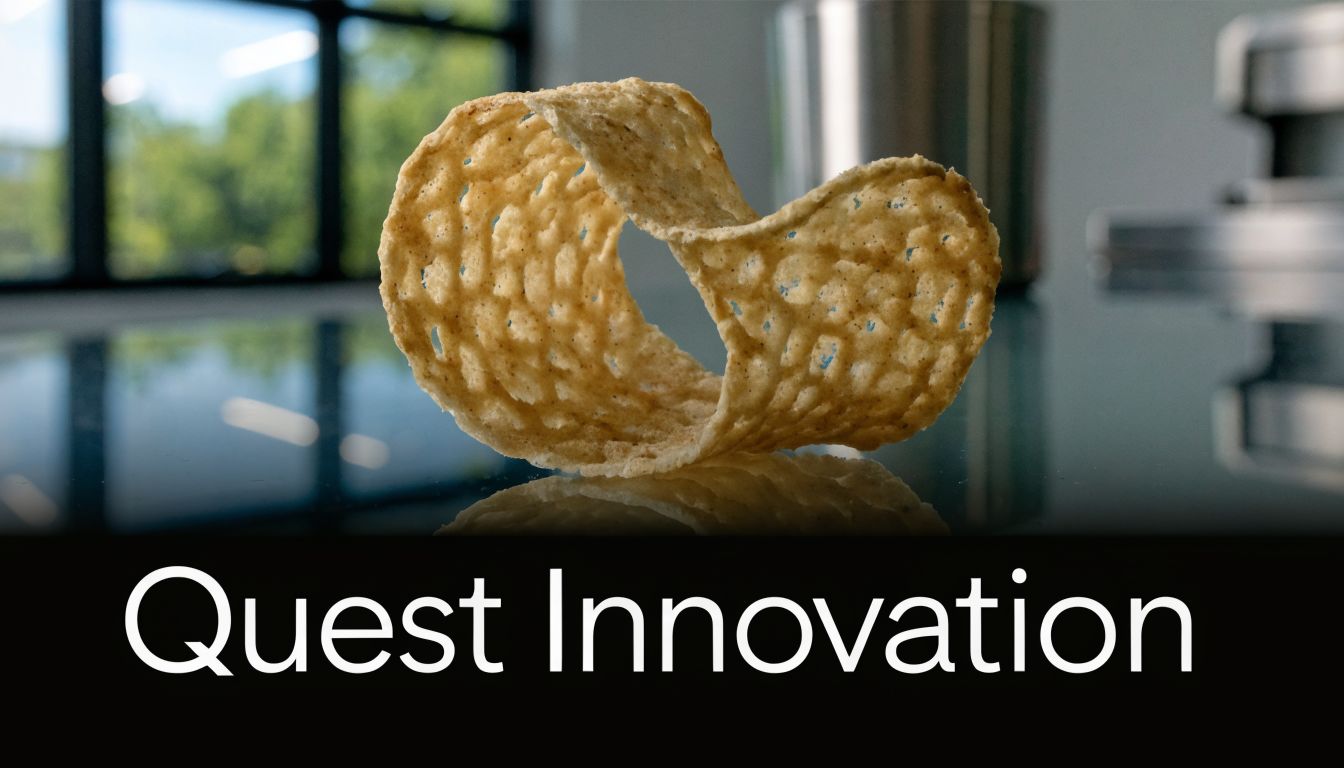
Quest Nutrition started in 2010 in El Segundo, California, founded by Tom Bilyeu, Mike Osborn, and Ron Penna after the team sold a previous software company. Shannan Penna developed the first bar recipe in her kitchen, and that practical, trial-and-error start helped shape the brand’s identity. The company focused on foods that felt more indulgent than traditional diet products, and by 2014 it had grown rapidly as it expanded from bars into new categories, according to Quest Nutrition’s company history and early growth timeline.
From bars to chips
The move into chips made sense.
Protein bars fit busy schedules, but they do not always fit savory cravings. Chips do a different job. They give you crunch, salt, and that casual snack feeling people usually reach for in a pantry, lunch bag, or desk drawer. Quest saw that gap and built a baked chip around protein instead of just sprinkling protein into a standard snack format.
That product strategy helped the brand stand out. The chip launch in 2014 gave gym-goers, dieters, and convenience-focused snackers a portable option that felt closer to a familiar salty snack than to a supplement.
Why the product resonated
Part of the appeal was psychological as much as nutritional. People like foods that match the situation. After a workout, during a road trip, or while watching a show at night, crunchy snacks often feel more satisfying than another shake or bar.
Quest chips worked like a macro-conscious version of a classic chip ritual. You still open a bag. You still get bold flavor and texture. The difference is that the product was designed to carry much more protein than regular chips, which changed how many shoppers viewed the whole category.
That shift also exposed a limit. Quest built its chips around dairy proteins, which works well for plenty of active eaters but leaves out some people who want plant-based snacks or need to avoid milk allergens. That is one reason this category now deserves a more careful look. Snack quality is not just about high protein. It is also about who the formula fits.
If you want to get better at spotting those fit issues on a package, this guide on how to read nutrition labels without missing the important details helps.
Decoding the Nutrition Label on Quest Chips
If you pick up a bag and glance at the label, the big selling point is obvious. Protein is front and center. But to decide whether protein chips quest deserves a place in your routine, you need to read past the headline.
Quest Protein Chips deliver 19 to 21 grams of protein per serving from a blend of milk protein isolate and whey protein isolate, and the baked formula uses ingredients like psyllium husk and corn starch to keep net carbs at 3 to 5 grams with total calories around 140 per bag, according to this Quest Protein Chips product listing and nutrition breakdown.
What the protein blend means
Milk protein isolate and whey protein isolate are both dairy proteins. That’s important because this isn’t just “protein added” in a vague sense. The product is built around dairy as the main structure.
Think of whey as the quick-arriving guest and milk protein as the steadier one. Together, they help create a snack that isn’t just flavorful but also meaningfully protein-dense. For an active person, that can make the bag feel more useful than a standard crunchy snack that offers very little protein.
That doesn’t mean you need chips for muscle gain. It means the snack is doing more nutritional work per bite than regular chips usually do.
Why the carb number looks lower
Many people get confused when they see chips with relatively low net carbs. They assume something must be off. Usually, it comes down to the formula.
Ingredients like psyllium husk and corn starch help create structure and crunch in a baked product. Psyllium also contributes fiber. In practical terms, that’s part of how the chip keeps a lower-carb profile while still trying to feel like a real chip instead of a brittle protein cracker.
If nutrition labels feel hard to interpret, this guide on how to read nutrition labels can help you slow down and look at serving size, protein source, and ingredient order more clearly.
Texture is engineered, not accidental
The crunch in Quest chips doesn’t happen by luck. The formula has to do several jobs at once:
- Hold a chip shape: It needs enough structure to survive the bag.
- Stay crisp after baking: Nobody wants a soft protein chip.
- Carry savory flavor well: Bold seasoning needs a stable base.
- Fit the macro promise: The formula still has to keep protein high and carbs controlled.
That’s why these products often have ingredient lists that look more technical than homemade food. You’re seeing the tradeoff between convenience food engineering and macro targeting.
A protein chip is less like “potato chips with extra protein” and more like a carefully designed protein food shaped into a chip experience.
The other label details to notice
When I coach someone through this label, I don’t stop at protein. I also ask them to notice three practical things.
- Sodium matters: Savory snacks need salt to taste good. If you already eat a lot of packaged foods, this is worth tracking.
- Dairy is the foundation: If milk doesn’t agree with you, this won’t be a neutral choice.
- Calories still count: A macro-friendly snack can still become a mindless snack if you eat it like regular chips.
That last point is important. The bag may be designed for fitness-minded eating, but your habits still determine whether it helps you or just becomes another easy-to-overeat snack food.
Is This the Right Protein Snack for Your Goals
A good snack isn’t “good” in the abstract. It’s good when it fits the person eating it.
Quest chips can be useful, but they aren’t a universal answer. The easiest way to judge them is to look at the type of eater you are and the problem you’re trying to solve.
For lifters and active people
If you train regularly and get tired of sweet protein products, Quest chips can fill a real gap. They give you a savory protein option that travels well, needs no prep, and feels more like a treat than a nutrition chore.
This is especially helpful for people who already use shakes and don’t want all their protein to come in liquid form. If you’re sorting out your overall intake, this guide on how many protein shakes a day you really need can help you balance convenience with actual meals and snacks.
What I like here is compliance. People are more likely to stick to a plan when the food feels enjoyable. A crunchy protein snack can make a high-protein eating pattern easier to live with.
For low-carb eaters
Quest chips are often attractive to people trying to keep carbs lower while still eating convenient foods. A traditional chip snack usually pushes the day in the opposite direction. This one is built to fit more neatly into a lower-carb pattern.
That said, lower carb doesn’t automatically mean better for everyone. If you perform well with moderate carbs, you don’t need to chase every low-carb product. Use it if it helps, not because the label sounds disciplined.
If your goal is consistency, choose snacks that reduce decision fatigue. A bag that fits your macros can be useful when the alternative is grabbing whatever’s nearby.
For GLP-1 users and appetite management
Some people using GLP-1 medications struggle to eat enough protein because large meals feel unappealing. In that situation, smaller savory options can be easier than big portions of meat or another sweet shake.
Quest chips may work well for that person because the serving is simple, portable, and more snack-like than a full meal. The caveat is tolerance. Some people want bland, soft, plain foods when appetite is lower. Others prefer something crunchy and salty. You have to test your own response.
Who should think twice
Many reviews become too broad. Not every high-protein snack is meant for every body.
A few groups should pause before buying:
- Vegans: The product uses dairy proteins, so it won’t fit a vegan pattern.
- People with milk allergy or dairy sensitivity: The protein source itself is the issue, not a minor side ingredient.
- Those watching packaged food intake closely: If you’re trying to emphasize minimally processed foods, this may feel more engineered than you prefer.
- People who snack mindlessly at night: A “better” chip can still become an automatic habit.
For those readers, the question isn’t whether Quest chips are good. It’s whether they solve your problem without creating a new one.
Quest Protein Chips vs Gym Snack A Complete Comparison
To compare Quest and Gym Snack, we need to look at their core product philosophies.
One is built around dairy protein. The other is built around plant protein. That sounds like a small ingredient choice, but it works more like choosing the foundation of a house. The foundation affects who the product fits, which diets it supports, and where it may cause friction.
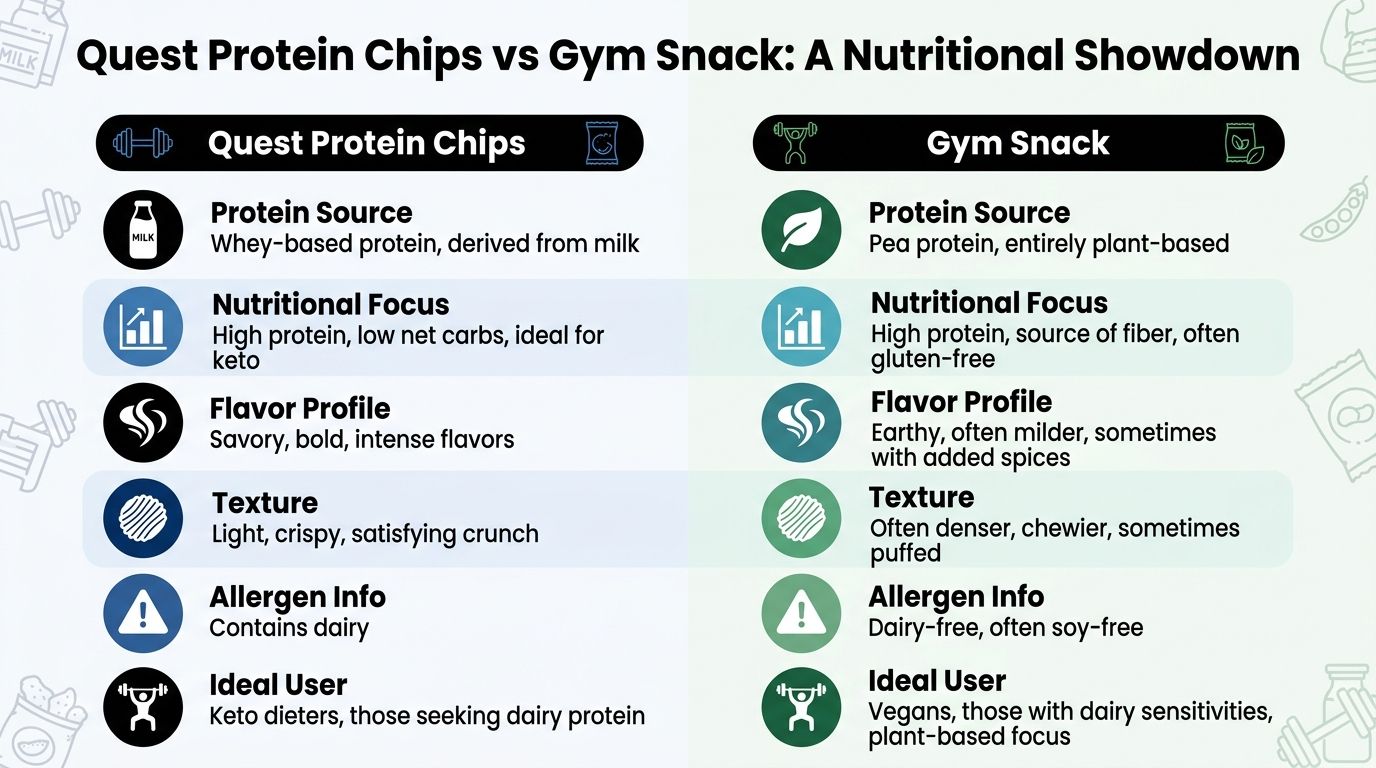
Quest is a match for people who do well with dairy and want a familiar high-protein chip format. Gym Snack is aimed at the gap Quest leaves open. People who prefer plant-based eating, avoid dairy, or need a more allergen-conscious option often want the same crunchy, savory experience without using milk-based protein.
That gap matters because snack decisions are rarely just about macros. They are also about what your body tolerates and what your eating style allows. If a snack checks the protein box but conflicts with your ethics, digestion, or allergy needs, it is like buying a great pair of shoes in the wrong size. The product may be good, but it is not right for you.
The core difference
Quest starts with milk protein isolate and whey protein isolate. That gives it a clear identity. It also narrows its audience.
Gym Snack, based on the publisher information provided, centers its product around pea protein and a plant-based savory snack approach. For shoppers comparing options across the category, this overview of high protein chips helps explain why dairy-based and plant-based products often serve different needs.
Quest Protein Chips vs. Gym Snack At a Glance
| Attribute | Quest Protein Chips | Gym Snack |
|---|---|---|
| Protein source | Milk protein isolate and whey protein isolate | Pea protein |
| Diet fit | Best for people who include dairy | Best for people seeking a plant-based option |
| Allergen profile | Contains dairy | Positioned as dairy-free, soy-free, and gluten-free based on publisher information |
| Snack style | Baked savory protein chip | Plant-based savory protein snack |
| Why someone chooses it | Wants a familiar dairy-based high-protein chip | Wants a vegan or allergen-conscious alternative |
Here’s a quick visual breakdown before the finer points.
How to choose without overthinking it
Use a practical filter.
- Choose Quest if dairy works well for you, you want a lower-carb profile, and you like the idea of a well-known option in this category.
- Choose Gym Snack or another plant-based option if dairy does not fit your ethics, digestion, or allergy needs.
- Choose neither if convenience snacks are not a priority and you would rather build protein intake from regular meals.
Taste still matters, of course. But ingredient base matters first. A crunchy snack only helps if it fits your body and your routine.
That is why this comparison is more useful than a simple flavor ranking. Quest can work well for the right person. Gym Snack answers a different need, and that makes it especially relevant for plant-based and allergen-conscious shoppers who are often left out of the usual Quest review.
Smart Ways to Buy and Use Your Protein Chips
By the time people decide they like Quest chips, they usually ask two practical questions. Where do I buy them, and how do I use them without getting bored?
Quest products are commonly found in supplement stores and mainstream retailers. The brand has had distribution in places like GNC, Vitamin Shoppe, and Whole Foods, according to the earlier company background. If you shop online, compare single-bag pricing with variety packs and watch for sales instead of buying impulsively one bag at a time.
Easy ways to use them beyond straight snacking
Typically, one only thinks of opening the bag and eating it as is. That works, but there’s more you can do.
- Crush them over soup or chili: You get crunch in the same way someone might use crackers.
- Use them on salads: A small handful can replace croutons if you want more protein and a bolder flavor.
- Turn them into coating: Crushed chips can work as a crunchy outer layer for baked chicken or fish.
- Pair with a simple whole food: Add fruit, cut vegetables, or a yogurt if you want the snack to feel more balanced and filling.
If you like experimenting, these ideas for a protein chips recipe can spark more creative uses.
Buying tips that help
A few habits make these snacks more useful:
- Keep them for high-risk hunger windows: Your car, office, or gym bag is better than your couch-side snack drawer.
- Treat the bag as a serving, not a free-for-all: Even better-for-you snacks work best with some awareness.
- Rotate flavors or formats: That keeps you from getting burned out and defaulting back to less helpful options.
The simplest strategy is to use protein chips as a tool, not a personality. They’re there to make your routine easier, not to replace regular meals.
The Final Verdict Are Quest Protein Chips Worth It
For the right person, yes. Quest Protein Chips are a smart convenience snack if you want high protein, savory flavor, and a lower-carb chip-style option without defaulting to sweet bars or shakes.
Their strengths are clear. They’re convenient, recognizable, and designed for people who want a crunchy snack that aligns more closely with fitness goals than standard chips. That’s why protein chips quest keeps showing up in gym bags, office drawers, and post-workout snack conversations.
The drawbacks are just as important. The formula is dairy-based, so it won’t work for vegans, milk-allergic individuals, or people who want a different ingredient approach. Some readers will also prefer less processed foods or want a plant-based option that still delivers a similar savory function.
The best takeaway is this. Don’t judge the product by hype or by one macro on the front of the bag. Judge it by fit. If dairy works for you and you want a protein-forward chip, Quest makes sense. If you want a plant-based, allergen-conscious route, another option will likely suit you better.
If you want a savory protein snack that skips dairy and leans plant-based, take a look at Gym Snack. It’s built for people who want crunch, bold flavor, and a protein-focused option that fits vegan and allergen-conscious eating more comfortably.