

Let's be honest: "protein chocolate chip" has officially made the leap. What used to be a term you'd only hear from serious gym-goers is now a full-blown wellness staple. We're talking about those snacks—bars, cookies, you name it—that pack a protein punch right alongside the classic, comforting taste of chocolate chips. They promise a healthier way to indulge, a way to hit your fitness goals without giving up the flavors you love.
Why Everyone Is Reaching for Protein Chocolate Chip Snacks
You can’t miss it. Stroll down any snack aisle, and you'll see an entire section that barely existed a decade ago. The once-niche corner for bodybuilding supplements has exploded, and the protein chocolate chip combo is front and center. This isn't just some passing fad; it's a real shift in how we think about snacking.
The appeal is powerful because it's so simple. We want our food to do more than just quiet a rumbling stomach. We want convenience, fantastic taste, and real nutritional benefits, all in one package. That’s the sweet spot where these snacks live.
The Best of Both Worlds
Think about it: you get to crush a craving for a sweet, chocolate-dotted treat while also giving your muscles the fuel they need to recover or keeping hunger locked down for hours. It’s a game-changer. Suddenly, a "guilty pleasure" feels more like a smart nutritional decision.
The market numbers back this up in a big way. The global protein snacks market, which is dominated by products like protein chocolate chip bars and cookies, was valued at a massive USD 54.86 billion in 2025. It's projected to more than double, hitting USD 120.43 billion by 2034. Here in North America, where high-protein snacks raked in $8.7 billion in 2024, chocolate is the undisputed king of flavors, chosen by 37.9% of customers. It’s clear we want our nutrition to taste like a treat. You can dig into more of this data on the booming market from Fortune Business Insights.
For so many people, hitting daily protein goals feels like a chore. Protein-fortified snacks flip that script, turning an obligation into something you actually look forward to. That consistency is what really moves the needle.
More Than Just a Post-Workout Fix
While these snacks are a perfect fit for post-workout recovery, their role has expanded way beyond the gym. Busy professionals, parents juggling a million things, and people on weight management journeys are all reaching for them. Here’s why:
- Sustained Energy: Protein slows everything down, helping you avoid the sugar rush—and the inevitable crash—that comes with typical sweet snacks.
- Appetite Control: High-protein foods are proven to boost satiety. In simple terms, they help you feel full and satisfied for longer, which can be a huge help in managing your overall food intake.
- Ultimate Convenience: They're a grab-and-go, no-prep solution for staying on track with your diet, even on the most chaotic days.
Think of this guide as your personal roadmap. We’re here to help you navigate the crowded shelves, decode the labels, and find the right protein chocolate chip snack that actually supports your health and fitness goals.
How to Read the Label Like a Nutritionist
Let's be honest, turning over that package to look at the nutrition label can feel a bit like you're trying to crack a code. But when it comes to protein chocolate chip snacks, knowing what's what is the only way to separate the truly helpful stuff from what's basically a candy bar in disguise.
The key is knowing where to look and what to look for. It starts with the main event: the protein.
Decode the Protein Source
Not all protein is created equal, and the source listed in the ingredients tells a story about how your body will use it. Think of them as different tools in a toolbox, each suited for a specific job.
Whey and casein are the two big players from dairy. They’re popular for a reason—they contain all the essential amino acids your muscles need to repair and grow. Whey is your "fast-acting" tool, absorbing quickly, which is perfect for right after a workout. Casein, on the other hand, is the "slow-and-steady" tool. It digests over hours, making it fantastic for keeping hunger at bay and providing a sustained release of amino acids.
If you're dairy-free or plant-based, you'll see sources like soy, pea, and rice protein. Most protein chocolate chip snacks will use a blend of these to create a "complete" protein that delivers all the amino acids, much like whey does. Soy is a proven powerhouse, and pea protein is a great hypoallergenic option that’s typically easy on the stomach.
The protein source tells you how the snack will work for you. Whey is for immediate muscle fuel, casein is for lasting fullness, and plant blends offer a dairy-free alternative with similar benefits.
Spotting Red Flags on the Label
Once you've sized up the protein, it's time to scan for the troublemakers. This is where a seemingly healthy snack can go wrong.
Here are the main things I always watch for:
-
Hidden and Added Sugars: This is the big one. Sugar hides under dozens of names—high-fructose corn syrup, dextrose, sucrose, maltodextrin, the list goes on. A simple rule of thumb: a good protein snack should have more grams of protein than sugar. If sugar is listed as one of the top three ingredients, that's a hard pass.
-
Excessive Sugar Alcohols: To keep sugar counts low, many brands use sugar alcohols like erythritol, sorbitol, and xylitol. In small amounts, they're usually fine. But when you see several of them high up on the ingredient list, be aware they can cause bloating and digestive upset for many people.
-
Unhealthy Fats and Fillers: Take a quick look at the type of fat being used. You want to avoid hydrogenated oils (trans fats) and an over-reliance on saturated fat. A super long list of ingredients filled with artificial flavors, gums, and fillers is another red flag—those things add zero nutritional value.
Want to go even deeper on this? Our comprehensive guide on how to read nutrition labels breaks it all down.
Ultimately, reading a label is about becoming an informed consumer. You're asking: Does this snack earn its calories? Are the ingredients clean? By learning to spot these details, you can pick a protein chocolate chip snack that actually helps you, rather than holds you back.
Choosing the Right Snack for Your Fitness Goals
When you're staring at a wall of protein chocolate chip snacks, it's easy to just grab one that looks good. But the right choice really comes down to a simple question: what are you trying to accomplish? Are you refueling after a killer workout, or are you just trying to get through a long afternoon without raiding the vending machine?
Think of it like picking the right tool for a job. You wouldn't use a sledgehammer to hang a picture frame. The same logic applies here—your goal dictates the perfect snack.
Fueling for Muscle or Fullness
If you've just wrapped up a tough training session, your body is screaming for two things: protein and carbs. This is your "sledgehammer" moment. A protein chocolate chip snack with a fast-acting protein like whey and a bit of sugar is perfect. The protein kicks off muscle repair, and the carbs help shuttle those nutrients right where they need to go, fast.
But if your main goal is staying full and managing your weight, you need a different approach. For all-day satiety, the winning combo is high protein and high fiber with as little sugar as possible. This trio slows down digestion, keeping you satisfied for hours and preventing that dreaded afternoon energy crash.
Your fitness goal dictates the ideal snack formula. Post-workout, a blend of protein and carbs is effective. For sustained fullness, protein and fiber with minimal sugar is the winning combination.
A Visual Guide to Your Options
Getting comfortable with reading a nutrition label is a game-changer. Once you understand how to calculate macronutrients for your own body, you can see past the flashy packaging and make choices that truly work for you.
Different protein sources also work in different ways. This chart gives you a quick visual breakdown of the most common types you'll find in these snacks and how they function in your body.
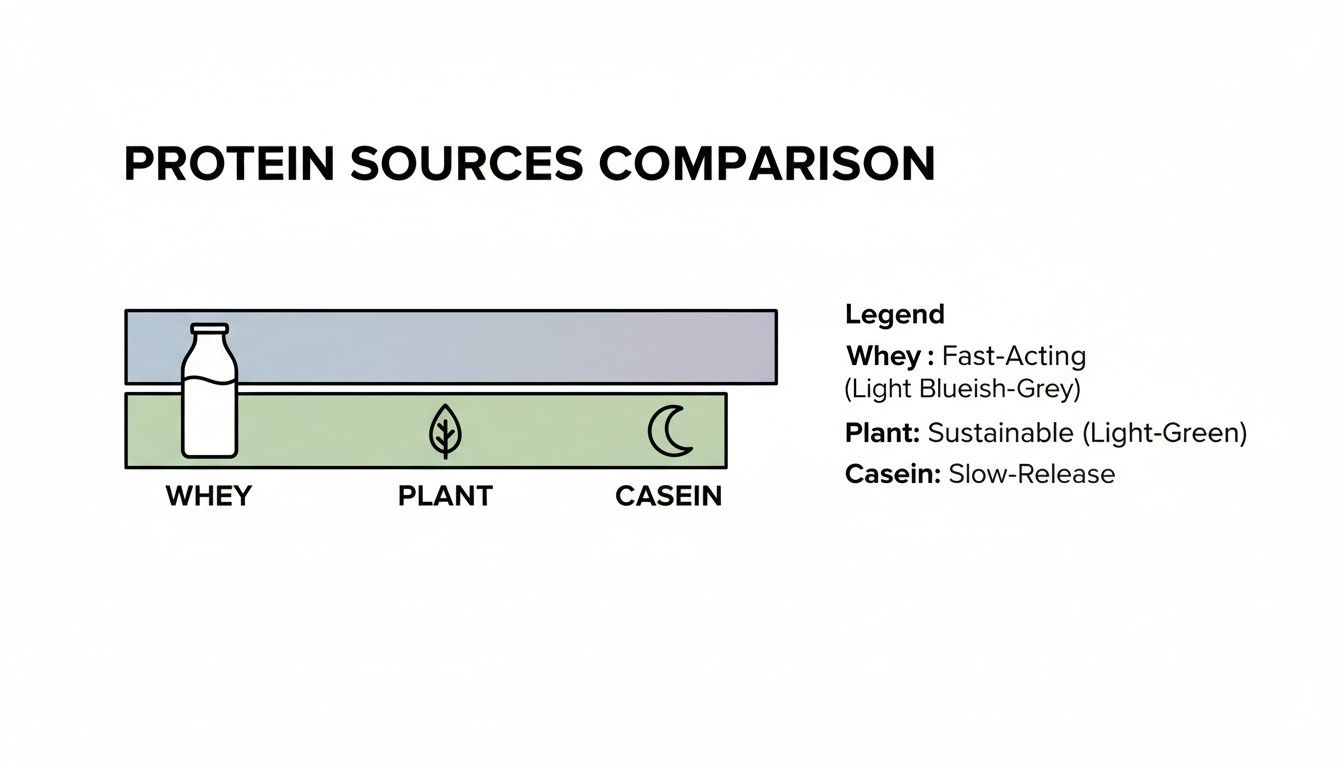
The big takeaway here is that not all protein is created equal. The speed at which your body digests it makes a huge difference. Whey is fast, making it ideal for recovery, while casein is slow and steady, perfect for lasting fullness.
To put this into a real-world context, let’s see how the numbers stack up between a few popular sweet and savory options.
Nutritional Snapshot Sweet vs Savory Protein Snacks
Here’s a side-by-side look at what you can typically expect from a protein bar, a cookie, and a savory chip. Notice how the macros and ingredients shift depending on the snack's purpose.
| Nutrient | Typical Protein Chocolate Chip Bar | Plant-Based Protein Cookie | Savory Protein Chip |
|---|---|---|---|
| Calories | 200–250 | 250–350 | 140–170 |
| Protein | 20g (often whey/casein) | 15g (often pea/rice) | 15g+ (pea protein) |
| Sugar | 1–5g (often with sugar alcohols) | 10–20g (often natural sugars) | <1g |
| Fat | 7–12g (can be high in saturated) | 10–18g (often nut-based) | 4–6g (low saturated fat) |
The trade-offs become pretty clear when you see them laid out like this. A standard bar gives you a big protein hit for the calories, but watch out for sugar alcohols. The plant-based cookie, while a good vegan-friendly option, often packs more sugar and calories, making it feel more like a dessert.
In contrast, the savory protein chip really shines for appetite control. It delivers a solid amount of protein with very little sugar or fat, making it an excellent choice when you just need something to hold you over without the sweet indulgence.
Navigating Plant-Based and Allergen-Free Options
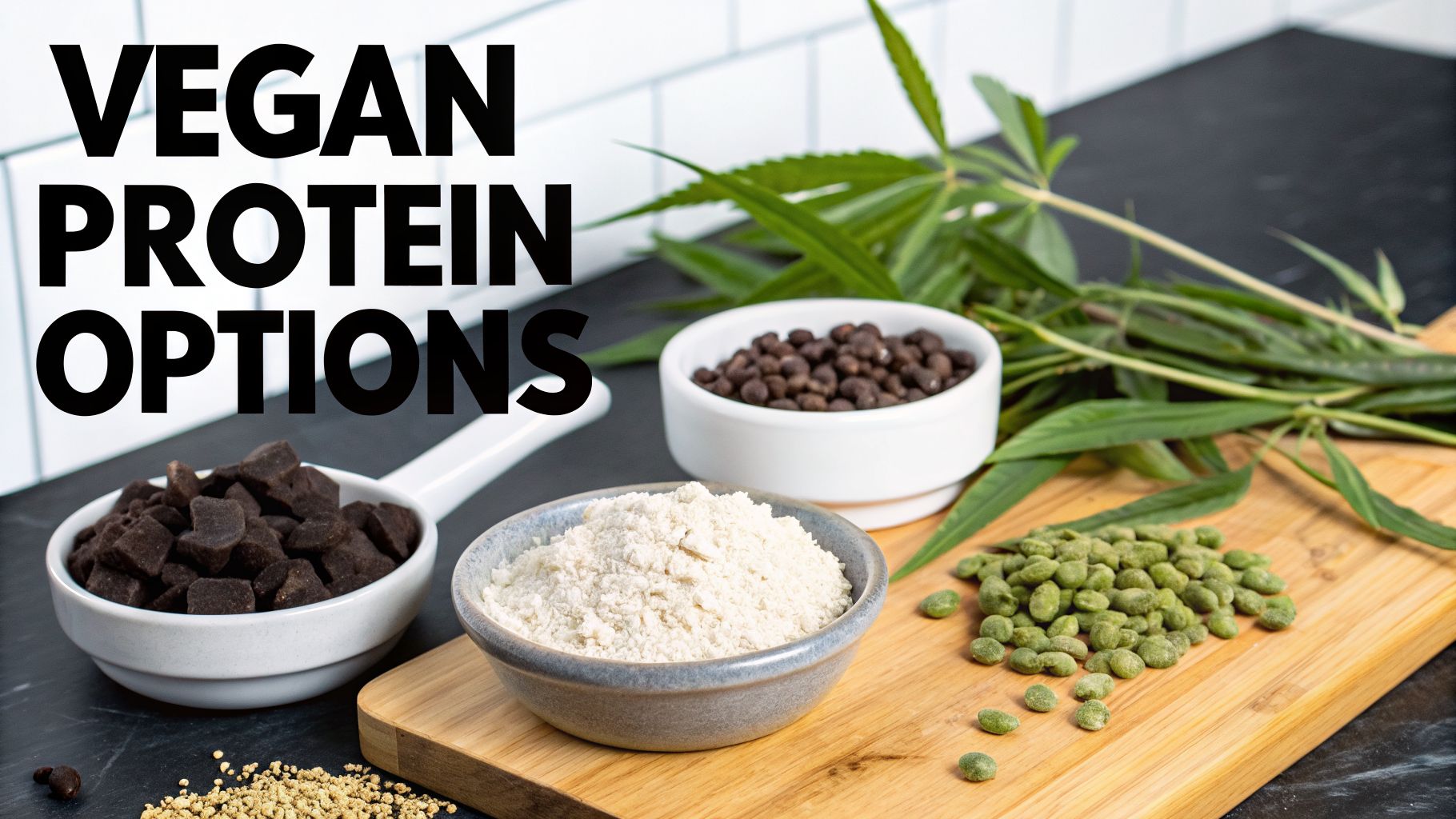
Whether you’re committed to a plant-based lifestyle or just trying to manage a food sensitivity, the snack aisle has changed for the better. It wasn't long ago that "protein chocolate chip" almost always meant dairy and gluten. Thankfully, that's no longer the case.
The demand for these specialized treats has exploded. We're talking about a market niche—protein confectionery—valued at a staggering $1.5 billion in 2026. Industry analysts are watching it climb toward a projected $3.2 billion by 2034, all thanks to health-conscious people like us who refuse to choose between function and flavor. You can see more on the growing demand for protein sweets for yourself.
What’s Inside Plant-Based Protein Snacks?
The biggest innovation has been the shift away from traditional dairy proteins like whey and casein. In their place, you'll find an impressive lineup of plant-powered ingredients, each with its own unique strengths.
- Pea Protein: This is the current MVP in the plant protein world. It’s an excellent source of iron and, most importantly, it's naturally free from common allergens like dairy, soy, and gluten. Many people also find it much easier to digest.
- Rice and Hemp Protein: You'll often see these blended with pea protein. This isn't just for filler; combining them creates a complete amino acid profile, giving your body all the essential building blocks it needs for muscle recovery.
- Soy Protein: As one of the original plant-based powerhouses, soy is a complete protein all on its own. It has a long and proven history of helping people meet their fitness goals.
These ingredients make it incredibly easy to find a great-tasting vegan protein chocolate chip snack. For more recommendations, check out our complete guide to the best vegan protein snacks on the market.
Your Guide to Avoiding Allergens
Finding a truly "clean" product that works for your body means you have to become a bit of a label detective. A "plant-based" sticker on the front doesn't always tell the whole story.
A truly allergen-free snack goes beyond just being "plant-based." You have to scrutinize the label for hidden nuts, soy, and gluten to ensure it aligns with your specific dietary needs.
Always keep an eye out for these three common offenders:
- Nuts: Many bars and cookies rely on nut butters for texture and binding. Always look for the "contains nuts" warning and check for cross-contamination advisories if you have a severe allergy.
- Soy: While it’s a fantastic protein source for many, soy is a major allergen. It can hide in plain sight as soy protein isolate or pop up as soy lecithin, a common emulsifier.
- Gluten: Unless a product is explicitly certified gluten-free, there’s a risk of cross-contamination from ingredients like oats. If you have celiac disease or a high sensitivity, that certification is non-negotiable.
And if chocolate itself is the issue? Don't worry, you still have options. Carob is a fantastic substitute with a naturally sweet, earthy flavor. If you want to try something different, you can explore carob-based alternatives to find a treat that fits your diet perfectly.
When to Choose Sweet vs When to Go Savory
Figuring out what to eat is a great start, but knowing when to eat it is how you really level up your nutrition game. It's all about matching the right snack to the right moment. I like to think of it as choosing between "performance fuel" and "reward fuel"—a simple mindset that helps keep your energy stable and your bigger goals in sight.
A sweet protein chocolate chip snack, for example, is perfect right after a tough workout. The combination of protein for muscle repair and quick-digesting carbs to restock your energy (glycogen) is exactly what your body needs. It’s the ideal time for a treat that tastes good and gets the job done.
But if you grab that same sweet bar in the middle of a slow workday, it might actually work against you. Sure, you get the protein, but the sugar rush can sometimes trigger more cravings or even lead to that dreaded afternoon energy crash. This is where savory snacks really shine.
Performance Fuel for Sustained Focus
When the goal is steady energy and sharp focus for a few hours, a savory, low-sugar protein snack is a much better bet. Things like protein chips give you that same satisfying, hunger-blocking protein but without the distracting sweetness. They provide a more gradual release of energy, helping you stay in the zone without the highs and lows.
Think of your snack choice like picking a tool from a toolbox. A sweet protein chocolate chip bar is your post-workout "reward fuel," while a savory option is your workday "performance fuel" for lasting focus and satiety.
Beating Flavor Fatigue
Let's be honest: sticking to any nutrition plan is a thousand times harder if you're bored. That's where something called flavor fatigue creeps in. If you're eating the same sweet protein bars and cookies every single day, your diet can start to feel like a chore. Before you know it, you’re grabbing something totally off-plan just to taste something different.
The numbers show that people are actively seeking more options. While chocolate still rules the high-protein snack world with a 37.9% market share, the savory snack category is booming, growing at a rate of 9.6% each year. People clearly want a break from all the sweetness, and you can read more about these high-protein snack trends on Market.us.
Switching between sweet and savory snacks is a simple strategy that works wonders. You can crush a dessert craving after the gym with a protein chocolate chip cookie and then tackle midday hunger with something crunchy and cheesy a day later. This variety is what makes healthy eating enjoyable and, more importantly, sustainable. If you need some inspiration, check out our guide to high-protein savory snacks for some great ideas.
Got Questions About Protein Chocolate Chip Snacks? We Have Answers.
Let's be honest—the whole idea of a "protein chocolate chip cookie" can feel a little too good to be true. Is it a genuinely helpful snack, or just a candy bar with clever marketing? It’s smart to be skeptical, and we’re here to clear up the confusion.
We’ve rounded up the questions we hear all the time. Here are some straight answers to help you figure out if these snacks are right for you.
Can I Eat a Protein Chocolate Chip Bar Every Day?
You absolutely can, but the real question is, should you? If you find a bar with clean ingredients and low sugar that fits your daily macros, having one can be a lifesaver on a busy day. Many people rely on them to hit their protein goals when they're on the go.
The problem comes when they start replacing whole foods in your diet. No processed bar can match the vitamins, minerals, and fiber you get from real, unprocessed food.
Think of a protein chocolate chip bar as a tool, not a crutch. It’s perfect for those chaotic days when a proper meal isn't an option. Just be sure to balance it out with whole foods to get the full spectrum of nutrients your body needs.
Are Protein Chocolate Chip Cookies Actually a Healthy Dessert?
They're definitely a healthier choice than the sugary, buttery cookie you'd get from a bakery. But calling them "healthy" really depends on what’s inside and what your personal health goals are.
A good protein cookie gives you a solid protein punch—ideally at least 15g of protein—with minimal sugar. That makes it a functional treat that can satisfy a sweet tooth while helping with muscle repair and keeping you full.
The catch? A lot of products out there are just glorified candy bars loaded with calories, questionable fats, and a laundry list of sweeteners. It's best to think of a protein cookie as a strategic indulgence that helps you meet your protein target, not a free-for-all dessert.
How Much Protein Should My Chocolate Chip Snack Have?
This is the number that really matters. The protein content is what separates a functional snack from a simple treat dressed up in a "healthy" wrapper.
For a snack to actually curb hunger and aid muscle recovery, look for at least 15 grams of protein per serving.
Anything under 10 grams is usually just marketing fluff—it's a carb-heavy snack that won't do much to keep you full or support your fitness goals. If you're using it as a post-workout boost or a quick meal replacement, aiming for 20 grams or more is even better. Always glance at the protein-to-calorie ratio to make sure you're getting a protein-dense snack, not just a calorie bomb.
Do Protein Snacks Help with Weight Management?
Yes, absolutely. This is one of their biggest advantages. Foods high in protein are proven to make you feel fuller for longer, a feeling known as satiety. This is a game-changer for controlling your appetite.
Here’s a quick rundown of how it works:
- Keeps You Full: A high-protein snack prevents that nagging hunger between meals.
- Crushes Cravings: When you feel satisfied, you're far less likely to reach for sugary, high-calorie junk food.
- Provides Steady Energy: Paired with fiber and low sugar, protein helps stabilize blood sugar, avoiding the energy crashes that trigger more cravings.
By helping you feel satisfied and in control, a well-made protein chocolate chip snack can be a fantastic tool in any weight management plan.
At Gym Snack, we believe your snacks should work as hard as you do. That’s why we created savory, plant-based protein snacks that deliver on crunch, flavor, and nutrition without the sugar and junk. Ready to upgrade your snack game?