

Most advice about high-protein snacking starts in the wrong place. It tells you to chase the biggest protein number on the front of the bag, even though protein grams alone don't tell you how filling a snack will be. A snack can look strong on paper and still leave you hungry if it's calorie-heavy, sugar-heavy, or built in a way that's easy to digest too quickly.
That's why protein dense snacks are better understood as a ratio, not a label claim. A meaningful snack gives you enough protein for the calories you're spending, with ingredients and texture that support satiety instead of just marketing. In a category already shaped by frequent snacking, a clear nutrition target, and real market growth, that distinction matters, especially when many shoppers want food that bridges the gap between meals rather than just sounding athletic. The protein snacks market was estimated at $5.27 billion in 2025 and projected to reach $8.87 billion by 2030, with a 10.9% CAGR, according to a market report, and consumer coverage cited by NAMA says nearly 49% of consumers snack three or more times daily, while 61% want snacks high in protein (protein snacks market report).
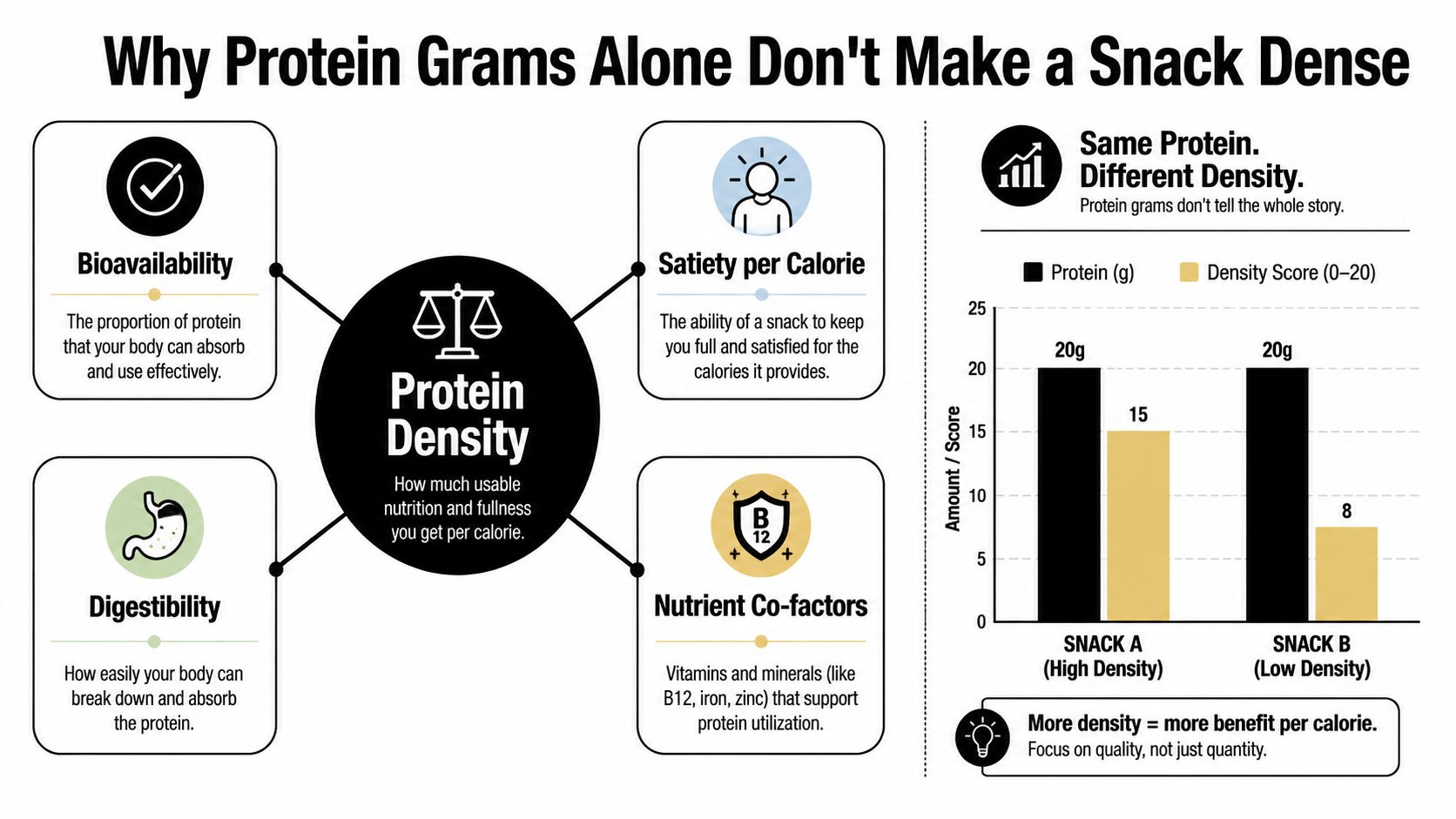
Why Protein Grams Alone Don't Make a Snack Dense
A snack with 20 grams of protein is not automatically better than one with 15 grams. If the first one comes bundled with a lot more calories, sugar, or low-satiety ingredients, it can be the weaker choice for a gym-goer or anyone trying to stay full between meals. Protein density means how much protein you get for the calories you spend, not just how big the protein number looks on the package.
That's the same reason a small, savory snack can feel more satisfying than a larger sweet one. The serving size matters, but so does the way the rest of the formula behaves in your mouth and in your stomach. A snack that gives you a strong protein-to-calorie ratio tends to do more useful work than a snack that merely looks impressive on the front label.
Practical rule: if you can't tell whether the calories are doing useful work, the protein number isn't enough information.
For people managing appetite, timing, or weight, that's a much better lens than front-of-pack hype. It also lines up with how clinicians talk about snack quality, not as a dessert in disguise, but as a compact food that earns its place. If you're looking at a weight-management plan and want a broader metabolic context, the Pause Medical metabolic program is one resource that frames food choices around sustainable structure instead of quick fixes.
The Four Criteria for Choosing a Truly Protein Dense Snack
The first filter is simple, protein per serving relative to calories. A snack with a solid protein dose in a modest calorie budget usually works better than one with the same protein padded by refined starch, sugar, or extra fat. FDA guidance cited by NPR says a food can be considered high in protein if it delivers at least 20% of the Daily Value for protein, which often works out to roughly 5 to 10 grams per serving depending on portion size (NPR on high-protein snack benchmarks).
Read the label like a coach, not a marketer
The second filter is ingredient quality. I'd look for foods that still sound like food, not a science project, and I'd be cautious when a snack leans on a lot of fillers, syrups, or hard-to-explain fat sources. The third filter is allergen fit, because a great protein snack isn't useful if it blocks the person who needs it from eating safely, especially with dairy, soy, gluten, or nuts in the picture.
The fourth filter is the fat and sugar profile around the protein dose. A snack can contain protein and still fail the satiety test if the rest of the formula pushes it toward candy logic. That's why the official “high in protein” line and the practical “useful snack” line aren't the same thing. The first is about labeling; the second is about whether you'll stay satisfied long enough to avoid grazing again an hour later.
Safefood's review helps make this concrete. In their survey of high-protein snack foods, protein bars averaged 31.7 g of protein per 100 g, while dairy drinks and smoothies had the highest mean protein per serving at 19.8 g (NPR summary of Safefood findings). Those numbers don't tell you which snack is best for every person, but they do show why the serving context matters as much as the protein total.
How Protein Dense Snacks Trigger Satiety and Support Muscle
A good protein snack doesn't just fill space in your stomach. It helps move hunger signals in the right direction, and that's especially noticeable in the mid-afternoon slump when people are most tempted to grab whatever is closest. Protein can support fullness and muscle repair at the same time, which is why a snack is more useful when it's timed with a real need rather than eaten on autopilot.
Why the same snack can feel different at different times
Think of hunger like a thermostat that's running a little too hot. A protein-dense savory snack can nudge it back toward steady without turning snack time into a second meal. That matters because the body doesn't treat every snack the same way, and the rest of the food matters too. A sweet snack with a lot of added sugar can feel less stabilizing even if the protein number looks fine on the front of the package.
Harvard Health notes that protein helps you feel fuller for longer and that, for muscle growth and recovery, a high-protein snack is often best within 30 to 60 minutes of strength training (Harvard Health). That's why a training snack needs to do two things at once, support recovery and avoid blowing up your calorie budget.
For a practical example, readers who like eggs for snack prep can also think about quality and taste, not just the protein total. If you want a deeper look at ingredient quality in that category, the superior taste of pasture raised eggs is a useful comparison point for how flavor and food quality shape whether a snack gets eaten.
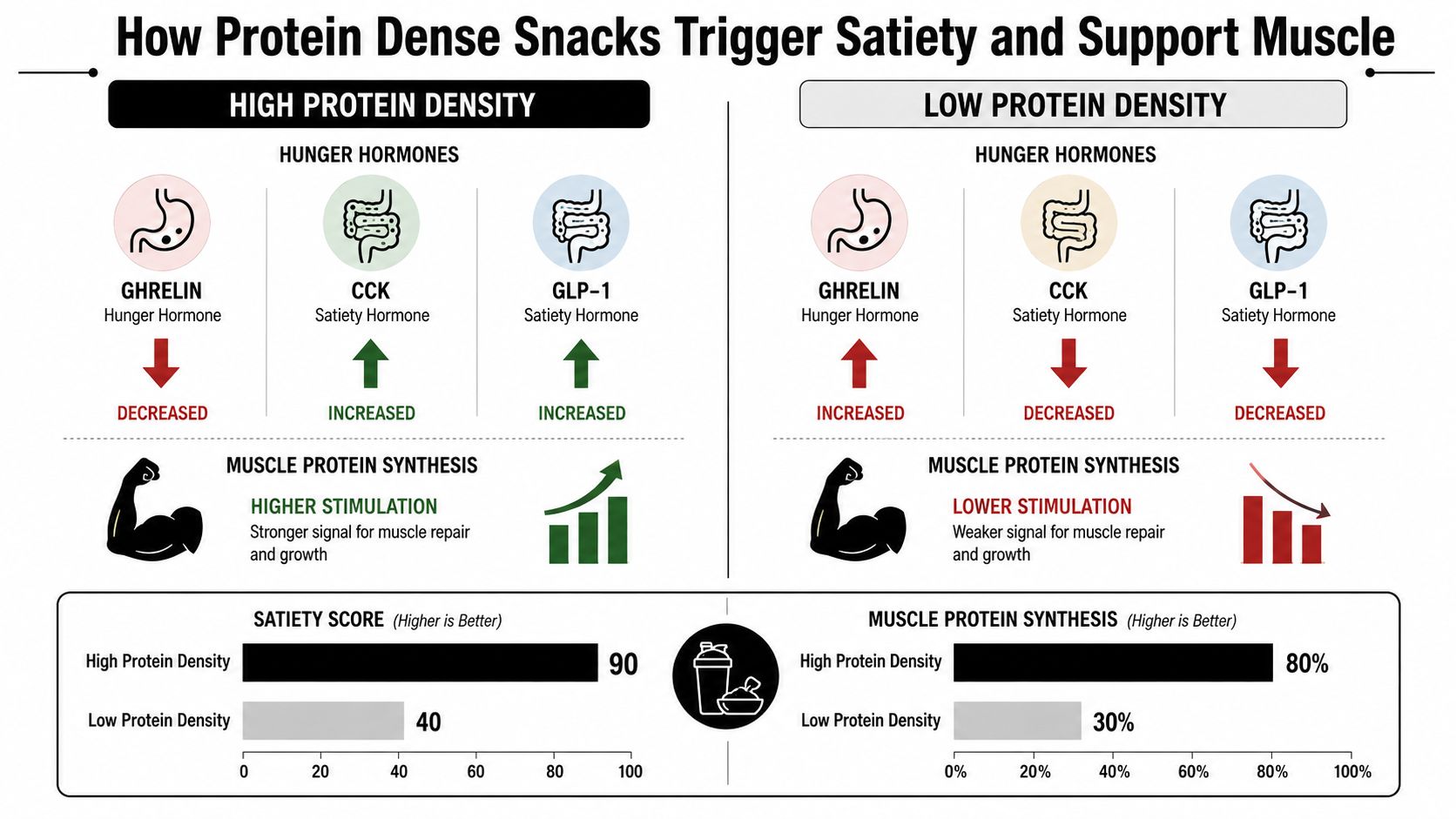
A snack that supports fullness and training recovery usually works better when the protein isn't buried under extra sugar.
If you want a broader view of staying full longer with smart food choices, the internal guide on how to stay full longer fits neatly with this protein-first approach.
Sweet Bars Versus Savory Crunch Where the Format Matters
Most shoppers meet protein snacks through bars and shakes, because those formats dominate shelf space. That doesn't make them the best default. Sweet bars can be convenient and tidy, but they often lean toward dessert behavior, which means the protein gets asked to compete with sweetness, chew profile, and craving psychology.
Savory crunch changes that equation. A crunchy, salty, protein-forward snack tends to feel more like a real break in the day and less like a candy substitute. That matters for people who want snack time to quiet hunger, not restart it. It also matters for plant-based and allergen-conscious consumers, because the market is still crowded with dairy-heavy and sweet-format products.
Here's a simple comparison:
| Format | What it tends to do well | Where it can fall short |
|---|---|---|
| Sweet bars | Portable, familiar, easy to portion | Can be sugar-forward and less satisfying |
| Shakes | Fast protein delivery, easy to drink | Often disappear too quickly to feel like a snack |
| Savory crunch | Better satiety feel, more food-like, lower sweetness load | Can be messier and less sleek in a bag |
A plant-based savory bag can fit that missing middle ground. Gym Snack is one example, with a crunchy pea-protein format built around 15g+ protein per serving and 30g+ per bag, while staying free of dairy, soy, gluten, and seed oils. That's not a universal answer, but it shows how savory protein snacks can be built around fullness rather than sugar-driven taste cues.
The format question is also a digestion question. Some people don't want a drink when they're hungry, and some don't want a bar that feels like candy. A crunchy savory snack can be the more practical choice when you want something portable that still behaves like food.
A quick visual comparison also helps if you like seeing the trade-offs in motion.
If you're looking for more format ideas, the internal guide on high-protein savory snacks covers the category from a different angle.
Timing and Portions for Gym Goers and GLP-1 Users
For gym-goers, snack timing should follow the workout, not fight it. If you're training hard, a snack in the 15 to 25 gram range can be useful when the goal is recovery or a meaningful satiety bump, while smaller amounts can still work as a bridge when you're nowhere near a full meal. The key is to spread protein across the day instead of trying to cram it all into one oversized eating window.
Two very different use cases need two different snack styles
A pre-workout snack usually needs to be light enough to sit well, while a post-workout snack should help you bounce back. That's why waiting too long after training can make you overeat later, and why a giant snack can feel too heavy if you're about to move. A slow-drip approach, where protein shows up in a few planned moments instead of one flood, tends to feel easier to maintain.
GLP-1 users often need the opposite of the old snack culture. Appetite is lower, portions need to stay smaller, and the best snacks are usually the ones that deliver a lot of satiety in a compact format. Independent reporting notes that US consumers on GLP-1 drugs are significantly less likely to buy snacks, and that the declines were concentrated in sweet and salty packaged snacks, which fits a shift toward intentional, smaller portions (Healthline on GLP-1 and snacking behavior).
Practical rule: when appetite is low, make the snack do more with less, not more with more.
That means a GLP-1-aware snack should be easy to finish, easy to digest, and built around protein density rather than volume. For gym-goers, the same logic applies in a different way. You're not just trying to eat protein, you're trying to place it where it helps performance without making you sluggish.
Smart Swaps and Two DIY Protein Dense Snack Recipes
A pantry makeover usually starts with honesty. If your default snack is a sweet bar, a big handful of chips, or a yogurt cup that behaves more like dessert than fuel, the first move is not perfection. It's choosing a better proxy for the same moment in your day.
| Common Snack Swaps for Better Protein Density | ||
|---|---|---|
| Original Snack | Protein Dense Swap | Key Improvement |
| Sweet bar | Savory pea-protein crunch bag | Less sugar, more food-like satiety |
| Chips | Roasted chickpeas with spices | More protein and fiber per bite |
| Sweet yogurt cup | Plain high-protein yogurt with berries | Less added sugar, better protein balance |
| Shake as a snack | Crunchy protein snack plus water | More chewing, slower eating, stronger fullness cue |
If you want more recipe ideas to build around this pattern, the protein recipes from Just Cook It can be useful as a technique library rather than a fixed menu.
Two quick DIY options
Savory roasted chickpea crunch: rinse and dry chickpeas well, toss them with oil and spices, then roast until crisp. The point isn't just flavor, it's transforming a humble legume into a biteable snack that feels closer to crunch food than meal prep. That's useful when you want something portable but not sugary.
Pea-protein cheese cracker style snack: combine a pea-protein base with seasonings, a little binder, and enough structure to bake into thin, crisp pieces. The target is a snack that behaves like a cracker but brings a stronger protein-to-calorie ratio than standard chips. If the final product still tastes good cold from a container, you've done it right.
For travel days, packaged crunchy protein snacks make more sense than DIY. For home, the goal is learning how to think in terms of texture, density, and portability, not just recipe steps.
Your Shopping Checklist for Better Protein Dense Snacks
A good shopping trip gets easier once you know what to ignore. The loudest number on the bag is rarely the whole story, and the best snack for you depends on whether you need recovery, fullness, portability, or allergen safety. The cleanest shortcut is to start with the protein-to-calorie ratio, then check ingredients, then decide whether the format matches the moment.
A fast filter by goal
- Gym recovery: choose a snack with enough protein to matter, and keep it easy to digest if you're eating close to training.
- GLP-1 support: pick smaller portions with a strong protein payoff and a lower sugar load.
- Plant-based: prioritize a dense protein base, not starch with protein sprinkled in.
- Allergen-conscious: look for labels that fit your needs before you look at the flavor name.
- Busy workday: choose something portable that won't turn into a second lunch.
Quick Tip: if the snack is sweet enough to feel like dessert, check whether the protein is doing the real work or just tagging along.
A simple minimum rule helps when you're in a hurry. Aim for at least 10g protein per serving, keep added sugar lower than the protein grams, and lean savory when you can. If you want to get faster at reading labels, the internal guide on how to read nutrition labels is worth keeping handy.
Before you buy, ask one question, not ten. Will this snack keep me satisfied for the next few hours, or is it just dressed up to look high-protein? If it can't answer that, leave it on the shelf.
Gym Snack offers a crunchy, plant-based savory option built for people who want protein without defaulting to bars or shakes. If you want a portable snack that fits the protein-density approach described here, visit Gym Snack and see how a savory format can fit your routine.