

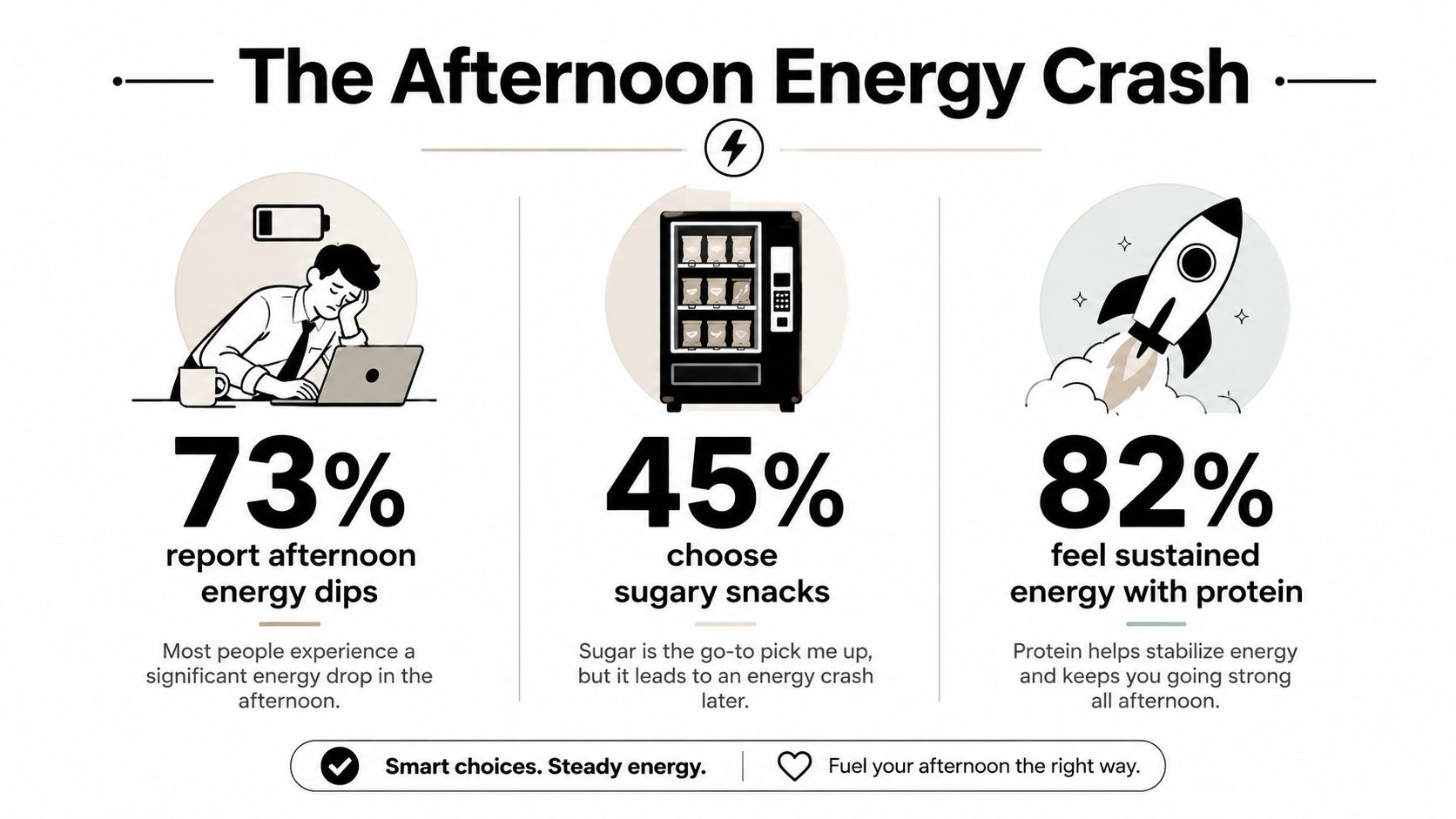
You're halfway through the workday, your stomach is growling, and the vending machine is offering either a sugary bar or a salty snack that leaves you hungry again. You choose one, promise yourself you'll eat better tomorrow, then arrive at training feeling flat and distracted. A well-built protein packed snack can interrupt that pattern without turning an ordinary hunger gap into another full meal.
The useful shift is to stop treating protein snacks as chalky dessert bars or oversized shakes. Savory, crunchy, plant-based formats can fit a desk drawer, gym bag, commute, or travel day while offering a practical combination of protein, texture, and portability. The global protein snacks market was valued at USD 54.86 billion in 2025 and is projected to reach USD 120.43 billion by 2034, with Asia Pacific representing 43.72% of the market in 2025, according to Fortune Business Insights' protein snacks market analysis.
This guide focuses on the decisions that matter in real life: how much protein to look for, how timing changes the target, how plant and animal options compare, how to read labels, and how to build savory snacks that you'll want to eat.
Why Protein Packed Snacks Have Become a Daily Habit
At three in the afternoon, a runner named Maya might still have emails to answer, a commute ahead, and an evening session planned. Lunch is long behind her, dinner is too far away, and coffee only masks the problem. A sweet granola bar may provide quick carbohydrates, but it often doesn't give her the staying power she needs to reach training without rummaging through the kitchen first.
A deliberate protein snack works as a bridge between meals. It doesn't need to replace lunch or dinner. It needs to make the gap manageable, especially when work schedules, late training, long commutes, and hybrid routines push traditional meals out of place.
Why protein feels more satisfying
Protein-rich meals can increase the gut hormones GLP-1 and PYY in a dose-sensitive way. In a controlled breakfast study, a high-protein meal produced the highest PYY at 240 minutes and the highest GLP-1 at 120 minutes, as described in this review of protein, appetite, and gut-hormone responses. That doesn't guarantee that your next meal will be smaller, but it helps explain why protein can make the hours between meals feel easier.
The practical result is appetite control, not magic. A snack with enough protein may reduce the urge to keep grazing, while the portion, total energy density, and timing still determine whether it fits your day.
Coach's rule: Use a protein snack to prevent an avoidable hunger emergency, not to compensate for meals that consistently lack enough food.
Protein also supports muscle repair and adaptation, which matters for lifters, runners, and anyone training regularly. The snack doesn't need to carry your entire daily nutrition plan. It needs to arrive in a format you can eat consistently, whether that means roasted legumes, a yogurt dip, a tuna pouch, or a savory plant-based crisp.
Consumer demand is moving in that direction. One U.S. industry analysis placed the broader snacking market at $126 billion, estimated protein snacks at $24 billion, and found protein-forward snacks outpacing the overall category by 3x. The same analysis reported 47.5% year-over-year growth for salty, savory protein snacks, signaling interest beyond sweet bars and shakes. See the protein snack phenomenon analysis from Chomps for the source details.
What Counts as a Protein Packed Snack
Start with a useful floor, not a marketing phrase. For everyday purposes, a protein packed snack should provide roughly 10 grams of protein without consuming the calories of a full meal. The more revealing calculation is protein density, expressed as grams of protein per 100 calories. A snack with a large protein headline can still be inefficient if most of its energy comes from sugar or fat.
A simple working benchmark
Use these questions in order:
- Does the serving contain enough protein? A snack that provides only a small amount may be nutritious, but it won't serve the same role as a protein-focused mini-meal.
- Does the protein fit the calories? Compare protein grams with total calories rather than judging the front of the package.
- Will you eat it in the setting where you need it? A refrigerated food may work after training but fail during a long commute.
- Does the ingredient list make sense for you? Dietary restrictions, allergens, digestion, and taste all count.
Protein can support fullness partly through GLP-1 and PYY responses, as the appetite research linked above explains. It also supplies amino acids involved in muscle protein synthesis. That makes protein useful after training, but it doesn't turn every high-protein treat into a complete recovery meal.
A protein packed snack is lighter and simpler than a high-protein meal. It should be easy to carry, eat with one hand, and store safely for the period you need it. A protein-flavored treat may contain a large protein claim, but sugar alcohols, coatings, oils, or added fats can push the total calories high enough that it functions more like dessert.
The definition to use while shopping
For this guide, look for a portable serving with 10 to 20 grams of protein, minimal added sugar, and recognizable ingredients. That could mean crunchy roasted edamame, a bean-based crisp, Greek yogurt with herbs, cottage cheese, eggs, or a carefully chosen jerky.
Coffee can also become part of a snack routine when it's paired with enough food to make the serving worthwhile. For readers who want to explore a convenient coffee format, this resource on reusable K-Cup protein coffee offers ideas for incorporating protein coffee into a reusable brewing setup. Treat the drink as one component, then check whether the complete snack still delivers enough protein and meaningful satiety.
How Much Protein and When It Matters Most
The right snack depends on what your body needs next. A between-meal snack has a different job from a recovery snack, and a pre-workout bite has different digestion demands from both.
12 to 15 grams is a practical between-meal default. It can help extend fullness without crowding out dinner. Before training, a smaller amount of protein paired with carbohydrates may work better, especially when the session begins soon. After training, a larger protein serving makes more sense because the priority shifts toward recovery.
| Timing window | Protein target | Calorie range | Primary purpose |
|---|---|---|---|
| Between meals | 10 to 15 g | Light snack portion | Extend fullness and reduce grazing |
| Before training | 5 to 10 g with carbohydrates | Light to moderate portion | Provide accessible training fuel |
| After training | 15 to 25 g | Moderate recovery portion | Support muscle repair and recovery |
These ranges are practical coaching targets, not guarantees. The appetite research on high-protein meals found that protein can raise GLP-1 and PYY, while also emphasizing that satiety and next-meal intake don't always move together. More protein isn't automatically better if the snack becomes so large that it interferes with your next meal.
Match the snack to the clock
If you're eating between meals, choose a compact savory option such as roasted legumes, a yogurt dip, or a protein crisp. If you're eating before training, combine protein with a carbohydrate source, such as crackers, fruit, or a small cereal serving. Keep the texture and portion easy to digest when the workout is close.
After training, put protein first and add carbohydrates when the session was demanding or your next meal is delayed. A snack with 15 to 25 grams can be more useful than a tiny bite that leaves you searching for food again soon afterward.
Timing shortcut: Before training, prioritize usable carbohydrates with a modest protein addition. After training, prioritize protein, then add carbohydrates according to the session and your next meal.
Your total daily protein intake still matters more than one snack. Use this guide to calculating daily protein needs to establish the larger target, then use snacks to fill predictable gaps rather than piling protein onto an already complete day.
A savory cereal or crunchy grain-based option can work when you want carbohydrates alongside protein. For shoppers comparing specialty products, artisan cereal at Saporia is one example of a format to evaluate by serving size, protein, sugar, and intended timing. The same label rules apply whether the snack is sweet, salty, dry, or refrigerated.
Plant Based Versus Animal Based Options
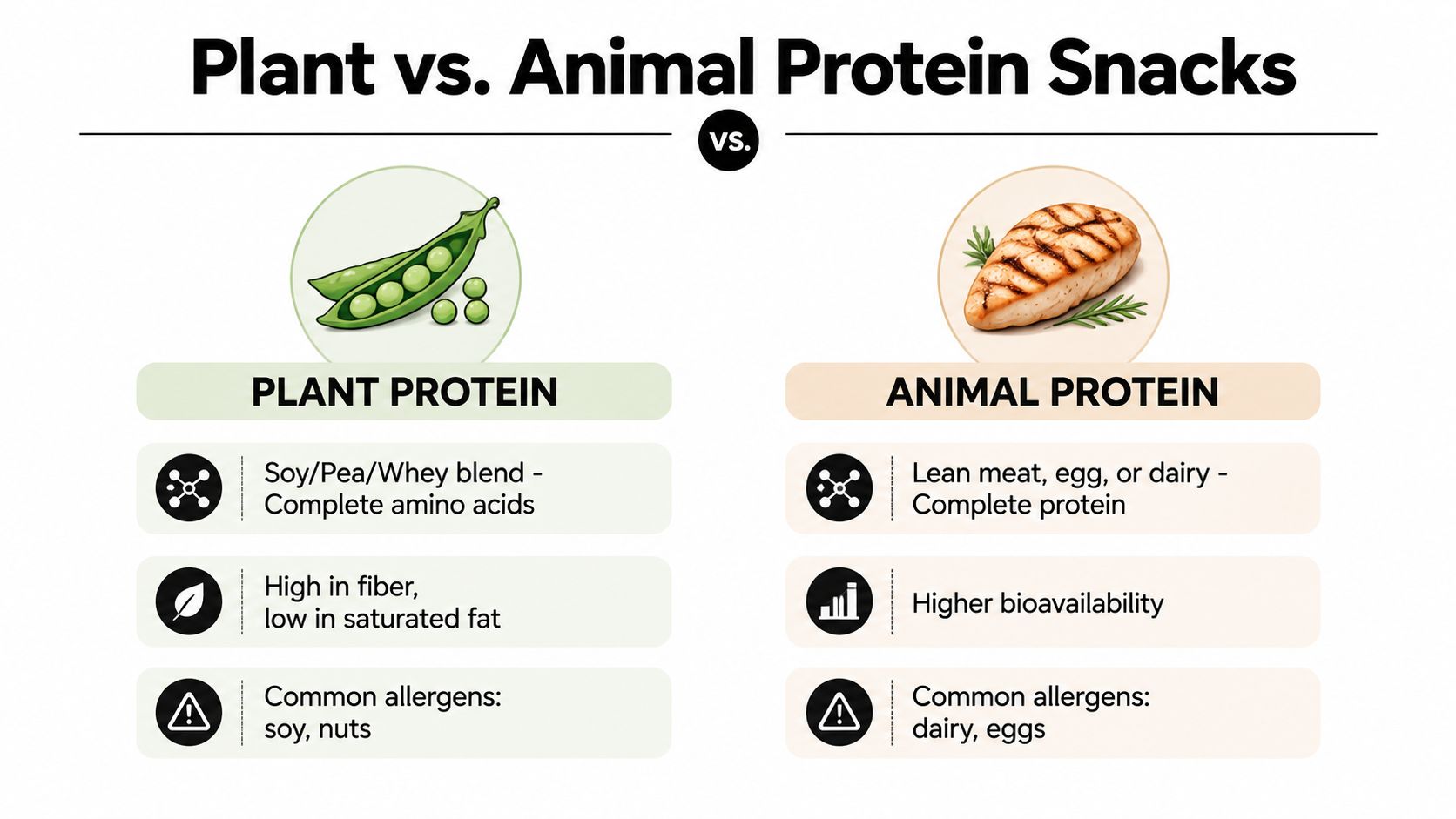
A Greek yogurt cup, boiled egg, tuna pouch, or chicken serving can deliver complete protein in a compact format. These foods are often convenient after training, but refrigeration, dairy or egg tolerance, and personal preference can limit where they fit.
Plant-based snacks bring different strengths. Roasted soybeans, edamame, chickpeas, lentils, peas, fava beans, and seed-based bites can provide crunch and portability while supporting a plant-forward routine. Their texture also helps solve a problem many athletes mention: they want something savory and satisfying, not another sweet, soft bar.
Protein quality is part of the label conversation
Pea protein can be useful, especially for people avoiding dairy, meat, or eggs, but it shouldn't be treated as identical to whey gram for gram. Literature summarized in this technical review of plant protein PDCAAS and DIAAS reports pea protein DIAAS values commonly around 0.65 to 0.82, with sulfur amino acids such as methionine and cysteine often limiting. Manufacturers can address that constraint through complementary protein blends, adequate serving sizes, or formulation choices that improve the overall amino-acid profile.
Soy is another useful plant option, while varied plant foods across the day can help broaden amino-acid intake. Digestibility, serving size, and the total diet matter more than whether a snack carries a plant-based label.
Choose according to the day you're having
| Consideration | Plant-based formats | Animal-based formats |
|---|---|---|
| Portability | Roasted legumes and crisps can be shelf stable | Jerky and tuna pouches travel well, dairy usually needs cooling |
| Texture | Crunchy, crisp, roasted, or seed-forward | Creamy, chewy, flaky, or firm |
| Protein quality | May require blending or a larger serving | Often compact and complete |
| Common concerns | Soy, peas, peanuts, tree nuts, sesame | Milk, eggs, seafood |
| Best fit | Plant-forward routines and pantry storage | Fast recovery options when refrigeration is available |
Allergen awareness matters on both sides. Check for soy, pea, peanuts, tree nuts, milk, egg, wheat, sesame, seafood, and shared-facility warnings. A product can fit your diet in theory and still be unsuitable if manufacturing cross-contact creates a risk.
For a deeper side-by-side explanation, use this plant-based protein versus animal protein comparison. The best choice depends on tolerance, budget, flavor, storage, and how reliably the snack helps you meet your needs.
Reading Labels Without Getting Fooled
The front of a package is designed to create a quick impression. The nutrition panel tells you whether the impression survives closer inspection.
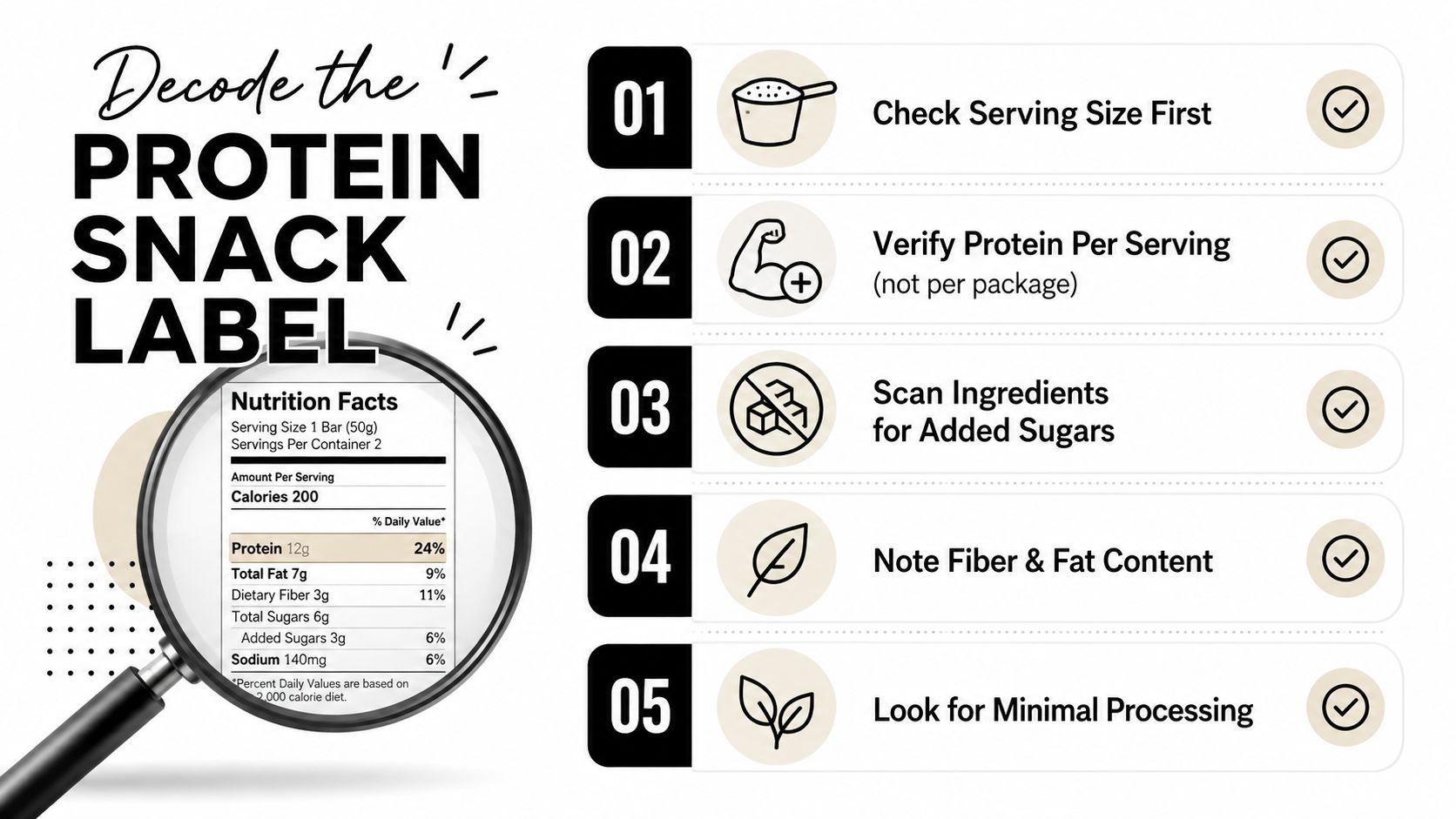
Start with the serving size. A bag may contain multiple servings, so a protein claim that looks impressive may apply to only part of what you plan to eat. Check the serving size, servings per package, protein per serving, and calories before comparing products.
Use the panel, not the promise
A strong label check takes less than a minute:
- Confirm the portion: Decide how much you'll eat, then calculate protein and calories for that amount.
- Compare protein density: A higher protein number isn't better if the serving also carries a large amount of energy.
- Scan added sugar: Savory snacks can still contain sweeteners, syrups, or sugar-heavy coatings.
- Check fiber and fat: Protein alone doesn't tell you whether the snack will feel satisfying or fit your appetite.
- Read the ingredients: Look for a list you understand, especially if you want a minimally processed option.
“Plant-based” describes the protein source, not the entire processing method. A snack can be plant-based and still use a long ingredient panel, multiple flavor systems, or an extrusion process. That doesn't automatically make it a poor choice, but it gives you more reasons to compare products rather than trusting the front label.
Seed oils deserve the same balanced treatment. Avoiding them may be a personal shopping preference, but their absence doesn't prove that a snack is healthier, lower calorie, or easier to digest. Judge the whole formula, including the protein source, fat, sodium, fiber, and portion.
Make value and safety visible
To compare cost, divide the total protein in the package by the total price. Then account for waste, storage, and whether you'll finish the product. A cheaper package isn't better value if it sits unused or requires storage you can't manage.
Use explicit allergen statements and shared-facility warnings rather than guessing from the ingredient list. This guide to reading nutrition labels can help you build a consistent process. A protein snack should pass three tests: the serving makes sense, the ingredients suit your needs, and the format works in the situation where you'll eat it.
Portable Savory Snack Ideas and Quick Builds
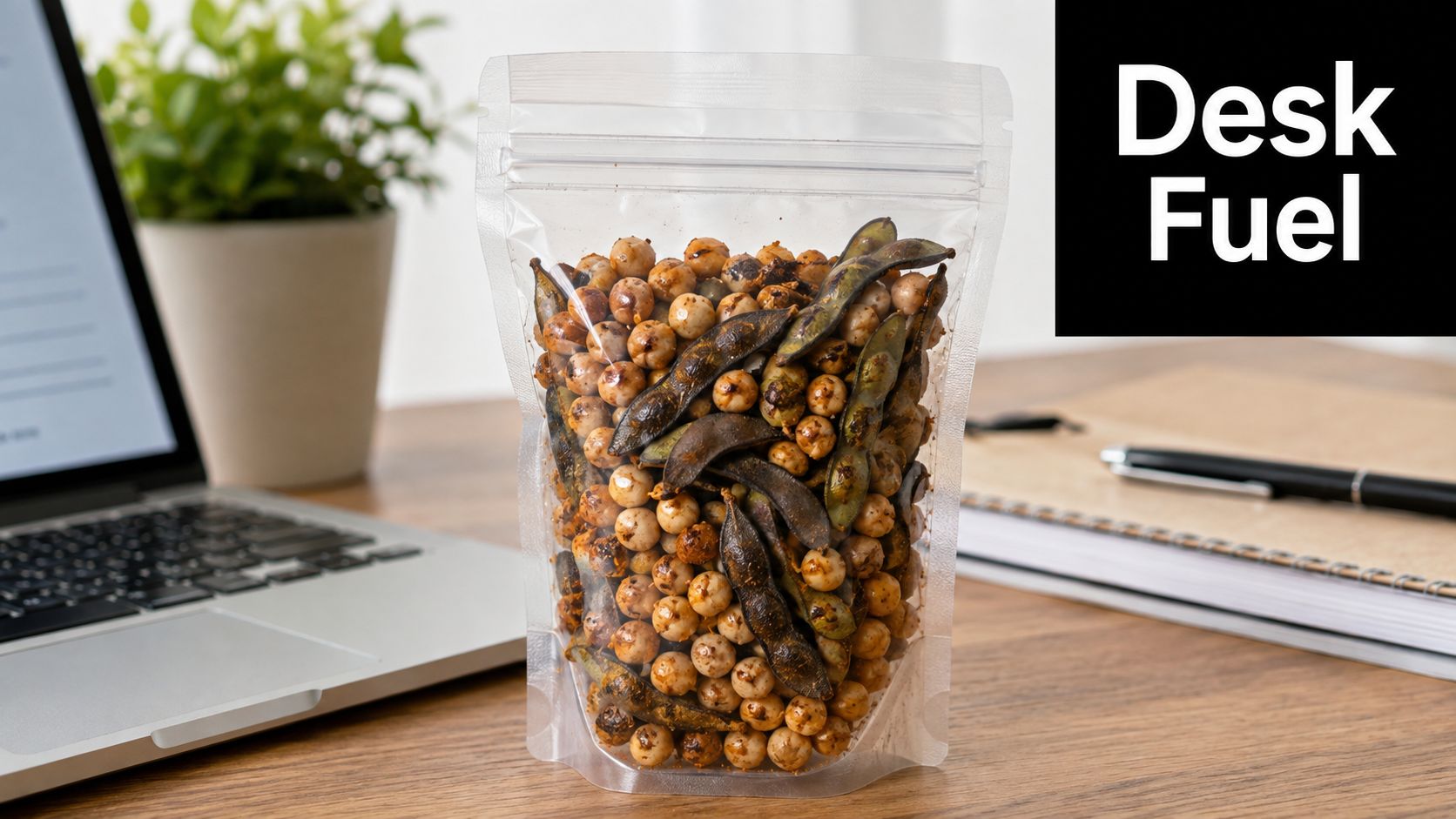
A lifter heading from work to the gym doesn't need another dessert disguised as sports nutrition. A small container of roasted chickpeas, edamame, fava beans, lentil crisps, or seeds can deliver the crunch that makes a snack feel substantial. Add fruit, crackers, or another carbohydrate when the workout demands more readily available fuel.
Build around one anchor
Choose one protein-forward component, then decide whether you need a carbohydrate, produce, or dip:
- Roasted legumes: Pair roasted chickpeas or edamame with fruit when training is later.
- Crunchy seed formats: Add whole-grain crackers or sliced vegetables for more volume.
- Hummus and crackers: Useful when you want a savory combination, but check the label because hummus alone may not reach your protein target.
- Apple and sunflower-seed butter: A practical plant-based pairing when you need carbohydrate and fat alongside a modest protein contribution.
- Bean dip and cucumber: Fresh, crisp, and easy to portion into a small container.
For storage, keep shelf-stable components separate from refrigerated foods. A compact lunch bag can make yogurt, dips, and cheese more realistic during a long day. If you're choosing a color or format for that carry system, this guide to yellow lunch bags offers a practical starting point for comparing lunch-bag styles.
Two quick savory builds
Herbed yogurt dip: Stir plain Greek yogurt, or an unsweetened plant-based alternative, with lemon, dried herbs, and black pepper. Pack it with cucumber, peppers, carrots, or a crunchy legume snack, then verify the final protein amount on the yogurt or alternative's label.
Smoky roasted chickpeas: Toss chickpeas with a small amount of olive oil, smoked paprika, and salt. Roast until crisp, cool them fully, and portion them into a container so the serving doesn't become the entire tray.
Gym Snack provides a worked example of the savory, crunchy, plant-based format. Its product information describes pea-protein crisps with 15 grams or more of protein per serving and 30 grams or more per bag, along with no dairy, soy, gluten, or seed oils. Check the current package for protein, ingredients, allergens, and serving size before deciding whether it fits your own needs.
Before training, keep the snack easy to digest and include carbohydrates when useful. After training, give protein priority. In either case, “high protein” doesn't excuse an oversized portion or a product you dislike enough to abandon after one purchase.
Putting It All Together on Your Next Shopping Run
Walk into the snack aisle with four questions. They'll keep you from choosing based on a large protein number alone.
The four-question filter
First, does the protein justify the calories? Compare protein grams with total calories and inspect the serving size. A snack should support your intended role, whether that's extending fullness or supporting recovery.
Second, does the timing match the job? Choose a smaller protein serving with carbohydrates before training, a larger protein serving after training, and a moderate portion between meals. The GLP-1 and PYY response helps explain why protein can improve fullness, but the snack still needs to fit your appetite and the next meal.
Third, can you understand the formula? Read the ingredients, added sugar, fiber, fat, sodium, and allergen statement. A short list isn't mandatory for every useful food, but transparency makes comparison easier.
Fourth, can you store and tolerate it? Choose plant-based, dairy-free, gluten-free, or allergen-conscious options when necessary. A refrigerated snack isn't practical if it will sit in a hot car, and a shelf-stable snack isn't useful if its texture makes you avoid it.
Shopping test: The right snack earns its place by matching your protein target, timing, digestion, storage, and taste. It doesn't win on the front label alone.
A practical shopping list
- Produce: Apples, bananas, cucumbers, peppers, and carrots for carbohydrate, freshness, and crunch.
- Dairy or alternatives: Greek yogurt, cottage cheese, or an unsweetened fortified alternative for a moderate protein serving.
- Pantry: Roasted chickpeas, edamame, fava beans, lentil crisps, seed-based snacks, whole-grain crackers, and bean dip. Check each package against your chosen protein target.
- Refrigerated case: Eggs, tuna pouches where appropriate, cheese, yogurt dips, or prepared lean proteins for post-training use.
- Savory packaged snacks: Compare serving size, protein density, allergen statements, and ingredient transparency before buying more than one package.
Portions should adjust to the rest of your day. If your meals already cover your protein needs, a smaller snack may be enough. If dinner is delayed after training, use the recovery range as your guide and add carbohydrates when the session or schedule calls for them.
Start with two formats this week, one shelf-stable and one refrigerated. Pack the shelf-stable option for your commute or desk, prepare the refrigerated option for training days, and record which one keeps you satisfied without spoiling your next meal.
Gym Snack offers chef-inspired, plant-based savory protein crisps designed for the gap between meals, training sessions, and busy commutes. If crunchy, dairy-free, soy-free, gluten-free snacking fits your routine, visit Gym Snack to review the available flavors and current product details.