

You train hard, eat mostly whole foods, and still hit the same problem every afternoon. Lunch was decent. Dinner will be solid. But between meetings, commuting, and your workout, your protein intake falls apart. You grab a sweet bar you don’t want, or skip the snack and show up to training underfueled.
That gap matters more on a plant-based diet than is commonly understood. Not because plant protein is weak, but because convenience often becomes the limiting factor. Plenty of people can build a high-protein dinner. Far fewer can consistently carry a savory, portable option that helps them close the distance between what they planned to eat and what they eat.
Why Your Plant-Based Diet Needs a Protein Strategy
A plant-based diet can support muscle, recovery, and body composition. But it works best when protein is planned on purpose, not left to chance.
Most active people don’t struggle at dinner. They struggle at 2 p.m., after a workout, during travel, or on a long workday. That’s when protein goals get replaced with coffee, fruit, a pastry, or a low-protein snack that does nothing for fullness. Then dinner becomes a rescue mission.
Where most people get stuck
Plant-based eaters usually fall into one of three patterns:
- Meal-only thinking. They assume breakfast, lunch, and dinner will cover everything, even when those meals are rushed or light on protein.
- Too much fiber too fast. They add big portions of beans and lentils without adjusting gradually, then blame plant protein instead of the transition.
- Sweet supplement fatigue. They rely on bars and shakes for convenience, then get bored, skip them, or start craving salty foods.
A smarter approach is to use meals for your protein base and snacks for your protein insurance. That’s the difference between “I eat healthy” and “I reliably hit my target.”
Practical rule: Build your day so that missing one meal choice doesn’t wreck your protein intake.
That’s especially important if you train before work, lift after class, or have a job where breaks aren’t predictable. In those settings, a protein rich plant based food strategy needs to include portable options, not just recipes.
If you need a practical primer on daily intake and meal construction, this guide on getting enough protein on a plant-based diet is a useful companion. The key idea is simple. Don’t treat protein like an afterthought. Treat it like part of your training plan.
What a real strategy looks like
A good plant-based protein strategy does four things well:
- Covers total daily intake with foods you’ll eat.
- Spreads protein across the day instead of saving it all for dinner.
- Uses convenient options for work, travel, and pre or post workout windows.
- Balances quality and digestion so you can stay consistent.
That combination supports muscle repair, satiety, and energy much better than random “healthy” eating. Consistency wins this game. The person who has protein available usually outperforms the person who plans to eat well later.
Understanding Plant Protein for Muscle and Metabolism
People still talk about plant protein as if it’s incomplete by default. That’s outdated. A better way to think about it is this: protein is built from amino acids, and your body cares about the total supply you eat across the day.
Think of amino acids like building bricks
Each protein food brings a different mix of amino acids. Some foods supply more of one, some more of another. If you imagine muscle repair as building with LEGO bricks, you don’t need every single brick in one handful. You need the full set available over time.
That’s why obsessing over combining foods at every meal usually isn’t necessary. A varied intake of legumes, soy foods, grains, nuts, seeds, and concentrated plant proteins can cover what your body needs. For readers who want a clear breakdown, this article on complete protein sources explains the concept in a practical way.
Why this matters beyond the gym
Protein isn’t only about bigger lifts or visible muscle. It also helps with:
- Repair and maintenance after training
- Staying fuller between meals
- Keeping energy steadier than low-protein snacking
- Making weight management easier when your meals are satisfying
Plant proteins also fit well into a broader health strategy. A Harvard T.H. Chan School of Public Health report on plant-to-animal protein ratio and heart health noted that the average American eats about a 1:3 plant-to-animal protein ratio, while shifting to at least 1:2 was linked with lower cardiovascular disease risk. A 1:1.3 ratio was associated with 19% lower cardiovascular disease risk and 27% lower coronary heart disease risk compared with the lowest ratio.
That doesn’t mean every athlete needs to be fully vegan. It does mean moving more of your protein intake toward plants can support both performance and long-term health.
Protein works best when it solves two jobs at once. It should help recovery, and it should make the next poor food decision less likely.
The satiety advantage people overlook
Most gym-goers understand muscle repair. Fewer think about satiety strategically. That’s a mistake.
When someone tells me they “can’t stay on plan,” I usually look at how much protein they eat before late afternoon. If breakfast is mostly carbs and lunch is light, cravings later are predictable. Plant protein can help here, especially when it comes from foods that are substantial enough to feel like real food, not candy in fitness packaging.
This is also where food format matters. Liquid protein has its place. So do bars in a pinch. But many people do better with savory options they can chew, because they feel more like a meal bridge than a dessert substitute. If you travel often and still use dairy in your diet, this piece on the benefits of 1 percent milk for travel is one example of how portability changes food choices on the road. The bigger lesson applies either way. Convenience shapes compliance.
What doesn’t work
A few habits repeatedly derail plant-based athletes:
- Waiting until dinner to “catch up” on protein
- Relying only on vegetables without a true protein anchor
- Using snacks that are mostly dates, syrups, or puffed grains
- Assuming whole foods alone will always be practical on busy days
A strong plant-based diet includes whole foods first, but it also respects reality. If your schedule is demanding, your protein plan has to be portable, repeatable, and easy to digest.
The Ultimate Plant-Based Protein Powerhouse List
The most useful way to build a protein rich plant based food plan is to separate foods by job, not by ideology. Some foods are meal anchors. Some are add-ons. Some are convenience tools.
A Healthline chart of vegan protein sources notes that plant-based proteins from legumes, nuts, seeds, and pea or soy milks provide about 4 to 10.5g protein per standard serving. Specific examples include lentils at 10.5g per ½ cup, kidney beans at 10g, chickpeas at 9g, pumpkin seeds at 8.5g per ounce, and pea milk at 8g per cup.
Top protein rich plant based foods at a glance
| Food Source | Serving Size | Protein (g) | Key Benefit |
|---|---|---|---|
| Lentils | ½ cup | 10.5 | Strong meal base with fiber |
| Kidney beans | Standard serving | 10 | Useful for bowls, chili, salads |
| Chickpeas | ½ cup | 9 | Versatile for roasting, mashing, tossing into meals |
| Pumpkin seeds | 1 oz | 8.5 | Easy topping or snack add-on |
| Pea milk | 1 cup | 8 | Simple way to raise breakfast protein |
Legumes that do the heavy lifting
Legumes are still the foundation for many plant-based athletes. They’re affordable, flexible, and satisfying.
Lentils work well because they cook quickly and fit almost anywhere. Add them to soups, pasta sauces, grain bowls, or wraps. Chickpeas are the easier “default protein” for many people because they can go into salads, curries, sheet-pan meals, or be crisped for texture. Kidney beans are a strong choice when you need a heartier meal with rice, potatoes, or corn.
If someone tells me they eat plant-based but struggle with protein, I often find they’re eating vegetables regularly but legumes inconsistently.
Seeds and nuts that boost totals quietly
Pumpkin seeds are one of the easiest upgrades because they add crunch and meaningful protein without changing your whole meal. Sprinkle them over oats, salads, soups, or roasted vegetables.
Nuts and seeds usually aren’t enough to carry an entire day’s protein target on their own, but they raise totals efficiently. That matters when you’re trying to move from “pretty good” to “on target.”
Kitchen shortcut: Keep one meal anchor and one protein booster in every meal. A grain bowl with lentils is better with pumpkin seeds. Oats are better with a higher-protein milk. Soup is better with beans.
Plant milks that can stop breakfast from underperforming
Breakfast often underdelivers on protein because people build it around fruit, toast, or coffee. Using pea milk instead of a lower-protein base is one of the easiest fixes. It works in oats, smoothies, cereal, and overnight oats.
That sounds small, but repeated breakfast choices shape the rest of the day. If breakfast is weak, lunch has to work harder.
Whole-food proteins versus concentrated proteins
Whole foods should stay central. They bring fiber, micronutrients, and more volume. But they also have limits in busy schedules.
A bowl of lentils is excellent at home. It’s less useful in a backpack, a glove compartment, or the gap between work and training. That’s where protein isolates and foods built from them become practical, not inferior.
Concentrated plant proteins help when you need:
- Higher protein in less volume
- Portability
- Less prep
- More predictable portions
That doesn’t mean replacing meals with packaged foods. It means using concentrated protein where it solves a real problem.
How to choose the right source for the situation
Different contexts call for different tools.
| Situation | Better choice | Why |
|---|---|---|
| Sit-down lunch | Lentils or beans | More satisfying as a meal anchor |
| Quick breakfast | Pea milk in oats or smoothie | Raises protein without extra prep |
| Desk snack | Pumpkin seeds plus fruit | Fast, shelf-stable, easy |
| Pre or post workout on the go | Concentrated plant protein snack | More protein with less bulk |
The mistake I see most often is using the same strategy for every setting. A good meal protein isn’t always a good travel protein. A good dinner food isn’t always a good gym-bag food.
The modern category that solves the snack gap
For athletes, students, and busy professionals, the gap usually appears between meals. That’s where modern pea-protein-based foods earn their place. They make it easier to keep intake high without carrying containers of beans or depending on sweet shakes.
That category matters because adherence matters. The more practical the food, the more likely you are to use it consistently. And consistency is what turns a plant-based pattern into a muscle-supportive one.
How to Fuel Muscle Growth with Plant Protein
Athletes don’t need motivational slogans about plant protein. They need to know whether it can support muscle gain, recovery, and training output. The answer is yes, but the details matter.
Start with total daily intake
Training creates the demand. Daily intake meets it.
For serious lifters and active people, a useful target is often discussed in grams per kilogram of body weight. The practical point is that your total for the day matters first, and then meal distribution helps you use that total better. If you train hard and only eat small, scattered amounts, performance nutrition becomes guesswork.
Leucine is the trigger that matters
Leucine is one of the amino acids most closely tied to switching on muscle protein synthesis, the process involved in repair and adaptation after training. In this context, some plant proteins stand out more than others.
A review of vegan protein sources and pea protein data notes that pea protein isolate provides about 8 to 9% leucine by weight, compared with 10 to 12% for whey, and that controlled trials found post-workout pea protein elicited muscle protein synthesis rates equivalent to whey.
That matters because it answers the common skepticism directly. Plant protein doesn’t need to imitate whey poorly. Some forms, especially pea isolate, perform well in the context athletes care about most.
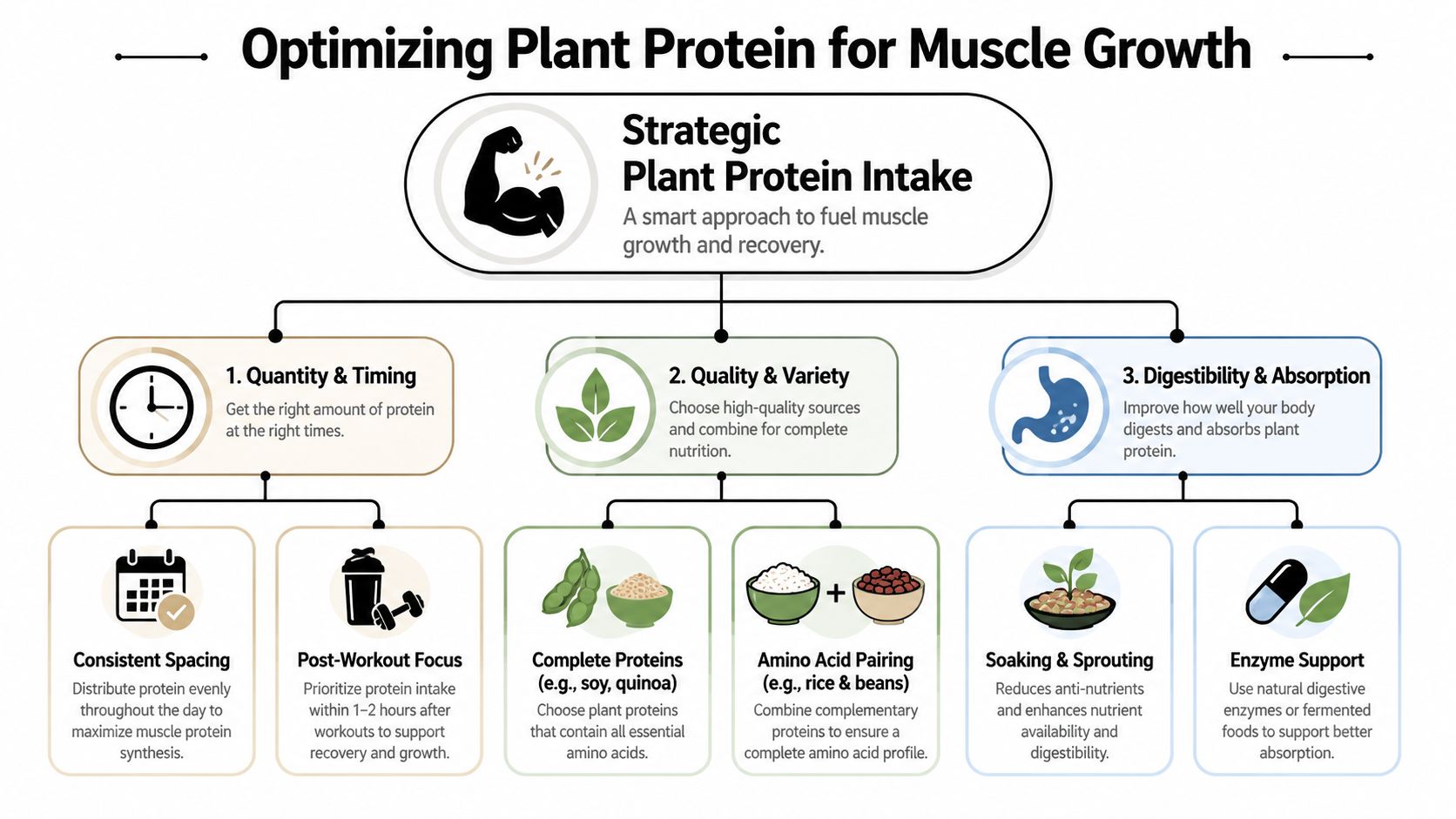
What works in practice
The lifters who do well on plant protein usually get three things right:
- They eat enough total protein, not just “clean” meals.
- They include stronger protein anchors around training.
- They stop treating convenience foods as a moral failure when those foods solve an actual performance problem.
The ones who struggle often build meals around salads, toast, smoothies with too little protein, or grain bowls that are heavy on carbs and light on concentrated protein.
Why pea protein deserves serious attention
Pea protein works well for several reasons. It has a strong leucine profile, it’s easy to formulate into savory foods, and it avoids dairy. For people who don’t tolerate whey well, that matters. For people tired of sweet supplements, it matters even more.
This doesn’t make soy, lentils, or mixed whole-food meals irrelevant. It means pea protein is one of the most useful tools when the goal is muscle support with convenience.
Don’t judge a protein source by whether it looks “natural” on social media. Judge it by whether you can digest it, use it consistently, and recover well on it.
Timing without overcomplicating it
You don’t need to turn your life into a feeding schedule. But a few timing habits help:
- Don’t leave long stretches with no meaningful protein, especially on training days.
- Eat a solid protein dose after lifting if your prior meal was light or far away.
- Use portable protein before the “I’ll eat later” trap starts.
That’s where savory plant protein options are often easier to stick with than another shake. They travel better, feel more food-like, and can fit before or after sessions without much planning.
If recovery is your weak point overall, not just protein timing, these science-backed recovery strategies offer useful context on the bigger picture. Protein is one lever. Sleep, hydration, and training load still count.
The performance takeaway
If your goal is muscle growth, don’t let outdated assumptions about plant protein hold you back. A well-structured plant-based diet can support hypertrophy and recovery. But it has to be built with intent.
Choose foods that are strong enough for the job. Use whole foods for meals. Use concentrated proteins when life gets busy. And make sure your snack choices support your training instead of just filling time.
Practical Meal and Savory Snack Strategies
You finish training, head into meetings, commute home late, and suddenly realize the only thing you have eaten since lunch is fruit and coffee. That is how plant-based athletes miss their protein target. Usually not at dinner. In the long stretch between meals.
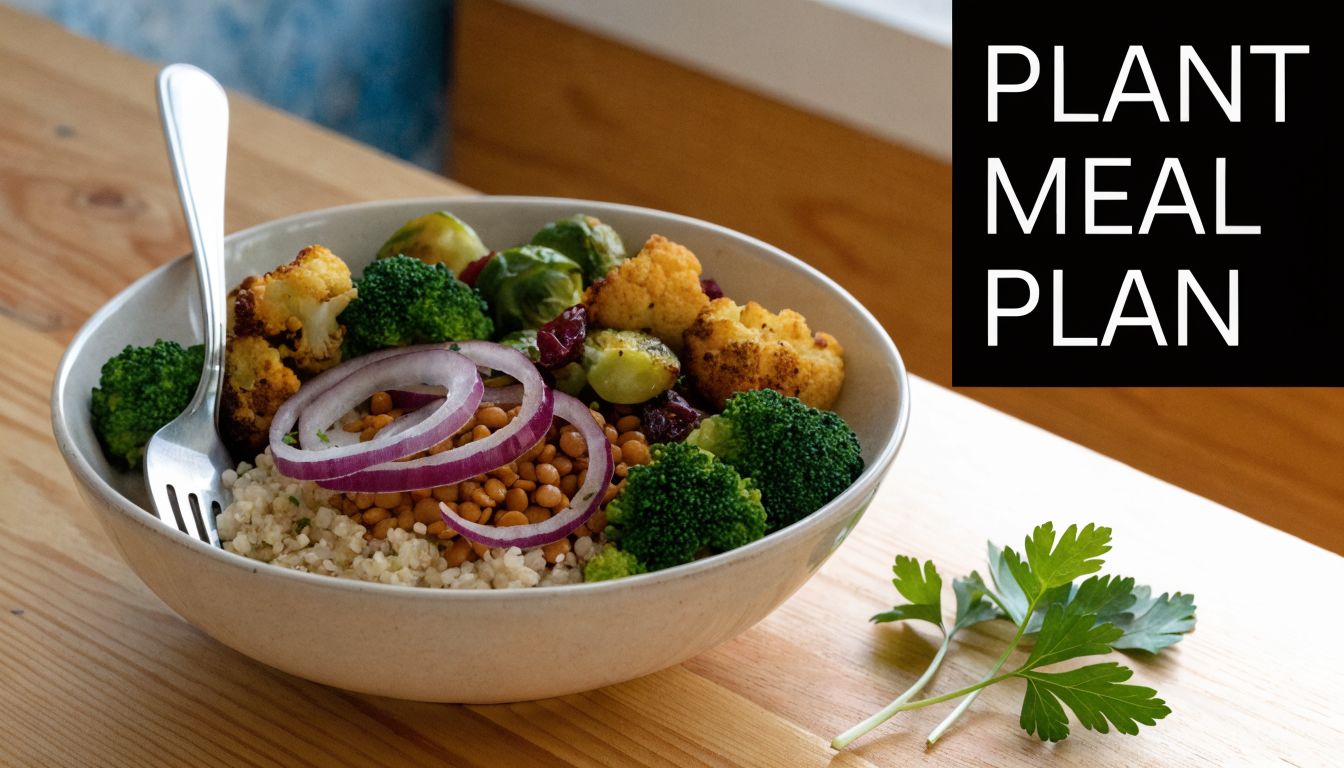
Build meals around a clear protein anchor
Every meal needs an obvious protein source, not just a healthy vibe. In practice, that means lentils, tofu, tempeh, edamame, chickpeas, pea milk, or a concentrated plant-protein snack that can cover the gap when a full meal is not realistic.
I tell active clients to ask one question before they eat: What is the protein anchor here? That question cleans up weak breakfasts, light lunches, and snack choices that leave them hungry an hour later.
A grain bowl without beans or tofu is mostly carbs. A salad without a legume, soy food, or protein topping is mostly produce. Both can fit into a good diet, but neither does much for muscle recovery on its own.
A day of eating that actually works in real life
A useful high-protein plant-based day does not require meal prep perfection. It requires repeatable choices.
- Breakfast. Oats made with pea milk, plus pumpkin seeds and fruit.
- Lunch. A lentil quinoa bowl with mixed vegetables and tahini dressing.
- Afternoon snack. Savory pea-protein crisps or roasted chickpeas, depending on how portable you need it to be.
- Dinner. Tofu, rice, and vegetables, or chickpea pasta with a lentil-based sauce.
- Evening option. A small protein-focused snack if dinner was light or training ran late.
That pattern works because protein shows up several times across the day. You are no longer trying to rescue your macros with one oversized dinner.
The snack gap is where many plant-based athletes fall short
Meals usually look fine on paper. The missed protein happens between them.
That gap matters most for people with long workdays, early training, double sessions, travel, or low appetite after exercise. Whole foods should still do most of the heavy lifting, but whole-food meals are not always available when you need them. A portable savory option solves a practical problem that meal plans often ignore.
Sweet bars and shakes can work. They also create flavor fatigue fast, especially for people who already use smoothies, oats, or fruit around training. Savory options feel more like food, travel better in a gym bag, and fit the appetite many people have at midday or after lifting.
A guide to savory high-protein snacks can help if you want examples that are easier to use between classes, meetings, or training blocks.
Snack rule: If a snack does not make a real contribution to your protein target, it is convenience food, not recovery support.
Use packaged protein with purpose
Packaged options are useful when they do a specific job. Gym Snack is one example. It is a savory pea-protein snack designed to be portable and suitable for people avoiding dairy, soy, or gluten. That makes it practical for the athlete who needs something shelf-stable at work, in a locker, or in a carry-on.
The trade-off is simple. Packaged snacks should support your food plan, not replace actual meals. Use them to cover dead zones in the day, especially the hours when cooking is impossible and a low-protein convenience choice is the default.
I usually recommend storing one portable protein option in each friction point: your gym bag, your desk, your car, or your travel bag. Consistency improves when the backup plan is already there.
Small kitchen upgrades add up fast
Portable snacks help, but home meals still set the foundation. A few changes make a noticeable difference:
- Use pea milk in breakfast staples instead of lower-protein plant milks.
- Add legumes twice in soups, stews, and bowls, such as lentils plus chickpeas.
- Start lunch with the protein, then build grains and vegetables around it.
- Batch-cook one major protein source each week so fast meals still have structure.
- Keep one savory portable option on hand for the part of the day when cooking will not happen.
If you want a visual reset for meal ideas, this clip is a helpful place to start.
Common mistakes that keep protein too low
| Common move | Why it underdelivers | Better option |
|---|---|---|
| Fruit-only snack | Gives quick energy, but very little staying power for recovery | Pair fruit with a protein source |
| Salad with no protein anchor | Too light for active people trying to build or maintain muscle | Add lentils, chickpeas, tofu, or tempeh |
| Saving most protein for dinner | Hard to catch up once the day gets away from you | Spread protein across meals and snacks |
| Relying only on sweet bars or shakes | Adherence drops when everything tastes like dessert | Rotate in savory portable options |
The practical lesson is straightforward. Meals create the base. Savory, high-protein portable foods close the snack gap. Handle both, and hitting your macros gets much easier.
Navigating Digestion, Allergens, and Bioavailability
A lot of people can eat more plant protein successfully. They just need a better transition plan.
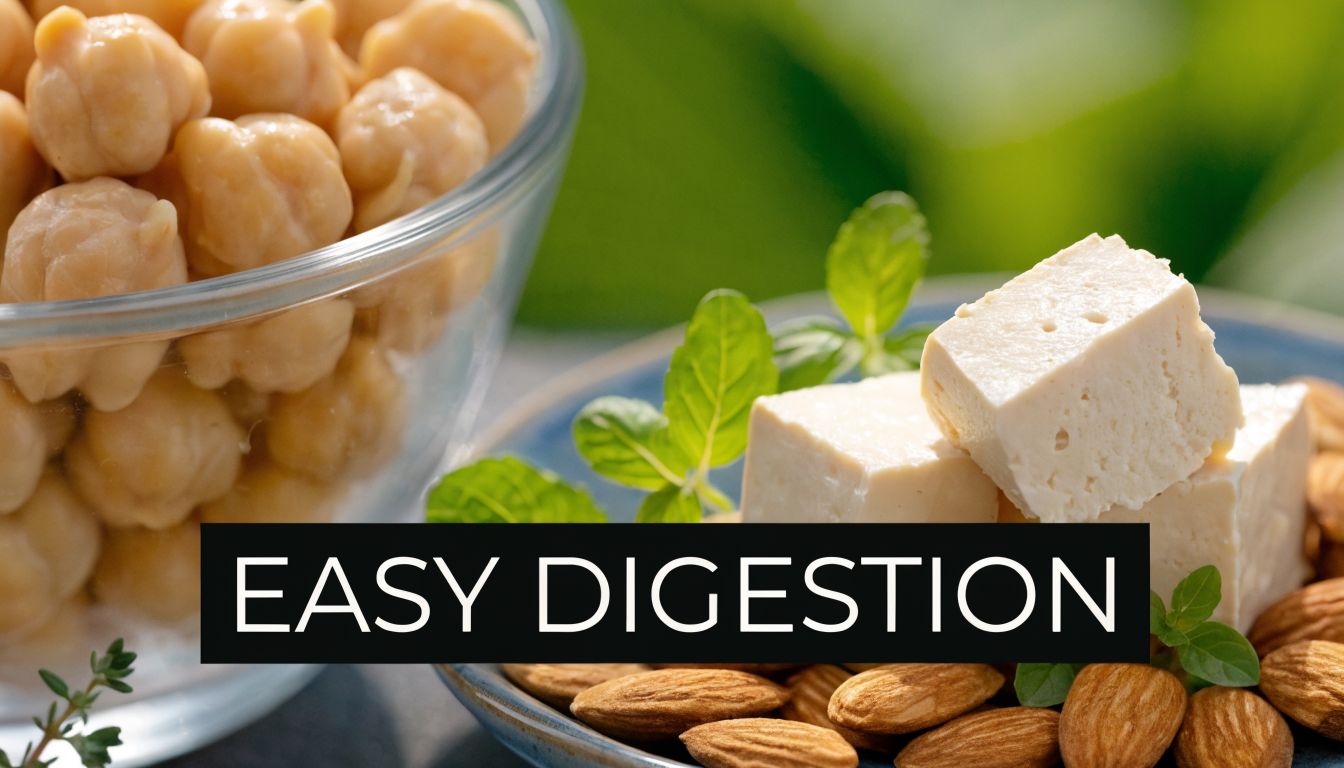
If beans bloat you, the answer usually isn’t “plants don’t work”
The answer is usually pace, preparation, and food form.
If you go from a lower-fiber diet straight into multiple large servings of beans, lentils, vegetables, seeds, and whole grains, your gut may complain. That’s not a failure of plant protein. It’s a sign that your digestive system needs time to adapt.
A few fixes help:
- Increase fiber gradually instead of overhauling everything in one day.
- Use smaller servings more often while tolerance improves.
- Rinse canned beans well and cook dried legumes thoroughly.
- Rotate in easier options like tofu, tempeh, pea milk, or pea protein snacks when you need less bulk.
Allergen trade-offs matter
Not every plant-based athlete does well with soy. Some need gluten-free options. Others are also avoiding dairy and want a cleaner backup than whey.
That’s where ingredient choice matters more than food trends. A product built around pea protein can be useful because it avoids several common allergens at once. For people who have digestive issues with dairy or don’t want soy in every meal, that opens up more flexibility.
Bioavailability in real life
Bioavailability sounds technical, but the practical question is simple. How much of what you eat can your body use?
The American Heart Association infographic discussed in this article on plant-based protein basics notes that pairing plant-based iron sources with vitamin C-rich foods can increase non-heme iron absorption by 2 to 3 times. It also notes that pea protein absorption is about 85 to 90%, so people generally need only a modest 10 to 15% more intake than animal sources to meet needs.
That’s a very workable trade-off. It means you don’t need perfection. You need sensible meal construction.
Easy ways to improve absorption and tolerance
Try these combinations:
- Lentils with bell peppers or citrus to support iron absorption
- Chickpeas with tomatoes or lemon for the same reason
- Pea-protein foods with fruit or vegetables rich in vitamin C
- Split protein across the day instead of forcing huge portions at once
If your digestion worsens every time you “eat healthier,” your plan is probably too aggressive, too fiber-heavy, or too inconvenient. Adjust the method before you blame the food.
The balanced view
Whole legumes offer more fiber and food volume. Concentrated proteins offer more convenience and often easier digestion. Most active people do better when they use both.
You don’t have to pick sides. Use beans and lentils when you have time and appetite for a full meal. Use easier, lower-bulk protein forms when your schedule, gut, or training window calls for them.
Your Next Steps to a Stronger Plant-Based Lifestyle
It is 4 p.m., training is in two hours, lunch is gone, and dinner is still far off. That is where plant-based athletes often miss their protein target. Not at breakfast or dinner, but in the gap between them.
A stronger plant-based routine comes from a system you can repeat under real conditions. Build meals around legumes, tofu, tempeh, edamame, or other high-protein staples. Then cover the snack gap with portable, savory options that do not require prep, refrigeration, or a blender bottle. For many active people, that is the difference between hitting daily protein consistently and trying to make up for it with an oversized dinner or another sweet shake.
I tell clients to solve protein in layers. Start with two dependable meals. Add one easy upgrade, such as soy milk, hemp seeds, or a higher-protein grain. Then keep a bag-friendly savory protein option on hand for workdays, commutes, and post-gym errands. That approach works better than relying on willpower.
If energy, recovery, or iron status still feels off, check your markers instead of guessing. This guide to vegetarian blood testing in the UK shows what to review on a vegetarian or mostly plant-based diet.
Start small and make it repeatable. Prep one protein base this week. Put one savory high-protein snack in your gym bag. Gym Snack offers plant-based savory protein snacks built around pea protein in a portable crunchy format, which can help close the gap between meals on busy days.