

You finish training, throw your gear in the car, and realize your next real meal is hours away. That's the moment when a snack either helps your performance or quietly works against it. Many athletes still reach for whatever is portable, sweet, and familiar. That often means bars that digest poorly, dairy that doesn't sit well, or snacks that kill hunger for a minute but don't help recovery.
That's why serious athletes need to think differently about protein snacks for athletes. A good snack isn't just “high protein.” It has to fit the session, digest cleanly, support recovery, and keep energy steady without leaving you heavy, bloated, or hunting for more food an hour later.
The old defaults still dominate a lot of advice. Yogurt, jerky, and sweet bars can work for some people. But they're not the only options, and for many athletes they're not the best ones. Savory, gut-friendly, plant-based snacks deserve a much bigger place in the conversation, especially for athletes who train hard, stay busy, and want better appetite control between meals.
Why Protein Snacks Are Essential for Athletic Performance
Protein snacks have become mainstream for a reason. The global protein snacks market reached $54.86 billion in 2025 and is projected to reach $120.43 billion by 2034 at a 9.18% CAGR, according to Fortune Business Insights' protein snacks market analysis. That growth reflects a real shift in how athletes fuel. Snacks are no longer an afterthought. They're part of the training plan.
The key distinction is simple. A random snack reduces hunger. A performance snack helps you train again sooner and better. That matters whether you lift, run, compete in team sports, or stack training around work and school.
What protein is actually doing
After training, your body needs raw material for repair. Protein gives you amino acids to support muscle protein synthesis, but in practice athletes feel that as better recovery, less of the flat and beaten-up feeling between sessions, and a better chance of showing up ready the next day.
That doesn't mean every snack needs to be a giant protein hit. It means your snacks should have a job. Some need to top up energy before training. Some need to start recovery after it. Some just need to bridge a long gap between meals without wrecking your stomach.
Practical rule: If your snack only tastes good and travels well, it's convenience food. If it also supports energy, recovery, and digestion, it's sports nutrition.
Why timing changes the value of a snack
A protein cookie eaten at your desk because you skipped lunch isn't the same as a smart post-lift snack. Context changes everything. Athletes who treat snacks strategically usually do three things better:
- They recover faster: They stop treating the post-workout period like dead time.
- They train with steadier energy: They don't rely on caffeine and willpower to patch over underfueling.
- They avoid the late-day crash: They use snacks to stay ahead of hunger instead of reacting to it.
Many runners also lean on liquid recovery, which can be useful when appetite is low. If that's your situation, RoutePrinter's recovery guide gives a helpful overview of where post-run protein shakes fit and where whole-food snacks may work better.
What doesn't work
Athletes get into trouble when they choose snacks by branding instead of function. The usual mistakes are easy to spot:
- Protein without carbs after hard training: Recovery stalls because you didn't replace enough fuel.
- Heavy, fatty snacks before practice: Digestion slows, and your session feels worse.
- Dessert-style “fitness” foods: They can be convenient, but many don't satisfy for long or sit well during a busy day.
Protein snacks for athletes matter because they give you a chance to make small corrections before poor fueling becomes a bad session, a poor recovery day, or a pattern of inconsistent performance.
Mastering Your Macros and Nutrient Timing
The athlete who snacks well usually isn't obsessing over every gram. They're following a few repeatable rules. According to Ohio State's guidance on healthy snacks for student athletes, snacks and meals should land around 60% carbohydrates, 20% proteins, and 20% fats, and snack bars work best with a two-to-one or three-to-one carbohydrate-to-protein ratio.
That ratio matters because protein alone doesn't solve an energy problem. If training volume is high, carbohydrates still do most of the heavy lifting for fueling work and restoring what you used.
Pre-workout fueling
Before training, most athletes need digestible energy more than a huge amount of protein. The closer you are to the session, the simpler the snack should be. Keep fat modest, avoid ingredient-heavy bars, and don't test a high-fiber bomb before intervals, lifting, or team practice.
A good pre-workout snack usually follows this logic:
- Lead with carbs: They give you usable fuel.
- Add some protein: Enough to support muscle repair and steady hunger.
- Keep it easy on the gut: Simple ingredients beat novelty formulas.
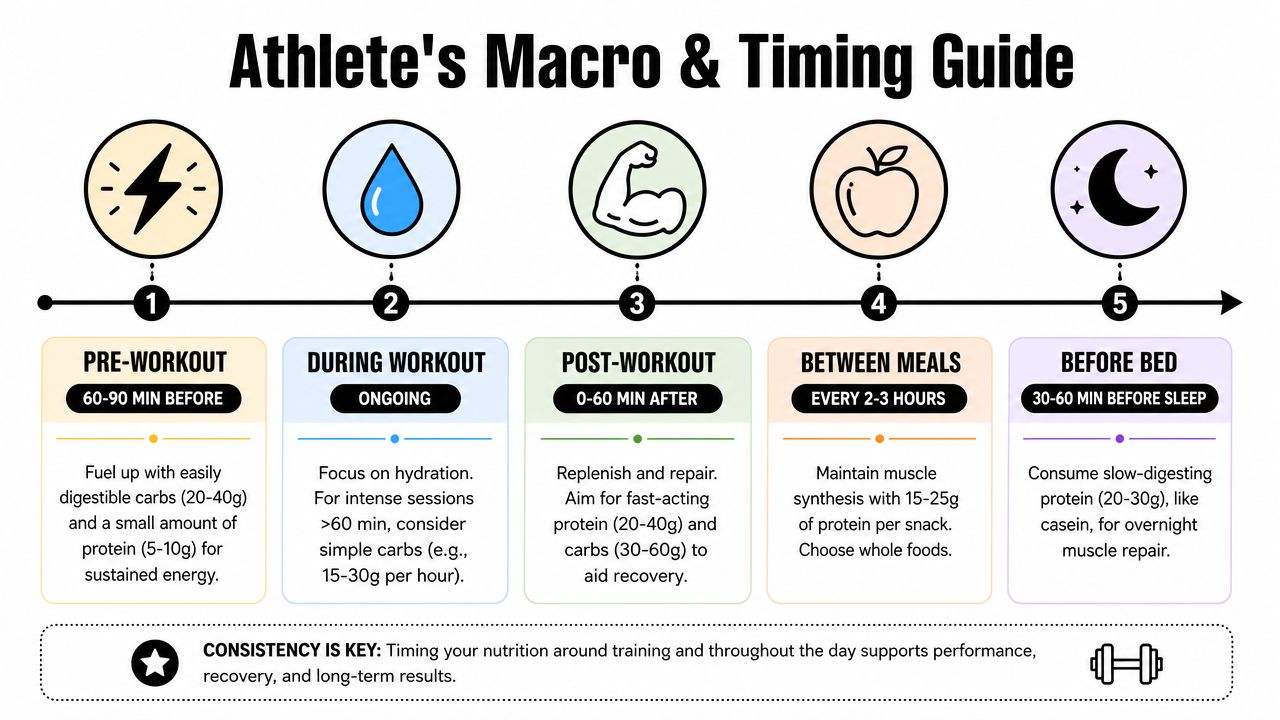
If you're trying to match intake more closely to body size and training demands, an optimal protein intake calculator can help you sanity-check your daily target. For a more sport-focused breakdown, this guide on how to calculate daily protein needs is also useful.
Post-workout recovery
After training, the priority changes. Now you're replacing fuel and giving your body what it needs to repair tissue. For endurance work lasting more than two hours, American Pistachios' article on the plant-based athlete notes that consuming 15g of plant-based protein with 1.5g of carbohydrate per kg of bodyweight within 2 hours post-workout supports recovery.
That's a practical reminder that post-workout snacks should almost never be protein-only. If you just hammer a plain protein serving after a long or hard session, you're underfueling recovery.
After a demanding session, don't ask whether you “earned” a snack. Ask what your next training session needs from you now.
What to do on rest days
Rest days aren't throwaway nutrition days. They're adaptation days. You still need enough protein spread through the day, but the snack can be calmer and less carb-heavy if total training demand is lower.
Athletes often do better with whole-food combinations and less “sports product” thinking. A recovery-focused rest-day snack should leave you feeling fed, not overfull.
A simple filter works well:
| Situation | What matters most | Better snack direction |
|---|---|---|
| Before training | Digestible energy | Carb-forward with some protein |
| After training | Refuel and repair | Carbs plus protein |
| Between meals | Hunger control and consistency | Balanced snack with clean ingredients |
| Rest day | Recovery without overeating | Protein-centered, moderate energy |
One rule that prevents a lot of mistakes
The more intense the training demand, the less useful it is to think of snacks as indulgences or “cheats.” They're part of your intake structure. Athletes who get this right don't need perfect precision. They just stop relying on snacks that are all sweet taste, no staying power, and poor timing.
The Ultimate Checklist for Choosing Protein Snacks
Most protein snacks for athletes fail on the details. The label says high protein. The package looks sporty. The actual eating experience is another story. It's too sweet, too greasy, too processed, too bulky before training, or too weak to keep hunger under control.
A better choice starts with a stricter checklist.
Start with digestibility
If a snack causes gut distress, it isn't a performance food for you. Ohio State's athlete snack guidance also stresses simple, recognizable ingredients, ideally four or five, because more complex formulas and high fat content can create digestive problems before practice and interfere with post-workout refueling. The same resource notes that a hard-boiled egg provides 7g of protein each in a simple format that many athletes tolerate well.
That principle matters more than trends. “Healthy” doesn't count if you feel heavy, bloated, gassy, or nauseated when the session starts.
Look for:
- Short ingredient lists: Easier to read, easier to tolerate.
- Moderate fat before training: Too much slows digestion.
- Known personal triggers: Dairy, soy, sugar alcohols, and heavily flavored coatings are common issues for some athletes.
Check the protein source, not just the total
Not all protein snacks deliver the same practical outcome. Some are engineered to hit a number on the label but come with fillers, oils, or textures that make them hard to use consistently. Others are simpler, cleaner, and easier to repeat day after day.
For athletes, the best protein source is the one that checks three boxes at once:
- You digest it well.
- It fits your training window.
- You can consistently eat it.
That's why source matters. Whey may work well for one athlete and be a digestive headache for another. A plant-based option may be more practical if dairy leaves you sluggish or uncomfortable.
Ingredient quality changes the result
There's a difference between a snack built from food-first ingredients and one built to imitate dessert. The second category often wins on sweetness and loses on function.
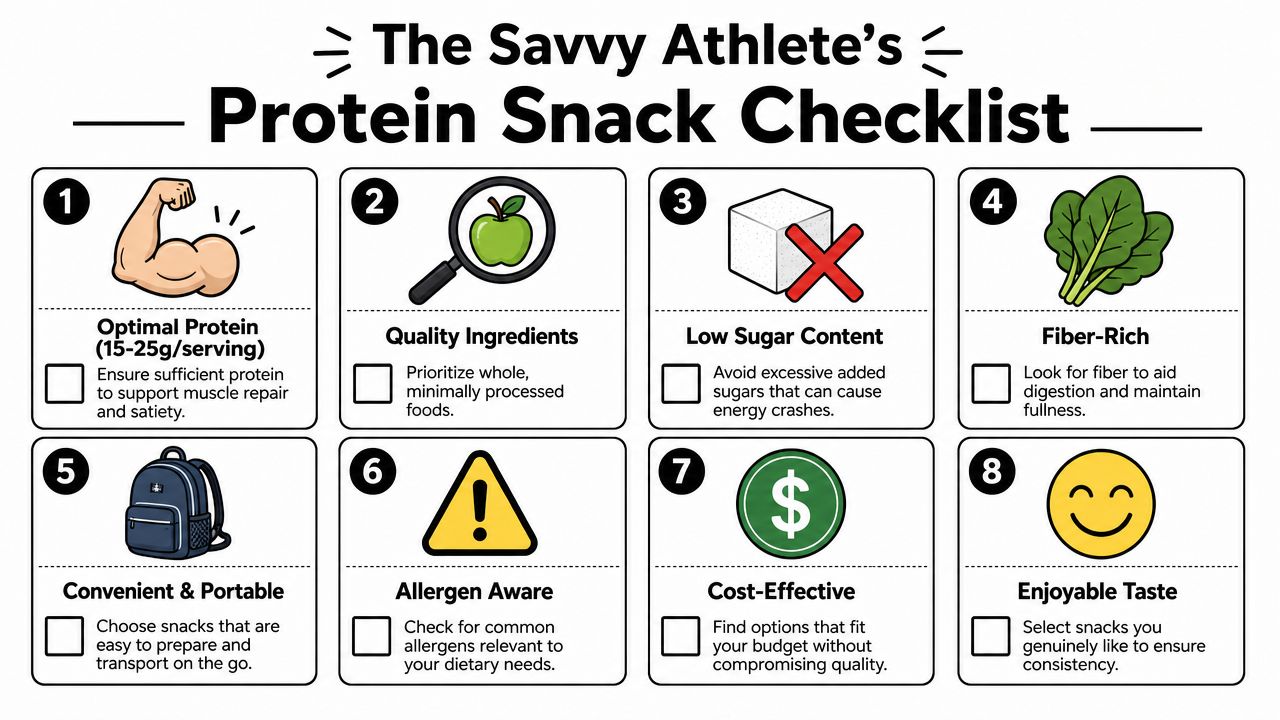
A quick label review should answer these questions:
| Checkpoint | What to look for | Red flag |
|---|---|---|
| Ingredient list | Recognizable foods and protein source | Long list of additives |
| Fat profile | Reasonable for the timing of use | Very heavy before training |
| Flavor profile | Something you won't burn out on | Dessert-only options |
| Portability | Easy to pack and stable enough to carry | Messy or hard to transport |
Satiety is not just about protein grams
Much athlete snack advice remains too basic. Protein amount matters, but fullness also depends on texture, flavor profile, and how the snack is built. According to Memorial Hermann's athlete snack guidance, a 2025 study in the Journal of Sports Nutrition found that savory, high-protein, low-fat snacks with crunch produced stronger GLP-1 activation than sweet, smooth bars and led to 22% longer perceived satiety.
That fits what many athletes notice in real life. A chewy sweet bar can disappear quickly and leave you wanting more. A savory, crunchy snack often slows you down and feels more like actual food.
Key takeaway: Don't judge a snack only by protein grams. Judge it by what happens to your energy, hunger, and stomach over the next two hours.
Micronutrients and food value still matter
A snack doesn't need to be a multivitamin. But if two products offer similar protein, the one that gives you more from real food usually wins. Eggs, fish, yogurt, legumes, and simple whole-food combinations tend to offer more nutritional value than highly engineered bars.
The practical question is this: does the snack help you perform, recover, and stay consistent, or is it just a protein-flavored placeholder?
That's the checklist. Digests well. Fits the moment. Uses a protein source you tolerate. Keeps ingredients simple. Helps you stay full in a useful way. If a snack misses several of those, the label claim won't save it.
Comparing Protein Sources and Navigating Allergens
Athletes often ask which protein source is best. The honest answer is that “best” depends on digestion, dietary pattern, timing, and tolerance. A source can look great on paper and still be the wrong call if it triggers stomach issues or limits what you can eat consistently.
For plant-based athletes, the decision becomes even more important because the snack has to do more work. According to NASM's guidance for vegetarian and vegan athletes, vegan athletes training 5+ days per week need 1.2 to 1.7g/kg of protein daily, and that can be met effectively with savory snacks delivering 15g+ of protein per serving when the protein comes from a clean, non-GMO pea protein blend that avoids antinutrients.
How the main options compare
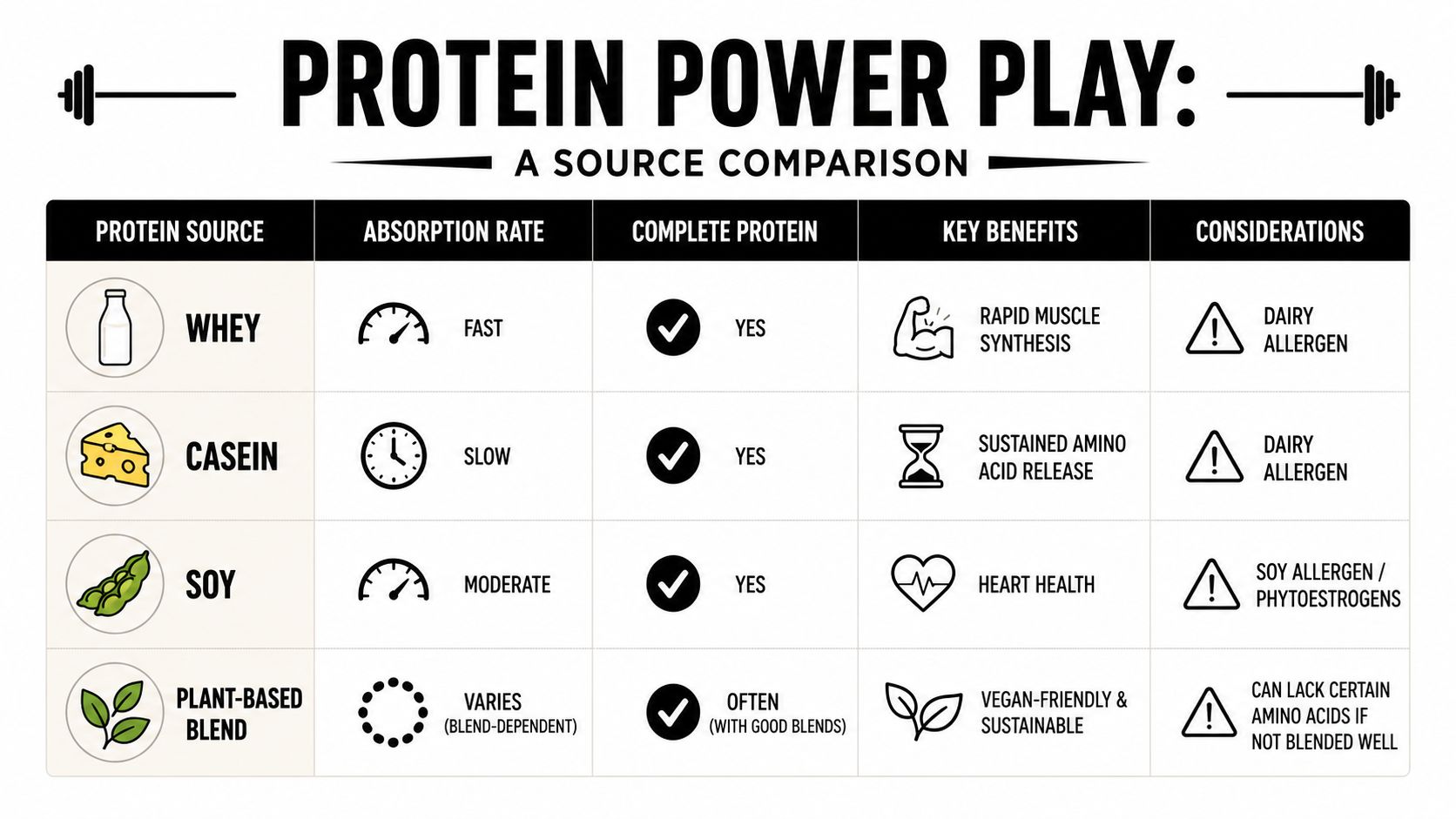
Here's the practical comparison athletes need:
| Protein source | Works well for | Common issue |
|---|---|---|
| Whey | Fast post-workout use, athletes who tolerate dairy | Dairy sensitivity |
| Casein | Slower digestion, longer satiety windows | Dairy sensitivity, heavier feel |
| Soy | Useful complete plant protein for some athletes | Soy avoidance or intolerance |
| Pea protein blend | Plant-based athletes, dairy-free and soy-free needs, savory formats | Quality varies by formulation |
Whey and casein can be effective, but they aren't automatically athlete-friendly if dairy bothers your gut. Soy can be useful, but some athletes prefer to avoid it for tolerance reasons. A well-built pea protein blend stands out when you want a non-dairy, non-soy option that still supports daily protein targets.
Allergens can affect performance indirectly
The issue with allergens isn't just diagnosis. It's disruption. If dairy, soy, or gluten leave you bloated, cramped, or hesitant to eat around training, your fueling consistency takes a hit. That's a performance problem even when the food technically “fits your macros.”
This is why allergen-conscious snacks aren't niche. They're practical. Athletes who train early, commute, work long shifts, or eat between classes need options they can trust under pressure.
A useful resource for narrowing those choices is this guide to finding your go-to allergy-friendly protein bars, which walks through what to screen for when labels start to blur together.
The right protein source is the one you can eat consistently before and after training without negotiating with your stomach.
What usually works best in practice
If you tolerate dairy well, dairy-based protein snacks can still be useful. If you don't, forcing them because they're “classic sports nutrition” makes no sense. The same applies to soy. There's no badge for eating a snack that keeps letting you down.
For many modern athletes, especially those with sensitive digestion, a savory plant-based option built around pea protein solves several problems at once. It can support protein intake, reduce allergen exposure, and avoid the sweetness fatigue that comes with bar-after-bar fueling.
High-Impact Protein Snack Ideas for Every Athlete
Many athletes don't have a knowledge problem. They have a repetition problem. They get stuck cycling through the same two or three snacks until they're sick of them, or until those snacks start feeling too sweet, too heavy, or too awkward around training.
That's one reason the savory gap matters. Move United's snack resource highlights an important problem: 38% of plant-based athletes report digestive discomfort from dairy or high-seed-oil snacks. Yet a lot of athlete snack lists still lean hard on Greek yogurt, cheese, and similar defaults.
Here's what a more useful rotation looks like.
Snack ideas by real-life use case
For the athlete heading into training soon, light and digestible usually wins. For the athlete finishing a hard session, the snack needs to help recovery start immediately. For the athlete stuck between meetings, classes, or a long commute, portability and satiety matter more.
A good rotation might include:
- Hard-boiled eggs with fruit or crackers: Simple, reliable, and easy to prep.
- Greek yogurt with a carb source: Useful if you tolerate dairy well and need quick convenience.
- Tuna or salmon with crackers: Savory, portable, and more meal-like than a bar.
- Roasted chickpeas or edamame-style snacks: Crunchy and portable, though some athletes need to test legume tolerance.
- Savory pea-protein snacks: A strong option for athletes who want crunch, portability, and a non-dairy format.
- Protein smoothies: Best when appetite is low or chewing food feels difficult after training.
What to choose when sweet snacks stop working
Sweet bars are often the first thing athletes buy and the first thing they burn out on. They can feel repetitive, and some leave people hungry again too quickly. Savory formats can solve that because they're easier to fit into a normal eating pattern and often feel more satisfying.
That matters for athletes trying to manage hunger across a long day, not just right after a workout. It also matters for people who use GLP-1-supportive eating strategies and want snacks that feel steady rather than dessert-like.
For teams or office environments where convenience matters, Vendmoore Enterprises' snack guide is a useful reference for practical post-workout options that can live beyond a home kitchen.
Sample Athlete Protein Snack Roster
| Snack Idea | Approx. Protein | Primary Pro | Consideration |
|---|---|---|---|
| Hard-boiled eggs | Qualitatively high | Simple and portable | Needs refrigeration |
| Greek yogurt cup | Qualitatively high | Convenient and familiar | Dairy may not sit well |
| Tuna with crackers | Qualitatively high | Savory and shelf-stable | Not ideal if you need something very light pre-workout |
| Protein smoothie | Varies | Easy after hard sessions | Less satisfying for some athletes |
| Savory pea-protein snack | 15g+ per serving | Crunchy, portable, dairy-free and soy-free | Best used as part of a balanced intake plan |
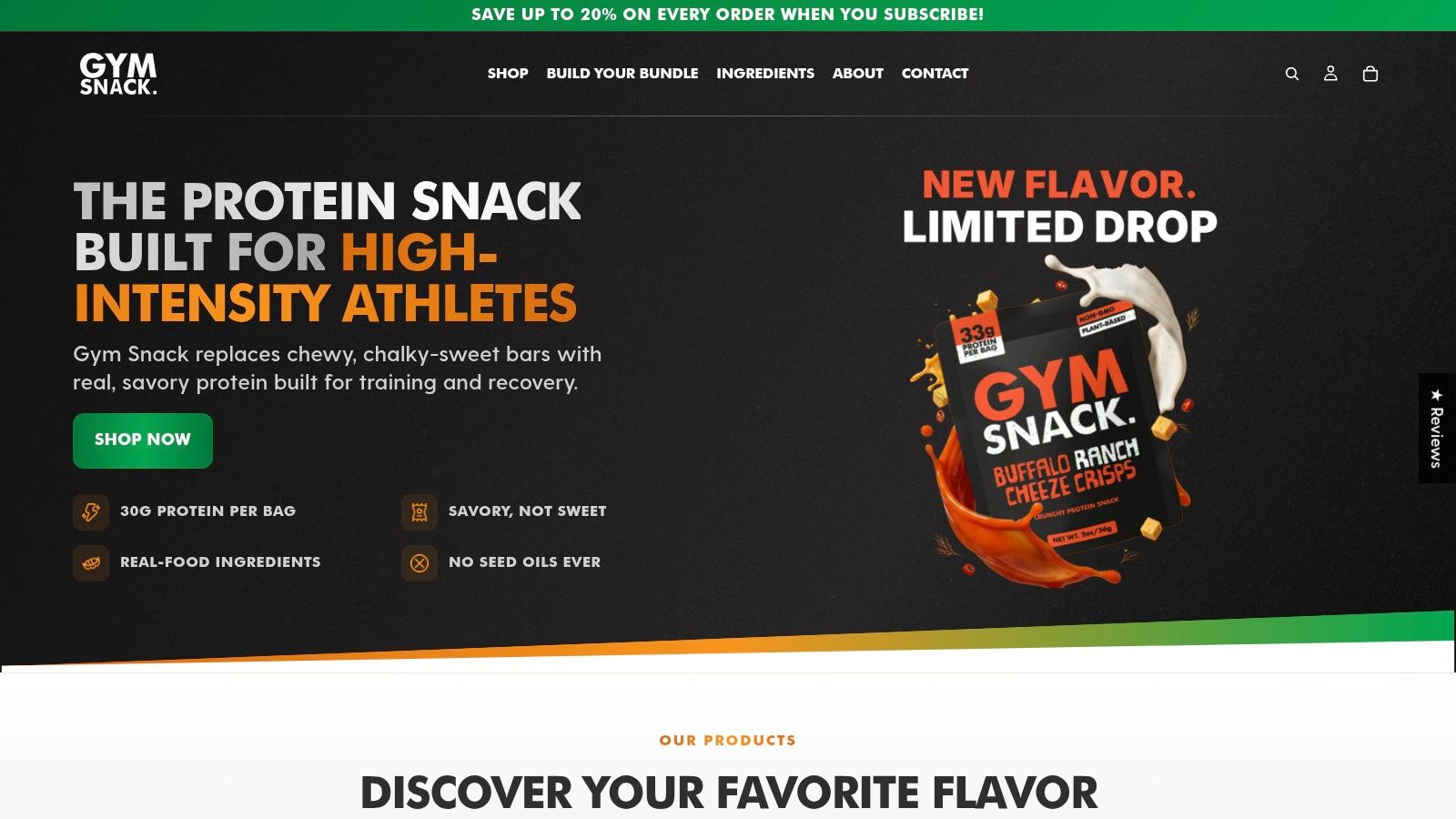
Some athletes also want to see how a product fits into day-to-day use before buying. This quick look helps show how a savory protein snack can slot into a training lifestyle without much prep:
The best snack is the one you'll use correctly
This is where theory meets reality. A technically perfect snack that lives in your pantry untouched isn't helping you. The best options are the ones you can carry, tolerate, enjoy, and repeat. For many athletes, that means keeping both classic staples and newer savory plant-based options in the mix so you're not dependent on dairy tubs, jerky sticks, or candy-like bars every day.
Smart Shopping and Packing Tips for a Fuel-Ready Life
Good snack strategy usually comes down to reducing friction. If you wait until you're starving after training, stuck in traffic, or running from class to practice, you'll buy whatever is easiest. That's exactly how athletes end up with low-value snacks that don't fit their goals.
Shop with a short checklist
At the store, ignore most front-of-pack promises. Turn the package over and check the basics.
Use this order:
- Protein source first: Know whether it's whey, casein, soy, pea, or a blend.
- Ingredient list second: Shorter and simpler usually works better.
- Fat and overall feel third: Ask whether this makes sense before training, after training, or just between meals.
- Allergen fit last: Don't assume “healthy” means it will work for your body.
If you want more practical ideas for everyday portability, this guide to grab-and-go protein snacks can help you build a better bench of options.
Pack for the day you actually live
Most athletes don't need a perfect nutrition system. They need one that survives real life. Keep at least one shelf-stable protein snack in your gym bag, one at your desk, and one in the car if heat and storage allow. Then pair those with easy refrigerated options at home.
A few habits make a big difference:
| Habit | Why it works |
|---|---|
| Pack tomorrow's snack tonight | Removes the rushed morning decision |
| Keep two formats on hand | One light option, one more filling option |
| Match the snack to the training day | Lighter pre-workout, more balanced post-workout |
| Rotate flavors and textures | Prevents boredom and snack fatigue |
Buy snacks for your worst logistical day, not your most organized one.
Don't confuse convenience with quality
Portable doesn't have to mean ultra-processed. Shelf-stable doesn't have to mean sugar-heavy. And a “fitness” label doesn't make a snack useful. The best athletes get picky in a smart way. They want snacks that travel well, fit their digestion, and support the actual demands of training.
If you clean this up, your energy gets more predictable. Recovery gets easier to manage. You stop treating hunger like an emergency and start treating it like information.
If you want a savory option that fits the needs covered here, Gym Snack is built for that exact gap. It offers chef-inspired, plant-based protein snacks with clean pea protein, 15g+ protein per serving, no seed oils, and a dairy-free, soy-free, gluten-free formula that's designed to be easier on the gut while still delivering real crunch and satisfying flavor. For athletes who are done with overly sweet bars and want a portable snack that supports fullness and consistent fueling, it's a practical upgrade.