

We’ve all been there: rushing between meetings, errands, and the gym, when hunger strikes. It's so easy to grab the first thing you see, which is often a sugary, processed snack that leads to an inevitable crash. But what if your snacks could do more? What if they could be your secret weapon for staying energized, focused, and on track with your health goals?
That's the whole idea behind grab-and-go protein snacks. They are specifically designed to give you a powerful protein punch without any of the prep work.
Why Smart Snacking Is Your Secret Weapon
Let's face it, a jam-packed schedule is probably the biggest obstacle to healthy eating. When you're constantly on the move, convenience often wins out over nutrition. This is where smart snacking completely changes the game. It turns a potential diet-derailer into a powerful tool for success.

Think of your energy for the day like your phone's battery. Your main meals—breakfast, lunch, and dinner—are like plugging it in for a major charge. But what about the time in between? Your battery slowly drains, and that's when you feel the classic afternoon slump, the brain fog, and the intense craving for a quick hit of sugar.
A grab-and-go protein snack is your portable power bank. It delivers a steady, reliable stream of fuel to keep your energy stable and your mind sharp all day long.
The Rise of Purposeful Snacking
This move toward more strategic snacking isn't just another fleeting trend; it’s a direct response to our modern, fast-paced lives. The proof is in the numbers. The global market for protein snacks is already valued at around USD 4.5–5.2 billion and is expected to more than double, hitting about USD 10.5 billion by 2034.
Here in North America, we're driving over 45% of that demand, thanks to our strong gym culture and demanding work schedules. With many of us getting over a third of our daily calories from snacks, it just makes sense that protein-rich options are becoming the go-to for anyone serious about their health. You can dig deeper into these market trends over at Market.us.
Smart snacking isn't about adding more food to your day. It’s about making the food you eat between meals work harder for you, providing sustained energy and satiety instead of a temporary rush.
More Than Just Convenience
The real magic of a great protein snack is how it can completely change the course of your day. Instead of constantly fighting off hunger pangs and fatigue, you’re giving your body the high-quality nutrients it needs to perform at its best. This simple switch helps you:
- Maintain Focus: Protein helps stabilize your blood sugar, preventing the energy spikes and crashes that destroy your concentration.
- Support Fitness Goals: It provides the amino acids—the essential building blocks—your muscles need to repair and grow, especially when eaten around your workouts.
- Curb Unhealthy Cravings: Protein is incredibly filling. It keeps you feeling satisfied for longer, which means you’re far less likely to reach for that bag of chips or candy bar.
At the end of the day, making grab-and-go protein snacks a part of your routine is about making intentional choices that support your goals, not sabotage them.
How Protein Powers Your Performance
Have you ever grabbed a snack only to feel your stomach rumbling an hour later? Or maybe you pushed through a tough workout but spent the next few days feeling achy and sore. The solution to both problems often comes down to one crucial nutrient: protein.
Think of protein as the master architect for your body.
If you eat a snack that's heavy on carbs, like chips or a pastry, you're essentially using cheap, flimsy fuel. It burns up fast, giving you a quick jolt of energy followed by a crash that leaves you feeling sluggish and unfocused. Protein, on the other hand, is like a slow-burning log on a fire. It delivers steady, sustained energy that keeps you feeling full and in control.
The Science of Feeling Full
That feeling of satisfaction after eating protein isn't just in your head—it’s a direct result of how protein interacts with your body's hunger hormones. Eating protein triggers the release of satiety hormones like GLP-1 and PYY, which send signals to your brain telling it you're full. This effectively shuts down your appetite and helps you avoid mindless grazing.
This is exactly why grab and go protein snacks are such a game-changer for managing hunger and hitting weight management goals. They help you stay ahead of cravings, stopping that desperate 3 PM reach for the office candy jar. It's a strategic way to keep your energy stable and your willpower intact.
The market is catching on. Grab-and-go protein snacks are now seen as essential for appetite control, with the global category expected to grow to over $10 billion by 2035. This boom is fueled by people who want their snacks to do more than just temporarily fill a void. You can dig into more on this trend from Future Market Insights.
Rebuilding and Repairing Your Muscles
If you hit the gym or just lead an active life, protein's job becomes even more important. Exercise, especially lifting weights, creates tiny micro-tears in your muscle fibers. Don't worry, this is a completely normal part of the process—it's how your muscles grow back stronger.
Protein delivers the essential amino acids—the "building blocks"—that your body needs to patch up these tears and rebuild your muscles, making them tougher and more resilient.
Consuming a protein-rich snack after a workout is like sending a construction crew straight to the job site. It delivers the raw materials needed for immediate repair, which helps reduce soreness and kickstart the recovery process.
This is why when you eat your protein can make a huge difference. A snack before your workout can supply the amino acids needed to prevent muscle breakdown, while one right after helps get the repair cycle going immediately.
- Pre-Workout: Helps fuel your muscles and protect them from excessive damage.
- Post-Workout: Provides the essential materials for rapid muscle repair and growth.
To really get the most out of your training, you need to understand how protein fits into the bigger picture of muscle repair. This is where a comprehensive guide on how to speed up muscle recovery can fill in the gaps with other smart nutrition and lifestyle habits. At the end of the day, reaching for a grab-and-go protein snack isn't just about convenience—it's a smart move for better energy, appetite control, and real physical results.
Decoding the Nutrition Label Like a Pro
Walking down the snack aisle can be a real minefield. Packages scream "healthy," "high-protein," and "all-natural," but a flip to the back often reveals a different truth. Learning to read a nutrition label isn't about becoming a nutritionist overnight; it's about knowing a few key things to look for so you can sidestep the marketing traps.
Think of the label as your personal cheat sheet. Once you know how to quickly scan for the good stuff and spot the red flags, you can make smart, confident choices in seconds. It’s the difference between grabbing a glorified candy bar and a snack that actually fuels your day.
Start With The Protein Per Serving
First things first: check the protein content. For a snack to do its job—keeping you full, fueling your muscles, and stabilizing your energy—it needs to pack a real punch. A sprinkle of protein for show just won't cut it.
A solid benchmark to aim for is at least 15 grams of protein per serving. That’s the amount that really starts to make a difference in triggering satiety hormones, which signal to your brain that you're full. Anything less than that, and you might find yourself reaching for another snack an hour later.
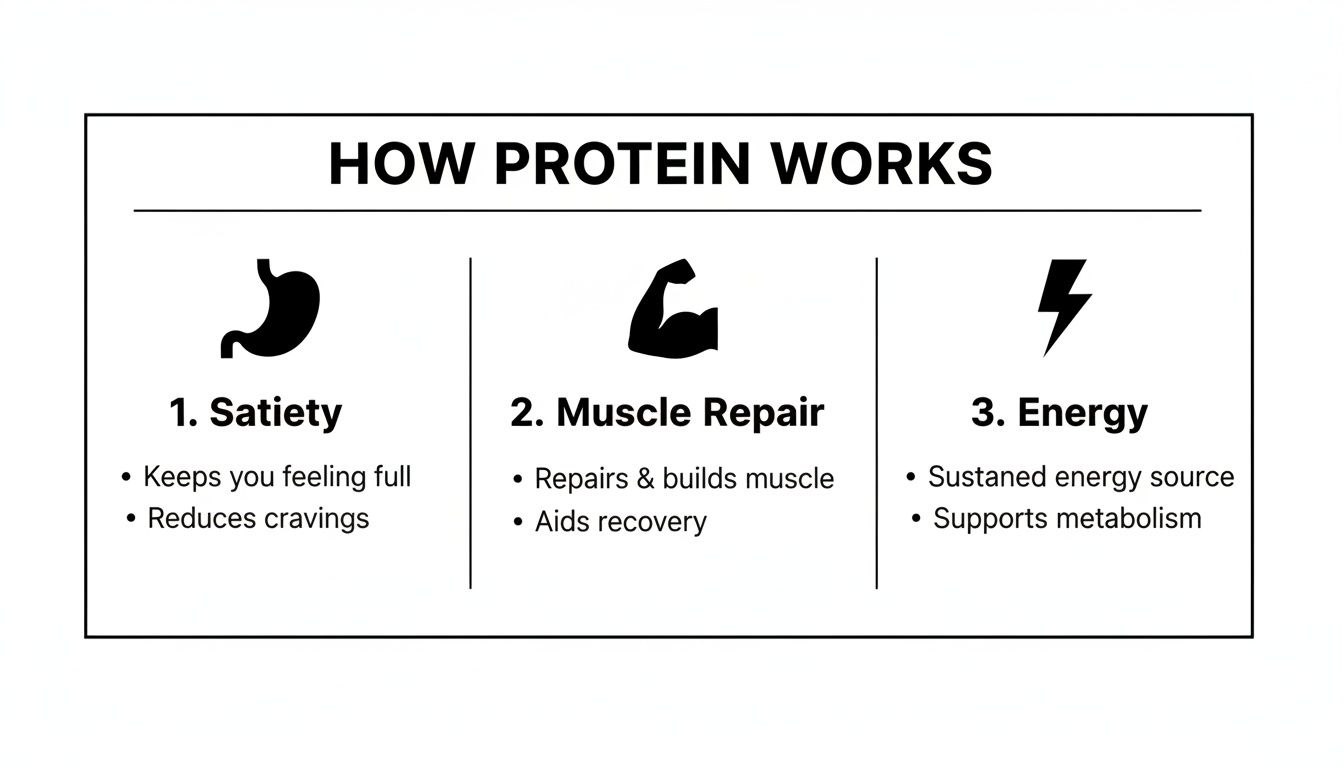
This powerful trio of benefits—feeling full, repairing muscle, and sustaining energy—is precisely why high-protein snacks are so incredibly effective for anyone with fitness goals or just a busy life.
Scan The Ingredients List For Red Flags
After you’ve confirmed the protein count, your eyes should jump straight to the ingredients list. This is where the real story is told. Ingredients are listed by weight, meaning the first few items on the list make up most of what you're about to eat.
A short, simple list filled with words you can actually pronounce is almost always a sign of a quality product. If you recognize what's in your food, you're on the right track.
For a more detailed guide on becoming a label-reading expert, check out our deep dive on how to read nutrition labels.
Healthy Protein Snack Checklist
To make things even easier, here's a quick comparison table. Think of it as your at-a-glance guide to separating the winners from the phonies on the shelf.
| Nutritional Factor | Look For This (The Green Flags) | Avoid This (The Red Flags) |
|---|---|---|
| Protein Content | 15g or more per serving | Less than 10g; protein is low on the ingredient list |
| Sugar Source | Natural sources like monk fruit or stevia | High-fructose corn syrup, cane juice, dextrose |
| Fat Source | Whole-food fats (nuts, seeds) | Hydrogenated oils, trans fats, excessive saturated fat |
| Ingredient List | Short, simple, and recognizable | Long list with chemical names you can't pronounce |
| Allergens | Clearly labeled and free of your specific sensitivities | Hidden dairy, soy, or gluten if you need to avoid them |
Using this checklist helps you cut through the noise and ensures the snack you choose is truly working for you, not against you. It's about making your calories count toward your goals.
Thinking Beyond Bars and Shakes
Let's be real—the world of protein snacks can get a little stale. If you're tired of the same old sweet protein bars and chalky shakes, you're definitely not alone. But shaking things up isn't just about beating boredom; it’s about finding better, more satisfying ways to fuel your body and curb those cravings.
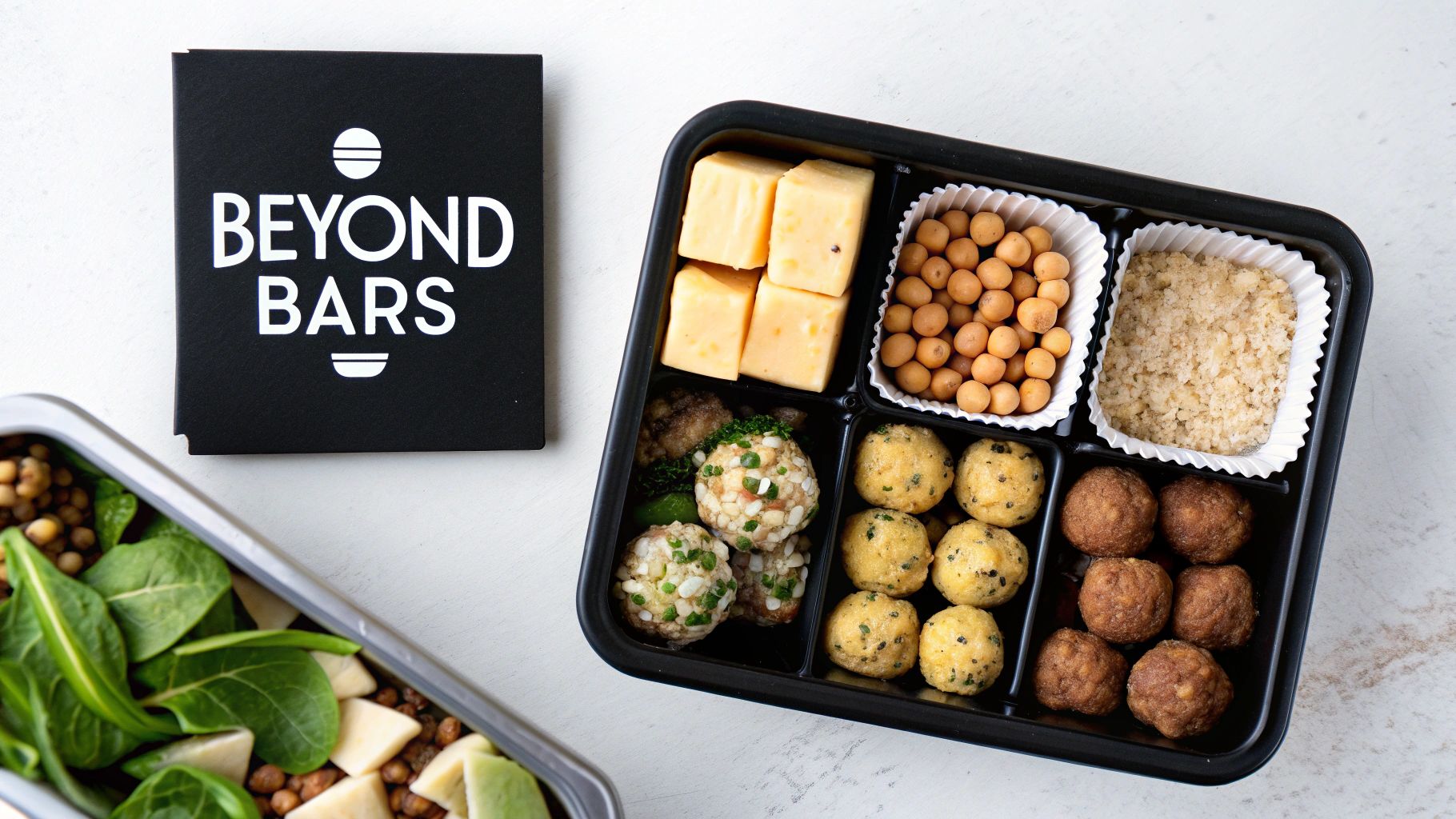
Thankfully, the market has exploded with creative options that go way beyond the basics. Think crunchy, savory bites or even unique protein-infused brews that are changing the game. Trying out these alternatives can make hitting your nutrition goals feel less like a chore and more like something you actually look forward to.
The Power of Savory Satisfaction
Sweet snacks have their place, but let's face it, they don't always cut it when you're genuinely hungry. That’s where savory options come in. A snack with a bold cheesy or spicy kick often feels more like "real food," giving you a deeper sense of satisfaction that a sweet bar just can't deliver.
This isn't just in your head—it's a powerful psychological tool. When a snack is truly gratifying, you're far less likely to feel deprived and start rummaging through the pantry again 30 minutes later. This is a huge win for anyone trying to manage their appetite, especially when fighting off cravings for salty junk food like potato chips.
Choosing a savory snack isn't just about flavor—it's a strategic move to signal true fullness to your brain. Bold flavors like cheddar or jalapeño can more effectively curb your appetite and prevent the cycle of sugar cravings that sweet snacks sometimes trigger.
By going for a savory, high-protein snack, you get the best of both worlds: you satisfy a real craving while giving your body the quality nutrients it actually needs.
Embracing High-Quality Plant Protein
There’s a stubborn myth that plant-based proteins are somehow inferior to animal-based ones. Let's set the record straight: high-quality plant proteins, especially pea protein, are nutritional powerhouses that absolutely hold their own.
Pea protein has some serious advantages, making it a perfect base for a modern, convenient protein snack:
- Complete Amino Acid Profile: It contains all nine essential amino acids your muscles need to repair and grow, making it just as effective as whey for reaching your fitness goals.
- Easy on the Gut: Pea protein is famously easy to digest because it doesn't contain common allergens like dairy or soy. That means no bloating or discomfort.
- Rich in Key Nutrients: It’s a great natural source of iron, which is crucial for maintaining your energy levels and helping your body transport oxygen.
The best part is, you no longer have to sacrifice taste for convenience. If you’re looking for more ways to break free from the shake-and-bar routine, check out our guide on alternatives to protein shakes for even more ideas. Delicious, high-protein snacking is about enjoying what you eat, not just ticking a box.
Making Protein Snacks Work for Your Schedule
Knowing what healthy snack to eat is only one part of the equation. The real secret to getting the results you want lies in knowing when to eat it. Weaving grab-and-go protein snacks into your day isn't just about grabbing something easy; it's a smart strategy to keep your energy high, your recovery on track, and your mind sharp.
Think of it like a performance plan. An athlete wouldn't just eat randomly before a big game, and you shouldn't either. Timing your snacks around the most demanding parts of your day can be a total game-changer. The right snack at the right time can fuel a killer workout or stop that afternoon slump in its tracks.
This is all about making your snacks work for you—turning them from a random fix for hunger into a precision tool. Whether you're trying to crush a workout, stay focused in a long meeting, or just avoid the siren song of the vending machine, timing is everything.
Pre-Workout Fuel for Peak Performance
Grabbing a protein snack about 30 to 60 minutes before you hit the gym is like giving your muscles a head start. It feeds them a steady supply of amino acids, which helps protect them from breaking down during a tough workout. The result? You'll have more gas in the tank to power through that last rep.
Unlike a snack loaded with simple carbs that gives you a quick sugar rush and then a crash, protein offers a more sustained energy release. This is especially great for strength training, making sure your muscles are ready to go. Aiming for around 15-20 grams of protein is the sweet spot here.
Think of your pre-workout snack as an insurance policy against muscle fatigue. It makes sure your body has the necessary resources on hand to shield muscle tissue from damage, so you can train harder and smarter.
Post-Workout Recovery and Repair
That critical window of time right after you finish a workout is often called the "anabolic window." During this period, your muscles are like sponges, primed to soak up nutrients and start the repair process. Getting a protein snack in your system within an hour after your session is a must.
This quick hit of protein fires up muscle protein synthesis—the process that rebuilds all the tiny muscle fibers you just broke down. Not only does this help your muscles grow back stronger, but it can also make a real difference in reducing that next-day soreness and speeding up your overall recovery.
The Midday Slump Buster
We’ve all been there: the dreaded 3 PM energy crash. It’s usually caused by your blood sugar taking a nosedive. A protein snack between lunch and dinner is the perfect antidote. Protein slows down digestion and helps keep your blood sugar stable, preventing the energy rollercoaster that leaves you feeling drained and craving junk food.
It’s a simple trick that keeps you feeling full and focused, making it much easier to power through the afternoon and avoid mindless snacking before dinner. If you need some inspiration, check out our full guide to the best on-the-go protein snacks for ideas that work any time of day.
So, What's the Takeaway?
Let's wrap this up. Making smarter snack choices isn't some impossible goal. It’s simply about finding what works for your life and making small, consistent upgrades. As we've seen, grab and go protein snacks are a game-changer for anyone juggling a hectic schedule with serious fitness or wellness goals. Think of them as your ace in the hole for keeping your energy and focus sharp all day long.
Just keep those core principles in mind. You're looking for real protein content, ingredients you can actually pronounce, and a taste you genuinely look forward to. Sticking to that simple framework is the difference between just filling a gap and truly fueling your body.
The old all-or-nothing approach to diet is dead. It's time to embrace nutrition that's convenient enough to fit your real life.
You've now got the tools to completely overhaul your snacking habits. When you're choosing what to buy, look for products that hit that sweet spot of high protein, great taste, and quality you can trust—something like Gym Snack is a perfect example. Making these kinds of deliberate choices is one of the easiest ways to support your fitness journey, crush those random hunger pangs, and just feel better day in and day out.
Stop letting subpar snacks derail your progress. Start fueling your ambition. It really is that simple.
Got Questions About Protein Snacks? We’ve Got Answers.
Jumping into the world of high-protein snacking can bring up a few questions, even for the most seasoned gym-goer. Let's tackle some of the most common ones so you can feel 100% on track with your choices.
How Many Protein Snacks Should I Actually Eat in a Day?
This is a classic question, and the honest answer is: it depends. Your personal protein needs are unique, hinging on everything from your weight and activity level to your ultimate fitness goals. Think of protein snacks as your trusty sidekick, not the main hero.
For most active individuals, aiming for one or two high-protein snacks a day is a solid strategy. It’s perfect for crushing hunger between meals and making sure you hit your daily protein numbers without a struggle. Just remember, whole-food meals should always come first.
Is Plant-Based Protein as Good as Whey for Snacks?
You bet it is. High-quality plant-based options, especially pea protein, are powerhouses for muscle building and recovery. It’s a complete protein, which means it delivers all nine essential amino acids your body can't make on its own.
The real win with something like pea protein? It's typically much easier on your stomach and sidesteps common allergens like dairy and soy. This makes it a fantastic, gut-friendly choice for just about anyone.
The bottom line is the protein content. As long as your snack packs a solid punch—we're talking 15g or more per serving—you're getting the benefits you need.
Can a Protein Snack Replace a Full Meal?
It's tempting, but most grab-and-go protein snacks are not built to be meal replacements. A proper meal gives you a full spectrum of nutrients: complex carbs, healthy fats, fiber, and of course, protein. A snack just can't compete with that.
That said, a protein snack is your best friend for bridging the gap between breakfast and lunch or fueling up before a tough workout. If you're in a real bind, reaching for a high-protein snack is always a smarter move than skipping a meal altogether.
Ready to make your snack time count with a savory, plant-based option that actually tastes amazing? Give Gym Snack a try and see just how easy hitting your macros can be. Explore our flavors at gymsnack.com.