

You’re in the snack aisle after training, or scrolling a supplement site between meetings, and the same question keeps coming up. Do you grab the protein bar you already know, or is there a catch hiding behind the bold protein number on the wrapper?
For a lot of gym-goers, quest bar protein feels like the default choice. It’s familiar, widely available, and built for people who care about macros. That popularity didn’t happen by accident. Quest helped reshape what many people expect from a protein bar.
The Quest Bar Dilemma in the Protein Aisle
A few years ago, many “protein bars” were basically candy bars wearing gym clothes. They often leaned harder on sweetness than on actual protein quality. Quest changed that. According to NutriScan’s Quest bar product overview, Quest Protein Bars revolutionized the protein snack market, with over 1 billion bars sold worldwide across more than 100 countries on 6 continents, and helped create the low-net-carb protein bar category.
That matters because it explains why Quest shows up everywhere. When a product helps define a category, it becomes the reference point. You see a chocolate-coated bar with a big protein number, and you compare it to Quest whether you mean to or not.
Still, popularity doesn’t answer the personal question. A bar can be impressive on paper and still be a poor fit for your stomach, your food preferences, or your goals.
Bottom line: Quest became famous for good reasons, but “popular” isn’t the same as “best for you.”
I see this with clients all the time. One person wants a sweet post-lift option and loves it. Another person eats the same bar before a workout and spends the next hour feeling puffy and uncomfortable. Same product. Different body.
That’s the dilemma. Quest Bars can be smart, convenient tools. They can also be the snack that looks perfect in your tracking app and feels terrible in real life.
Decoding the Quest Bar Nutrition Label
You grab a Quest Bar after training, flip it over, and see a lot packed into a small wrapper. Big protein. Very low sugar. Low net carbs. It looks straightforward until you ask the question that matters most. How will those numbers play out in your body?
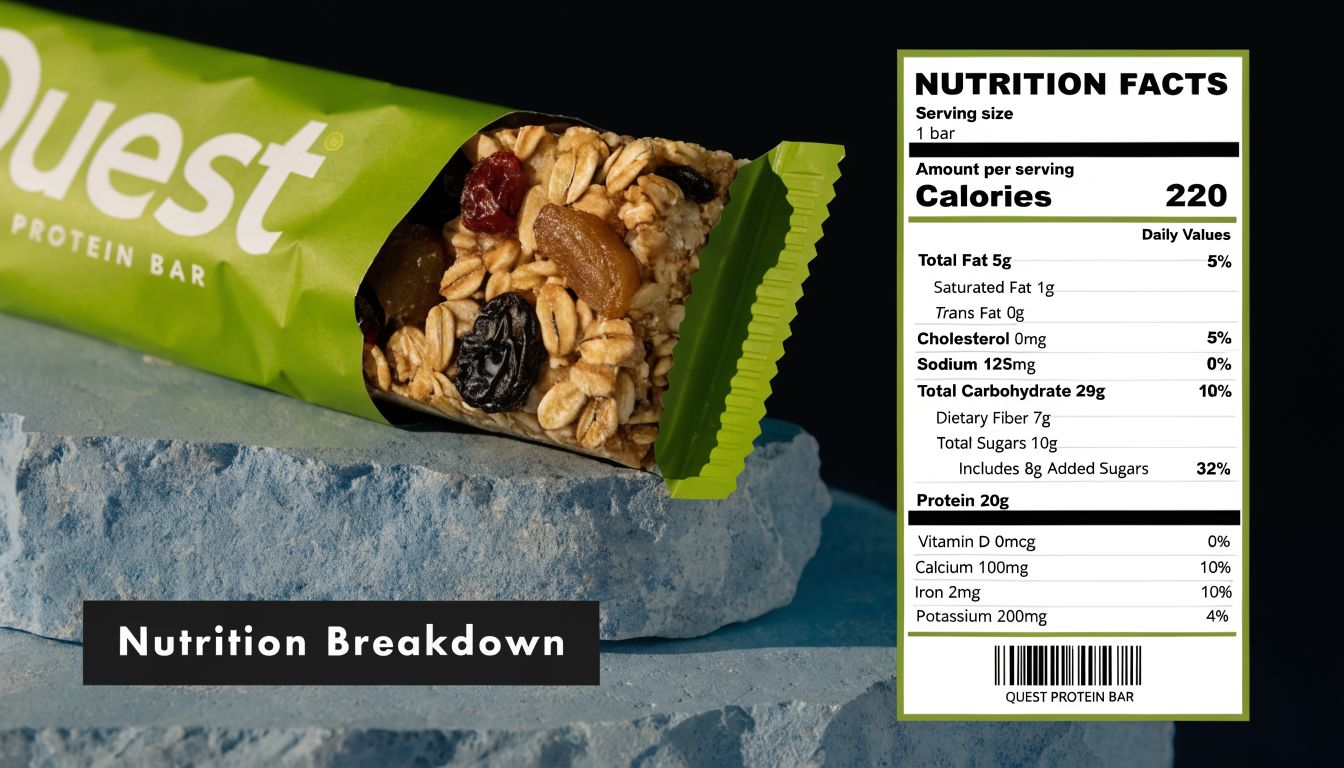
What the main numbers mean
A standard Quest Bar is built around a familiar sports-nutrition formula: high protein, low sugar, moderate calories, and a low net carb count. Based on the Quest bar nutrition listing, a typical bar provides about 20 to 21 grams of protein, 190 to 200 calories, 1 gram of sugar, 4 grams of net carbs, 8 to 9 grams of fat, plus a large dose of fiber and erythritol.
That mix explains why the bar appeals to lifters, dieters, and low-carb shoppers at the same time.
Here is the practical way to read those numbers:
- 20 to 21 grams of protein: enough to make the bar more than a snack-sized dessert replacement
- 190 to 200 calories: compact enough to fit into many meal plans without much adjustment
- 1 gram of sugar: helpful if you want sweetness without much added sugar
- 4 grams of net carbs: attractive if you track carbs closely
- 8 to 9 grams of fat: enough to slow digestion a bit and make the bar feel more filling
A lot of people stop there. That is where confusion starts.
Why net carbs confuse people
Net carbs are not the same thing as total carbs. Quest arrives at its low net carb number by subtracting fiber and erythritol from total carbohydrate. For someone eating low carb, that can make the bar look unusually lean on paper.
The easiest way to read it is this. Total carbs are the full grocery bill. Net carbs are the subtotal after certain items are taken off because they tend to affect blood sugar differently.
That can be useful, but it can also hide an important reality. Ingredients that count lightly in a carb calculation can still count heavily in your gut. A bar can look very light in a tracking app and still feel heavy in your stomach.
If nutrition panels tend to blur together, this guide on how to read nutrition labels on packaged snacks helps you compare bars with more confidence.
The protein line is only part of the story
Quest uses milk protein isolate and whey protein isolate as its main protein sources. That is one reason the bar can deliver a high protein number in a relatively small serving.
For a fitness-focused shopper, that is the headline benefit. Concentrated dairy proteins are efficient, which is different from saying the whole bar is easy for everyone to digest.
That distinction matters. A label can show strong protein numbers and still include a fiber-sweetener combination that some people tolerate poorly. If you have ever eaten a bar that looked perfect on paper but left you bloated an hour later, this is usually the part of the label that explains why.
A good label-reading habit is to check the full formula, not just the protein total. The protein helps you judge muscle support. The fiber and sweeteners often predict stomach comfort.
A quick way to judge any protein bar
When you compare bars, use this order:
- Protein amount. Is the serving large enough to help with your goal?
- Protein source. Milk, whey, soy, pea, or collagen each bring different strengths and tradeoffs.
- Fiber and sweeteners. These often decide whether the bar feels satisfying or causes digestive pushback.
- Calories and fat. These shape fullness, timing, and how well the bar fits your daily intake.
That scan takes a few seconds, and it keeps you from overrating the flashy front label. With Quest, the numbers are strong, but the key test is whether the whole ingredient package works for your training plan and your gut.
The Science of Quest Bar Protein Quality
Protein quantity gets the headline, but quality is what determines how useful that protein is for recovery and muscle support.
Complete protein explained simply
Think of muscle repair like rebuilding a brick wall after a storm. The wall can’t go back together if some bricks are missing. In nutrition terms, those bricks are the essential amino acids your body can’t make on its own.
A complete protein contains all of them. That’s why dairy-based proteins such as whey and milk are widely used in sports nutrition. They give your body the full set of building blocks instead of only part of the set.
If you want a broader primer on this idea, what complete protein sources are breaks it down in a straightforward way.
Why whey and milk isolates are valued
Whey and milk isolates are popular because they’re efficient. They deliver protein in a concentrated form, and many active people use them when they want something fast and practical after training or between meals.
That doesn’t mean they’re magical. It means they’re reliable. For someone trying to hit a daily protein target, a bar built on these sources can function like a portable backup plan when whole-food meals aren’t available.
The role of amino acids in recovery
When people hear “muscle recovery,” they often picture soreness going away. The actual process is more mechanical than that. Training creates demand. Protein supplies raw materials. Your body then uses amino acids to repair and adapt.
Here’s a short visual if you like seeing nutrition concepts explained another way:
Practical rule: A bar with a decent protein dose can help, but it works best as part of your full day of eating, not as a substitute for real meals every time.
Where people get confused is assuming “high protein” and “high quality protein” are always identical. They’re not. Some products use sources that are less complete or less useful for muscle-focused goals. Quest’s appeal is that its protein source is one many fitness-minded people already trust.
The catch isn’t the protein quality. The catch is everything else wrapped around it.
Ingredients Beyond Protein and Their Digestive Impact
The conversation now gets more honest.
Quest Bars are often praised for satiety, low sugar, and macro-friendly numbers. Those benefits are real for many people. But the same ingredient strategy that helps create those numbers can also create digestive problems.
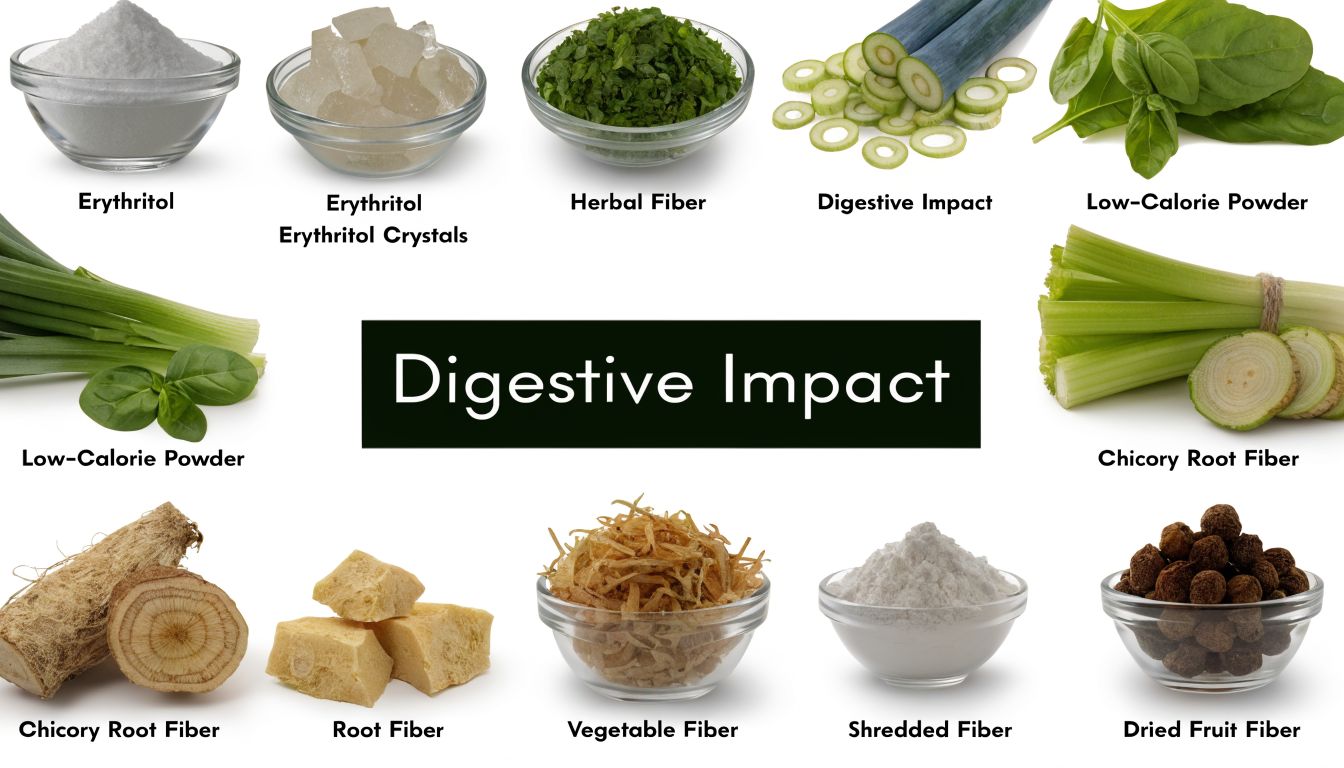
Why some people feel great and others feel awful
Quest Bars contain 14 grams of fiber and 5 grams or more of erythritol, and that combination can cause significant bloating and gas for some people, according to this discussion of digestive issues tied to fiber-heavy protein bars. The same source notes that 2025 consumer surveys indicate 30% of high-protein bar users experience digestive issues, rising to 45% for fiber-heavy products like Quest.
That’s a big clue for anyone who has ever said, “The macros look perfect, but my stomach hates this.”
Fiber isn’t the villain. Sugar alcohols aren’t automatically bad either. The issue is dose, timing, and individual tolerance. A bar can be satisfying precisely because it slows digestion, but that same slowdown can feel heavy, gassy, or crampy in a sensitive gut.
The satiety trade-off
One reason Quest feels filling is that its ingredients don’t digest like a soft rice cake or a banana. The bar has more resistance to digestion. That can be useful when you need a snack to hold you over.
But satiety and comfort aren’t always the same thing.
- For some people, more fullness is helpful. They want a snack that sticks with them between lunch and dinner.
- For others, that fullness turns into pressure. The bar sits in the stomach longer than they’d like.
- During exercise, that can be a problem. A snack that feels stable on the couch may feel unpleasant before squats or intervals.
If a bar regularly leaves you bloated, your body isn’t “failing nutrition.” It’s giving feedback.
Common trouble spots
The people most likely to notice digestive issues are often the ones trying hardest to eat “better.” They add a high-fiber bar on top of protein shakes, Greek yogurt, and other fortified foods, then wonder why their stomach feels busy all day.
A few patterns I watch for with clients:
| Situation | Why it can backfire |
|---|---|
| Eating a fiber-heavy bar right before training | Digestion competes with movement and intensity |
| Having multiple bars in one day | The total load of fiber and sugar alcohols adds up |
| Pairing the bar with other sweetened diet foods | Tolerance can get overwhelmed fast |
| Using it while already dealing with nausea or slowed digestion | The ingredients may feel more irritating than helpful |
If shakes and bars often leave you uncomfortable, this article on why protein shakes upset your stomach can help you spot patterns that carry over to bars too.
Other ingredient realities
Quest Bars are also dairy-based because the protein comes from milk and whey isolates. That rules them out for some people right away. Others may tolerate dairy in yogurt but not in bars, especially when it’s combined with high fiber and sugar alcohols.
Flavor matters too. Many Quest flavors are built to taste like desserts, which can be a plus if you want a sweet replacement for cookies or candy. But if you’re burnt out on sweet protein foods, that style can become hard to stick with.
The practical takeaway is simple. Don’t judge a protein snack only by the protein number. Judge it by what happens after you eat it.
Matching Quest Bars to Your Fitness and Health Goals
Whether Quest works for you depends less on internet hype and more on your actual goal, eating style, and gut tolerance.
If your goal is muscle building
Quest makes sense for many lifters who want a convenient protein source with a solid dairy-based amino acid profile. It can be especially handy when you’re commuting, working late, or leaving the gym without time for a full meal.
That said, a bar is still a supporting player. It helps you plug a gap. It doesn’t replace the value of regular meals built around foods you digest well.
If your goal is weight management
Quest can feel either very helpful or very frustrating.
The protein-plus-fiber structure can make the bar feel substantial, which some people love when they’re trying to control snacking. It can function like a “speed bump” between meals, making it easier not to drift into grazing.
But comfort matters. If the fullness comes with bloating, the strategy may backfire. People often mistake digestive heaviness for successful appetite control, when really they’ve just chosen a snack their body doesn’t enjoy processing.
The best snack for weight management is one you can use consistently without feeling punished by it.
If you’re using GLP-1 medications
GLP-1 users often want the same thing everyone else wants from a protein snack: convenience, satiety, and enough protein to support muscle retention. On paper, a Quest Bar can look like a strong fit.
In practice, this group may need to be more cautious. If you already deal with slowed digestion, early fullness, or food aversions, a dense, fiber-heavy, sweetened bar may feel like too much. For some people, smaller and simpler foods are easier to tolerate.
If you eat plant-based
Standard Quest Bars are not the obvious match here because their protein relies on dairy. If you avoid milk ingredients for ethical, digestive, or preference reasons, that alone settles the issue.
This is also where many plant-based clients get frustrated with the aisle itself. They don’t just want vegan protein. They want something less candy-like, less sweet, and easier on the stomach.
A good decision filter is this:
- Choose Quest if you tolerate dairy well, like sweet snack flavors, and want a compact protein option.
- Look elsewhere if you’re sensitive to fiber-heavy bars, dislike sugar alcohols, or want a plant-based savory snack.
A Savory Alternative - Comparing Quest to Gym Snack
You finish training, open your gym bag, and realize one more sweet bar sounds about as appealing as a sixth cup of coffee. You still want protein. You just want it to feel like a snack, not dessert.
That is the lane where a savory option can make more sense.
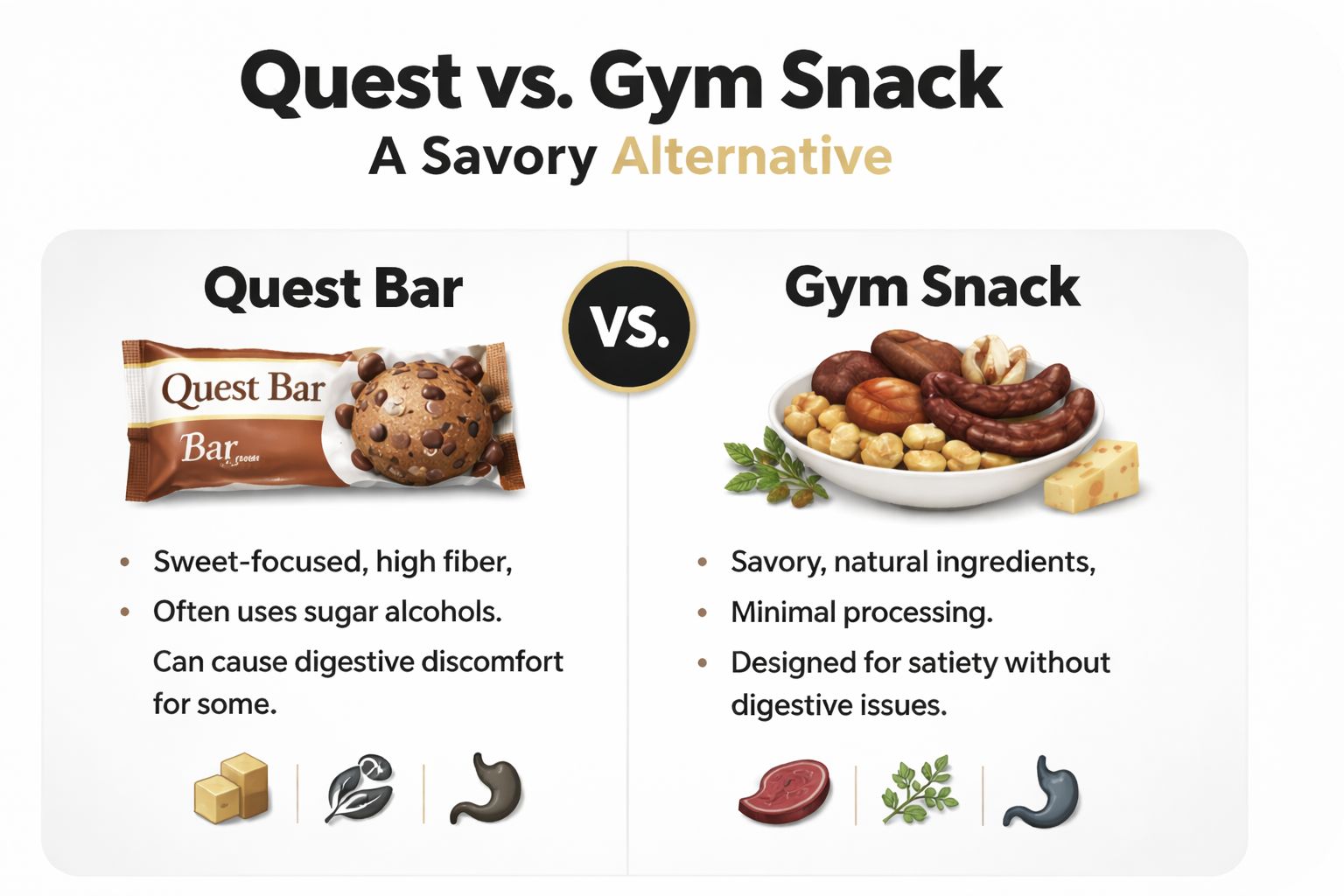
What separates these options
Quest already fills a clear role in the protein aisle. It is a sweet, convenient bar built for people who like dessert-style flavors and want a compact protein hit.
Gym Snack is aimed at a different eating experience. Based on the publisher information provided, it uses pea protein, a savory flavor profile, and a formula designed to be gut-friendly, while also being free of dairy, soy, and gluten. That changes more than taste. It changes who is likely to enjoy eating it repeatedly.
A useful comparison is footwear. Running shoes and hiking boots can both help you move, but they feel right in different settings. Protein snacks work the same way. The better choice depends on what you want the snack to do, how you want it to taste, and how your body tends to respond.
Quest Bar vs. Gym Snack at a Glance
| Feature | Quest Protein Bar | Gym Snack Savory Protein |
|---|---|---|
| Protein source | Milk protein isolate and whey protein isolate | Pea protein |
| Flavor experience | Sweet, dessert-style | Savory, bold, crunchy |
| Formula style | Traditional fitness bar | Designed as a gut-friendly savory snack |
| Allergen profile | Contains dairy | Dairy-free, soy-free, and gluten-free |
| Eating occasion | Works well for people who enjoy sweet bars | Works well for people who want a more food-like protein snack |
| Best match | Sweet-tooth gym-goers who tolerate the formula well | Plant-based eaters and people who want a savory grab-and-go option |
Why the savory route can improve consistency
Adherence matters more than novelty. A protein snack only helps if you want to eat it on a Tuesday afternoon, after a workout, or during a long drive home.
Savory protein can solve a very practical problem. Many active people already get plenty of sweetness from shakes, yogurts, energy drinks, and flavored waters. Adding another cookie-style bar can create flavor fatigue. A crunchy, salty option often feels closer to real food, which makes it easier to fit into daily life without feeling like another processed treat.
For people sensitive to the high fiber and sugar alcohols mentioned earlier, the bigger advantage may be simplicity and tolerance. That is one reason a gut-friendly savory snack can be more useful than a bar that looks stronger on paper but sits poorly in your stomach.
Who tends to prefer Gym Snack
Gym Snack is often a better fit for people in these situations:
- You want protein without another dessert flavor.
- You eat plant-based and want an option built around pea protein.
- You want something crunchy and savory that feels closer to a regular snack.
- You are building a full day of protein intake and want more variety alongside bars and shakes. If that is your goal, this guide on what 150 grams of protein looks like helps put snack choices into a bigger daily plan.
Quest can still work well for the person who enjoys sweet bars and digests them comfortably. Gym Snack answers a different question. It gives the athlete or busy professional a plant-based, savory option that broadens the protein toolbox instead of repeating the usual candy-bar format.
Your Protein Strategy and Final Takeaway
You finish a workout, head into a busy afternoon, and need something that will hold you over without upsetting your stomach. That is the critical test for any protein snack. The label matters, but your next three hours matter more.
A useful protein strategy has three parts. First, match the snack to the moment. A sweeter bar may fit best when you want something post-workout and easy to grab. A lighter, savory option may fit better during a workday when you want protein without dessert fatigue. Second, watch digestion as closely as macros. A bar that looks great on paper but leaves you bloated is like a running shoe that fits your budget but gives you blisters. You will stop using it. Third, pay attention to repeatability. The best snack is the one you can eat often, enjoy, and tolerate well enough that it supports your routine instead of interrupting it.
That is why it helps to test snacks the way you would test a training plan. Try one option after lifting. Try it on a desk-heavy day. Try it when lunch runs late. If your energy stays steady, hunger is manageable, and your gut stays calm, you have found something useful.
If you are building a full-day plan instead of judging one product in isolation, this guide on what 150 grams of protein looks like can help you place snacks in the bigger picture.
The long-term win is not choosing the “best” bar in theory. It is building a protein system you can live with. Good timing, comfortable digestion, and a flavor profile you do not get tired of will do more for consistency than one impressive label ever will.
If you want a savory, plant-based protein option instead of another dessert-style bar, take a look at Gym Snack. It’s built for people who want convenient protein with bold flavor, a crunchy texture, and a formula designed to feel easier on the gut.