

Salsa verde chips are those addictively zesty, tangy tortilla chips you see everywhere. The flavor comes from salsa verde, a classic green salsa made with tomatillos, cilantro, and lime, giving them a bold profile that’s hard to resist.
Why We Crave Salsa Verde Chips
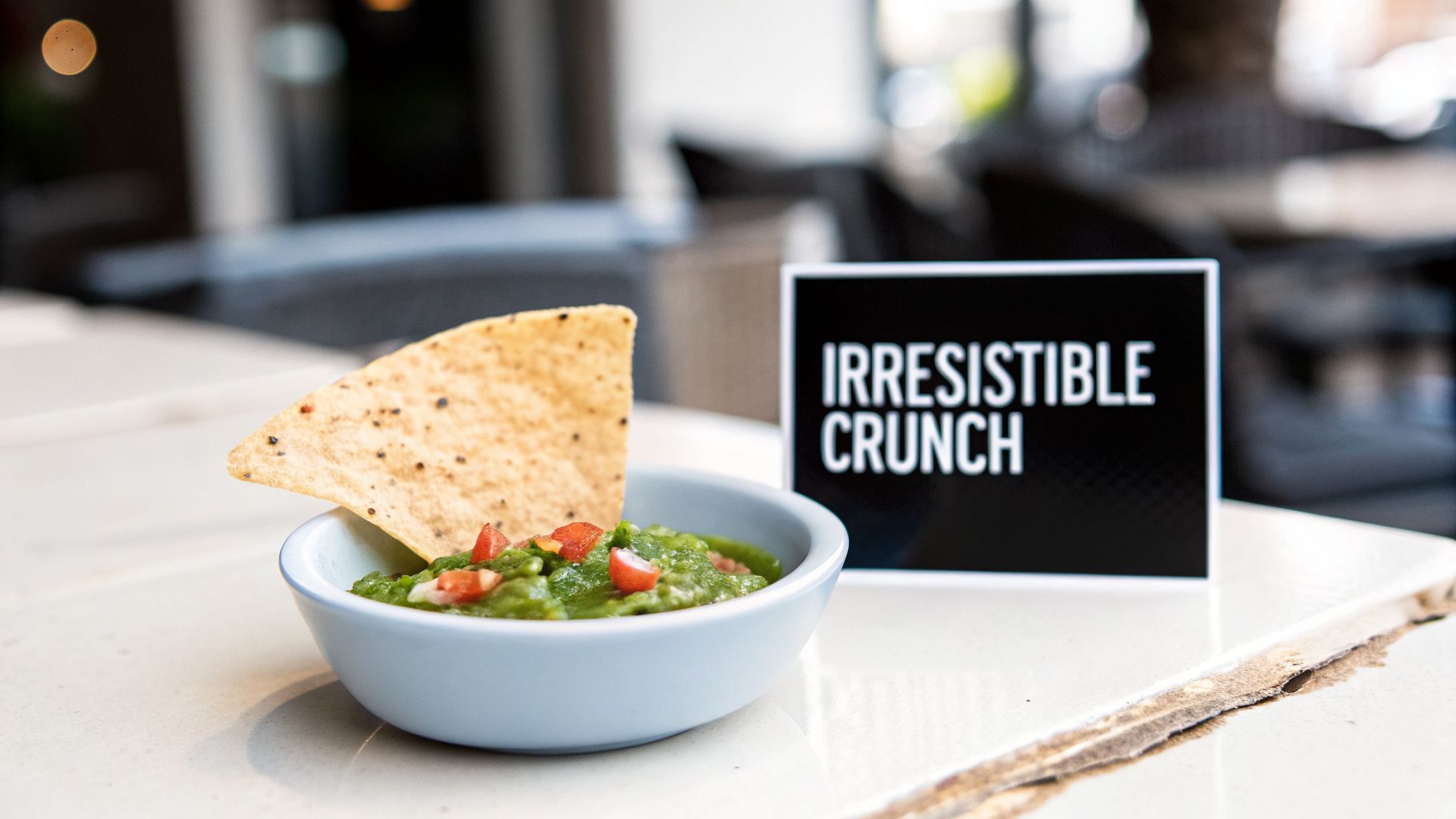
You know the feeling. That first satisfying crunch gives way to a bright tang of tomatillo, a hint of cilantro, and just the right amount of heat. It's a full-flavor experience in a single bite, which explains why we love salsa verde chips so much.
But for anyone focused on their health and fitness, a question always pops up in the snack aisle: can this incredibly addictive snack fit into an active lifestyle?
This guide is here to answer that exact question. We’ll get into the real story behind their popularity and break down what’s actually inside the bag.
More Than Just a Snack
Our collective craving for flavorful, convenient snacks has created a massive market. The global tortilla chip industry, which includes salsa verde varieties, is on track to hit an incredible $48.7 billion by 2030. This boom is driven by our busy schedules, where grabbing a quick, on-the-go snack has become a daily ritual.
Think of it this way: your craving for salsa verde chips isn't just a personal preference; it's part of a massive global shift toward convenient, boldly flavored foods that fit into a fast-paced world.
What This Guide Will Unpack
This article will give you everything you need to make smarter snacking choices without giving up the flavors you love. We're here to show you how to get that satisfying crunch without derailing your fitness goals.
Here’s what you’ll learn:
- Ingredient & Nutrition Breakdown: We'll dig into what's really in those store-bought chips, from the corn and oils to the mysterious "seasoning blends."
- Homemade Healthy Recipe: A simple guide to baking your own amazing salsa verde chips, putting you in complete control of every ingredient.
- Protein-Forward Pairings: Learn smart ways to turn your chips into a more balanced mini-meal that actually helps with satiety. You can also check out our guide on how to stay full longer for more tips.
- Functional Snack Alternatives: We'll introduce a higher-protein option that delivers the crunch you want with the nutrition you actually need.
What Goes into Making Salsa Verde Chips
Ever wonder what gives salsa verde chips that unmistakable tangy kick? The secret isn't some mystery powder. It all starts with capturing the soul of a classic Mexican green salsa and infusing it directly onto a crispy tortilla chip.
Think of it this way: instead of scooping up the dip, all that fresh, vibrant flavor is already there in every single bite. The star of any true salsa verde is the tomatillo. Don't mistake it for an unripe tomato; this little green fruit, wrapped in its papery husk, delivers a bright, zesty, and almost citrusy flavor that's completely its own. Roasting or boiling them first brings out a subtle sweetness before they're blended with the other ingredients.
The Core Flavor Profile
While the tomatillo lays the foundation, a handful of simple, fresh ingredients work together to build that complex taste we all crave. Each one has a crucial job to do.
- Fresh Cilantro: This is where the bright, herbaceous notes come from. It adds a clean, almost peppery taste that cuts right through the richness.
- Onions and Garlic: You can't have a good salsa without a savory backbone. These two provide a pungent depth that perfectly balances the tomatillo's acidity.
- Green Chilies: To bring the heat, most recipes use jalapeños or serranos. The level of spice can be anything from a gentle warmth to a real fiery kick, depending on the chip.
- Lime Juice: Often, a final squeeze of fresh lime juice is what ties it all together, making every other flavor pop.
And people are definitely craving it. On Amazon alone, "salsa verde" gets searched over 8,200 times a week. Products like Whole Foods Market's Mild Cantina Style Salsa are flying off the virtual shelves, proving this authentic taste is a massive hit. You can dive deeper into these consumer trends and top-selling salsas.
In essence, a great salsa verde chip manages to capture the essence of a freshly made salsa—the tang, the heat, and the herbal notes—in a single, dry seasoning.
From Corn to Chip
Of course, all that incredible flavor needs a vehicle. The humble tortilla chip starts its journey as masa harina (a special kind of corn flour) or whole corn kernels. This corn base is mixed with water and a bit of lime (the mineral, not the fruit!) to make a dough, which is then shaped, cut, and cooked.
How the chip gets its crunch is a critical step. Most of the salsa verde chips you’ll find in stores are deep-fried in vegetable oils like corn, canola, or sunflower oil. This is what gives them that classic, airy crunch and satisfying texture, but it’s also what packs in the extra fat and calories.
The alternative is baking. Baked chips skip the deep fryer, using very little or no oil at all. This gives you a chip that's often denser with a sturdier crunch and, naturally, a much lower fat content. This single choice—fried versus baked—makes a huge difference in the chip’s final texture and nutritional profile.
What's Really Inside Salsa Verde Chips? A Nutrition Deep Dive
It’s easy to get sold on the zesty, tangy flavor promised on the front of the bag. But to really know what you're eating, you have to flip it over and look at the nutrition label. That’s where the real story is. Going beyond the calorie count is key to understanding how a snack actually fuels your body.
With most store-bought salsa verde chips, a quick glance at the label reveals a pretty standard profile. You're typically looking at around 140-150 calories for a small one-ounce serving. The vast majority of those calories come from two places: carbs and fat.
This chart gives you a simple visual of what a typical salsa verde chip is made of.
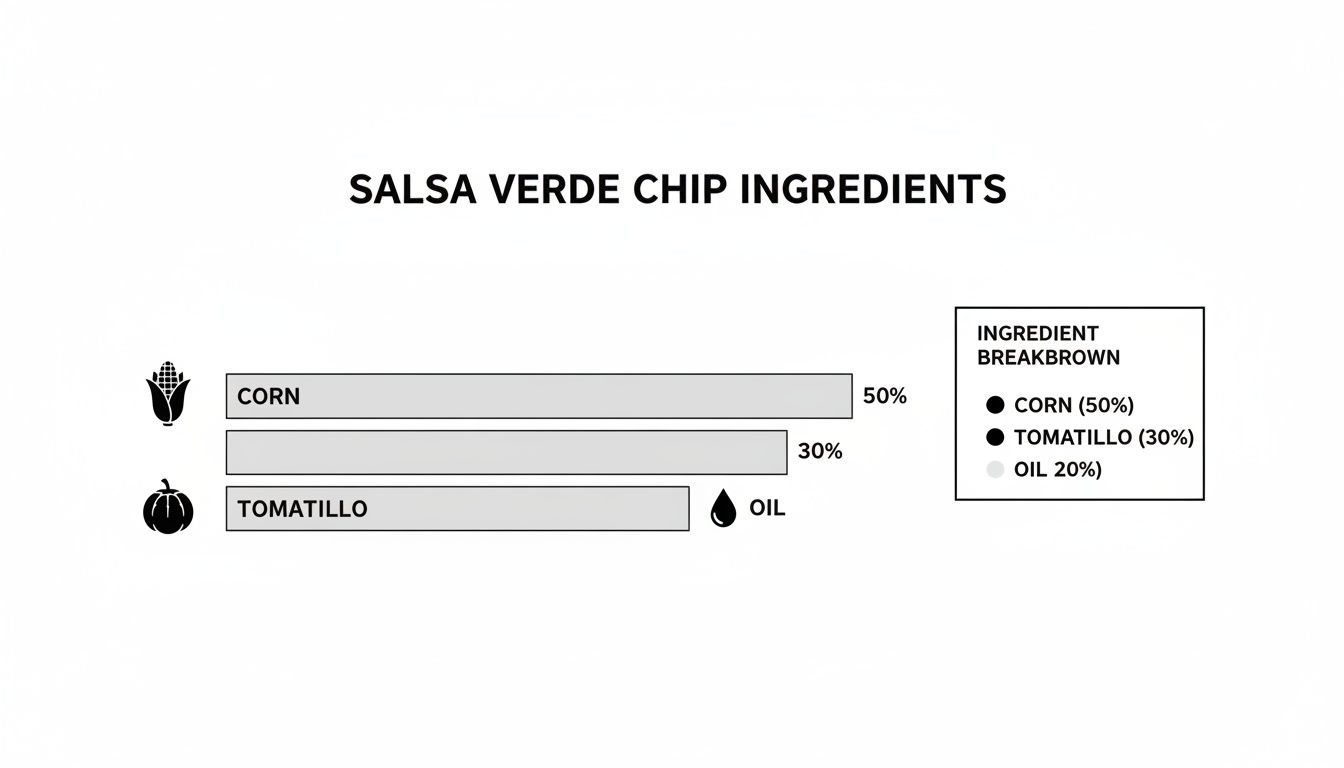
As you can see, corn forms the base, while the oil and tomatillo-based seasonings are responsible for the flavor, texture, and a good chunk of the calories.
The Macronutrient Breakdown
Let's talk about what makes up those calories. The carbohydrates in salsa verde chips come almost entirely from corn. These are mostly refined carbs, which digest quickly for a short-lived energy burst but don't offer much in the way of fiber or lasting fuel to get you through a workout or a busy afternoon.
Next, you've got the fat. Because most chips are deep-fried, the fat content is usually pretty high—often around 7-9 grams per serving. This fat is almost always from industrial seed oils like corn, sunflower, or canola oil, which are known for being high in omega-6 fatty acids.
And then there's protein. Here’s where classic chips really miss the mark for anyone with fitness goals. You'll find a measly 1-2 grams of protein per serving, which explains why you can eat a whole bag and still not feel satisfied. We take a closer look at this in our complete guide to tortilla chips nutrition.
Don't forget about the sodium. It’s the other major player here. Just one serving can have anywhere from 150-250mg of sodium, which is roughly 10% of what you should have in an entire day. And let's be honest, who ever stops at just one serving?
Nutritional Snapshot Salsa Verde Chips vs High-Protein Alternative
To really put things into perspective, let's compare how traditional salsa verde chips stack up against a snack built with performance in mind. This table lays out the nutritional differences side-by-side.
| Nutrient | Fried Salsa Verde Chips (1 oz) | Baked Salsa Verde Chips (1 oz) | High-Protein Snack (1 oz) |
|---|---|---|---|
| Protein | ~2g | ~2g | 15g+ |
| Total Fat | ~8g | ~2g | ~4g |
| Sodium | ~200mg | ~200mg | ~290mg |
| Primary Fat Source | Seed Oils | None or Seed Oils | High-Oleic Sunflower Oil |
The numbers don't lie. While switching to baked chips cuts down on the fat, it does nothing to fix the core problem: a near-total lack of protein. A truly functional snack, on the other hand, completely changes the game by making protein the star ingredient.
This shift means you get a crunchy, savory snack that actually works with your fitness goals, helping you stay full and support muscle recovery instead of just adding empty calories to your day.
The Ultimate Homemade Healthy Salsa Verde Chips Recipe
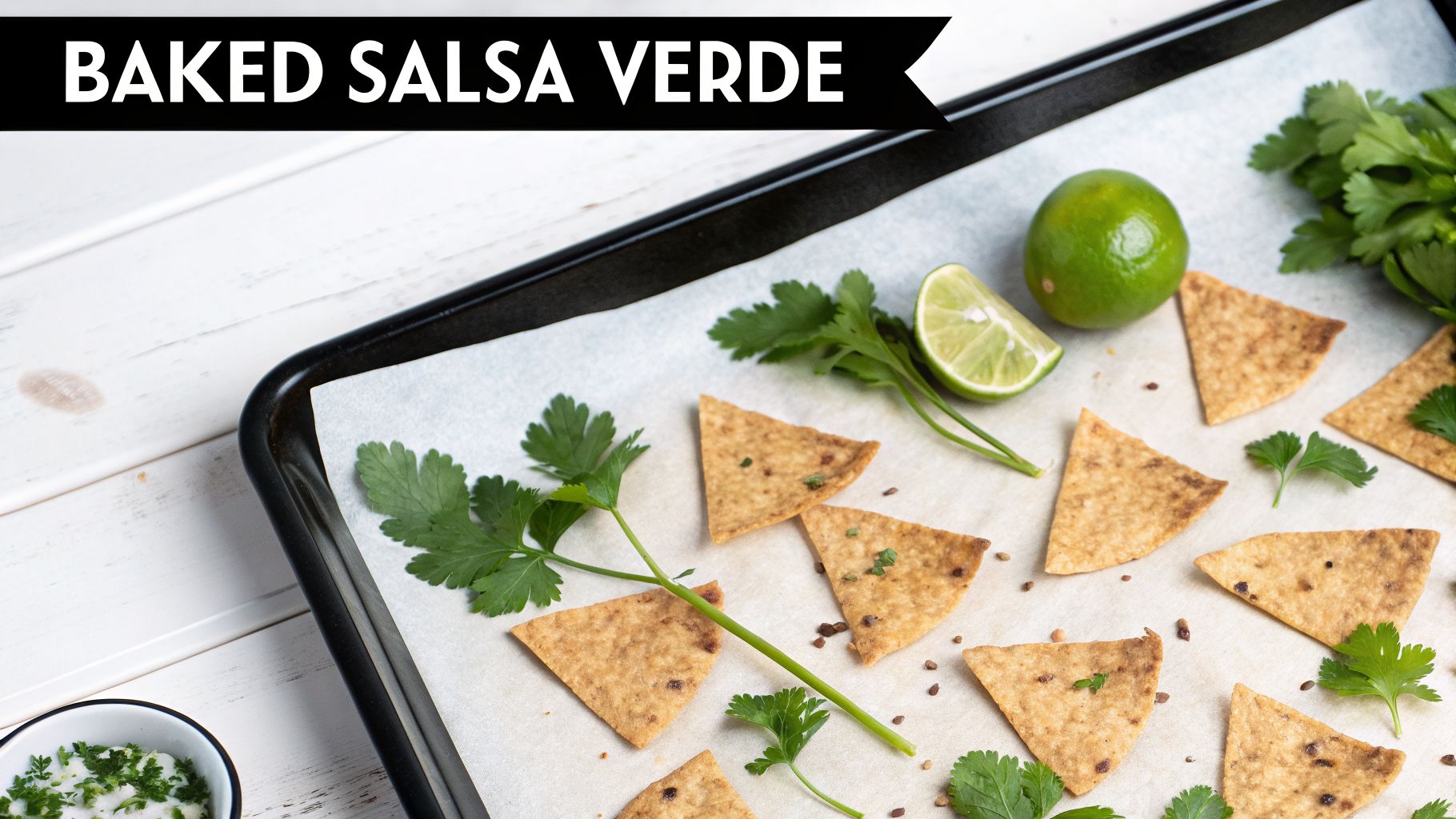
If you really want to take control of your crunch, there's nothing better than making your own salsa verde chips right at home. It’s way easier than you’d imagine, and it lets you ditch all the processed ingredients for a snack that's bursting with flavor, not guilt.
The secret is to bake, not fry. That single change slashes the fat and calories but still delivers the crispy, satisfying texture we all love in a good chip. And by making your own seasoning from scratch, you know every single bite is packed with fresh, vibrant ingredients.
Building Your Fresh Salsa Verde Seasoning
First things first, let's talk about flavor. We're going to create a concentrated seasoning paste using all the fresh ingredients you'd find in a great salsa verde. Forget the mystery powders from a packet.
What You'll Need:
- Tomatillos: Grab about 5-6 medium tomatillos, with those papery husks removed.
- Aromatics: You’ll want 2-3 cloves of garlic (leave the skin on for now) and about a quarter of a white onion.
- Heat: One jalapeño or serrano chili will do the trick. The choice depends on how much of a kick you like.
- Herbs & Citrus: A big handful of fresh cilantro and the juice from one whole lime are non-negotiable for that bright, zesty flavor.
- Oil & Salt: Just one tablespoon of a good-quality oil and a teaspoon of salt.
The magic starts with charring the vegetables to unlock their flavor. Spread the tomatillos, unpeeled garlic, and chili on a baking sheet. Broil them on high for 5-7 minutes per side. You’re looking for a nice, blistered char—this step adds a smoky depth you just can't get otherwise.
Once everything has a good char, let the veggies cool down for a few minutes. Then, you can easily slip the skins off the garlic cloves and pull the stem off the chili. Toss it all—the roasted tomatillos, garlic, chili, fresh onion, cilantro, lime juice, oil, and salt—into a blender. Pulse it until you have a thick, fairly smooth paste. That's your flavor base.
From Tortilla to Chip: The Baking Process
With the hard part done, turning that beautiful seasoning into crispy chips is a breeze.
Here’s how you do it:
- Prep Your Tortillas: Start with a dozen corn tortillas. I like to stack them up and slice them into sixths to get those classic triangle chip shapes.
- Coat with Flavor: Tip the tortilla wedges into a large bowl. Pour your beautiful salsa verde paste over them and use your hands to gently toss everything together. You want every piece to get a light, even coating.
- Arrange for Baking: Spread the coated chips out in a single layer on a baking sheet lined with parchment paper. This is important: don't overcrowd the pan! If you need to, use two sheets. Giving them space is what helps them get crispy instead of just steaming in the oven.
- Bake to Perfection: Pop them into a preheated oven at 375°F (190°C) for about 10-15 minutes. I always flip them about halfway through to make sure they get golden and crispy on both sides. You’ll know they’re done when they’re golden-brown and firm.
Let your chips cool right on the baking sheet; they’ll get even crispier as they sit. Once they're cool, you can store them in an airtight container for up to a week (if they last that long!).
Even with baking, the type of oil you use still matters. If you're curious about which oils pack the best nutritional punch for different cooking methods, it's worth reading up on the healthiest oil for deep frying and baking to make the most informed choice for your kitchen.
Smart Ways to Pair and Serve Your Chips
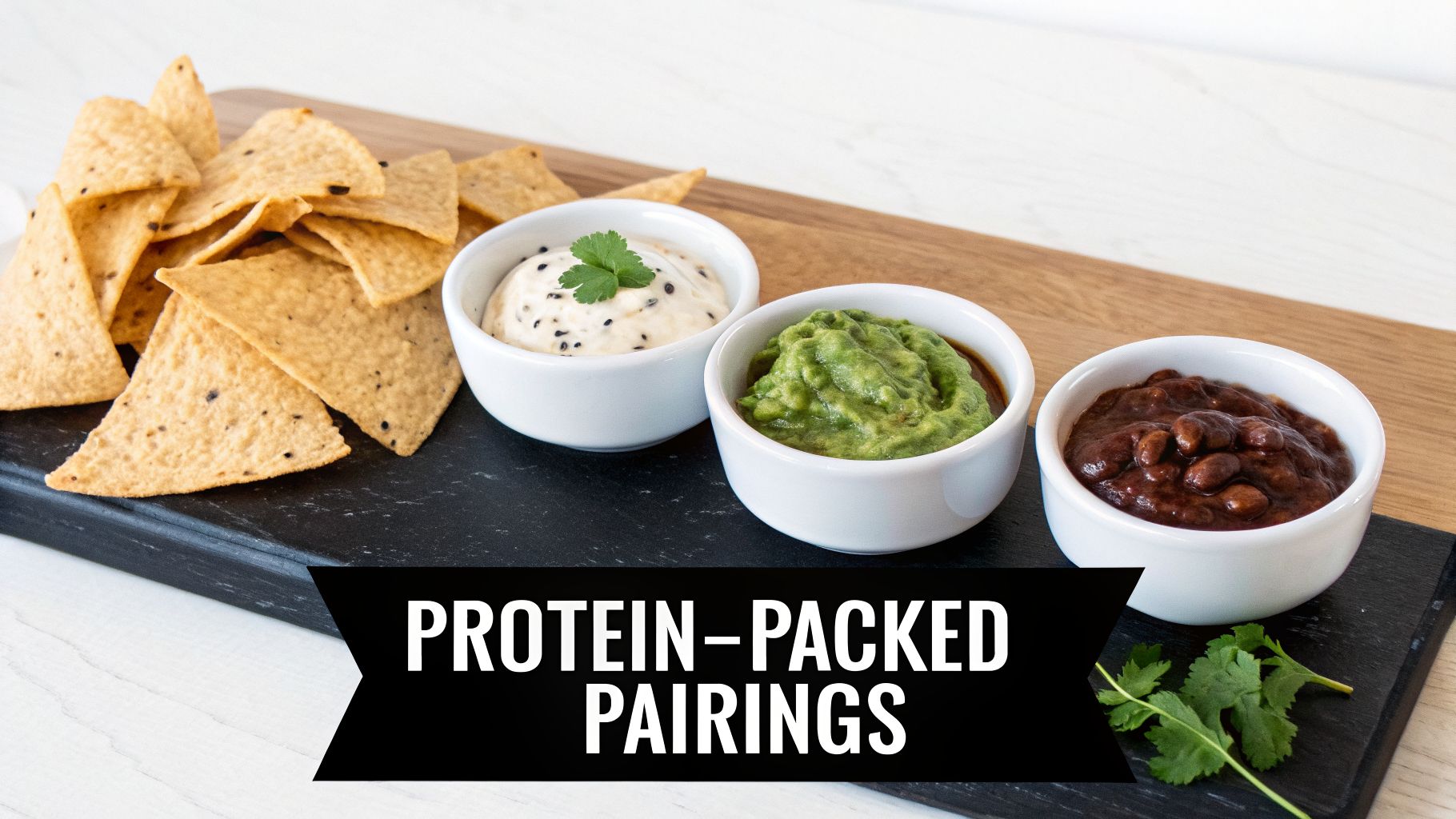
So, you’ve either baked your own healthier salsa verde chips or found a great store-bought brand. That’s awesome, but the chip itself is only half the story. To really make this snack work for an active lifestyle, you need to be smart about what you pair it with.
This means moving beyond the usual high-fat sour cream and cheese dips and choosing partners that add genuine nutritional value. Your goal here is to build a better snack by adding a solid source of protein. This simple move transforms your crunchy salsa verde chips from a quick craving-buster into a tool for muscle recovery and lasting fullness. Just think of the chip as the vehicle and the protein as its high-performance fuel.
Protein-Powered Dip Ideas
Swapping out classic dips for these protein-packed versions is one of the easiest wins you can score for your daily macros. They complement the tangy flavor of the chips perfectly while helping you crush your fitness goals.
-
Greek Yogurt Ranch Dip: Ditch the bottled stuff. Just mix plain, non-fat Greek yogurt with a packet of ranch seasoning. You get a creamy, familiar dip that delivers around 15-20 grams of protein per cup, plus a nice dose of probiotics for gut health.
-
Savory Cottage Cheese: Don't knock it 'til you've tried it! Blend cottage cheese until it’s perfectly smooth and creamy, then season it with a little garlic powder, onion powder, and fresh chives. This dip offers a massive protein boost that makes your snack incredibly filling.
-
Flavorful Black Bean Dip: Puree a can of black beans (rinsed, of course) with fresh lime juice, cumin, and a handful of cilantro. Black beans give you both plant-based protein and fiber—a powerful combo for keeping hunger locked away for hours.
It's no secret that people love Latin-inspired snacks. The Latin America snack market was valued at a whopping $70.38 billion in 2023 and is on track to reach $128.31 billion by 2034, with salty snacks leading the charge. Healthier options like zesty salsas are a huge driver of this trend, giving health-conscious people the bold flavors they want without the compromise. You can learn more about the growth of the Latin American snack market.
The smartest snack isn’t just about what you avoid—it’s about what you add. By pairing your salsa verde chips with a protein source, you’re creating a complete, functional snack that works with your body, not against it.
And don't just stop at dipping! Crumble your salsa verde chips over a taco salad for a satisfying crunch, or use them as a scoop for a hearty bowl of chicken chili. They're a fantastic addition to all sorts of quick Mexican dinner ideas, turning a simple meal into something special.
So, What’s a Real Savory Snack Alternative?
We've talked a lot about salsa verde chips, and let's be real: they nail that tangy, zesty flavor we all love. But when you look past the taste, it's clear they don't offer much in the nutrition department. They’re a fun treat, not functional fuel for an active body.
For anyone who expects their food to do more than just taste good, it's time to think outside the chip bag. The goal isn't just to find a slightly "healthier" chip; it's about upgrading to a snack that genuinely supports your performance and recovery.
Moving Beyond the Corn Chip
Picture a snack with that same awesome crunch and bold, savory flavor you get from salsa verde chips. Now, imagine it's also packed with a nutritional profile actually built to power your workouts. This isn't about compromise—it's about making your snack time work for you.
That’s where a true savory protein snack changes the game. Unlike traditional chips, which are mostly a combination of carbs and fats, a high-performance alternative completely flips the script by making high-quality, plant-based protein the star of the show.
A snack built for performance should do more than just quiet a craving. It should provide sustained energy, support muscle repair, and deliver genuine fullness, making it the smarter choice for any serious fitness enthusiast.
What Really Makes a Snack Work For You
A truly effective snack delivers on a few key things that you just won't find in a standard bag of chips. It's as much about what's inside as what's left out.
- High-Quality Protein: Always look for 15g or more of plant-based protein in a single serving. This is the foundation of a performance snack, helping you crush your daily protein targets and keeping you feeling full for hours.
- Clean Fats: It should skip the inflammatory seed oils that are so common in fried snacks. Instead, a better snack uses healthier fat sources that support your body’s overall wellness.
- Allergen-Friendly: A smart snack is often designed to be free from common irritants like dairy, soy, and gluten, making it easy on your gut and a great option for almost anyone.
When you make this kind of switch, you aren't just snacking smarter—you're fueling your body with purpose. To get the full picture, check out our guide on the benefits of high-protein chips and see how they can fit into your active lifestyle.
Got Questions About Salsa Verde Chips? We've Got Answers.
Even after breaking it all down, a few questions might still be bouncing around in your head. Let's clear up some of the common ones so you can feel confident about your snack choices.
Are Salsa Verde Chips Really Healthier Than Other Flavors?
That’s a common misconception. The truth is, a chip’s flavor doesn't have much to do with how healthy it is. What really matters are the base ingredients and how it's cooked—baked or fried.
When you look at the label, you'll find that most flavored chips, including salsa verde, are nearly identical in sodium, oil content, and their distinct lack of protein. The flavor is just seasoning on top.
Can I Eat Salsa Verde Chips on a Gluten-Free Diet?
For the most part, yes. Any chip made from 100% corn is naturally free of gluten.
The real risk, however, comes from cross-contamination. If the chips are made in a factory that also handles wheat products, there's a chance for exposure. If you have celiac disease or a serious gluten intolerance, your best bet is to always look for a 'certified gluten-free' seal on the bag. That’s your guarantee.
How Do I Keep My Homemade Chips Crispy?
There's nothing worse than putting in the effort to make your own chips only to have them turn soggy the next day. Here's the secret:
The key to keeping your homemade salsa verde chips crispy is letting them cool completely on the baking sheet before storage. This allows all the excess moisture to evaporate, preventing them from becoming soggy.
Once they're totally cool, just toss them in an airtight container and keep them at room temperature. They should stay perfectly crunchy for up to a week. If they do start to soften up a bit, you can bring them back to life with a few minutes in a 300°F oven.
If you’re looking for a savory, crunchy snack that’s actually built for performance—with 15g+ of protein and none of the junk—it might be time for an upgrade. Check out Gym Snack and discover a smarter way to get your crunch on.
Find your new favorite protein snack and see what you've been missing.