

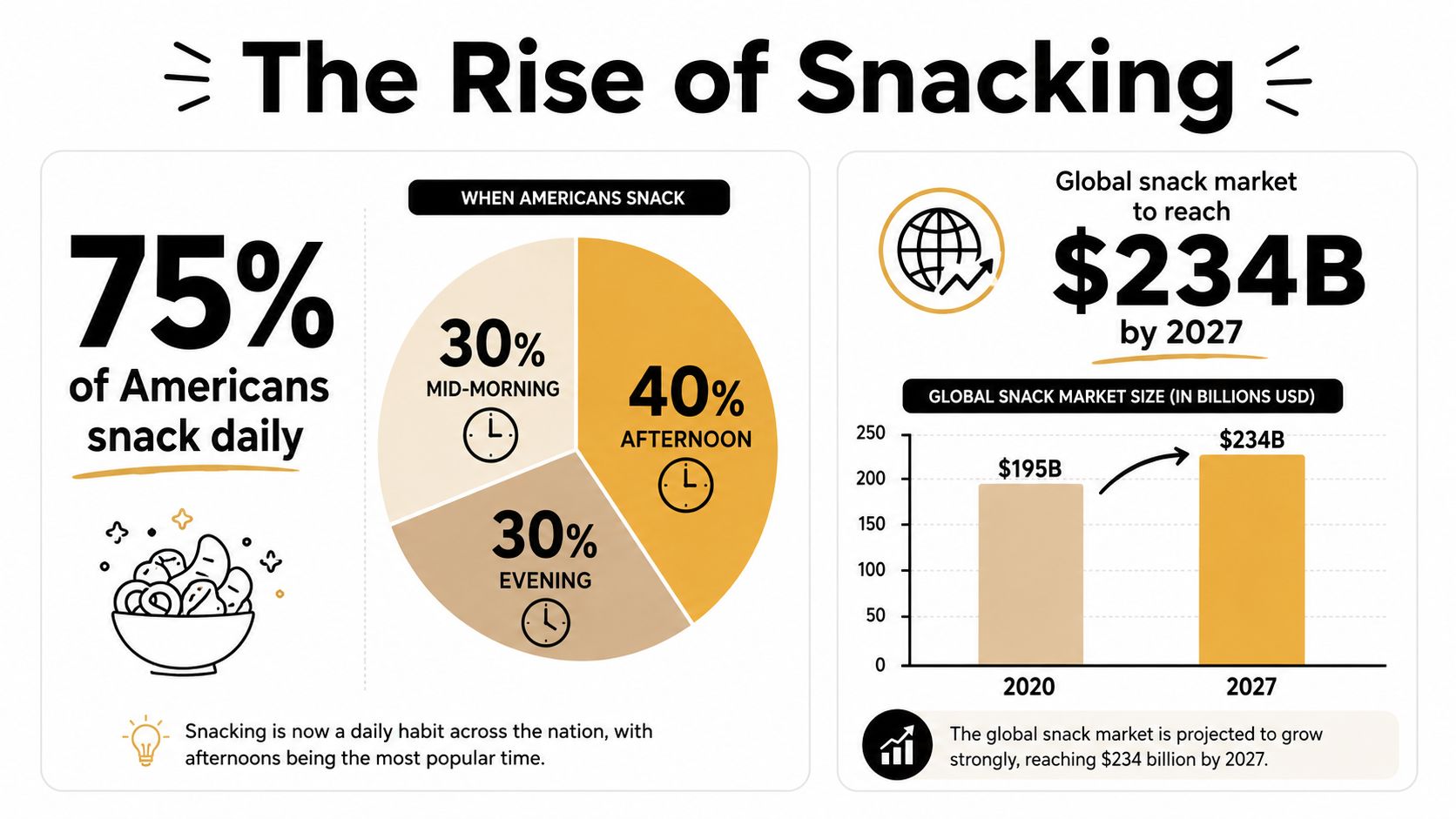
Snacks between meals are no longer an occasional indulgence. A 2026 CivicScience analysis found that 79% of U.S. adults snack between meals at least once per day on average, while 54% snack multiple times daily, the highest multi-snacking share CivicScience had recorded since it began tracking the habit in 2015. (CivicScience analysis)
That reality changes the practical question. Instead of asking whether you should snack at all, ask whether your snack is solving a real problem, such as a long gap before dinner, a demanding training session, or inadequate protein intake, or merely adding calories through habit. The most useful snacks between meals are deliberate, portioned, and substantial enough to support your next meal rather than derail it.
Why Snacks Between Meals Are Now the Norm
Between-meal eating has become part of ordinary food culture in the United States and beyond. CivicScience reports that 32% of Americans most often snack between lunch and dinner, while evening after-dinner snacking accounts for 29% and late-night snacking for 23%. A separate 2022 YouGov poll across 43 major markets found that 45% of global consumers often snack between meals, so this isn't just an American gym or office habit.
The behavior also has a longer history than many people realize. Dietary Guidelines research indicates that snacks contribute approximately 22% to 23% of total energy intake, and adults report an average of 2 to 3 snacking events per day. Earlier information summarized by Harvard's Nutrition Source found that 40% of Americans sometimes replaced meals with snacks, while 25% sometimes skipped meals entirely. The pattern has shifted from occasional nibbling toward a meaningful part of daily eating.
The useful reframe
Snacking doesn't deserve automatic guilt. A planned snack can bridge a long workday, make a pre-workout session more comfortable, or prevent arriving at dinner so hungry that portion control disappears. For a lifter training after work, the difference between a balanced afternoon snack and random office grazing can determine whether the workout feels fueled or flat.
The problem isn't the existence of snacks. It's the combination of low-satiety food, unplanned timing, and repeated eating without awareness. A sweet drink and a handful of small treats may feel like several separate decisions, yet they can form one continuous grazing pattern. A protein-forward snack, eaten while seated and portioned in advance, serves a different purpose.
Practical rule: Treat a snack as a small eating occasion with a job, not as background entertainment.
For ideas that fit active schedules, use this guide to good snacks for energy. The right choice depends on your appetite, training demands, dietary pattern, and the distance to your next proper meal.
When Snacking Helps and When It Hurts
Snack frequency advice remains unsettled. The 2025 Dietary Guidelines systematic review concluded that there isn't enough evidence to determine whether more frequent meals or snacking reliably improves diet quality. That means rigid rules such as “never snack” or “eat every few hours” go beyond what the evidence can support.
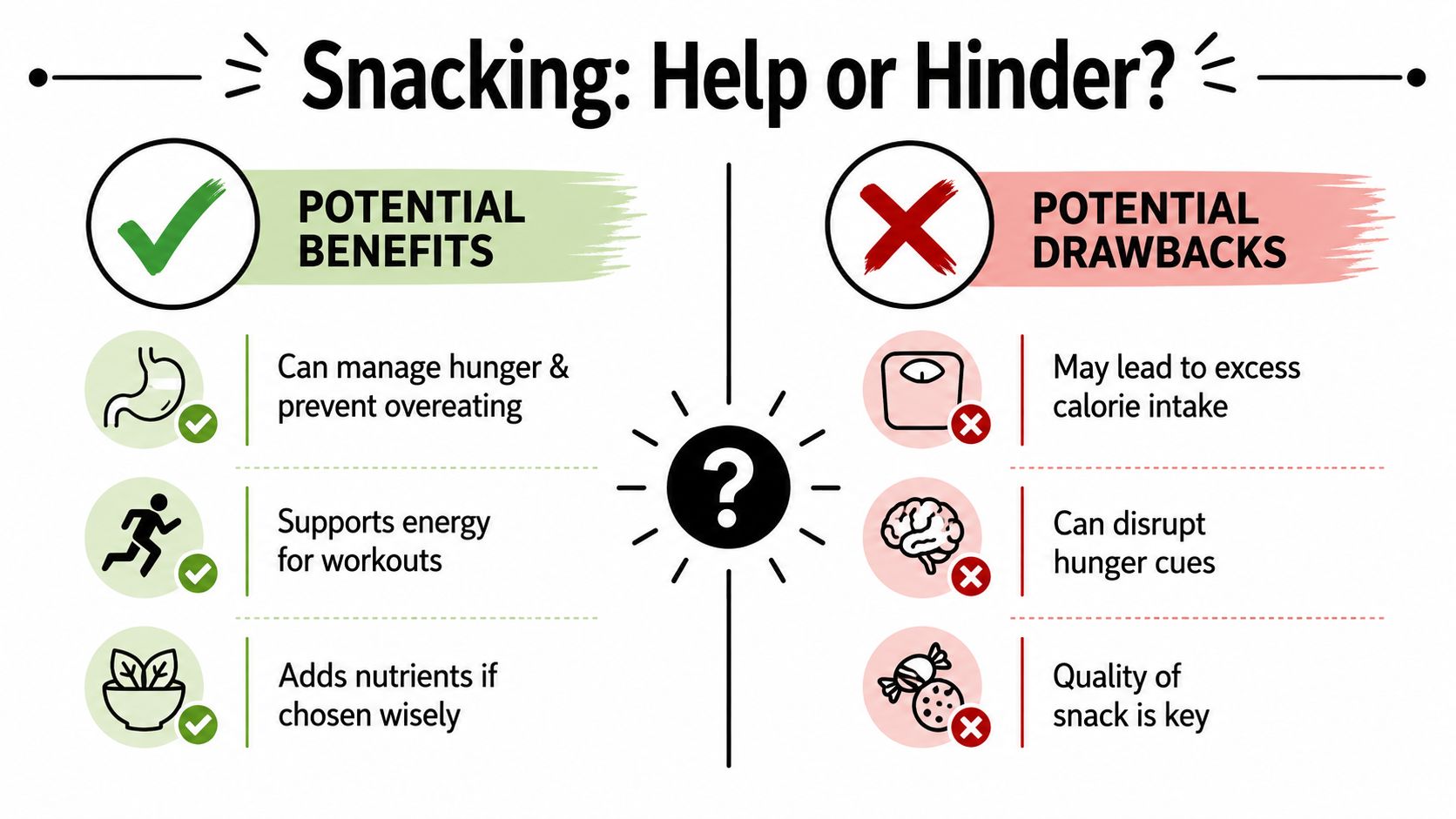
A snack helps when it addresses a predictable need. You may have a long interval between lunch and dinner, an evening training session, or a main meal that couldn't provide enough food for your schedule. In those situations, a measured combination of protein, fiber, and, where useful, carbohydrate can improve practicality and reduce the chance of overeating later.
A snack hurts when it runs on autopilot. Habit strength has been associated with greater between-meal snack energy intake in daily life, which suggests that people often eat because a routine, location, screen, or social cue prompts them, not because physical hunger has built. The answer isn't necessarily to eliminate the behavior. Reshape the cue, prepare a defined portion, and decide in advance whether the food should provide energy, protein, or simple enjoyment.
Hunger, routine, or boredom
Before opening the cupboard, ask three quick questions:
- Physical hunger: Would a basic meal or savory food sound appealing, or am I chasing one specific flavor?
- Timing: Is my next meal far enough away that a snack will make the day easier?
- Purpose: Do I need training fuel, protein, or a small bridge to dinner?
If the answer points to routine rather than hunger, try changing the environment first. Move away from the kitchen, make tea, finish the meeting, or pack the snack into a bowl rather than eating from a large bag. If hunger remains, eat the planned snack without turning it into a moral debate.
Protein changes the equation because it tends to delay hunger more effectively than many lower-protein snack choices. A review of snack composition and satiety reports that higher-protein snacks show the strongest satiety effect, while high-protein, high-fiber snacks can reduce intake at the next meal compared with high-fat, high-sugar snacks. That doesn't make every protein product useful, but it gives you a better starting point than choosing by calories alone.
How to Build a Protein-Forward Snack
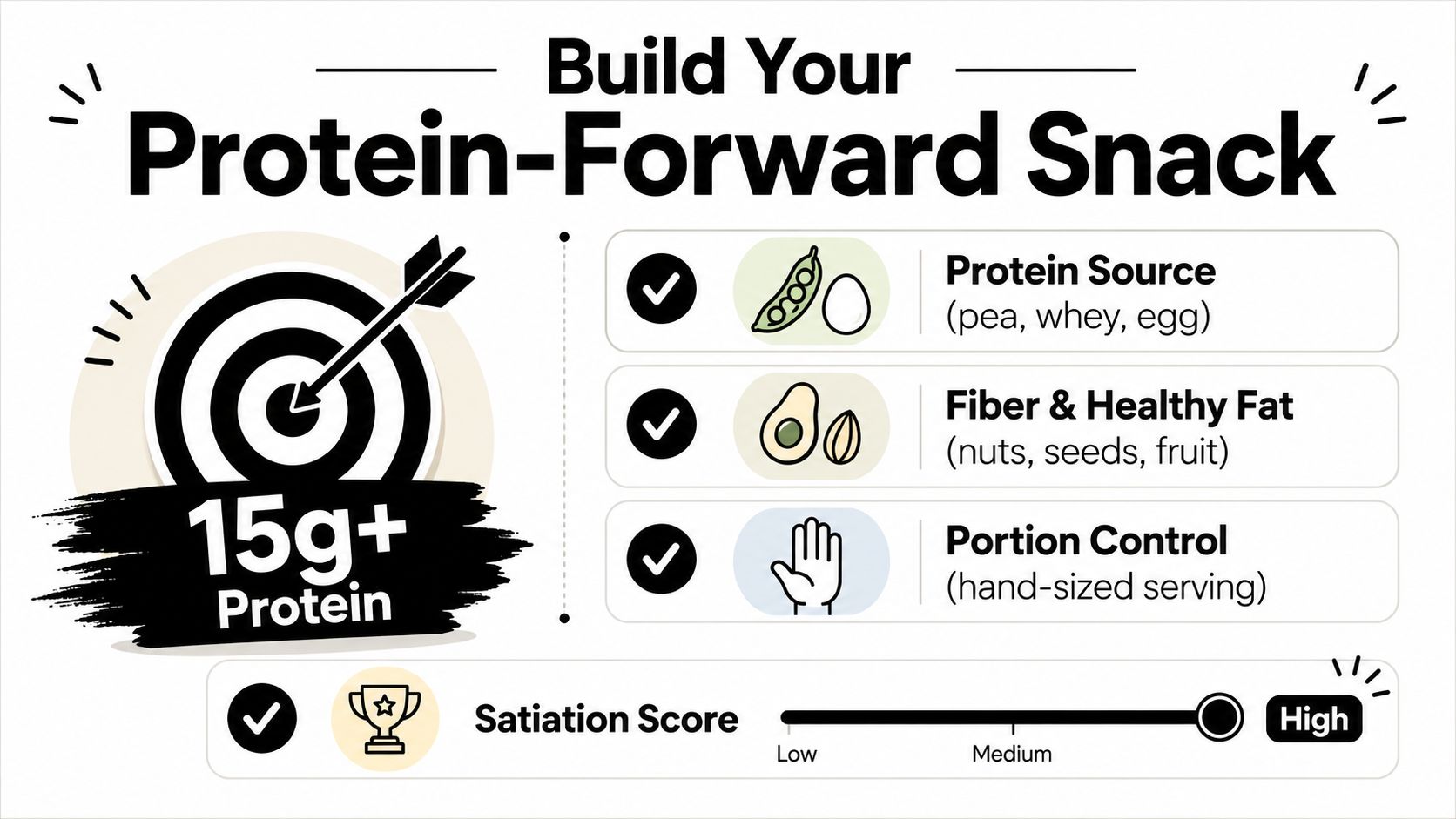
Start with a protein anchor, then add the smallest supporting portion that matches your situation. For most active adults, 15 grams or more of protein is a practical snack target, especially when the snack needs to carry you through a long gap or support recovery. This is a working framework, not a universal prescription, and your total daily intake still matters more than one isolated snack.
Use the four-part filter
1. Choose the protein first. Options include Greek yogurt, cottage cheese, eggs, tuna, lean meat, pea protein, whey, beans, lentils, or a deliberately formulated plant-based snack. If you're eating a bar or packaged product, check the protein line before being distracted by flavor claims.
2. Add fiber or produce. Berries, an apple, cucumber, peppers, roasted chickpeas, or a bean dip can make a snack more substantial. Fiber adds texture and volume, but don't assume a product is high quality simply because the package highlights one fiber ingredient.
3. Match fat and carbohydrate to the job. A small amount of nuts, seeds, avocado, or cheese can improve satisfaction, while fruit, oats, or whole-grain crackers may make sense before training. A desk snack doesn't need the same carbohydrate emphasis as food eaten before a hard workout.
4. Make the portion visible. Use a single serving, a small container, or a hand-sized portion rather than eating directly from the package. Portion control matters even with nutritious foods, because a snack that repeatedly exceeds your actual hunger can become an extra meal.
Food form matters as much as the label. A drink can be convenient, but liquid calories often require less chewing and may feel less substantial than a crunchy or spoonable food. A dense snack can travel well, yet it may be easy to finish quickly without noticing fullness. Choose the form that slows you down enough to register the eating occasion.
Store test: Can you name the protein source, identify the portion, and explain why you're eating it?
Ingredient preferences are personal, but a clear label still helps. Look for a recognizable protein base, useful fiber, moderate sweetness, and a flavor you can tolerate repeatedly. If avoiding seed oils, dairy, soy, or gluten matters to you, verify those details on the package rather than relying on front-label language. For a broader strategy, follow this practical guide to increasing protein intake.
Why Savory Crunch Beats Sweet Bars for Adherence
Sweet protein bars and shakes are convenient, but convenience doesn't guarantee repeatability. Some people enjoy dessert-style flavors for a while, then develop flavor fatigue, dislike the aftertaste of sugar alcohols, or find that a sweet snack keeps their desire for more sweet food active. When that happens, the technically “high-protein” choice stops working in real life.
Savory, crunchy snacks offer a different sensory experience. Cheesy seasoning, jalapeño heat, and a crisp texture can feel closer to a small food serving than to a dessert replacement. That distinction matters for adherence because people don't eat nutrition labels. They eat foods they want to repeat.
Compare the trade-offs
| Sweet bar or shake | Savory crunchy snack |
|---|---|
| Often convenient for commuting and quick intake | Easy to portion into a gym bag or office drawer |
| May satisfy a sweet preference | Can provide flavor contrast when sweet foods feel repetitive |
| Some formulas rely heavily on sugar alcohols or sweeteners | Bold seasoning can reduce dependence on dessert-style flavors |
| Frequently soft or liquid in texture | Crunch provides a more deliberate eating experience |
Neither category is automatically superior. A shake may be the sensible choice when chewing is difficult, and a bar can work when its ingredients, taste, and portion fit your plan. The mistake is assuming that every high-protein product will control appetite because it contains protein.
For people managing appetite or using GLP-1 medication, large portions and heavy sweetness may be especially unappealing. A compact savory option can be easier to approach, but individual tolerance varies, and anyone using medication should follow their clinician's guidance. The practical objective is not to force food. It's to make the available protein easier to eat consistently.
If sweet cravings are driving repeated snack decisions, this guide to stopping sugar cravings naturally offers another way to think about the pattern. A savory snack won't solve every craving, but it can give your routine a more satisfying alternative to another sweet product.
Sample Snack Plans for Real Lifestyles
The same snack can be useful for one person and unnecessary for another. Timing, appetite, training, dietary restrictions, and access to a refrigerator all change the decision. These examples use a protein-forward structure while keeping portions practical rather than turning every snack into a full meal.
| Lifestyle | Timing | Protein target | Example snack |
|---|---|---|---|
| Gym-goer training after work | Mid-afternoon, before training | 15 g or more | Pea-protein crisps with fruit, or Greek yogurt with berries |
| Plant-based eater avoiding dairy and soy | Between breakfast and lunch | 15 g or more | Pea-protein snack with an apple, or roasted chickpeas with a bean dip |
| Busy professional | Between meetings, before dinner | 15 g or more | Single-serve protein snack with whole-grain crackers and vegetables |
| GLP-1 or weight-management user | Only when genuine hunger appears | 15 g or more if tolerated | A small savory protein portion with cucumber or a few berries |
The after-work trainee
If lunch is early and your session begins after the workday, a mid-afternoon snack can prevent training on an empty stomach. Keep the portion moderate, include protein, and add a digestible carbohydrate if the workout demands it. Eating too much fat or fiber immediately before training may feel heavy, so place larger, slower-digesting foods farther from the session.
The plant-based eater
A dairy-free, soy-free plan needs deliberate protein selection. Pea protein, beans, lentils, chickpeas, seeds, and nuts can all contribute, but nuts and seeds often bring more fat than protein per bite. Pair a concentrated plant protein with fruit or vegetables instead of expecting a small handful of nuts to carry the whole snack.
The professional with no gap between calls
Pack the snack before leaving home. A sealed, single-serving option is more reliable than hoping a meeting ends on time, and pairing it with water can make the eating occasion feel complete. If dinner is soon, choose the smaller portion. If dinner will be delayed, add produce or a modest carbohydrate rather than returning repeatedly to the office snack drawer.
The GLP-1 or weight-management user
Appetite may be lower, but protein and overall nourishment still deserve attention. Start with a small portion, eat slowly, and stop when comfortable. Don't force a large snack because a target says you should, and speak with your healthcare professional about nutrition needs, medication effects, and any persistent nausea or difficulty eating.
Using Gym Snack as an On-the-Go Protein Option
Gym Snack fits the protein-forward framework as a portable, savory option for people who don't want another sweet bar or shake. Its plant-based base uses pea protein, with 15g+ protein per serving and 30g+ per bag, plus low saturated fat and no cholesterol. The product is also described as free from dairy, soy, gluten, and seed oils, which can simplify choices for people managing those ingredients.
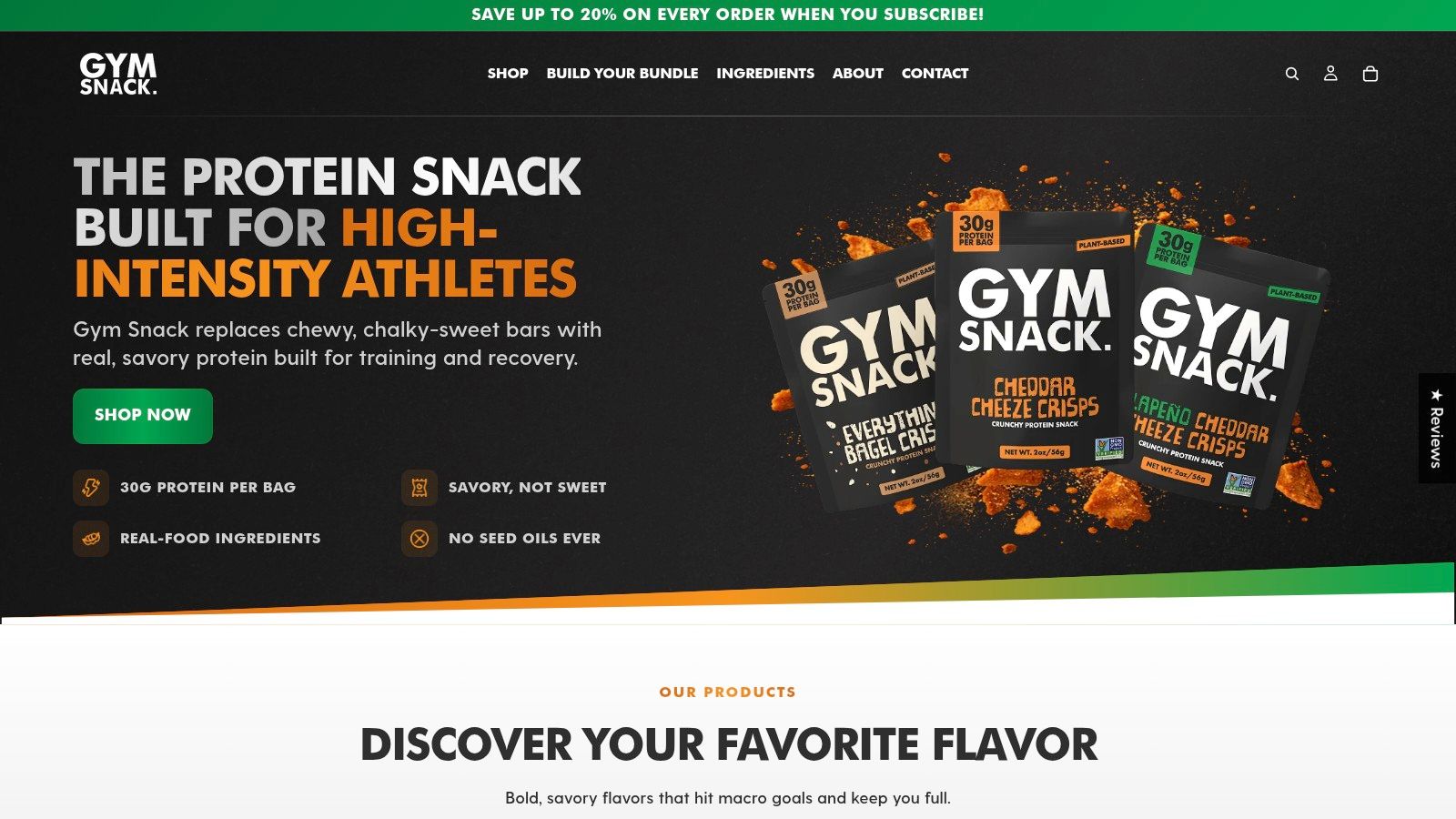
That combination makes sense for an office drawer, commute, travel day, or gym bag. The savory Cheddar Cheeze and Jalapeño Cheddar Cheeze profiles address a specific adherence problem: some people don't want every protein snack to taste like a dessert. Crunch also creates a different experience from a soft bar, which may make the snack feel more intentional.
The nutrition logic still depends on how you use it. If you need a pre-workout carbohydrate source, pair the snack with fruit or another suitable carbohydrate. If you're bridging lunch and dinner, the protein portion may be enough alongside water, depending on your hunger. If you're trying to reduce total intake, don't eat from an open bag while distracted. Use the serving that matches your plan.
Best use case: Keep a measured portion available for the predictable hunger window, rather than waiting until you're ravenous and buying whatever is closest.
Gym Snack offers bundles and custom pack options, so people can organize different routines around workdays, training days, or travel. The product's stated focus is transparent ingredients, savory flavor, and portable protein, which makes it one practical option among the broader range of snacks between meals.
Here's a closer look at how a savory protein snack can fit around active days:
Your Personal Snacking System Between Meals
Build your system around three decisions. First, snack when there's a real gap, a training demand, or physical hunger, not because food is visible. Second, anchor the portion with 15g or more of protein when appropriate, then add fiber, produce, or carbohydrate according to your appetite and activity.
Third, audit the habit after eating. Did the snack improve energy, reduce distracting hunger, or support training? Or did it disappear without changing how you felt? Keep the options that solve a problem, and reshape the routines that don't.
Snacking isn't a moral issue. It's a tool, and the best tool is the one you can use consistently without creating more food noise. Run one structured plan for a week, record your energy, hunger, and training performance, then adjust the timing or portion based on what you observe.
Gym Snack makes plant-based savory protein snacks with 15g+ protein per serving, a crunchy texture, and Cheddar Cheeze or Jalapeño Cheddar Cheeze flavors for convenient eating between meals. Visit Gym Snack to explore bundles or build a custom pack for your workday, training schedule, or travel routine.