

You’re standing in front of the snack shelf at Trader Joe’s after work, gym bag over one shoulder, trying to make a fast decision. Dinner is hours away. You want protein, something portable, and ideally something that doesn’t taste like chalk. The bars look easy enough. The wrapper says protein. The flavor sounds familiar. The price feels painless.
That’s exactly why trader joe's protein bars keep ending up in so many carts.
They solve a real problem. They’re convenient, widely available, and cheap enough that grabbing a box doesn’t feel like a commitment. For a lot of shoppers, that’s more important than having a perfect ingredient list. In practice, many shoppers aren’t choosing between a pristine, chef-prepped recovery snack and a Trader Joe’s bar. They’re choosing between a bar, skipping food entirely, or grabbing candy from the checkout line.
Still, the label matters. So does the ingredient list. And for many active people, the bigger issue isn’t just macros. It’s how the bar sits in your stomach, whether it keeps you full, and whether a sweet, processed snack is helping or subtly working against your goals.
Some Trader Joe’s bars are decent emergency options. Some are better framed as convenience food with a health halo. A few make sense in very specific situations, especially when budget is the top priority. But if you care about digestibility, cleaner ingredients, or getting away from dessert-style “fitness” snacks, you need a more honest lens than calories and protein alone.
Your Guide to Navigating the Trader Joe's Protein Bar Aisle
The Trader Joe’s bar aisle creates a familiar kind of confusion. The packaging suggests energy, wellness, convenience, and fitness. The flavors lean dessert-like. The prices make the choice feel smart. But once you start comparing bars, the line between practical snack and candy bar in activewear gets blurry fast.
That’s where most shoppers get stuck.
A college student trying to stretch a grocery budget sees a sub-$1 bar and thinks, “Good enough.” A commuter tosses one into a backpack for a long day. A gym-goer grabs one before class because it’s there and it tastes better than most protein products. All of those choices are understandable. None of them are irrational.
The problem is that “protein bar” has become a category label, not a nutrition verdict.
Some Trader Joe’s bars can work when convenience matters more than optimization. Others look more useful on the front of the package than they are in real life. If your goal is muscle recovery, appetite control, cleaner eating, or steady energy, you need to judge the bar by more than the protein number on the wrapper.
A cheap bar that you’ll actually eat can be more useful than a premium bar you leave in the cabinet. But useful and ideal aren’t the same thing.
The better way to evaluate trader joe's protein bars is to ask a few practical questions:
- What job is this bar doing: quick snack, pre-workout fuel, post-workout recovery, or meal bridge?
- What trade-off are you accepting: lower price, more sugar, more processed ingredients, or lower protein?
- How do you feel after eating it: satisfied, bloated, hungry again, or craving more sweets?
That last question gets ignored far too often. A bar can look decent on paper and still be the wrong fit for your body or your goals.
Anatomy of a Trader Joe's Protein Bar
You grab a bar because lunch got pushed back, training starts in an hour, or you need something that can live in a bag for days. In that moment, the label matters less than what the bar does for hunger, digestion, and energy.
Trader Joe’s sells several bars, but they do not belong in one nutritional bucket. Some are closer to compact energy snacks. Others are marketed as protein-forward convenience foods. If you want a better read on the category, start with the bar’s protein density, sugar load, and ingredient mix, then ask the practical question: will this keep you full without upsetting your stomach or pushing you toward another sweet snack an hour later?
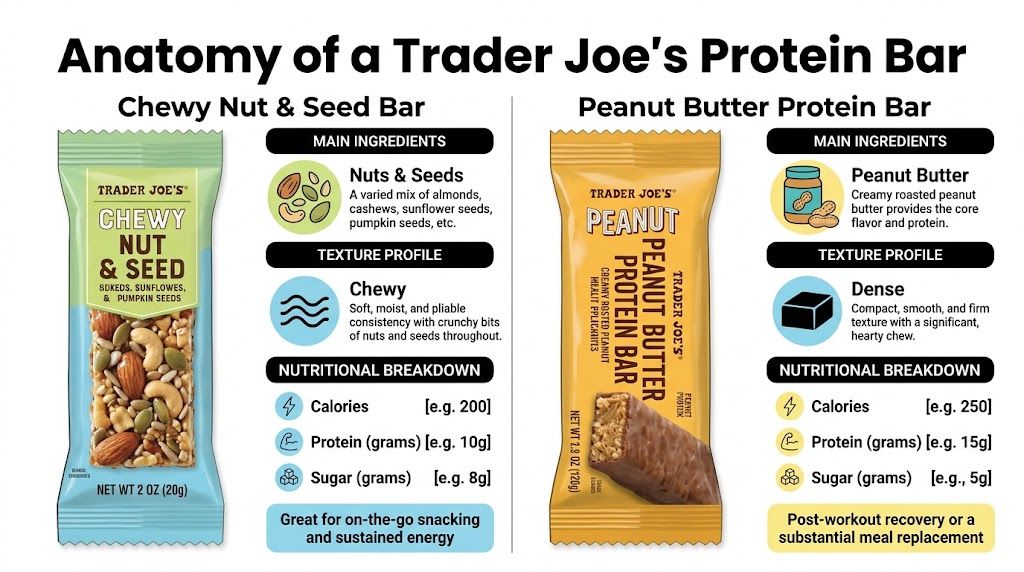
The Chewy Chocolate & Peanut Butter Protein Bar is a useful example. According to Runivore’s review of Trader Joe’s protein bar nutrition, each 40 gram bar provides 190 calories, 11 grams of fat, 15 grams of carbohydrates, 7 grams of added sugar, and 10 grams of protein, and it sells for less than $1 per bar in major U.S. markets.
That profile puts it in the middle ground. It has enough protein to be more filling than a standard candy bar, but not enough to stand in for a strong post-workout option. It also leans sweet, which can work before activity or during a long day, but it is not the same as a high-satiety snack built around protein and fiber.
What the label says and what it means
The front of the wrapper highlights protein. The ingredient list gives you the better signal.
Bars in this category often rely on ingredients like soy protein crisps, chocolate liquor, and molasses to create a sweeter, more candy-like texture while still hitting a protein claim. From a sports nutrition standpoint, that usually means a more processed formula, faster palatability, and a mixed satiety result. Some people feel fine on that setup. Others get hungry again quickly, or notice bloating if soy-heavy bars do not sit well with them.
That gut piece gets ignored too often. A bar can fit your macros and still be a poor fit for your day if it leaves you gassy during a commute, too full before training, or hunting for another snack because the sweet taste kept cravings switched on.
A quick comparison mindset
Use a simple filter in the aisle.
| Bar | Best viewed as | Known nutrition facts |
|---|---|---|
| Chewy Chocolate & Peanut Butter Protein Bar | Budget snack with some protein and quick energy | 190 calories, 10g protein, 15g carbs, 7g added sugar |
| Energy Bar Peanut Butter | More substantial energy bar, not a protein-dense recovery bar | 270 calories, 11g protein |
The Energy Bar Peanut Butter sits in a different lane because it gives you more total calories without a meaningful jump in protein. For someone trying to bridge a long gap between meals, that may be useful. For someone trying to increase protein intake efficiently, it is not an especially strong value.
The Ingredient Trade-Off
Shoppers often choose bars by flavor first. I would rank these factors higher:
- Protein source: Soy protein can be effective, but tolerance varies. If a bar consistently leaves you bloated or heavy, the ingredient list matters more than the front label.
- Sweetness level: A sweeter bar is easier to eat on the go, but it also behaves more like a treat and may be less satisfying than a less sweet, more savory snack.
- Processing level: Chewy texture, flavor coatings, and shelf stability usually come with a more engineered formula.
- Satiety payoff: Ten to eleven grams of protein can help, but it may not be enough for people using a bar to replace a real snack or support recovery.
- Allergen load: Peanut and soy are workable for many shoppers and a hard stop for others.
For a better framework on reading wrappers, this guide to protein bar nutrition facts is useful because it pushes the right question. What is this bar built to do, and what problem does it solve?
Label check: If a bar tastes close to dessert, read it as a convenience food first and a recovery food second.
Why these bars stay popular anyway
Trader Joe’s gets the convenience equation right. Low price, decent taste, and long shelf life cover a lot of real-life situations.
That does not make every bar a strong nutrition choice. It explains why people keep buying them.
For budget-conscious shoppers, a TJ’s bar can be a reasonable backup option. For people focused on cleaner ingredients, better digestion, and longer-lasting fullness, it usually makes more sense to treat these bars as occasional sweet snacks with some protein, not as the gold standard for daily fueling.
The Pros and Cons of Grabbing a TJ's Bar
You leave the gym late, dinner is still an hour away, and the only thing within reach is a Trader Joe’s bar at the bottom of your bag. In that moment, the bar solves a real problem. It is portable, cheap, and easy to eat before hunger turns into a fast-food stop.
That convenience is why these bars keep selling. For plenty of shoppers, the choice is not between a Trader Joe’s bar and a perfectly balanced whole-food snack. It is between a Trader Joe’s bar and nothing.

Where TJ’s bars earn their spot
The biggest advantage is practicality.
A TJ’s bar works well as a backup snack in a desk, car, carry-on, or gym bag. The price is usually easier to justify than many fitness-branded bars, and the sweeter flavor profile makes them more approachable for people who do not enjoy dense, powdery protein products.
They can also be useful before training if the goal is quick, easy fuel rather than a perfectly clean ingredient panel. For that job, a bar with some carbs can be more useful than a high-protein option that sits heavy. If that is your use case, this guide on choosing a protein bar before a workout gives a better framework than chasing the highest protein number.
I recommend them most often as insurance, not as a staple.
Where the trade-offs show up
The downside is not just macros. It is what happens after you eat the bar.
Many Trader Joe’s bars are built to taste good, stay shelf-stable, and hit a low price point. That usually means a sweeter profile, a more processed ingredient list, and protein that is present but not especially substantial. For someone trying to stay full for several hours, support recovery, or keep cravings under control, that combination can underperform.
The gut health piece matters too. Bars that rely on syrups, isolates, added fibers, gums, or soy-forward formulations can be hit or miss digestively. Some people tolerate them fine. Others get bloating, a heavy stomach, or the weird mix of still feeling hungry while also feeling overly full. I see that problem often with clients who assume all protein bars function the same way.
Here is where TJ’s bars tend to fall short:
Satiety
A sweet bar can take the edge off hunger, but it often does not create the same fullness as a snack built around more protein, less sweetness, and a simpler ingredient list. If your afternoon snack leaves you hunting for more food 45 minutes later, that matters.
Recovery value
For hard training days, many of these bars are better viewed as partial fuel than full recovery nutrition. They can help bridge the gap. They often do not finish the job on their own.
Digestibility
Shelf-stable bars live or die by texture and flavor. The trade-off is that the formula can get more engineered. For shoppers with sensitive digestion, that matters more than the front-of-package protein claim.
Food preference drift
If every convenience snack tastes like candy, your palate starts expecting candy. That makes the shift toward more savory, high-satiety snacks harder, even when those options do a better job controlling hunger.
Cheap and convenient is a valid win. It just does not erase the digestion and fullness trade-offs.
A more useful standard
I judge Trader Joe’s bars by role, not hype.
| Goal | Does a TJ bar usually fit? | Why |
|---|---|---|
| Emergency snack | Yes | Easy to store, inexpensive, good enough in a pinch |
| Pre-workout convenience | Sometimes | Useful if you want quick fuel and easy digestion, but product choice matters |
| Long-lasting fullness | Often not | Sweetness and moderate protein do not always hold appetite well |
| Daily clean snack habit | Usually no | Ingredient quality and digestibility are common sticking points |
| Gut-friendly option | Unreliable | Tolerance varies a lot based on the bar and the person |
That is the fairest read on trader joe's protein bars. They are popular because they solve a convenience problem well. They are weaker as a daily solution for people who care about cleaner ingredients, steadier appetite control, and a snack that feels good in the stomach after the wrapper is gone.
Who Are These Protein Bars Actually For?
The best use case for trader joe's protein bars isn’t “everyone.” It’s a narrower set of people whose top priority is convenience, price, and acceptable taste.
If that’s you, the bars may fit fine. If your priorities are different, they may miss badly.
They make sense for some shoppers
A budget-conscious student is a good example. If you need a shelf-stable snack between classes and you don’t have much room in your budget, Trader Joe’s bars are easy to justify. They’re also reasonable for busy professionals who need something non-perishable at work and don’t want to spend time meal prepping every snack.
They can also fit some endurance situations. The Chewy Chocolate & Peanut Butter bar’s carb content and electrolytes were specifically noted by the earlier cited review as useful for mid-exercise fueling during long efforts like hikes or ultramarathons. In that context, you’re not asking the bar to be ultra-clean. You’re asking it to be edible and useful while moving.
They’re a weak fit for other goals
For someone focused on clean eating, daily blood sugar management, or higher-quality protein intake, these bars become much harder to recommend as a routine choice. The same goes for shoppers who know soy doesn’t sit well with them.
People following lower-sugar eating patterns often run into a mismatch too. A sweet bar can fit occasionally, but relying on dessert-like snacks every day tends to keep cravings alive rather than reducing them.
Here’s a practical split:
- Good fit: students, commuters, travelers, hikers, people who need a cheap backup snack
- Conditional fit: recreational gym-goers who care more about convenience than optimization
- Poor fit: clean-label shoppers, soy-sensitive eaters, low-sugar dieters, people wanting a stronger post-workout protein hit
Match the bar to the moment
Most confusion disappears when you separate context from identity. A Trader Joe’s bar may be the right snack for one moment and the wrong snack for your broader routine.
For example, a sweet, compact bar can make sense before training if you need fast fuel and don’t want a heavy meal. This guide on choosing a protein bar before a workout is useful because it frames the question around timing and tolerance, not branding.
Use-case rule: buy a bar for the situation you’re in, not for the person you wish the packaging said you were.
That mindset saves people from overthinking. It also stops the common mistake of turning a convenience snack into a daily nutrition cornerstone.
Sweet vs Savory Why Your Protein Snack Choice Matters
The biggest shift in protein snacking isn’t just better macros. It’s a change in taste expectations.
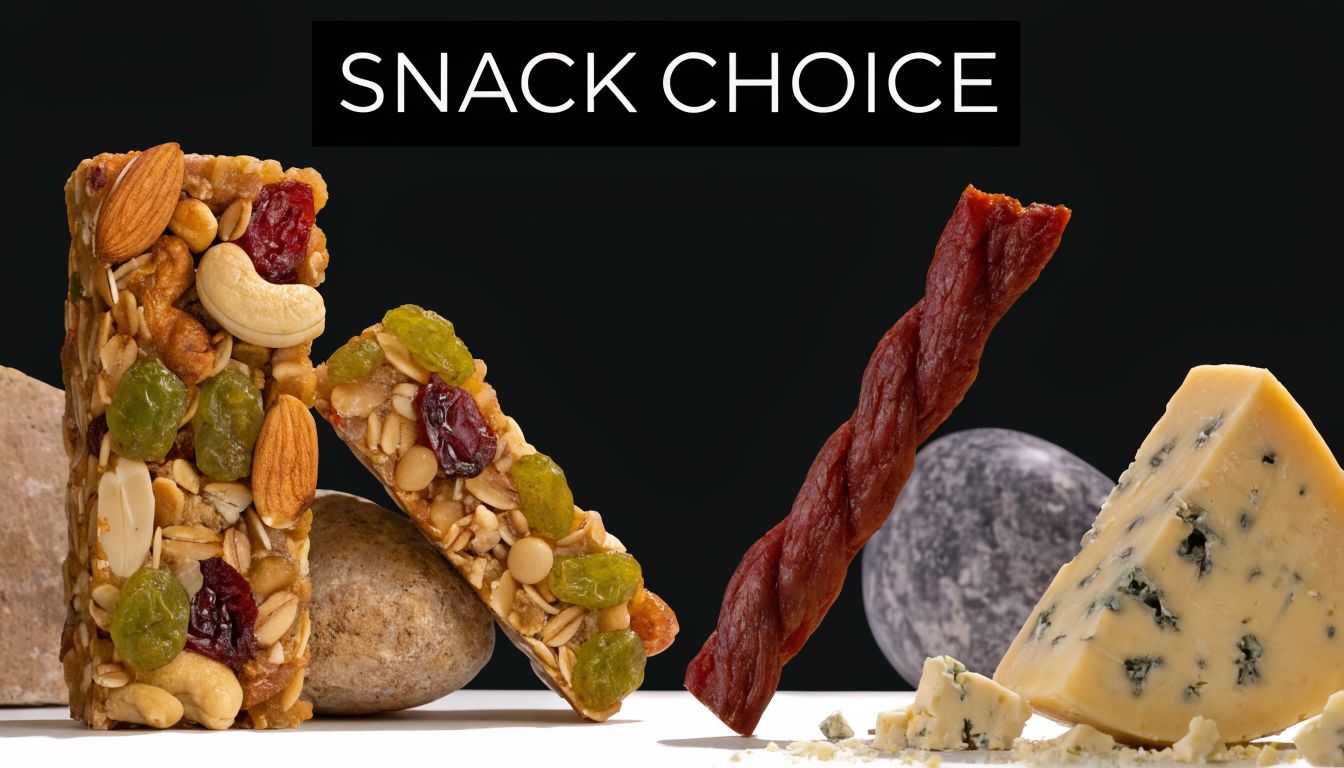
For years, the category trained people to believe protein snacks had to imitate dessert. Chocolate, cookie dough, peanut butter cup, birthday cake. The assumption was simple: if it tastes indulgent enough, people will tolerate the processed texture and the nutrition compromises.
That model is starting to wear thin for a lot of eaters.
Sweet bars can create their own problem
Dessert-style bars often work against appetite regulation in a subtle way. Even when the macros look respectable, the eating experience still feels like candy. For some people, that keeps the reward loop running. You finish the bar and want something else sweet. Or you feel like you had a treat, not a satisfying snack.
This doesn’t happen to everyone, but it happens enough that it’s worth paying attention to.
Savory snacks change the experience. They tend to feel more like food and less like a workaround. For people who are burned out on sweet shakes, bars, and “healthy candy,” that shift matters more than most labels acknowledge.
Digestibility is the overlooked filter
Trader Joe's protein bars deserve a more critical examination.
The gut-health angle is under-discussed in most bar reviews, but it matters. According to the video discussion on digestibility and soy-based bars, an underserved issue in this category is how soy protein, which is key in the Chewy Chocolate & Peanut Butter bars, may contribute to bloating, especially for fitness-focused people sensitive to common irritants. That same discussion contrasts soy-heavy bars with pea protein options promoted as easier to digest and naturally free of soy, dairy, and gluten.
That tracks with what many active people report privately. A bar can be “fine” on paper and still feel terrible before training, after training, or during a long day of sitting at work.
Signs your bar may not be working for you
- You feel puffy or distended after eating it
- You get hungry again fast despite the calories
- You crave something sweet right after
- You avoid eating it before training because it sits too heavy
Those signs don’t prove a product is objectively bad. They do tell you it may be a poor match for your digestion or your satiety needs.
Why savory often wins on satiety
Savory protein snacks usually have an easier time feeling substantial. The palate reads them as food, not dessert. That can reduce the urge to keep chasing sweetness through the day.
Here’s the practical distinction:
| Sweet dessert-style bar | Savory protein snack |
|---|---|
| Often feels like a treat replacement | Often feels like an actual snack |
| Can reinforce sweet cravings | Can reduce flavor fatigue |
| May rely on processed sweetness to improve taste | Leans on salt, seasoning, and crunch |
| Can be hit-or-miss for digestion | Often better suited to people avoiding sugary bars |
A lot of clients don’t realize they’re tired of sweet protein products. Once they move toward savory formats, they stop white-knuckling snack decisions.
This short clip adds useful context on how snack choices are evolving beyond bars alone:
The modern standard is different
People aren’t just asking, “How much protein is in it?” They’re asking better questions:
- Will this upset my stomach?
- Do I want another sweet snack today?
- Does this keep me full?
- Can I eat this often without feeling like I’m settling?
That’s why the old candy-bar-with-protein model is losing some of its shine. Taste still matters. Convenience still matters. But digestibility, ingredient simplicity, and satiety now matter just as much.
If a snack checks the macro box but leaves you bloated and still hunting for food, it didn’t really solve the problem.
Smarter Snacking Recommendations for Your Goals
There is no universal yes-or-no verdict needed on trader joe's protein bars. What's needed instead is a decision that fits one's actual goal. That’s where the answer gets more useful.

If your goal is fitness performance
Treat Trader Joe’s bars as backup fuel, not as your default recovery strategy. The lower-protein bars can help in a pinch, especially if you need something immediately after training and there’s nothing else around. But if you train hard and expect your snacks to pull real weight, look for options that center protein more clearly and don’t rely so heavily on sweetness.
A simple rule works well here:
- Before training, choose something you know you tolerate well.
- After training, prioritize a snack or meal that feels protein-forward, not just protein-labeled.
- For long outings, a TJ bar can make sense as a portable bridge.
If your goal is weight management or appetite control
At this point, many people outgrow sweet bars.
Dessert-style snacks can fit calories on paper and still do a weak job on fullness. If your afternoons are driven by cravings, a sweet protein bar may keep that loop going. In this situation, a more food-like snack often works better than a candy-like one.
Try this decision filter:
- Choose savory first if you notice sweet snacks trigger more snacking
- Pair convenience with chewing because crunchy, substantial snacks often feel more satisfying
- Use bars selectively for travel, commutes, or true schedule emergencies
For people comparing lighter packaged options, this roundup of low-calorie protein bars can help clarify the trade-off between calorie control and actual fullness.
If your goal is plant-based or allergen-aware eating
This group needs to read Trader Joe’s labels more carefully than most. Soy can be acceptable for one person and a nonstarter for another. The same goes for dairy and gluten in broader bar categories.
Instead of asking whether the bar is vegan enough or clean enough in a vague way, use a checklist:
| Question | Why it matters |
|---|---|
| Is soy a main protein source? | Some people tolerate it poorly |
| Is the bar sweet enough to feel like candy? | That may not fit your daily routine |
| Do you want an everyday staple or just an emergency option? | Standards should be higher for daily use |
| Do allergens matter more than flavor novelty? | Then simplicity should win |
The smartest move is often boring
People expect the best snack strategy to be exciting. Usually it’s not. It’s just consistent.
Keep a few categories on hand:
- One emergency shelf-stable option
- One cleaner daily option
- One savory choice for when you’re tired of sweet bars
That approach works better than trying to crown one bar as the answer for every situation.
Frequently Asked Questions About Trader Joe's Protein Bars
Are any Trader Joe's protein bars fully vegan
Some Trader Joe’s bars are marketed in a plant-based direction, but that does not guarantee a fully vegan formula. Ingredients and manufacturing details can shift, so the package is the only reliable place to confirm the current ingredient list and allergen statement.
For anyone buying with digestion or food sensitivities in mind, that label check matters just as much as the protein number.
Which Trader Joe's bars are gluten-free
Do not assume a bar is gluten-free because the ingredient list looks short or the branding feels health-focused. Trader Joe’s packaging should clearly confirm whether the product is gluten-free and whether cross-contact is a concern.
If gluten avoidance is medical, check every box you buy. Bar formulas and sourcing can change.
Which specific Trader Joe's bar offers the most protein
Among the bars discussed earlier in this guide, the Peanut Butter Energy Bar comes in slightly higher protein-wise than the Chewy Chocolate & Peanut Butter Protein Bar.
That difference is small enough that digestibility, sugar load, and fullness matter more for most shoppers than chasing a one-gram edge.
Is it healthy to eat a protein bar every day
It can be, but only if the bar fits your routine well. A daily bar should do more than help you hit protein. It should sit well in your stomach, keep sweetness in check, and leave you reasonably full instead of sending you back to the pantry an hour later.
That is where many grocery-store bars fall short. They are convenient, but not always a strong daily habit if you are trying to eat less processed food or reduce reliance on sweet snacks.
Are Trader Joe's protein bars good for weight loss
They can help with weight loss if they replace a less filling snack and keep your calories more predictable. The problem is that some bars still eat like dessert, which can leave appetite management weaker than the label suggests.
In practice, the best weight-loss snack is the one that controls hunger without stirring up more cravings. For many people, that means a less sweet and more savory option works better.
Are they good before a workout
Sometimes. Bars can work before training if you digest them easily and you need something portable. But if a bar is dense, fiber-heavy, or sweet enough to sit heavy in your stomach, it may feel rough before lifting or cardio.
Test it on an easier training day first. Gut comfort matters more than marketing here.
If you’re ready to move beyond candy-like bars, Gym Snack offers a different kind of protein snack built for people who want savory flavor, clean pea protein, and easier digestion without soy, dairy, or gluten. It’s a practical fit for gym-goers, busy professionals, and anyone who’s tired of treating every protein snack like dessert.