

You're halfway through a long gym session, your stomach is loud, and the vending machine offers chocolate bars, oversized chips, or a protein snack with an ingredient list you can't read quickly. On travel days, the same problem appears in a different form: you pack one flavor, lose interest in it, then buy whatever is available at the gate.
A well-built box of variety pack snacks solves more than convenience. It gives you controlled portions, dependable plant-based protein, contrasting textures, and enough flavor rotation to keep savory eating enjoyable. The key is to curate the assortment around your goal instead of treating variety as permission to collect random foods.
Why a Curated Variety Pack Beats Random Snacking
Random snacking usually fails in predictable ways. You grab something because it's visible, not because it fits your training plan. One item may be mostly carbohydrate, the next mostly fat, and neither may provide enough protein to make the snack feel substantial. If you're avoiding dairy, soy, gluten, or particular allergens, the label check becomes even more important when you're hungry and in a hurry.
A curated pack puts the decision in your hands before appetite takes over. For a post-workout bag, that might mean one savory protein item, one crunchy carbohydrate source, and one portion of nuts or seeds. For a travel pouch, it could mean shelf-stable foods that don't crumble immediately, plus a flavor contrast that prevents fatigue.
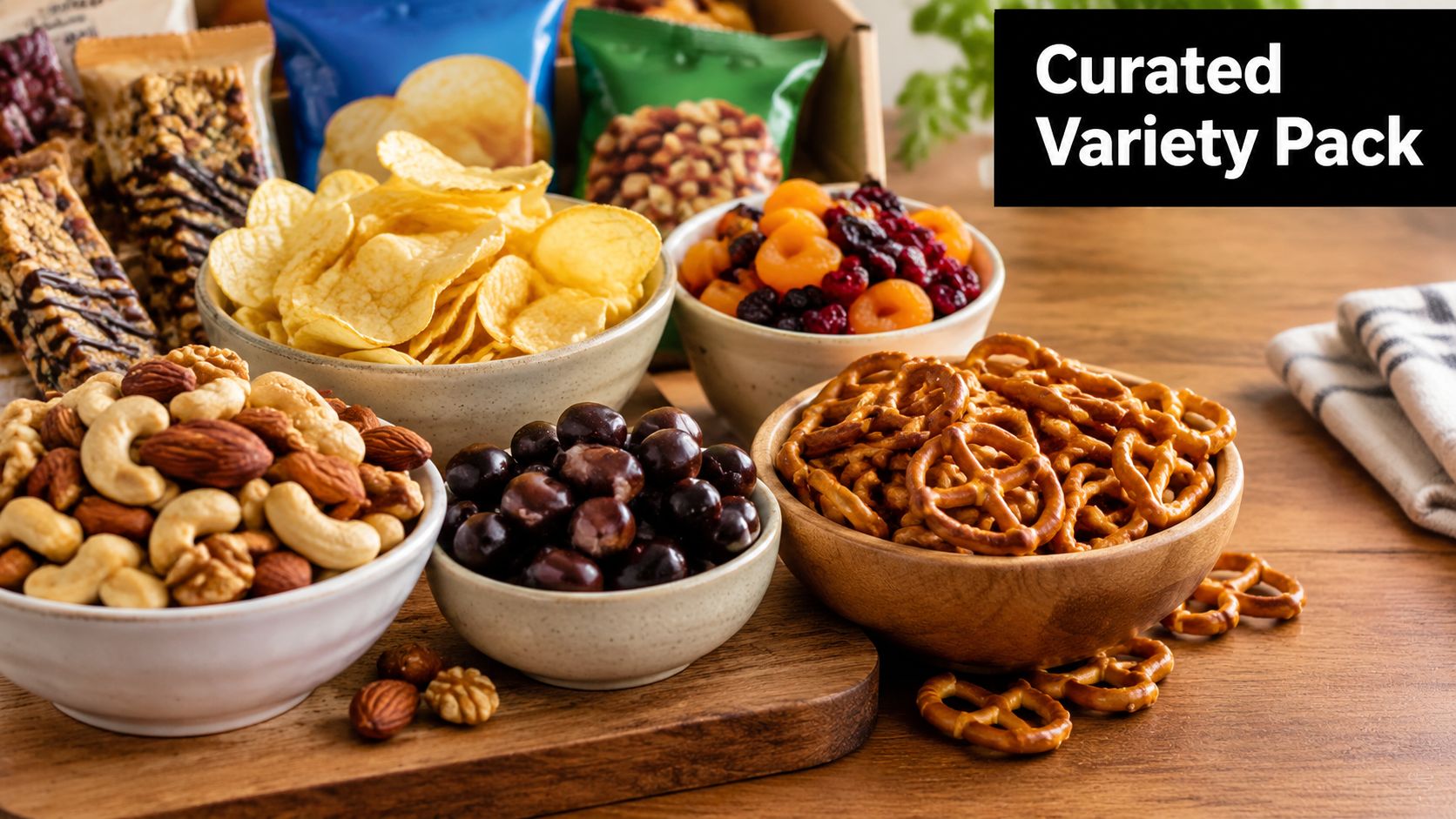
The box should solve a real problem
I build snack packs around the moment they'll be used. A gym-day pack needs to support energy before training and recovery afterward. A commuting pack needs to survive a backpack. A weight-management pack needs satisfying portions, not a large bag that turns “one snack” into unconscious grazing.
Variety also protects against flavor fatigue. If every item tastes like a sweet cookie or chocolate dessert, you may stop enjoying the pack even if the nutrition looks good. Savory options, spicy seasoning, roasted textures, and neutral foods create a rotation that feels more like eating than supplementing.
The broader retail shift supports this approach. A 2025 Circana Snack Survey found that 28.7% of consumers were buying multi- and variety packs, while a 2023 survey found that 49% were looking for snacks in a variety pack, up 8 percentage points from the prior year, as reported by Baking Business. Those figures don't tell you which foods to pack, but they do show that assortment has become a practical shopping format.
Practical rule: Build the pack for the occasion first, then choose flavors and macros that serve it.
For a more structured starting point, compare your choices with this protein snack pack guide. The useful question isn't “Which snack is healthiest?” It's “Which combination keeps me fueled, satisfied, and consistent when the convenient option is poor?”
Defining Your Protein and Calorie Targets
Before buying several flavors, establish the guardrails. Otherwise, a variety pack can become a collection of foods that taste good but doesn't help you reach your daily target.
Start with protein. Use body weight, training demands, and your dietary pattern to set a practical daily goal with guidance from a qualified professional when needed. Plant-based eaters can meet protein needs, but snack selection matters because many familiar vegan snacks, such as chips, fruit snacks, and plain crackers, contribute little protein.
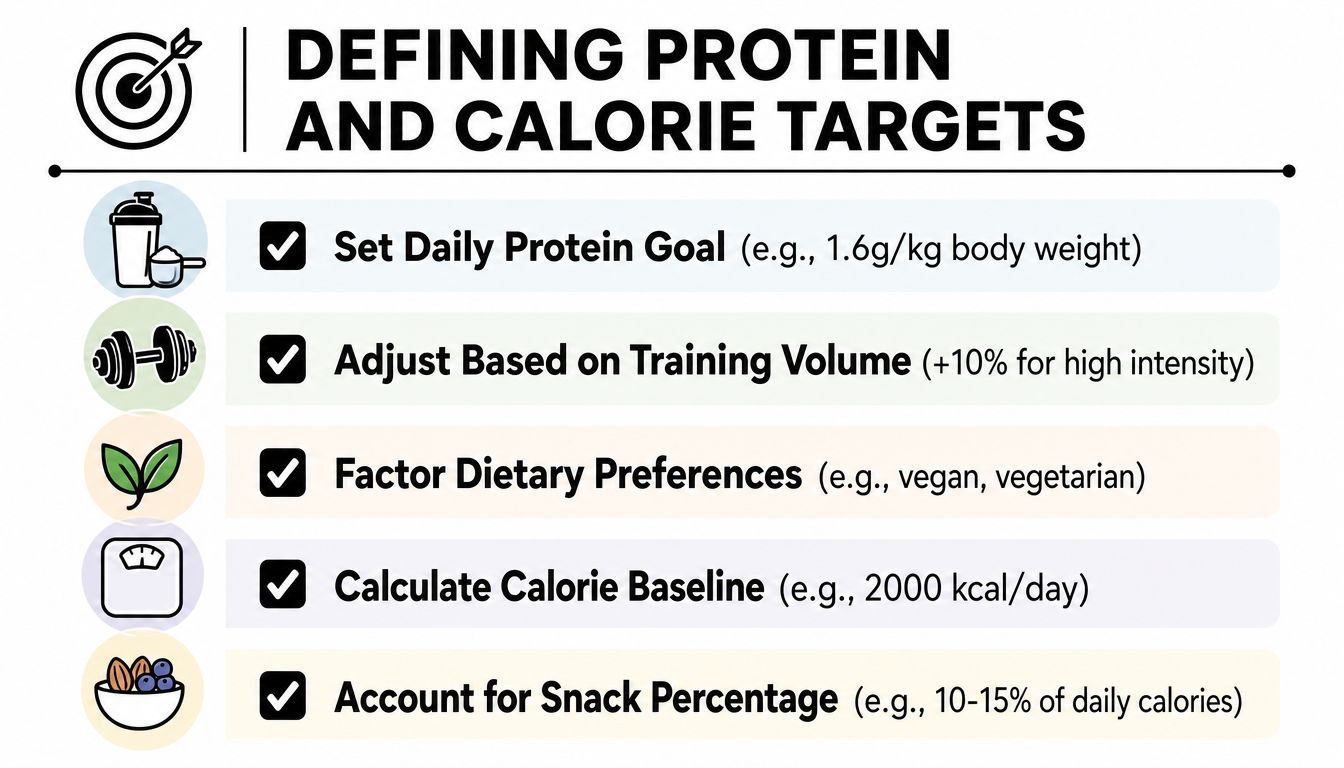
Set the protein floor
Choose the minimum protein you want from a snack, then decide how many snack occasions you have. A person who eats three full meals may need only one protein-forward snack. Someone training early, eating on the road, or working long shifts may need a pack that covers more than one eating window.
Read the serving size carefully. A package can look like one snack while containing multiple servings, and the protein listed on the label may apply to only part of the bag. For plant-based options, rotate sources such as roasted legumes, peas, seeds, and protein crisps rather than relying on one ingredient every day.
The daily protein needs calculator guide can help you organize the calculation before you shop. Treat the result as a planning tool, not a reason to force-feed protein when you're already meeting your needs through meals.
Fit snacks into the calorie budget
Your snack calories should support the day's objective. During a gaining phase, a more energy-dense combination can make sense. During maintenance, you'll want enough food to bridge meals without turning every afternoon snack into a second lunch. For weight management, prioritize protein, fiber-rich ingredients, and high-volume textures while keeping portions visible.
Calorie needs also change with activity. A hard lifting session, a long hike, and a desk day don't create the same fueling requirement. If conventional exercise is difficult, resources on no-impact cardio for weight loss can offer another perspective on building movement into a broader energy-management plan.
Clear the allergen filter
Write your priorities on the outside of the shopping list:
- Dairy-free: Check seasoning blends, cheese powders, and “natural flavors,” which can contain milk-derived ingredients.
- Soy-free: Inspect protein blends, roasted snacks, and emulsifiers rather than assuming a plant-based product is soy-free.
- Gluten-free: Look for appropriate certification when cross-contact is a concern, especially with shared facilities.
- Nut-aware: Separate nuts from seed-based alternatives if the pack will be shared.
Once those filters are set, variety becomes easier. You're choosing among foods that already fit your boundaries, rather than discovering an allergen after you've packed the bag.
Balancing Flavors and Macros for Training and Satiety
A useful variety pack has jobs for each component. Pre-workout food should be easy to digest and provide accessible energy. Post-workout food should make it easier to restore protein intake. A between-meal pack should slow the return of hunger without leaving you sleepy or weighed down.
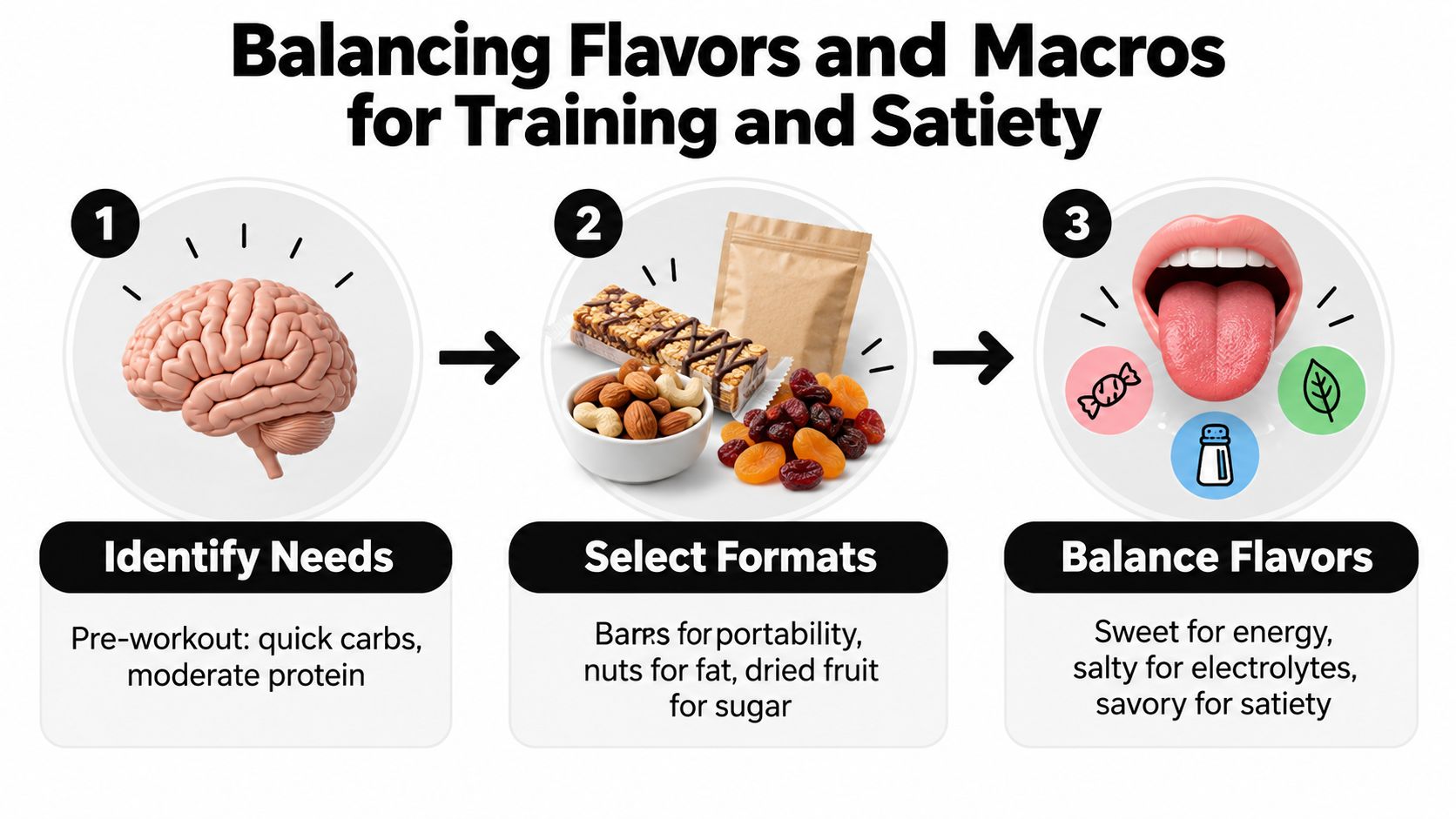
Match the format to the moment
For pre-workout use, pair a modest portion of quick carbohydrate with moderate protein. Dried fruit can provide a convenient carbohydrate source, while a small amount of roasted legume or plant protein adds substance. Avoid making the pre-training pack excessively fatty or bulky if you know those foods sit heavily during exercise.
Post-workout, lead with protein and add carbohydrate according to the session and the rest of your day. A savory protein crisp, roasted edamame, or a pea-protein snack can be more appealing than another sweet bar, particularly if you've already had sweet flavors earlier.
For satiety between meals, combine protein with fiber and some fat. Nuts and seeds are useful for texture and energy density, but they're easy to overeat directly from a large bag. Portion them before they enter the gym bag.
Use flavor contrast deliberately
Flavor fatigue often comes from repeating the same sensory experience, not from eating too many snacks overall. Build contrast across the pack:
- Cheesy and roasted: Protein crisps or nutritional-yeast crackers create a rich, savory anchor.
- Spicy and bright: Jalapeño seasoning, chili-lime chickpeas, or peppered peas add intensity.
- Salty and crisp: Pretzel-style pieces or lightly salted roasted legumes offer a simpler reset.
- Earthy and crunchy: Seeds, roasted lentils, or broad-bean snacks change the bite.
Gym Snack's plant-based savory crisps are one example of a protein-first option, with 15g or more of protein per serving and 30g or more per bag, according to the publisher's product information. They're made without dairy, soy, gluten, seed oils, cholesterol, or high saturated fat, and come in Cheddar Cheeze and Jalapeño Cheddar Cheeze flavors.
Protein and fiber may also make a snack feel more satisfying because they slow eating and contribute to fullness. The publisher specifically positions its formula around fullness-signaling hormones such as GLP-1 and PYY. That's a reason to combine protein-rich savory foods with an appropriate portion, not a reason to treat any snack as a guaranteed appetite-control intervention.
Build for appetite, not novelty: Two or three contrasting formats usually work better than a box filled with minor flavor variations.
The research on assortment supports restraint in another way. A randomized crossover study found that increasing snack assortment from 11 to 19 options did not increase total snack energy intake compared with the control condition, but the variety condition shifted choices toward more nutrient-dense items. The study also found that a large package increased snack energy intake compared with the standard and variety conditions, as detailed in the randomized snack assortment study.
How Assortment Size Influences Choices and Calories
More choice isn't automatically a problem. The composition of the choice set and the size of each package matter more than the mere existence of variety.
In the randomized study described above, a broader assortment didn't raise total snack energy intake by itself. It did, however, influence the kinds of foods participants selected. The practical implication is important for plant-based packs: variety can support better decisions when the available options are useful, but it won't rescue a pack dominated by oversized indulgent foods.
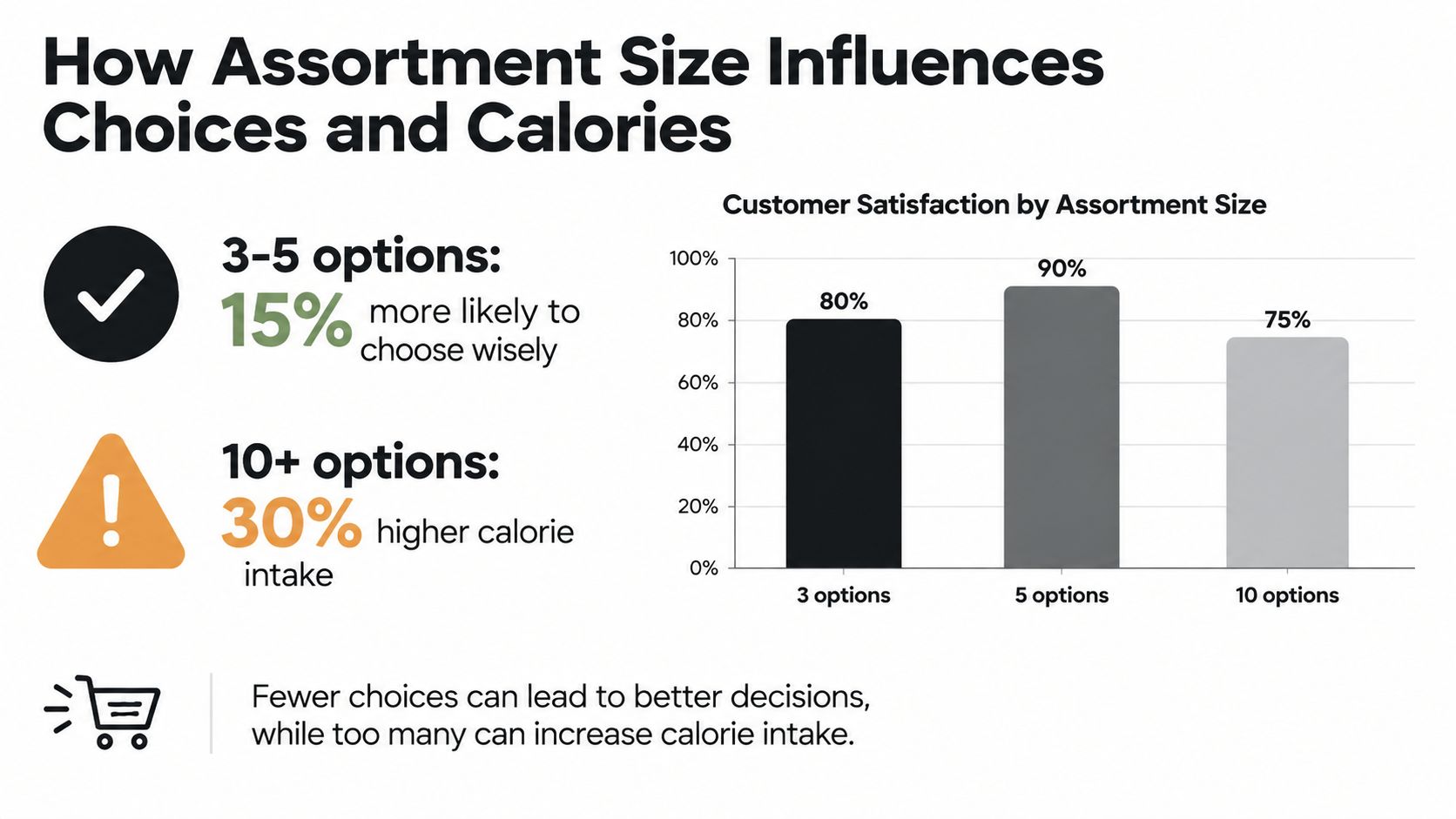
Make the healthy mix dominant
A separate lab-and-field investigation found that when 75% of the snack assortment was healthy, 44.3% selected a healthy snack, compared with 13.9% when only 25% of the assortment was healthy. The healthier planogram also increased healthy-snack sales in the field setting, according to the assortment structure investigation.
That result changes how I'd build a box. Don't add one protein-rich option to a pack full of chips and call it balanced. Make protein-forward, minimally processed, or nutrient-dense items the default, then include a smaller number of foods chosen for pleasure and texture.
A practical structure looks like this:
- Protein anchors: Roasted edamame, pea-protein crisps, lentil snacks, or seed-based protein bites.
- Supportive sides: Fruit, whole-grain crackers, air-popped popcorn, or vegetables when refrigeration allows.
- Enjoyment items: A deliberately portioned savory chip or spiced snack that keeps the pack satisfying.
Package size deserves equal attention. A variety pack filled with individually portioned items can make stopping easier than a large shared bag, even when the foods themselves are similar. The research specifically warns against assuming flavor variety is the main calorie driver. Oversized packages can push intake upward.
The assortment should make the better choice the easiest choice, not merely make it available.
For a weight-management pack, keep the number of open decisions low. Place the protein anchor at the front, pair it with a measured crunchy side, and reserve the most energy-dense food for a clearly defined portion. You still get variety, but the pack doesn't turn every hunger cue into a tasting session.
Three Custom Variety Pack Templates for Real Life
The same principles look different depending on the day. A gym bag needs training support, a travel kit needs durability and flexibility, and a weight-management box needs more deliberate portions. Use the templates below as frameworks, then swap ingredients according to allergies, taste, and meal timing.
| Template | Best For | Snack Focus | Macro Priority |
|---|---|---|---|
| Gym day pack | Pre- and post-workout fueling | Savory protein crisp, roasted legume, fruit or grain-based crunch | Protein after training, carbohydrate around training |
| Travel pack | Flights, road trips, and long commutes | Shelf-stable crisps, seeds, dried fruit, portioned crackers | Protein consistency, moderate energy density |
| Weight-management pack | Office afternoons and between-meal hunger | Protein anchor, fiber-rich crunch, measured nuts or seeds | Protein and satiety with controlled portions |
Gym day pack
Pack one easy-to-digest carbohydrate, one savory protein item, and one texture change. A small dried-fruit portion can work before training, while roasted edamame or plant-based protein crisps fit better after lifting. If you're training soon after a full meal, keep the pre-workout portion modest and let the post-workout snack carry more of the protein responsibility.
The trade-off is portability versus freshness. Dry snacks travel well, but they don't replace a full meal when your training day runs long. Keep your actual meal plan separate so the pack doesn't become an excuse to under-fuel.
Travel pack
Travel rewards foods that stay stable and don't require utensils. Use individually portioned savory crisps, dry-roasted beans, pumpkin seeds, and a small dried-fruit serving. Choose at least two flavor profiles, such as smoky and spicy, because one repeated flavor becomes tiring during a long journey.
For hydration support, a convenient electrolyte variety pack can complement dry snacks during travel. It doesn't replace food or water, but flavor variety may make it easier to keep fluids in your routine.
Weight-management pack
Lead with the most satisfying item, not the smallest one. Choose a protein-forward savory snack, then add a fiber-rich crunchy food and a carefully portioned source of fat such as nuts or seeds. The goal is a snack that feels complete enough to interrupt automatic grazing.
The trade-off is that energy-dense foods require more portion awareness. If you tend to eat from the package, buy single portions or divide bulk foods immediately. A pack can support appetite management, but it can't compensate for unmeasured serving sizes.
Packing and Storing Your Snacks for Maximum Freshness
Crunch is part of the experience, so storage affects whether you'll eat the foods you planned. Keep unopened snacks in a cool, dry place, away from direct heat in a car or gym locker. Once opened, reseal them promptly because humidity softens crisp textures and weakens seasoning.
Portion bulk foods when you get home. Use small containers or resealable snack bags for nuts, seeds, roasted legumes, crackers, and dried fruit. Label each portion if you're tracking protein or calories, and keep the protein-forward items physically separate from the foods you're most likely to eat casually.
Rotate the pack instead of forgetting it
Use a simple first-in, first-out system. Put older packages at the front of the pantry, check dates during your weekly grocery routine, and replace items that repeatedly come home untouched. The untouched food is useful feedback. It may have the wrong texture, an overly sweet flavor, or too little protein for the hunger it needs to manage.
For a gym bag, carry only the day's portion and keep reserve stock elsewhere. For an office drawer, maintain separate savory and sweet options so you can choose based on appetite rather than defaulting to whatever is closest. Travel packs deserve their own inspection before departure, especially if heat exposure could affect texture or quality.
A strong variety pack is a small system, not a random assortment. It gives you enough choice to stay interested, enough protein to support your plan, and enough portion structure to prevent a snack from becoming a meal.
Gym Snack offers chef-inspired, plant-based savory protein crisps in bundle and custom-pack formats, with 15g or more of protein per serving and bold Cheddar Cheeze or Jalapeño Cheddar Cheeze flavors. Visit Gym Snack to build a variety pack that fits your gym days, travel routine, or weight-management plan.