

A solid vegan bodybuilding meal plan is your blueprint for building muscle. It's all about strategically combining high-protein plant-based foods, hitting your calorie targets, and timing your nutrients just right. The goal here is to show you, step-by-step, how to achieve elite physical conditioning entirely on powerful whole foods, leaving no room for doubt that you can get seriously strong without animal products.
Why Vegan Bodybuilding Is More Than Just a Trend
Let's be honest—the idea of building a powerful physique without meat can still raise a few eyebrows. For years, the gospel in fitness circles was that animal protein was absolutely essential for packing on serious muscle. If you've felt that skepticism, you're not alone.
But the truth is, a well-structured vegan bodybuilding meal plan isn't a compromise. For a growing wave of successful competitors and athletes, it's a strategic choice for hitting peak performance. They're making the switch not in spite of their goals, but because of them, tapping into the unique performance and recovery benefits a plant-centric diet offers.
The Explosive Growth of Plant-Based Fitness
The rise of vegan bodybuilding has been nothing short of explosive. It's been fueled by a huge surge in plant-based eating among fitness enthusiasts everywhere. Just to put it in perspective, back in 2014, about 1% of U.S. consumers were vegan. By 2023, that number jumped to 6%—a massive 500% increase. This isn't just happening in the States; it's a global shift. The Veganuary challenge saw over 500,000 people sign up in 2021, which was a 25% jump from the 400,000 who took part in 2020. You can dig deeper into the stats on the rise of vegan fitness over at Fitness Volt.
This isn't just some dietary fad. It's a genuine movement backed by athletes who are seeing and feeling real results. They're finding out that a plant-based approach can support their goals just as effectively—and sometimes even more so—than old-school, meat-heavy diets.
Key Drivers Behind the Shift
So, what's really driving this migration toward plant-based performance? It really comes down to a few core advantages that hit home for bodybuilders trying to get to the top of their game.
- Faster Recovery: Think about it—plant-based foods are loaded with antioxidants and anti-inflammatory compounds. This can be a game-changer for reducing muscle soreness and speeding up your recovery time between those brutal training sessions.
- Better Digestion: A diet built around whole plant foods is naturally high in fiber, which is fantastic for your gut health. When your digestion is on point, you absorb nutrients more efficiently, and that's critical for repairing and growing muscle.
- Ethical and Environmental Alignment: For a lot of us, this choice goes beyond the gym. Aligning your diet with your values on animal welfare and sustainability can be an incredibly powerful source of motivation and discipline.
By focusing on nutrient-dense, anti-inflammatory foods, vegan athletes often report feeling more energetic and recovering faster. It's about optimizing your body's internal environment to handle the intense demands of training.
Ultimately, the boom in vegan bodybuilding just confirms what pioneers in the space have known all along. With smart planning and the right food choices, building a strong, muscular physique on plants isn't just possible—it comes with its own unique set of powerful benefits.
Nailing Your Vegan Macros: The Blueprint for Bulking and Cutting
Before you even think about meal prep, you need a solid game plan. In bodybuilding, that plan is your numbers—your daily calories and macros. This is especially true for plant-based athletes, where precision is key to either packing on muscle (bulking) or revealing it (cutting).
For many, the jump to vegan fitness starts with a healthy dose of skepticism. But with the right approach, that doubt quickly turns into real growth and, eventually, a deep-seated confidence in the power of plants.
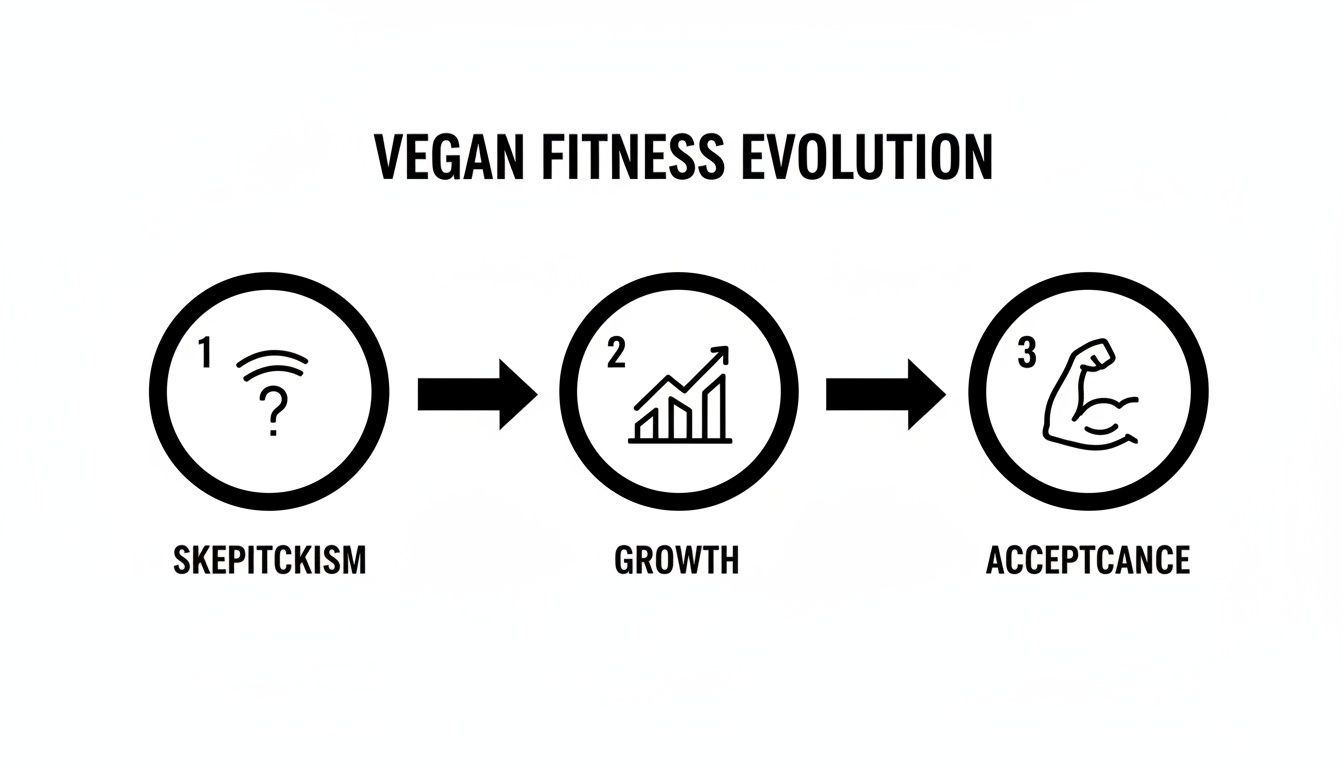
This journey is about moving past the noise and proving to yourself just how effective a well-structured vegan diet can be. It all starts with the math.
First, Figure Out Your Calorie Needs
The starting line for any serious diet plan is calculating your Total Daily Energy Expenditure (TDEE). Think of this as your metabolic "sweet spot"—the total number of calories your body burns just by existing, working, and training. It’s your maintenance level.
Once you know your TDEE, you can steer your body in the right direction based on your current goal:
- For a Lean Bulk: The goal is to build muscle, not just gain weight. Add a modest surplus of 300-500 calories on top of your TDEE. This gives your body just enough extra fuel to synthesize new muscle tissue without packing on a ton of unwanted fat.
- For a Cut: To shed fat and get lean, you need to be in a deficit. Subtract 300-500 calories from your TDEE. This prompts your body to start tapping into its fat stores for energy while you focus on training hard to preserve that muscle you've built.
Setting Your Vegan Macros
With a calorie target locked in, it’s time to divide those calories among the three macronutrients: protein, carbs, and fats. Getting this balance right is everything for a plant-based lifter.
Protein: The Non-Negotiable
For vegan bodybuilders, protein is priority number one. I always tell my clients to aim for 1.6 to 2.2 grams of protein per kilogram of body weight (that’s roughly 0.7 to 1.0 grams per pound). This slightly higher range ensures you’re getting a full profile of essential amino acids from varied plant sources to kickstart muscle protein synthesis.
A huge mistake I see is people under-shooting their protein on a vegan diet. Hitting this target day in and day out is the foundation for muscle repair and growth. It's simply not optional.
Carbohydrates: The High-Octane Fuel
Carbs are what get you through those grueling leg days. They're your body's primary energy source, and they're crucial for refilling the glycogen stores your muscles burn during intense workouts. Your carbs should make up about 40-55% of your total calories. Stick with complex sources like oats, quinoa, sweet potatoes, and brown rice for sustained energy.
Fats: The Hormone Regulators
Don't neglect healthy fats. They play a vital role in hormone production (including testosterone) and overall well-being. The rest of your calories, typically 20-30% of your total intake, should come from high-quality fats. Think avocados, nuts, seeds, and good olive oil.
For a deeper dive into protein calculations, our guide on how to calculate your daily protein needs is a great resource.
Let's See It In Action
Numbers on a screen can feel abstract, so let’s walk through a real-world example.
Meet our vegan bodybuilder. He weighs 180 lbs (about 82 kg), his TDEE is 2,800 calories, and he’s ready to start a lean bulk.
-
New Calorie Target: He adds a 400-calorie surplus to get into an anabolic state.
2,800 (TDEE) + 400 (Surplus) = 3,200 calories per day
-
Protein Goal: He aims for the middle of the recommended range, at 1.8g per kg.
82 kg x 1.8 g/kg = ~148 grams of protein- This is 592 calories from protein (148g x 4 cal/g).
-
Fat Goal: He decides 25% of his calories will come from healthy fats.
3,200 calories x 0.25 = 800 calories from fat- This equals about 89 grams of fat (800 cal / 9 cal/g).
-
Carb Goal: The rest of the calories are for carbs to fuel his workouts.
3,200 (Total) - 592 (Protein) - 800 (Fat) = 1,808 calories from carbs- This comes out to 452 grams of carbs (1,808 cal / 4 cal/g).
Now he has a clear, actionable set of numbers to aim for every single day.
While this blueprint is a fantastic starting point, working with a coach for professional nutrition guidance can help fine-tune these numbers specifically for you. One thing to remember: vegan diets are naturally high in volume and fiber. This is actually a huge advantage, especially during a cutting phase, as it helps you feel full and satisfied even on lower calories.
Your 7-Day High-Protein Vegan Bodybuilding Meal Plan
Alright, let's get into the good stuff—the actual day-by-day blueprint you can start using right now. This is more than just a list of foods. It’s a carefully structured, high-protein vegan meal plan designed to fuel a lean bulk, take the guesswork out of your nutrition, and show you just how satisfying plant-based muscle building can be.
This entire plan is built around hitting a target of roughly 3,000-3,200 calories and packing in over 170 grams of protein every single day. I've broken each day into five or six meals and snacks, giving you specific ingredients and portions. But remember, this is your template for success—feel free to swap ingredients based on what you like or have on hand.
To give you a clearer picture of how these numbers break down, here’s a quick snapshot of Day 1's targets. This table helps visualize how we're distributing those macros across the day to keep your body fueled for growth and recovery.
Sample Daily Macro Breakdown for a Bulking Phase
| Meal | Example Food | Calories (Approx.) | Protein (g) | Carbs (g) | Fat (g) |
|---|---|---|---|---|---|
| Breakfast | High-Protein Tofu Scramble | 750 | 48 | 80 | 28 |
| Morning Snack | Power Smoothie | 410 | 35 | 50 | 9 |
| Lunch | Chickpea Quinoa Bowl | 680 | 28 | 105 | 18 |
| Afternoon Snack | Apple with Peanut Butter | 300 | 8 | 35 | 16 |
| Dinner | Tofu & Veggie Stir-fry | 650 | 35 | 95 | 14 |
As you can see, each meal is strategically planned to contribute a solid chunk of protein and energy. Now, let’s dive into the full week.
Day 1: Fueling Up
-
Breakfast: Start strong with a High-Protein Tofu Scramble. Sauté one block (14 oz) of extra-firm tofu with a cup of spinach, ½ cup of black beans, and a pinch of turmeric. Serve it alongside one cup of cooked oatmeal topped with 2 tbsp of almond butter. (Macros: ~750 calories, 48g protein, 80g carbs, 28g fat)
-
Morning Snack: Blend up a Power Smoothie. Combine one scoop of your favorite vegan protein powder, a large banana, 1 tbsp of chia seeds, and 1.5 cups of soy milk. (Macros: ~410 calories, 35g protein, 50g carbs, 9g fat)
-
Lunch: A Hearty Chickpea Quinoa Bowl is next. Mix 1.5 cups of cooked quinoa with 1 cup of chickpeas and some roasted bell peppers and zucchini. Finish it with a drizzle of 2 tbsp of tahini dressing. (Macros: ~680 calories, 28g protein, 105g carbs, 18g fat)
-
Afternoon Snack: Keep it simple and effective. Slice up a large apple and have it with 2 tbsp of natural peanut butter. (Macros: ~300 calories, 8g protein, 35g carbs, 16g fat)
-
Dinner: End the day with a Tofu & Veggie Stir-fry. Cube up 7 oz of firm tofu and stir-fry it with broccoli and snap peas in a light tamari-ginger sauce. Serve it all over 1.5 cups of brown rice. (Macros: ~650 calories, 35g protein, 95g carbs, 14g fat)
Day 2: Performance Plate
-
Breakfast: Prep this the night before: Protein-Packed Overnight Oats. In a jar, mix 1 cup of rolled oats, a scoop of vegan protein powder, 1 tbsp of flax seeds, and 1.5 cups of almond milk. Just top it with ½ cup of mixed berries in the morning. (Macros: ~550 calories, 40g protein, 75g carbs, 12g fat)
-
Morning Snack: A quick and easy grab-and-go. Have about ¼ cup of raw almonds and one medium pear. (Macros: ~280 calories, 8g protein, 35g carbs, 14g fat)
-
Lunch: Time for Loaded Seitan Wraps. Grab two large whole-wheat tortillas and stuff them with 6 oz of sliced seitan, 3 tbsp of hummus, mixed greens, and sliced avocado. (Macros: ~700 calories, 45g protein, 80g carbs, 22g fat)
-
Afternoon Snack: Get a protein punch with an Edamame Power-Up. Just steam 1.5 cups of shelled edamame and add a pinch of sea salt. (Macros: ~280 calories, 25g protein, 20g carbs, 12g fat)
-
Dinner: A comforting bowl of Red Lentil Chili. Simmer 1 cup of dry red lentils with kidney beans and diced tomatoes. Don't skimp on the chili spices. Serve with quinoa on the side. (Macros: ~750 calories, 40g protein, 130g carbs, 8g fat)
Day 3: Building Blocks
-
Breakfast: Who doesn't love pancakes? Make a stack of three medium Vegan Protein Pancakes using a blend of oat flour and protein powder. Top with ½ cup of blueberries and a drizzle of maple syrup. (Macros: ~580 calories, 38g protein, 85g carbs, 10g fat)
-
Morning Snack: A simple Soy Yogurt Parfait. Layer 1 cup of unsweetened soy yogurt with ¼ cup of granola and a few fresh strawberries. (Macros: ~320 calories, 15g protein, 40g carbs, 12g fat)
-
Lunch: A classic Tempeh Buddha Bowl. Fill a large bowl with 1.5 cups of quinoa, 6 oz of pan-fried tempeh, roasted sweet potatoes, and steamed kale. A tahini drizzle brings it all together. (Macros: ~720 calories, 35g protein, 90g carbs, 25g fat)
-
Afternoon Snack: Something light and crunchy. Top two brown rice cakes with ½ mashed avocado, a squeeze of lemon juice, and red pepper flakes. (Macros: ~250 calories, 5g protein, 25g carbs, 15g fat)
-
Dinner: Make your own Black Bean Burgers. Serve two homemade patties on whole-wheat buns with all the fixings, plus a side of baked sweet potato fries. (Macros: ~800 calories, 35g protein, 120g carbs, 20g fat)
Day 4: Recovery Fuel
-
Breakfast: Use your leftovers for a Tofu Scramble Burrito. Wrap the scramble from Day 1 in a large whole-grain tortilla and add a scoop of salsa. (Macros: ~600 calories, 35g protein, 65g carbs, 22g fat)
-
Morning Snack: Quick and simple Protein Shake. Just mix 1.5 scoops of vegan protein powder with water or unsweetened plant milk. Done. (Macros: ~200 calories, 35g protein, 5g carbs, 4g fat)
-
Lunch: Leftover Black Bean Burgers. Why cook twice? Enjoy the remaining patties from last night, either on a bun or crumbled over a big salad. (Macros: ~750 calories, 32g protein, 115g carbs, 18g fat)
-
Afternoon Snack: Dip time! Have ½ cup of hummus with a generous portion of cucumber, carrot, and bell pepper sticks. (Macros: ~280 calories, 10g protein, 28g carbs, 15g fat)
-
Dinner: A flavorful Tempeh and Soba Noodle Stir-fry. Sauté 7 oz of tempeh with broccoli and mushrooms, then toss it all with soba noodles and a sesame-tamari sauce. (Macros: ~700 calories, 40g protein, 90g carbs, 20g fat)
Remember, consistency trumps perfection every time. If you miss a meal or have an off day, don't sweat it. Just get right back on track with the next one. Think of this plan as a guide, not a set of rigid rules.
Day 5: Peak Performance
-
Breakfast: Kick things off with a Smoothie Bowl. Blend a scoop of protein powder, 1 cup of frozen berries, a big handful of spinach, and a cup of soy milk. Pour it into a bowl and top with granola and sliced banana. (Macros: ~500 calories, 35g protein, 70g carbs, 10g fat)
-
Morning Snack: Grab a Vegan Protein Bar for those busy moments. Look for one with at least 15g of protein. (Macros: ~250 calories, 15g protein, 25g carbs, 10g fat)
-
Lunch: A plant-based classic: Chickpea Salad Sandwich. Mash 1.5 cups of chickpeas with some vegan mayo, celery, and onions. Serve it on two slices of whole-grain bread. (Macros: ~650 calories, 25g protein, 90g carbs, 20g fat)
-
Afternoon Snack: A perfect pairing of an orange and ¼ cup of walnuts gives you vitamin C and healthy fats. (Macros: ~300 calories, 7g protein, 25g carbs, 20g fat)
-
Dinner: Lentil "Meatballs" with Zucchini Noodles. Serve up some homemade lentil meatballs over a bed of zoodles tossed in your favorite marinara sauce. (Macros: ~650 calories, 35g protein, 80g carbs, 20g fat)
Day 6: Refeed and Rebuild
-
Breakfast: Try something different with Savory Oatmeal. Cook 1 cup of oats in vegetable broth, then stir in ½ cup of green peas and 4 oz of crumbled, pan-fried tofu. Top with nutritional yeast for a cheesy flavor. (Macros: ~550 calories, 30g protein, 75g carbs, 14g fat)
-
Morning Snack: Protein Coffee. This is an easy hack—just mix a scoop of unflavored or vanilla vegan protein powder into your morning coffee. (Macros: ~150 calories, 25g protein, 3g carbs, 3g fat)
-
Lunch: Bake up some Stuffed Bell Peppers. Fill two large bell peppers with a mix of cooked quinoa, black beans, and corn, then bake until tender. (Macros: ~600 calories, 25g protein, 110g carbs, 8g fat)
-
Afternoon Snack: Some crunchy Roasted Chickpeas. Toss a cup of chickpeas with smoked paprika and roast until crispy. (Macros: ~270 calories, 15g protein, 45g carbs, 5g fat)
-
Dinner: A rich and satisfying Coconut Chickpea Curry. Made with 1.5 cups of chickpeas, coconut milk, and spinach, served over 1.5 cups of brown rice. (Macros: ~850 calories, 30g protein, 120g carbs, 28g fat)
Day 7: Rest and Restore
-
Breakfast: A weekend-worthy Vegan Breakfast Sandwich. Toast a whole-grain English muffin and layer it with a seasoned tofu "egg" patty, a vegan sausage patty, and a slice of avocado. (Macros: ~500 calories, 30g protein, 45g carbs, 22g fat)
-
Morning Snack: A no-fuss combo of a handful of almonds and a quick shake made with soy milk and protein powder. (Macros: ~350 calories, 30g protein, 15g carbs, 18g fat)
-
Lunch: Time for leftovers! Enjoy the remaining Coconut Curry from last night. The flavors are always better the next day anyway. (Macros: ~850 calories, 30g protein, 120g carbs, 28g fat)
-
Afternoon Snack: A light and refreshing Fruit Salad with mixed melon, berries, and kiwi. (Macros: ~150 calories, 2g protein, 35g carbs, 1g fat)
-
Dinner: Finish the week with High-Protein Vegan Pizza. Use a chickpea flour crust and top it with tomato sauce, 5 oz of sliced seitan, mushrooms, bell peppers, and a good sprinkle of nutritional yeast. (Macros: ~750 calories, 45g protein, 90g carbs, 20g fat)
Putting together a solid vegan bodybuilding plan means being precise, especially when you need to consistently hit 120g+ of daily protein to fuel muscle growth. That breaks down to about 30-35g per main meal and another 5-10g per snack. This plan relies heavily on legumes, soy, and grains to ensure you get all your essential amino acids. With 4% of the U.S. population following a vegan diet in 2023, high-protein plant-based eating is more accessible than ever. For more ideas on how to adapt these plans, you can find great resources at Nourish.
From Plan to Plate: Your Grocery and Meal Prep Game Plan
A killer meal plan is one thing, but making it happen week after week is where the real work—and the real results—come in. Let's bridge that gap between the numbers on your screen and the food on your plate. Consistency is everything in bodybuilding, and a smart shopping and prep routine is your secret weapon.
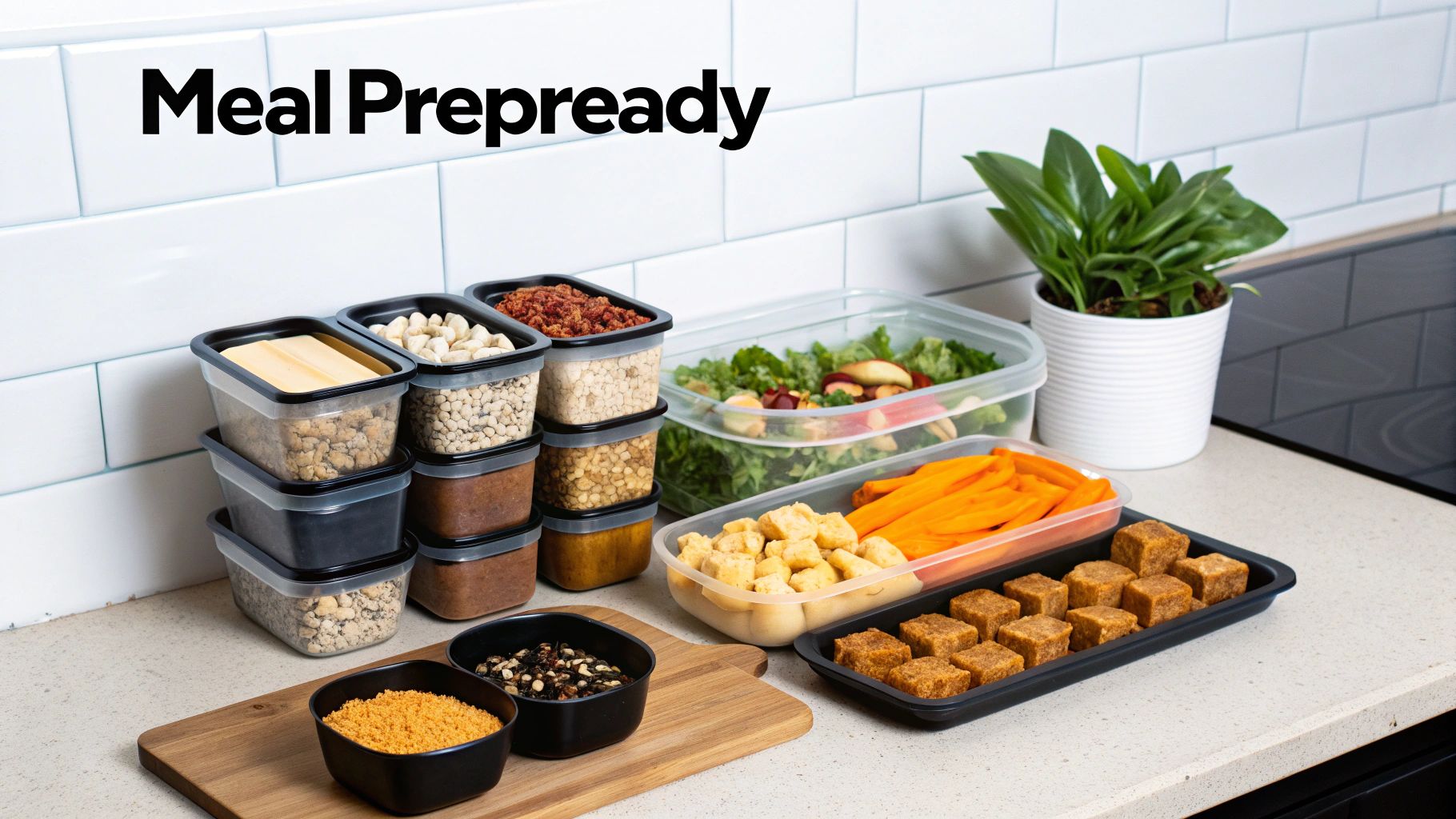
Think of your grocery list as the architectural blueprint for the physique you're building. When you organize it by food category, you're not just saving time at the store; you're making sure every macronutrient is accounted for. The goal is to build a system that makes hitting your targets feel automatic, not like a chore.
Your Core Grocery Checklist
Here’s how I like to structure a shopping trip to stock a pantry that's always ready for gains. Don’t just mindlessly grab items—visualize how each one fits into your meals for the week ahead.
-
Plant-Based Proteins: This is your muscle-building foundation. You need a good variety to cover all your amino acid bases.
- Tofu & Tempeh: I always grab at least two blocks of extra-firm tofu and a package of tempeh. They are incredibly versatile, perfect for everything from scrambles to stir-fries.
- Lentils & Beans: Canned and dry lentils (red and brown), chickpeas, and black beans are your best friends. They're cheap, packed with nutrients, and incredibly filling.
- Seitan: When you're craving a chewier, meatier texture, seitan is a game-changer for wraps or "steak" strips.
- Vegan Protein Powder: Honestly, this is a non-negotiable for hitting high protein targets consistently. A good pea or soy isolate blend mixes easily and gets the job done.
-
Complex Carbohydrates: This is the high-octane fuel for your workouts.
- Grains: Quinoa, brown rice, and rolled oats are absolute must-haves for sustained energy.
- Starchy Veggies: Sweet potatoes, butternut squash, and corn are fantastic for refueling your muscles after a tough session.
- Whole-Grain Breads & Wraps: Great for quick meals. Just look for brands with minimal added sugar.
-
Healthy Fats: These are critical for hormone production and overall health. Don't skip them.
- Nuts & Seeds: Almonds, walnuts, and especially chia, flax, and hemp seeds are perfect for snacks or adding a nutritional boost to smoothies and oats.
- Butters & Oils: A good natural peanut butter, almond butter, tahini, and avocado oil should always be in your pantry.
- Avocados: A powerhouse of healthy fats and potassium.
"Your success is determined by your daily habits. Meal prep isn't just about cooking; it's about setting yourself up for a week of consistent wins, ensuring you never have to make a last-minute, off-plan decision."
A Sustainable Meal Prep System
Forget the idea of spending your entire Sunday chained to the kitchen. An efficient prep session shouldn't take more than two hours, max.
The real trick is to batch-cook components, not necessarily entire finished meals. This gives you the freedom to mix and match during the week, which is a lifesaver for preventing boredom. For some more advanced techniques, check out our guide on how to meal prep for muscle gain.
Here’s a simple, effective workflow:
- Get Your Grains Going: First thing, get a big batch of quinoa and brown rice on the stove. These will be the base for countless lunches and dinners.
- Prep Your Proteins: While the grains simmer, press your tofu and chop it into cubes. You can get that pan-frying alongside some tempeh while a big pot of lentils cooks on another burner. Multitasking is key.
- Roast the Veggies: Chop up a ton of broccoli, bell peppers, and sweet potatoes. Toss them with a little oil and your favorite seasonings, then spread them on a baking sheet and pop them in the oven.
- Cool, Portion, and Store: Once everything is cooked, let it cool down. Then, portion out your components into separate airtight containers. You can assemble a few complete meals for the next day or two, but keep the rest separate. That way, your vegan bodybuilding meal plan is always prepped and ready for you to grab and assemble in minutes.
Nail Your Nutrient Timing and Smart Snacking for Maximum Gains
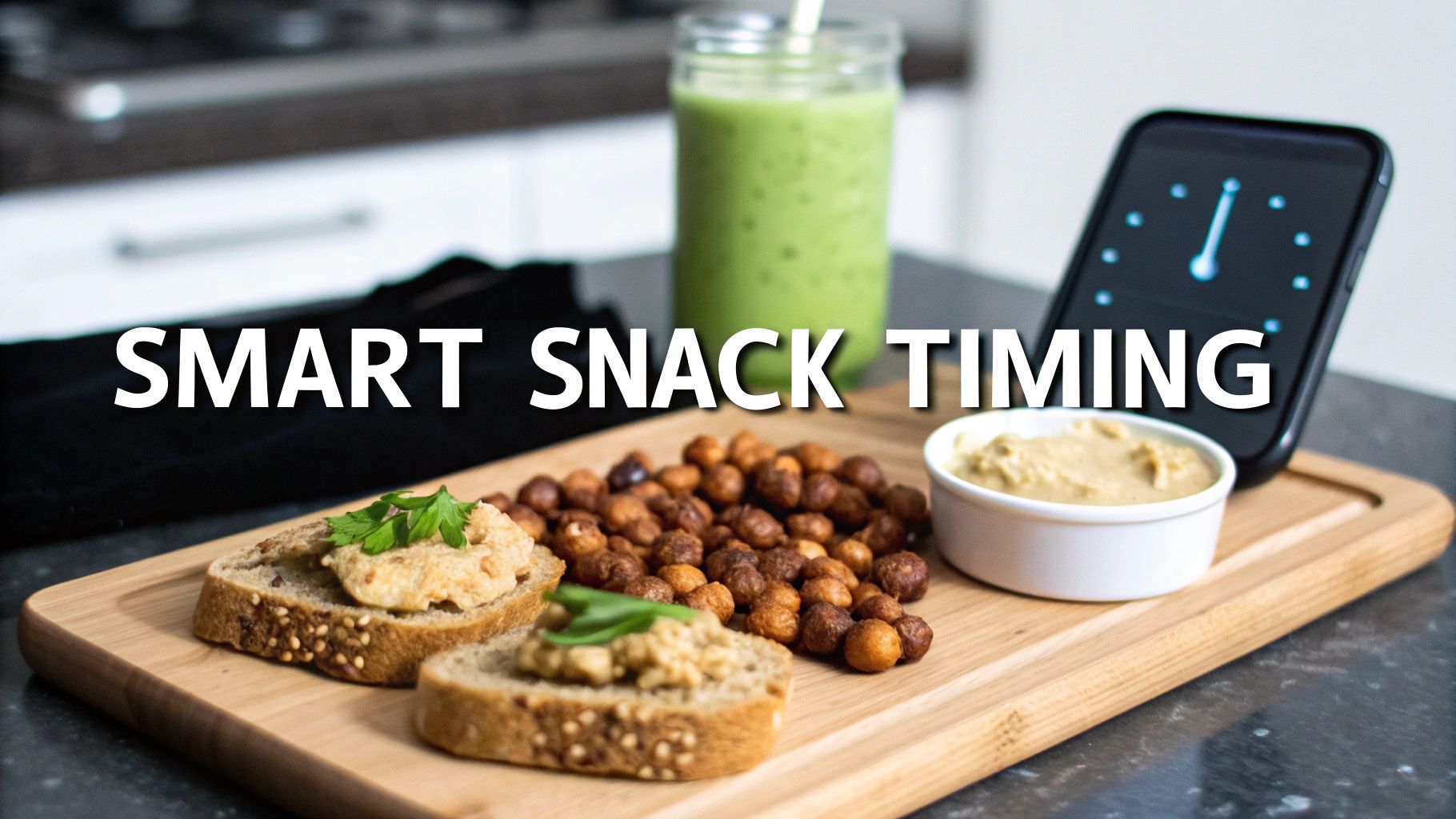
Your main meals are the foundation, but what you do in the "in-between" moments can really move the needle on your progress. Strategic snacking and nutrient timing, especially around your workouts, are what separates a decent physique from a truly impressive one. It’s all about making your nutrition work for you, boosting performance and speeding up recovery so every bit of effort in the gym pays off.
This isn't about mindless grazing. It's a calculated approach to fueling your body for peak performance and optimal repair. A well-timed snack can honestly be the difference between hitting a new PR and just going through the motions.
Fueling Your Workout The Plant-Based Way
Before you even touch a weight, your body needs the right kind of energy. The goal here is to provide a steady stream of fuel that gets you through those intense sets without making you feel sluggish or heavy.
- Pre-Workout (60-90 minutes before): Stick to easily digestible carbs with a little bit of protein. Think a banana with a tablespoon of peanut butter, a small bowl of oatmeal, or even a few dates for a quick energy jolt.
- Intra-Workout: Honestly, for most sessions under 90 minutes, plain water is all you need. If you're tackling a monster leg day or a marathon session, a simple carb source like a sports drink or a mashed banana can help keep your intensity up.
The "Anabolic Window": Optimizing Post-Workout Recovery
Once you’ve put the weights down, a critical window for recovery swings open. Your muscles are like sponges, primed to soak up nutrients. This makes your post-workout meal arguably the most important one of the day.
Your mission is to get a solid meal or snack in within 30-60 minutes of finishing your training. It needs to be rich in both protein and carbs. This one-two punch refills your depleted muscle glycogen (your energy stores) while kicking off muscle protein synthesis—the actual process of rebuilding and growing muscle.
For more ideas on what to grab after a tough session, check out our guide on the best post-workout snacks.
Think of your post-workout meal as the final, non-negotiable step of your training. Skipping it is like building a house and leaving off the roof—you're just not protecting your hard-earned gains.
The Power of Savory Protein Snacking
Let’s be real: hitting a high protein target day after day can lead to serious "flavor fatigue." If all you have are sweet shakes and bars, you’re going to get bored. This is where high-protein savory snacks become a total game-changer for sticking with your vegan bodybuilding plan.
A good savory snack can crush a craving while delivering clean, muscle-building protein. For example, a product like Gym Snack's Jalapeño Cheddar Cheeze packs 15g of protein into a single serving, all from a pea-based, gluten-free formula. These kinds of snacks also help keep you full by influencing satiety hormones like GLP-1 and PYY, making them perfect for pre-workout fuel or to tide you over between meals.
With 39% of non-vegans now incorporating plant-based foods, the market has finally caught up. Options like these prove that a well-planned vegan diet can absolutely build serious muscle. You can see how these principles are applied in other high-protein plans at Nourish.
A Few Key Vegan Supplements
While your diet should always come first, a few supplements can be incredibly helpful for filling nutritional gaps and giving vegan athletes an edge.
- Creatine Monohydrate: This is one of the most researched supplements on the planet for a reason. It flat-out works, helping improve strength, power, and muscle mass. A simple 3-5 grams daily is all you need.
- Vitamin B12: This is non-negotiable. B12 isn't found in plant foods, and it's absolutely essential for energy and healthy nerve function.
- Vitamin D: Many people—vegan or not—are deficient in Vitamin D, which is crucial for bone health and your immune system. Supplementing is a smart way to ensure you have optimal levels.
Common Questions About Vegan Bodybuilding
Switching to a plant-based diet for bodybuilding is exciting, but it definitely brings up a lot of questions. Even with the perfect vegan bodybuilding meal plan, you'll likely wonder about things like energy levels, digestion, and whether you're really getting enough protein to grow.
Let's walk through some of the most common concerns I hear from athletes making the switch. Getting these answers straight will help you navigate the process with confidence.
Is It Harder to Cut on a Vegan Diet?
This is probably the biggest question out there. Bulking on a plant-based diet can feel pretty natural—quality carbs and calorie-dense foods like nuts and seeds are everywhere. But cutting? That’s a different beast. The whole game is about keeping your protein sky-high while dropping calories to shed fat, all without sacrificing the muscle you’ve worked so hard for.
This is where things can get tricky for vegan athletes. A recent 2023 study really highlighted this, comparing vegan and omnivore bodybuilders during a cut. Both groups lowered their calories by about the same amount (omnivores by 8.5 kcal/kg/day and vegans by 7.9 kcal/kg/day), but the vegan group’s protein intake dropped more sharply. This can create a real risk for muscle loss if you aren't strategic.
The key takeaway is precision. When you're cutting, every gram of protein counts. You absolutely have to prioritize lean, protein-dense sources like seitan, tofu, and pea protein isolate to protect your gains.
To help you hit those numbers, it's useful to know which foods give you the most protein bang for your buck.
Top Vegan Protein Sources per 100g
Here's a quick-reference table showing the protein content of common plant-based foods to help you make smart choices for your meals.
| Food Source | Protein per 100g (Approx.) |
|---|---|
| Seitan | 25g |
| Lentils (cooked) | 9g |
| Tofu (firm) | 17g |
| Tempeh | 19g |
| Edamame | 11g |
| Chickpeas (cooked) | 8g |
| Pea Protein Isolate | 80-90g |
Keep this list handy when you're meal prepping—it makes hitting your protein target on a cut so much easier.
What About Bloating From All the Fiber?
Ah, the other big one: digestive issues. Let’s be real, suddenly flooding your system with beans, lentils, and cruciferous veggies can cause some serious bloating and gas. Your gut microbiome needs time to adjust to all that new fiber. It's a completely normal, and usually temporary, side effect.
Fortunately, there are a few simple tricks to make the transition much smoother:
- Ease Into It: Don't go from zero to one hundred overnight. Gradually add more high-fiber foods to your diet over a couple of weeks to give your body time to adapt.
- Cook Everything Thoroughly: Well-cooked legumes and vegetables are way easier on your digestive system than raw or undercooked ones.
- Stay Hydrated: Water is your best friend here. It helps the fiber move through your system properly and prevents things from getting backed up.
If you’ve tried these tips and still feel uncomfortable, you might consider adding a digestive enzyme supplement or a daily probiotic. They can give your gut the extra support it needs to handle the high volume of food.
For more great advice on training, recovery, and other fitness topics, checking out a dedicated fitness blog can be incredibly helpful. These kinds of resources offer a broader perspective that complements your specific nutrition plan. At the end of the day, success with a vegan bodybuilding meal plan comes down to listening to your body and making smart adjustments along the way.
Ready to crush your cravings and hit your protein goals without the junk? Gym Snack offers chef-inspired, plant-based savory protein snacks designed for athletes like you. Ditch the sugary bars and experience the satisfying crunch of our Jalapeño Cheddar Cheeze or classic Cheddar Cheeze puffs, each packed with over 30g of clean pea protein per bag. Build your custom pack today and fuel your gains the delicious way at https://gymsnack.com.