

Most advice about vegan, dairy-free, gluten-free eating starts with restriction. That's the wrong starting point for anyone who trains, works long hours, or needs a snack that can carry them to the next meal. A free-from label tells you what a product excludes, not whether it contains enough protein, keeps you satisfied, or tastes good enough to eat repeatedly.
The better standard is high-function free-from nutrition. Choose snacks that remove dairy and gluten without replacing them with sugar, refined starch, or a long list of unnecessary fillers. A savory, protein-forward option can fit a vegan diet, support training, and make restrictive eating easier to sustain.
Rethinking the Free-From Snack Aisle
The free-from aisle has a serious identity problem. Too many products treat vegan, dairy-free, and gluten-free as permission to sell a sweet bar with a health halo. If the snack leaves you hungry soon after eating, it hasn't solved the practical problem. It has only removed a few ingredients.
That matters because the audience is much broader than people with a formal diagnosis. A 2026 market report found that 63% of respondents actively seek lactose-free or gluten-free options, while 48% consume them without a formal diagnosis, mainly for perceived health benefits, according to consumer research on food intolerance products. Those shoppers still need clear labels, useful nutrition, and food that works in real life.
Free-from should mean functional
For active people, the first question shouldn't be, “Is this free from everything?” Ask instead:
- Where does the protein come from? Look for a clearly named plant protein rather than relying on vague terms such as “energy blend.”
- Will it keep me satisfied? Protein, fiber, and a reasonable amount of fat generally make a more useful snack than a sweetened puff or fruit-based chew.
- Can I eat it before training? Choose a portion that feels comfortable and doesn't depend on heavy dairy, wheat, or excessive sweetness.
- Will I enjoy it? Savory seasoning, crunch, and a familiar flavor profile matter because adherence depends on repetition.
This is why savory snacks deserve more attention. A crunchy pea-protein snack, roasted beans, or a simple chickpea combination can replace the role of a cheese cracker or protein bar without turning every snack into dessert.
Practical rule: If a free-from snack is mostly sweetener, starch, or coating, treat it as a treat. Don't automatically count it as a protein food.
Nut allergies add another layer of complexity. For households balancing several exclusions, this 2025 guide to nut-free snacks offers useful ideas for widening the snack rotation without relying on the same packaged products every day. The key is still the same: check the actual ingredient list and manufacturing information, not only the promise on the front of the packet.
Decoding Vegan Dairy Free Gluten Free Labels
These three labels answer different questions. Vegan concerns animal-derived ingredients and processing choices. Dairy-free concerns milk and milk derivatives. Gluten-free concerns gluten-containing grains and the risk of cross-contact. The labels overlap, but none of them automatically guarantees the other two.
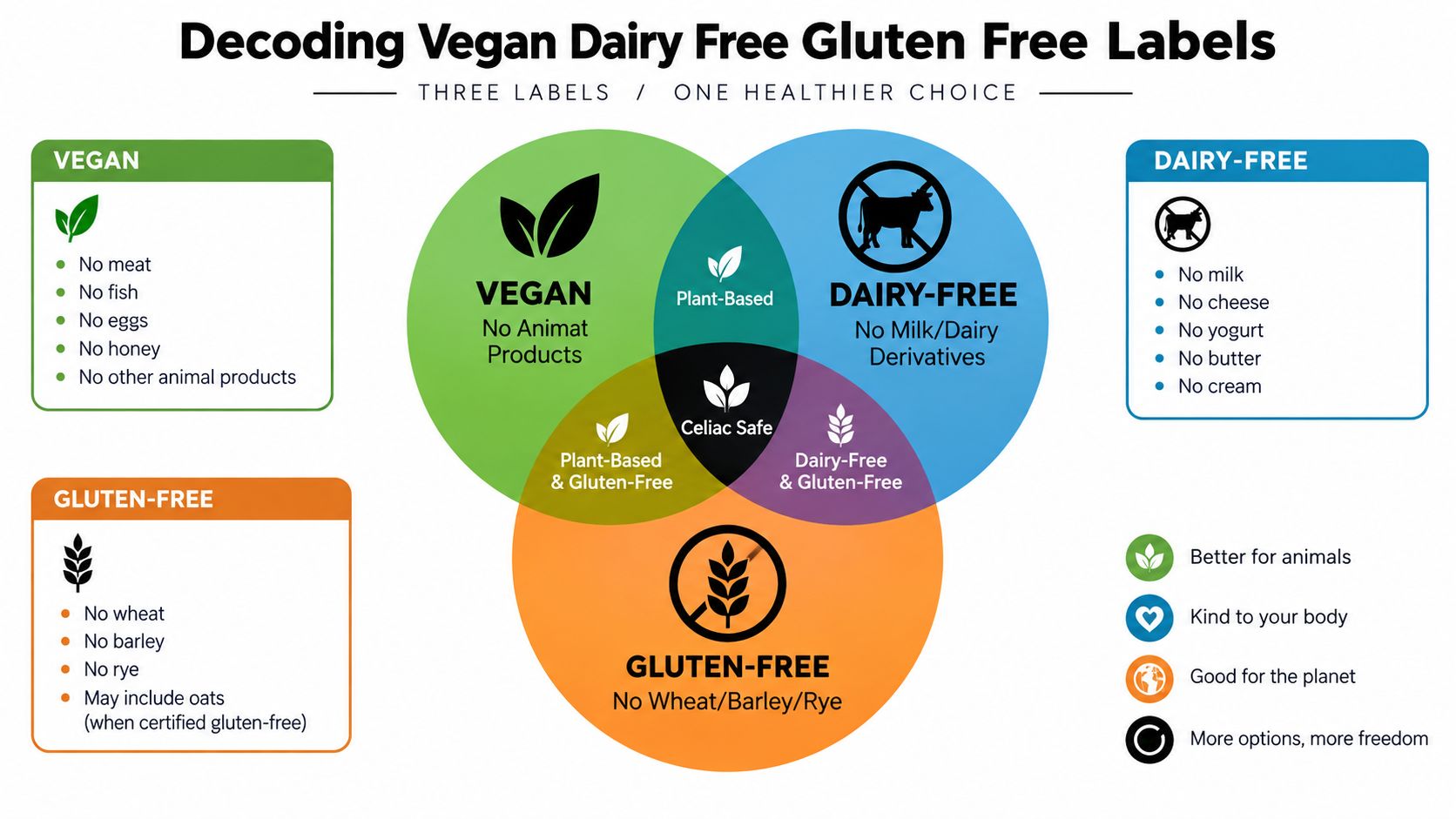
A vegan product can still contain gluten from wheat, barley, or rye. A gluten-free product can contain milk, whey, or butter. A dairy-free product may remove milk ingredients but still use other animal-derived ingredients, depending on the product and the manufacturer's definition. Read the three claims separately.
The medical distinction matters
About 1% of the world's population has celiac disease, while 8.4% have a gluten-related disorder, including gluten intolerance, according to the global gluten-free market overview. Those groups don't face identical risks, and a lifestyle preference doesn't require the same level of control as a medically necessary gluten-free diet.
For celiac disease or a diagnosed allergy, a front-of-pack claim is only the beginning. Check whether the product carries a credible gluten-free certification, whether the manufacturer addresses shared equipment, and whether the advisory statement creates a concern for your personal risk threshold. “Vegan” doesn't mean “safe for celiac disease.”
Dairy-free shoppers should apply the same discipline. Look for milk, whey, casein, lactose, butter, cream, and other dairy derivatives. Someone avoiding dairy for preference may make a different decision from someone managing a milk allergy. Don't use one person's tolerance as a guide for another person's medical safety.
Use a three-question filter
Before buying, answer these questions in order:
- Is it vegan? Check for milk, eggs, honey, gelatin, and other animal-derived ingredients.
- Is it dairy-free? Search for milk derivatives even if the product looks plant-based.
- Is it gluten-free for my needs? Check the grain ingredients, certification, and cross-contact statement.
For a deeper explanation of package panels and serving information, use this guide to reading nutrition labels. If digestive comfort is part of your decision, a best gluten free probiotic guide can provide broader context, but no supplement can compensate for a product that contains an ingredient you need to avoid.
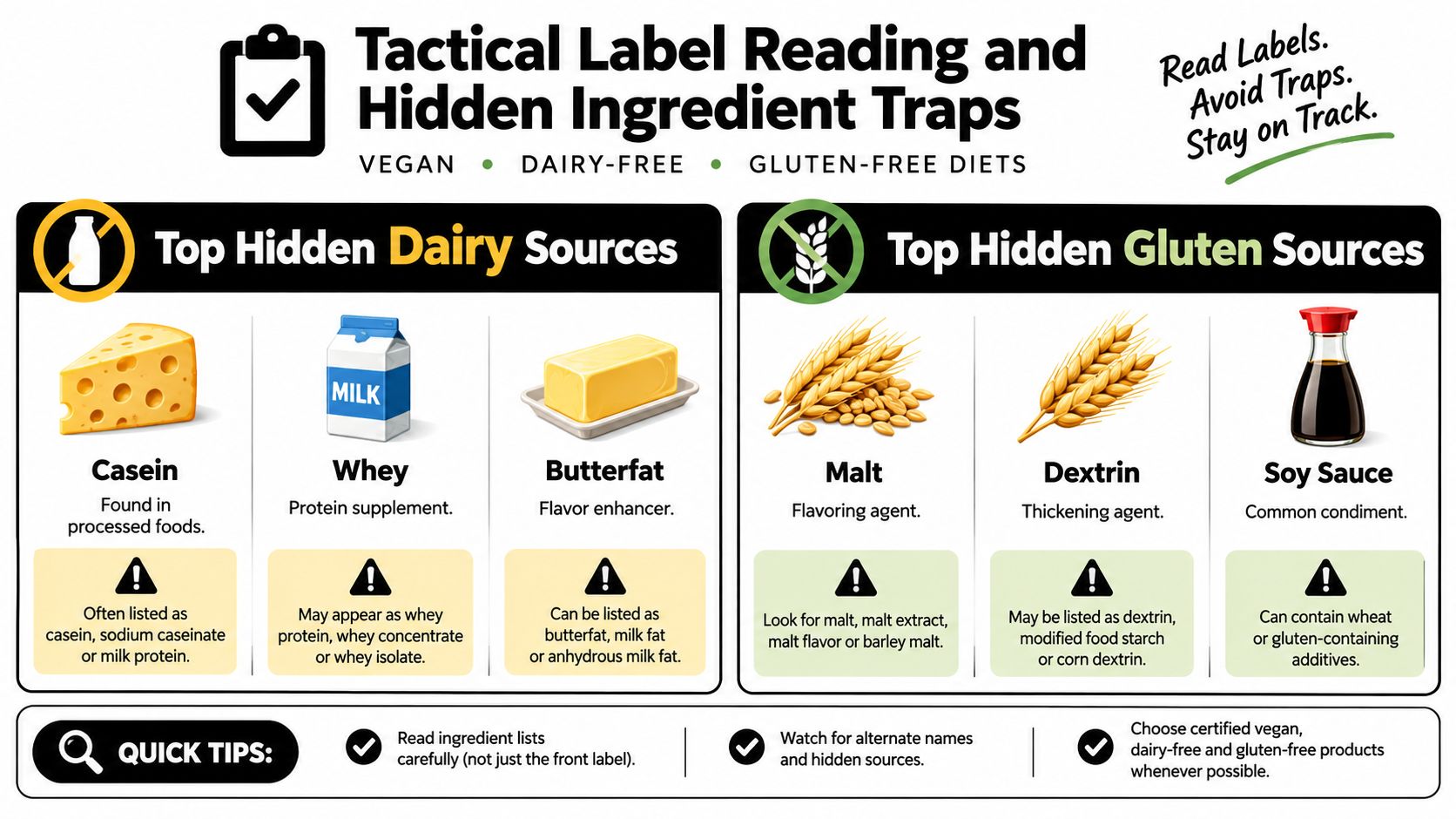
Tactical Label Reading and Hidden Ingredient Traps
The ingredient list is where marketing claims meet reality. Read it with a system, because scanning only the first few ingredients makes it easy to miss a small but important dairy or gluten derivative.
Start with the ingredient list
Use this sequence every time:
- Confirm the product identity. A product marketed as plant-based may still contain dairy, and a product marketed as gluten-free may not be vegan.
- Scan for obvious dairy. Milk, butter, cream, cheese, whey, and casein are immediate stop signs for a strict dairy-free or vegan diet.
- Look for technical dairy terms. Caseinate, lactalbumin, milk solids, and butterfat can appear in processed foods, flavor systems, and protein products.
- Check grain-derived ingredients. Wheat, barley, rye, malt, and brewer's yeast deserve attention. Malt flavoring commonly points to barley.
- Review starches and extracts. Modified food starch, dextrin, yeast extract, and seasoning blends need context. Their source can vary, so verify the manufacturer's gluten-free statement rather than guessing.
- Read the advisory statement. “Manufactured in a facility that processes wheat” isn't the same as an ingredient declaration. It does, however, provide information about possible shared equipment and should be taken seriously when medical risk is involved.
The phrase “may contain” also needs a personal rule. Someone choosing gluten-free foods for preference may accept a different level of uncertainty from someone with celiac disease. If you need strict avoidance, contact the manufacturer when the label doesn't answer the question.
Don't confuse clean with safe
Short ingredient lists are useful, but they don't prove that a product is suitable for every person. A five-ingredient snack can still be made on shared equipment, while a longer formula may provide clearer certification and allergen controls. Judge the product by its full label, not by the number of ingredients alone.
Use the following video as a visual reminder of where label mistakes happen, especially with protein powders, seasonings, and packaged snacks.
For routine shopping, save photos of products you tolerate and keep a short list of ingredients that cause problems. That reduces rushed decisions at the gym, airport, or office vending machine.
Choosing the Right Plant Protein for Allergen Control
Removing dairy and gluten doesn't remove the need for a serious protein strategy. If every snack becomes fruit, chips, or a sweetened bar, daily protein intake becomes harder to manage and hunger tends to dictate the next choice.
Pea protein is a particularly practical fit because it's naturally vegan, dairy-free, gluten-free, and hypoallergenic. The Cleveland Clinic describes pea protein as providing about 15 to 20 grams of protein per 100 calories in a suitable formulation, as explained in its overview of pea protein. That density makes it useful in a compact snack rather than only in a shake.
Compare the main options
| Protein Source | Allergen Risk | Digestibility | Best Use Case |
|---|---|---|---|
| Pea protein | Generally suitable for vegan, dairy-free, and gluten-free formulas, but check the facility statement | Often well tolerated and easy to use in snacks | Savory crisps, bars, shakes, and compact workout snacks |
| Soy protein | Not suitable for people avoiding soy, and individual tolerance varies | Can work well when tolerated | Complete plant-based meals and protein blends |
| Rice protein | Naturally plant-based and often compatible with free-from diets | Can feel gritty in some formulations | Blends, powders, and products where texture is managed |
| Hemp protein | Plant-based, with a distinct flavor and texture | Works best when combined with other ingredients | Smoothies, bowls, and whole-food combinations |
Pea protein isn't identical to whey. It tends to contain less methionine and cysteine than animal proteins, and published reviews report a PDCAAS range of about 0.69 to 0.89 in the technical review of pea protein quality. That doesn't make it a poor choice. It means the total formula matters.
Build around the formula
A product can improve the overall protein strategy by pairing complementary plant proteins, offering a useful serving size, and keeping the texture digestible. Look for a named protein source, transparent serving information, and a flavor profile you can use before or after training.
If you want a more detailed look at protein choices for combined restrictions, review this guide to dairy-free, gluten-free protein. The practical target is simple: choose the protein that fits your tolerance, your training schedule, and your ability to eat it consistently.
Prioritizing Satiety and Savory Flavor Profiles
The strongest free-from snack isn't the one with the most exclusions. It's the one that solves a real appetite problem without creating another. A sweet bar can fit a vegan, dairy-free, gluten-free diet and still fail as a bridge between lunch and dinner if it doesn't provide enough protein or satisfaction.
Savory flavor changes the decision point. Salt, spice, herbs, nutritional yeast, and a crisp texture make a snack feel more like food than a compromise product. That matters for people who are tired of rotating through sweet shakes, fruit chews, and dessert-style bars.
Protein first, flavor second, convenience always
Build snacks around three jobs:
- Support fullness. Protein-rich foods can help a snack hold you over, especially when paired with fiber or a modest amount of fat.
- Protect training consistency. A portable option reduces the chance that a missed meal becomes an unplanned purchase that doesn't fit your restrictions.
- Keep the diet enjoyable. Cheesy-style seasoning, jalapeño heat, roasted flavors, and crunch offer variety without relying on dairy.
The connection to appetite hormones such as GLP-1 and PYY is often discussed too casually. Don't treat a snack as a medication or promise a hormonal outcome. Instead, use the practical principle: a protein-forward snack with satisfying texture can make it easier to manage hunger and avoid constant grazing.
The category needs better performance nutrition
The functional food trend analysis from the Institute of Food Technologists reports that dairy-free is the fastest-growing allergen-free segment at a 7.5% CAGR through 2035. Yet much free-from content still focuses on recipes and ingredient avoidance rather than the nutrition trade-offs an athlete faces.
That gap is obvious in the gym. People need something they can eat between meetings, before a session, or after training without dairy, gluten, or a heavy sugar load. Choose the snack as you would choose training equipment: by the job it performs, not by the label it displays.
A restriction should narrow the ingredients, not lower the standard.
Real-World Shopping and High-Protein Snack Ideas
A workable shopping strategy starts with separate categories. Keep one list for protein, one for carbohydrate, and one for flavor and texture. That prevents the common mistake of buying a bag of “free-from” snacks without checking whether any of them can support a training day.
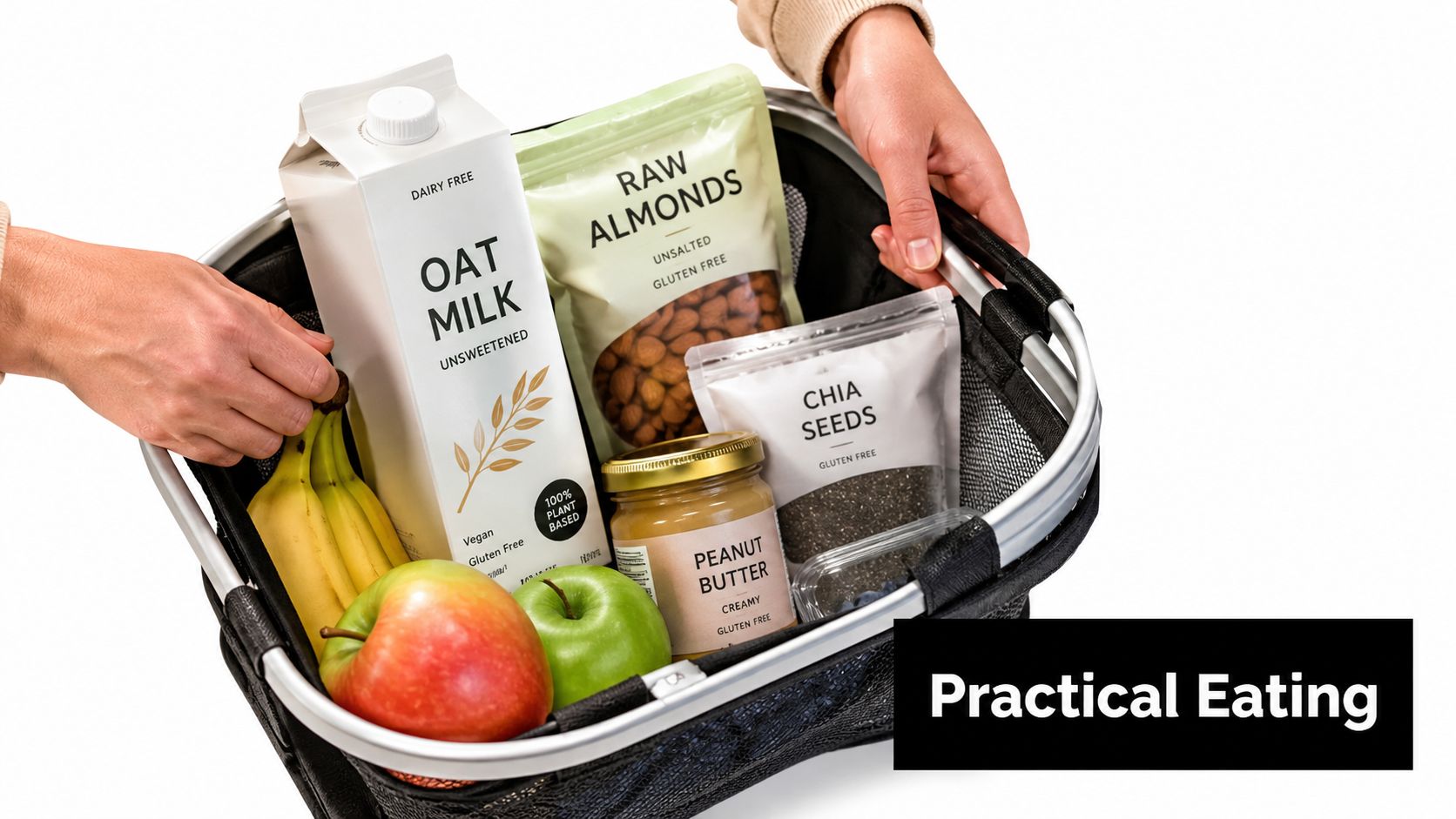
Build three types of snack
For the gym bag, choose a sealed savory pea-protein snack with transparent ingredients and a flavor you won't get tired of. A cheddar-style plant-based seasoning or jalapeño-style version can provide the familiar savory profile many people miss after removing dairy, while the crunchy format works better for some athletes than another liquid shake.
For the office, pair a protein-centered packaged snack with fruit, gluten-free crackers, or a small portion of seeds if those foods fit your tolerance. For travel, choose shelf-stable options and pack them before leaving. Airports and convenience stores offer fewer safe choices when you're hungry and in a hurry.
A home option can be as simple as roasted chickpeas with herbs, a tofu and vegetable box if soy works for you, or a smoothie made with pea protein and a tolerated plant milk. Keep the recipe basic enough to repeat. Complexity is the enemy of preparation.
Use a simple packing formula
Prepare one protein item, one produce item, and one texture item. For example:
- Post-workout: pea-protein snack, banana, and water.
- Desk snack: roasted chickpeas, berries, and gluten-free seed crackers.
- Long travel day: sealed plant-protein snack, dried fruit, and a label-checked oat-based item.
- Pre-training: a modest protein portion with an easy-to-digest carbohydrate, adjusted to your own tolerance.
If appetite management or medication has changed how much you can comfortably eat, this collection of snacks that support muscle on tirzepatide offers additional ideas for smaller, protein-focused choices. For more combinations built around the same restrictions, use this guide to gluten-free high-protein snacks.
The important detail is preparation. Put one verified snack in your work bag, one in your car, and one in your gym kit. You won't need perfect discipline if the right option is already within reach.
Building a Sustainable Free-From Fitness Routine
A sustainable vegan, dairy-free, gluten-free routine has four standards: clear labels, adequate protein, useful satiety, and repeatable convenience. Remove any one of those, and the diet becomes harder to maintain. A snack can be technically compliant and still be a poor choice if it leaves you hungry or tastes unpleasant.
Use this weekly check:
- Audit the labels. Confirm vegan, dairy-free, and gluten-free status separately.
- Choose protein deliberately. Prioritize a named plant protein, with pea protein often fitting the allergen-control brief.
- Keep savory options available. Don't force every snack into a sweet format.
- Plan for context. Pack different options for the gym, office, travel, and post-workout recovery.
- Respect medical needs. If you have celiac disease, an allergy, or another diagnosed condition, treat cross-contact information as part of the product decision.
The broader vegan food market shows why these products are no longer a niche concern. One estimate values the global vegan food market at USD 42.24 billion in 2025 and projects it to reach USD 132.21 billion by 2034, with a projected 13.56% compound annual growth rate, according to Fortune Business Insights' vegan food market estimate. More choice is useful, but it also makes label discipline more important.
Don't settle for a snack that merely avoids ingredients. Choose one that gives you protein, flavor, comfort, and a realistic reason to keep it in your routine.
Gym Snack offers plant-based savory protein snacks built around pea protein, with dairy-free and gluten-free options in bold cheddar-style and jalapeño cheddar-style flavors. Visit Gym Snack to explore convenient options for your gym bag, desk, or next training session.