

You finished training, your stomach is growling, and the last thing you want is another sweet bar that tastes like frosting mixed with chalk. That's the trap a lot of athletes fall into. They hit protein targets on paper, but their snack rotation gets so dessert-heavy that they start skipping recovery fuel altogether.
That's where better vegetarian protein snack ideas matter. You need options that are portable, savory, satisfying, and built around real macros, not just wellness branding. Crunch helps. Salt helps. A snack that feels like food helps even more.
This matters beyond preference. The global protein snacks market is projected to grow from USD 34.44 billion in 2026 to USD 49.62 billion by 2031, and the chips and crisps segment is projected to grow even faster at a 9.02% CAGR through 2031, according to Mordor Intelligence's protein snacks market report. That lines up with what athletes already know from experience. Sweet fatigue is real, and savory crunch is underbuilt.
The seven snacks below are the ones I'd recommend to lifters, runners, and busy people trying to stay consistent. Some are better post-workout. Some are better as a desk snack or travel option. None of them are perfect. The point is to know the trade-offs so you can choose on purpose.
1. Gym Snack
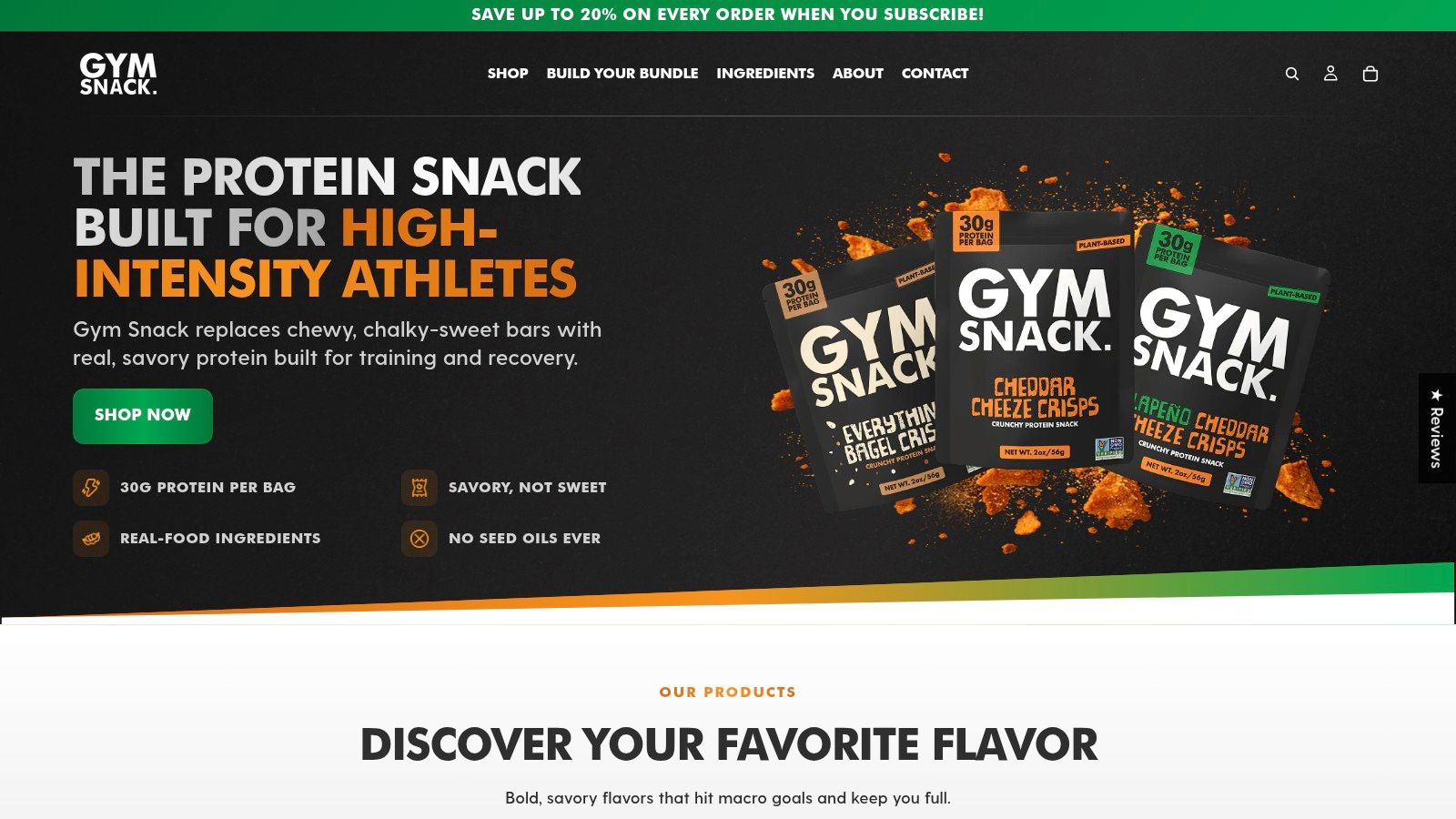
You finish a hard session, want something salty, and every protein option in your bag tastes like dessert. Gym Snack fixes that specific problem better than almost anything else on this list. It gives you a savory, crunchy option with enough protein to matter, which is why it stands out for athletes who are burned out on bars and shakes.
A full bag comes in at about 30 grams of protein, with roughly 290 calories and a macro split that is balanced enough to use in more than one way. Post-lift, it has enough protein to count as recovery food. Between meals, it works well when hunger is high and you need something with real staying power, not a light snack that disappears in 10 minutes. That also makes it a solid fit for GLP-1-friendly snacking. Higher protein, decent volume, and crunch tend to slow you down and make the snack feel more satisfying.
The format is the biggest win. Plenty of vegetarian crunchy snacks give you texture but not much protein. Others give you some protein, but portions are too small to help after training. As noted earlier, athletes run into this problem all the time with standard roasted legume snacks. Gym Snack closes that gap by giving you a chip-style experience with protein density closer to what a training snack should offer.
If you want a broader look at how options like this compare, this guide to best vegetarian protein snacks is useful.
Why it earns a spot in a real rotation
Adherence matters more than perfect labels. A snack can have clean ingredients and still fail if you never want to eat it. Gym Snack does well here because the flavors stay on the savory side. Cheddar Cheeze, Jalapeño Cheddar Cheeze, Everything Bagel, and Buffalo Ranch make more sense for athletes dealing with sweet snack fatigue than another cookie-dough-style bar.
I also like the ingredient profile. It is certified vegan and free of dairy, soy, and gluten. It skips seed oils, sugar alcohols, and artificial sweeteners too. For athletes who pay attention to digestion, that matters. Some high-protein snacks look good on paper, then leave people bloated or still hungry an hour later.
Trade-offs to know before you buy
Price is the obvious drawback. This sits closer to specialty snack pricing than grocery store chip pricing, so it works best for people who value convenience, macro quality, and flavor enough to pay for them. I would use it strategically, not mindlessly. Keep a few bags for post-workout, travel, or long workdays rather than treating it like an everyday throwaway snack.
It also will not replace a full meal if you are seriously under-fueled. The protein is strong, but the calories are still snack-level for bigger athletes or anyone training hard twice a day. In that case, pair it with fruit, yogurt, or a sandwich and move on.
- Best use case: Post-workout, commuting, travel, and late-afternoon hunger when sweet snacks sound terrible
- Main downside: Higher cost per bag than standard savory snacks
- Watch-out: Strong flavors help with satisfaction, but flavor preference is personal and some people may find certain varieties a little too assertive
2. No Cow Protein Bars
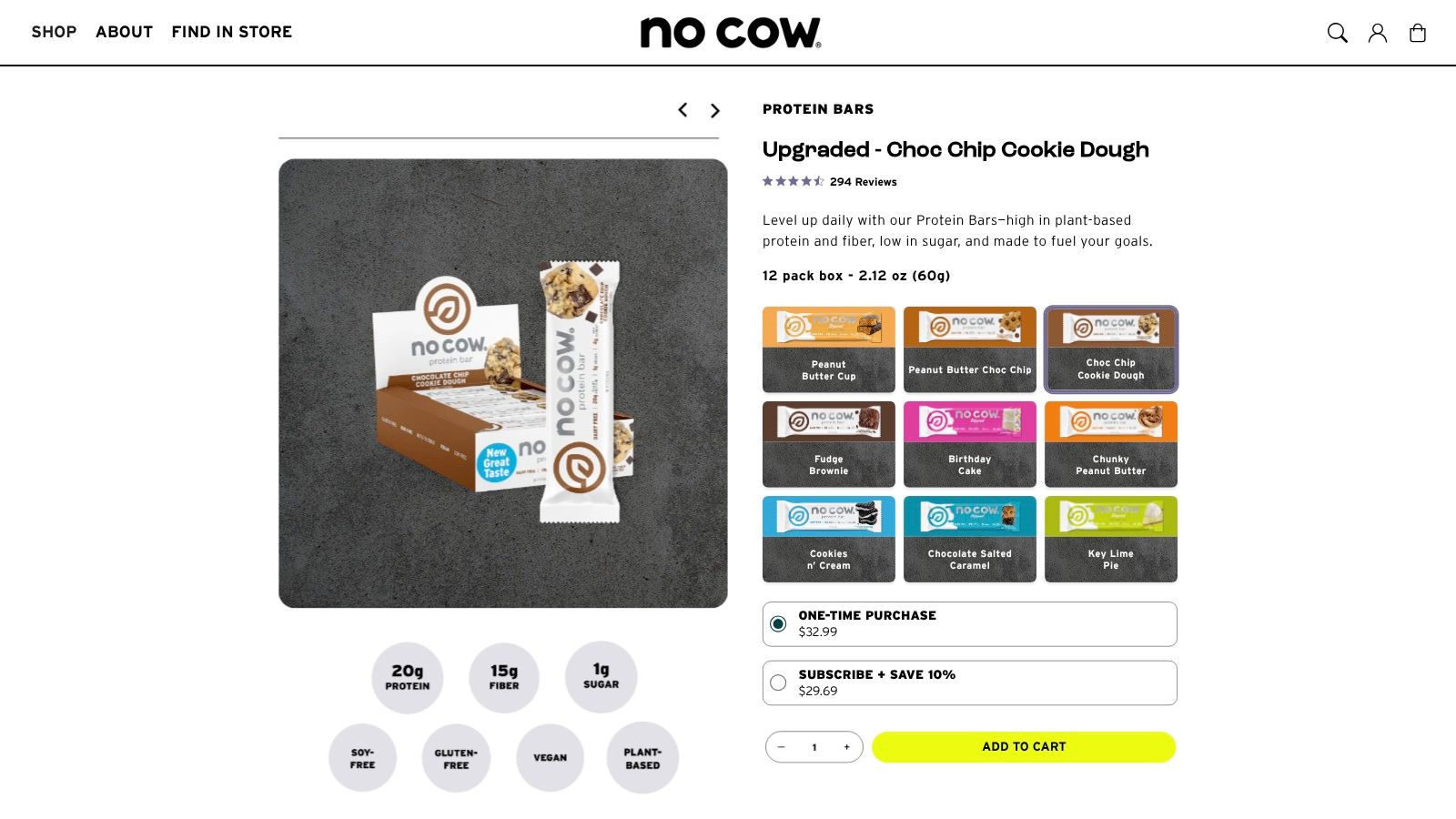
No Cow bars are what I recommend when convenience wins and you need a high-protein vegan bar that's easy to stash anywhere. They use a pea and rice protein blend, they're dairy-free, and they keep the sugar low. For gym-goers trying to hit daily protein without relying on shakes, that makes them useful.
Each bar delivers 20 grams of plant protein. That's enough for a legit snack, and it puts No Cow in a different class from bars that market themselves as “protein” but barely separate themselves from candy. If you want a broader sense of where bars fit, this guide to plant-based protein bars is a good starting point.
Where No Cow fits in a real routine
I don't think of No Cow as a craving snack. I think of it as a compliance snack. It works when you're between meetings, in the car after training, or trying to avoid getting home so hungry that dinner turns into a free-for-all.
The downside is texture. Dense bars can feel heavy, especially if you eat them fast or pair them with coffee and no water. They also don't solve sweet snack fatigue if that's your main issue. Even good bars still eat like bars.
If you're sick of sweet flavors, use bars as backup, not as your only plan.
A few practical notes matter here:
- Strong point: High protein with low sugar in a shelf-stable format.
- Useful for: Busy workdays, gym bags, and travel.
- Less ideal for: Anyone who's already burned out on sweet snack formats.
- Possible drawback: The dense texture and fiber load can feel like a lot if you're snacking close to training.
You can buy them directly from No Cow.
3. ALOHA Organic Plant-Based Protein Bars
ALOHA bars are for the person who wants a cleaner-label bar and cares about ingredient quality as much as raw protein. They're vegan, USDA Organic, and avoid stevia and sugar alcohols, which is a real plus for people who get tired of that icy aftertaste many bars have.
Protein is lower than the biggest macro bars. ALOHA delivers 14 grams of plant protein per bar, along with about 10 grams of fiber and 5 grams of sugar or less. That makes it a smoother fit for everyday snacking than for a heavy post-workout slot where you want more protein in one hit.
Best for taste-first athletes
Some athletes need the highest protein number possible. Others need a snack they'll consistently eat. ALOHA tends to do better with the second group.
The texture is usually softer and more approachable than ultra-dense bars. That makes it useful for people who've tried harder-core protein bars and decided they'd rather skip snacks than chew through another brick. It also helps if you're trying to keep digestion calm.
- Best use case: Mid-morning snack, work bag, or pre-errand snack that won't feel too heavy.
- Why people like it: Better taste reputation than many functional bars.
- Trade-off: Lower protein than options built specifically for macro chasing.
- Cost reality: It's a premium bar, so the price usually reflects that.
ALOHA is a good option when you want a plant-based bar that feels more like food and less like a sports product. You can shop the lineup at ALOHA.
4. Louisville Vegan Jerky Co.

If your biggest issue is texture boredom, vegan jerky can be a lifesaver. Louisville Vegan Jerky Co. gives you chew, salt, and bold savory flavor in a way bars and puffs don't. It's made from textured soy protein and comes in flavors like Smoky Carolina BBQ and Smoked Black Pepper.
This is not the highest-protein pick on the list per serving. It's roughly 6 grams per 1 ounce serving, with multiple servings per bag. So I don't treat it like a primary recovery snack unless you're pairing it with something else. I treat it as a strong savory bridge snack that keeps you out of the vending machine.
Why jerky solves a different problem
A lot of vegetarian protein snack ideas miss one thing. Sometimes you don't want crunch. You want chew. Jerky slows eating down, which can help satiety because you don't inhale it in ninety seconds.
That said, soy is the obvious limitation here. If you avoid soy, this one's out. Some flavors also carry the usual jerky trade-offs, including more sugar or sodium than minimalist snacks.
Chewy snacks work well when your hunger is more mental than physical. They buy time and give your brain a stronger “I ate something” signal.
Use Louisville Vegan Jerky when you want savory intensity and portability.
- Best use case: Commutes, flights, road trips, and late-afternoon salty cravings.
- Big advantage: Strong flavor and a real jerky texture.
- Main downside: Lower protein density than bars or protein crisps.
- Not for everyone: Soy-sensitive eaters should skip it.
You can check flavors and bundles at Louisville Vegan Jerky Co..
5. BRAMI Italian Snacking Lupini Beans
Sweet bars start tasting the same by midweek. This is one of the better resets.
BRAMI gives you lupini beans in savory flavors like Sardinian Sea Salt, Garlic and Rosemary, and Chili and Lime. The appeal is different from bars, jerky, or puffs. You get a briny, firm bite and a whole-food ingredient profile that feels closer to actual food than a snack engineered around sweetness.
The macro profile is solid for a legume-based option, and the satiety is usually better than people expect. That matters if you are trying to control snack drift, especially during a cut or on GLP-1 meds, where smaller portions need to work harder. Beans help because they slow eating down and bring more substance than airy crunchy products.
The trade-off is texture. Lupini beans do not deliver that dry, loud crunch some athletes want when sweet snack fatigue hits. I usually recommend them to people who want a savory snack with real staying power, then pair them with something crisp if they still want that crackly snack experience. Cucumbers, seeded crackers, or even a few olives turn this into a compact mini-meal that covers texture and satiety better than the beans alone.
A better fit for appetite control than pure crunch
This is one of the smarter vegetarian protein snack ideas for athletes who are tired of sweet flavors but still want decent macros. The flavor is savory, the portion is easy to manage, and the fullness signal is stronger than what you get from many puffed snacks.
- Best use case: Afternoon hunger, lighter desk lunches, and snack plates that need more staying power.
- What works: Savory whole-food feel, good satiety, and easy pairing with crunchy sides.
- What doesn't: Less crunch than roasted snacks, and the briny texture is not an instant win for everyone.
- Allergy note: If legumes do not sit well with you, test tolerance before buying in bulk.
You can buy BRAMI directly from BRAMI.
6. Seapoint Farms Dry Roasted Edamame
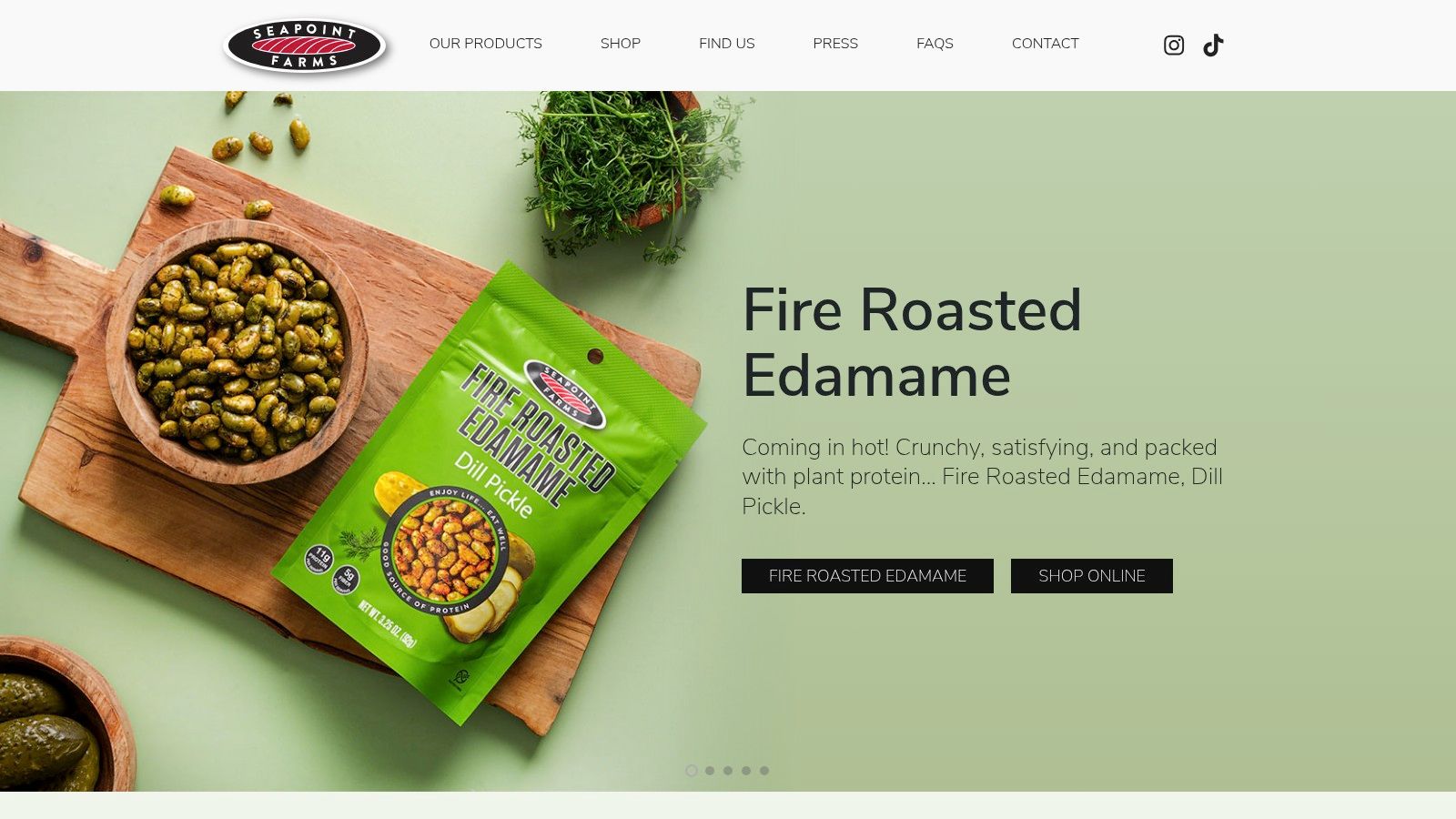
Seapoint Farms Dry Roasted Edamame is the practical workhorse on this list. It's crunchy, simple, and usually cheaper than more specialized protein snacks. If you care about macro efficiency and don't need chef-style flavor development, this is an easy pantry staple.
The ingredient profile is straightforward because it's built from dry-roasted soybeans. That matters. A lot of snacks market themselves as clean but still rely on a long chain of fillers, oils, or sweeteners to become edible.
The macro-friendly default
This is one of the easiest vegetarian protein snack ideas for people who want consistency over novelty. Resealable bags and snack packs make portioning simple, and the crunch is satisfying enough to scratch the salty-snack itch.
The weak point is obvious too. Edamame can get boring. If you need flavor excitement to stay adherent, plain roasted soybeans may not carry you for long. Some flavors also get salty fast.
There's another practical caveat. People often point to roasted edamame as the answer to savory plant protein, and it's better than many generic snacks, but it still doesn't fully replace products specifically engineered around higher protein density and stronger flavor payoff. It's a great base hit, not always a home run.
- Best use case: Budget-conscious daily snacking.
- Why it works: Crunchy, high-protein, widely available, and easy to portion.
- Main downside: Soy-based and less exciting than chips, crisps, or jerky.
- Coach's note: Keep this around for consistency, but don't expect it to solve sweet fatigue by itself.
You can find the different formats at Seapoint Farms.
7. IWON Organics Protein Stix / Puffs
IWON Organics is the grocery-store answer to the “I want chips, but I also want some protein” problem. Their Protein Stix and puffs use ingredients like peas, brown rice, and sometimes navy beans to create a crunchy, salty snack that lands closer to chips than to bars.
Depending on the product and size, protein usually falls in the 7 to 10 gram range per serving. That's respectable for a crunchy snack, but it's not enough to treat as a serious post-workout feeding unless you pair it with something else.
Best when cravings are the real issue
There's a big difference between a snack for recovery and a snack for behavioral control. IWON works better in the second role. It helps when you want something crisp and savory and don't want to default to standard chips.
Some products are USDA Organic, and many are gluten-free and soy-free. But you still need to read labels because some cheese-style flavors are vegetarian rather than vegan. If you want a broader look at this category, this guide to plant-based protein puffs gives a useful overview.
The bigger market context supports why this format keeps expanding. The global plant-based protein snacks market was valued at US$ 20.02 billion in 2025 and is projected to reach US$ 28.66 billion by 2032, according to QYResearch's plant-based protein snacks report. Crunchy legume-based formats are a visible part of that shift.
Don't confuse “better than chips” with “enough protein for recovery.” Those are two different jobs.
- Best use case: Evening snack cravings and grocery-store convenience.
- Strong point: Delivers a familiar puffy, chip-like eating experience.
- Main downside: Lower protein than bars, legumes, or protein-first crisps.
- Watch labels: Some flavors may include dairy seasonings.
You can browse the range at IWON Organics.
Top 7 Vegetarian Protein Snacks Comparison
| Product | Preparation / Convenience (🔄) | Cost & Availability (⚡) | Protein / Nutrition (⭐) | Expected Outcomes (📊) | Ideal Use Cases & Tips (💡) |
|---|---|---|---|---|---|
| Gym Snack | 🔄 Ready-to-eat single‑serve bag; portable crunch | ⚡ Premium (~$5.99/bag); bundles & Subscribe & Save; online-focused | ⭐ Very high, ≈30 g protein per bag (15 g+ per serving); ~290 kcal; vegan, allergen‑conscious | 📊 Strong support for muscle repair, satiety, steady energy between meals | 💡 Best for athletes/on‑the‑go professionals; buy multi‑packs to reduce cost; flavor preference varies |
| No Cow Protein Bars | 🔄 Ready bar; grab‑and‑go | ⚡ Widely distributed U.S. retail; available in 12‑count cases | ⭐ High, 20 g plant protein per bar; low sugar formulation | 📊 Effective for hitting protein targets with minimal added sugar | 💡 Good gym/travel bar; texture can be dense or polarizing for some |
| ALOHA Organic Protein Bars | 🔄 Ready bar with cleaner label focus | ⚡ Premium price; USDA Organic & B‑Corp; grocery/online | ⭐ Moderate, ~14 g protein/bar; ≤5 g sugar; higher fiber | 📊 Supports cleaner digestion and enjoyable taste but lower per‑bar protein | 💡 Ideal for organic/clean‑label seekers; pair with extra protein when needed |
| Louisville Vegan Jerky Co. | 🔄 Ready-to-eat chewy jerky | ⚡ Shelf‑stable single bags and bundles; specialty retail/online | ⭐ Moderate, ~6 g protein per 1 oz serving (≈3 servings/bag) | 📊 Satisfies savory cravings and portable protein; higher sodium in some flavors | 💡 Great savory alternative to bars; not suitable for soy‑allergic consumers |
| BRAMI Lupini Beans | 🔄 Ready-to-eat marinated pouches; minimal prep | ⚡ Shelf‑stable until opened; specialty/online availability | ⭐ High for calories, ~12 g protein per 100 kcal (brand claim); whole‑food legume | 📊 Whole‑food protein with low net carbs; versatile in salads/dips | 💡 Best for whole‑food snackers; marinated taste/texture may be unfamiliar |
| Seapoint Farms Dry Roasted Edamame | 🔄 Ready snack in resealable bags/snack packs | ⚡ Budget‑friendly; widely available in stores and online | ⭐ High plant protein from soy; lower fat than nuts | 📊 Macro‑friendly crunchy snack; simple ingredient deck | 💡 Everyday protein crunch; watch for salty flavors and soy allergy |
| IWON Organics Protein Stix / Puffs | 🔄 Ready crunchy puffs/stix (chip‑like) | ⚡ Grocery availability (Whole Foods, online); organic SKUs | ⭐ Low–moderate, typically 7–10 g protein per serving | 📊 Satisfies chip/crisp cravings with added protein but lower density | 💡 Good substitute for chips; check labels for dairy seasoning on some flavors |
Build Your High-Protein Snacking Toolkit
You finish training, get back to the car, and realize one more cookie-dough bar sounds terrible. That is usually not a motivation problem. It is sweet snack fatigue, and it is one reason athletes stop hitting their protein numbers consistently.
A better setup fixes that. Keep snacks that do different jobs, not five versions of the same bar. Savory crunch covers the moments when you want something salty and satisfying. A dense bar covers the days when you are behind on protein and need an easy correction. A whole-food option helps when you want better fullness and less processed texture.
That mix works well for appetite control too.
Gym Snack is a strong pick for post-lift hunger when you want crunch and a macro profile that still makes sense. No Cow fits the high-protein, low-hassle slot. ALOHA is easier to recommend for athletes who care more about ingredient simplicity and taste than maximum protein per bar. Louisville Vegan Jerky Co. gives you chew, salt, and a real break from sweet flavors. BRAMI and dry roasted edamame are practical staples if you prefer legumes over bars. IWON earns its place when the craving is chips, not a traditional protein snack.
Texture matters more than many people think. Crunchy and chewy snacks usually slow eating speed, which can help satiety. That lines up well with GLP-1-friendly snack choices, where protein, fiber, and a more deliberate eating pace often work better than soft foods you can finish in two minutes. The trade-off is simple. The crunchier, more savory options are often better for satisfaction, but bars still win when you need more protein in less volume.
My rule is simple. Keep one savory crunchy option, one protein-dense grab-and-go option, and one whole-food option in your gym bag, desk, or car. That system cuts down on impulse vending-machine choices and makes it easier to stay on target without forcing every snack to do the whole job.
If you want to round out your setup with extra support for a vegetarian or vegan routine, supplements for specific dietary needs can help fill the gaps. A good snack system should make eating enough protein easier, more satisfying, and a lot less repetitive.