

"Clean eating." You've probably heard the term thrown around, but what does it actually mean? At its core, it's a beautifully simple approach to food: eat things that are as close to their natural state as possible.
It's all about prioritizing whole, minimally processed foods. Think fruits, vegetables, lean proteins, and whole grains—the kind of stuff you'd find on the outer aisles of the grocery store. The goal is to steer clear of foods loaded with artificial ingredients, preservatives, and a ton of added sugar.
What a Clean Eating Diet Really Means
Picture this: you're walking through the supermarket. In one hand, you could have a fresh apple, a bunch of kale, and a carton of eggs. In the other, a brightly packaged box of sugary cereal with an ingredient list you can't pronounce. Clean eating is simply choosing the first option, most of the time.
It’s less of a strict, rule-based "diet" and more of a sustainable way of thinking about how you fuel your body. You're not aiming for perfection or cutting out entire food groups. You're just making a conscious effort to eat real food. This straightforward philosophy is catching on, too. A 2023 survey found that 12% of Americans now follow a clean eating lifestyle, making it one of the most popular approaches to nutrition today. You can dive deeper into these trends with this in-depth research on food markets.
Embracing Simplicity in Your Choices
The central idea is to keep your plate simple. Next time you pick up a food item, ask yourself: "How many steps did it take to get this from the farm to my plate?" A baked sweet potato is pretty direct. A bag of sweet potato-flavored chips? Not so much. It's been sliced, fried, salted, and packed with additives.
At its heart, clean eating is about trading complexity for quality. You swap out factory-made products with long, unpronounceable ingredient lists for nutrient-dense foods that your body recognizes and can use efficiently.
To help visualize this, let's break down some common choices.
Clean Eating at a Glance: What to Choose and What to Limit
| Food Category | Clean Choices (Embrace These) | Processed Alternatives (Limit These) |
|---|---|---|
| Proteins | Fresh chicken, fish, eggs, beans, lentils, tofu | Deli meats, hot dogs, chicken nuggets |
| Carbohydrates | Brown rice, quinoa, oats, sweet potatoes | White bread, sugary cereals, pastries |
| Fats | Avocado, nuts, seeds, olive oil | Margarine, fried foods, processed oils |
| Fruits & Veggies | Fresh or frozen produce | Canned fruit in syrup, fruit juices, veggie chips |
| Snacks | A handful of almonds, an apple with nut butter | Candy bars, potato chips, packaged cookies |
This table isn't about labeling foods as "good" or "bad." It's just a simple guide to help you recognize the difference between whole foods and their highly processed counterparts.
Of course, clean eating isn't just about what you eat—it's also about what you drink. This means opting for clean hydration essentials like electrolyte powders that skip the artificial sweeteners. By focusing on whole sources for both food and hydration, you naturally cut back on refined sugars, unhealthy fats, and synthetic junk that can leave you feeling sluggish and inflamed. It’s a powerful way to take back control of your health, one simple, clean choice at a time.
The Five Core Principles of Clean Eating
So, what does “clean eating” actually look like in your kitchen and on your plate? It’s less about a rigid set of rules and more about a mindset. Once you get the hang of it, you’ll find it's a flexible approach that helps you make better choices without feeling like you're on a strict, joyless diet.
Let’s break it down into five core ideas that form the foundation of this lifestyle.
This diagram really nails the main point: it’s all about choosing whole, natural foods over things that come from a factory.
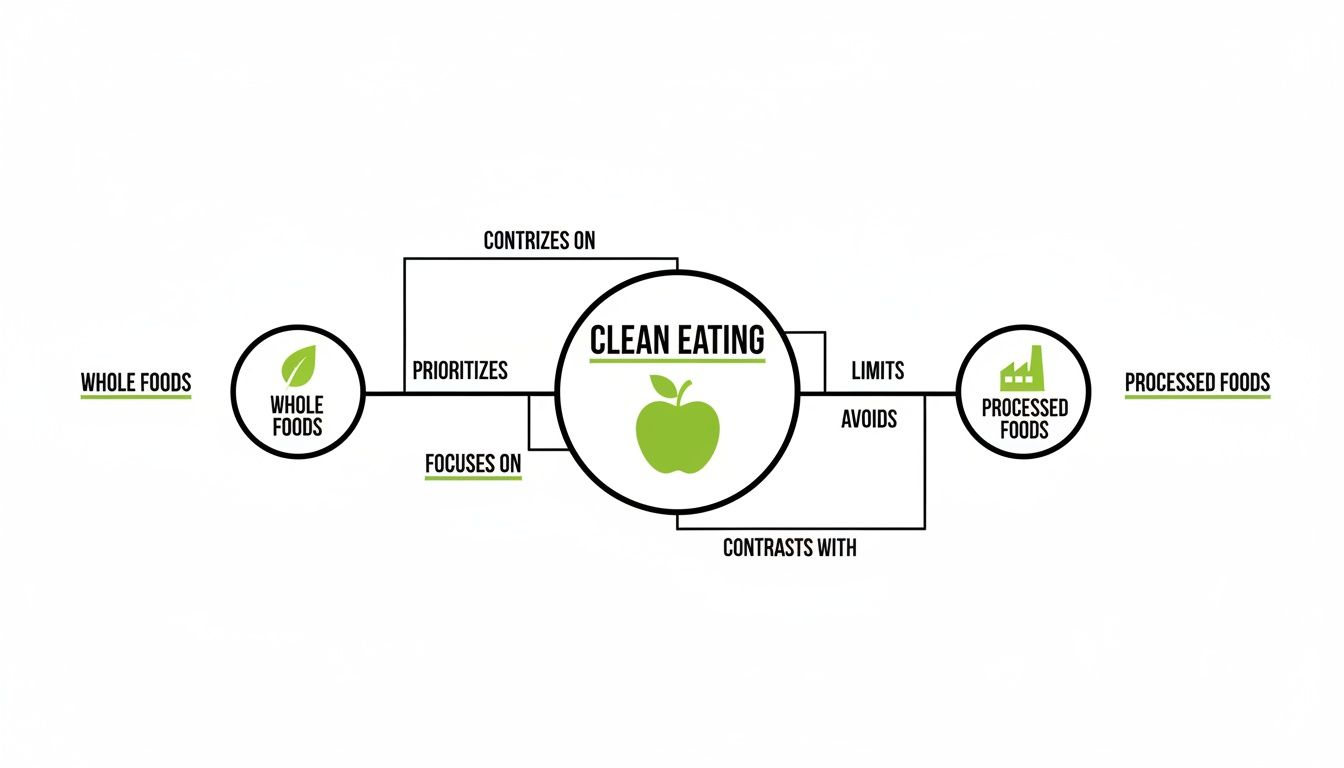
Think of it as shortening the distance from the farm to your fork. The fewer detours, the better.
1. Prioritize Whole Foods
This is the big one. At its heart, clean eating is about choosing foods as close to their natural state as possible.
Picture an apple versus a bottle of apple juice. The apple is a complete package—fiber, water, vitamins, and natural sweetness all wrapped up. The juice, on the other hand, is often just sugar water with most of the good stuff, like fiber, stripped away.
Your mission is simple: build your meals around ingredients that still look like they did when they were harvested.
- Fresh Fruits and Vegetables: Make them the star of every meal. They’re packed with the vitamins, minerals, and antioxidants your body craves.
- Lean Proteins: Think chicken, fish, eggs, beans, and lentils.
- Whole Grains: Swap out the white bread and pasta for things like brown rice, quinoa, and old-fashioned oats.
Making this one shift automatically boosts your nutrient intake and cuts down on the synthetic junk found in most packaged goods.
2. Read and Understand Food Labels
You've got to become a bit of a food detective here. The front of the box is pure marketing, but the ingredient list and nutrition panel tell the real story. This is where companies hide shocking amounts of sugar, unhealthy fats, and a laundry list of chemicals.
A good rule of thumb is the five-ingredient rule. If a product has more than five ingredients, or you can’t pronounce half of them, it’s a sign that it's probably been heavily processed. Getting savvy with labels is your superpower. To get a head start, you can check out our guide on how to read nutrition labels at https://gymsnack.com/blogs/gym-alpha/how-to-read-nutrition-labels.
3. Limit Highly Processed Foods
Let’s be clear: not all processing is bad. Minimally processed foods are your friends—think frozen berries, pre-chopped veggies, or canned beans. These are lifesavers for busy people and are still packed with nutrients.
The real problem is ultra-processed foods. These are the items engineered for an insanely long shelf life and designed to be addictively tasty. We're talking about sugary cereals, packaged cookies, most deli meats, and instant ramen. They’re usually full of industrial ingredients you'd never find in a home kitchen.
4. Watch Out for Added Sugars and Sweeteners
Added sugar is the hidden enemy in so many modern foods. It drives inflammation, can lead to weight gain, and sends your energy levels on a rollercoaster. You expect it in soda and candy, but it also lurks in ketchup, salad dressings, and even bread.
Clean eating is all about retraining your palate to appreciate natural sweetness from sources like whole fruit. If you need a little extra, reach for small amounts of less-refined options like real maple syrup or honey instead of white sugar or high-fructose corn syrup.
5. Hydrate Smarter
What you drink matters just as much as what you eat. Staying hydrated is non-negotiable for energy, good digestion, and overall health. Your best bet, always, is plain old water.
So many popular drinks—from sports drinks to those fancy coffee creations—are just sugar bombs loaded with artificial flavors. Try to make a few simple swaps:
- Carry a water bottle and drink plenty of water all day.
- Stick to unsweetened tea and coffee.
- Ditch the sugary sodas and fruit juices that have added sweeteners.
Nail these five principles, and you’ll have a powerful but simple framework for giving your body the high-quality fuel it's built to run on.
What Science Says About the Health Benefits
Switching to clean eating isn't just about following another food trend; it’s a decision to actively support your body’s intricate machinery. When you swap out processed stuff for whole foods, you’re giving yourself the high-quality fuel it's designed to run on. And the perks aren't just something you have to take on faith—they're real, measurable changes backed by a lot of solid science.
One of the first things most people report is having more sustained energy. Forget those sharp spikes and crashes you get from sugary snacks and refined carbs. Whole foods deliver a slow, steady stream of energy, which means you can finally kiss that dreaded mid-afternoon slump goodbye and stay sharp all day.
Better Weight Management and a Feeling of Fullness
If you're focused on fitness or managing your weight, clean eating is a game-changer because it works with your body’s natural hunger cues, not against them. The secret lies in foods loaded with fiber and protein, which are champions at making you feel full and satisfied after a meal.
These nutrients help trigger the release of gut hormones like GLP-1 (glucagon-like peptide-1), which basically tells your brain, "Hey, we're good here, no need for more food right now." This simple hormonal signal is a powerful tool for kicking cravings to the curb and avoiding overeating, making it much easier to stay on track without feeling like you're starving.
Clean eating shifts the focus from counting calories to prioritizing nutrient density. This naturally helps regulate your appetite and supports a healthy metabolism for the long haul.
This way of eating has implications that go far beyond individual health. The EAT-Lancet Commission highlighted that a global shift toward whole-food-based diets could prevent an estimated 11 million deaths every year. Think about that for a second. Poor diets are now responsible for more deaths worldwide than unsafe sex, alcohol, drugs, and tobacco combined. You can dive deeper into these stunning findings in the full summary report.
A Happier Gut and Less Inflammation
Your gut is like a bustling city of trillions of tiny microbes that influence everything from how you digest food to how well your immune system works. A diet heavy on processed foods, weird additives, and unhealthy fats can throw this delicate ecosystem into chaos, leading to inflammation and digestive trouble.
On the flip side, clean eating is exactly what your gut microbiome needs to thrive.
- Fiber is Fuel: Fruits, veggies, and whole grains are prebiotics—they’re basically food for the good bacteria in your gut.
- Polyphenols are Peacemakers: Foods like berries, nuts, and dark leafy greens are packed with compounds that help calm inflammation throughout your body.
When you cut back on inflammatory triggers like refined seed oils and added sugar, you’re not just helping your digestion. You'll likely notice other great side effects, too. Many people find their skin clears up, their thinking gets sharper, and they have fewer random aches and pains once their body isn't fighting chronic, low-grade inflammation. It creates a fantastic cycle—the better you feel, the more motivated you are to keep eating well.
Your Practical 7-Day Clean Eating Meal Plan
Knowing the "what" and "why" of clean eating is the first step, but putting it all into action is where you'll really see and feel the difference. To get you started, I've mapped out a simple 7-day meal plan designed for real life—no weird ingredients or hours spent in the kitchen required.
Think of this less as a strict rulebook and more as a template. It’s all about making clean eating feel less like a chore and more like a natural, enjoyable part of your day.
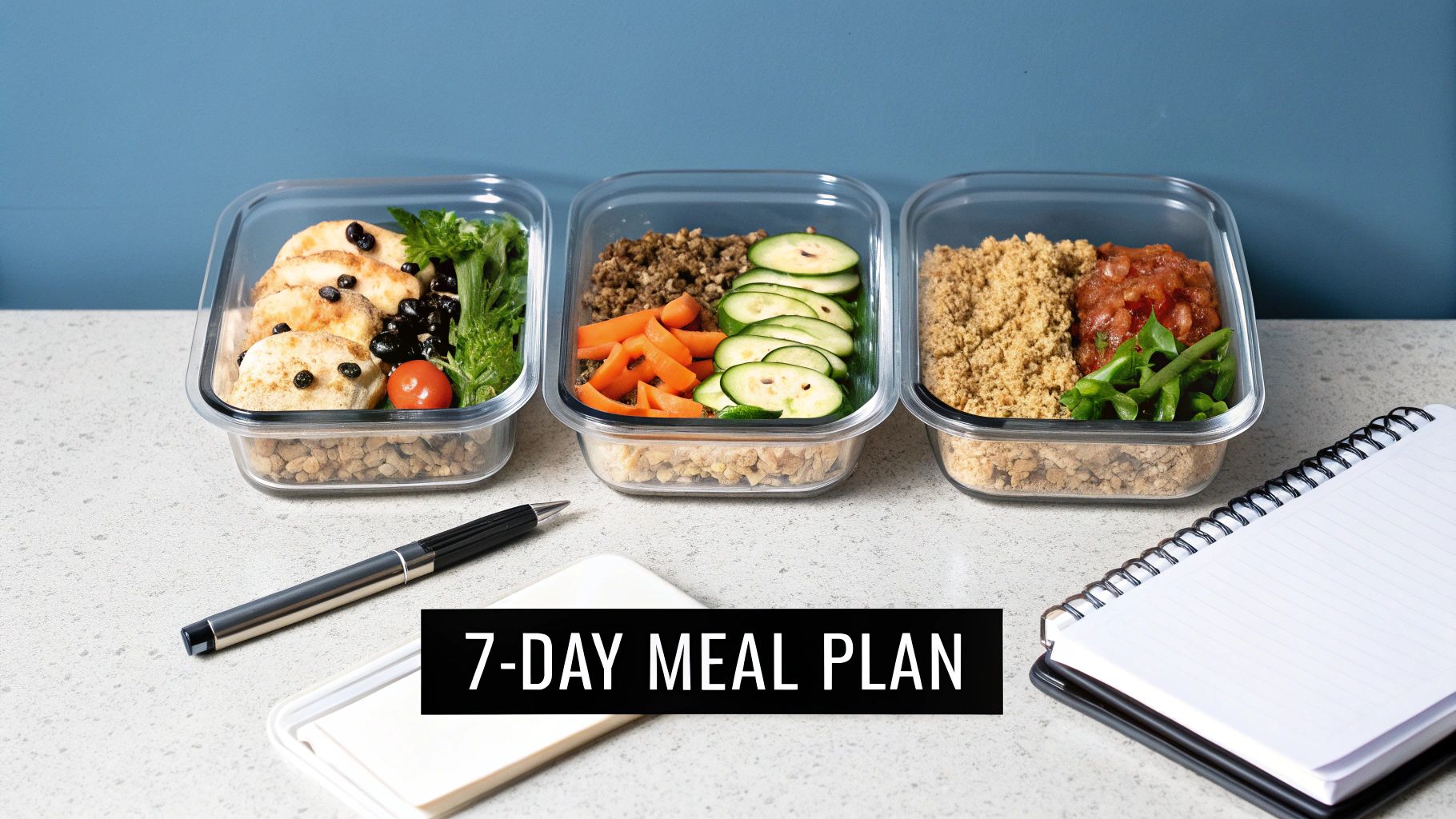
A Week Of Clean Eating Made Simple
To show you just how doable this is, here’s a sample week. This plan is built around whole foods that are easy to prep, with plenty of plant-based options. The key is to listen to your body and adjust portions as you see fit.
Sample 7-Day Clean Eating Meal Plan
| Day | Breakfast | Lunch | Dinner | Snack Idea (featuring Gym Snack) |
|---|---|---|---|---|
| Monday | Oatmeal with berries & walnuts | Big salad with grilled chicken or chickpeas & lemon-tahini dressing | Baked salmon or lentil shepherd's pie with roasted broccoli & quinoa | A handful of raw almonds and a pear. |
| Tuesday | Scrambled eggs or a tofu scramble with spinach & avocado | Leftover salmon or lentil pie | Turkey or black bean burgers (no bun) with baked sweet potato wedges | Apple slices with a tablespoon of natural peanut butter. |
| Wednesday | Plain Greek yogurt or coconut yogurt with chia seeds & peaches | Quinoa bowl with black beans, corn, & cilantro-lime vinaigrette | Sheet pan chicken or tempeh with bell peppers & onions | Gym Snack Jalapeño Cheddar Cheeze for a 30g protein boost. |
| Thursday | Smoothie with protein powder, spinach, & banana | Leftover sheet pan chicken or tempeh | Hearty vegetable & white bean soup | Baby carrots with hummus. |
| Friday | Oatmeal with sliced almonds & a drizzle of pure maple syrup | Leftover vegetable & bean soup | Shrimp or edamame stir-fry with broccoli & snap peas (use coconut aminos) | A hard-boiled egg. |
| Saturday | Whole-grain toast with avocado & red pepper flakes | Tuna salad (made with Greek yogurt) or chickpea "tuna" salad in lettuce cups | Grilled steak or large portobello mushroom caps with asparagus & a baked potato | Gym Snack Jalapeño Cheddar Cheeze to fuel your weekend workout. |
| Sunday | Veggie-packed omelet or frittata (use up leftover veggies!) | Leftovers from Saturday's dinner | Roasted chicken or a whole roasted cauliflower with brown rice & steamed green beans | Celery sticks with almond butter. |
This structure is all about making your life easier. By planning ahead, you remove the guesswork and make the healthy choice the easy choice.
And if you're worried about the cost, don't be. Eating clean doesn't have to break the bank. We have some great tips on how to do it affordably—you can learn more about clean eating on a budget right here: https://gymsnack.com/blogs/gym-alpha/clean-eating-on-a-budget.
Smart Snacking That Fits Your Goals
Snacks are not your enemy! For anyone with fitness goals, they're actually a crucial tool. The right snack can bridge the gap between meals, keep your energy steady, and prevent that ravenous hunger that often leads to grabbing the first processed thing you see.
The challenge? Finding snacks that are both clean and high in protein.
That's where having a go-to option that aligns with your goals makes all the difference. Instead of a sugary bar or chips with a laundry list of ingredients, you need something that delivers on nutrition without the junk.
A few solid clean snack ideas include:
- An apple with a tablespoon of natural almond butter.
- A handful of raw, unsalted nuts and seeds.
- Baby carrots with hummus.
- A hard-boiled egg for a quick protein hit.
And for those moments when you need a serious protein punch without compromising your clean-eating principles—especially after a tough workout—a bag of Gym Snack Jalapeño Cheddar Cheeze is the perfect fit. It gives you that savory, satisfying crunch you crave along with a massive 30g of plant-based protein, helping you nail your macros effortlessly. Its simple, transparent ingredient list makes it an ideal choice for a clean lifestyle.
Debunking Common Clean Eating Myths
Let's be honest, the term "clean eating" can sound a little intimidating. It often brings to mind a world of strict rules and expensive habits, but most of what you've probably heard is just plain wrong. It’s time to clear the air.
Once we bust these myths, you’ll see that eating clean is far more flexible, affordable, and realistic than it's made out to be.
Myth 1: Clean Eating Is Too Expensive
This is the big one, isn't it? The idea that you need a cart full of trendy organic superfoods to eat clean is probably the most common misconception out there. In reality, a smart approach to clean eating can actually save you money compared to a diet of takeout and processed foods.
The secret is knowing where to look. You don’t need every exotic fruit or fancy cut of meat to get the job done.
- Buy in Bulk: Think oats, brown rice, dried beans, and lentils. These are nutritional powerhouses and are incredibly cheap when you buy them from the bulk bins.
- Embrace Frozen Produce: Frozen fruits and veggies are picked and flash-frozen at their peak, meaning they are just as nutritious as fresh—sometimes even more so. They're also way cheaper and you don't have to worry about them going bad.
- Shop Seasonally: Produce that's in season is always going to be cheaper and taste a million times better. A juicy peach in the summer will always beat one that’s been shipped halfway across the world in January, both in flavor and price.
A little planning goes a long way. You can absolutely build a grocery list that’s good for your body and your bank account.
Myth 2: It's Too Restrictive and Time-Consuming
Another popular fear is that clean eating chains you to your kitchen all weekend and forces you to say a permanent goodbye to your favorite foods. That "all or nothing" thinking is exactly what makes any lifestyle change feel impossible.
The reality? Clean eating is simply about making better choices more often, not about being perfect. You can whip up delicious, nourishing meals without spending hours slaving over a stove. Think simple: sheet pan dinners where you toss your protein and veggies on a pan and roast them together, or big, satisfying salads built on pre-cooked grains. Easy.
Plus, the market is catching up. As more people demand healthier foods, it’s getting easier to find clean options. Data shows that plant-based labels appeal to 30.6% of consumers, and the organic food market is booming. This means more convenient, minimally processed foods are hitting the shelves every day. You can discover more insights about these consumer trends on Escoffier.edu.
Myth 3: You Have to Be Perfect 100% of the Time
This is the myth that trips almost everyone up. The pressure to be flawless creates a vicious cycle of restriction, followed by guilt, and then just giving up entirely. But a truly healthy lifestyle isn't built on perfection—it's built on consistency.
Enter the 80/20 rule. This is a much healthier and more sustainable way to think about it. Focus on making clean, whole-food choices 80% of the time, and give yourself the other 20% as wiggle room.
This means you can absolutely go out for pizza with friends or enjoy a slice of birthday cake without feeling like you’ve failed. This kind of balance is what turns clean eating from a short-term diet into a long-term habit. It makes room for real life, and that's the real key to success.
Tailoring Clean Eating for Your Fitness and Plant-Based Lifestyle
Clean eating isn't a rigid, one-size-fits-all rulebook. Think of it more as a flexible foundation you can build upon to hit very specific goals, whether you're an athlete chasing a new personal best or someone committed to a vibrant, plant-based diet. It’s all about making smart choices with whole foods that give your body exactly what it needs to perform.
When you're active, nutrition becomes more than just sustenance—it's a critical part of your training. This is where understanding strategic nutrition for faster muscle recovery comes into play. A clean eating approach naturally supports this by focusing on anti-inflammatory foods that help calm post-workout soreness and speed up tissue repair.
Fueling for Performance and Recovery
If you’re serious about fitness, you know that food is fuel. Clean eating is the difference between filling up with premium, high-octane fuel versus the cheap stuff that gums up the engine. The focus sharpens on nutrient timing and macronutrient quality to power you through tough workouts and help you bounce back faster.
- Pre-Workout Energy: Grab a banana or a small bowl of oatmeal. These simple, clean carbs give you quick, accessible energy without the dreaded sugar crash you get from processed snacks.
- Post-Workout Repair: This is where high-quality protein is non-negotiable. It delivers the essential amino acids your muscles are screaming for to repair, rebuild, and grow stronger.
Here's the problem many active people face: finding convenient protein that's actually clean. A lot of supplements are loaded with artificial sweeteners, weird fillers, and gums. That's why pure protein sources, like the pea protein in Gym Snack, are such a game-changer. They let you hit your macro goals without sacrificing your commitment to real, recognizable ingredients.
By focusing on clean foods, you’re providing the high-quality raw materials for muscle growth while also reducing the systemic inflammation that can sabotage your progress and keep you sidelined.
A Clean Approach to Plant-Based Eating
A plant-based lifestyle and clean eating go hand-in-hand, both celebrating whole, unprocessed foods straight from the earth. The main thing people worry about is getting enough complete protein and key minerals like iron. But with a little planning, a clean, plant-based diet can easily cover all your bases.
The secret is variety. Make it your mission to include a wide range of protein-rich plants in your meals every single day. If you're looking to build muscle on a vegan diet, it’s all about combining these sources effectively. You can learn more about maximizing plant-based protein for muscle growth in our complete guide.
Some of the best plant-based powerhouses to keep in your pantry include:
- Legumes: Lentils, chickpeas, and black beans are your go-to for protein and fiber.
- Whole Grains: Quinoa is a standout because it’s a complete protein with all nine essential amino acids.
- Nuts and Seeds: Almonds, chia seeds, and hemp seeds pack a punch with protein and healthy fats.
For that easy, on-the-go protein boost that works for both fitness and plant-based goals, you need a clean snack you can trust. Gym Snack delivers just that, offering over 30g of high-quality, plant-based protein in every bag. It’s made without common allergens like dairy or soy, making it the perfect gut-friendly option to fuel your ambitions without compromise.
Your Top Clean Eating Questions, Answered
Alright, let's get into the nitty-gritty. Once you start thinking about clean eating, the real-world questions pop up fast. This is where the theory meets reality, so let’s tackle some of the most common sticking points to help you navigate your new approach with confidence.
Think of this as your go-to guide for those "what do I do when..." moments.
How Can I Eat Clean at Restaurants?
Eating out is part of life, and it definitely doesn't have to sabotage your efforts. It’s all about having a game plan before you walk in the door.
- Do a little recon: Most restaurants have their menus online. Take two minutes to check it out beforehand so you can spot the best options without feeling pressured at the table.
- Look for signal words: "Grilled," "steamed," "roasted," and "baked" are your friends. They usually signal simpler preparations with less added fat. Be wary of words like "fried," "crispy," "battered," or "creamy."
- Take control: This is the easiest trick in the book—ask for dressings and sauces on the side. That way, you decide how much goes on your food, not the chef. It’s a simple way to dodge a ton of hidden sugar and unhealthy oils.
What Is the Best Way to Handle Junk Food Cravings?
First off, cravings are normal. They don't mean you've failed or have no willpower. The trick isn't to fight the craving, but to get smart and find a better way to satisfy it.
The goal isn't to eliminate cravings but to upgrade them. Find a healthier swap that offers a similar texture or flavor, and you can satisfy the urge without derailing your progress.
Craving something salty and crunchy? Instead of potato chips, grab a handful of lightly salted almonds or some air-popped popcorn. Need a sweet fix? A bowl of fresh berries with a scoop of Greek yogurt is a fantastic alternative to candy. Over time, as you consistently make these smarter choices, you'll be surprised to find your palate changing and even starting to prefer the healthier options.
Does Clean Eating Help with Weight Loss?
Absolutely. Clean eating can be incredibly effective for sustainable weight loss, mainly because it shifts your focus from just counting calories to prioritizing nutrient quality. When your diet is built around whole foods, you're naturally consuming more fiber, protein, and water.
These three things are champions of satiety—the feeling of being full and satisfied. This helps you regulate your appetite without even thinking about it, making you far less likely to overeat. You’re giving your body the high-quality fuel it's designed to run on, which in turn supports a healthy metabolism and makes managing your weight feel less like a chore.
Ready to make clean snacking simple and delicious? Gym Snack offers savory, crunchy, and macro-friendly options packed with over 30g of plant-based protein to fuel your goals without the junk. Find your new favorite protein snack.