

Pre-workout is mainly good for a short-term performance boost, especially in endurance, power, and strength work. Caffeine taken at 3–6 mg per kilogram of body weight has been linked with an average 2.9% improvement in mean power output versus placebo in pooled research, but more stimulant isn't automatically better.
You know the moment. You're standing beside the rack, hands chalked, heart rate just beginning to rise, and the bar feels heavier than it should. You mix a scoop, hoping it will turn a sluggish session into productive work.
That hope is partly justified, but pre-workout isn't magic. It's a timed supplement product designed to sharpen alertness, increase energy, reduce how hard exercise feels, and sometimes support blood flow to working muscle. Its value depends on the formula, your sensitivity to stimulants, the workout in front of you, and whether your sleep and nutrition are already doing their jobs.
What Pre Workout Actually Does Before You Lift
A pre-workout product usually comes as a powder or drink taken before training. Formulas vary widely, but the practical purpose is simple: help you perform better during the session that starts soon, rather than create a long-term adaptation by itself.
The clearest effects usually fall into five areas:
- Alertness and reaction speed: Caffeine can make an early or monotonous session feel more engaging.
- Repetition tolerance: A reduced sense of effort may help you stay with demanding sets.
- Power output: Sprinting, jumping, and explosive lifting can benefit when you need to produce force quickly.
- Training density: Better energy may help you complete useful work with shorter rests or across a longer session.
- Focus on tired days: A stimulant can make it easier to direct attention toward technique and the next set.
The same product has clear limits. It won't replace sleep, build muscle on its own, repair a poor warm-up, or compensate for training without enough food. A scoop may help you attack a bench-press top set, but it can't supply the calories or recovery resources that support progress over time.
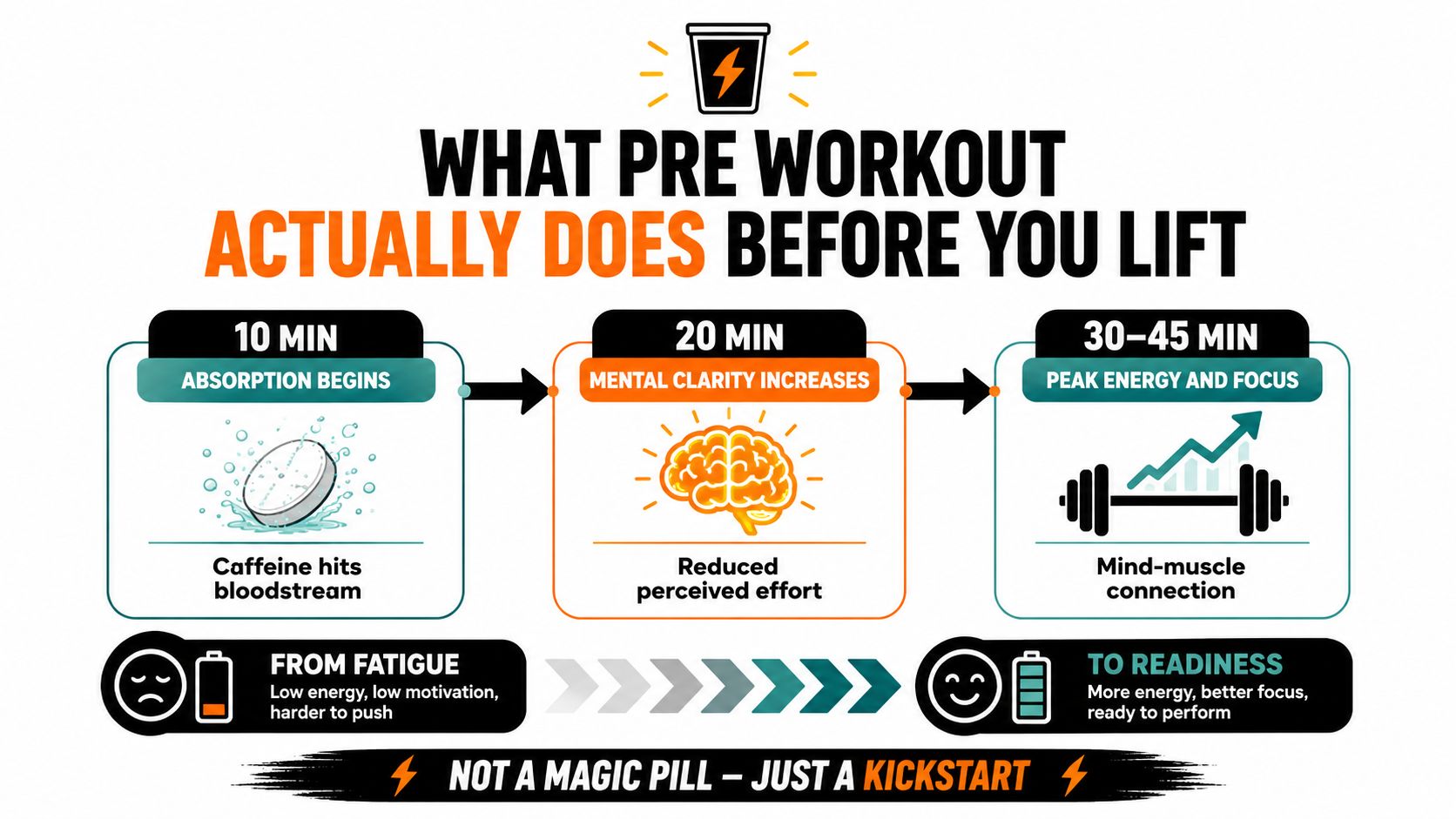
The realistic expectation
Caffeine is the best-studied ingredient in many formulas. An international sports nutrition position stand pooled 46 randomized placebo-controlled studies and found a small but significant ergogenic effect, including benefits for aerobic endurance, strength, muscular endurance, power, jumping performance, and exercise speed (International Society of Sports Nutrition position stand).
That means pre-workout is best viewed as an amplifier of an existing training stimulus. If you arrive rested, fueled, hydrated, and ready to work, it may help you express a little more output. If you arrive exhausted and underfed, it may only make you feel more awake while your underlying performance remains limited.
Before changing the supplement, check the basics with this guide to the best foods to eat before the gym. For a broader look at how energy production fits into health, a mitochondrial health guide for energy boosters can provide useful background.
The Core Ingredients That Drive Performance
Not every ingredient on a brightly colored label has equal support. The most useful way to read a formula is to ask what the ingredient is supposed to change, then match that change to your workout.
Caffeine
Caffeine acts on the central nervous system and reduces the sense of fatigue associated with exercise. In practical terms, a lifter may feel more willing to attack a heavy set, maintain effort through repeated sets, or stay mentally present during a long session.
Consider a bench-press workout. Without caffeine, you might stop a set when the effort feels overwhelming. With a suitable dose, you may keep your technique together for another repetition or approach a planned top set with more drive. That doesn't guarantee a heavier lift, and the benefit may be small, but small differences matter when the session depends on repeated quality efforts.
Beta-alanine
Beta-alanine supports the formation of muscle carnosine, which helps buffer the acidity associated with high-intensity work. Its role makes more sense in repeated efforts that create a strong burning sensation, rather than in a single low-repetition strength attempt.
A practical example is a circuit of high-repetition goblet squats, rowing intervals, or repeated hill sprints. The relevant outcome isn't an instant surge of strength. It's the possibility of sustaining hard work when local muscular discomfort would normally force you to slow down. Skin tingling can occur, so that sensation shouldn't automatically be interpreted as proof that the formula is working.
Nitrates and nitric oxide support
Nitrates from sources such as beetroot can contribute to nitric oxide production, a pathway associated with blood-vessel widening and muscle oxygen delivery. Citrulline-based products are also commonly marketed around blood flow and exercise support, but the precise effect depends on the product and dose.
For a runner doing hill repeats, the practical target is smoother repeated effort and better tolerance of the aerobic demand. For a lifter, the experience may be more about blood flow and a fuller feeling in the working muscle than a dramatic increase in maximal strength.
| Ingredient | Mechanism | Best Training Scenario |
|---|---|---|
| Caffeine | Reduces perceived effort and increases alertness | Strength sets, intervals, endurance work |
| Beta-alanine | Supports buffering during intense efforts | High-repetition lifting and repeated sprints |
| Nitrates | Supports nitric oxide pathways and blood flow | Endurance sessions and sustained high-intensity work |
A 2016 study of a caffeine-containing pre-workout found significant increases in anaerobic peak power and mean power compared with placebo in recreationally trained men. A later review also described improved physical performance alongside possible cardiovascular changes, reinforcing the main point: pre-workout is a short-term exercise tool, not a replacement for consistent training (review of multi-ingredient pre-workout research).
Caffeine Dosing and Timing for Real Training
Caffeine dose should relate to body weight, experience, and the time of day. Sports nutrition guidance identifies 3–6 mg per kilogram of body weight as a commonly studied range, while also noting that doses below 3 mg per kilogram, around 200 mg for many adults, can still improve performance (GSSI caffeine and exercise performance update).
For a 75 kg trainee, that studied range works out to 225–450 mg. Treat that as an evidence range, not a target you must reach. Beginners and people who rarely use caffeine should start at the lower end, while regular users may notice less from the same amount.
Timing matters because you want the effect during the main work, not after you've finished. Taking caffeine roughly 30–45 minutes before training is a practical approach, but your response can vary based on food, sleep, and individual sensitivity.
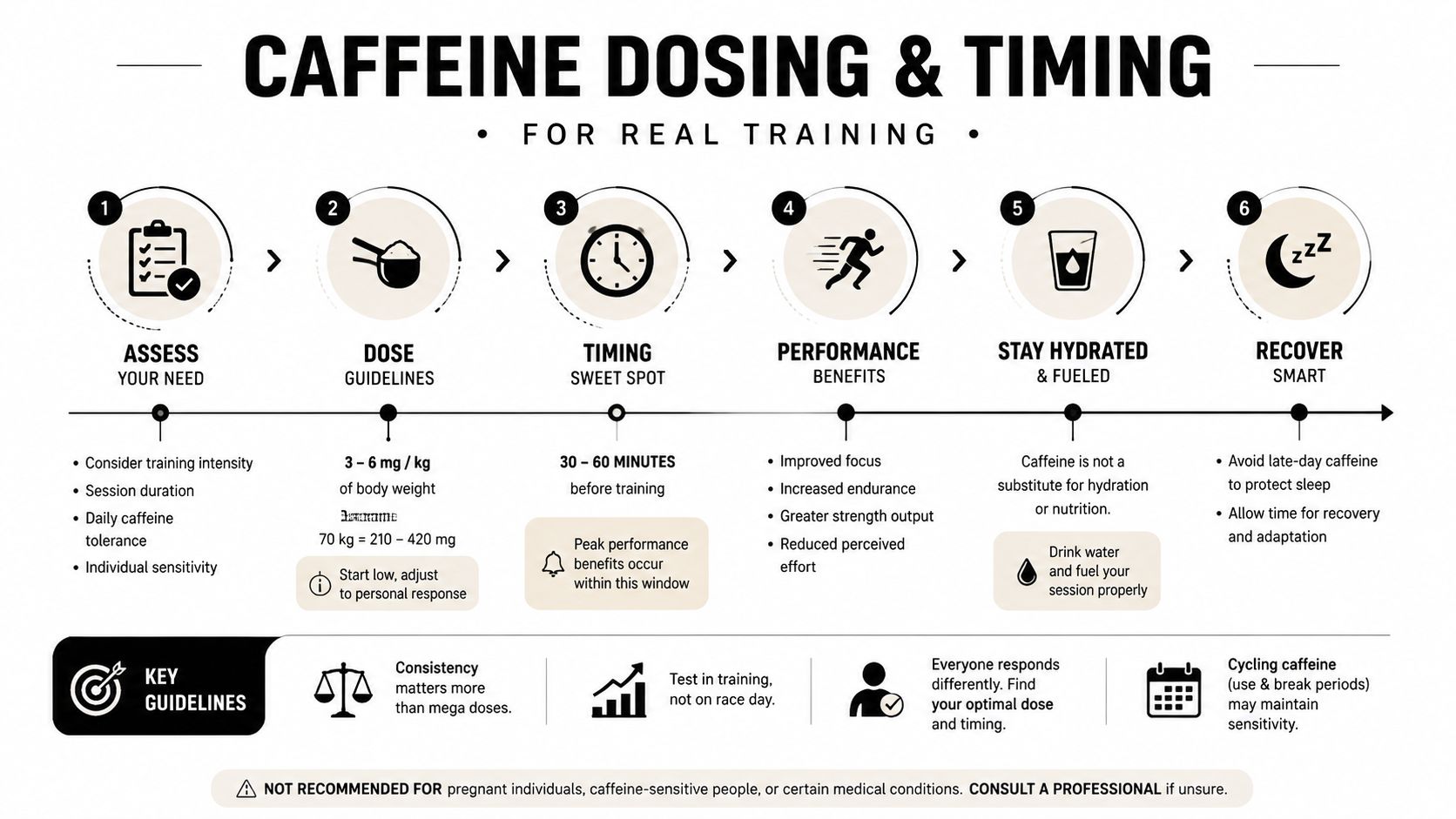
Why higher isn't automatically better
Higher doses of 5–9 mg per kilogram don't appear to add extra performance benefit, while side effects become more likely. Jitters, nausea, racing heartbeat, and loss of concentration can replace the calm force production you wanted in the first place.
Practical rule: Use the smallest amount that improves your session without damaging your sleep, appetite, or focus.
Don't count only the scoop. Coffee, energy drinks, tea, and fat burners can all contribute to your total stimulant intake. If you're comparing coffee with a supplement, this iced coffee guide from Vendmoore Enterprises can help you think about caffeine as a beverage ingredient rather than assuming every serving feels the same.
Choosing Between High-Stim and Stim-Free Formulas
The right formula depends less on the most impressive label and more on when you train, how you respond to caffeine, and what tomorrow's recovery requires.
A high-stim product suits someone who trains early, tolerates caffeine well, and needs strong alertness for demanding work. A low-stim formula can provide a gentler lift when you want focus without turning the session into a test of how long you can ignore jitters. A stim-free product removes caffeine from the decision and lets you focus on ingredients associated with blood flow, buffering, or training support.
| Formula Type | Typical Caffeine | Best Use Case | Main Trade-Off |
|---|---|---|---|
| High-stim | 200–400 mg | Early, demanding sessions for tolerant users | Greater risk of jitteriness, sleep disruption, and appetite changes |
| Low-stim | 100–150 mg | Moderate alertness and flexible training times | Less noticeable stimulation |
| Stim-free | None | Late workouts or stimulant-sensitive users | No caffeine-related alertness boost |
The listed caffeine ranges are common product categories described in the brief, not universal standards. Always check whether a label includes multiple stimulant sources, especially proprietary blends that make the total amount difficult to assess.
A 6 p.m. lifter may feel energetic during the workout but sleep poorly after a large stimulant serving. That trade-off can erase the value of the session by reducing recovery and making the next day harder. A 5 a.m. trainer may have a stronger reason to consider caffeine, provided the dose doesn't create anxiety, stomach upset, or a later crash.
Tolerance also changes the experience. People who use caffeine daily often report that the same serving feels less dramatic over time, so stepping down or taking occasional breaks may restore sensitivity. Don't chase the original rush by repeatedly increasing the scoop.
Read labels carefully with this guide to understanding nutrition labels. The best product is the one that supports today's training without sabotaging sleep, appetite, or tomorrow's readiness.
Who Should Think Twice Before Using Pre Workout
Pre-workout isn't automatically appropriate for every gym-goer. The main concern usually comes from the stimulant component, but multi-ingredient formulas can make it difficult to identify what caused a reaction.
Stimulant-sensitive users
If a small amount of caffeine makes you anxious, shaky, nauseated, or unable to focus, a high-stim formula is a poor experiment. Choose a stimulant-free product, use food and hydration instead, or skip pre-workout altogether. A strong sensation isn't the same as better performance.
Late-day trainers
People who train after work should consider sleep before excitement. If caffeine remains active when you're trying to wind down, the workout may feel productive while the night becomes less restorative. For late sessions, stimulant-free support is often more sensible than trying to overpower fatigue with a large dose.
Blood pressure and heart concerns
Anyone with hypertension, an arrhythmia, a history of heart problems, or a strong family history of cardiac disease should discuss stimulant use with a qualified clinician before taking pre-workout. Even moderate caffeine can affect heart rate and blood pressure, and intense resistance training already places substantial demand on the cardiovascular system.
Medication users
Caffeine and other stimulants may interact with medicines, including MAOIs, some SSRIs, ADHD stimulants, and blood-pressure drugs. The effect could include stronger side effects, changes in heart rate or blood pressure, increased anxiety, or altered medication response. A pharmacist or prescribing clinician can check your specific medication list more reliably than a supplement label can.
If you're unsure whether your medication and pre-workout belong together, ask a pharmacist before the first scoop.
More than half of surveyed users reported side effects such as nausea, racing heartbeat, and skin reactions, while commonly reported reactions include insomnia, headaches, digestive upset, jitteriness, and increased heart rate (Mayo Clinic Press guidance on pre-workout safety). Stop using a product that causes alarming symptoms and seek medical help for severe or persistent reactions.
Pre Workout in a Real Training Week
Maya trains at 5:45 a.m. before work. She isn't looking for a dramatic rush. She wants enough alertness to warm up properly, follow her lifting plan, and stay focused before the day begins.
She takes a low-stim formula containing 150 mg of caffeine about 45 minutes before training, alongside oats and a banana. The food matters because the supplement isn't carrying the entire workload. On a deload week, when the training demand is deliberately lower, she skips the scoop and keeps the meal.
Devon trains at 7 p.m. and aims to sleep at 11 p.m. A caffeinated product would create a poor trade for him, even if it made the first few sets feel easier. He uses a stim-free pump formula based on citrulline and glycerol instead, then evaluates it by session quality, digestion, and sleep rather than by how intense the tingling feels.
Neither approach is universally correct. Maya's early schedule creates room for caffeine, while Devon's evening schedule makes recovery the priority.
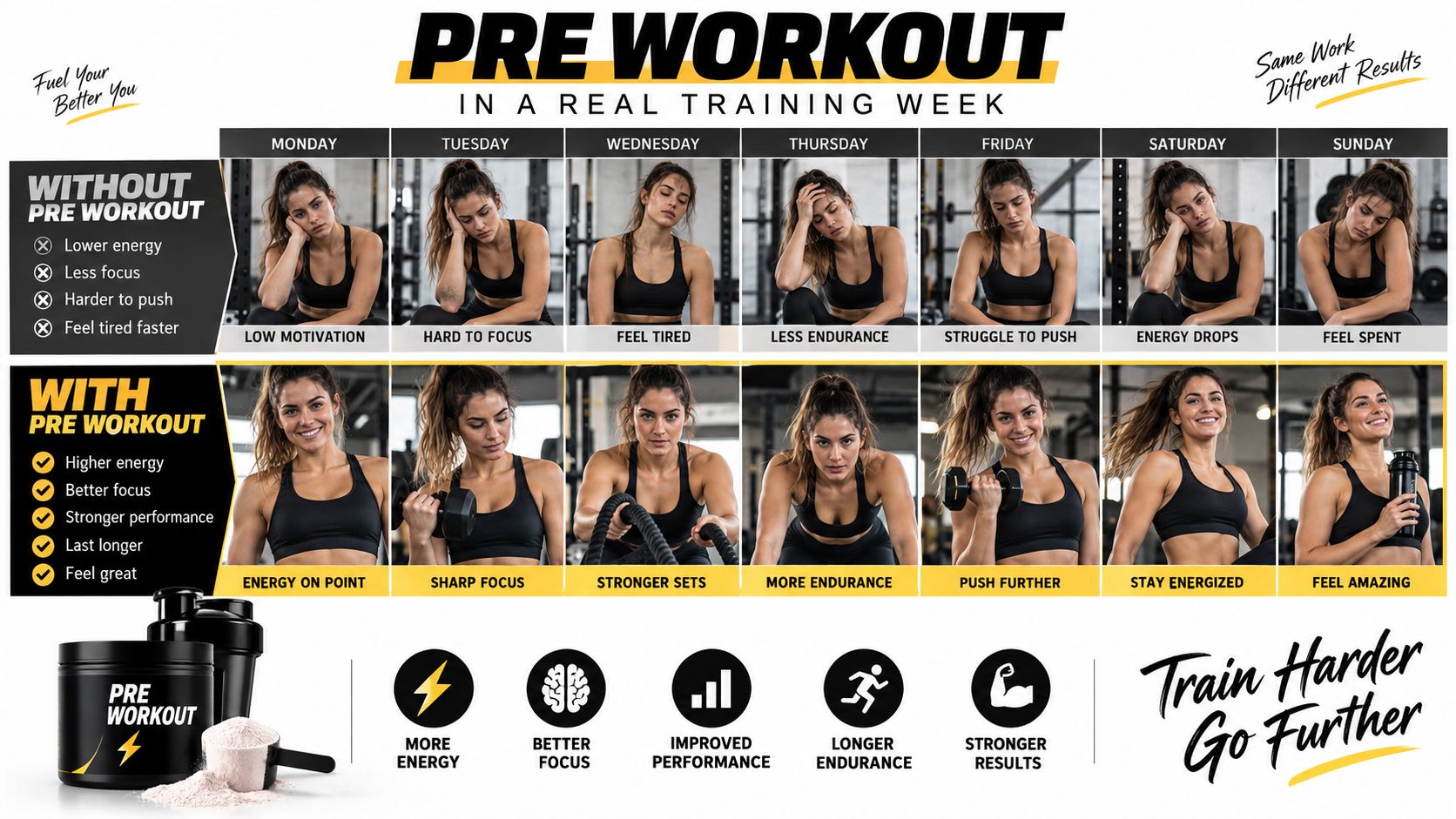
Adjust the plan when the context changes
During a calorie deficit, a full serving may feel harsher because the user has less food in the stomach and less overall energy available. A half serving can be a more practical test than assuming the usual amount remains comfortable.
Appetite is another useful signal. Devon might find that a very large stimulant serving suppresses his post-workout meal, which makes it harder to eat afterward. If the supplement helps the workout but disrupts recovery nutrition, the formula isn't serving the full week.
Use a simple log for a few sessions:
- Record the dose: Include caffeine from coffee and other drinks.
- Rate the session: Note focus, output, and perceived effort.
- Check the evening: Track digestion, appetite, and sleep quality.
The same product can feel useful for heavy strength work, unnecessary for an easy session, and counterproductive during a recovery week. Your schedule and response should decide its place.
Making Pre Workout Part of a Bigger Nutrition Plan
Pre-workout works best as the final layer of preparation, not the foundation. Before reaching for a scoop, check whether you slept adequately, ate enough across the day, drank enough fluid, and supplied your muscles with usable fuel.
Protein supports the broader recovery plan. A practical daily target is to spread 20–40 grams of protein across meals, using foods that fit your preferences and digestion. Carbohydrates are especially useful before moderate or high-intensity training, so a small meal containing oats, fruit, rice, toast, or another familiar source can be more valuable than adding another stimulant.
Hydration deserves equal attention. Start training with fluids already in place, and consider electrolytes if you sweat heavily or train in hot conditions. An empty stomach can also make a strong formula feel rough, so test new products with a modest meal rather than during an important workout.
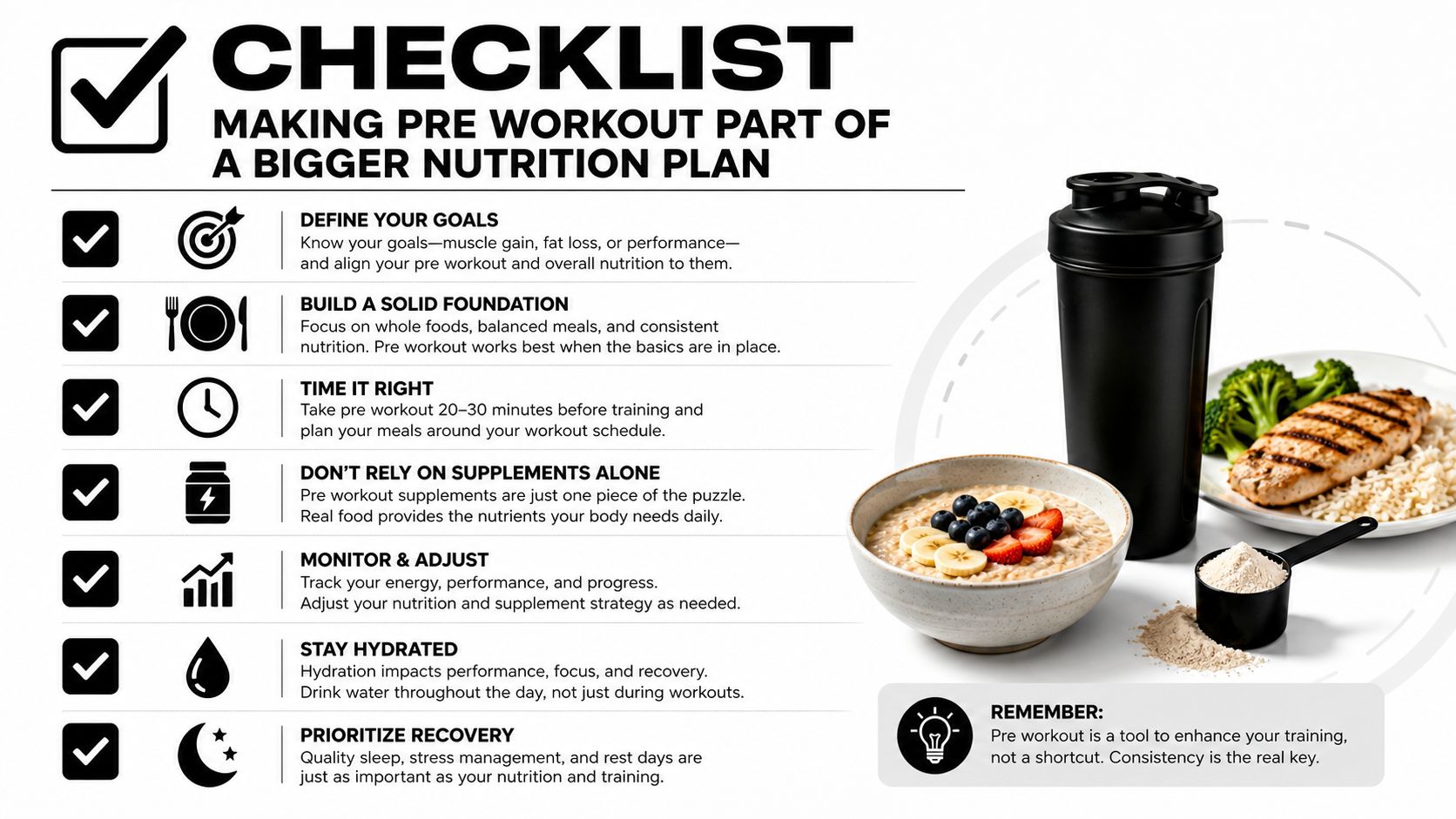
A simple decision tree
- Sleep was poor: Skip the scoop if you slept under six hours. Stimulants can mask tiredness without restoring recovery.
- Meals are missing: Eat something suitable first. A supplement shouldn't stand in for basic fuel.
- The workout is light: A caffeine-only option, or no supplement, may be enough.
- The session is demanding: Consider a full formula only if you tolerate it and the performance ceiling matters.
- Training is late: Choose stimulant-free support to protect sleep.
For runners, meal timing and digestion deserve special attention, so this pre-run fuel guide from Swift Running is a useful companion. For gym sessions, compare familiar options with these pre-workout snacks for muscle gain.
Gym Snack offers plant-based savory protein snacks built around pea protein, with 15g or more of protein per serving and 30g or more per bag, plus bold Cheddar Cheeze and Jalapeño Cheddar Cheeze flavors. Visit Gym Snack to explore a convenient protein-forward option for the meal gap before or after training, then choose your pre-workout strategy based on sleep, food, timing, and tolerance rather than the size of the scoop.