

You're standing in front of a cooler, or scrolling through a retail page, and every bottle looks like it's solving the same problem. Chocolate, vanilla, coffee, plant-based, “clean,” “lean,” “advanced,” “meal replacement.” If all you want is a practical answer to where can I buy protein shakes, the short version is easy: almost everywhere.
The harder question is whether the place you buy them is the right place for your goals, budget, stomach, and routine. Most store pages don't help much. They show stock status, pickup, delivery, and brand names, but they rarely help you compare nutrition, ingredient quality, or whether a shake is even the best format for the job.
Navigating the World of Protein Shakes
You're in a rush after training, hungry enough to buy the first bottle you see, and every label is making the same promise. More protein. Better recovery. Less sugar. Cleaner ingredients. The hard part usually is not finding a protein shake. It is choosing the right buying channel for what you need that day.
That choice matters more than people expect. The same shake can be a smart convenience buy at one moment and a waste of money at another. A single bottle from a pharmacy or gas station can save the day when you need something now. A case bought online or at a warehouse club usually makes more sense if you already know the brand, flavor, and ingredients sit well with you.
Why store listings rarely answer the real question
Retail pages are built to help you complete a purchase, not make a good decision. They show flavor, price, shipping, and stock status. They rarely help you compare protein source, sweeteners, texture, or whether a ready-to-drink shake is even the best fit for your routine.
That gap is easy to see on Sam's Club protein shake listings. You can sort by brand and package size, but you still have to do your own work on trade-offs like cost per serving, ingredient quality, and whether buying in bulk is smart or just convenient.
Practical rule: Easy to buy does not mean smart to buy.
I use a simple filter. Buy based on the job.
If the job is emergency convenience, almost any decent ready-to-drink option can work. If the job is daily nutrition, price per serving and ingredient quality matter a lot more. If the job is staying full between meals, a sweet shake may not do it, and a gas station protein shake option versus real food snack is worth comparing before you grab another bottle.
A practical way to choose where to buy
Start with three questions:
- How soon do you need it? Right now, later today, or after a few days of shipping?
- How specific are your needs? Whey, plant-based, lactose-free, low-sugar, higher-calorie, or meal-replacement style?
- What are you optimizing for? Lowest cost, easiest access, broader selection, or better ingredients?
Those answers usually point you to the right channel faster than brand marketing does.
A nearby store wins on speed. Online wins on selection. Bulk retail wins on cost if you already know what works for you. And sometimes the better answer is no shake at all. If you need something more filling, less sweet, or easier on your stomach, savory whole-food options can beat a bottled shake without much effort.
Mass Retailers The Convenience Option
You're already at the grocery store buying chicken, oats, and fruit, and you realize you're out of protein shakes. Mass retail works well for that moment. It lets you solve the problem without making a separate supplement run, and sometimes that convenience is the right call.
What mass retail gets right
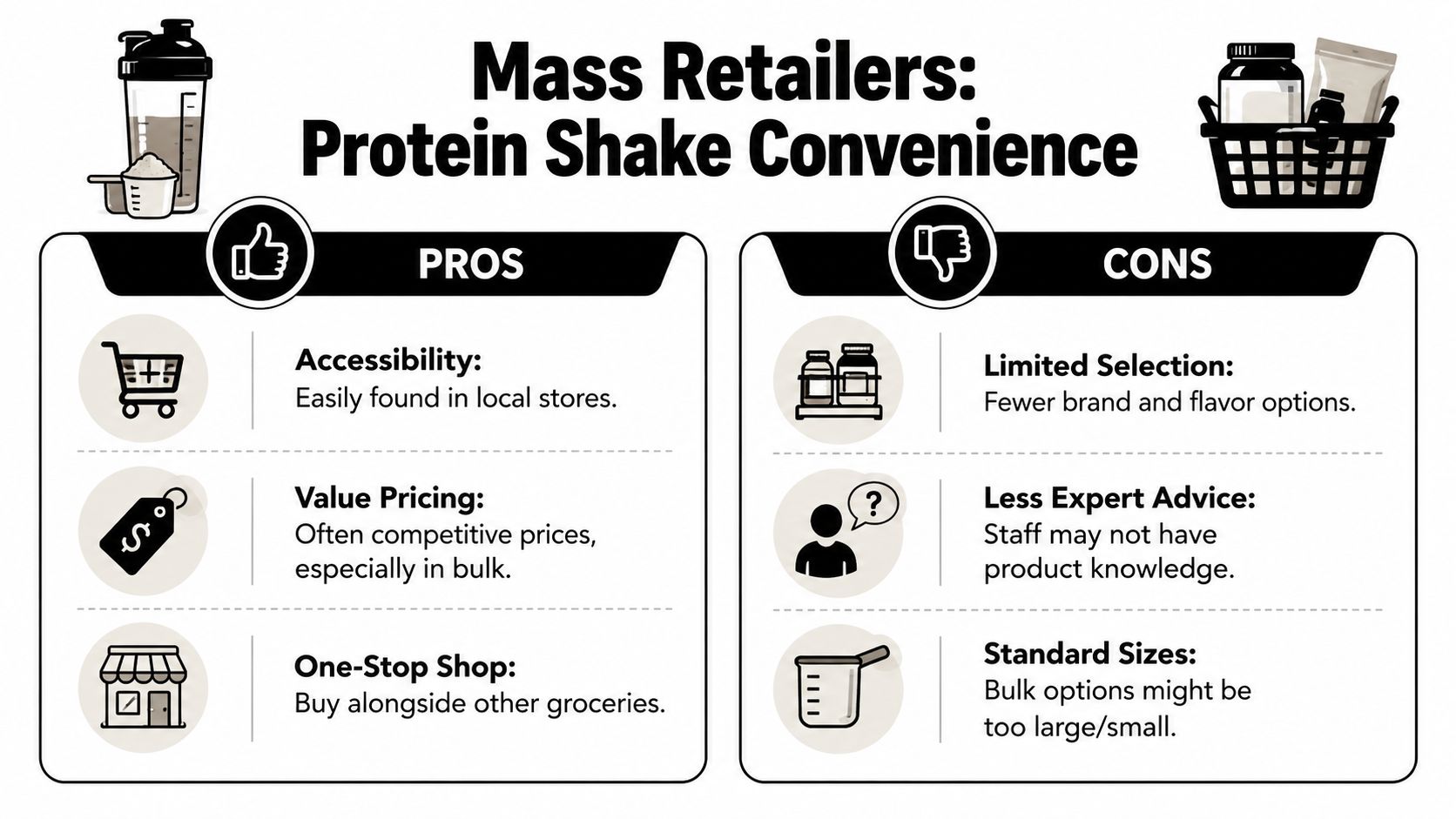
Big grocery chains, supercenters, pharmacy retailers, and warehouse clubs are strong on one thing: speed. You can add shakes to a normal errand list, compare a few mainstream options on the shelf, and leave with something usable the same day.
That matters more than people admit. A decent shake you buy is often more useful than a “perfect” one you keep meaning to order.
Mass retail also gives you a few practical advantages:
- Easy restocking: Good for people who already know the brand, flavor, and protein type they tolerate well.
- Multipack savings: Warehouse clubs can cut the per-bottle cost if you're buying a shake you use regularly.
- Emergency coverage: Useful after training, during travel, or on a workday when a real meal is not happening.
If your shopping habits include quick stops at convenience stores, it helps to compare gas station protein shakes and real food snack options before defaulting to another sweet bottle.
Where mass retail falls short
The shelf looks broad, but the actual choice is often narrow. You'll usually find the biggest national brands, a few store-brand options, and whatever flavor mix the retailer thinks will sell fastest.
That creates trade-offs.
If you want a basic ready-to-drink shake with familiar macros, mass retail is efficient. If you need to avoid sugar alcohols, artificial sweeteners, gums, lactose, or thicker meal-replacement formulas, the label work gets harder and the shelf gets thinner fast.
I also wouldn't assume a shake is the best answer just because it is in front of you. For some people, a salty, savory snack with protein does a better job of keeping hunger down than a cold sweet drink.
| Buying factor | What mass retail does well | Where it can disappoint |
|---|---|---|
| Convenience | Fast pickup during normal errands | Easy impulse buy with little comparison time |
| Price | Good promos, store brands, and club packs | Low sticker price can hide weaker ingredients |
| Selection | Covers common ready-to-drink products | Limited niche formulas and specialty diets |
| Quality control | Easier to inspect packaging in person | Ingredient quality still varies a lot by brand |
One more practical point. Mass retail is usually a better place to buy a shake you already trust than to experiment with a full case of something new. Bulk only saves money if you finish it.
If you're stocking up for regular use and want a simple powder option instead of paying bottled-shake prices, you can also optimise health with this protein.
Best use case for this channel
Mass retail is best for repeat purchases, same-day needs, and no-drama convenience. It is weaker for shoppers who need tight ingredient standards or want to compare a lot of formulas side by side.
Use this channel when speed matters, when you already know what works, or when you need a stopgap option. Skip it when the better purchase is more research, or when the better meal is actual food.
Online Marketplaces and Specialty Stores
The shopping experience splits in two directions. Specialty nutrition stores help when you want guidance. Online marketplaces help when you want range.
Specialty stores for focused shopping
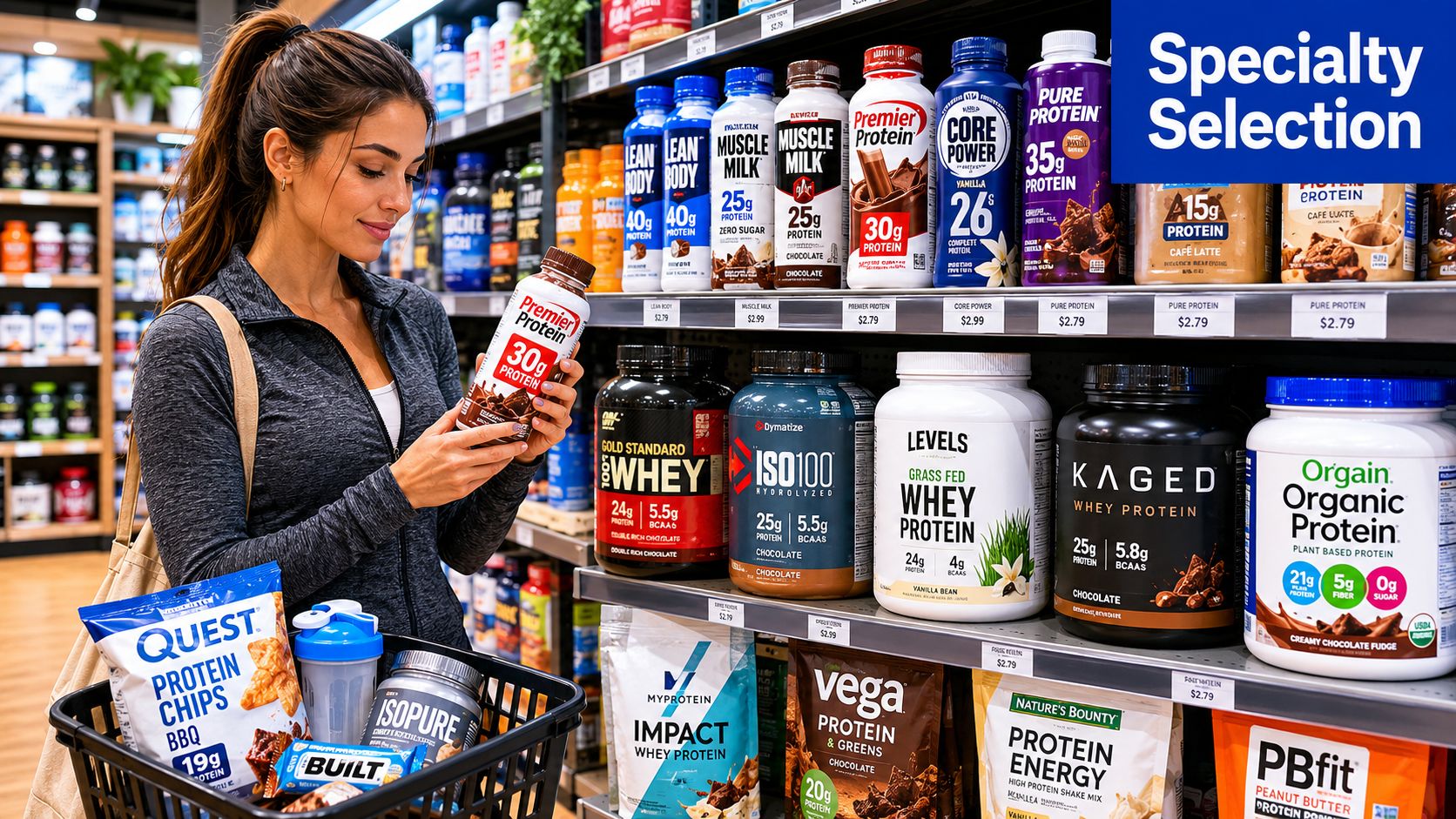
A store like GNC or a local supplement shop can save time if you're the kind of buyer who wants to ask questions out loud. That matters more than people think. If you're deciding between whey, plant-based blends, meal-replacement formulas, or low-sugar options, talking through your use case with someone who knows the shelf can be helpful.
This channel is best when:
- You want help narrowing choices
- You're buying for a specific training goal
- You need to compare similar products quickly
The catch is obvious. You'll often pay more for that guidance, and the store's recommendations still need your own label-reading and common sense.
Online marketplaces for selection
Online retail is where you go when the physical shelf isn't enough. It's also where you'll usually get the broadest access to flavors, pack sizes, and harder-to-find formulas. In major retail channels, product pages often pair nutrition details with local store availability. For example, Target lists protein products with 30 g protein, 1 g sugar, 4 g carbs, and 160 calories, and directs shoppers to a store locator, while BOOST says its advanced shake is sold nationwide through ShopRite, Meijer, Amazon, and the brand's own site, as shown on Target's product listing.
That kind of detail helps when you want to compare before buying. It's also useful if you're trying to avoid driving from store to store hoping something is in stock.
If you're looking beyond ready-to-drink bottles and want a cleaner whey option to compare against the mainstream shelf, you can optimise health with this protein as one example of the more focused products that online shopping makes easier to find.
The online downside nobody likes
The problem with online marketplaces isn't lack of choice. It's too much choice, plus uneven quality control between sellers and listings. Product pages can look nearly identical while hiding big differences in ingredient lists, flavor systems, and return policies.
A simple rule helps:
If a product is new to you, buy a smaller format first when possible. Bulk only makes sense after you know the taste, texture, and digestion are all acceptable.
Online is usually the best channel for hard-to-find formulas. It's not always the best channel for first-time experimentation.
How to Choose the Right Protein Shake for You
You buy a shake because the day got busy, then end up with something too sweet for breakfast, too light for a meal bridge, or too heavy right after training. That is the selection problem. The right product depends less on shelf appeal and more on the job you need it to do.
Start with Your Goal
A post-workout shake, a stopgap between meetings, and a breakfast replacement ask for different things. One product can cover two of those roles. It rarely handles all three well.
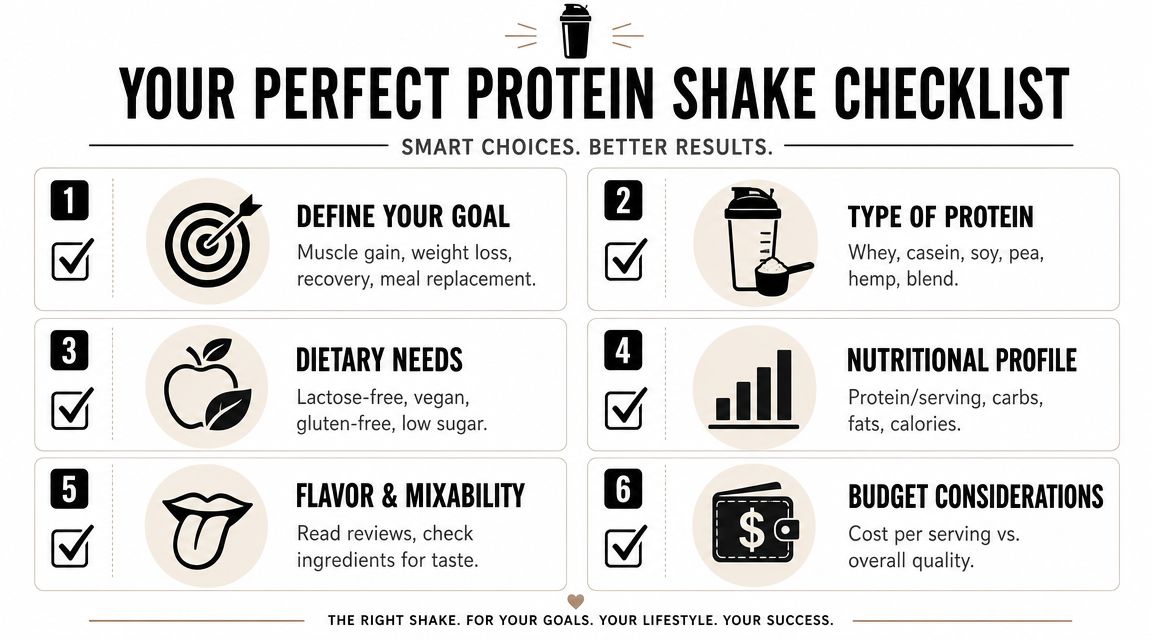
Use this filter before you buy:
-
Recovery after training
Go for something easy to drink and easy on digestion. Fast convenience matters more than a long ingredient list full of extras you do not need. -
Meal support during busy days
Look beyond protein grams. Texture, calories, fiber, and fat all affect fullness. A thin sweet shake can leave you hungry again in an hour. -
Convenience insurance
If this is your backup plan for chaotic days, shelf stability and portability matter more than perfect taste.
If you need a starting point for daily intake, RepStack's protein guidance is a useful way to estimate a reasonable target before you compare products.
Check the label with a skeptical eye
Protein grams get the headline, but they do not tell the whole story. Two shakes with similar macros can feel completely different in real use. One may sit fine and keep you going until lunch. Another may taste good for three days, then become something you force down.
Read the label in this order:
- Protein source: Whey works well for many people, but not everyone tolerates dairy. Plant blends can be a better fit, though texture is often less smooth.
- Sugar and sweeteners: Low sugar sounds good on paper, but some sweetener systems leave an aftertaste or bother digestion.
- Calories: Higher is not worse. It depends on whether you need recovery support, a snack, or a partial meal.
- Ingredient list: Shorter is not always better, but a formula packed with fillers and gums deserves a closer look.
- Format: Shelf-stable bottles win on convenience. Powders usually win on cost per serving.
For a closer look at macros, ingredients, and serving sizes, this guide to protein shake nutritional information helps when you are comparing labels side by side.
A quick visual can help before you buy:
Don't ignore contaminant screening
Flavor sells the product. Testing tells you more about whether you should trust it.
Consumer Reports tested popular protein powders and shakes and found that several products exceeded its level of concern for lead. It also explains that the FDA has no action levels for lead in protein powders or shakes, which makes independent testing worth checking before you commit to a product you plan to use often, as covered in Consumer Reports' protein product testing review.
Major retail placement does not guarantee strong screening.
Match the shake to your body, not the marketing
This part is simple, but it saves money. Buy for tolerance and repeat use, not for label hype.
- If dairy bothers you: start with non-dairy options and read labels carefully
- If you use shakes often: prioritize taste fatigue, ingredient quality, and digestion
- If you only need one in a pinch: convenience can matter more than a perfect formula
- If sweet shakes wear you out: do not force it just because the bottle is trendy. A savory, whole-food option may be the better tool
The best choice is the one that fits your routine, sits well, and solves a real problem without becoming another thing in your bag that never gets used.
Beyond Shakes On-the-Go Savory Protein Snacks
A lot of people asking where they can buy protein shakes are really asking a different question. They want portable protein that doesn't derail their day. A shake is only one answer to that.
The problem is that many shakes lean dessert-like. Sweet, creamy, flavored like candy, and not always satisfying in the way actual food is. That works for some people after training. It's less appealing if you're tired of drinking your protein or you want something with crunch and salt instead of another bottle of vanilla.
When shakes stop being the right tool
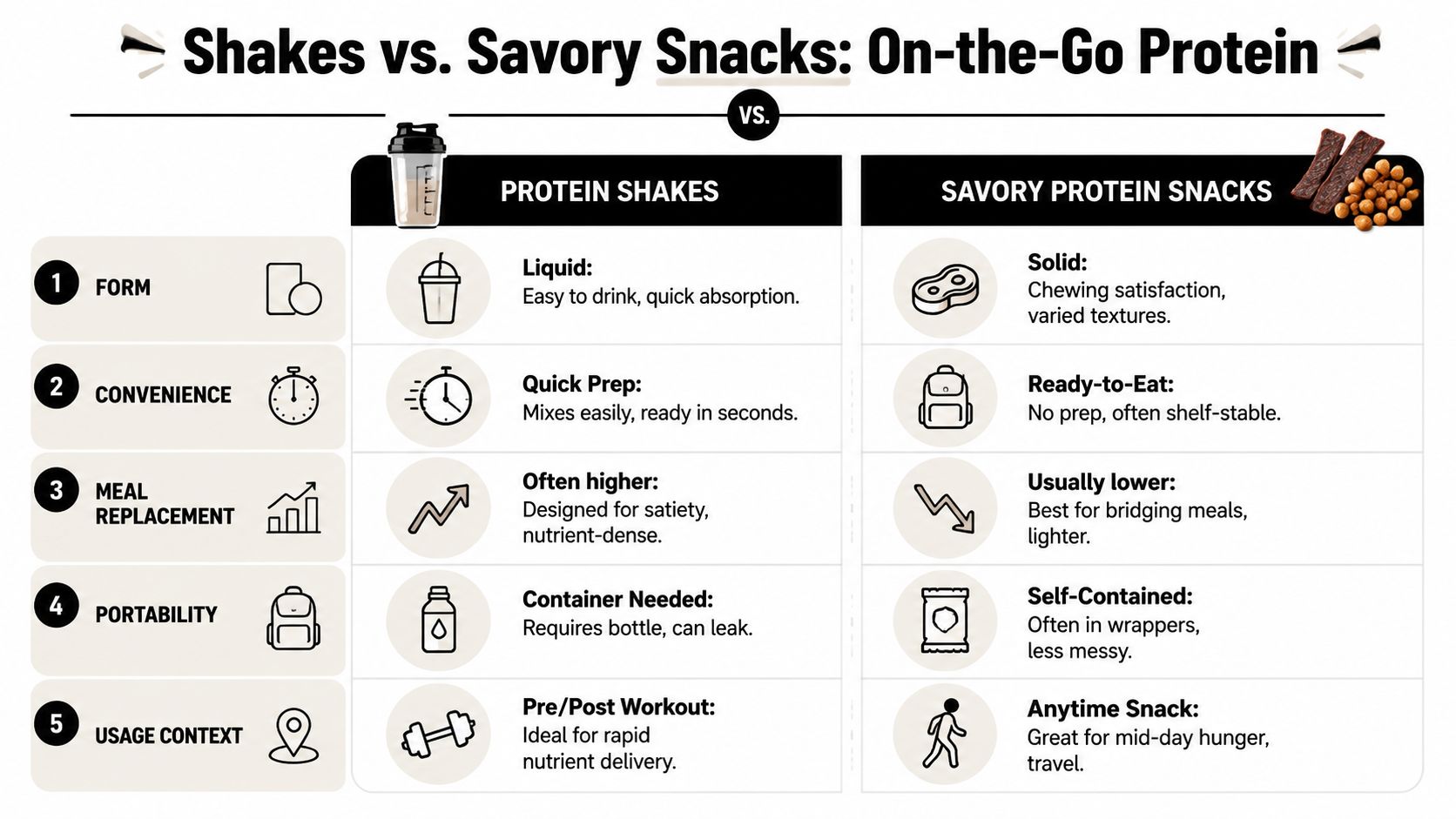
Protein shakes are useful when you need speed, low prep, or a drinkable option after training. They're less convincing when you want chewing satisfaction, whole-food feel, or an option that doesn't taste like a melted milkshake.
This is also where retail search gets frustrating. Mainstream listings rarely help shoppers compare dietary-fit needs very well. Walmart does group some ready-to-drink shakes by attributes like plant-based, low carb, and dairy-free, but chains such as CVS, Walgreens, GNC, and Sam's Club tend to focus more on brand assortments and convenience than deeper ingredient-based filtering, which is part of the gap discussed on CVS protein drinks and shakes listings.
That gap matters if your real need is:
- Plant-based protein
- Dairy-free portability
- Low-sugar everyday use
- Allergen-conscious snacking
A lot of buyers don't need “more shake options.” They need a protein format they can actually live with.
Savory options solve a different problem
Savory protein snacks don't replace every shake. They do solve some issues shakes handle poorly.
| Situation | Protein shakes | Savory protein snacks |
|---|---|---|
| Post-workout appetite is low | Often useful | Sometimes less appealing |
| Midday hunger at work | Can feel unsatisfying | Usually more food-like |
| Travel and commuting | Bottles can be bulky | Easier to stash in a bag |
| Sweet flavor fatigue | Common problem | Usually the better fix |
If you've hit the point where you don't want another chocolate or vanilla bottle, look at alternatives to protein shakes instead of forcing the format.
One example is Gym Snack, which sells a plant-based savory protein snack built around pea protein and designed for people who want a crunchy, non-sweet option. That's not a replacement for every recovery shake, but it is a practical fit for people who want portable protein without dairy, soy, or gluten and without the usual dessert-style profile.
Use the format that matches the moment
This is the decision:
- Drink a shake when you need fast protein and minimal prep.
- Eat a savory protein snack when you want convenience with texture and a more food-like experience.
- Skip both when a normal meal is available and makes more sense.
Plenty of people default to shakes because stores push them harder. That doesn't mean they're the best answer for every busy day.
Making Your Smartest Protein Purchase
You're standing in front of a cooler after training, staring at a 12-pack online later that night, and wondering if either option is smart. That decision usually comes down to three things. How fast you need it, how much you want to spend, and how picky you are about ingredients and taste.
The best buying channel depends on the job. Mass retail is useful for grab-and-go convenience. Online is usually the better choice when you want a specific formula, flavor, or dietary filter. Specialty stores make more sense if you want a staff member to help you compare whey, plant-based blends, sugar alcohols, or ready-to-drink versus powder.
A simple framework helps:
- Buy from grocery, pharmacy, or warehouse retail when speed and easy restocking matter most.
- Buy from specialty stores when ingredient questions matter enough to justify a slower trip and a higher price.
- Buy online when you already know what you want and care more about selection than instant access.
- Choose a non-shake option when sweet drinks leave you bored, hungry, or dealing with ingredients that do not sit well.
Protein shakes are everywhere now. That makes shopping easier, but it also creates a lot of mediocre choices that look better on the label than they taste or digest.
Convenience can get expensive fast.
Warehouse packs and same-day delivery work well if you already know the product agrees with you. If you are testing a new shake, a huge case is often the wrong buy. I'd rather pay a little more for a smaller trial than get stuck with twelve bottles of something chalky, overly sweet, or hard on the stomach.
The same rule applies to specialty products. If you want protein plus caffeine, the category keeps branching out beyond standard shakes and tubs. This protein coffee K-cups guide is a good example of how specific these formats have become.
The smart purchase is the one that fits real use. Buy the cheapest reliable option for products you already use often. Pay for convenience when timing matters. Skip the shake entirely when a normal meal or a savory snack does the job better.
If you want an option beyond sweet ready-to-drink bottles, Gym Snack offers savory, plant-based protein snacks built for portable everyday use. It's a practical route for people who want protein with crunch, simpler ingredient expectations, and an allergen-conscious format that fits gym bags, workdays, and travel.