

An allergy-friendly protein bar should make clear which allergens it excludes. That can help people with specific allergies find options, but the label is not a promise of suitability for everyone. Read the full ingredient list and cross-contact information for your own allergens.
What Makes a Protein Bar Truly Allergy Friendly

The term “allergy-friendly” needs context: which allergens are excluded, and what steps address cross-contact? Look for specific information about the product rather than treating a general marketing description as a safety guarantee.
Think of yourself as a nutritional detective. Your job is to look past the flashy claims on the front of the wrapper and dig into the real evidence: the ingredient list.
In the U.S., the FDA recognizes nine major food allergens for specific labeling requirements, often called the “Big 9.” These are important to check, but they are not the only foods that can cause allergies.
An allergy-friendly protein bar should clearly identify the allergens it excludes. Avoiding the nine major U.S. allergens does not guarantee that a product suits every allergy. Check your specific allergens, the full ingredient list and cross-contact information each time. See FDA information on food allergies.
Getting a handle on these allergens is your first step toward finding a snack that actually works with your body.
The Big 9 Allergens to Watch For
When you're scanning that ingredient label, these nine ingredients are your primary persons of interest. You'll find that most conventional protein bars contain at least one of them, and sometimes several. Knowing this list is your best line of defense.
- Peanuts: A classic base for flavor and texture in countless bars.
- Tree Nuts: Almonds, cashews, and walnuts are everywhere, used for their healthy fats and protein.
- Milk: This is a big one, as it's the source of whey and casein—two of the most popular protein supplements on the market.
- Eggs: Often used as a protein source or a binder to hold the bar together.
- Soy: A very common plant-based protein that, unfortunately, is also a major allergen for many.
- Wheat: Can show up as a source of gluten or be used as a binding agent.
- Fish and Shellfish: While pretty rare in protein bars, you can sometimes find derivatives used in certain supplements or flavorings.
- Sesame: Recently added as the ninth major allergen, sesame can pop up in certain savory or global-inspired flavor profiles.
The good news? As more people demand clean ingredients and transparency, we're seeing more high-quality options than ever before. For anyone looking for completely nut-free protein bars, there are now excellent products made just for you. It just takes a sharp eye and a little bit of know-how to find trusted fuel that won't let you down.
Uncovering Hidden Allergens in Protein Bars
If you have food allergies, you know the protein bar aisle can feel like a minefield. What should be a simple grab-and-go snack often turns into a high-stakes game of "spot the hidden allergen." Many of the most popular bars are loaded with ingredients that can cause serious reactions, so finding a truly safe option means knowing exactly what to look for—and why.
Think of it like being a detective. Your first step is to get familiar with the common culprits that show up again and again on ingredient labels. These aren't necessarily "bad" ingredients, but they are major allergens that hide in plain sight. Once you understand their role in the bar, you can spot them a mile away. For a full masterclass on this, our guide on how to read nutrition labels is a great place to start.
The Usual Suspects in Protein Bars
So, why do the same ingredients appear in almost every bar? It usually comes down to protein, texture, or flavor. Here are the main offenders you need to keep an eye on:
- Whey and Casein: These are powerhouse proteins derived from milk. Whey is famous for its fast absorption, which is why it’s a go-to for post-workout recovery. Casein, on the other hand, digests slowly, keeping you full longer. Both are big no-gos if you have a dairy allergy.
- Soy and Soy Lecithin: Soy is a complete plant-based protein that's also very cost-effective. You'll also see soy lecithin, which is an emulsifier—a fancy word for an ingredient that creates a smooth, uniform texture and stops the bar from falling apart.
- Peanuts and Tree Nuts: A classic for a reason. Nuts like almonds, peanuts, and cashews add healthy fats, extra protein, and that satisfying crunch we all love. They often form the entire flavor base of a bar.
- Wheat and Gluten: Often used as binders, wheat and gluten help hold the bar together and contribute to a chewy, satisfying texture.
The fact that these ingredients are so common is exactly what makes finding an allergy-friendly protein bar so tough. For example, with nut allergies affecting roughly 2-3% of the U.S. population, the need for safe, convenient snacks is more than just a preference; it's a serious public health concern. You can learn more about how the industry is (slowly) adapting at Eating With Food Allergies.
This quick-reference table identifies common ingredients and possible alternatives. An alternative is useful only if it fits your individual allergies and the finished product’s label and manufacturing information.
Common Allergens in Protein Bars and Possible Alternatives
| Common Allergen | Why It's Used | Possible Alternative, Depending on Your Allergies |
|---|---|---|
| Milk (Whey/Casein) | High-quality, fast or slow-digesting protein source. | Pea protein, pumpkin seed protein, or sunflower protein. |
| Soy (Protein/Lecithin) | Complete plant protein and a texture-enhancing emulsifier. | Sunflower lecithin (for emulsifier) and other plant proteins. |
| Peanuts & Tree Nuts | Adds protein, healthy fats, flavor, and a crunchy texture. | Seeds (sunflower, pumpkin, chia), toasted chickpeas, or puffed quinoa. |
| Wheat; gluten-containing grains | Acts as a binder to hold the bar together and create a chewy texture. | Gluten-free oats, tapioca fiber, or brown rice syrup. |
These substitutions are not safety guarantees. Check the full ingredient list for every allergy you have, and review advisory statements. Gluten-free labeling addresses gluten; it is not a general food-allergy claim.
Don't dismiss the cross-contamination warning on a label. It's not just legal jargon. A bar made on the same equipment as an almond-butter bar can easily pick up traces of nuts, which is more than enough to trigger a reaction.
Why Manufacturing Practices Matter
Cross-contact is the unintentional introduction of an allergen into a food. It can occur through shared equipment or other manufacturing steps, so the ingredient list and manufacturing controls both matter.
Claims and certification marks can provide useful information, but their scope matters:
- Gluten-Free: In the U.S., this claim must meet FDA requirements, including gluten below 20 parts per million. Third-party certification is separate, and programs may use different criteria. FDA does not endorse a particular certification program. See FDA guidance.
- Dedicated Nut-Free Facility: Ask which allergens the claim covers and what controls apply to ingredients and production. The statement alone is not proof of independent certification or zero cross-contact risk.
Use claims alongside the full label and your allergy care plan. If the information is unclear or contradictory, contact the manufacturer before choosing the product. See FDA guidance on cross-contact and free-from claims.
Choosing Your Protein Source
The protein is the heart of any protein bar, but when you’re hunting for an allergy-friendly option, the source of that protein is everything. Think of it as the engine in your car—different types deliver different levels of performance, but some come with major baggage for sensitive systems. The three main players in the protein bar world are whey, soy, and other plant-based proteins, and each has its own set of trade-offs.
Whey is a milk protein, so people with milk allergy need to avoid it. Lactose intolerance concerns milk sugar and is a different condition; the product’s lactose content and individual tolerance matter. See NIDDK on lactose intolerance.
This is a huge deal because so many bars on the shelf rely on whey.
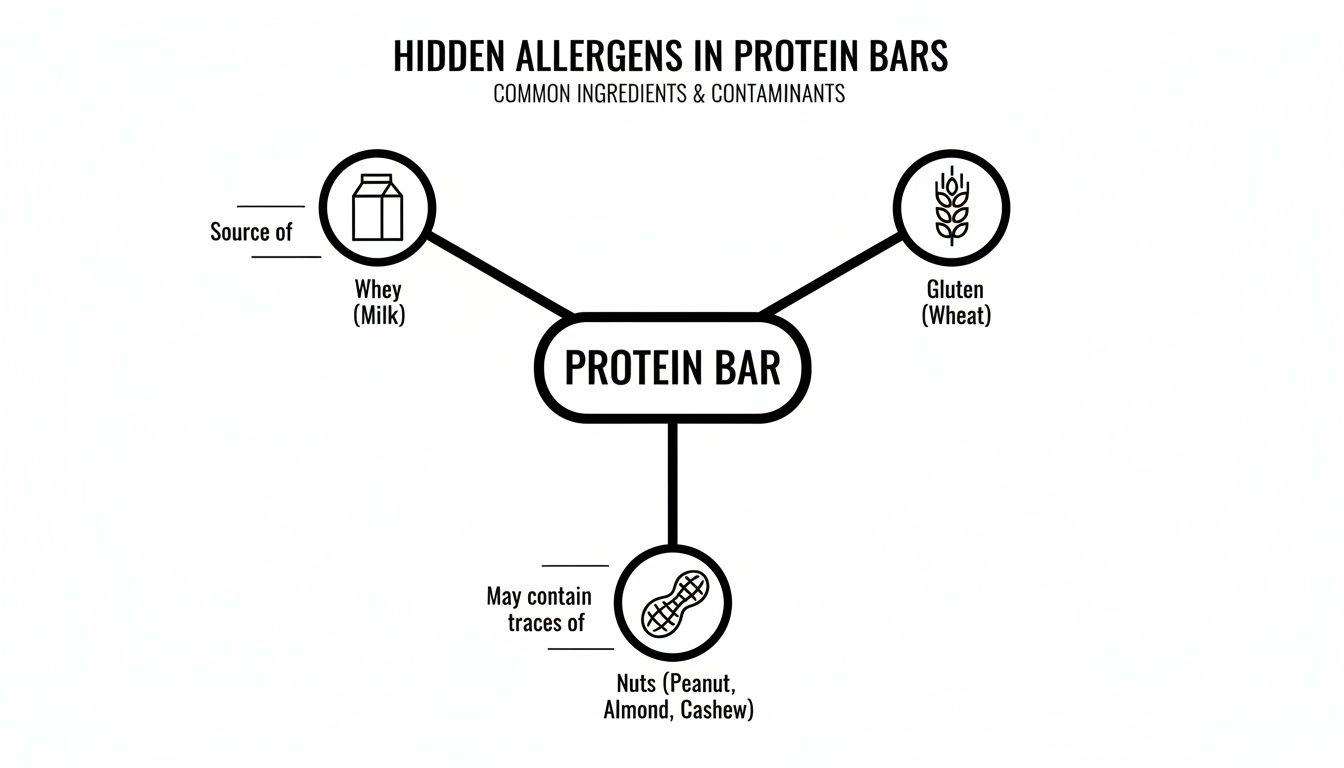
As you can see, whey, gluten, and nuts are the usual suspects, often lurking behind flashy health claims. This is where reading the fine print becomes so important.
The Plant-Based Power Players
This challenge with whey naturally leads us to plant-based proteins. Soy protein is a common alternative because it’s one of the few plant sources that provides a complete amino acid profile, much like animal proteins. The catch is that soy is one of the "Big 9" major allergens, which immediately rules it out for a significant number of people looking for a truly safe snack.
Pea protein is another option, but its suitability depends on the person and the whole product. Consider both nutrition and individual allergy needs:
- Individual Allergy Needs: Pea protein can cause allergic reactions, including in some people with peanut allergy. Do not infer that a finished bar is free from other allergens because it uses pea protein. See Health Canada’s guidance.
- High-Quality Protein: It delivers a powerful dose of protein, easily rivaling many animal-based options.
- Packed with Iron: It’s a fantastic source of iron, a mineral that’s absolutely critical for energy and keeping your performance levels high.
- Digestive Tolerance: Bloating can relate to several ingredients and serving size. Switching protein sources does not guarantee symptom relief.
Pea protein can be one way to meet protein needs, but it does not guarantee freedom from allergic reactions or digestive symptoms. Choose around your individual needs and check the whole product. Our comparison of pea protein vs. whey protein discusses the protein sources.
Making the Right Choice for You
The huge demand for cleaner, safer snacks is reshaping the market. The nut-free protein bar segment alone has exploded into a USD 1.48 billion global market, with North America driving 38% of sales by 2026 as more of us actively hunt for snacks without top allergens.
The right protein source depends on your specific allergies, nutritional needs and preferences. Avoid an allergen you have been diagnosed with, rather than assuming that whey, soy or pea is universally better or worse. For anyone with dietary restrictions, exploring plant protein options can help identify products to assess against those needs.
A plant-based protein can be useful when it fits your needs, but a plant-based label or a specific protein source cannot establish allergen safety. The full ingredient list and cross-contact information remain essential.
Looking Beyond Protein for Fullness and Energy
When you’re picking out an allergy friendly protein bar, the protein count is obviously important. But if you’re only looking at protein, you're missing half the story. A great bar does more than just feed your muscles; it should also be your ally in managing hunger and keeping your energy steady all day long.
This all comes down to the feeling of being full and satisfied, a concept known as satiety. A truly effective protein snack works with your body’s natural hunger cues, not against them.
When you eat a high-protein snack, your body responds by releasing key appetite-regulating hormones. Two of the most important players here are GLP-1 (glucagon-like peptide-1) and PYY (peptide YY). Think of them as messengers that travel to your brain to deliver the news: "We're full, you can stop eating now." This hormonal response is incredibly helpful for controlling cravings and preventing you from overeating later.
The Savory Advantage for Sustained Energy
Here’s where you can really see the difference between a savory, protein-forward snack and a sweet, dessert-like bar. So many protein bars on the market are basically candy bars in disguise, packed with sugar, sugar alcohols, or artificial sweeteners to hit that sweet spot.
Sure, they might give you a quick jolt of energy. The problem is, it’s almost always followed by a nasty crash. That spike-and-crash cycle is your body reacting to a flood of sugar, which sends your blood sugar soaring and then plummeting, leaving you tired, foggy, and often hungrier than you were before.
A savory snack built around quality protein and fiber, on the other hand, gives you a much more stable and sustained release of energy. For active people, this is a perfect fit for macro-friendly goals. Snacks with 15g+ protein, like many pea-based options, that are also low in cholesterol and free of seed oils, help trigger those fullness signals from PYY and GLP-1. This makes them ideal for both pre- and post-workout fuel. You can get more great fitness-focused insights from the experts at The Real Food Dietitians.
A savory protein snack delivers what your body actually needs: steady fuel to power you through a workout or a hectic afternoon. It works from the inside out to curb hunger, rather than just temporarily satisfying a sweet tooth.
Why Satiety Is Key for Your Goals
Once you understand how different snacks affect your body’s hunger signals, you can start making much more strategic choices. Whether you're focused on building lean muscle, managing your weight, or just trying to avoid that 3 p.m. slump, the right protein bar can make a huge difference.
Here’s a quick breakdown of how a snack designed for satiety can help you:
- Pre-Workout Fuel: It gives you the energy you need to perform your best without feeling weighed down or bloated.
- Post-Workout Recovery: It helps repair your muscles and keeps you feeling full until your next meal, so you’re not tempted to grab the first unhealthy thing you see.
- Weight Management: By keeping you satisfied for longer, it naturally helps you reduce your overall calorie intake without feeling deprived.
When you choose a bar that prioritizes high-quality protein and keeps sugar to a minimum, you're getting more than just a snack. You’re investing in better performance, better appetite control, and a more stable source of energy to fuel your day.
Your Allergy Friendly Shopping Checklist

Finding a protein bar with food allergies takes more than a quick look at the front label. Use a repeatable label check, and ask the manufacturer or your clinician when information is unclear.
Your 5-Step Label Check
Use these steps to gather the information needed to assess a product against your specific allergies. An absent warning or a short ingredient list does not by itself settle that question.
-
Read Ingredients and Any “Contains” Statement. Major allergens must be identified by source in the ingredient list or a separate Contains statement; that separate statement is not always required. If your allergen is listed, do not choose the bar.
-
Check Advisory Warnings. If a warning names your allergen, avoid that product. These statements are voluntary and their wording does not rank risk; no warning does not guarantee absence of cross-contact.
-
Check All Your Specific Allergens. The nine major U.S. allergens are not the complete list of foods that can cause allergy. Review the full ingredient list and ask about unclear ingredients.
Ingredient-list length and familiar names do not establish allergy safety. Focus on your specific allergens and the product’s labeling and cross-contact information.
-
Check the Scope of Claims. If a certification is important to you, verify who issued it and what it covers. A dedicated-facility statement alone does not establish independent certification, and gluten-free does not mean free from every allergen.
-
Resolve Uncertainty Before Choosing. Ask the manufacturer about ingredients and cross-contact controls if the label does not answer your questions. Follow your allergy care plan; pea protein or another protein source alone is not a safety check.
The Market Is on Your Side
The good news is that this process is getting easier. Just a decade ago, in the mid-2010s, finding a decent allergy-friendly protein bar was a real struggle. Today, the industry has changed dramatically, with the nut-free segment in particular seeing huge growth.
This boom shows a major shift where fitness needs and allergy awareness have finally aligned. As you can learn in more detail from reports on the nut-free protein bar market, consumer demand is creating way better options. By following this checklist, you can tap into this growing market and find a bar that’s truly right for you.
Got Questions? Let's Clear Up the Confusion
These common questions can help you interpret labels, but they cannot replace product-specific information or your allergy care plan.
Think of this as your final checklist for making safe, smart choices that actually fuel your body right.
Are 'Plant-Based' Bars Always Allergy-Safe?
No. A plant-based description does not establish that a bar is suitable for your allergies. Even vegan labeling is not a substitute for allergen information, as the Food Standards Agency explains. Check ingredients and advisory warnings for the actual product.
Plant-based bars may contain soy, peanuts, tree nuts or wheat, and pea protein can also cause allergic reactions. Look for your specific allergens rather than assuming all products in a category have the same exclusions.
Read the full ingredient list, any Contains statement and any advisory warning. Recheck each purchase because ingredients and manufacturing information can change.
What Does 'May Contain' Really Mean?
Pay close attention to this one. The "May Contain" warning is a manufacturer's way of telling you that cross-contamination is a real possibility.
Imagine a factory that makes one batch of peanut butter bars, then switches the line over to produce your "allergy-friendly" bar. Even with cleaning, tiny, invisible traces of peanut protein could easily find their way into your snack. For anyone with a serious allergy, that’s all it takes to trigger a reaction.
Treat a warning for your allergen as a reason to avoid that product. Advisory wording and dedicated-facility claims do not by themselves quantify risk or certify zero cross-contact. Ask the manufacturer if you need more information.
Are Savory Protein Snacks a Better Option?
Savory snacks can add variety, but flavor style does not establish allergen safety. Assess the specific product in the same way as a sweet bar.
Savory snacks can contain milk, soy, wheat, nuts or other allergens in their protein sources and seasonings. Read the complete label and cross-contact information instead of relying on flavor or marketing descriptions.
It's also why clean-label, savory snacks are becoming so popular. Transparency matters—some studies have even found that up to 37% of bars labeled "vegan" or "soy-free" can contain concerning levels of heavy metals, which underscores the need for truly trustworthy brands.
How Much Protein Is Enough in a Bar?
There's no single magic number, as the right amount of protein really hinges on what you're using the bar for. But we can work with some solid guidelines.
For a snack that genuinely tides you over between meals or to properly kickstart muscle recovery after a workout, look for a bar with at least 15-20 grams of protein. That's the sweet spot for signaling fullness to your brain and giving your muscles the building blocks they need.
The goal is to find a bar where protein is the main event, not just an afterthought. Otherwise, you’re basically eating a candy bar with a little protein sprinkled in. A quick glance at the macros will tell you if the protein content is worth the calories.
Ready to fuel your fitness with a snack that’s savory and crunchy? Gym Snack creates savory, plant-based protein snacks with 15g+ of protein per serving. Check the current ingredient and allergen information for each flavor before choosing one. Explore our cheesy, crunchy flavors and build your custom pack today!