

Finding a great-tasting protein bar is one thing. Finding one that's also safe for a nut allergy can feel like a totally different ballgame. This guide is here to cut through all that noise and confusion.
We'll walk through exactly how to choose nut free protein bars with confidence, making sure they're not just safe, but also genuinely packed with high-quality protein to help you crush your goals.
Why Nut Free Protein Bars Are So In-Demand
Not too long ago, searching for a nut-free protein bar felt like a niche, almost impossible task. Now, it's a full-blown mainstream movement. People aren't just trying to avoid allergens anymore; they're actively seeking out clean, effective fuel that works for all kinds of lifestyles, from dedicated athletes to busy parents on the go.
The market numbers tell the same story. The demand for safe, allergen-conscious snacks is skyrocketing, with the nut-free protein bar market expected to hit $2.8 billion in 2025. It's projected to keep growing at a massive 14.50% CAGR through 2033, a pace that leaves the general protein bar market in the dust. This isn't just a trend; it's a huge shift in what people want from their food. You can dive deeper into the full nut-free protein bar market analysis to see the data for yourself.
What This Guide Covers
Think of this as your complete playbook for navigating the growing world of nut-free options. We're going to bust the myth that "nut-free" has to mean bland, boring, or nutritionally weak. You'll see how innovative brands are using powerful plant-based sources like pea protein to deliver on both performance and flavor.
Here’s what you'll walk away knowing:
- How to Decode Allergen Labels: We’ll teach you how to read between the lines on warnings like "may contain traces of nuts" so you can shop without anxiety.
- The Truth About Key Ingredients: You'll get the real pros and cons of different nut-free protein sources.
- How to Pick the Right Bar for Your Goals: We'll help you find the perfect match, whether you need fuel for fitness, support for weight management, or a clean vegan snack.
By the time you're done, you'll know exactly what's in your bar and how to pick the one that's right for you.
The real challenge isn't just dodging nuts. It's finding a bar that delivers on protein, taste, and safety without making you compromise on any of them. A truly great nut free protein bar should actively support your health goals, not just be something you settle for.
Let's set the stage. We're about to turn what can be a stressful shopping trip into a simple, informed choice.
How to Read Labels for True Allergen Safety
If you have a nut allergy, navigating the snack aisle can feel like walking through a minefield. The key to staying safe isn't just about glancing at the front of the package. It's about becoming a skilled detective, knowing exactly what to look for on the back of every nut free protein bar.
Think of a food label as a contract between you and the manufacturer. The "Contains" statement is the most direct part of that contract—it’s legally required for the top major allergens. If it lists tree nuts or peanuts, that bar is obviously off the table. The real gray area, though, comes from the voluntary "May Contain" warnings, which can be much harder to interpret.
This flowchart can help you simplify the process, walking you through the right questions to ask when picking a safe and effective protein snack.
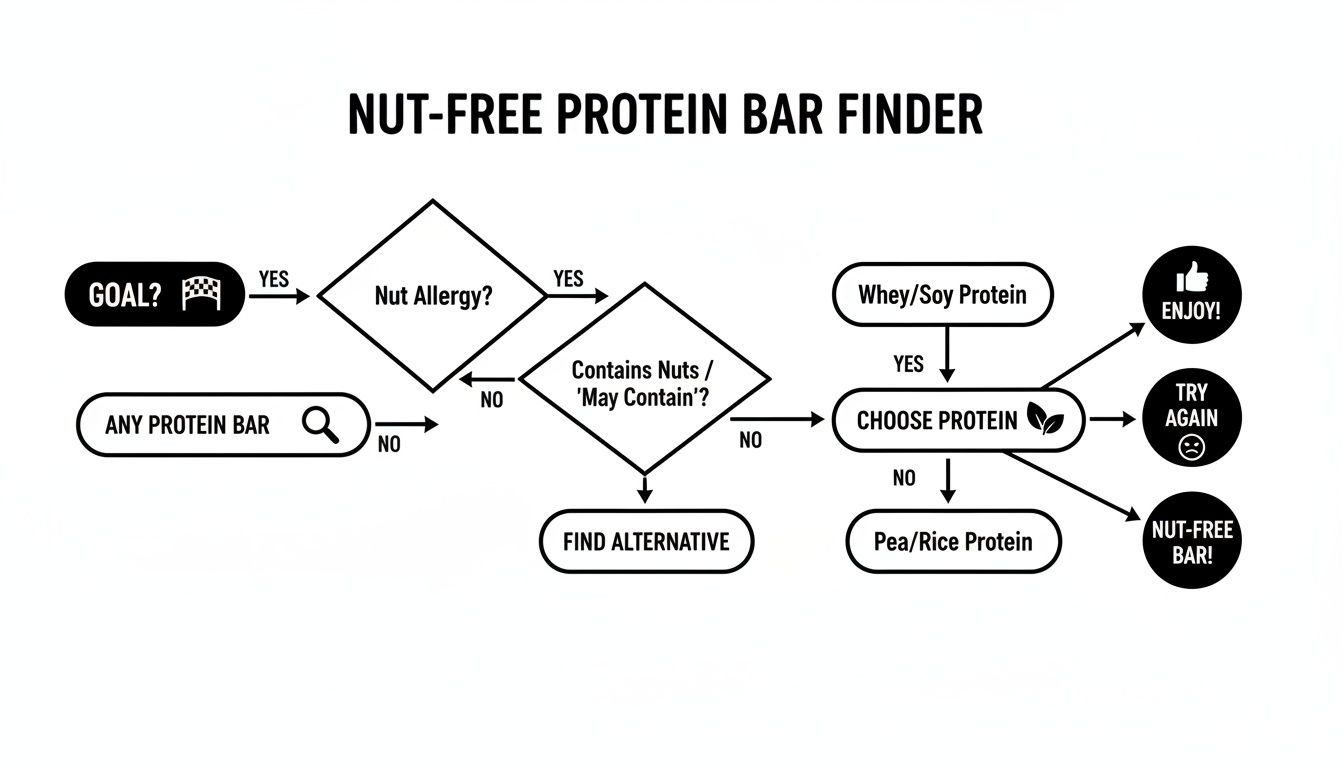
As you can see, finding the right bar is a step-by-step process. You start with your goal, confirm allergen safety, and then pick a protein source that works for you.
Decoding Precautionary Allergen Labels
So, what do those different warnings really mean? They aren't all the same, and knowing the difference is crucial for deciding what level of risk you’re comfortable with.
These warnings are voluntary, so their wording can vary. This table breaks down the common ones you’ll see.
| Label Warning | What It Means | Risk Level |
|---|---|---|
| "May contain nuts" | This is a general, catch-all statement. It means nuts aren't an ingredient, but cross-contamination is a possibility somewhere along the line. | Moderate |
| "Made on shared equipment with nuts" | This is much more specific. The bar was made on the same machinery as products that do contain nuts, which increases the chance of direct contact. | High |
| "Processed in a facility that also handles nuts" | This is the vaguest warning. Nuts are present somewhere in the same building, but that could mean anything from the next line over to a separate room. | Low to Moderate |
Understanding these labels is a skill. For a deeper dive, our guide on how to read nutrition labels offers even more tips.
The Gold Standard: Dedicated Nut-Free Facilities
For anyone with a severe allergy, the safest possible choice is a product made in a dedicated nut-free facility. This is the gold standard because it eliminates the risk of cross-contamination from the air, equipment, or even trace particles on surfaces.
A dedicated nut-free facility means that no tree nuts or peanuts are ever allowed on the premises. This provides the highest level of assurance, going way beyond simple cleaning protocols to guarantee complete allergen segregation.
When a brand invests in a dedicated facility, it’s a clear sign they take allergen safety seriously. While many companies have robust cleaning procedures, the complete physical separation of a dedicated facility offers a level of certainty that shared spaces just can't match. If your allergy is severe, this is the certification to look for.
Exploring the Best Nut-Free Protein Sources
When you grab a nut-free protein bar, you’re counting on a plant-based engine to fuel your body. But what's actually under the hood? Think of nut-free protein sources like different types of fuel for a high-performance car—some provide a quick burst of energy, while others are built for sustained, long-lasting performance.
Getting familiar with these core ingredients helps you look beyond the flashy packaging and pick a bar that genuinely works for your body and your goals. The most common players—pea, soy, and various seeds—each bring something unique to the table.
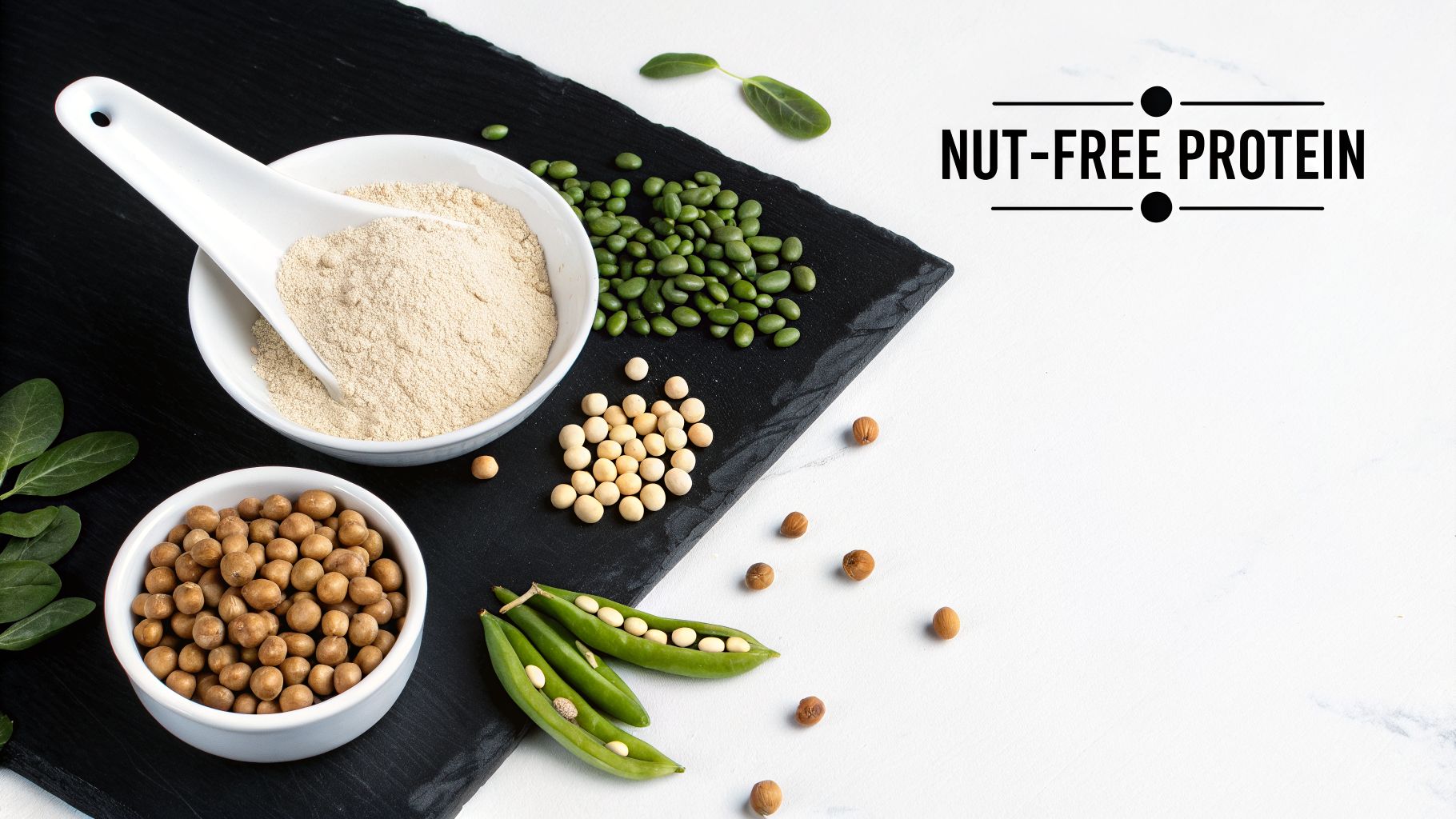
This kind of innovation is why the market is exploding. In 2026, protein snack bars—including nut-free options—held a massive 40.40% share of the global market. That dominance is projected to grow the industry from $5.81 billion to an incredible $10.59 billion by 2034. The rise of vegan and plant-forward diets is a huge part of that acceleration. You can dive into the numbers in this full nutritional bar market analysis.
Pea Protein: The Hypoallergenic Powerhouse
Pea protein has rightfully earned its spot as a superstar in the nut-free world. It's extracted from yellow split peas and is famous for being one of the most hypoallergenic proteins out there. This makes it an incredibly safe bet if you're navigating multiple food sensitivities.
But it’s not just about what it lacks. Pea protein is a complete protein, which means it packs all nine essential amino acids your body can't make on its own. These are the literal building blocks for muscle repair and growth, making it a fantastic choice for post-workout recovery.
Soy Protein: The Complete Vegan Staple
Soy has been a cornerstone of plant-based nutrition for decades, and for good reason. As another complete protein, it delivers the goods. It’s also known for its smooth texture and fairly neutral flavor, which makes it an easy and versatile ingredient for manufacturers to work with.
The main catch? Soy is one of the top major allergens, so it's not going to work for everyone. If you don't have a soy allergy, it remains a highly effective and reliable protein source. For a deeper dive into finding the right fuel for your workouts, check out our guide on the best plant protein for muscle gain.
Seed-Based Proteins: The Nutrient-Dense Contenders
Don't sleep on seeds. They offer a fantastic alternative, providing not just protein but a whole host of other micronutrients, healthy fats, and fiber.
- Sunflower Seed Protein: Usually found as sunflower seed butter or powder, it's rich in vitamin E and healthy fats with a distinct, slightly earthy flavor.
- Pumpkin Seed Protein: This is another nutrient-dense powerhouse, high in magnesium, iron, and zinc. It tends to have a mild, pleasant taste.
- Hemp Seed Protein: Hemp is a complete protein packed with a balanced ratio of omega-3 and omega-6 fatty acids, making it a great choice for overall wellness.
Each protein source delivers a different experience—from taste and texture to how it sits in your stomach. The best choice really comes down to your personal dietary needs, what you enjoy eating, and your fitness goals. Knowing what's inside helps you pick a bar that feels and performs best for you.
How Protein Choices Affect Your Fullness and Energy
Ever grab a snack only to find your stomach rumbling again thirty minutes later? The secret to lasting satisfaction versus a fleeting sugar rush often boils down to one thing: protein. A great nut-free protein bar does more than just plug a hunger gap; it works with your body's own chemistry to keep you genuinely full for hours.
Think of it like building a fire. A sugary snack is like throwing kindling on the flames—it burns hot and fast, then fizzles out, leaving you with an energy crash. High-quality protein, on the other hand, is like a dense, slow-burning log. It provides a steady, sustained release of energy that keeps you focused and productive.
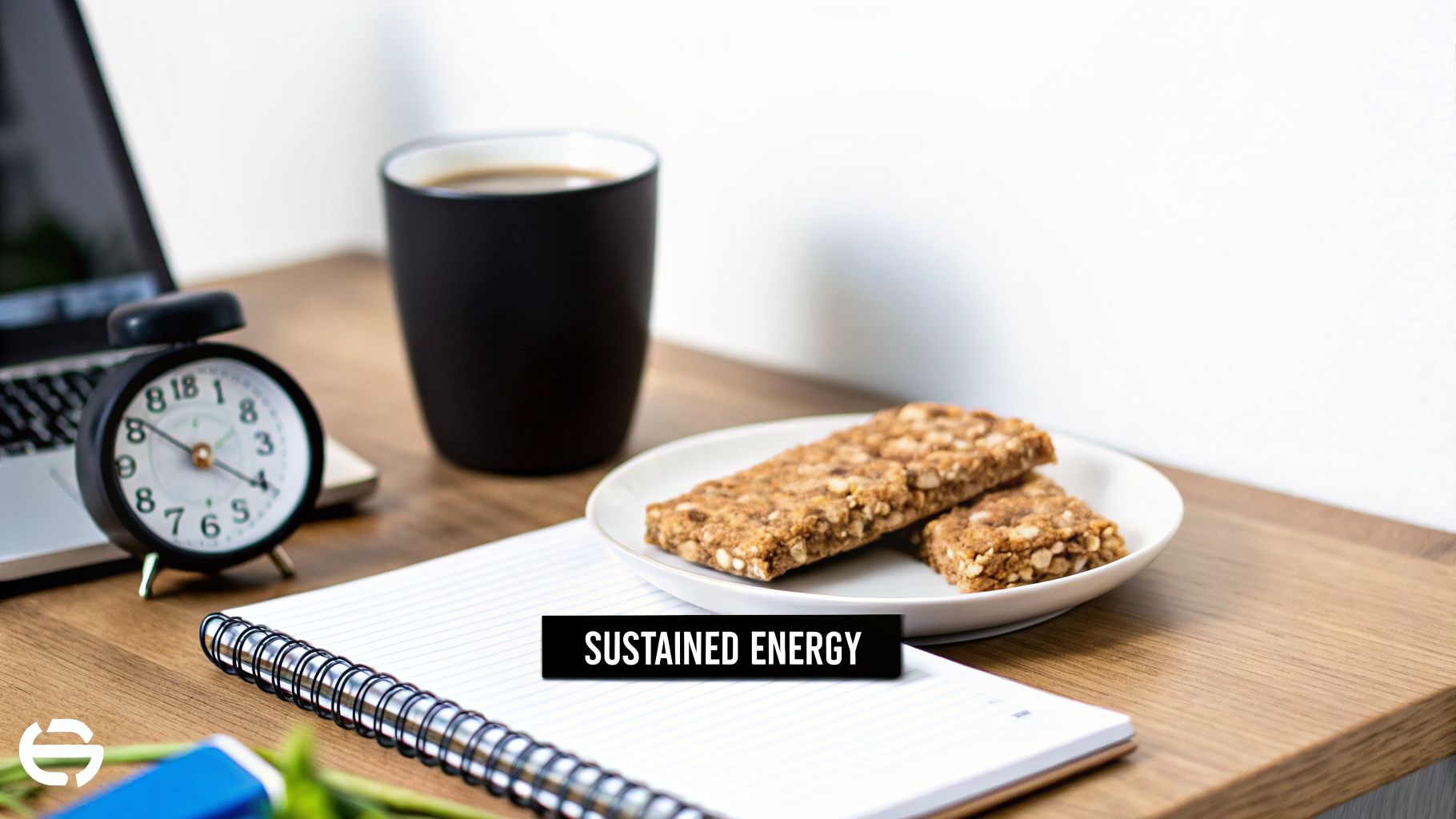
The Science of Satiety, Simplified
That feeling of being full and satisfied is called satiety, and it’s about a lot more than just a full stomach. It’s actually a sophisticated communication network run by your hormones. When you eat protein, your gut releases specific hormones that send powerful "I'm full" messages to your brain.
Two of the most important messengers in this process are:
- GLP-1 (Glucagon-like peptide-1): This hormone slows down how quickly food leaves your stomach, which is a major reason you feel full longer. It also tells your brain directly that you've had enough.
- PYY (Peptide YY): Released after you eat, PYY is a potent appetite suppressant. When your PYY levels go up, your hunger levels go way down.
By choosing a protein-rich snack, you're not just consuming calories—you're activating your body's built-in appetite control system. This is what makes protein such an effective tool for managing cravings and sticking to your health goals.
This hormonal teamwork is precisely why a snack with 15 grams of protein can keep you going for hours, while a sugary treat with the same calorie count leaves you hungry and reaching for more. The protein is working behind the scenes to regulate your hunger and stop that mindless grazing in its tracks.
Why Savory and Crunchy Matter, Too
Now, let's talk about another crucial piece of the satisfaction puzzle: taste and texture. Let’s be honest, most protein bars are basically candy bars in disguise. They’re sweet, chewy, and while they might hit the spot for a moment, they don't always crush the kind of deep, savory cravings that strike in the middle of the afternoon.
This is where a savory snack has a real edge. A bar that delivers a bold, cheesy flavor and a deeply satisfying crunch creates a multi-sensory experience that a soft, sweet bar just can't compete with. The physical act of chewing something crunchy can also heighten feelings of fullness and make a snack feel more substantial.
When you combine a powerful protein source like pea protein with a savory, crunchy profile, you get the best of both worlds. You trigger the powerful satiety hormones GLP-1 and PYY while also satisfying that primal urge for something flavorful and substantial. This makes a snack like Gym Snack more than just an alternative to sweet bars—it’s a smarter, more satisfying choice for lasting energy and complete craving control.
How to Choose the Right Bar for Your Goals
Not all nut free protein bars are created equal. Just like a marathon runner needs different shoes than a sprinter, the best protein bar for you is the one that lines up perfectly with your personal goals. To find it, you have to look past the flashy packaging and get real with the nutrition panel.
Think of it as building a custom toolkit for your health. What are you trying to accomplish? Are you looking to supercharge muscle recovery, manage your weight, or just survive a chaotic day with a convenient meal? Each of these goals demands a completely different nutritional blueprint to be effective. Once you learn to spot the key metrics—like protein, fiber, and sugar—you can turn a random snack choice into a strategic move that actually helps you get where you want to go.
Bars for Fitness and Muscle Recovery
If you’re grabbing a bar to refuel after a tough workout, your priority is simple: protein. And plenty of it. Right after you exercise, your muscles are like sponges, primed to soak up amino acids for repair and growth. That means you need a bar that’s packed with protein.
Here’s what to look for:
- High Protein Content: Aim for a bar with at least 20 grams of protein. This is the sweet spot for kickstarting muscle protein synthesis.
- Moderate Carbohydrates: Carbs are your friend here. They help restock the glycogen stores your muscles just burned through. A 2:1 or 1:1 ratio of carbs to protein is a great target.
- Minimal Added Sugar: You want functional carbs that provide energy, not a sugar rush that leads to a crash. Stick to bars that prioritize complex carbohydrates over simple sugars.
Bars for Weight Management and Satiety
When managing your weight is the main goal, the strategy shifts. Now, you’re looking for a bar that maximizes fullness and keeps cravings at bay so you don’t overeat later. The best tool for this job is a bar high in both protein and fiber, a dynamic duo for long-lasting satiety.
For weight management, your bar isn't just a snack; it's a tool for appetite regulation. A bar with 15+ grams of protein and 5+ grams of fiber can help trigger the release of fullness hormones like GLP-1 and PYY, keeping you satisfied for hours.
Look for a bar that keeps sugar and total calories in check while loading up on those satiety-boosting ingredients. If you want to dive deeper into this topic beyond just bars, dedicated guides on using protein powder for weight loss can offer even more strategies for optimizing your protein intake.
Bars as a Meal Replacement
We all have those days when a real, sit-down meal just isn't happening. A protein bar can be a total lifesaver, but a tiny 150-calorie snack bar isn't going to cut it. A true meal replacement needs to be nutritionally robust enough to actually stand in for a meal.
A solid meal replacement bar should have:
- A balanced macro profile: Look for a good mix of protein (at least 15-20g), healthy fats, and complex carbs.
- Higher calorie count: Something in the 300-400 calorie range is far more appropriate for replacing a meal.
- Added micronutrients: Some of the best meal replacement bars are fortified with vitamins and minerals to more closely mimic the nutritional profile of a complete meal.
The protein bar market is exploding as people look for more specialized options. While North America is expected to hold a massive 56.95% market share in 2025, the real action is in the allergen-friendly, plant-based, and low-sugar categories. This trend shows a clear demand for clean, goal-focused nutrition.
By matching the nutrition label to your specific goal—whether it's muscle gain, weight management, or sheer convenience—you can make sure your nut free protein bars are always working in your favor. For more tips on finding a snack that fits your calorie budget, check out our guide to low-calorie protein bars.
Your Questions About Nut-Free Protein Bars Answered
It’s totally normal to have a few lingering questions, even after you’ve gotten the hang of reading labels and weighing your protein options. Sometimes the nitty-gritty details can be the most confusing.
Let's clear up some of the most common uncertainties. Think of this as the final piece of the puzzle, designed to help you choose your next protein bar with total confidence.
Are Seed Butters Always Safe in Nut-Free Products?
This is a fantastic and super common question. Ingredients like sunflower, pumpkin, or even watermelon seed butter are wonderful, naturally nut-free alternatives that add healthy fats and a great creamy texture to bars. But the ingredient itself is only half the story.
The real issue is cross-contamination. A seed butter can be 100% nut-free, but if it was ground on the same equipment as almond butter without a rigorous cleaning process, the risk is still there.
The most reliable indicator of safety isn't just the ingredient list, but the allergen warning. Always look for statements like "made on shared equipment." For anyone with a severe allergy, products made in a dedicated nut-free facility are your gold standard for safety.
How Much Protein Should I Look For in a Bar?
There's no magic number here. The right amount of protein really depends on what you're using the bar for. It's all about matching the nutrition to your goal.
- For a Satiating Snack: Need something to kill that 3 PM hunger pang and hold you over until dinner? Look for at least 15 grams of protein. That’s a solid amount to help trigger your body's fullness signals.
- For Post-Workout Recovery: After you've pushed your muscles hard, they need serious fuel to repair and rebuild. Aim higher, around 20 grams of protein or more, to give them what they need.
- As a Light Energy Boost: If you just need a quick little pick-me-up, a bar with about 10 grams can do the trick, but don't expect it to keep you full for very long.
Why Are Most Protein Bars Sweet Like Candy?
You’re not imagining it—the protein bar aisle often looks like a candy aisle. Chocolate brownie, cookie dough, birthday cake... the list goes on. This happened because sweet flavors became an easy and popular way to mask the earthy or chalky taste some protein powders can have.
To get that intense sweetness without the sugar, many bars are loaded with sugar alcohols like erythritol or maltitol. The problem? It can lead to "sweetness fatigue," where you just get tired of the same old dessert flavors. Plus, it does absolutely nothing for you when a savory craving hits, which is why a crunchy, cheesy alternative can be a much more satisfying go-to snack.
What Is the Best Way to Store Protein Bars?
This might seem basic, but how you store your bars makes a huge difference in their taste and texture. A few simple habits will keep them fresh and delicious.
The ideal spot is a cool, dry place away from direct sunlight, like your pantry or a desk drawer. Heat is the enemy—it can melt coatings and make bars unpleasantly soft. Sunlight can also degrade the ingredients over time. And if you have a bar that’s all about the crunch, keeping it in an airtight container will stop it from going stale.
Ready to try a nut-free protein snack that's savory, crunchy, and full of plant-based power? Gym Snack packs 15g of pea protein per serving into bold, cheesy flavors—without the sugar, soy, or gluten. Shop our allergen-friendly snacks and build your custom pack today!