

At its core, pea protein powder is a powerhouse for muscle growth, a fantastic tool for weight management, and a gentle, hypoallergenic alternative to popular dairy-based proteins. It's a complete, plant-based protein source, meaning it delivers all nine essential amino acids your body can't make on its own.
Why Is Everyone Suddenly Talking About Pea Protein?

Let’s get into why pea protein has become a staple for everyone from pro athletes to busy professionals looking for a clean energy boost. It's a high-quality protein made from yellow split peas. The process is a bit like making cold-pressed juice—it isolates the protein from the rest of the plant, leaving you with a clean, potent, and highly usable nutrient source.
This surge in popularity isn't just a fleeting trend. It’s a direct answer to the growing need for effective, plant-based, and allergen-friendly fuel. More and more people are looking for ways to power their bodies without the digestive issues that often come with whey or other dairy-based proteins.
The Big Shift to Plant-Based Power
There's no denying the massive move toward plant-forward nutrition, and pea protein is right at the center of it. It’s completely shattered the old myth that you can't build serious strength or hit peak performance with plant-based options. What was once a simple legume is now a fitness staple that goes toe-to-toe with whey and casein.
And the numbers back this up. The global pea protein market was valued at a whopping USD 580.61 million in 2023 and is projected to explode to USD 1,644.67 million by 2032. This incredible growth highlights just how many people are recognizing its benefits as a sustainable and powerful protein source. You can read more about these market trends and what’s driving them.
This isn't just about skipping dairy or meat. It's about choosing a protein that is functionally powerful, easy on your gut, and better for the planet—a trifecta that today’s health-conscious consumer is looking for.
A Preview of What’s to Come
As we unpack the specific benefits, we'll connect the science to how you can actually use it in your daily life. We'll look at how its unique profile makes it a top choice for:
- Building Muscle: It provides the crucial amino acids your body needs to repair and grow muscle after a tough workout.
- Managing Weight: It helps you feel full and satisfied, which is a game-changer for controlling appetite and reducing calorie intake.
- Supporting Gut Health: It’s a gentle, hypoallergenic option that gives your body the fuel it needs without causing bloating or discomfort.
Beyond the shaker bottle, innovative snacks are now packing the power of pea protein into convenient, savory options. These ready-to-eat products prove that plant-based fuel can be both incredibly effective and seriously delicious. This guide will show you exactly how to tap into these benefits to reach your own health goals.
What's Actually in Your Pea Protein? A Closer Look
To really get why pea protein is such a big deal, we have to look past the powder and see what it's made of. Its power comes from a potent mix of high-quality amino acids and key minerals, but also from what it doesn't have—like cholesterol and a lot of saturated fat. This makes it an incredibly clean and efficient fuel source.
Think of protein as the ultimate repair kit for your body, and amino acids are the individual tools. Your body can make some of these tools on its own, but there are nine it can't: the essential amino acids. You have to get these from your diet. If even one is missing, critical jobs like repairing muscle or producing hormones can't get done right.
A Complete Set of Tools
A protein source gets the "complete" label when it provides all nine of these essential amino acids. A lot of plant-based proteins fall short, missing one or two, which means you have to combine them to get the full set. But pea protein is different.
It’s one of the few plant-based sources that naturally contains all nine, making it a complete toolbox for your body’s most important work. You can learn more about what it takes to be a complete protein and why that matters for hitting your goals. This complete profile means every scoop gives your body exactly what it needs for growth and repair.
Loaded with Muscle-Building BCAAs
Now, within that toolbox, some tools are especially good for building muscle. Pea protein is packed with Branched-Chain Amino Acids (BCAAs)—leucine, isoleucine, and valine. Leucine is the real MVP here; it acts like a switch that tells your body to kickstart muscle protein synthesis, which is the fancy term for building new muscle tissue.
Because it's so high in BCAAs, pea protein doesn't just hand your body the raw materials—it actively tells your body to start building. This makes it a fantastic choice for post-workout recovery and adding lean mass.
Each serving of pea protein delivers a solid dose of leucine, directly signaling your body to recover faster, get stronger, and adapt to your training.
A Surprising Iron Boost
Another huge plus is pea protein's iron content. Iron is the mineral that carries oxygen through your blood, and if you don't get enough, you can feel tired, weak, and see your performance tank. This can be a real challenge for people on plant-based diets since many of the best iron sources come from animals.
Pea protein steps in as a great plant-based solution, packing a significant amount of iron in every serving. Adding it to your routine can help keep your energy levels up and support your overall health—a huge win for plant-based athletes and everyone else.
Finally, unlike whey or casein, pea protein is naturally free of cholesterol and has very little saturated fat. This is a game-changer. It means you can fuel your muscles without worrying about your heart health, getting clean, targeted nutrition focused purely on performance.
Fueling Muscle Growth and Athletic Performance
For a long time, whey protein has been the undisputed king of the muscle-building world. But that’s changing. One of the most impressive benefits of pea protein powder is that it delivers comparable results, proving once and for all that plant-based options are no longer the underdog for athletic performance.
This isn't just wishful thinking. When you put pea protein and whey in a head-to-head competition, pea protein holds its own remarkably well, supporting significant muscle and strength gains. This power comes directly from its impressive amino acid profile—the essential building blocks your body desperately needs to repair and grow after you’ve pushed it to the limit.
The Powerhouse Amino Acids at Work
Let’s talk about how muscles actually get bigger. It all comes down to a process called muscle protein synthesis (MPS). Picture MPS as a construction crew showing up to rebuild your muscle fibers stronger than before. But this crew doesn't just show up randomly; they need a green light. That signal comes from a very specific amino acid: leucine.
Pea protein is packed with leucine and the other Branched-Chain Amino Acids (BCAAs), which are the MVPs for kicking off muscle repair. With such a high concentration of BCAAs, pea protein doesn’t just supply the raw materials for growth—it flips the switch to get the whole process started, helping you recover faster and build strength more efficiently.
This visual breaks down the key components that make pea protein such a formidable ally in the gym.
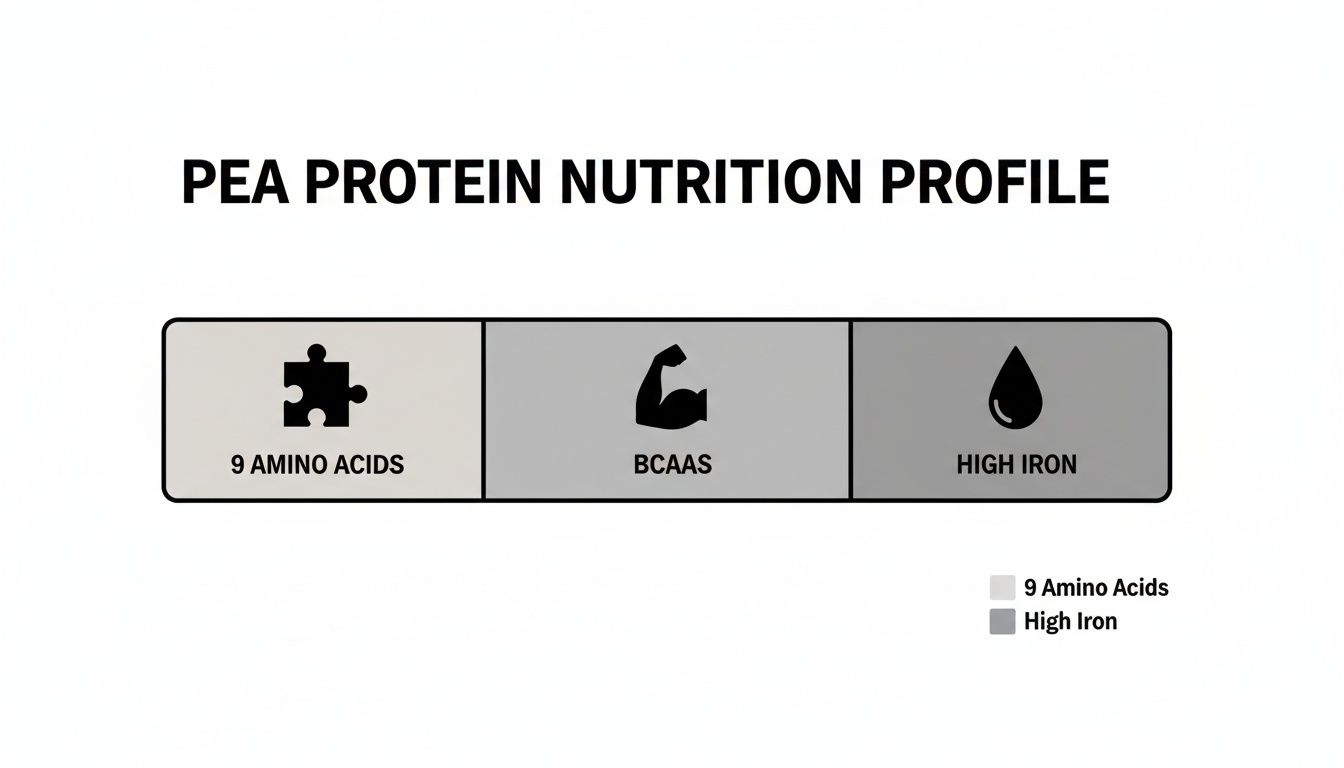
As you can see, its complete amino acid profile, loaded BCAA content, and rich iron supply all work together to help you hit your peak.
Enhancing Blood Flow for Better Recovery
Another secret weapon in pea protein's arsenal is the amino acid arginine. Your body uses arginine to produce nitric oxide, a compound that helps relax and open up your blood vessels. This process, called vasodilation, is a game-changer for your muscles.
So, what does better blood flow actually do for your workout?
- Better Nutrient Delivery: It’s like upgrading from a country lane to a superhighway. More oxygen and nutrients can get to your muscles, boosting your endurance.
- Faster Cleanup: Improved circulation helps clear out waste products like lactic acid, which is a major cause of muscle fatigue and that post-workout burn.
- A Better "Pump": That feeling of fullness in your muscles isn't just for show; it’s a sign that your muscles are fully engaged and getting the blood flow they need.
By boosting circulation, the arginine in pea protein makes sure your muscles are well-fed and well-cared-for, leading to smarter recovery and more consistent gains over time.
Pea Protein vs Whey Protein for Muscle Growth
Let’s get right to the big question: how does pea protein stack up against the long-reigning champ, whey? Here's a quick look at how they compare when it comes to building muscle.
| Feature | Pea Protein | Whey Protein |
|---|---|---|
| Amino Acid Profile | Complete (all 9 essential amino acids) | Complete (all 9 essential amino acids) |
| BCAAs (Leucine) | High in leucine, which is crucial for triggering muscle protein synthesis. | Very high in leucine; often considered the gold standard for this reason. |
| Digestion Speed | Medium digestion speed, providing a sustained release of amino acids. | Fast-digesting, which leads to a rapid spike in amino acids post-workout. |
| Allergens & Digestion | Hypoallergenic. Free from dairy, soy, and gluten. Easy on the stomach. | Contains lactose, a common allergen that can cause digestive issues for many. |
| Clinical Evidence | Studies show it’s just as effective as whey for muscle thickness & strength. | Extensively studied and proven to be highly effective for muscle growth. |
While whey has a slight edge in digestion speed, the research is clear: when you consume the same amount of protein, the results in muscle growth and strength are virtually identical. The source just doesn't matter as much as the quantity and quality.
Proven Results Level the Playing Field
Science backs this up. A 2015 study published in the Journal of the International Society of Sports Nutrition found that athletes who supplemented with pea protein over a 12-week period saw the same increases in muscle thickness as those taking whey. And a 2019 study confirmed similar results for strength gains.
The key takeaway is that when protein intake is matched, the source—whether it's from peas or whey—doesn't dictate the outcome. Both can lead to significant improvements in muscle thickness and strength.
This evidence makes pea protein an undeniably excellent choice for any athlete. You can dive deeper into why it’s considered one of the best plant proteins for muscle gain in our dedicated guide.
Ultimately, it all comes down to what works best for your body. If you're looking for a powerful, plant-based fuel that's easy to digest and free from common allergens, pea protein is a clear winner.
Aiding Your Weight Management Goals
Beyond just building muscle, pea protein is a fantastic ally in managing your weight. It works quietly in the background to help you feel satisfied, get a handle on cravings, and keep your metabolism fired up. This makes your health journey feel less like a constant battle against hunger.
The real magic is its ability to promote satiety—that feeling of fullness that signals your brain to stop eating. Out of the three macronutrients (protein, fats, and carbs), protein is by far the most filling. When you have a protein-rich meal or snack, your body releases hormones like GLP-1 and PYY, which are essentially natural appetite suppressants.
This hormonal response sends a direct message to your brain saying, "We're good here, no more food needed." By keeping you feeling fuller for longer, pea protein helps you naturally lower your overall calorie intake without feeling deprived or obsessing over your next meal.
Taming Cravings and Boosting Metabolism
This powerful feeling of fullness is a total game-changer for crushing those afternoon cravings that can so easily throw you off track. Instead of grabbing a sugary snack that will only lead to an energy crash, a high-protein option gives you a steady, sustained release of energy.
For instance, a crunchy, savory protein snack can hit the spot when you want something salty and satisfying, all while delivering the nutrients your body actually needs. This helps you stay on track and make smarter choices throughout the day.
On top of that, protein has a higher thermic effect of food (TEF) than fats and carbs. You can think of TEF as the energy "tax" for digestion. Your body simply has to work harder—and burn more calories—just to break down and absorb protein.
It's not a magic bullet, but this metabolic boost means a portion of the calories from protein are burned off during the digestion process itself. Over time, this small but consistent edge can really contribute to a healthier body composition.
Making Weight Management Sustainable
This one-two punch of appetite control and a subtle metabolic lift makes managing your weight so much more sustainable. When you feel full and satisfied, you're just not as likely to overeat or give in to impulse snacking. This is a core idea we dive into in our guide on using plant-based protein for weight loss.
Here’s how pea protein can help in the real world:
- Reduced Snacking: A protein-packed breakfast shake or mid-day snack can easily carry you to your next meal without the urge to graze.
- Smaller Portion Sizes: You'll probably find yourself naturally eating smaller portions at meals because you feel full faster, without ever feeling restricted.
- Stable Energy Levels: By sidestepping the blood sugar spikes and crashes from high-carb snacks, your energy stays steady, making you less likely to hunt for a quick sugar fix.
Ultimately, bringing pea protein into your routine helps you build an effective and sustainable approach to managing your weight. It empowers you to work with your body's natural hunger signals, not against them, making it that much easier to hit and maintain your long-term health goals.
Why Pea Protein Is Your Gut-Friendly Ally
Let’s be honest, finding the right protein powder can feel like a minefield of bloating, cramps, and general digestive misery for a lot of us. If you’ve ever felt that post-shake discomfort, the problem might not be protein itself, but where it comes from. This is exactly where pea protein shines—it's incredibly easy on the gut.
What makes it so gentle? It all comes down to its hypoallergenic nature. Pea protein is naturally free from the biggest troublemakers in the food world. It contains no dairy, no soy, no gluten, and no nuts, which makes it a safe bet for just about anyone, especially if you have known food sensitivities.
This gives you a level of confidence that other popular protein sources just can't offer. You can finally focus on fueling your body without bracing for the uncomfortable side effects that can throw your whole day off track.
Common Protein Powder Allergen Profile
To see just how pea protein stacks up, let's look at the usual suspects when it comes to protein powder allergens. This table breaks down what you'll find in the most common options on the market.
| Protein Source | Contains Dairy | Contains Soy | Contains Gluten | Contains Nuts |
|---|---|---|---|---|
| Pea Protein | No | No | No | No |
| Whey Protein | Yes | No | No | No |
| Casein Protein | Yes | No | No | No |
| Soy Protein | No | Yes | No | No |
| Egg White Protein | No | No | No | No |
| Almond Protein | No | No | No | Yes |
As you can see, pea protein is one of the few options that ticks all the "no" boxes, making it an incredibly reliable and clean choice for fueling your body without worry.
Saying Goodbye to Digestive Distress
One of the biggest reasons people make the switch to pea protein is to escape the notorious "whey belly." Since whey protein is made from milk, it contains lactose—a sugar that a huge chunk of the population struggles to digest properly. For anyone with lactose intolerance, even a mild case, that post-workout whey shake often leads to bloating, gas, and discomfort.
Pea protein, being 100% plant-based, completely sidesteps that problem. It gives you all the muscle-building power you need, without any of the digestive drama.
Choosing pea protein means you’re ditching the number one cause of protein-related stomach issues. It’s a simple swap that can completely change how you feel after you refuel.
The Power of High Digestibility
It’s not just about what pea protein doesn’t have. Its gentle nature is also thanks to how it’s made. High-quality pea protein isolate—the kind you’ll find in clean supplements and snacks like our Gym Snack bars—goes through a filtration process that strips away most of the fiber and starches from the whole pea.
This is a really important step. While fiber is great for you, too much of it from certain plant powders can be rough on some people's digestive systems. By isolating the protein, what's left is a pure, smooth, and incredibly easy-to-digest product.
- Low in FODMAPs: Removing those starches makes pea protein isolate low in FODMAPs (Fermentable Oligosaccharides, Disaccharides, Monosaccharides, and Polyols). These are short-chain carbs that can cause gas and bloating in people with sensitive guts.
- High Bioavailability: Your body can absorb and put the amino acids from pea protein to work quickly and efficiently. This means less work for your digestive system and more fuel getting straight to your muscles.
This high digestibility makes pea protein a comfortable and dependable choice, day in and day out. For anyone who's been burned by other supplements, it offers some much-needed peace of mind.
Bringing Pea Protein into Your Daily Routine
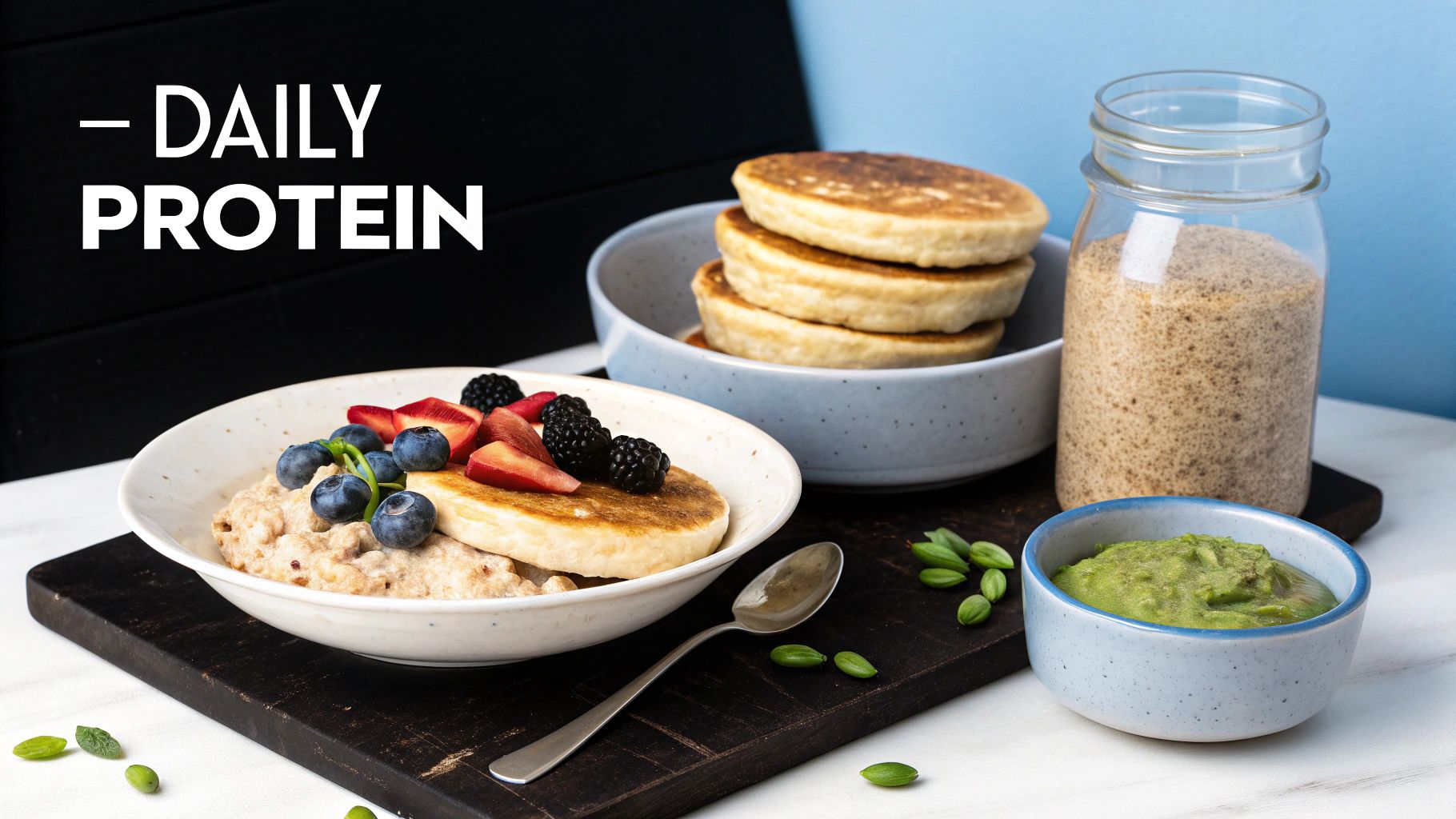
Knowing the benefits of pea protein is one thing, but actually feeling them is another. The good news is that weaving this plant-based powerhouse into your life is way easier—and tastier—than you might think. It’s a versatile ingredient that can quietly upgrade your current meals without forcing you to overhaul your entire diet.
The most common starting point is, of course, a smoothie or shake. This method is popular for a reason: it’s fast, convenient, and you can easily mask the earthy taste of unflavored pea protein with other delicious ingredients. For a smooth, grit-free texture, blend the powder with your liquid first before tossing in frozen fruit, greens, or nut butters.
Pro Tip: My go-to shake is simple but effective: one scoop of pea protein, a frozen banana for creaminess, a spoonful of almond butter, and some unsweetened almond milk. It’s a perfectly balanced post-workout refuel or a quick breakfast on the run.
Simple Ways to Fortify Your Meals
Beyond the blender, pea protein powder can sneak into meals you already love. It's a ridiculously simple way to add a serious protein punch to your breakfast, helping you start the day feeling full and focused. A protein-rich morning helps stabilize blood sugar and keeps those mid-morning cravings from derailing your day.
Here are a few easy ideas to get you started:
- Oatmeal or Porridge: Just stir a scoop of pea protein into your dry oats before adding water or milk and cooking as usual. It mixes right in and makes your morning bowl so much more satisfying.
- Yogurt Bowls: Whisk the powder into your favorite plant-based yogurt. Top it with berries and nuts, and you've got a complete, high-protein snack.
- Pancake or Waffle Batter: Add a scoop to your pancake mix. This simple trick transforms a carb-heavy breakfast into a muscle-fueling meal without messing up that fluffy texture we all love.
These small tweaks make a huge difference in your daily protein intake, helping you hit your goals without even trying. The key is to stop thinking of it as just a supplement and start seeing it as a functional food ingredient.
The Savory Snack Revolution
While sweet applications are great, using pea protein in savory foods is a real game-changer. This breaks you out of the mold of sugary shakes and dessert-flavored bars, giving you a convenient way to refuel when you’re craving something crunchy and salty. It's the perfect fix for on-the-go energy without the dreaded sugar crash.
Imagine satisfying that 3 p.m. crunch craving with a cheesy, high-protein snack that actually supports your goals. Ready-to-eat products like savory protein puffs are turning pea protein into a delicious, macro-friendly option you can grab anytime. This shift towards better-for-you snacking isn't just happening at home; there are all sorts of healthy vending machine options making nutritious eating more accessible everywhere.
So, how much should you aim for? A single serving of 20-30 grams of protein is the sweet spot for a post-workout snack or to round out a meal. This is the amount shown to effectively trigger muscle repair and keep you feeling full. By working pea protein into both the sweet and savory parts of your day, you can easily and enjoyably unlock all its benefits.
Got Questions About Pea Protein? We’ve Got Answers.
It's smart to have questions before adding anything new to your health routine. Let's tackle some of the most common ones about pea protein powder, so you can feel confident about making it part of your day.
Will Pea Protein Make Me Bloated?
For most people, the answer is a resounding no. In fact, high-quality pea protein isolate is often the go-to for those who experience digestive issues with other proteins. This is because the process used to create the isolate strips out most of the fiber and starches (FODMAPs)—the usual suspects behind bloating and gas.
Plus, unlike whey, pea protein is naturally dairy-free. That means no lactose, which is a huge relief for anyone who’s even slightly lactose intolerant. If you do find yourself feeling a bit off, take a look at the ingredients list; it’s often other additives or fillers in a low-quality blend causing the problem, not the pea protein itself.
Is It Really as Good as Whey for Building Muscle?
Absolutely. This isn't just wishful thinking; it's backed by solid science. Study after study has shown that when it comes to building muscle, increasing strength, and speeding up recovery, pea protein performs right on par with whey.
The secret is its impressive amino acid profile, which is loaded with the all-important Branched-Chain Amino Acids (BCAAs). These are the specific building blocks that kickstart muscle repair and growth. So, no, you're not compromising by choosing a plant-based option.
The research is clear: when total protein intake is matched, the source—whether from peas or whey—produces similar gains in muscle size and strength. Pea protein is not a compromise; it’s an equally effective choice.
What Does Pea Protein Taste Like? (And How Can I Make It Better?)
Let's be honest, unflavored pea protein has a distinct taste. It's often described as mild and slightly earthy. Some people don't mind it at all, especially when it's blended into a smoothie with strong flavors like banana, cocoa, or a handful of berries, which can easily cover it up.
But if you’re not a fan of the taste or gritty texture of protein shakes, you're not stuck. A much better way to get your protein in is with ready-to-eat snacks. Savory protein puffs, for example, use the power of pea protein but deliver it in a crunchy, delicious format that completely avoids that earthy flavor. It’s proof that you don't have to sacrifice taste to hit your protein goals.
Ready to experience the benefits of pea protein in a snack you'll actually crave? Gym Snack delivers a cheesy, crunchy, and satisfying way to fuel your day. Build your custom pack of savory protein snacks today!