

Granola has one of the strongest health halos in the grocery aisle, and a lot of shoppers still fall for it. Crunchy oats, nuts, seeds, and earthy packaging can make a bag look like smart fuel even when it eats more like dessert. If you're trying to find the best protein granola, the first move isn't picking a brand. It's learning how to judge the category without getting distracted by front-of-pack claims.
That matters because protein granola isn't a tiny niche anymore. In a 2026 market snapshot, ASINSIGHT reported that KIND led 126 Amazon competitors with more than 30,000 monthly sales and a 4.6-star rating, while the keyword “protein granola” had a weekly search volume of 7,262. People are buying it at scale. When a category gets that crowded, labels get louder, formulas get more engineered, and the difference between a useful product and a sugary snack gets harder to spot.
Beyond the Breakfast Bowl What Is Protein Granola
Protein granola is not just regular granola with a fitness buzzword slapped on the bag. The category has its own logic. Standard granola usually leans on oats, sweeteners, oils, and mix-ins to create flavor and clusters. Protein granola tries to keep that crunch while adding ingredients that push the macro profile toward satiety and workout support.
That sounds simple. In practice, it creates trade-offs.
A granola can raise protein by adding whey, soy isolate, pea protein, milk proteins, nuts, seeds, or crunchy inclusions. Each route changes texture, sweetness, digestibility, and ingredient quality. Some products become more filling. Others just become sweeter cereals with a slightly better label.
Why this category deserves more scrutiny
The protein claim on the front of the bag tells you almost nothing by itself. A high number can still come with a formula loaded with added sugar or a serving size that makes the protein look more impressive than it feels in real life. For athletes and active people, that matters because snack quality shows up later in the day. A breakfast that tastes healthy but digests like candy usually leaves you chasing energy again.
Protein granola works best when it acts like fuel first and flavor second.
The online market confirms that shoppers are actively comparing options, not just grabbing whatever looks wholesome. The search and sales activity in the category suggests that protein granola has become a mainstream grocery and snack decision, not a specialty-store product for bodybuilders.
What makes it different from regular granola
A practical way to think about protein granola is this:
- Regular granola emphasizes crunch and sweetness. It often wins on flavor first.
- Protein granola tries to balance crunch with satiety. The formula has to do more work.
- The best protein granola earns its place through trade-offs. If protein goes up but texture collapses, or sugar climbs to keep it tasty, the product hasn't really solved the problem.
For most gym-goers, the best use case isn't a giant breakfast bowl drowned in milk. It's a controlled serving that adds crunch and protein to a meal, or a portable snack that won't leave you hungry an hour later.
The Anatomy of a High-Quality Protein Granola
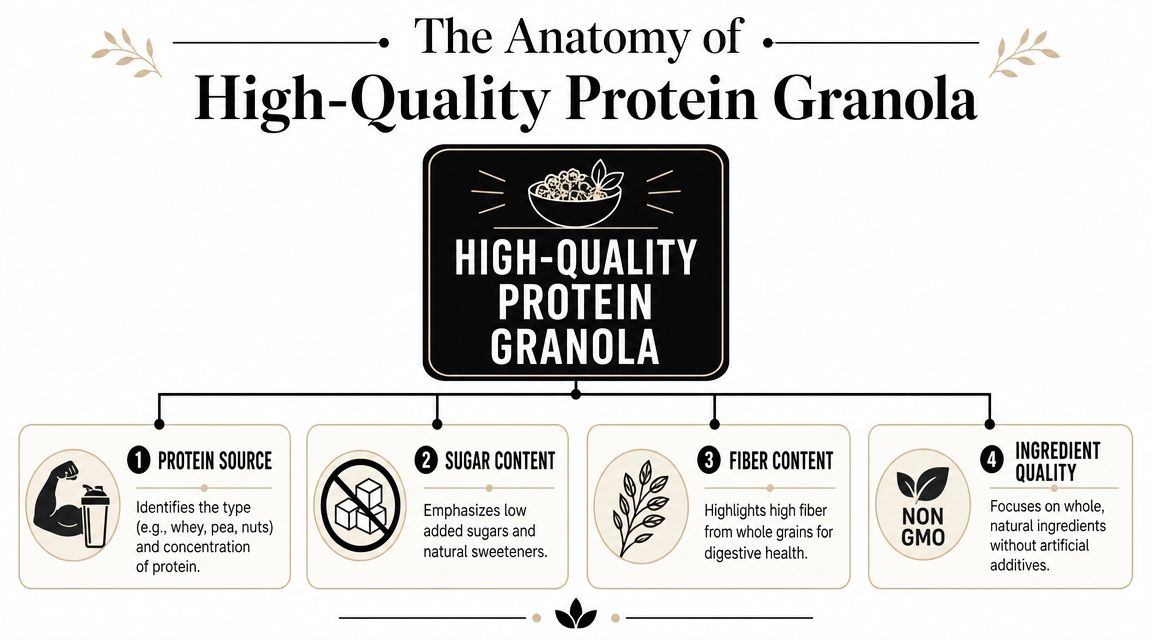
If you want a simple buying framework, use four checkpoints. Protein, sugar, fiber, and ingredient quality decide whether a bag belongs in your cart.
According to Consumer Reports guidance summarized around healthier granola standards, the strongest benchmark is at least 7g of protein and 4g of fiber per serving, with added sugar below 5g and sodium as low as possible. That's a useful screen because it cuts through branding fast.
Protein has to be meaningful
A protein claim only matters if the serving gives you enough to notice. At least 7g per serving is a practical floor from the benchmark above. For active people, higher can be useful, but only if the rest of the formula stays under control.
Look at where the protein comes from. Nuts and seeds are a plus, but many products need an added protein source to move beyond a modest bump. That's not a problem by itself. It just means you should expect some trade-offs in taste and texture.
Sugar is where many products fail
Granola has a long history of being sold as healthy while leaning hard on sweetness. That's why added sugar below 5g per serving is such a strong filter. It forces a brand to do more than coat oats in sweetener and call it wellness food.
A lot of shoppers focus on total sugar and miss the key point. Fruit can contribute sweetness. Binders and syrups are what often turn a protein granola into dessert.
Practical rule: If the protein number looks good but the product still tastes like a treat, check the added sugar line before anything else.
Fiber helps determine whether it actually fills you up
Protein alone doesn't make granola satisfying. At least 4g of fiber per serving is part of the same benchmark for a reason. Oats, seeds, and whole-food inclusions help slow the eating experience and improve staying power.
Fiber also helps separate a serious granola from one that relies mostly on isolates and sweeteners. If a product markets itself as fitness food but skimps on fiber, it often feels less substantial than the label suggests.
Ingredient quality still matters
The last check is less glamorous, but it's where experienced shoppers save themselves from disappointment.
Look for:
- Whole-food structure. Oats, nuts, seeds, and recognizable binders usually eat better than heavily engineered clusters.
- Fats that make sense. The benchmark favors healthier fat choices and lower sodium.
- A short, understandable ingredient list. More processing isn't always bad, but it should earn its place.
The best protein granola isn't the one with the loudest protein badge. It's the one that hits the nutrition targets without hiding behind sweetness or a bloated ingredient panel.
From Whey to Pea Protein Choosing Your Source
Protein source changes everything. It affects texture, digestibility, allergens, and whether the granola fits your routine outside the gym. If you've ever bought a bag that looked great on paper but ate like dusty crumbs, the protein source was probably part of the story.
One useful food science point comes from a protein granola formulation breakdown at Cooking With Ayeh, which notes that protein powders increase the dry solid load and can make granola chalky or brittle, while nuts and seeds plus protein powder create a more nutrient-dense matrix and help preserve crunch. That matches what you see in the aisle. Pushing protein higher is easy on a label. Keeping the granola enjoyable is harder.
How the common options compare
| Protein Source | Type | Best For | Considerations |
|---|---|---|---|
| Whey | Dairy-based protein powder | Lifters who want a familiar fitness ingredient | Not suitable for dairy-free shoppers, can change texture quickly |
| Casein or milk protein | Dairy-based protein | People who want a richer, denser bite | Also excludes dairy-free eaters, can feel heavier |
| Soy isolate | Plant-based protein | Shoppers who want a complete plant option in many commercial products | Doesn't fit soy-free diets |
| Pea protein | Plant-based protein | Vegan, dairy-free, and allergen-conscious shoppers | Can taste earthy if the formula isn't balanced well |
| Nuts and seeds | Whole-food plant protein | Shoppers who want less processed texture and ingredients | Usually won't drive protein as high on their own |
Whey and dairy proteins
Whey is common because it's familiar in sports nutrition and can raise the protein number fast. The downside is that it can push a granola toward a dry, powdery finish if the binder isn't dialed in. Dairy proteins also narrow the audience immediately.
If you're comparing dairy and plant options for training, this breakdown on pea protein vs whey protein is a useful lens for thinking beyond the label.
Soy and pea protein
Soy isolate can work well in commercial products because it's efficient and usually easy to formulate. For some shoppers, though, soy is a nonstarter. That's especially true when someone is looking for a snack that also avoids common allergens.
Pea protein has become a practical option for granola and crunchy snacks because it fits plant-based eating and can support a cleaner ingredient story. The catch is flavor management. If the product doesn't have enough fat, seasoning, or smart sweetness, pea protein can leave that familiar earthy dryness behind.
The best formulas don't rely on protein powder alone. They use seeds, nuts, oats, and enough binder to make the structure feel like food, not fortified dust.
Nuts and seeds as the base
Granola built around nuts and seeds often has the most natural texture. It usually chews and crunches better than products trying to force all the protein through powders. But if the formula doesn't include a concentrated protein source, the final protein number may stay moderate.
That's why the best protein granola for one person isn't the best for everyone. If you're training hard and want a stronger protein hit, you may accept some formulation trade-offs. If you care more about ingredient simplicity and digestibility, a lower-protein but better-structured granola might be the smarter buy.
Decoding the Nutrition Label on Protein Granola
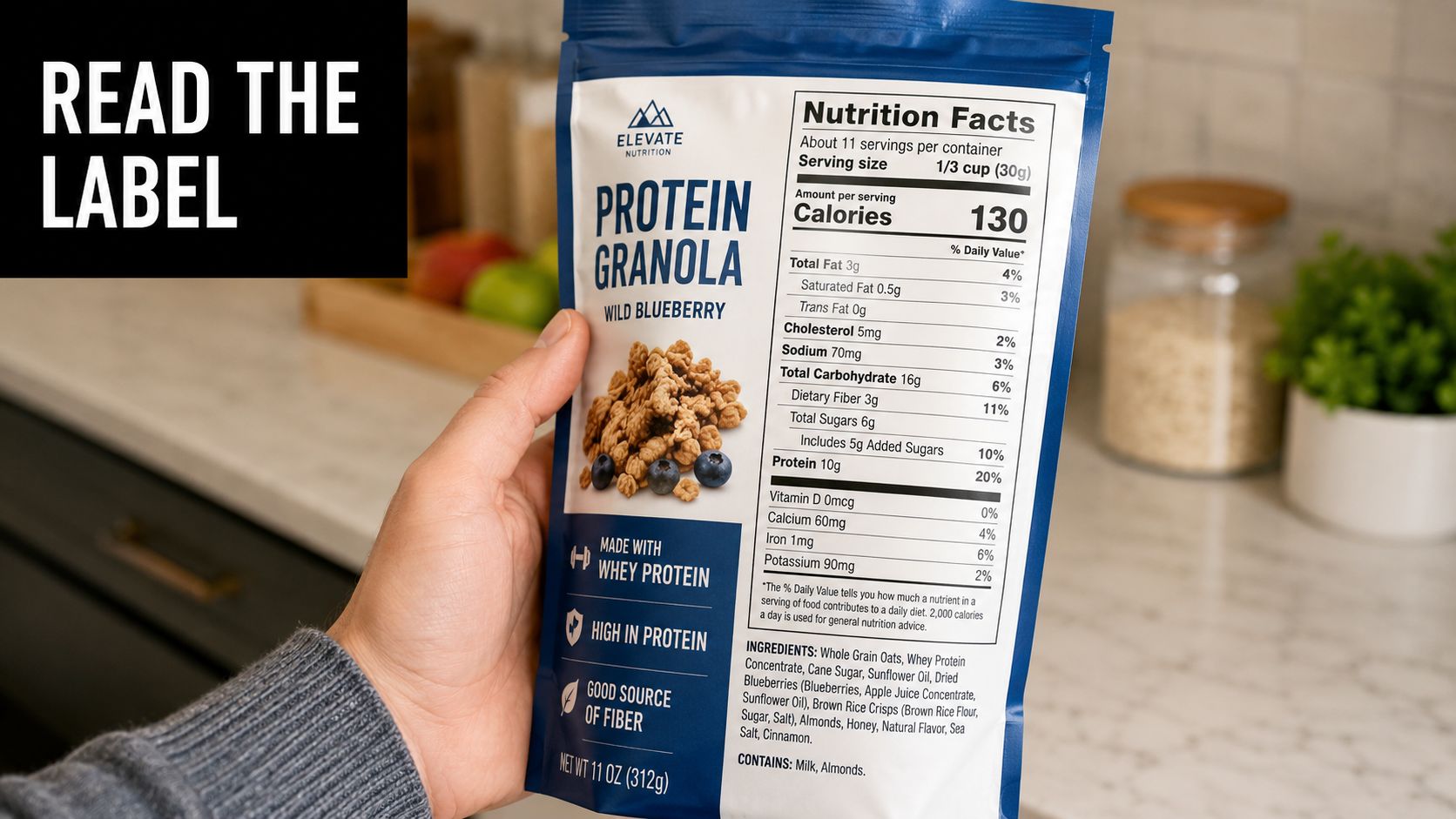
The front of the bag is marketing. The side panel is where the decision gets made.
When I look at a protein granola label, I don't start with calories. I start with serving size, then protein, then added sugar, then fiber. That order keeps flashy claims from hijacking the decision.
Start with serving size
Granola is dense. A serving can look smaller than people expect, especially once it lands in a bowl. If you don't anchor on serving size first, every number after that becomes misleading.
A bag can look high-protein because the serving is large. That's not automatically bad, but it changes how you use the product. A breakfast topper and a standalone snack are not the same job.
Use a real benchmark
A clear commercial example helps. Nature Valley's Protein Oats & Honey Granola lists 13g of protein per 2/3 cup serving. That tells you two important things right away. First, double-digit protein in this category is realistic. Second, the serving size matters because 2/3 cup is not a tiny sprinkle.
Now read the rest of the panel with that context.
- Protein first. Is the number high enough to justify calling it protein granola?
- Added sugar next. Does the product earn that protein number without leaning too hard on sweetness?
- Fiber after that. A decent protein number with weak fiber often underdelivers on fullness.
- Ingredients last. The label tells you what the formula had to do to reach those macros.
For a broader skill set, this guide on how to read nutrition labels is worth bookmarking.
A fast aisle test
When you only have a minute in the store, use this:
- Check the serving size. Make sure it's realistic for how you'll eat it.
- Scan protein. Stronger products justify the category name.
- Look at added sugar. Many "healthy" granolas often lose my interest due to added sugar.
- Confirm fiber. Low fiber often means lower staying power.
- Read the first few ingredients. They should make sense together.
If a granola needs a lot of sweetness to make its protein palatable, it's not a great protein food. It's a sweet food with a protein assist.
Finding Granola for Sensitive Stomachs and Allergies
Macros don't help much if the product leaves you bloated, irritated, or constantly checking the ingredient list. For a lot of shoppers, the best protein granola isn't the one with the biggest protein number. It's the one they can eat consistently.
That means looking past broad claims like "plant-based" or "gluten-free." Those labels can be useful, but they don't tell the whole story about cross-contact risk, hidden ingredients, or how the formula sits in your gut.
Labels that deserve a closer look
A few issues come up repeatedly with protein granola:
- Gluten concerns. Oats can fit many gluten-free diets, but some people want a more stringent standard than a casual front-label claim.
- Dairy surprises. Yogurt coatings, milk proteins, and whey can show up where shoppers don't expect them.
- Soy exposure. Soy crisps, soy isolate, and lecithin may matter for people avoiding soy.
- Nut sensitivity. Granola often relies on almonds, cashews, or mixed nuts for crunch and protein.
A "free-from" product should still be read carefully. Ingredient lists tell you more than branding does.
Gut comfort matters as much as macros
Some high-protein foods look efficient but digest poorly. In granola, common trouble spots can include dense sweeteners, very dry protein-heavy formulas, and ingredient combinations that feel heavy once you eat more than a small serving.
For sensitive stomachs, these patterns usually work better:
- Simpler ingredient decks. Fewer moving parts often means fewer surprises.
- Whole-food texture. Oats, seeds, and nuts can feel more natural than highly engineered clusters.
- Moderate sweetness. Very sweet granola can be harder to use daily, especially if you're already eating other flavored protein products.
- Protein sources you already tolerate well. If whey shakes never agree with you, whey granola probably won't become the exception.
Some people keep buying the "cleanest" looking granola and still feel off after eating it. Usually the issue isn't motivation. It's that the product solved macros while ignoring digestion.
When restrictions stack up
The category gets harder when you need several things at once, such as dairy-free, soy-free, and gluten-free. That's also where many granolas start to feel more like compromise products than enjoyable food.
If you're in that group, don't assume protein granola has to be your answer every time. Sometimes a different protein snack format makes more sense than trying to force one product to cover every dietary need.
Creative Ways to Eat Your Protein Granola
A lot of people buy protein granola with good intentions, use it on yogurt twice, then let the bag go stale. That's usually a usage problem, not a product problem. Granola works better when you stop treating it like cereal.
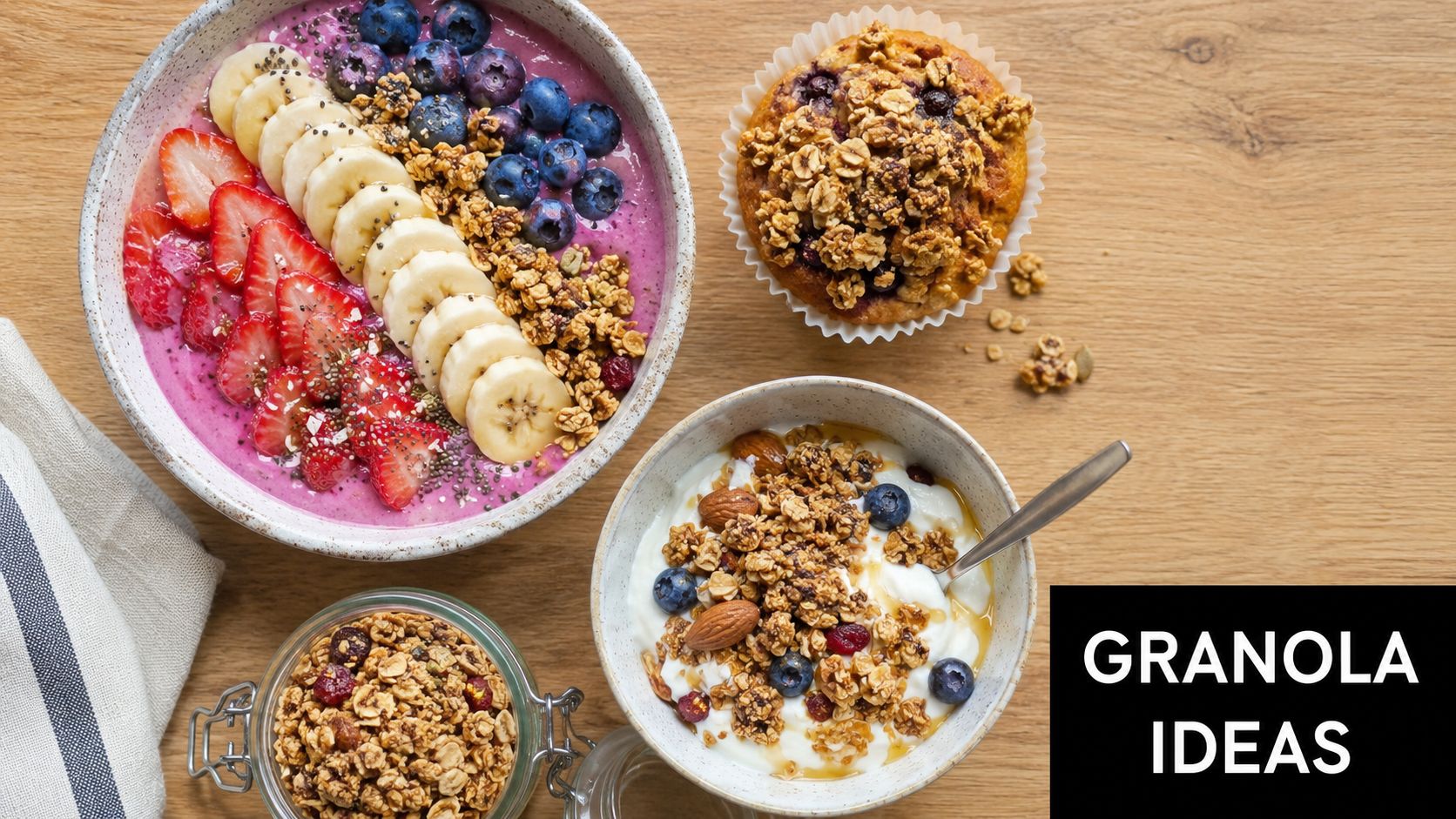
Four ways it actually earns its shelf space
As a smoothie bowl finish.
A soft smoothie can digest fast and leave you wanting more texture. A measured handful of protein granola gives contrast and makes the bowl feel like a meal instead of a cold drink in disguise.
As a crust for baked fruit.
Toss chopped apples or pears into a baking dish and use protein granola as the crunchy top layer. It gives you the feel of a crisp without building a full dessert around flour and extra sweetener.
Inside homemade protein bites.
When you mix a sticky base for no-bake bites, granola adds structure. It also saves you from making every bite soft and pasty, which is where a lot of homemade protein snacks go wrong.
After you've seen a few prep ideas, it gets easier to use the product intentionally:
As a small crunchy side with Greek yogurt or a dairy-free alternative.
This is the classic use, but the trick is portioning. Think of granola as the texture layer, not the whole meal. That keeps the sweetness and density in check.
Use it like an ingredient, not a default breakfast
The best protein granola is usually too dense to treat casually. Once you start using it as a topping, mix-in, or crunch element, it becomes much easier to control. You get the benefits of texture and some added protein without turning breakfast into a sugar-heavy bowl.
When You Need Protein Without the Sugar
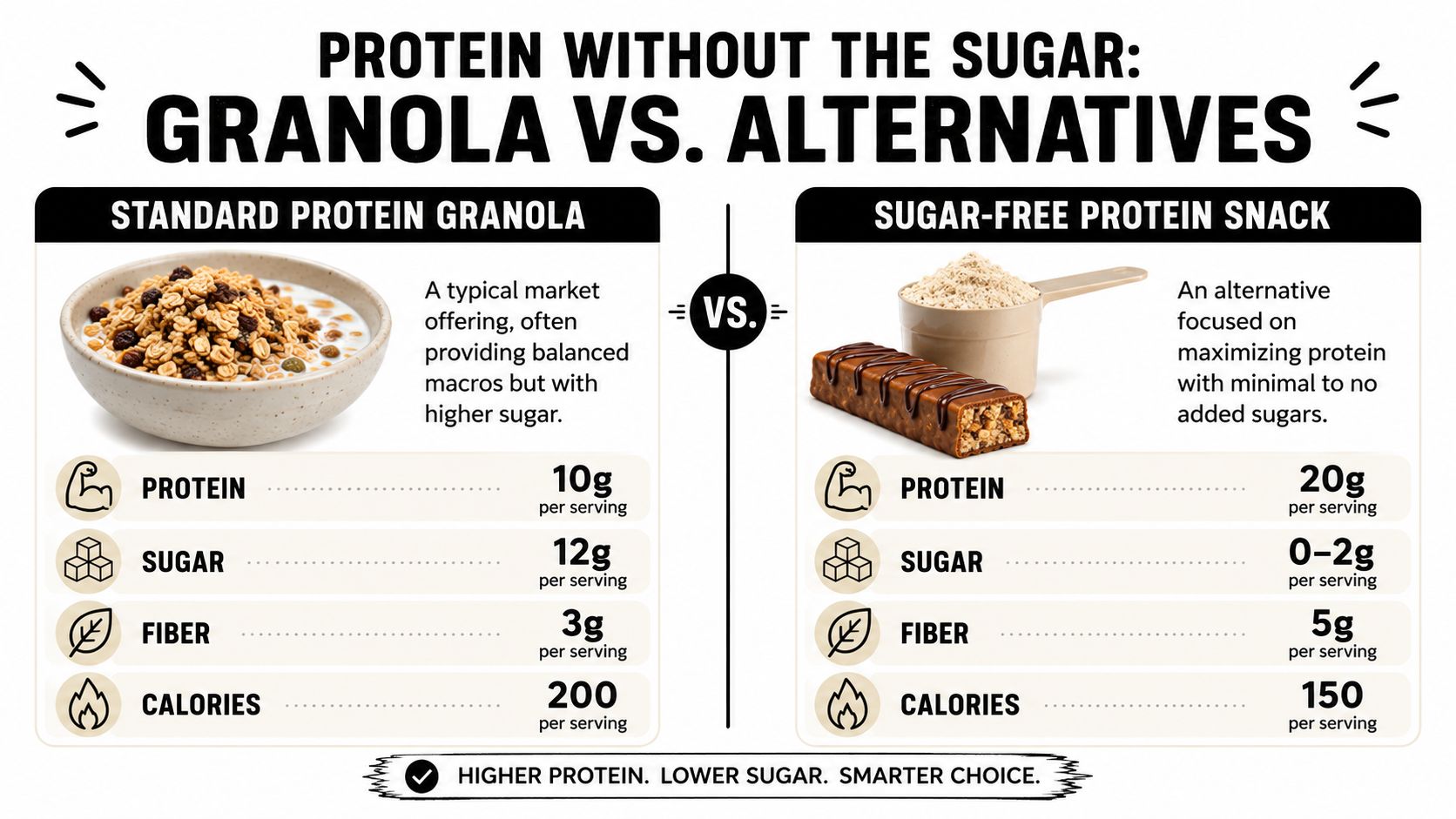
Protein granola still has a built-in limitation. Most of it is sweet.
That's fine when you want a breakfast topper or a snack with fruit and yogurt. It's less useful when you want protein during the afternoon, after training, or anytime you're already burned out on dessert-style nutrition products. That gap matters because, as Eleat's discussion of high-protein granola points out, many shoppers want dairy-free, soy-free, and low-processed options that work as savory between-meal snacks instead of sweet breakfast foods.
Sweet isn't always the right tool
A lot of active people hit a point where every convenient protein option starts tasting the same. Bars taste like candy. Shakes taste like dessert. Granola can fall into the same lane, even when the macros look better than a standard cereal.
That doesn't mean protein granola is bad. It means it has a specific use case.
Choose it when you want:
- Crunch with breakfast foods
- A topper for yogurt, smoothie bowls, or fruit
- A portable snack that still leans slightly sweet
Skip it when you want:
- A savory option
- Less sweetness during the workday
- Protein that doesn't rely on granola-style flavor cues
Savory protein snacks fill a different role
If you want crunch and protein without the sweetness, a savory snack format often fits better than another bag of granola. Roasted pulses, seasoned protein crisps, and plant-based crunchy snacks can solve a different problem. They give you the grab-and-go convenience people like about granola without forcing everything into a breakfast profile.
For shoppers specifically looking for protein snacks without sugar, that broader category is worth considering. One example is Gym Snack, which makes a crunchy plant-based savory protein snack built around pea protein and formulated to be dairy-free, soy-free, and gluten-free. That's not a granola replacement in every situation. It's a different tool for the moments when sweet protein isn't what you want.
The best protein granola is still sweet by nature. If your real goal is protein plus crunch with minimal sweetness, look outside the granola aisle.
The smartest approach is to match the snack to the job. Use protein granola when texture and breakfast compatibility matter. Use savory protein snacks when you want cleaner separation from dessert flavors.
If you want a savory option alongside your granola, Gym Snack offers a plant-based crunchy protein snack for workouts, commutes, and between-meal fuel. It's built for people who want protein without defaulting to another sweet bar, shake, or cereal-style snack.