

The worst way to buy a protein bar is to flip it over, find the highest protein number, and stop thinking.
That's how lifters end up with bars that look perfect on paper but sit heavy in the gut, taste like candy, and get old fast. For bodybuilding, a bar isn't just a protein delivery vehicle. It's a convenience food that has to work in real life. It has to fit your training, your appetite, and your digestion well enough that you'll keep using it.
That matters because protein bars are now a mainstream category, not a niche gym product. One market report valued the global category at USD 15.80 billion in 2025 and projected USD 24.21 billion by 2033 (Grand View Research). More choice sounds good. In practice, it means more labels to decode and more bars that blur the line between sports nutrition and dessert.
More Than Just a Number How to Really Choose a Protein Bar
A bodybuilder doesn't need the bar with the biggest number on the wrapper. A bodybuilder needs the bar that fits the job.
That sounds obvious, but the market pushes the opposite idea. A huge protein callout on the front makes people assume the bar is automatically better for growth, recovery, and body composition. It often isn't. A bar can be high in protein and still be poorly timed for training, too low in fiber to hold you over, or loaded with ingredients that make repeated use miserable.
What actually matters in the gym
A bar should solve a real problem. Maybe you need something portable between meetings so you don't miss a meal. Maybe you need a post-lift option that isn't a shaker bottle. Maybe you're cutting and want something filling enough to stop snack drift later in the day.
Those are different use cases, so the same bar won't be ideal for all of them.
If you're trying to get more precise about your nutrition targets, it helps to first calculate your muscle mass. That gives context for your overall intake instead of making random bar choices based on branding.
Practical rule: Buy bars the same way you build a meal plan. Start with purpose, then check macros, then read ingredients.
The smarter filter
Use a quick three-part screen:
- Match the bar to the moment: A training bar, a desk-drawer bar, and a cutting-phase bar can look very different.
- Judge the full macro profile: Protein matters, but carbs, fats, and fiber decide how the bar performs.
- Check whether you can tolerate it repeatedly: If a bar causes bloating, urgency, or appetite rebound, it's a bad bodybuilding tool no matter how good the front label looks.
That last point gets ignored far too often. Lifters don't just need effective bars. They need sustainable ones. And sustainability isn't only about clean eating discipline. It's also about not getting burned out on endless sweet, chewy, dessert-style flavors.
Decoding the Label for Maximum Muscle Growth
A good protein bar works like a complete toolkit. Protein is the brick. Carbohydrates help refill the tank. Fat changes how satisfying the bar feels. Fiber affects fullness and digestion.
If one piece is off, the whole thing underperforms.
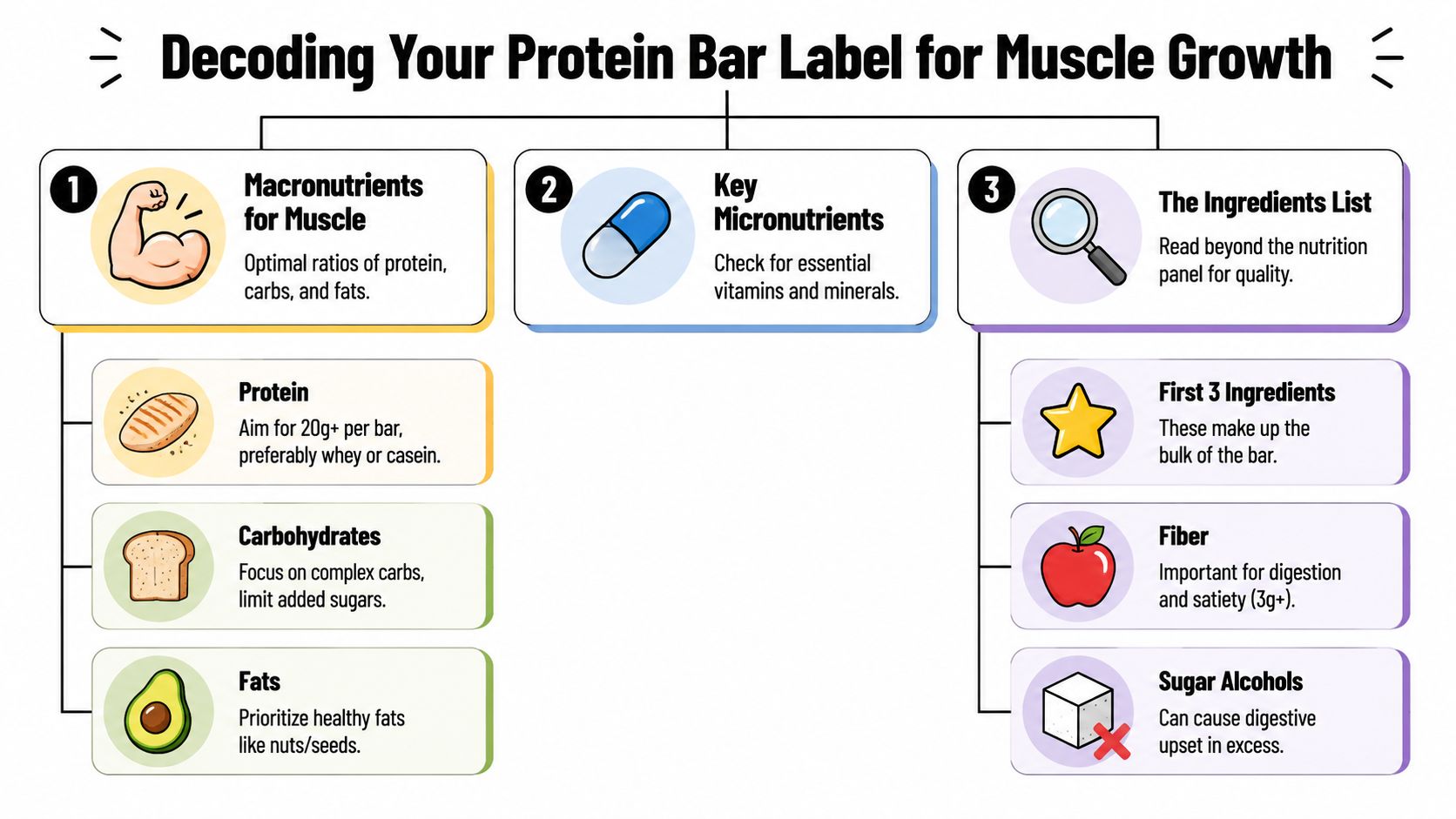
Start with the macro job
For bodybuilder protein bars, dietitians cited by Men's Health recommend 20 to 30 g of protein per bar, with about 30 g of carbohydrates if you're using it around training, and 5 to 10 g of fiber if the goal is satiety between meals (Men's Health dietitian guidance).
That gives you a practical framework:
| Use case | What to prioritize |
|---|---|
| Around workouts | 20 to 30 g protein plus about 30 g carbs |
| Between meals | 20 to 30 g protein with 5 to 10 g fiber |
| Meal-like option | A more balanced profile, not just protein alone |
A lot of lifters make the mistake of treating every bar like a post-workout bar. That's where choices go sideways. If you're eating the bar at your desk between lunch and dinner, the one with a more balanced profile may do more for appetite control than the one that chases protein at all costs.
Read beyond the front label
The nutrition panel tells you whether the bar fits your target. The ingredients list tells you whether the bar earns your trust.
When I teach clients to read labels, I tell them to spend less time looking at the hero number and more time checking the full panel and top ingredients. A simple guide on how to read nutrition labels can help if you want a refresher on the basics.
Use this sequence:
- Protein first: If the bar is meant for serious lifting support, look for it to land in the 20 to 30 g range.
- Carbs with context: Around training, carbs help. At other times, too little may leave the bar unsatisfying, while a dessert-heavy formula can feel more like candy than fuel.
- Fiber as a quality check: Fiber can improve fullness, especially when the bar replaces a snack rather than a meal.
- Fat for staying power: Some fat can help a bar feel like food instead of a supplement.
A strong bodybuilder protein bar doesn't rely on one macro. It earns its place by doing a specific job well.
Protein source still matters
Not all protein feels the same in practice. Fast-digesting dairy proteins often make sense around training. Slower proteins can be useful when you need staying power. Plant-based formulas can also work well when the full recipe is built intelligently.
A peer-reviewed sports nutrition study used a high-protein bar built with 24% whey protein isolate and 6% soy protein isolate, along with oat flakes and inulin, and concluded that consuming the bar improved post-training physiological adaptation in elite athletes (peer-reviewed study on bar formulation).
The takeaway isn't that every lifter needs that exact formula. It's that the best bars are designed like performance foods, not candy bars with added protein.
The Ingredients to Scrutinize and Avoid
Most protein bar problems don't show up in the macro line. They show up in your stomach, your appetite, and your willingness to keep eating the product.
That's why the ingredient list matters as much as the label totals.
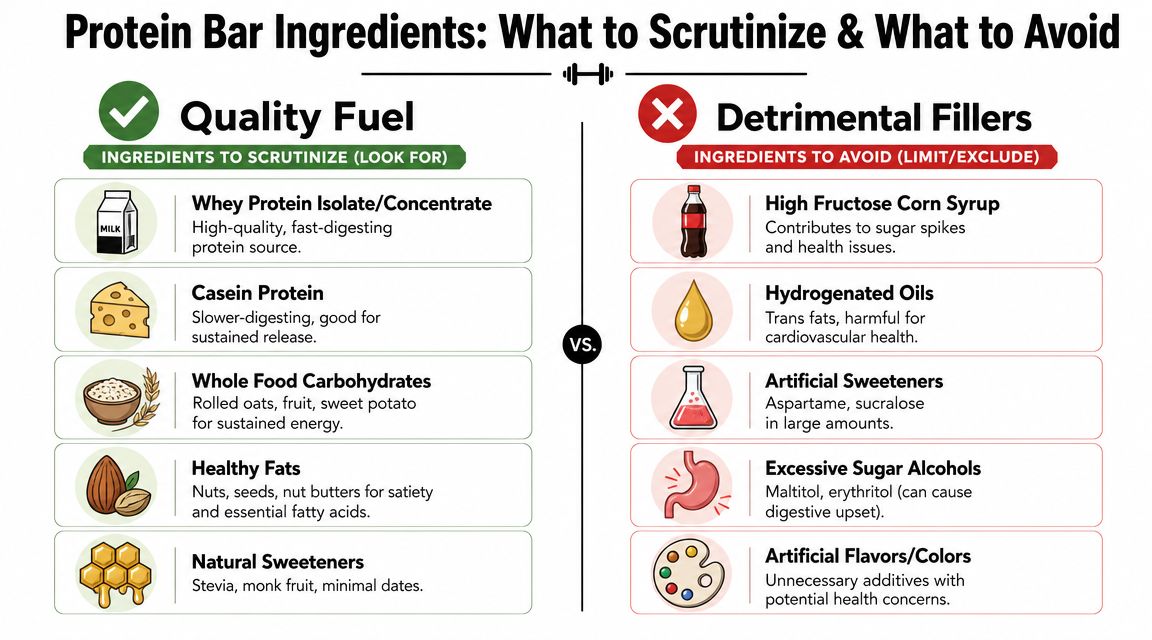
The repeat-use test
Many reviews acknowledge that sugar alcohols and processed fibers such as inulin or chicory root can cause digestive issues, yet they remain common in dessert-style bars (Garage Gym Reviews on muscle gain bars). That's the gap a lot of bodybuilding content misses. It ranks bars by protein and calories, but it doesn't ask whether the formula is tolerable when you eat it often.
For a casual snack once in a while, maybe that's fine. For a lifter using bars during workdays, travel, long gym sessions, or calorie cuts, it's not.
Here's what I tell clients to watch closely:
- Sugar alcohols: These can be useful for lowering sugar, but some people get bloating, gas, or urgent bathroom trips from them.
- Processed fibers: Inulin and chicory root can help texture and fiber numbers, but tolerance is highly individual.
- Dessert-style sweetener stacking: A bar with multiple sweetening systems often tastes impressive at first and gets harder to eat consistently over time.
Red flags that matter in real training life
Not every “problem” ingredient is universally bad. The issue is fit.
A bar that digests poorly before training can ruin a session. A bar that leaves you distended on a travel day is a headache. A bar that tastes like a candy bar might feel satisfying for a week, then become something you force down because you're sick of sweetness.
Your best bar is the one you can digest well on normal days, hard training days, and rushed days.
That's why I like a simple filter more than a blacklist. Ask:
| Question | Why it matters |
|---|---|
| Can I eat this before or after training without stomach drama? | Performance and comfort |
| Does it feel like food or like a chemistry set? | Long-term adherence |
| Could I eat it several times a week without flavor burnout? | Sustainability |
What to look for instead
Cleaner doesn't have to mean bland. Better bars usually have a shorter, more understandable ingredient profile and a flavor strategy that doesn't depend entirely on extreme sweetness.
A strong ingredient pattern often includes:
- Recognizable protein sources: Whey, casein, pea protein, or well-built blends
- Useful carb sources: Oats and other food-based ingredients often feel steadier than a candy-style matrix
- A realistic sweetening approach: Less sweetness is often better for repeated use
- Fiber with purpose: Enough to help satiety, not so much clever processing that your gut pays the price
The bodybuilder test is simple. If a bar looks good on paper but you dread eating it again, it failed.
Strategic Timing for Peak Performance and Recovery
When you eat a bar changes what “best” means.
A lot of people ask whether protein bars are pre-workout food, post-workout recovery, or just emergency snacks. The answer is yes, but only if the formula matches the situation.
Before training
Pre-workout, digestion speed matters. You want something that gives you usable energy and some protein without sitting in your stomach like a brick.
A practical pre-lift bar usually works best when it isn't overloaded with ingredients that digest poorly for you. This is highly individual. Some lifters handle a denser bar just fine. Others do better with a simpler option plus fruit or another easy carb source.
After training
Post-workout, the bar has a different job. Guidance and research often cite about 30 grams of protein post-workout as an effective target for muscle repair, while many bars only provide 10 to 20 grams (UC San Diego recreation guidance).
That doesn't mean a bar with less protein is useless. It means you should know whether that bar is your full recovery feeding or just one piece of it.
If you want more detail on choosing a good protein bar after workout, the key is simple: don't expect a light snack bar to do the work of a real recovery meal unless the macros support it.
Post-lift, don't ask whether the bar is “healthy.” Ask whether it actually covers your recovery job.
During long gaps between meals
This is where bars earn their keep. A bar can stop the slide from “I'm a little hungry” to “I just raided the vending machine.”
For bodybuilders, that matters in two situations:
- Mass phases: You need portable intake so missed meals don't stack up.
- Cutting phases: You need something structured enough to prevent random grazing.
A simple timing framework
Use bars deliberately:
- Before training: Pick easier digestion over novelty.
- After training: Aim for a bar that gets you close to a real recovery target, or pair it with other food.
- Between meals: Favor satiety, ingredient quality, and flavor you won't resent.
That last piece is bigger than it sounds. If every bar in your bag is sweet, sticky, and dessert-coded, compliance drops. Not because you lack discipline. Because your palate gets tired.
Beat Flavor Fatigue with a Savory Protein Shift
This is the problem hardly anyone talks about. Lifters don't just get tired of dieting. They get tired of sweet protein foods.
By the time someone has rotated through chocolate brownie, cookies and cream, peanut butter fudge, birthday cake, and salted caramel across shakes, bars, puddings, and cereal, they're often done. The issue isn't only taste. It's adherence. When every “high-protein” option tastes like a dessert, eating enough quality protein starts to feel oddly monotonous.
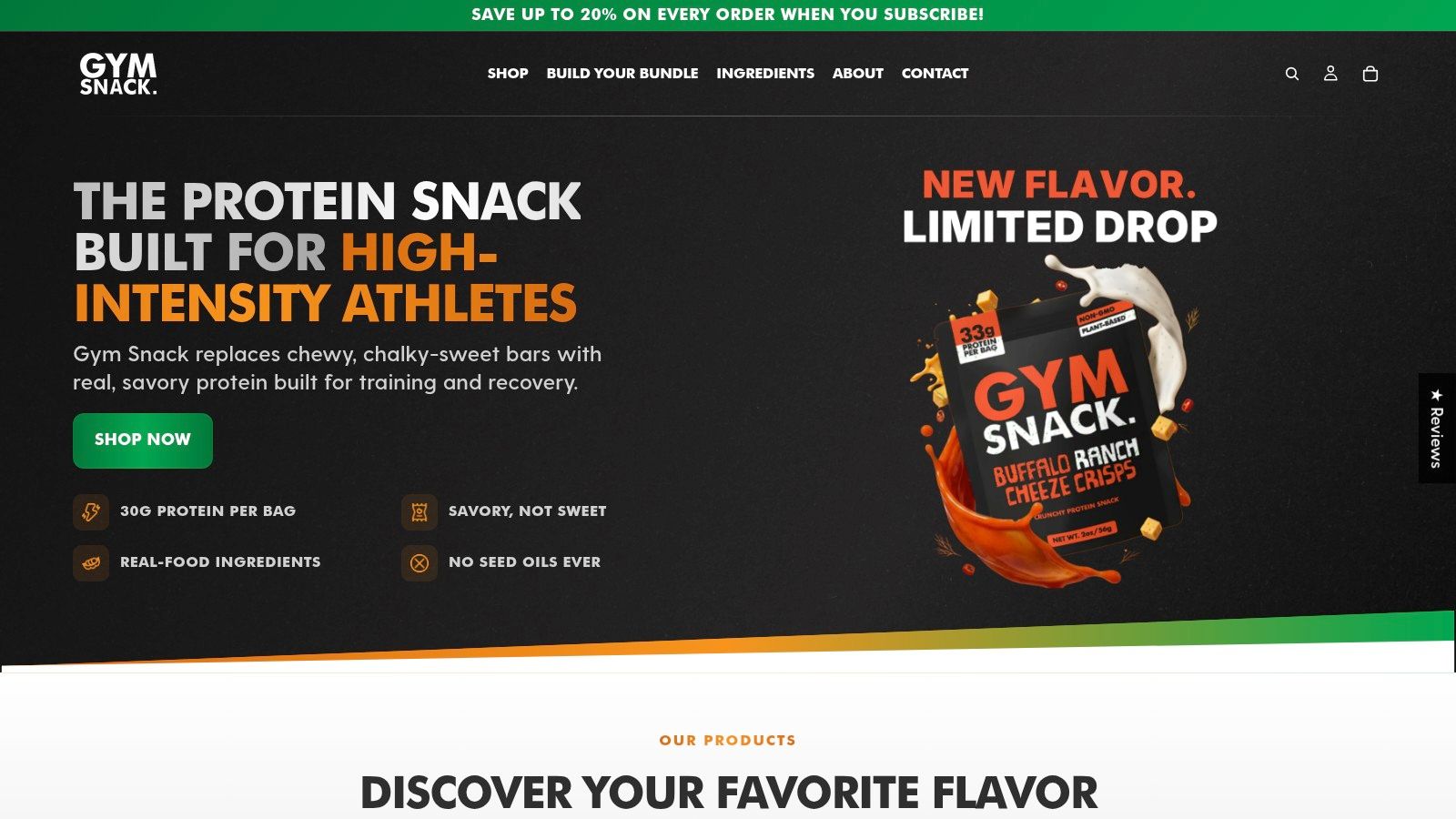
Why savory changes the game
Savory protein snacks solve a practical problem that sweet bars can't. They reset the palate.
That matters most for people who use protein products daily. A savory option can feel more like real food, especially if you're eating it in the afternoon, on the road, or after a day of already sweet meals and supplements.
It also pairs better with normal eating patterns. Savory foods fit alongside fruit, salads, wraps, or simple meal-prep combinations without turning every snack into a dessert event.
Satiety matters more than hype
Bar coverage often centers on the highest protein count, but satiety is a separate issue. BarBend notes that for people cutting weight or managing hunger, a bar with 20 to 30 g of protein and 5 to 10 g of fiber can work better than one that maximizes protein exclusively without a balanced macro profile (BarBend on protein bar satiety).
That's a useful correction for bodybuilders. During a cut, the “best” bar is often the one that keeps you steady, not the one that wins a front-label showdown.
If savory options interest you, this guide to savory high-protein snacks is worth a look because it addresses the exact problem most sweet-bar roundups ignore.
A protein snack you enjoy for months beats a “perfect” bar you're sick of after two weeks.
What savory options often do better
They tend to help in three ways:
- Less flavor burnout: You're not stuck in an endless dessert loop.
- Better meal compatibility: Savory snacks fit naturally with whole-food meals.
- More realistic appetite control: They often feel like part of an eating pattern, not a treat with macros attached.
This doesn't mean sweet bars are bad. It means relying on them exclusively is a mistake. Smart bodybuilding nutrition isn't just about hitting numbers. It's about building a setup you can live with.
How to Build Your Bar into a Complete Meal Plan
The biggest mistake with bodybuilder protein bars is treating them like random backups. Used well, they can plug real gaps in a meal plan without replacing the basics.
That's how I prefer to frame them for lifters. Bars and protein snacks aren't your foundation. They're support pieces that keep the foundation intact when life gets busy.
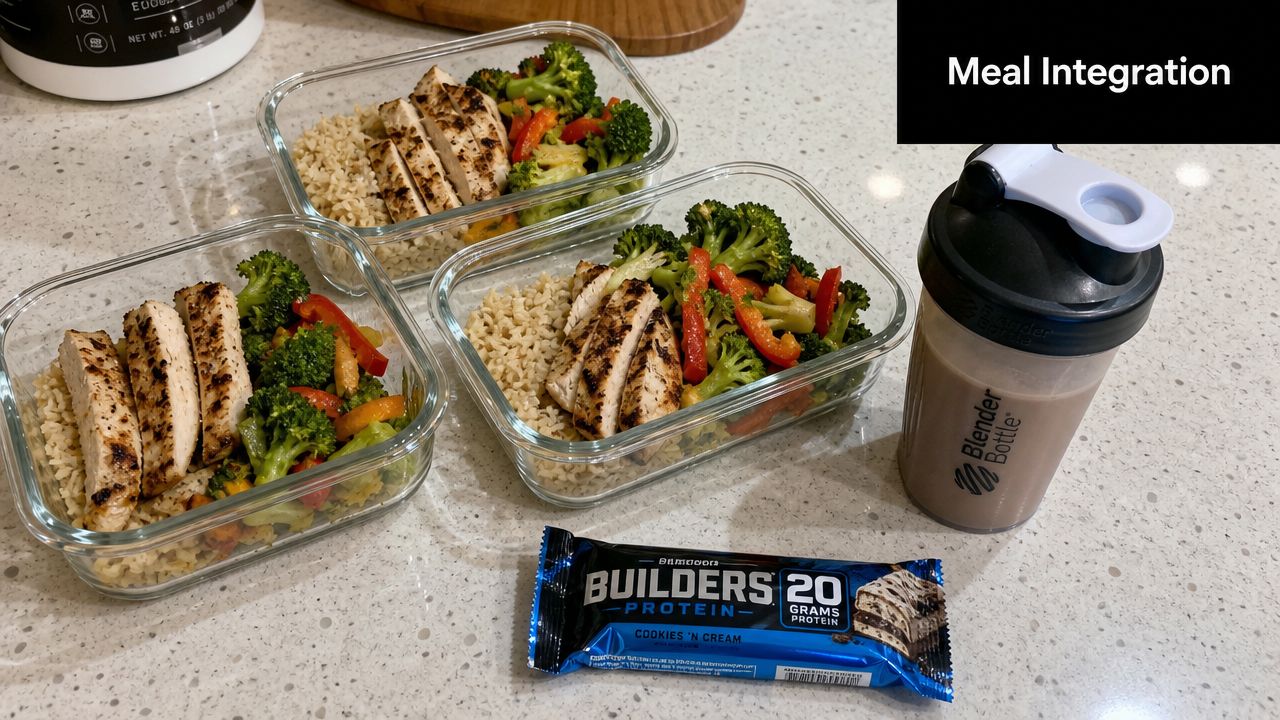
A training day example
A practical bodybuilding day might look like this:
- Morning: A normal breakfast with protein and carbs
- Midday: Meal prep lunch
- Pre-lift or post-lift: A bar or high-protein snack chosen for the training window
- Evening: A full dinner built around whole foods
- Late gap insurance: A portable protein option if dinner is delayed or calories are still short
That approach works better than grazing on bars all day. You're using them to reinforce structure, not replace it.
For lifters who want their food strategy to match a more performance-driven routine, a 2026 functional bodybuilding program can be useful context because it pushes you to think about how training style and nutrition support each other.
Pairing ideas that actually work
A protein snack gets more useful when you stop seeing it as a standalone object.
Here are pairings I use often with clients:
| Situation | Better pairing |
|---|---|
| Fast post-workout option | Protein bar plus an easy carb source |
| Desk snack | Protein snack plus fruit |
| Travel day | Protein snack plus nuts or another simple whole-food add-on |
| Light meal upgrade | Crumble a savory protein snack over a salad or soup for texture and extra protein |
The goal is to complete the meal, not worship the bar.
Use convenience without drifting into junk convenience
A lot of lifters start meal prepping with good intentions, then end up underprepared on the exact days that matter most. That's where a protein bar or savory protein snack earns its place.
This video gives a useful visual reminder that consistency always comes back to planning and easy execution.
Where bodybuilder protein bars fit best
Think in roles:
- Bridge food: Prevents long gaps between meals
- Recovery backup: Helps when a full meal isn't available
- Macro closer: Makes it easier to finish the day on target
- Adherence tool: Gives you portable structure during busy weeks
The best use of a bar is boring and effective. It keeps your day on track when perfect eating isn't possible.
That's the right standard. If a protein snack helps you stay consistent without wrecking digestion or causing taste fatigue, it's doing its job.
Your Action Plan for Smarter Protein Snacking
When you're shopping for bodybuilder protein bars, ignore the hype language and run a quick filter.
Use this checklist
- Start with purpose: Decide whether the bar is for post-workout recovery, a between-meal bridge, or hunger control during a cut.
- Check the protein target: For serious lifting support, bars in the 20 to 30 g range are usually the most useful.
- Match carbs to timing: Around workouts, more carbohydrate support makes sense. Away from training, balance often beats sugar-heavy formulas.
- Look hard at fiber: Enough fiber can improve satiety. Too clever a fiber system can backfire if your gut doesn't tolerate it.
- Read the ingredients like an adult, not a marketer: If sugar alcohols or processed fibers regularly bother you, don't keep trying to “tough it out.”
- Pay attention to flavor fatigue: If all your protein products are sweet, add savory options so your plan stays sustainable.
The real standard
A strong protein bar should do three things well. It should support your macros, digest predictably, and remain something you're willing to eat week after week.
That's the difference between a flashy product and a useful one.
If you treat protein snacks as strategic tools instead of magic muscle foods, your choices get much easier. You stop chasing labels. You start choosing based on performance, appetite, digestion, and long-term compliance.
If you want a break from the usual dessert-style protein routine, Gym Snack is worth a look. It takes a different approach with chef-inspired, plant-based savory protein snacks that are built for lifters who want crunch, cleaner ingredients, and a more sustainable way to keep protein intake on track.