

The most popular advice about cholesterol free snacks is also the least useful: look for the label and assume you've made a heart-smart choice. That shortcut misses what an active body needs. A snack can contain no dietary cholesterol and still deliver little protein, little fiber, or a large amount of saturated fat.
A better approach asks what the food contributes, not only what it excludes. For fitness, appetite control, and cardiovascular-friendly eating, prioritize plant protein, fiber, and lower saturated fat. That framework turns snack shopping from label spotting into a practical skill.
Introduction What Healthy Snacking Means in 2026
Healthy snacking now has to solve more than hunger between meals. You may need portable fuel before training, a satisfying option after exercise, or something that fits a weight-management plan without feeling like dessert. A single “cholesterol-free” claim can't answer those questions.
Plant-based snacks naturally avoid dietary cholesterol, but that doesn't automatically make every plant-based product a strong choice. Refined starches, added sugars, and saturated fats can still shape the snack's overall nutritional value. The more useful question is whether the food helps you reach a meaningful protein goal, adds fiber, and keeps saturated fat modest.
This matters especially for people using GLP-1 medications or eating smaller portions. Dietitian guidance increasingly emphasizes protein-forward, lower-fat, easy-to-digest snacks for these consumers, with a practical target of 10 to 20 grams of protein per serving according to GLP-1 snack guidance from Food Network.
The winning snack, then, is more than just cholesterol-free. It's satisfying, tolerable, savory when you want savory, and aligned with your training and health goals.
Decoding the Cholesterol-Free Label
Dietary cholesterol and blood cholesterol are related concepts, but they aren't the same thing. Dietary cholesterol is a substance found in animal-derived foods. Blood cholesterol is carried through your bloodstream and measured through markers such as LDL cholesterol, non-HDL cholesterol, and apoB.
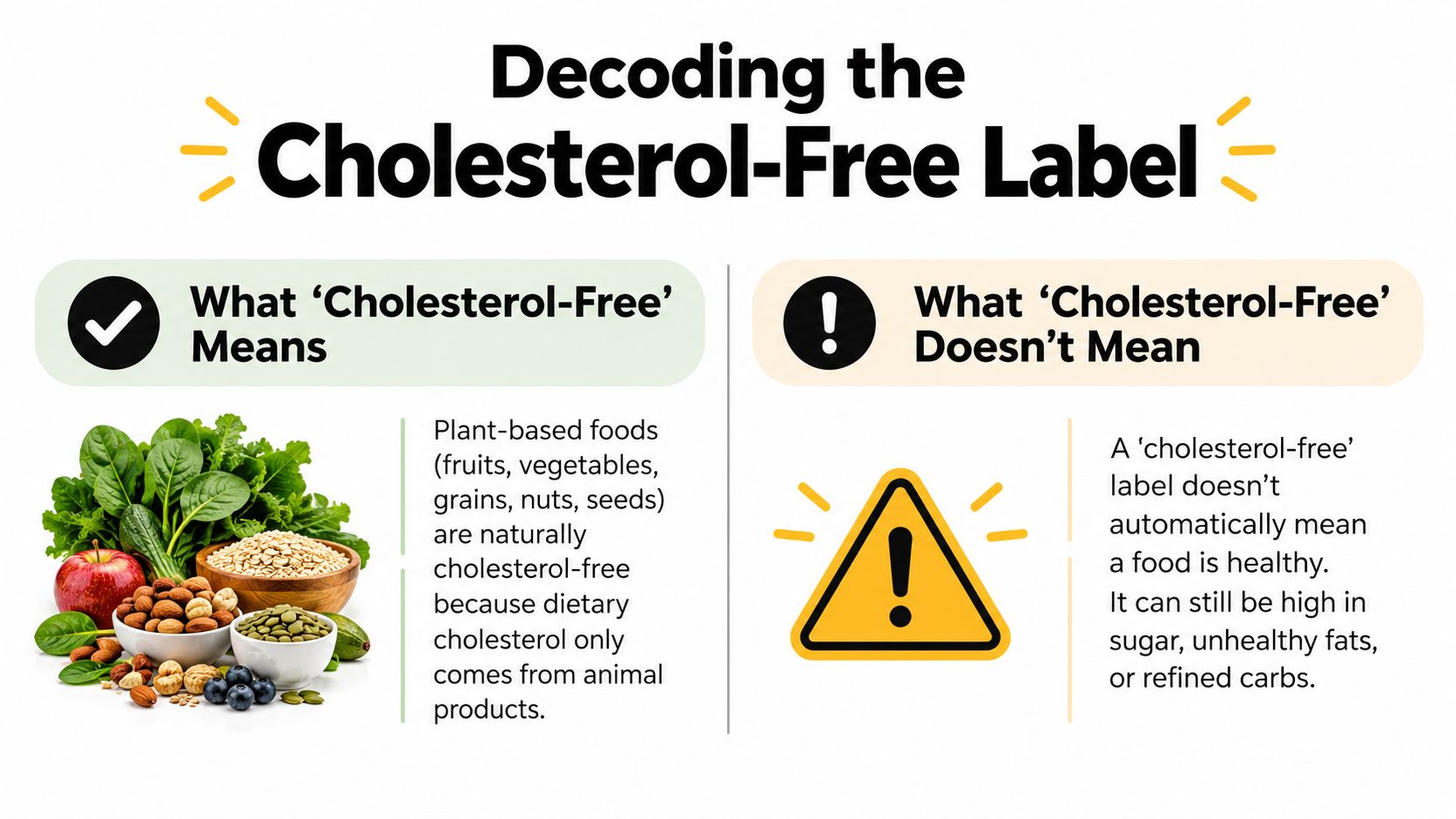
Plant foods, including fruits, vegetables, grains, legumes, nuts, and seeds, are naturally free of dietary cholesterol. That makes a plant-based protein snack a straightforward way to avoid cholesterol from dairy, eggs, or meat. It doesn't tell you whether the snack is balanced.
What the label tells you
A cholesterol-free claim tells you something narrow about the ingredients or finished product. It doesn't guarantee that the snack is high in protein, rich in fiber, low in saturated fat, or minimally processed.
That distinction is important because the benefit of a heart-conscious snack comes mainly from its overall composition and the foods it replaces. Replacing animal protein with plant protein has been associated with improved blood lipid markers, while a cholesterol-free label by itself isn't a health guarantee, as discussed in the systematic review on plant protein substitution.
Think of the label as one checkbox, not the final verdict. A puffed plant snack made mostly from refined starch may be cholesterol-free but still leave you hungry. A legume-based or pea-protein snack can offer a more useful combination of protein, texture, and fiber.
The metric to inspect next
Look at saturated fat after you confirm the product contains no cholesterol. Some packaged plant-based foods use coconut-based ingredients or other concentrated fats that can increase saturated fat even though the product remains cholesterol-free. You should also check the ingredient list for added sugars, refined starches, and a long sequence of ingredients that adds little nutritional value.
For a plain-language refresher on serving sizes, ingredients, and nutrient panels, use this guide on how to read nutrition labels. If you want more background on how cholesterol markers are interpreted, OneTwenty's cholesterol guide offers useful context.
Practical rule: Treat “cholesterol-free” as a starting point. Your next questions should be, “How much protein and fiber does this provide?” and “What does the saturated fat look like?”
A Smarter Framework for Choosing Snacks
A nutrition label works like a training log. One number rarely tells you whether the whole session was productive, and one nutrition claim rarely tells you whether a snack deserves a place in your routine.
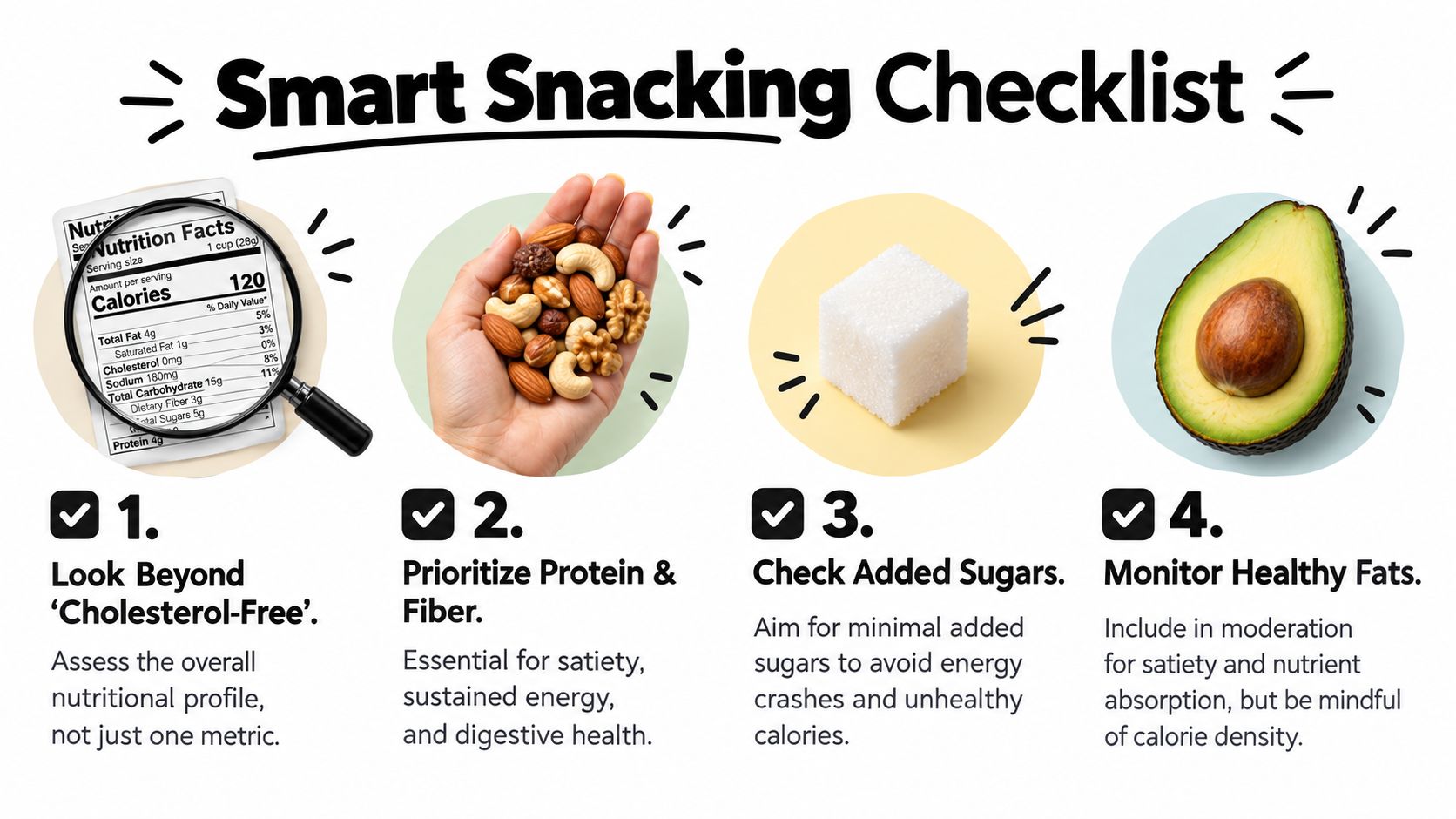
Start with the protein-fiber-saturated-fat trio. Protein helps a snack feel substantial and supports dietary needs around training. Fiber adds bulk and can make a small serving more satisfying. Saturated fat deserves attention because a product can be cholesterol-free while still carrying a less favorable fat profile.
Read the label in three passes
First, find the protein. For people managing weight or using GLP-1 medications, dietitian guidance favors protein-forward snacks in the 10 to 20 gram range per serving. That range is a practical shopping reference, not a requirement for every person or every occasion. A smaller snack may suit a short errand, while a more substantial serving may fit after resistance training.
Second, find the fiber. Choose snacks that get fiber from recognizable sources such as chickpeas, lentils, peas, beans, seeds, vegetables, or whole grains. Fiber-rich plant-based patterns are associated with improved lipid markers. A 2023 meta-analysis reported average reductions of 0.34 mmol/L in total cholesterol and 0.30 mmol/L in LDL-C compared with omnivorous diets, as reported in this meta-analysis of plant-based dietary patterns.
Third, inspect saturated fat and the ingredient list. A cholesterol-free product can still be less helpful if saturated fat is prominent or if the recipe is built mainly around refined carbohydrates. Look for a snack where plant protein appears near the front of the ingredient list, rather than a product that uses a small amount of protein as a marketing feature.
Use the whole-food test
Ask whether the snack resembles a recognizable food combination. Edamame, roasted chickpeas, hummus with vegetables, and nuts with fruit each provide a clear nutritional role. Packaged snacks can fit too, but they should earn their place through useful protein, fiber, and tolerability rather than the front-of-pack claim alone.
Shopping shortcut: If the snack is cholesterol-free but has little protein and fiber, it's closer to a treat than a strategic training snack.
For readers who want nutrition to support a realistic weight-management routine, Pause Medical's guide to sustainable weight loss in Mississippi provides broader lifestyle context. You can also use the video below as a visual primer for evaluating everyday food choices.
Fueling Fitness and Managing Fullness
A cholesterol-free label does not guarantee a satisfying snack. If you finish eating and immediately start searching for something else, the choice provided little appetite support. If it feels heavy before training, its nutrition profile will not help much during the workout.
Protein and fiber usually create steadier fullness than a snack built mostly from refined carbohydrates. They also fit the current interest in appetite signals such as GLP-1 and PYY, including among people managing weight or using GLP-1 medications. Food does not need to imitate medication. A better target is a compact snack that supports satiety while remaining comfortable to digest.
Match the snack to the moment
Before training, choose a modest portion that feels light enough to tolerate. Roasted chickpeas, edamame, or a savory plant-protein snack can provide more staying power than fruit alone without becoming a full meal. Your own digestion sets the limit. Spicy ingredients and higher-fat recipes may cause discomfort, particularly if your stomach is sensitive.
After training, protein becomes more important for a recovery routine. A pea- or soy-protein snack can support plant-based eating without relying on dairy, egg, or meat. The potential lipid advantage comes from replacing some animal protein with plant protein, not from the cholesterol-free label itself.
For practical ideas that make satisfying eating occasions easier to plan, use this guide on how to stay full longer. Recovery also includes habits beyond food, and some people explore an optimized cellular healing environment alongside nutrition and training with appropriate professional guidance.
Why savory options deserve attention
Sweet protein bars and shakes fill much of the fitness aisle, yet savory snacks meet a different need. Crunch, salt, and cheese-style flavors can make a snack feel like food rather than dessert or a drink. That sensory variety may reduce repeated grazing on options that leave you unsatisfied.
Read the label with the workout in mind. Look for useful protein, fiber, and low saturated fat, then check whether the serving feels dense or causes bloating. If exercise becomes uncomfortable, change the format or reduce the portion. Satiety and tolerability belong in the same decision, especially when appetite is reduced or digestion is more sensitive.
Practical Snack Ideas for Your Goals
A cholesterol-free snack is not automatically the right snack for the moment. A portable option for a long workday may need to stay crisp and satisfying, while a pre-workout bite should be easy to digest. After training, protein may matter more, especially if your next full meal is not coming soon.
Use the options below as a decision guide, not a rigid menu. Match the snack to your schedule, appetite, training demand, and digestion.
Quick on-the-go fuel
Edamame: Keep shelled edamame chilled for a convenient combination of plant protein and fiber. A little seasoning adds savory flavor without making the snack feel like a full meal.
Roasted chickpeas: Roast chickpeas until crisp, then use smoked paprika, garlic, or a mild herb blend. They travel well and provide a crunchy alternative to standard chips.
Hummus and vegetables: Pair hummus with bell peppers, carrots, cucumber, or snap peas. The vegetables provide crunch and volume, while chickpea-based hummus contributes plant protein and fiber.
Nuts with fruit: A small portion of nuts with a piece of fruit combines fat, protein, and carbohydrate. It is simple to pack, but portion awareness matters because nuts are energy-dense.
Savory textures can also make a practical difference. Crunch, salt, and spice may feel more like a real eating occasion than another sweet bar or liquid shake, which can help you choose a snack you will enjoy and use consistently.
Pre-workout energy boosts
Before exercise, choose food your stomach handles comfortably. If training starts soon, keep the serving modest and avoid testing an unfamiliar product before an important session. A snack that looks nutritious on paper still fails its purpose if it leaves you feeling heavy or unsettled.
Try one of these combinations:
- Roasted chickpeas with fruit: Fruit supplies a familiar carbohydrate source, while chickpeas make the snack more substantial.
- Whole-grain crackers with hummus: This pairing suits a savory preference and provides some carbohydrate before movement.
- Edamame with light seasoning: Use a smaller serving if legumes tend to feel filling during pre-workout digestion.
- A plant-protein crunch snack: Select a product with a clear protein contribution and lower saturated fat. Test its texture and tolerability during an ordinary workout first.
Post-workout protein repair
After resistance training or a demanding session, build the snack around protein when your next meal is not immediate. A savory plant-protein option can fit this role without relying on dairy, eggs, or meat.
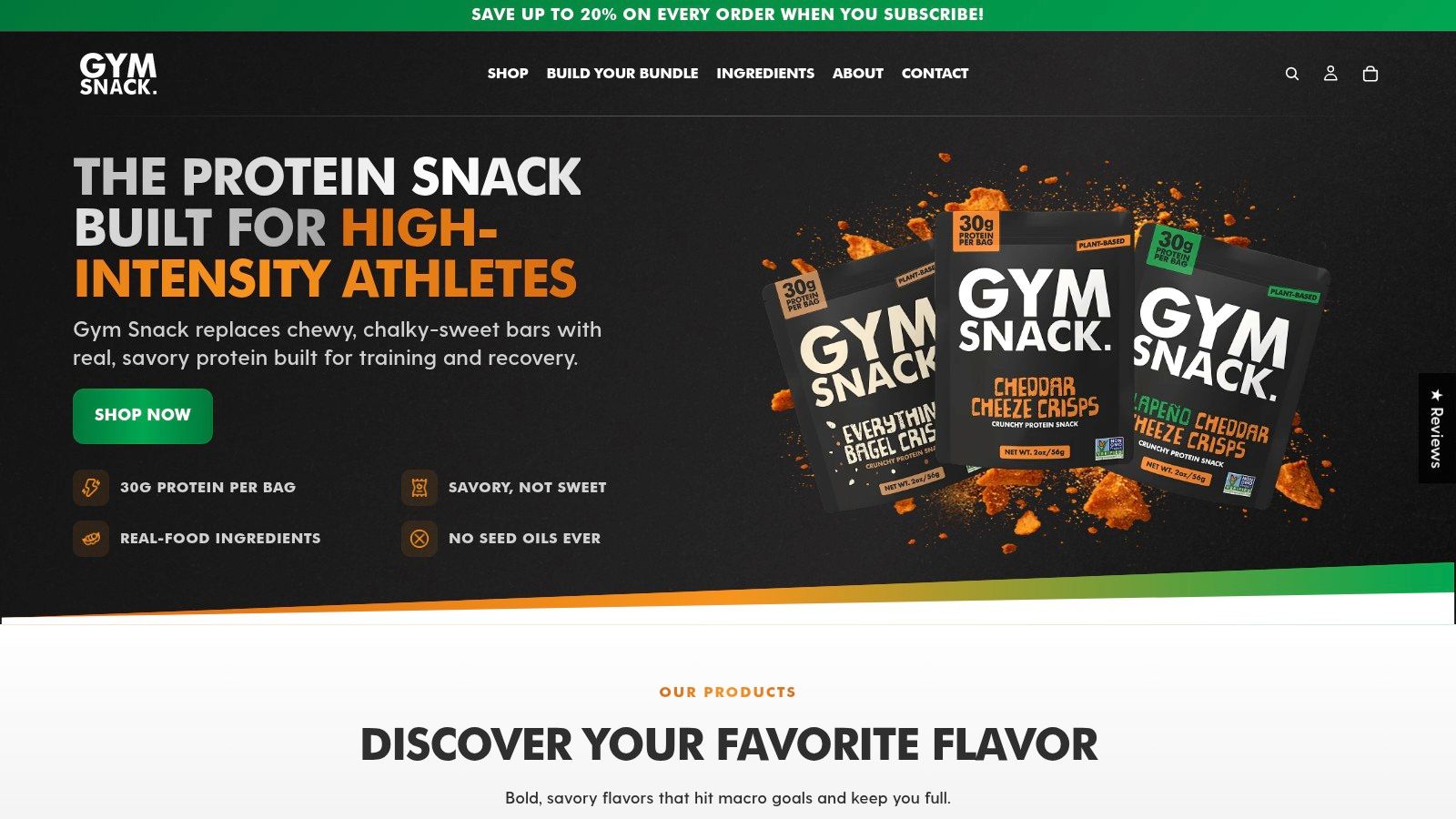
Gym Snack is a plant-based savory snack made with pea protein. According to the publisher's product information, it provides 15g or more of protein per serving, 30g or more per bag, low saturated fat, and no cholesterol. Treat it as one convenient choice within a varied eating pattern, not as a substitute for complete meals.
Other options include edamame, hummus with whole-grain crackers, or roasted chickpeas followed by a more complete meal later. Peas and soy are practical protein sources for a vegan diet. If legumes or spicy seasonings cause digestive discomfort, begin with a smaller serving and adjust the format.
Compare the structure, not just the calories
The table below offers a qualitative comparison framework. Exact nutrition values vary by recipe, brand, serving size, and preparation, so read the package before buying.
| Snack (150-180 calories) | Protein (g) | Fiber (g) | Saturated Fat (g) | Cholesterol (mg) |
|---|---|---|---|---|
| Edamame | Varies by preparation | Varies by preparation | Typically low | 0 |
| Roasted chickpeas | Varies by recipe | Varies by recipe | Typically low | 0 |
| Hummus with vegetables | Varies by portion | Varies by portion | Depends on recipe | 0 |
| Nuts with fruit | Varies by portion | Varies by portion | Depends on nut and serving | 0 |
| Plant-protein savory snack | Check package | Check package | Check package | 0 when plant-based |
The useful comparison is the protein source, not the front-of-pack cholesterol claim alone. Replacing an animal-based protein snack with a plant-protein alternative may support a more favorable lipid profile when it fits your diet and goals. The cited systematic review associated this substitution with lower LDL cholesterol and improvements in other lipid markers, as described in the research on replacing animal protein with plant protein.
For a closer look at fat quality, review these low-saturated-fat snack ideas. Stock two portable options, one pre-workout choice, and one protein-first post-workout option. Planning ahead makes the higher-protein, fiber-aware choice easier when hunger arrives.
Conclusion Your New Approach to Snacking
The phrase cholesterol-free tells you only that dietary cholesterol isn't present. It doesn't tell you whether the snack contains enough protein to support fullness, enough fiber to improve its nutritional value, or a sensible amount of saturated fat.
For an active consumer, the better checklist is straightforward. Choose plant protein when it replaces dairy, egg, or meat protein. Look for fiber-rich ingredients. Evaluate saturated fat, added sugars, and refined carbohydrates instead of stopping at the front-of-pack claim. Then match the texture and serving size to your workout, appetite, and digestion.
This approach makes room for whole foods such as edamame, chickpeas, hummus, vegetables, fruit, and nuts, as well as carefully selected packaged snacks. It also recognizes that a satisfying savory crunch can be more useful than another sweet bar when you're trying to manage cravings.
Your next grocery trip doesn't require a perfect cart. Pick one cholesterol-free snack with meaningful plant protein, pair it with a fiber-rich food, and read the full label before you buy.
Visit Gym Snack to explore plant-based savory protein snacks designed for portable fuel, pre-workout eating, and post-workout recovery. Choose a crunchy option that fits your protein-first, lower-saturated-fat approach, then keep it available for the moment your usual snack choices let you down.