

You're standing in the snack aisle trying to make a decent choice. One bag says “natural,” another says “made with real ingredients,” another says “protein,” and a fourth looks healthy because it uses muted colors and a matte pouch. Flip them over, and the ingredient lists tell very different stories.
That's where many get stuck. They want something easy, filling, and better than chips or candy, but the packaging is doing half the talking and the ingredient panel is doing the other half. If you care about training, energy, appetite control, or just not eating junk by accident, that disconnect gets old fast.
The push toward clean label snacks didn't come out of nowhere. The category was valued at USD 51.74 billion in 2025 and is projected to reach USD 100.62 billion by 2033, with nearly one in three new food and beverage launches globally now carrying a clean label claim, according to Data Bridge Market Research on the clean label snacks market. That matters because it shows this isn't a niche food fad. Shoppers are forcing brands to become more transparent.
The Overwhelming World of Healthy Snacking
A lot of “healthy” snacks are still built like old-school processed foods. The language changed. The formulas often didn't.
You'll see bags that lead with words like simple, wholesome, or better for you, then bury the actual formula in a long ingredient list full of sweeteners, isolates, flavor systems, gums, or shelf-life helpers. Some are fine. Some are mostly marketing.
Why the aisle feels confusing
Consumers aren't confused because they don't care. They're confused because food labels mix three different things into one message:
- Nutrition claims like protein or fiber
- Lifestyle claims like organic, gluten-free, or non-GMO
- Brand language like natural, clean, simple, or honest
Those aren't interchangeable. A snack can be high in protein and still read like a lab project. It can be organic and still be loaded with sugar. It can say natural and still leave you guessing about what's inside.
Clean eating gets easier when you stop judging the front of the package and start treating the back label like the real product page.
What shoppers are really looking for
In practice, most health-conscious buyers want the same few things. They want a short ingredient list, food they recognize, and a snack that supports a goal. That goal might be getting more protein, staying full between meals, avoiding digestive trouble, or not blowing through calories on something that barely satisfies.
Savory snacks deserve more attention here. Sweet bars and dessert-style protein products dominate the “healthy snack” conversation, but plenty of people don't want another cookie-shaped bar with chocolate drizzle. They want crunch, salt, bold flavor, and real satiety.
That gap is one reason clean label matters. It pushes the conversation away from vague wellness language and back toward a simple question. What is this snack made of, and does that formula support what you're trying to do?
What Clean Label Actually Means
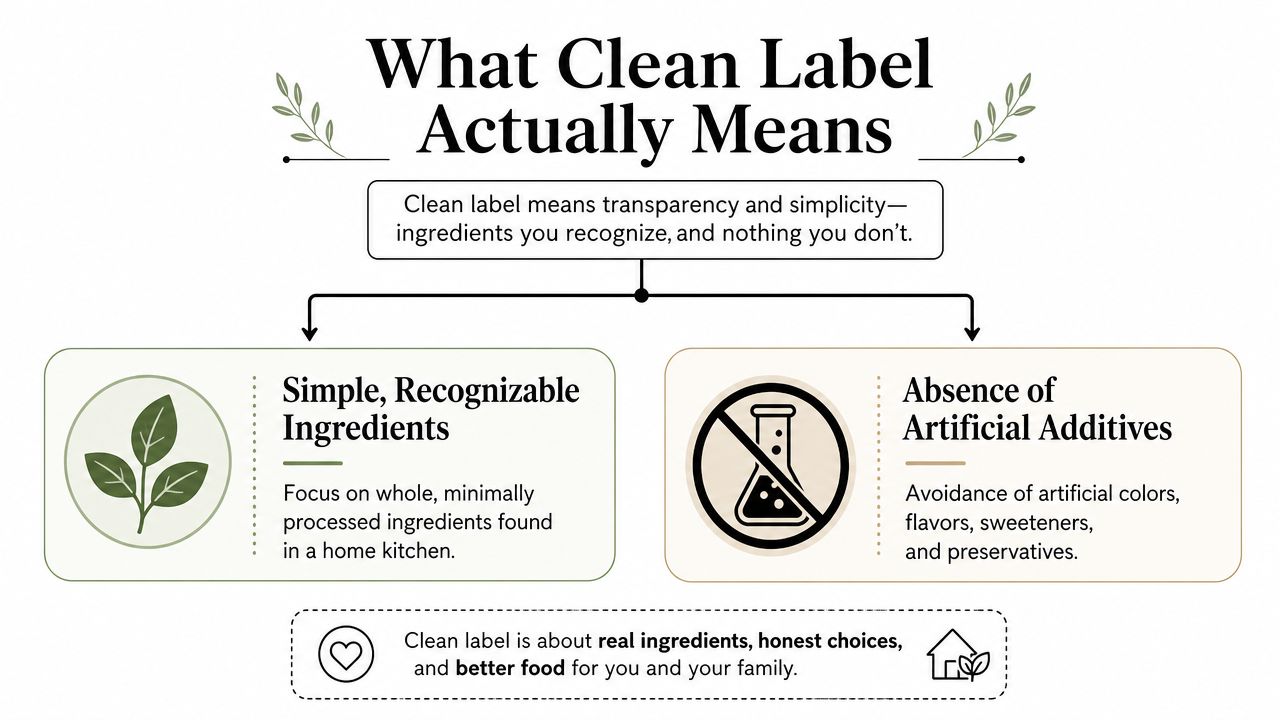
Clean label is not a legal nutrition standard. It is a formulation standard shoppers use to judge whether a snack looks like food or like a workaround built from isolates, flavor systems, and filler ingredients.
The shortest useful definition
A clean label snack usually has a shorter ingredient list, ingredients a typical shopper can recognize, and less dependence on artificial colors, artificial flavors, sweeteners, or preservatives.
A current 2026 trend in clean label snack formulation is the push toward shorter decks built around a manageable number of recognizable ingredients, often in the single digits to low teens. That is a helpful rule of thumb, not a guarantee of quality.
For savory snacks, this matters more than many brands admit. It is fairly easy to make a sweet product seem healthy with dates, cocoa, and a few add-ins. It is harder to build a crunchy, salty snack that stays satisfying, travels well, and still keeps the label readable. That is why the savory clean label gap is real. Good options exist, but they take more formulation discipline.
What clean label usually includes
In practical terms, clean label often means:
- A shorter ingredient list with fewer fillers, stabilizers, and mystery blends
- Recognizable ingredients first such as chickpeas, lentils, potatoes, oats, nuts, seeds, rice, seasonings, or pea protein
- Clear functional choices where each ingredient has an obvious job
- Fewer artificial additives and less dependence on synthetic colors, preservatives, or sweeteners
That last point matters because every formulation involves trade-offs. Remove preservatives and shelf life can tighten. Cut binders and texture can suffer. Strip back flavor systems and the snack may taste flat. Clean label done well is not just about using fewer ingredients. It is about choosing ingredients that still deliver crunch, flavor, and stability without turning the back panel into a chemistry lesson.
What it does not mean
Clean label does not automatically mean low sugar, high protein, low sodium, organic, or aligned with your training plan.
A savory lentil puff can be clean label and still be too light to keep you full. A nut mix can be clean label and still overshoot calories fast. A meat stick can have a simple label and still be high in sodium. The label can be clean while the nutrition fit is wrong for the job.
That is especially relevant for people using food to support appetite control. Many GLP-1 users, and plenty of people trying to avoid constant snacking, do better with savory options that combine protein, fiber, and enough chew or crunch to feel like real food. A clean label cracker or puff that disappears in six bites may look good on paper and still miss the satiety goal.
A more useful standard
I use a simple test. Can you read the ingredient list and understand why each ingredient is there?
If yes, you are usually in the right territory. If the formula relies on stacked starches, vague natural flavor systems, multiple gums, and sweeteners to create the eating experience, the clean label claim gets weaker even if the front of pack looks polished.
If you want a practical companion to that standard, this guide to minimally processed snacks helps separate simple formulation from marketing language.
Decoding Label Claims and Spotting Red Flags
You are standing in the snack aisle after a workout or between meetings, trying to find something that will hold you over. The front of the pack says clean, natural, plant-based, protein, maybe all four. The back panel decides whether any of that means much.
Savory snacks create a lot of confusion here. Brands know health-conscious shoppers want chips, crackers, puffs, and bites that feel cleaner than the old ultra-processed options. But savory products are hard to formulate. You still need crunch, seasoning adhesion, shelf life, and repeatable flavor. That pressure is where labels start to drift from simple to selective.
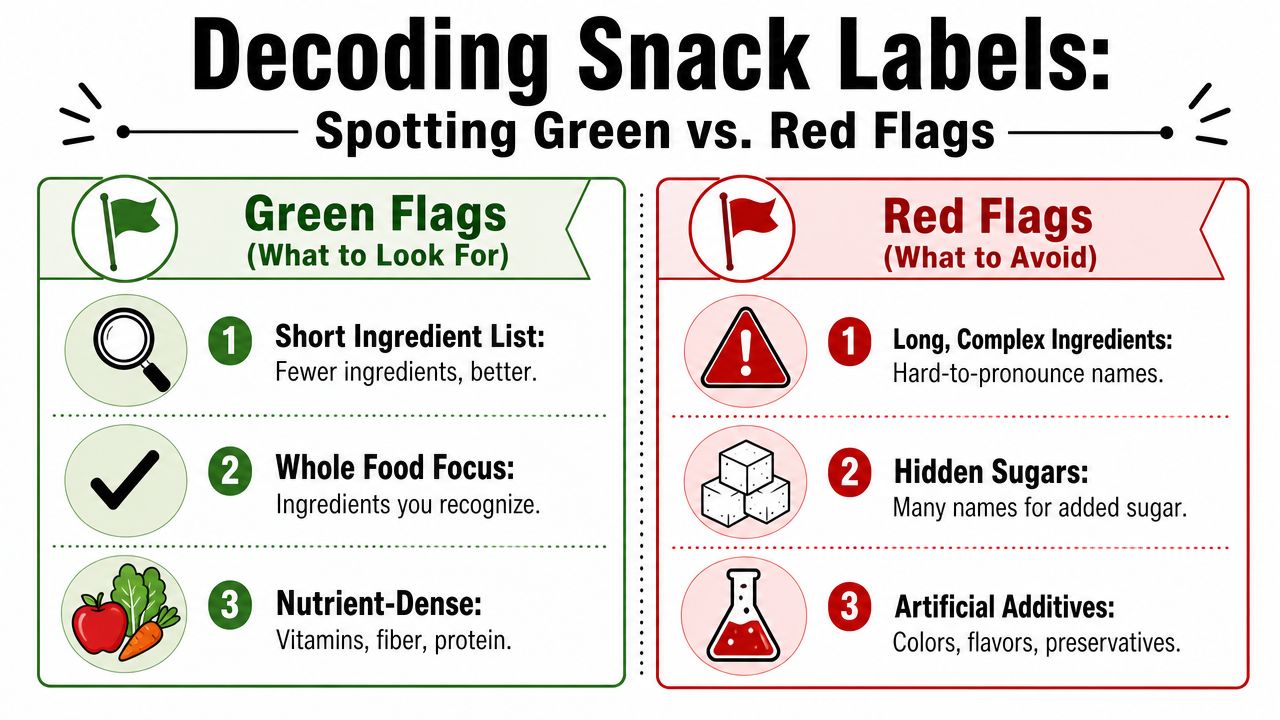
Green flags worth noticing
Some products earn trust fast because the formula reads like food with a clear purpose.
| Green flag | Why it matters |
|---|---|
| Short ingredient list | Fewer moving parts usually means less reliance on fillers and flavor patchwork |
| Foods you recognize first | The first ingredients make up most of the product, so they tell you what you are really buying |
| Specific seasoning ingredients | Garlic powder, onion powder, paprika, herbs, sea salt, or yeast extract are clearer than vague flavor systems |
| A purpose that fits the formula | If it claims to support fullness or protein intake, the ingredients and nutrition panel should make that believable |
For savory snacks, I like to see a base ingredient that can do some real work. Chickpeas, lentils, peas, nuts, seeds, oats, or whole grain corn usually give you a better starting point than refined starch blends carrying the whole product.
That matters even more for satiety. A clean label puff made mostly from starch can still leave you hunting for another snack 20 minutes later. For GLP-1 users or anyone trying to manage appetite, a savory option with protein, fiber, and some chew usually performs better than one built mainly for lightness and perfect crunch.
Red flags that deserve a pause
A red flag does not mean automatic rejection. It means the product deserves a slower read.
- “Natural flavors” without context is still one of the foggiest terms on a package. It may be harmless. It may also be doing a lot of sensory heavy lifting in a product marketed as simple.
- Multiple added sweeteners in a savory snack often show up because brands are balancing bitterness, masking plant proteins, or pushing hyper-palatable flavor. That is useful in product development, but it weakens the clean label story.
- Long chains of gums, stabilizers, and emulsifiers usually signal a formula that needs help holding texture, suspension, or shelf life.
- Protein claims with weak staying power are common in airy crackers and puffs. If the serving gives you a little protein but almost no fiber, volume, or chew, it may not support fullness the way shoppers expect.
- Front-of-pack health language that outruns the ingredient panel is another common issue. “Whole food,” “simple,” and “real ingredients” should be easy to verify on the back.
What front-of-pack language misses
Plant-based, gluten-free, keto, and high-protein claims describe a category or macro target. They do not tell you how the product gets there.
I see this a lot in savory snacks aimed at fitness-minded buyers. A cracker can be high in protein because isolates were added to a refined starch base. A chip can be gluten-free and still rely on vague flavors, sweetener balancing, and texture aids. A meat snack can be simple on paper but loaded with sodium if you eat it as a routine grab-and-go option.
If you want to sharpen this skill, learn to read the package as a whole. This guide on how to read nutrition labels helps you connect ingredient choices with the nutrition panel.
One quick walkthrough makes the difference clearer:
A better rule than “can I pronounce it”
Pronounceable is a weak filter.
Some perfectly legitimate ingredients sound technical. Some very familiar ingredients show up in amounts that make the snack a poor fit for your goals. The better question is simpler. Does each ingredient have a clear job, and does the full formula still match what the product promises?
A short label built around starch, sugar, and flavoring is not automatically better than a slightly longer one built around legumes, seeds, seasoning, and a binder that serves a real function.
Read the formula like a product developer would. Ask what creates the crunch, what carries the flavor, what improves shelf life, and whether those choices still support the reason you bought the snack in the first place.
Your 60-Second Clean Label Checklist
Most snack decisions happen fast. You're hungry, distracted, and probably not in the mood to analyze a package for five minutes. That's why it helps to use a quick screen instead of chasing perfection.
The fast grocery store audit
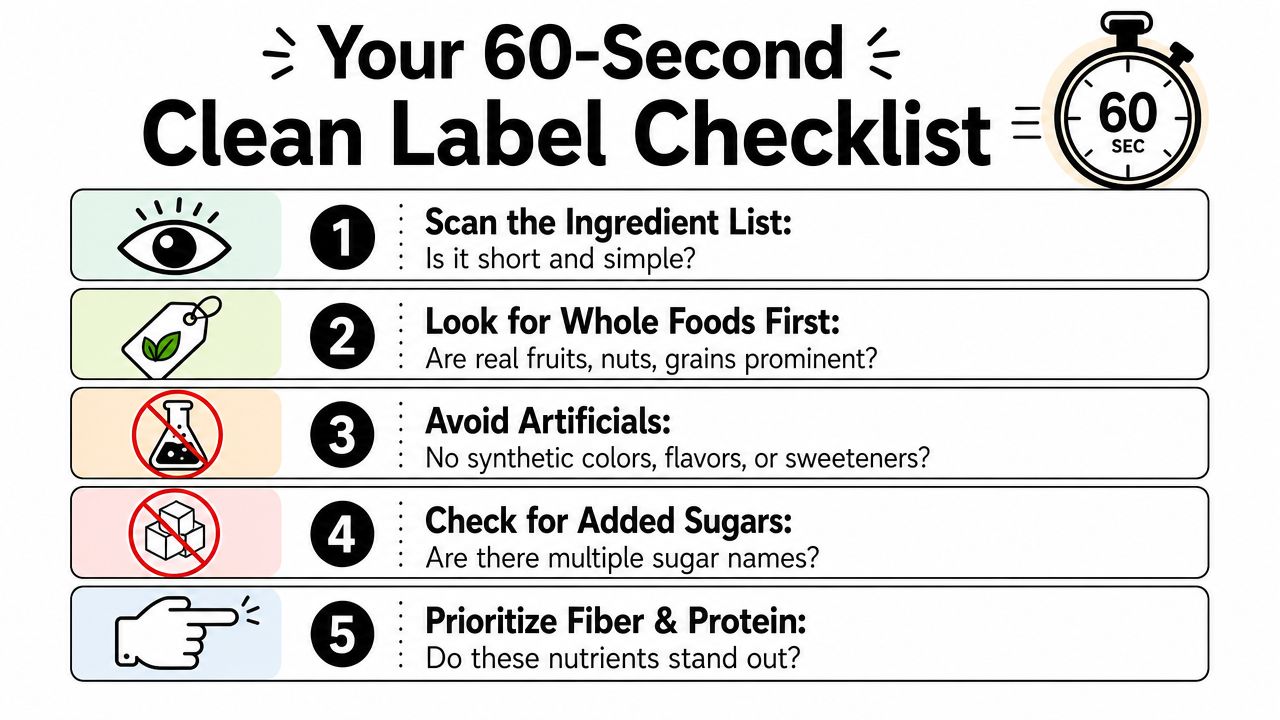
Use this in order.
- Ignore the front first. Flip to the back. The ingredient panel will tell you more in ten seconds than the marketing will in a minute.
- Count the ingredients. You don't need an exact tally every time, but if the list keeps going, ask why. Clean label snacks are often built around a tighter formula.
- Read the first few ingredients carefully. Those define the product. If the first ingredients are the foods you want, that's a strong sign.
- Look for sweetener stacking. Even in savory products, added sugars can sneak in for flavor balancing.
- Check whether the nutrition matches the promise. If the product claims to support fullness, training, or steady energy, the nutrient profile should make that believable.
Texture is where clean formulas get tricky
This is the part shoppers rarely see. Many conventional snacks rely on synthetic texture aids to create a perfect crunch, puff, chew, or shelf-stable bite. Clean label development usually has to work harder.
According to Austrade's article on clean label texture formulation, clean label formulation often pairs plant proteins such as pea protein with native starches, and developers have to test water activity carefully to hit a target crispness or chew while staying free of common allergens.
That sounds technical because it is. Texture is one of the biggest trade-offs in this space.
What works and what doesn't
From a product development standpoint, a few patterns show up again and again.
-
What works well
- Protein plus starch pairing can create structure without leaning on synthetic texture systems
- Simple seasoning systems often hold up better than overbuilt flavor stacks
- Purpose-driven formulas usually taste more coherent because every ingredient has a job
-
What often fails
- Trying to mimic junk food exactly with a stripped-down formula. It usually disappoints on texture.
- Overloading protein without balancing moisture and structure. That can lead to chalky, dry, or dense snacks.
- Using clean label as an excuse for blandness. Simple doesn't mean boring.
Practical rule: If a clean snack tastes oddly dusty, collapses into crumbs, or leaves a strange coating in your mouth, the formula probably solved for label simplicity without fully solving for structure.
The real goal of the checklist
You're not trying to find a morally pure snack. You're trying to find one that's transparent, useful, and satisfying enough that you'll keep buying it.
That last part matters. A snack can look flawless on paper and still fail if it doesn't satisfy hunger or craving. The best clean label snacks don't just remove things. They still deliver texture, flavor, and a clear nutritional purpose.
Choosing Clean Snacks for Your Specific Goals
A good snack isn't universally good. It's good for a reason. That reason might be lifting, appetite control, convenience, or staying consistent with a plant-based diet when you're busy.
That's why the most practical way to shop for clean label snacks is to start with your goal and work backward to the label.
If your goal is training and recovery
Fitness-focused people usually need a snack that does more than avoid artificial additives. They need one that helps them hit protein intake consistently without feeling like a dessert substitute.
Sweet bars can do the job, but they're not always the best fit, especially if you train hard and want something savory after a workout or between meals. A savory format can feel more satisfying and less repetitive over time.
If your goal is satiety and appetite control
The market still has a blind spot. According to Kerry's analysis of clean-label savory snacks, over 50% of consumers want clean-label savory snacks with added protein, yet the category remains underserved. The same source says fortified savory snacks with 15g+ protein are the top unmet need and notes their relevance to satiety hormones such as GLP-1.
That lines up with what many people report in real life. If you're trying to stay full between meals, especially during a calorie deficit or while using GLP-1 medications, a sweet snack often doesn't scratch the itch. You don't just want protein. You want crunch, chew, salt, and enough substance to quiet the “I need something” feeling.
If your goal is plant-based eating without compromise
Plant-based shoppers often have two extra filters. They want clean ingredients, and they don't want hidden dairy, soy, or other ingredients that can complicate digestion or dietary preferences.
That means a useful clean snack for this audience should do more than say vegan on the front. It should have a short, sensible formula and a protein source that makes practical sense in a savory product.
A lot of people also build snack routines around energy support rather than just macros. If that's you, a homemade add-on can help. This piece on the benefits of matcha powder offers a simple way to think about pairing a clean snack with a more stable afternoon energy ritual.
A simple decision filter by goal
| Your goal | What to prioritize in clean label snacks |
|---|---|
| Strength training | Protein-forward savory options with a straightforward ingredient list |
| Weight management | Snacks that feel filling, not just light or virtuous |
| GLP-1 support | Protein and crunch that help satisfy appetite with less reliance on sweetness |
| Plant-based eating | Transparent formulas with clearly plant-based protein sources |
| Busy workdays | Portable snacks that don't require refrigeration and still taste like real food |
If you want a shortlist of what to look for in this category, these examples of clean protein snacks are useful because they focus on protein quality and ingredient clarity, not just front-of-pack claims.
Frequently Asked Questions About Clean Snacks
Are clean label snacks always more expensive
Usually, yes. Simpler formulations, tighter ingredient standards, and certifications often cost more, so clean label snacks commonly carry a price premium, as noted earlier. That said, price alone means very little. I've seen expensive products padded with trendy claims, and I've seen reasonably priced savory snacks with a short ingredient list, solid protein, and no filler ingredients doing the intended work.
Supply also affects what shows up on shelf and what it costs. The clean label ingredients market is projected to grow from USD 47.91 billion in 2026 to USD 83.44 billion by 2034, at a 7.18% CAGR, according to this clean label ingredients market projection covered by Yahoo Finance. As more brands compete for simpler ingredients, some categories get better and some get pricier.
Are natural flavors a dealbreaker
Natural flavors sit in the middle.
I don't automatically reject them, but I do ask what job they're doing. In a savory snack, a small amount may round out a cheese-style or spice profile. If the product depends on natural flavors to create most of the taste, the clean label story gets weaker. A short label with one gray-zone ingredient is different from a formula built on workarounds.
Is clean label the same as organic
Organic and clean label solve different problems. Organic follows a certification standard. Clean label is about how understandable and straightforward the product is.
A snack can qualify as organic and still be ultra-processed or built to taste hyper-palatable. A clean label snack may skip organic certification and still give you a clearer, more practical ingredient list. For shoppers focused on fitness or appetite control, that distinction matters.
Does clean label mean healthier
Healthier for what goal?
That's the better question. A clean label cookie is still easy to overeat, and a clean label fruit bar can still leave you hungry an hour later. For someone trying to stay full between meals, support training, or manage appetite on a GLP-1, the better clean snack is often savory, protein-forward, and satisfying enough to reduce the urge to keep grazing.
What's the fastest way to improve your snack choices
Start with the snack you eat on autopilot. For many people, that's the afternoon desk snack or the grab-and-go option after training.
Then make one practical upgrade. Choose a savory option with a short ingredient list, a clear protein source, and enough texture to feel like real food. That single swap usually does more for satiety and consistency than buying another sweet snack with cleaner branding.
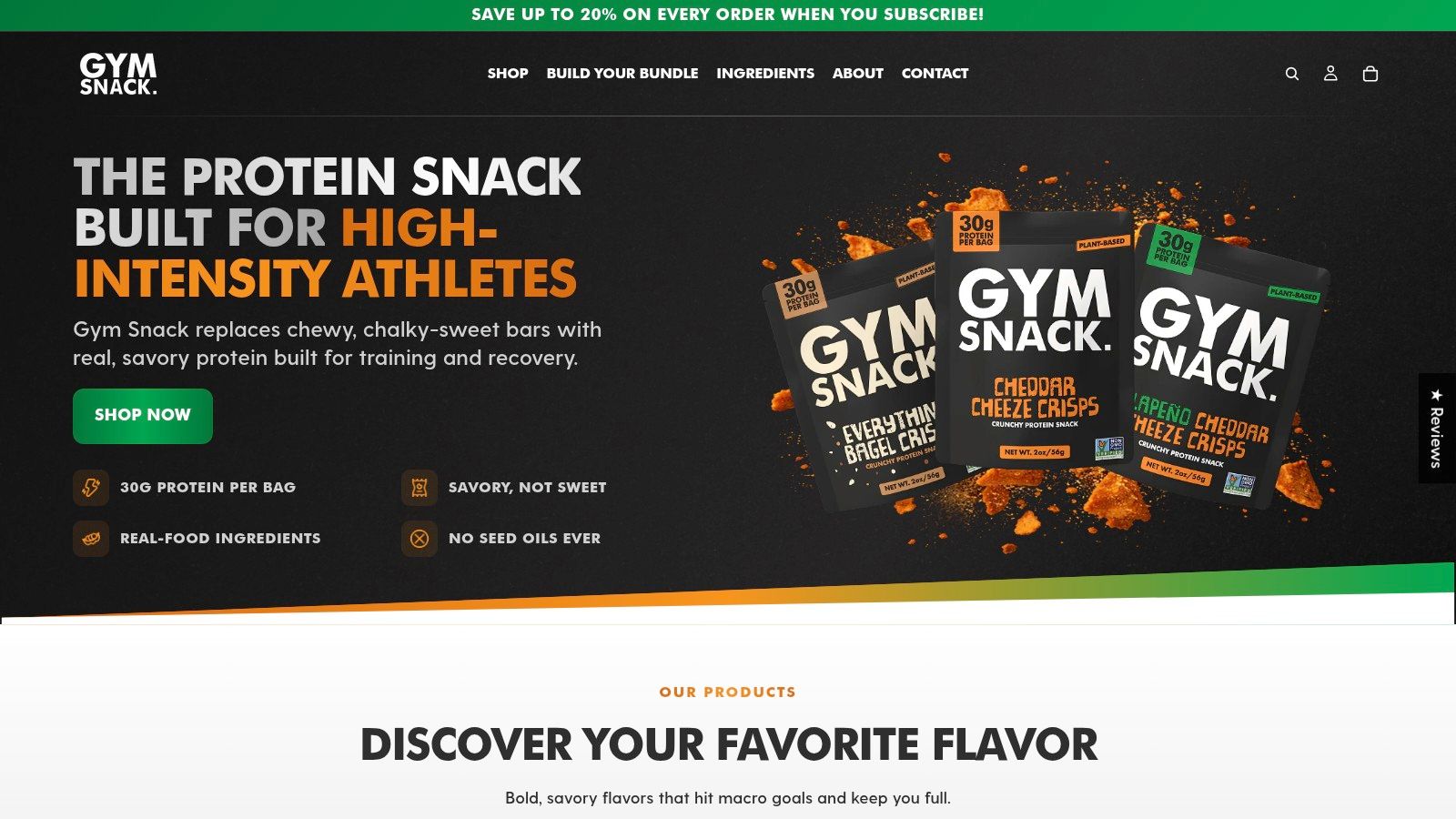
If you want a savory option that applies these principles in real life, Gym Snack is worth a look. It's built around plant-based pea protein, bold cheesy flavor, and a clean, pronounceable ingredient list, with a format that makes more sense for people who want crunch, satiety, and real snack satisfaction instead of another sweet bar.