

You're probably doing this right now. You pick up a snack bag that says “protein,” another that says “clean,” and a third that says “made with real ingredients.” They all look healthy. Then you flip them over and the ingredient lists tell three very different stories.
That confusion makes sense. Snack packaging is built to sell convenience first, clarity second. If you're trying to eat for better energy, hit protein goals, manage appetite, or make smarter choices while using a GLP-1 medication, that gap matters.
Minimally processed snacks can help, but only if you know what the phrase means in real life.
Navigating the Modern Snack Aisle
A grocery store snack aisle can feel like a row of false choices. One bag leans on “plant-based.” Another promises “natural flavor.” A protein bar sounds practical until the label reads more like a formula sheet than food. You're left asking a fair question. Which of these snacks will keep me full and fit my goals?
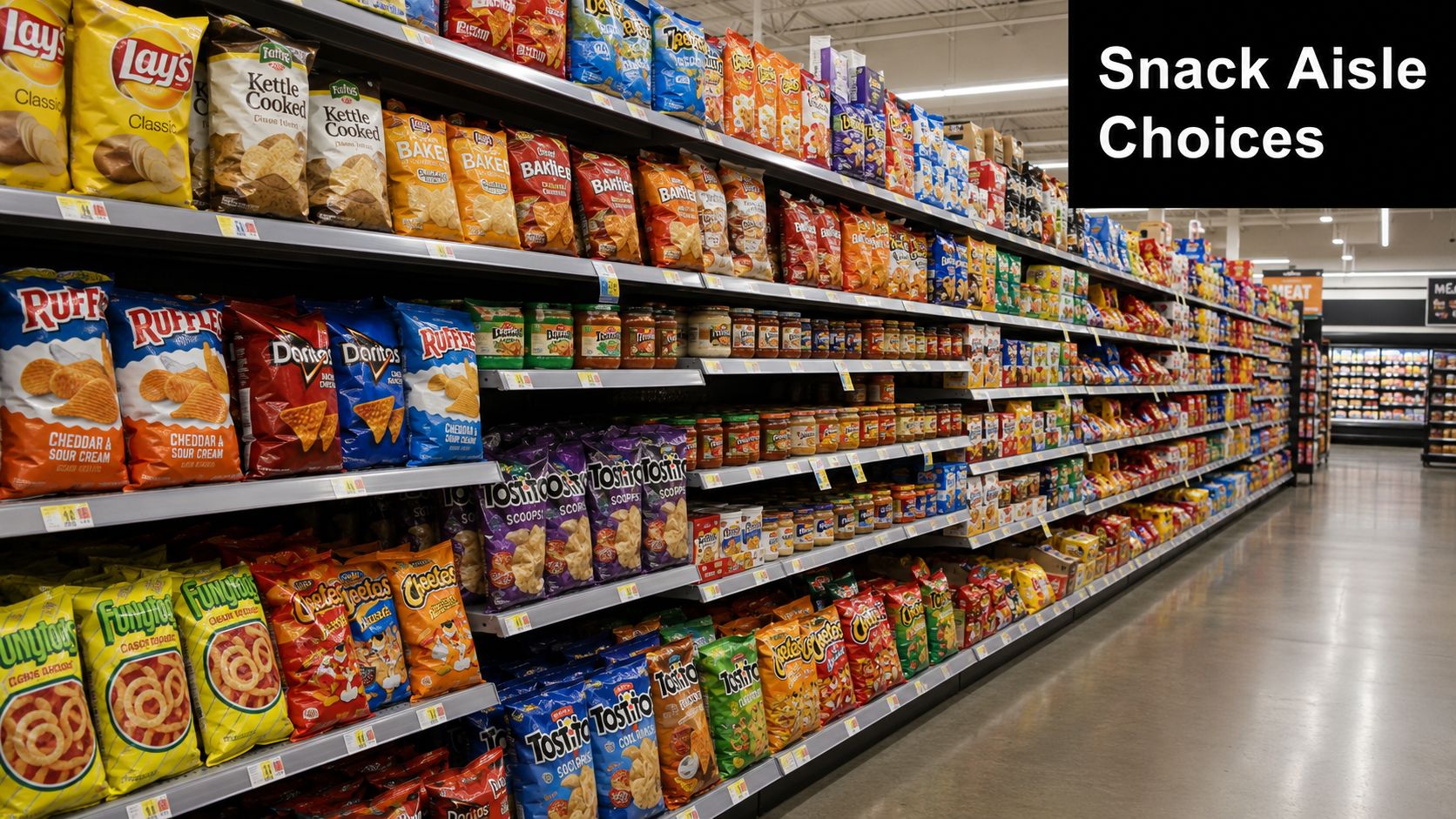
This isn't just a personal frustration. It reflects how the food environment has changed. In recent CDC data, U.S. adults got 53% of their daily calories from ultra-processed foods, while the share of calories from minimally processed foods at home fell from 33.2% in 2003 to 28.5% in 2018 (CDC data brief). Snacks are part of that shift, especially packaged savory foods that are designed to be cheap, craveable, and easy to overeat.
Why this matters in daily life
When most available snacks are highly formulated, your “default” choice starts working against your goals. That shows up in a few common ways:
- You chase protein but get dessert instead. Many snack products market protein while still behaving more like candy.
- You want convenience, not a kitchen project. Whole foods help, but you can't always carry a bowl of lentils or a tub of cottage cheese.
- You need appetite control. That matters for fat loss, long workdays, and people trying to eat comfortably on GLP-1 medications.
The modern snack problem isn't only about willpower. It's about trying to make a smart choice in an aisle built around ultra-processed defaults.
If you enjoy packaged foods from different food cultures, browsing guides like Buy Me Japan can also be useful for seeing how snack formats vary across markets. The same label-reading skills still apply, whether the package is local or imported.
Defining Minimally Processed Snacks
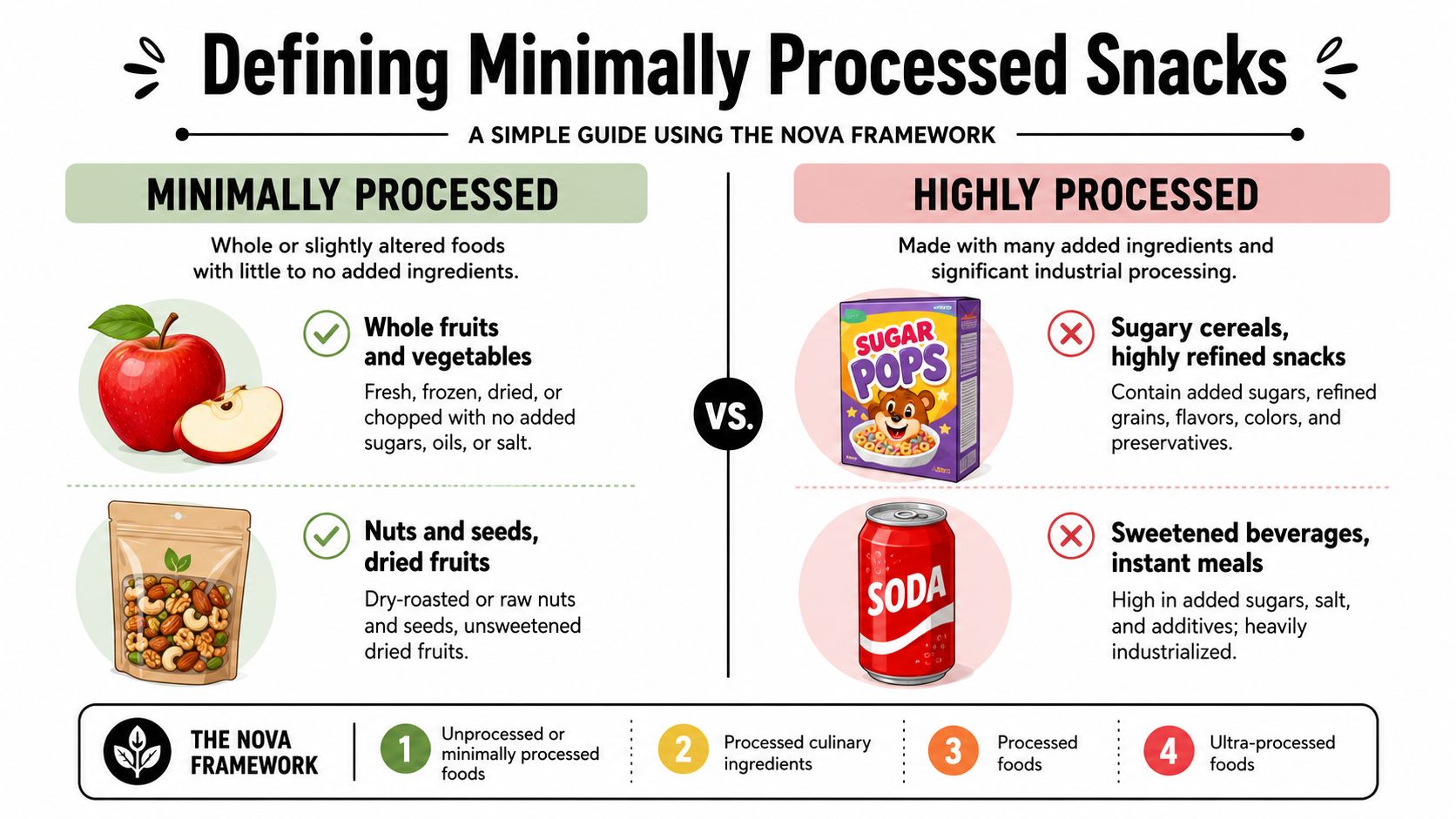
The phrase minimally processed sounds simple, but it trips people up because all packaged food is processed to some degree. An apple is unprocessed. Frozen edamame is processed. Plain roasted nuts are processed. That doesn't make them bad choices.
According to the Harvard-endorsed NOVA framework, minimally processed foods are altered for safety, storage, or convenience through methods like freezing, pasteurizing, or grinding, without substantially changing their nutritional content or adding industrial additives like emulsifiers or synthetic colors (Harvard Nutrition Source on processed foods).
Think kitchen test, not perfection test
A simple way to judge minimally processed snacks is the kitchen test.
If the ingredient list looks like things you'd keep in a normal kitchen, you're usually closer to minimal processing. Think chickpeas, peas, oats, peanuts, almonds, dates, sea salt, olive oil, spices.
If the label leans heavily on industrial extras added to create texture, shelf stability, intense flavor, or color, you're moving toward ultra-processing.
What usually counts as minimal processing
These steps often keep a food in the minimally processed zone:
| Food change | Why it's used | Example snack |
|---|---|---|
| Washing | Safety and cleanliness | Ready-to-eat grapes |
| Freezing | Storage and convenience | Frozen edamame |
| Drying | Shelf life | Unsweetened dried fruit |
| Grinding | Texture and usability | Nut butter, oat-based crackers |
| Pasteurizing | Safety | Yogurt ingredients |
| Fermentation | Preservation and flavor | Some cultured dairy or soy foods |
Where people get confused
Some shoppers think “processed” means “bad,” full stop. That's too broad.
A better distinction is this:
- Minimally processed snack: the original food is still recognizable
- Ultra-processed snack: the original food is more like a starting material than the finished product
A handful of roasted pistachios still looks and eats like pistachios. A cheese-flavored puff with a long list of stabilizers, flavor enhancers, and coloring agents doesn't resemble the base ingredients anymore.
Practical rule: Ask, “Is this food mainly preserved and packaged, or mainly engineered?”
A working definition you can actually use
For everyday shopping, a minimally processed snack is usually one that checks most of these boxes:
- Short ingredient list
- Recognizable foods first
- Few or no industrial additives
- Nutrition still resembles the original ingredients
- Convenient without becoming fake-food adjacent
That last point matters. A snack doesn't have to be raw, fresh, or homemade to fit your goals. It just needs to stay close enough to real food that your body still gets the fiber, protein, fats, and micronutrients you think you're buying.
The Science of Satiety and Better Snacking
People often assume fullness comes down to calories or macros alone. In practice, the way a food is built matters too. Texture, structure, ingredient form, and how quickly a snack goes down can all shape how satisfying it feels.
UC Davis highlights intervention studies where people eating ultra-processed foods consumed more calories and gained more weight than people eating whole foods, even when macros like protein and fiber were matched (UC Davis on processed and ultra-processed food). That's a big clue. Food structure isn't just a side issue. It can change how much you eat without meaning to.
Why less processed snacks often feel more filling
Think of satiety like a brake pedal. Some snacks barely tap it. Others press it more firmly.
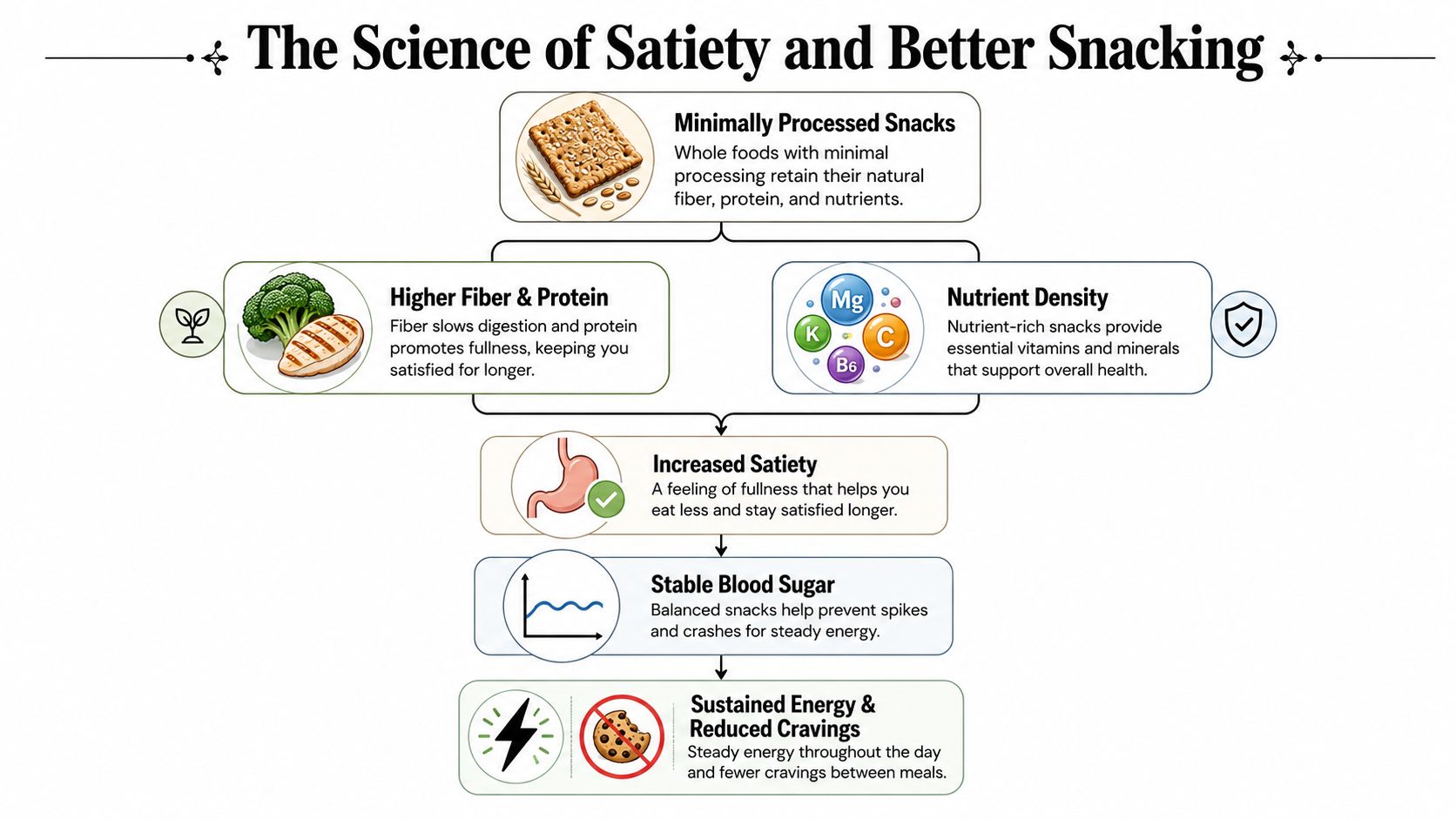
Minimally processed snacks tend to help because they often have more of the traits that slow eating and support fullness:
- Intact structure keeps the food more substantial
- Natural fiber adds bulk and slows digestion
- Protein helps a snack hold you longer
- Less hyper-palatable engineering can make it easier to stop when you're satisfied
A soft, sweet bar that disappears in a minute may fit your macro app. That doesn't mean it will register as satisfying. By contrast, a snack that requires chewing and still resembles peas, nuts, lentils, or fruit often creates a very different eating experience.
Why this matters for protein goals
If you train regularly, protein isn't just a muscle-building topic. It's also a practical hunger-management tool.
The catch is that many high-protein snacks come in heavily formulated formats. They can work, but some people notice they don't feel as grounding or satisfying as less processed options. That's why combining protein target thinking with processing awareness is useful.
A simple example:
- Roasted edamame or chickpeas: more food-like, crunchy, slower to eat
- Dessert-style protein snack: convenient, but often easier to eat quickly and less satisfying for some people
Neither choice is morally better. One may fit your appetite better.
A useful angle for GLP-1 users
If you're using a GLP-1 medication, snack strategy changes. You usually need foods that are easy to tolerate, portion-friendly, and worth the few bites you can comfortably eat. That often means choosing snacks with a better satiety-to-ingredient-noise ratio.
In plain English, you want something that gives you protein and staying power without a long list of extras or a huge volume of food.
For GLP-1 users, the goal usually isn't “eat less” in the abstract. It's “make smaller eating occasions count.”
Some people do best with softer snacks. Others prefer crunchy savory options because they feel more meal-like than sweet bars. The right answer depends on tolerance and routine, but minimally processed snacks give you a clearer starting point.
For more ideas on choosing foods that support fullness, this guide on appetite control foods can help connect snack decisions to real-world hunger management.
The bigger takeaway
The best snack for satiety usually isn't the one with the loudest front label. It's the one that asks your body to do normal food things. Chew. Digest. Recognize the ingredients. Register fullness.
That's why minimally processed snacks fit so well with modern goals like body composition, steadier energy, and appetite control. They aren't a trend rule. They're often a smarter design for how people want to feel after eating.
How to Read Labels Like a Pro
Front-of-pack claims are advertising. The ingredient list offers a reality check.
If you want to spot minimally processed snacks quickly, stop spending most of your attention on words like “natural,” “high protein,” or “gluten free.” Those labels can be useful, but they don't tell you how formulated the product is.
Start with the ingredient list
Read the first few ingredients first. That tells you what the snack is mostly made of.
Here's a fast screen:
- Green light if you see foods such as peas, chickpeas, oats, nuts, seeds, dates, lentils, spices
- Yellow light if the food starts well but then adds a long tail of extras
- Red light if the list is dominated by isolates, syrups, flavor systems, colors, emulsifiers, and texture modifiers
A short list doesn't automatically make a snack healthy, but it often makes the product easier to understand.
Watch for the add-on ingredients
Ultra-processed snacks often rely on supporting ingredients that do a lot of behind-the-scenes work. They improve crunch, make flavors louder, extend shelf life, and help a product feel consistent from bag to bag.
Look closely for patterns like:
| Label clue | What it can signal |
|---|---|
| Multiple sweeteners | A product designed around sweetness first |
| Emulsifiers and gums | More industrial formulation |
| Synthetic colors or flavor enhancers | Heavier processing style |
| Long “seasoning blend” lists | Flavor complexity that may hide many additives |
That doesn't mean every additive is dangerous. It means the snack is moving away from minimal processing and toward food engineering.
The ingredient list answers a more useful question than “Is this healthy?” It answers, “What kind of product is this, really?”
Then check whether the nutrition fits the job
A snack should have a role. Maybe you need protein after training. Maybe you need something light between meetings. Maybe you need a portable option that won't leave you raiding the pantry later.
Look at the panel and ask:
- Does the protein make sense for my goal?
- Will this likely keep me full, or is it mostly fast carbs and flavor?
- Does the sodium or sugar fit how often I'll eat it?
- Would I still choose this if the front label were plain?
If you want a helpful refresher on the basics, Rip Van's guide to mastering nutrition facts pairs well with this more processing-focused approach. You can also use this practical walkthrough on how to read nutrition labels to sharpen your routine.
The price issue is real
One reason highly processed snacks dominate shelves is cost. A large-scale analysis of over 19,000 foods found that ultra-processed items were, on average, 52.09% cheaper per calorie than their minimally processed alternatives (GroceryDB analysis paper).
That doesn't mean you should ignore your budget. It means you need a smarter strategy.
- Use whole basics often. Nuts, popcorn, fruit, yogurt, and roasted legumes can do a lot of work.
- Save premium packaged snacks for high-friction moments. Travel days, office drawers, gym bags, late afternoons.
- Pay for function, not hype. If a snack costs more, it should offer better ingredients, better satiety, or better convenience.
Reading labels well helps you spend intentionally, not just optimistically.
Smart Snack Ideas for Fitness and Plant Based Lifestyles
The tricky part isn't finding “healthy” snacks. It's finding snacks that are healthy and practical for real routines. Fitness-focused eaters want protein. Plant-based eaters want ingredient clarity. Busy people want something they can throw in a bag. GLP-1 users often want smaller portions that still feel worth eating.
That's where minimally processed snacks become useful. They let you stop thinking in food ideology and start thinking in fit-for-purpose options.
Health-focused coverage often points out a real tradeoff. Many minimally processed snack ideas like fruit and nuts can be lower in protein or less portable than conventional bars, which leaves a gap for savory, higher-protein options that still support satiety and convenience (Novant Health snack ideas).
DIY ideas that travel well enough
If you don't mind a little prep, these options hit a nice middle ground between whole food and convenience:
- Roasted chickpeas for crunch and fiber
- Dry-roasted edamame for a higher-protein plant option
- Popcorn with lentils if you want volume plus substance
- Nut-and-date combinations for quick energy before a workout or long gap between meals
- Nuts with dried fruit for a classic portable mix
These aren't perfect for every goal. Some are more calorie-dense. Some are lighter on protein than a dedicated sports snack. But they're simple and recognizable.
Packaged options that make sense
Packaged minimally processed snacks work best when they solve a specific problem. Maybe you need a savory snack after training. Maybe you're tired of sweet bars. Maybe you want something plant-based that doesn't lean on a long list of additives.
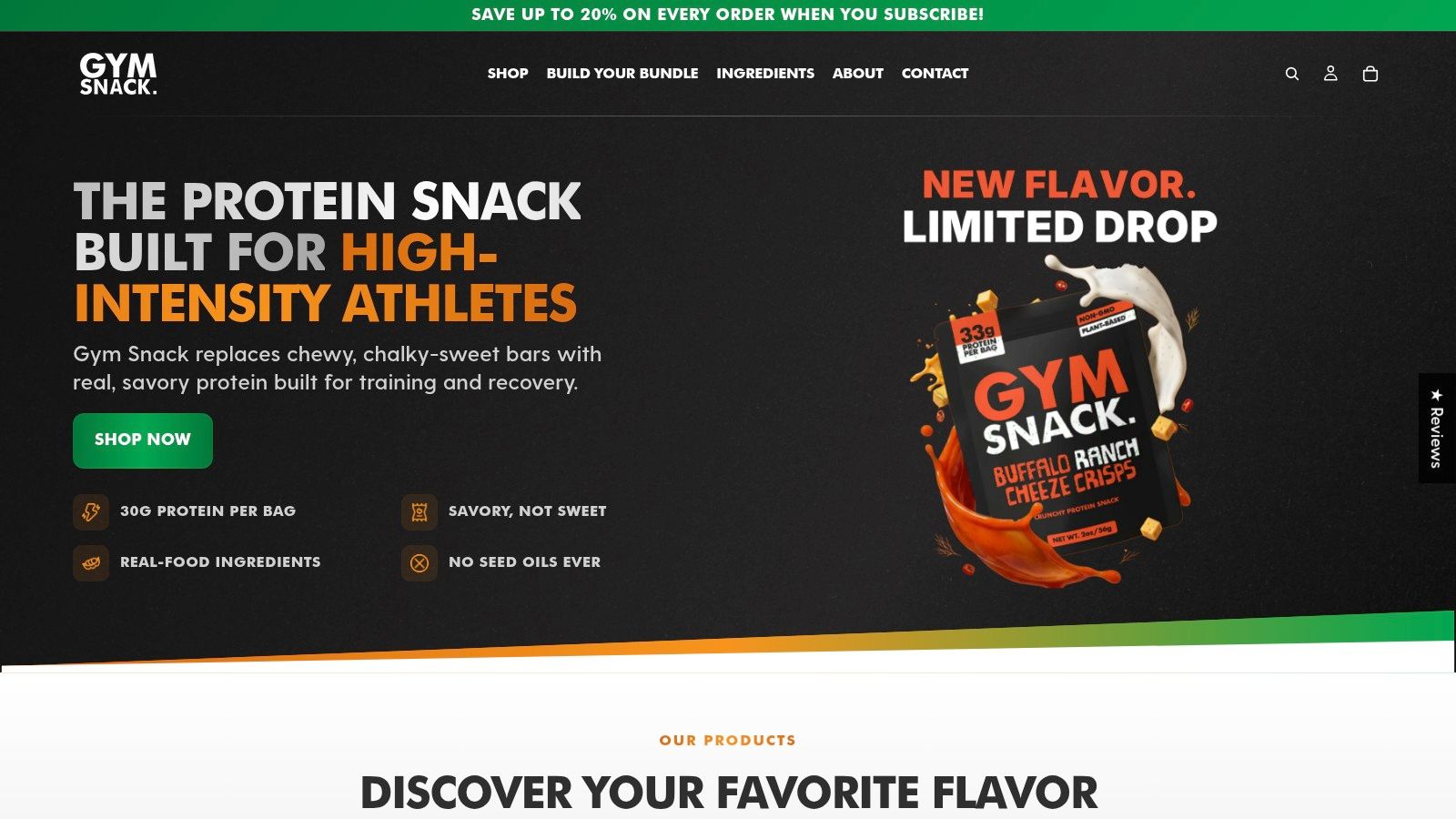
One example is high-protein plant-based snacks built around short, recognizable ingredients and a savory format. In that category, Gym Snack is a packaged option that uses pea protein and a shorter ingredient approach than many dessert-style convenience snacks, which makes it relevant for people trying to balance protein, portability, and lower processing in one product.
Match the snack to the moment
A good snack strategy isn't one list. It's a small menu for different situations.
Before training
Choose something light enough to tolerate, but substantial enough to prevent the “I'm starving by the time I finish” rebound.
After training
Protein matters more here. A minimally processed option with real chew and a savory profile can feel more satisfying than a sweet bar, especially if you're already tired of shakes.
At work or in the car Here, portable packaged options earn their place. If a snack lives in a drawer or bag, shelf stability matters.
A quick visual can help if you want ideas in motion rather than on paper.
A simple decision filter
When you're comparing options, ask:
- Will this help me hit protein without turning into candy?
- Does the ingredient list still feel like food?
- Can I keep this around and use it?
- Does it fit my appetite right now?
That last question matters more than often acknowledged. The smartest snack is the one you'll eat consistently, digest well, and feel good after. For some people that's roasted edamame. For others it's nuts and fruit. For others it's a savory packaged protein snack with a cleaner label.
Building Your Healthier Snack Strategy
You don't need to snack perfectly. You need a system that makes better choices easier.
Start with the big filter. Look for snacks that still resemble their ingredients. Then match the snack to the job. If you need fullness, prioritize protein, fiber, and real chew. If you need convenience, keep a few packaged minimally processed snacks where life usually gets messy. If you're on a GLP-1 medication, choose smaller options that deliver substance without a lot of ingredient clutter.
Keep this framework simple
- Read the back, not the front
- Prefer recognizable ingredients
- Use whole-food snacks often
- Use packaged options on purpose
- Aim for better, not stricter
A strong snack routine should lower stress, not raise it.
Minimally processed snacks aren't magic. They're just easier to trust because the food usually still looks like food. That makes them a solid tool for protein targets, appetite control, steadier energy, and long-term consistency.
If you want a savory packaged option that fits this approach, Gym Snack offers plant-based protein snacks designed around recognizable ingredients and a crunchier, less dessert-like format for people who want convenient support for training and satiety.