

You’re standing in front of a vending machine, a grocery checkout lane, or the snack shelf after training. You want something fast, crunchy, and satisfying. A Crunch bar looks harmless enough. It’s small, familiar, and easy to justify when hunger is high and time is short.
That moment matters more than it might seem. For an active person, a snack isn’t just about taste. It’s a decision about energy, satiety, recovery, and whether your next hour feels steady or scattered. That’s why crunch bar nutrition deserves a closer look than a quick glance at calories.
The Crunch Bar Nutritional Profile Unwrapped
Right after training, a snack can either support the next few hours or satisfy a craving. A Crunch bar falls into the second category more often than the first.
A standard Nestlé Crunch bar provides 220 calories per 1.55 oz (44g) serving, with calories coming mainly from 51% carbohydrate, 45% fat, and 4% protein, according to FoodStruct’s Crunch bar nutrition analysis. In practical terms, that equals about 29.5 to 30g carbohydrate, 24 to 24.2g sugars, 11 to 11.4g fat, 7g saturated fat, and 2 to 2.2g protein in one bar.
That distribution matters. For an active person, snack calories are usually more useful when they bring a meaningful amount of protein, some staying power, and a structure that helps appetite remain stable. Here, most of the calorie load comes from sugar and fat, while protein remains minimal.
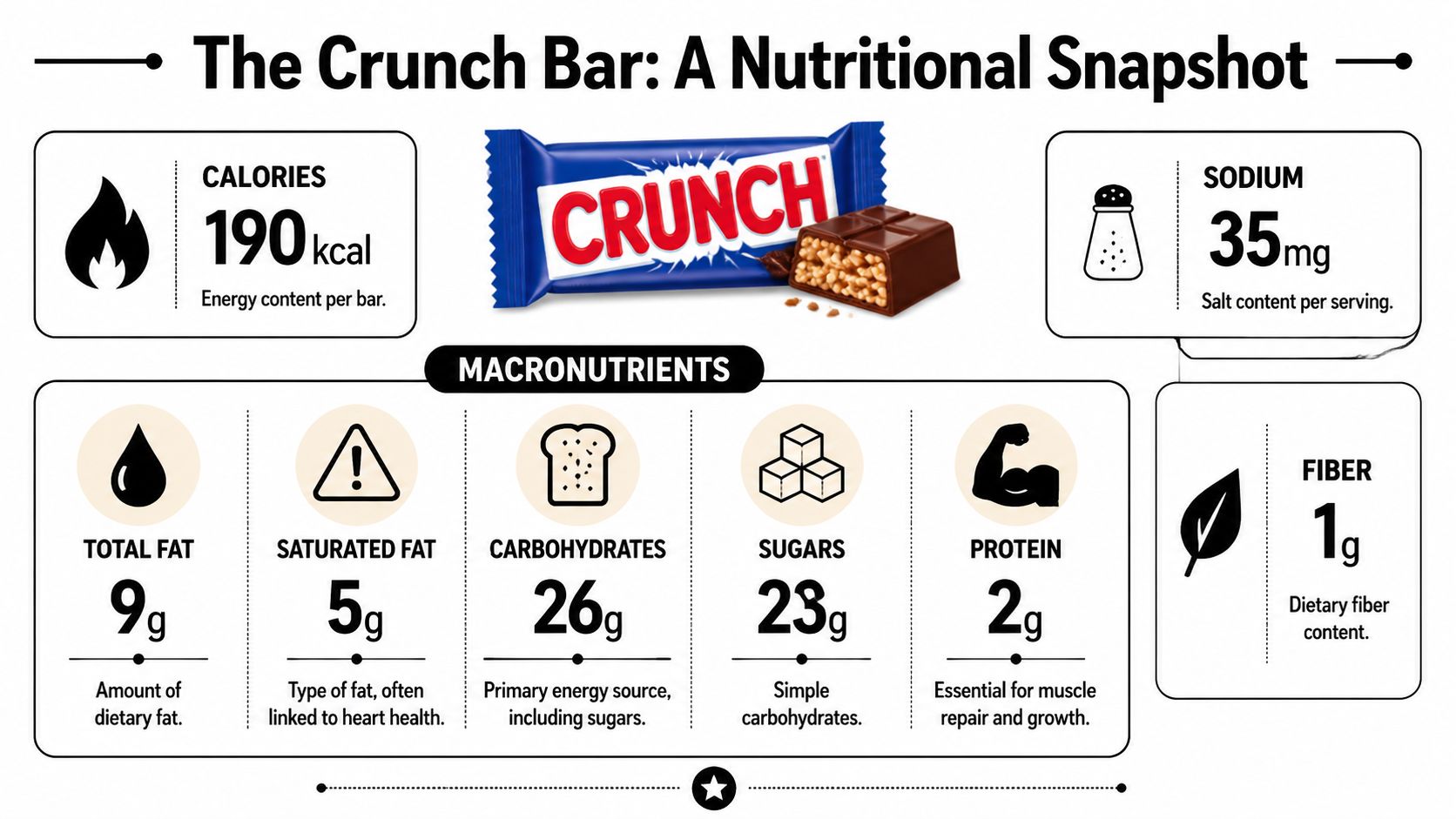
Reading the label like a nutritional budget
A Crunch bar uses a meaningful share of your snack calories without doing much for protein intake.
| What the bar delivers | What that means for an active person |
|---|---|
| 220 calories | Enough energy to count as a real snack |
| Mostly carbohydrates and fat | The bar is built for palatability more than recovery support |
| About 2 to 2.2g protein | Too little protein to meaningfully help post-workout repair or fullness |
| 7g saturated fat | A large share of total fat comes from saturated fat |
| 24 to 24.2g sugars | The carbohydrate load is driven largely by sweetness, not fiber-rich or slow-digesting ingredients |
Per 100g, the pattern becomes even clearer. FoodStruct reports 500 calories, 67g carbs, 26g fat, and 5g protein per 100g, alongside relatively limited micronutrient value in the amounts listed there. For a fitness-focused reader, that is the profile of a confectionery product with a low satiety return per calorie, not a snack designed to support training demands.
Portion size changes the math quickly
Candy bars are easy to underestimate because package size can change faster than appetite cues do. A king-size Crunch bar rises to 390 calories, 52g carbs, 43g sugars, 13g saturated fat, and 4g protein based on the same source data summarized above.
The fun-size version lowers the dose, but not the underlying pattern. Two fun-size bars, totaling 26g, still provide 130 calories, 17g carbs, 15g sugars, and 1g protein.
The practical point is simple. A smaller serving reduces exposure to sugar, calories, and saturated fat, but it does not turn the bar into a high-function snack.
What this macro profile means in practice
For body composition, recovery, or appetite control, the main limitation is not that the bar contains carbohydrate. The limitation is the bar’s overall architecture. It delivers quick energy with very little protein and little reason to expect strong fullness signals afterward.
That distinction matters because snacks are not judged only by their label totals. They are judged by what they help you do next. A snack that contributes meaningful protein is more likely to support muscle repair and keep hunger manageable. A candy bar built mostly from milk chocolate and crisped rice is less likely to do either, even if the calorie count looks manageable on paper.
If you want a stronger framework for comparing packaged snacks, this guide on how to read bar nutrition facts is a useful reference.
Decoding the Ingredients and Health Implications
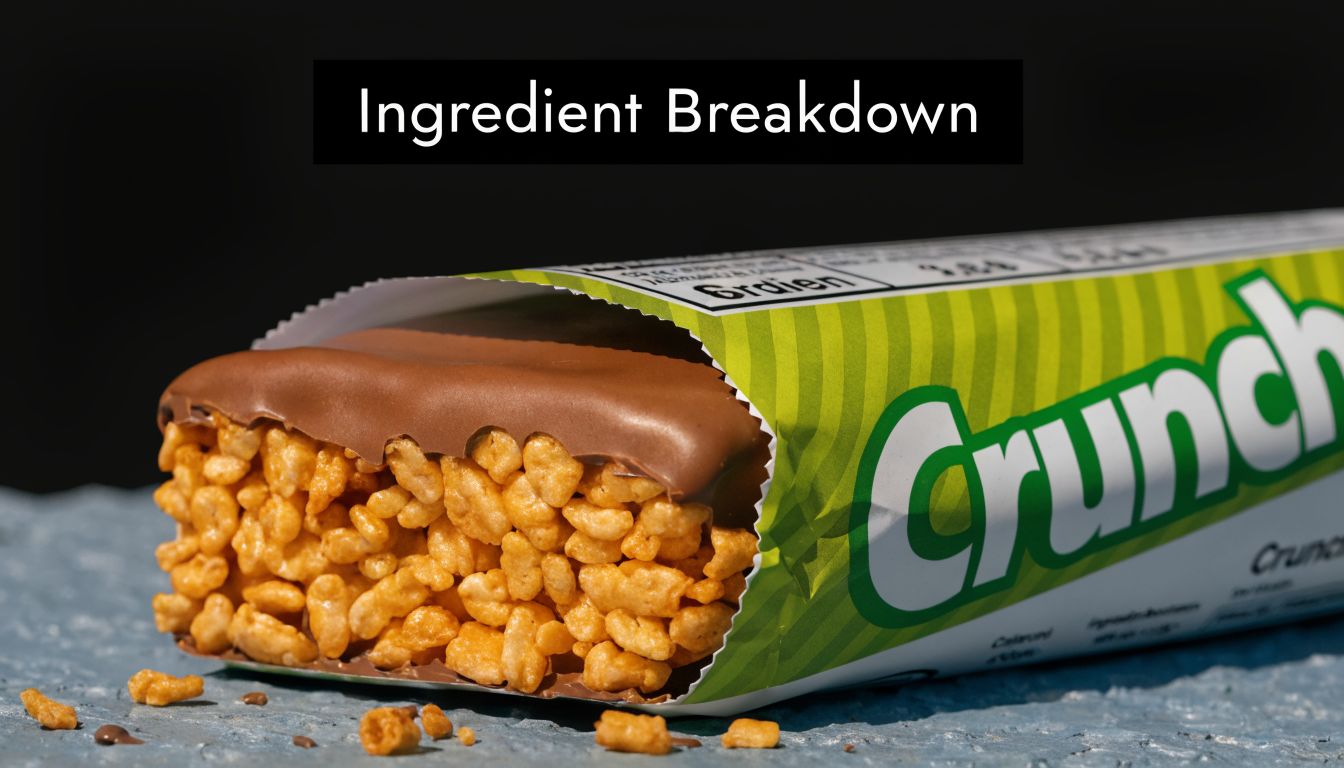
The ingredient list explains why the label looks the way it does. A Crunch bar is milk chocolate wrapped around crisped rice. That combination creates its signature texture, but it also drives the metabolic experience.
What milk chocolate contributes
Milk chocolate brings the bulk of the bar’s sweetness and a large share of its fat. That matters because Eat This Much’s Crunch bar entry describes the bar as providing about 220 calories per 44g serving, with 51% carbohydrate, 45% fat, and 4% protein, and a caloric density of about 5 kcal per gram. It also notes that this is relatively high calorie density compared with whole-food benchmarks.
High calorie density changes how easy it is to overshoot your needs. You can eat a compact amount of food and take in a lot of energy without getting the bulk, water, fiber, or protein that usually helps a snack feel physically substantial.
What crisped rice contributes
Crisped rice gives the bar its snap and lightness. That’s part of the product’s appeal. But nutritionally, it adds texture more than depth.
Rice crisps don’t turn the bar into a slow-release carbohydrate source. In this format, they work with the chocolate to create a food that’s easy to eat quickly and easy to crave again. The result is a product that feels airy in the mouth while still carrying dense calories.
The texture can trick people into thinking the bar is lighter than it really is.
What happens after you eat it
For many active people, the issue isn’t that the bar contains carbohydrate. Carbs can be useful. The issue is the architecture of the snack. When a bar is built mostly from refined sweet carbohydrate and fat, with very little protein, it tends to be less effective for satiety and less useful for recovery.
That’s where many “quick energy” snacks disappoint. They solve the immediate urge to eat. They often don’t solve the reason you needed the snack in the first place, which may be low energy, poor meal timing, or a need for staying power between meals.
A Crunch bar is best understood as a dessert-format food that happens to be portable. If you eat it occasionally and enjoy it, that’s straightforward. If you expect it to behave like a balanced training snack, the ingredients don’t support that expectation.
How a Crunch Bar Impacts Your Fitness Goals
A common gym-floor assumption is that any calories can work as workout fuel. That’s only partly true. Calories matter, but the form they come in changes what they do for performance, recovery, and hunger.
Why it falls short after training
Post-workout nutrition has a job to do. It should help your body start repairing tissue and support adaptation to training. That requires enough protein, and enough of the right amino acids.
According to Prospre’s ingredient review of Crunch bar protein quality, Crunch bars provide 2.2 to 5g protein per serving from milk-based ingredients, but protein sources aimed at optimizing muscle protein synthesis are described there as needing 2.5g or more leucine per serving, along with strong branched-chain amino acid profiles. The bar’s modest protein content doesn’t hit that threshold.
That point gets missed all the time. A little dairy-derived protein doesn’t automatically make a candy bar useful for recovery. The amount has to matter.
Why it can be awkward before training
Before a workout, you usually want a snack that feels predictable. You don’t want something that sits heavily, spikes hunger later, or leaves you dragging mid-session.
The same Prospre source notes that the protein in Crunch is limited in quantity, which means the bar isn’t offering much buffering effect against a fast rise-and-fall energy experience. For some people, that’s the difference between feeling briefly switched on and then wanting more food soon after.
If your main goal is strength, recovery gets even more important than convenience. In that case, structured coaching such as personalized programs for strength can help you align snack choices with training blocks instead of relying on whatever’s easiest in the moment.
The carb-to-protein problem
Elsewhere in the verified data, Crunch is described with a carbohydrate-to-protein ratio of about 12.7:1, and that ratio is exactly why the bar doesn’t behave like a fitness snack. Protein isn’t just there for muscles. It also helps with staying power.
Consider these practical scenarios:
- After lifting: You need meaningful protein. Crunch doesn’t provide enough.
- Between meetings: You want focus and appetite control. Sugar-heavy snacks often fade fast.
- As a treat after dinner: That’s where the bar fits more naturally.
A snack can taste satisfying and still be functionally weak for training goals.
The deeper insight is that fitness nutrition isn’t just about avoiding “junk.” It’s about choosing snacks whose structure matches your objective. A Crunch bar is built for pleasure and convenience. Those are valid product goals. They’re just different from muscle support, fullness, and steady output.
Crunch Bar Suitability for Specific Diets and Allergies
A product can be enjoyable and still be the wrong fit for a specific eating pattern. Crunch bar nutrition becomes much easier to judge when you stop asking whether it’s “healthy” in the abstract and start asking who it works for.
Plant-based and vegan diets
This one is simple. The protein in Crunch comes from milk-based ingredients, so it isn’t suitable for a vegan diet. For people who choose plant-based eating for ethical, digestive, or training reasons, that’s a clear fail.
It’s also not a useful example of a plant-forward snack strategy. Even if you aren’t strictly vegan, a candy bar with milk-derived protein and a dessert-style macro split doesn’t solve the needs that usually drive people toward higher-protein convenience foods.
Weight management and GLP-1 support
For readers focused on appetite control, the bar’s profile is a mismatch. The verified data describes Crunch as a high-energy, low-protein food and notes that satiety signaling is more meaningfully supported when protein intake is stronger.
That matters for GLP-1 users too. Texture can help satisfaction, but texture without substance doesn’t go far. A crunchy snack with minimal protein and little fiber may satisfy a craving in the moment while doing less for fullness over the next stretch of the day.
Keto and lower-carb approaches
Crunch also fits poorly with lower-carb or keto-leaning patterns. Its carbohydrate load is central to the product, not incidental. This isn’t the kind of snack you can easily “make work” inside a carb-restricted structure unless it’s a deliberate exception.
Allergy and sensitivity concerns
Because Crunch uses milk-derived ingredients, it isn’t appropriate for people avoiding dairy allergens. The broader category of processed snack bars can also create concerns for consumers trying to avoid common triggers and unnecessary additives.
For readers navigating restrictions, this guide to allergy-friendly protein bars offers a more practical framework than trying to force-fit a mainstream candy bar into a specialized diet.
A fair summary looks like this:
- Vegan diet: No
- Protein-forward fitness diet: Poor fit
- GLP-1 or satiety-focused eating: Weak fit
- Lower-carb eating: Poor fit
- Dairy allergy or sensitivity: No
That kind of pass-fail clarity is useful. It keeps a treat in the treat category, which is where many foods make the most sense.
The Case for a Savory Protein-Forward Snack
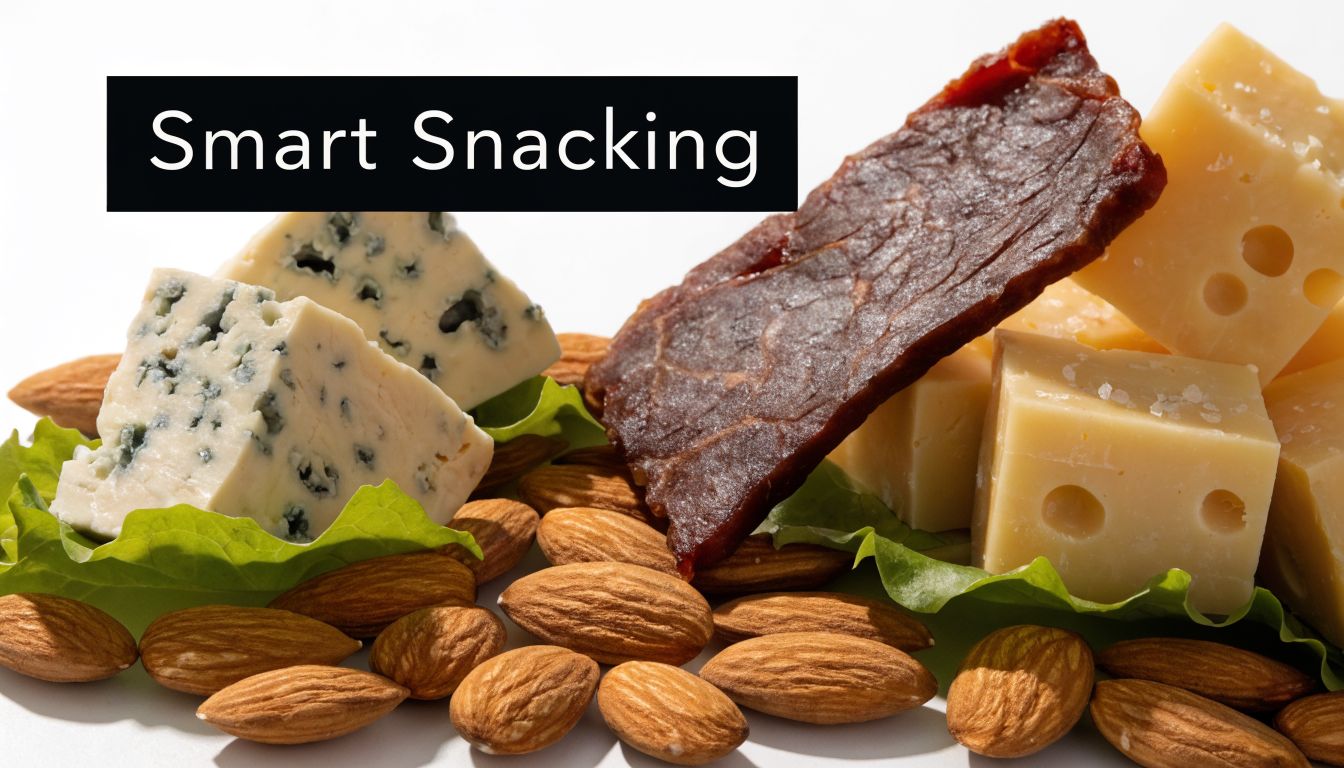
The useful question isn’t whether a Crunch bar should exist. It’s what kind of snack architecture works better when your goal is training support, steadier energy, or appetite control.
The answer starts with one word: protein.
Crunch is valuable when it carries the right nutrients
Texture matters more than many nutrition plans admit. People don’t just eat nutrients. They eat experiences. That’s one reason crunchy foods can feel more satisfying than soft, sweet bars that disappear in a few bites.
The difference is what delivers the crunch. Verified data tied to Parade’s discussion of healthy crunch bar trends notes that crunch texture enhances perceived satiety, which is relevant for weight-management and GLP-1 users, but also that the source matters. A Crunch bar’s rice crisps bring minimal protein, while consumers rank high protein at 41% and texture at 31% as key drivers. The same verified data points to 15g+ protein as the kind of substantial dose that better supports fullness hormones.
That’s the actual distinction. Crunch isn’t the problem. Low-protein crunch is the problem.
Why savory often works better than sweet
Savory snacks can solve a different craving pattern than dessert-style bars. After a sweet breakfast, sweet coffee drink, or sweet protein shake, another sweet snack often adds to flavor fatigue rather than fixing hunger.
A savory, protein-forward option changes the sensory profile and often makes portion control easier. It can feel more like actual food and less like a reward item. For busy professionals and lifters alike, that difference matters because repeat snack decisions shape the whole day.
Clinical lens: The best snack for appetite control doesn’t just taste good. It reduces the chance that you’ll go hunting for more food soon after.
Clean ingredients matter too
There’s another layer that doesn’t show up on the front of most packages. Verified data on snack bar quality notes that heavy metal and pesticide contamination in popular snack bars is an underexplored risk, and that a 2024 Clean Label Project study found many bars contain contaminants tied to soil and packaging, creating demand for transparently sourced ingredients. That verified point is associated with this reference page discussing snack bar concerns.
This doesn’t mean every bar is unsafe. It means label reading can’t stop at macros. Ingredient sourcing and manufacturing transparency matter, especially for consumers who eat packaged snacks often.
What a stronger snack profile looks like
A better fitness snack doesn’t need to be complicated. It needs to be built with a different hierarchy of priorities.
- Protein first: Enough protein to matter for fullness and recovery.
- Crunch with purpose: Texture should come attached to nutritional value, not just refined starch.
- Savory over dessert-style when needed: This can help break the cycle of constant sweet snacking.
- Transparent sourcing: Macros matter, but ingredient quality matters too.
For readers exploring alternatives to sweet bars, this roundup of savory high-protein snacks is a practical place to compare formats that better match those principles.
The broader conclusion is easy to miss if you only read the label. A Crunch bar isn’t inferior because it’s indulgent. It’s inferior for fitness goals because the bar’s entire design prioritizes sweetness and texture over protein density, satiety support, and ingredient functionality.
Beyond the Bar Making Smarter Snack Choices
Smart snack decisions get easier when you stop judging foods morally and start judging them functionally. Ask one question: What job do I need this snack to do?
If the answer is enjoyment, a Crunch bar can fit as an occasional treat. If the answer is recovery, appetite control, or steady energy between meals, the article’s analysis points elsewhere. The mismatch isn’t subtle. It’s built into the bar’s macro profile, protein content, and ingredient design.
A simple filter helps:
- Check the protein role: Is protein a headline nutrient or an afterthought?
- Check the sugar context: Is sweetness carrying the snack?
- Check ingredient transparency: Verified data notes that heavy metal and pesticide contamination in popular snack bars is an underexplored risk, with a 2024 Clean Label Project study finding contaminants in many bars from soil and packaging, which is why transparent sourcing deserves more attention than most shoppers give it.
- Check the one-hour test: Will this snack still feel like a good decision later?
Some readers need even tighter snack planning because medical history changes the stakes. For people recovering from bariatric procedures or working within medically guided nutrition limits, specialized dietary guidance for bariatric patients can help translate these principles into safer, more personalized choices.
The biggest takeaway is simple. Crunch bar nutrition makes sense when you treat it like candy. It stops making sense when you ask it to perform like a fitness food.
If you want a snack that’s built for training, satiety, and savory cravings instead of dessert-style macros, take a look at Gym Snack. It’s a protein-first option designed for people who want crunch with a more functional nutrition profile.