

Dairy-free protein snacks are your secret weapon for fueling an active lifestyle without the bloating or digestive issues that often come with whey or casein. These snacks get their power from plant-based proteins—think pea, soy, nuts, and seeds—to deliver the essential amino acids your body needs for energy and muscle repair.
They're a fantastic choice for anyone with lactose intolerance, a dairy allergy, or who simply feels better leaving dairy on the sidelines.
Why Dairy Free Protein Snacks Are Everywhere
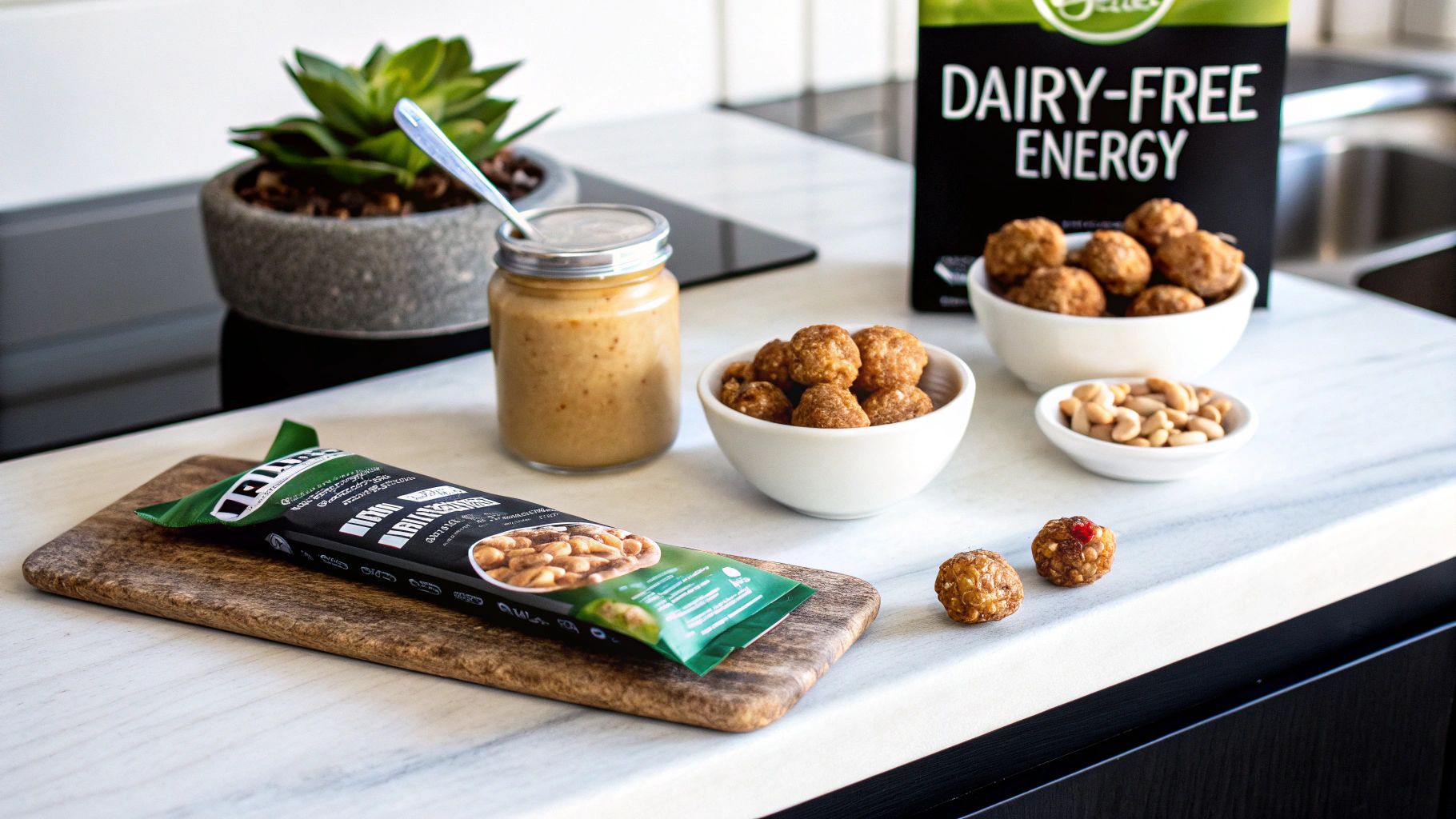
Ever grabbed a traditional protein bar and felt heavy or bloated minutes later? You're definitely not alone. For many of us, that feeling comes from whey or casein, the main proteins found in milk. This common experience has helped kickstart a massive shift toward dairy-free alternatives, pulling them out of the niche health food aisle and into the mainstream.
This movement isn't just about avoiding a food sensitivity. It's about feeling lighter, more energized, and sidestepping the digestive slowdown that can crush your afternoon. People are catching on that going dairy-free doesn't mean you have to compromise on nutrition, flavor, or feeling satisfied. In fact, it unlocks a whole new world of delicious possibilities.
The Growing Demand for Better Options
The numbers really paint a picture here. The global dairy-free snacks market is exploding, projected to jump from USD 6.39 billion in 2025 to USD 12.56 billion by 2033. That’s not just a small trend; it’s a reflection of a fundamental shift in how we think about food.
With lactose intolerance affecting a huge chunk of the population, the demand for tasty and effective alternatives has never been stronger. People are actively seeking out cleaner, more gut-friendly fuel to power their days.
The move to dairy-free snacking is less about restriction and more about discovery. Consumers are finding that well-crafted snacks provide high-quality protein without the digestive drawbacks of traditional options.
Beyond Sweetness: A New Era of Snacking
For the longest time, the protein snack aisle was a sea of super-sweet, dessert-inspired bars and shakes. But as our tastes have matured, so have our options. The rise of clean, savory dairy free protein snacks is completely changing the game.
Imagine crunchy, cheesy-flavored bites that actually curb your craving for something salty and substantial.
These new-school snacks prove you can hit your protein goals with incredible savory flavors that feel more like a real treat than a sugary supplement. If you want to dive deeper into finding the best options out there, check out this ultimate guide to dairy-free protein bars.
Decoding Plant-Based Proteins in Your Snacks
When you're picking out a dairy-free protein snack, the first step is to get familiar with what’s actually inside. Think of your body as a high-performance engine. You wouldn't just put any fuel in it, right? The same goes for protein. Different plant-based sources offer unique benefits, and knowing the difference is key.
The usual suspects you'll see on ingredient labels are pea, soy, nuts, and seeds. Each one has a different profile of amino acids—the fundamental building blocks of protein. Looking past the big number on the front of the package and understanding these sources helps you choose a snack that truly backs up your health goals.
Common Plant Protein Sources
Navigating the world of plant-based proteins is a lot simpler once you know the main players. Some are famous for their muscle-building prowess, while others are packed with awesome extras like fiber and healthy fats.
Here’s a quick look at what you’ll find in many top-tier dairy-free protein snacks:
- Pea Protein: This one is a real powerhouse for muscle repair and growth, largely because it's rich in Branched-Chain Amino acids (BCAAs). It's also easy on the gut and hypoallergenic, which is why it's a go-to for people with sensitive stomachs and a core ingredient in clean options like Gym Snack.
- Soy Protein: As one of the few complete plant proteins out there, soy delivers all nine essential amino acids your body can't make on its own. It's incredibly versatile, but it's also a common allergen, so always double-check the label if you have a sensitivity.
- Nut and Seed Proteins: Almonds, pumpkin seeds, hemp seeds—these guys bring a fantastic mix of protein, healthy fats, and fiber to the table. That combination is perfect for sustained energy and keeping hunger at bay.
The incredible variety is a huge reason why plant-based snacks have taken over. In fact, these options now make up a massive 62.6% to 62.8% of the entire global protein snacks market. This boom is fueled by people just like you—including the 42% of consumers worldwide who now identify as flexitarians—who are actively looking for healthier, more sustainable choices.
Here’s a quick comparison of the most common dairy-free protein sources you'll find in snacks, highlighting what makes each one unique.
Comparing Popular Plant-Based Protein Sources
| Protein Source | Key Benefit | Complete Protein? | Common Allergens |
|---|---|---|---|
| Pea Protein | High in BCAAs for muscle building | No | None |
| Soy Protein | Contains all 9 essential amino acids | Yes | Soy |
| Hemp Protein | Good source of omega-3s and fiber | Yes | None |
| Pumpkin Seed | Rich in magnesium and healthy fats | No | None |
| Almond Protein | Provides Vitamin E and healthy fats | No | Tree Nuts |
Each source brings something different to the party, so mixing them up in your diet is a great way to cover all your nutritional bases.
How to Read the Label for Protein Quality
Next time you grab a snack, flip it over. The ingredient list tells the real story. The source of the protein is just as important as the number of grams. A snack might boast 15 grams of protein, but is it coming from a high-quality, digestible source like pea protein isolate, or is it buried in a long list of fillers and soy concentrates? For a closer look at these ingredients, check out our guide to high-protein plant-based snacks.
A great snack isn't just about high protein content; it's about high-quality, functional protein. Look for simple ingredient lists where the protein source is clearly identified and easy to recognize.
If you’re thinking about adding a powder to your routine for smoothies or baking, it’s worth spending some time on finding a great vegan and gluten-free protein powder that fits your lifestyle. Becoming a savvy label-reader is a superpower. It lets you choose snacks that deliver real, effective nutrition to fuel your body and help you feel your best.
How to Spot and Avoid Hidden Dairy on Labels
Trying to find truly dairy free protein snacks at the grocery store can feel like you need a secret decoder ring. Dairy has a real knack for hiding in plain sight, lurking in ingredient lists under names that sound nothing like "milk." To make sure your snack is genuinely dairy-free, you have to look beyond the obvious "Contains: Milk" warning on the label.
It’s surprisingly common for manufacturers to use milk-derived proteins and sugars as binders, fillers, or flavor enhancers. They show up in everything from protein bars to savory bites. This means a snack that looks perfectly safe at first glance could still be the culprit behind digestive issues or an allergic reaction. Your best defense? Become a label detective. It's the only way to snack with total confidence.
Red Flags: The Sneaky Names for Dairy
Think of the ingredients list as the final boss in your snack-hunting mission. Dairy loves to wear a disguise, and spotting these aliases is the key to winning the game. When you're scanning a label, keep an eye out for these common culprits that always mean dairy is present.
- Casein & Caseinates: These are milk proteins, often added for texture and a protein boost. You’ll see them listed as sodium caseinate or calcium caseinate.
- Whey & Whey Protein: This is probably the most common protein supplement out there, and it’s a direct byproduct of cheesemaking. It's in countless bars and powders.
- Lactose: This is simply the natural sugar found in milk.
- Ghee: A type of clarified butter. While most milk solids are removed, trace amounts of casein and lactose can still be left behind.
- Hydrolysates: These are proteins that have been broken down, often appearing as "casein hydrolysate" or "whey protein hydrolysate."
It’s absolutely critical to understand the difference between "lactose-free" and "dairy-free." A lactose-free product has had the milk sugar removed, but it still contains milk proteins like casein and whey. A truly dairy-free product is completely free of all milk components.
For anyone who loves savory flavors, finding options without hidden dairy can be especially tough. To get a better handle on this specific category, check out our in-depth guide to amazing dairy free cheese snacks.
The best dairy-free snacks are built on a foundation of plant-based proteins, as you can see below.
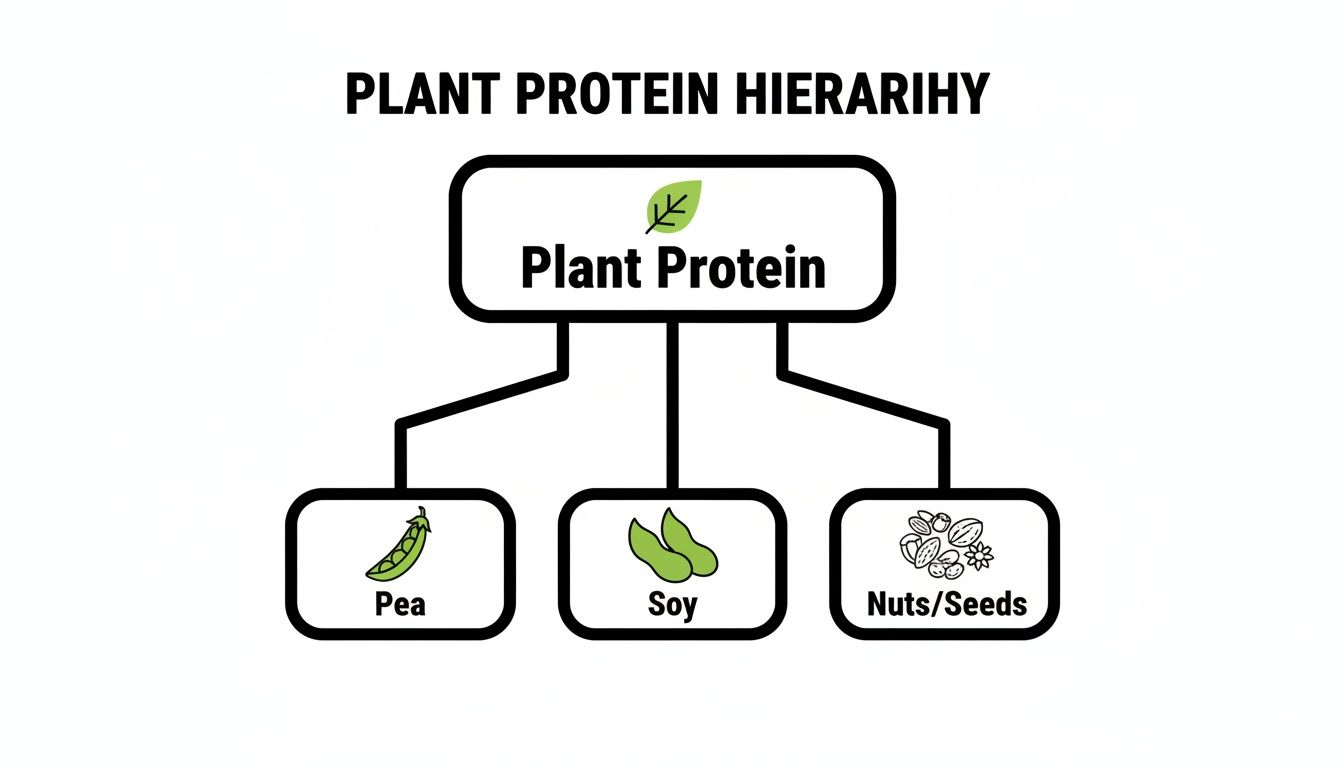
High-quality sources like peas, soy, and a variety of nuts and seeds are the building blocks of the entire dairy-free protein world.
Green Flags: Certifications That Give You Peace of Mind
The good news is, you don’t have to do all the detective work on your own. Certain third-party certifications act as a green light, offering a quick and reliable shortcut to identifying safe products.
- Certified Vegan: This is your gold standard. If a product is certified vegan, you can be 100% sure it contains zero animal-derived ingredients, which automatically excludes all forms of dairy.
- Certified Plant-Based: Very similar to the vegan seal, this certification confirms the product is made entirely from plants.
- Allergen-Free Statements: Many brands are getting better at this. Look for explicit call-outs right on the package, like "Free from Dairy, Soy, and Gluten."
Once you get the hang of spotting the red flags on the ingredients list and the green flags from trusted certifications, choosing the right snacks becomes second nature. You'll be able to grab what you need quickly and confidently, knowing it aligns perfectly with your goals.
Matching Your Snacks to Your Health Goals
A great snack isn't just a tasty bite to get you through to the next meal—it’s a powerful tool for hitting your health and fitness targets. Whether you're looking to build muscle, manage your weight, or just survive that afternoon slump, choosing the right dairy free protein snacks can make a huge difference. It’s all about picking a snack with the right nutritional stats for the job.
Think of it like picking the right tool for a project. You wouldn't use a hammer to drive a screw. In the same way, the snack that powers a heavy lifting session is totally different from the one that keeps you sharp and focused at your desk. When you start matching your snacks to your goals, you stop eating passively and start eating with a purpose.
Snacks for Sustained Energy
We've all been there: the dreaded 3 PM crash. To sidestep it and keep your energy levels humming along, you need a snack that brings together protein, healthy fats, and complex carbs. This trio works as a team to slow down digestion, which means you avoid the sharp blood sugar spikes and subsequent crashes that sugary treats cause.
For steady, all-day energy, look for snacks that offer:
- 10-15g of Protein: Just enough to keep you satisfied without weighing you down.
- Healthy Fats: Think nuts and seeds, which provide fuel for the long haul.
- Fiber: This is key for a slow, steady release of energy that keeps you focused for hours.
Something as simple as a handful of almonds with an apple works great. A savory, balanced option like Gym Snack also fits the bill perfectly, giving you a steady stream of fuel instead of a short-lived sugar rush.
Fueling Muscle Repair and Growth
Just finished a tough workout? Your muscles are crying out for repair. Exercise creates tiny micro-tears in your muscle fibers, and protein is what your body uses to patch them up and build them back stronger. The ideal post-workout snack delivers high-quality, easy-to-digest protein—and fast.
Pro Tip: Aim for a post-workout snack with a protein-to-carb ratio of about 1:2 or 1:3. The carbs are crucial for refilling your energy stores (glycogen), which lets the protein get straight to work on muscle repair.
A snack with 15-25 grams of protein is the sweet spot here. Plant-based options like pea protein are fantastic choices because they’re loaded with BCAAs (Branched-Chain Amino Acids), the MVPs of muscle building. To figure out your own targets, it helps to learn how to calculate daily protein requirements based on your body and how active you are.
Supporting Weight Management Goals
If weight management is your main focus, then feeling full is your secret weapon. You need snacks that shut down hunger and keep cravings at bay, which naturally helps you lower your overall calorie intake. Protein is an absolute powerhouse for this, as it’s the most satisfying macronutrient and even gives your metabolism a little boost.
People are catching on. The plant-based snacks market was valued at a massive USD 42.2 billion in 2025 and is expected to more than double to USD 92.8 billion by 2035. This boom is all thanks to people like you looking for smarter, goal-focused food choices.
For this goal, look for snacks high in both protein and fiber. A snack with at least 15 grams of protein and 3-5 grams of fiber is a winning combination. Together, they slow digestion and send powerful "I'm full" signals to your brain, making it so much easier to stay on track with your eating plan.
Simple DIY Dairy-Free Protein Snack Recipes
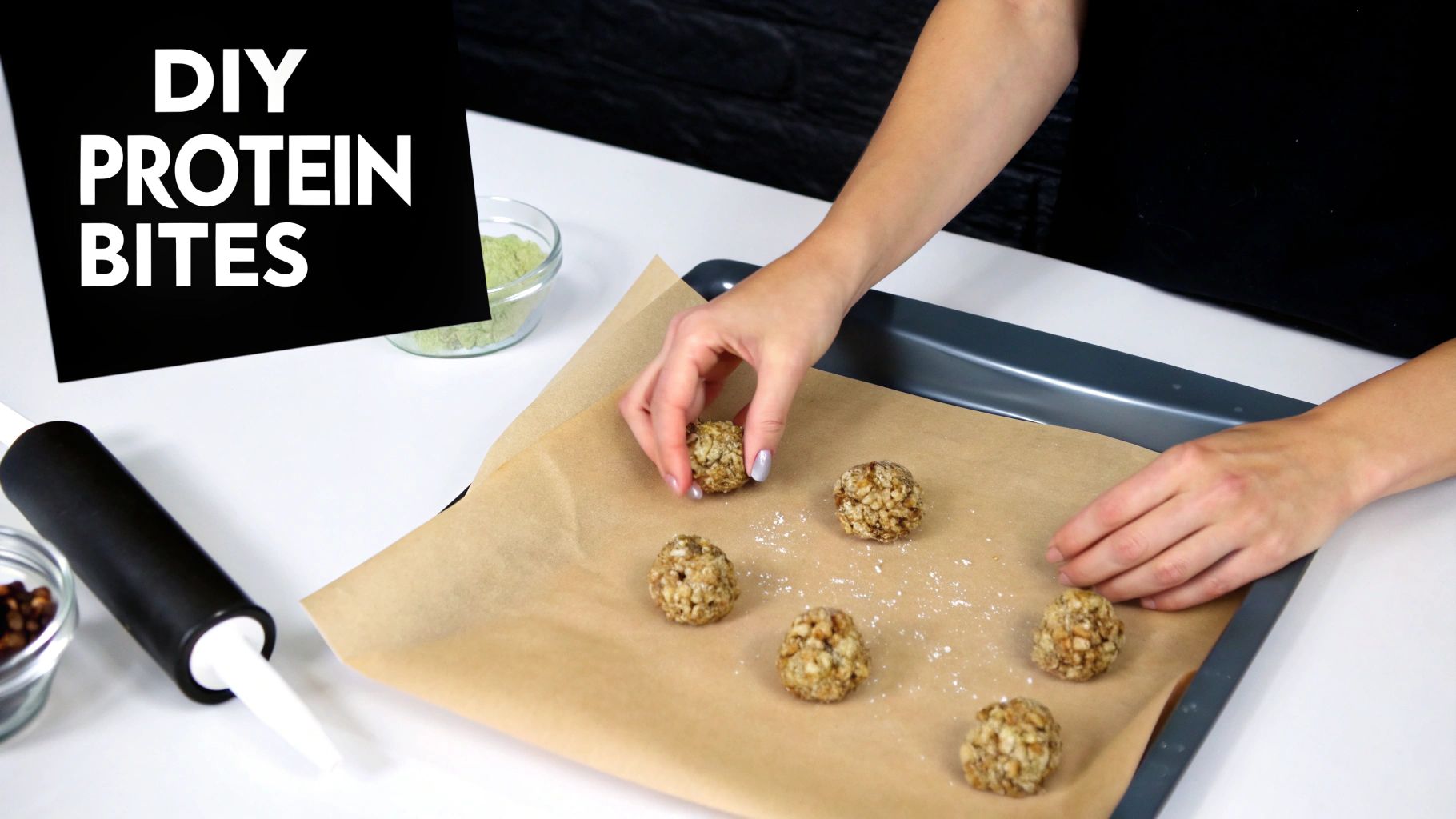
You definitely don't need to be a chef to make amazing dairy-free protein snacks at home. It's actually way easier than you might think to take control of your snack ingredients, and most recipes only need a few pantry staples and a couple of minutes of your time.
Making your own snacks is the best way to guarantee they’re free from hidden dairy, weird preservatives, or sneaky sugars. It's also a great way to nail the exact flavors you love. Below are three of my go-to, high-protein recipes you can throw together in no time.
5-Minute Protein Energy Bites
These no-bake bites are the definition of convenience. They're loaded with protein, fiber, and healthy fats that give you a steady stream of energy, making them perfect for a pre-workout boost or that 3 p.m. slump.
- Ingredients: 1 cup rolled oats, ½ cup nut butter (almond or peanut works great), ⅓ cup maple syrup or honey, 1 scoop of dairy-free protein powder (vanilla or chocolate are good starting points), and 2 tablespoons of chia seeds.
- Instructions: Just toss everything into a bowl and mix it up until a sticky dough forms. Roll the mixture into bite-sized balls and pop them in the fridge. They'll keep for up to a week. Feel free to get creative here—add some cacao nibs or shredded coconut for extra texture and flavor.
Savory Roasted Chickpeas
Got a craving for something crunchy and salty? These roasted chickpeas are the perfect answer and a much healthier choice than a bag of chips. Chickpeas are a powerhouse of plant-based protein and fiber, so they do a fantastic job of keeping you feeling full.
- Prep: Get your oven preheating to 400°F (200°C). Rinse and drain a 15-ounce can of chickpeas, then dry them really, really well. Patting them down with a towel is the secret to making them super crispy.
- Season: Toss the dry chickpeas with a tablespoon of olive oil and whatever savory seasonings you're in the mood for. A mix of smoked paprika, garlic powder, and a pinch of cayenne is a personal favorite for a smoky kick.
- Roast: Spread them out on a baking sheet in a single layer. Roast for 20-30 minutes, giving the pan a good shake halfway through, until they're golden and perfectly crunchy.
Creamy Nut Butter Protein Pudding
This little recipe tastes like a rich, decadent dessert but is secretly packed with protein, making it the perfect way to satisfy a sweet tooth. It’s creamy, incredibly satisfying, and comes together in less than two minutes with zero cooking.
This pudding is a total game-changer for a post-dinner treat that won't throw you off track. It uses the healthy fats from nut butter and the punch of plant protein to create a snack that actually fills you up.
To make it, just blend ½ cup of dairy-free milk (almond or oat are great), one scoop of your favorite plant-based protein powder, and two tablespoons of creamy nut butter until it's completely smooth. If you want a thicker, more mousse-like texture, add a tablespoon of chia seeds and let it chill in the fridge for about 15 minutes to set.
How to Turn Your Snack into a Balanced Meal
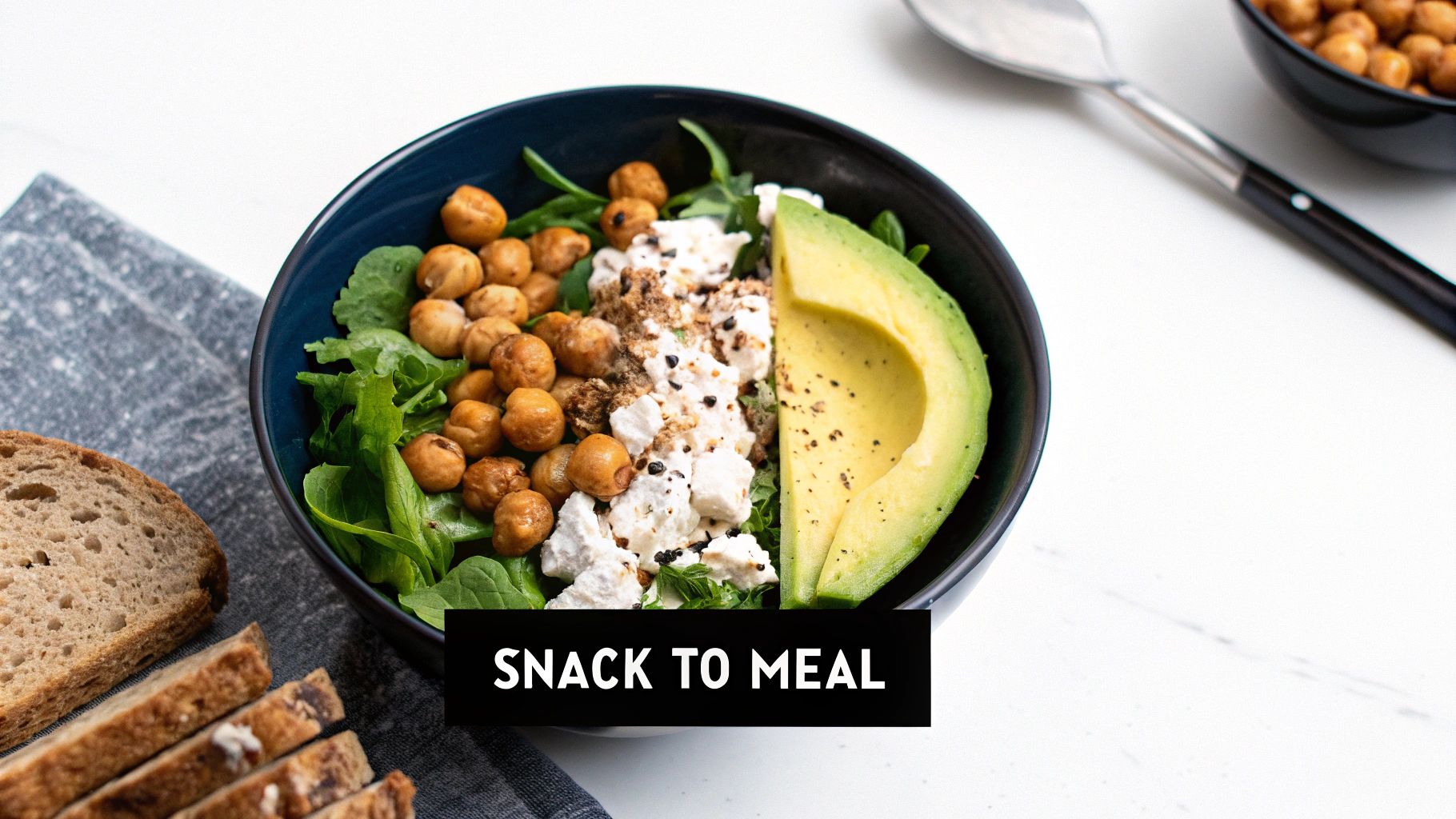
While dairy-free protein snacks are fantastic for grab-and-go fuel, their real magic is in their versatility. With a bit of strategic thinking, you can easily turn a simple snack into a complete, satisfying meal. This approach saves a ton of time without forcing you to compromise on your health goals.
Think of your snack as the protein-packed centerpiece of a plate. The trick is to build around it with fiber-rich carbs and healthy fats. This simple formula creates a balanced meal that will keep you full, focused, and energized for hours—perfect for those days when a quick lunch or light dinner is all you have time for.
From Snack to Meal in Minutes
Ready to give it a try? Here are a few simple, practical ways to level up your favorite snacks into something more substantial.
- Build a Power Bowl: Lay down a bed of leafy greens like spinach or arugula. Top it with a savory protein like roasted chickpeas or a serving of Gym Snack, then toss in some chopped veggies, avocado, and a light vinaigrette. You’ve just made a nutrient-dense lunch in under five minutes.
- Boost Your Breakfast: Crumble a dairy-free protein bar over your morning smoothie bowl or a serving of coconut yogurt. It adds a satisfying crunch and an extra protein kick to keep you full and firing on all cylinders until lunchtime.
- Upgrade Your Soup: Ditch the empty-calorie croutons. Instead, top your next bowl of tomato or vegetable soup with crunchy dairy-free protein snacks like savory roasted chickpeas. It adds great texture and a meaningful protein boost.
The key is creating synergy. By pairing your high-protein snack with sources of fiber (veggies, whole grains) and healthy fats (avocado, nuts, seeds), you create a meal that stabilizes blood sugar and keeps you genuinely full.
This mindset makes healthy eating feel less like a chore and more like a creative puzzle. When you see the potential in your snacks, you unlock a world of possibilities for quick, balanced meals that truly support your wellness journey.
Got Questions About Dairy-Free Protein Snacks? Let's Clear Things Up.
Diving into the world of dairy-free protein snacks can feel like a whole new language. It's totally normal to have questions. Getting the right answers means you can confidently pick snacks that actually help you hit your health and fitness targets. Let's tackle some of the big ones.
Are "Dairy-Free" Snacks Automatically Healthier?
Not always, and this is a big one to watch out for. Just because a snack is dairy-free doesn't give it a free pass. It's easy for a snack to skip the dairy but still be packed with refined sugar, weird fats, or a list of artificial ingredients you can't pronounce.
The real secret is to turn the package over and read the ingredient list. A truly healthy snack—dairy-free or not—is built on simple, whole-food ingredients. Look for that clean label and balanced nutrition, not just the claim on the front.
Can You Really Build Muscle with Only Plant-Based Protein?
Absolutely. It’s a stubborn myth that you can't build serious muscle without whey or casein, but it’s been busted time and time again. Plant proteins from sources like peas, soy, nuts, and seeds deliver all the essential amino acids your body needs to repair muscle fibers and grow stronger.
When it comes to building muscle, what matters most is the protein's complete amino acid profile and how well your body can absorb it. High-quality plant proteins are every bit as effective as animal proteins when you get enough of them.
Don't forget, many world-class athletes are powered entirely by plants. They're living proof you can reach peak performance without a drop of dairy.
How Can I Stop Plant-Based Snacks from Causing Bloat?
If you feel a little bloated after a plant-based snack, it’s usually just your digestive system getting used to more fiber or different types of protein. It's a common, and often temporary, issue.
A couple of simple tricks can make a huge difference. First, start with smaller servings and slowly work your way up. Second, look for snacks made with easier-to-digest proteins, like pea protein isolate. And don't forget to drink plenty of water—it helps your body handle the extra fiber like a champ, keeping your gut happy.
Ready to try a clean, savory, and satisfying dairy-free protein snack that won't leave you feeling bloated? Gym Snack delivers crunchy, cheesy-flavored bites with 15g of pea protein to fuel your goals. Check out all the delicious options at https://gymsnack.com.